|
|
Jordan Wright
November 27, 2012
Special to DC Metro Theater Arts, Broadway Stars, and localKicks
Thanks to Visit Rappahannock County Virginia – Office of Tourism
‘Grey Thursday’. Who dreamt this one up? It’s so not right, on so many levels, and affords us little time to catch up with family, trim the tree together or settle in for a bit of football. Turkey sandwiches anyone? ‘Black Friday’ – a miserably stressful experience at best. Enough said. Now we have “Cyber Monday’ and we are urged to buy online. Let’s just say it’s a cheerless marketing ploy devoid of Santa and his adorable elves. Is this what Christmas has become, just a way to buy gifts more efficiently? If the meaning of Christmas is checking off items online, or battling frantic buyers in a department store for the last cashmere sweater, then surely the spirit of the holidays will pass us by. So count me out. I want the old-fashioned Christmas back – that glorious time of year when we greet our neighbors and find a store where we can meet the owner or the talk to the artist. So bundle up and sally forth with good cheer into the chill air. Have a mug of hot spiced cider, or something a bit more fortified. Tis the best season of the year!
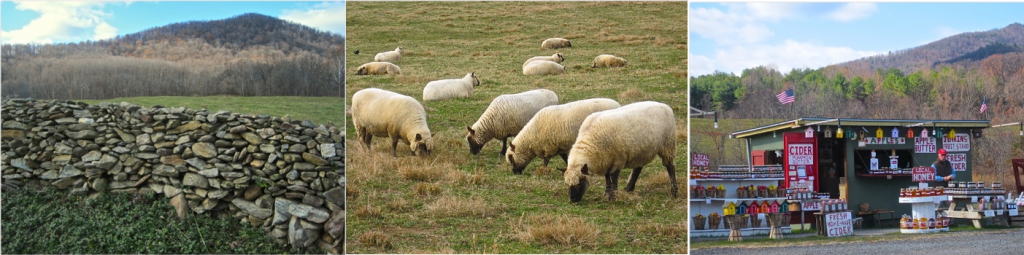 Rappahannock Pasture – Cluneford Sheep – Roadside Cider Shop – Photo credit Jordan Wright I like to inch up on Christmas slowly, smell chestnuts roasting, bake cookies, make tiny marzipan pigs, put up fruit chutneys and fill tureens with homemade pimento cheese. As for shopping I prefer to patronize a local business. Last weekend we decided to take our list with us to Rappahannock County, Virginia and add to it an elegant country manor, a few wineries, galleries, specialty boutiques and a few sips of damn good whiskey.
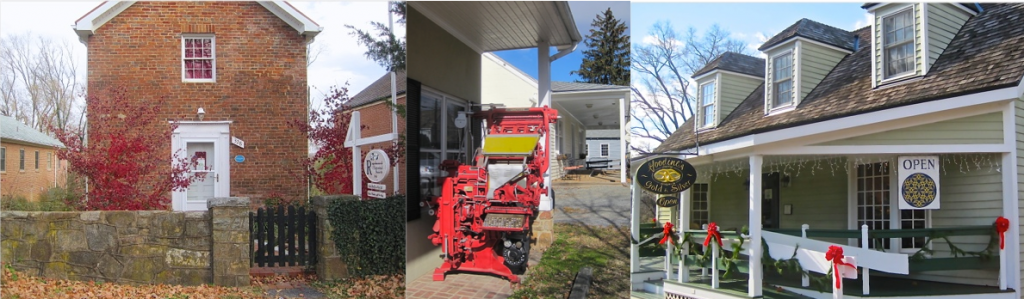 Rappahannock Historical Society – Antique Printing Press – Shops in Washington, VA – Photo Credit Jordan Wright The Friday after Thanksgiving, as department stores and parking lots were filling up with crazed shoppers, we headed west – a quick hour and a half drive from Washington, DC. Soon silhouettes of the Blue Ridge Mountains traced the horizon and we were motoring down country lanes past meadows dotted with Black Angus cattle drinking from placid ponds and on through valleys where horses grazed idly. Weathered red barns and hulking silos chockfull of fodder towered over fallow fields strewn with cylinders of winter hay. Our first stop was a mom-and-pop cider stand to pick up local sorghum and apple butter. Rappahannock County was once one of the nation’s largest apple producers and its rich history of agriculture is still thriving.
Flint Hill
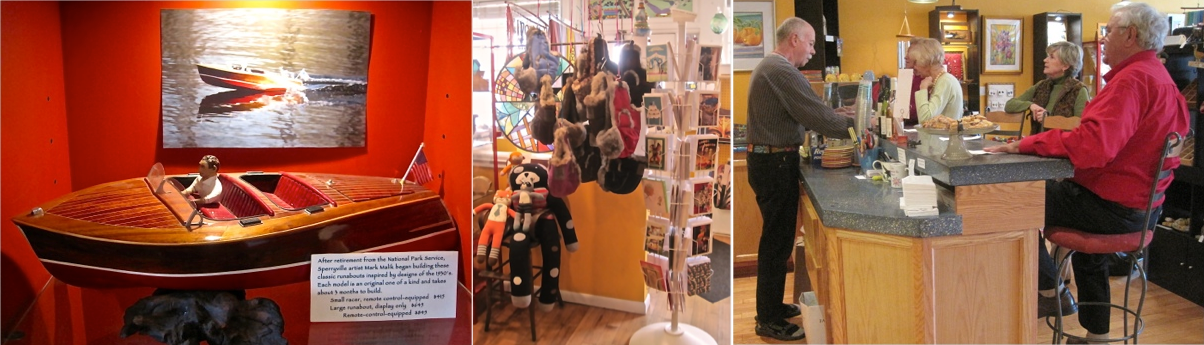
We begin in Flint Hill. The tiny town’s quirky not-to-be-missed 24 Crows boasts an art gallery, gift shop and lunch spot. It’s a friendly place where neighbors linger over a glass of wine and where you can get your hands on an extendable bug zapper or choose from a selection of fine wines, gourmet goodies and hand woven socks. The turquoise and yellow clapboard house also bears an array of gifties like dainty fabric handbags, handmade jewelry and wool scarves. Brightly colored fur trapper’s hats with pull-down flaps float down from the ceiling and handcrafted sock animals await the children on your list. We loved the original greeting cards and hand carved larch wood cutting boards. For the nautically inclined on your list take note of Sperryville artist Mark Malik’s classic one-of-a-kind 1950’s runabout models reminiscent of Henry Fonda’s speedboat in On Golden Pond.
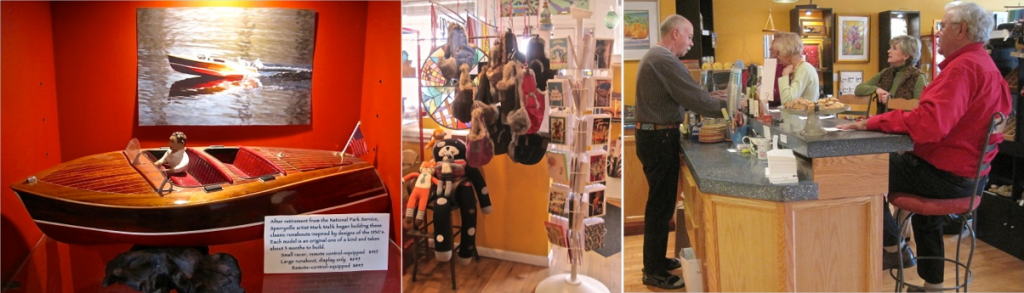 Classic Runabout Model by local artist Mark Malik – Shopping and dining at the counter at 24 Crows – Photo credit Jordan Wright Lunch changes daily according to owner/chefs Heidi and Vinnie’s caprices. From the ingredient-driven lunch menu we chose a Wagyu Beef Burger with Applewood smoked bacon and Maytag blue cheese on a challah bun, and the Curried Chicken Salad with apricots and toasted almonds on organic whole grain bread. End on a sweet note with Heidi’s Handmade Ice Cream. The challenge was in deciding on one of the intriguing flavors like Apricot, Drunk Pumpkin made with Meyers Rum, and Curious George Banana and Peanuts. We opted for a cone of Copper Fox Whiskey Sticky Toffee Ice Cream and didn’t regret a lick of it! Shades of things to come… 24 Crows is open Wednesday through Sunday 11:30 till 2:30pm for lunch only.
Across Zachary Taylor Highway (Route 522) is the Horse N Hound for the pet lover and equestrian on your list. The rustic cottage offers everything you need for riding and rough outdoor wear. A pair of Blundstone paddock boots or a jaunty oilskin equestrian cap would satisfy the sportiest on your list – horse owner or not. For the family dog there’s natural pet food and treats or a new collar and leash engraved in a thrice.
Washington
A few miles further will put you in Washington. The Inn at Little Washington is the cornerstone of the town and has been a destination spot since 20th Century pioneer chef Patrick O’Connell turned a run-down garage in an off-the-the-grid town into a mecca for international gourmands and the landed gentry. O’Connell has since bought up much of the village, turning Pre-Revolutionary homes into bespoke shops and posh accommodations. If you’re lucky enough to secure a reservation to dine there or stay in one of their romantic suites, you will be in for an extravagant bucket list experience. Executive Chef Scott Lyons gave me a tour of the gleaming kitchens and a dinner guest-only box of mignardises nestled in a replica box of the inn.
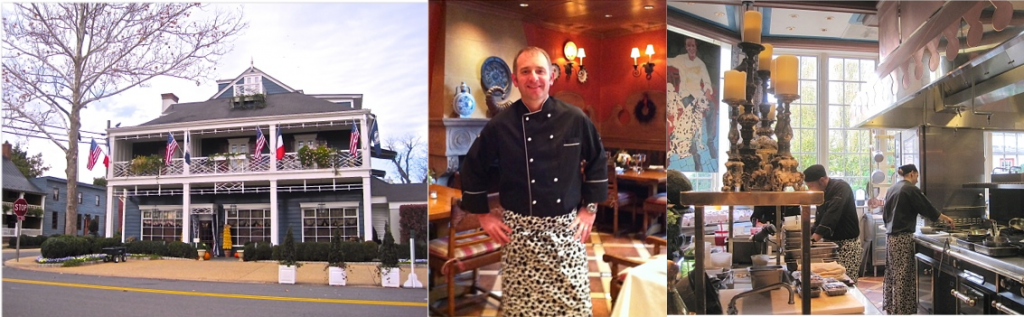 The Inn at Little Washington – Executive Chef Scott Lyons – Chefs prep for dinner service – Photo credit Jordan Wright Housed in a 1740 restored tavern are The Shops at The Inn at Little Washington. Here you can buy souvenirs of the inn including cookies, preserves, and pies sold in a handmade Shaker box or, for the cook that has everything, one of their signature Dalmatian-spotted aprons. Irresistible Susan Carson and Company handbags; soaps and perfumes from the venerable 18th Century French house of Rancé; chic home accessories; fine art or a cocktail table-worthy cookbook from a fine collection in will beckon the discerning shopper. Mystique Jewelers has a small nook with a case of designer baubles. A pair of gold fleur-de-lis earrings caught my eye, as did some pretty silk negligees from Kumi Koocoon and lingerie from Veréna.
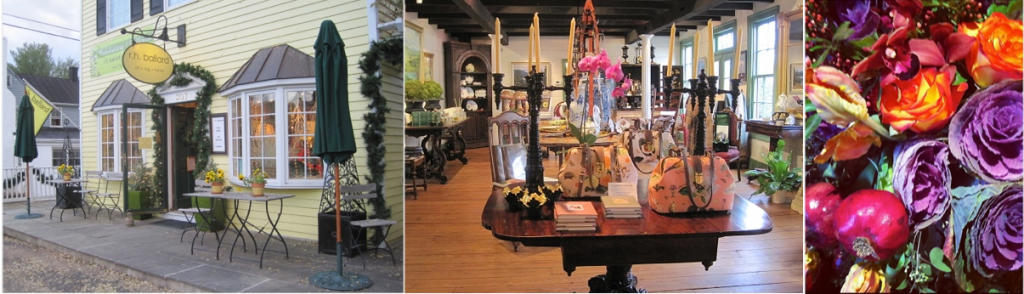 r.h. Ballard Shop – Washington shops – Floral display at the Inn – Photo credit Jordan Wright Stonyman Gourmet Farmer is a unique and beautifully restored 18th Century mercantile, one of the oldest in the Mid-Atlantic region. It boasts a series of enchanting outdoor gardens offering a relaxing respite to enjoy lunch or a plate of farmstead cheeses, pastries and fresh baked breads.
Scour Antiques at Middle Street for vintage pieces and collectibles including clocks, toys and porcelain or seek out French tablecloths, rugs and fine art at r.h. Ballard.
A Currier & Ives Christmas
This Sunday, December 2nd, the historic town will be all aglow with its annual Christmas in “Little” Washington Festival & Holiday Parade. Festivities begin 10am with an Artisans Market featuring over 30 local artists and crafters, along with specialty food and wine vendors. The Market will be at both the Washington Town Hall and the RAAC Community Theatre until 4pm.
The Washington Baptist Church on Gay Street will be the site of the “Hanging of the Greens” services at 10am. A rare Christmas stamp collection will be on display from 12:30 until 7pm.
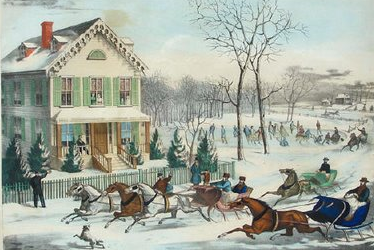
Grand Marshal “George Washington” returns to the first town he surveyed as a young man of 19. Accompanied by other famous Virginia patriots from “The Committee for the Republic,” he leads the Holiday Parade along Main and Gay Streets. The parade begins at 1:00pm and showcases antique cars, homemade floats, a cavalcade of animals and marching bands, and, of course, Santa Claus himself.
At 2pm Stonyman Town Square hosts Santa Claus, who will have a gift for each child who stops by. Also on the Square, the Gold Top County Ramblers will play and sing country and Christmas favorites and visitors can stay warm by the bonfire. Also at 2pm you can experience “living history” as the Virginia Patriots re-enact events from Valley Forge. And for the piece de resistance magician Steve Kish performs at 2:30pm at The Theatre at Little Washington. All events are free and held whatever the weather.
Huntly
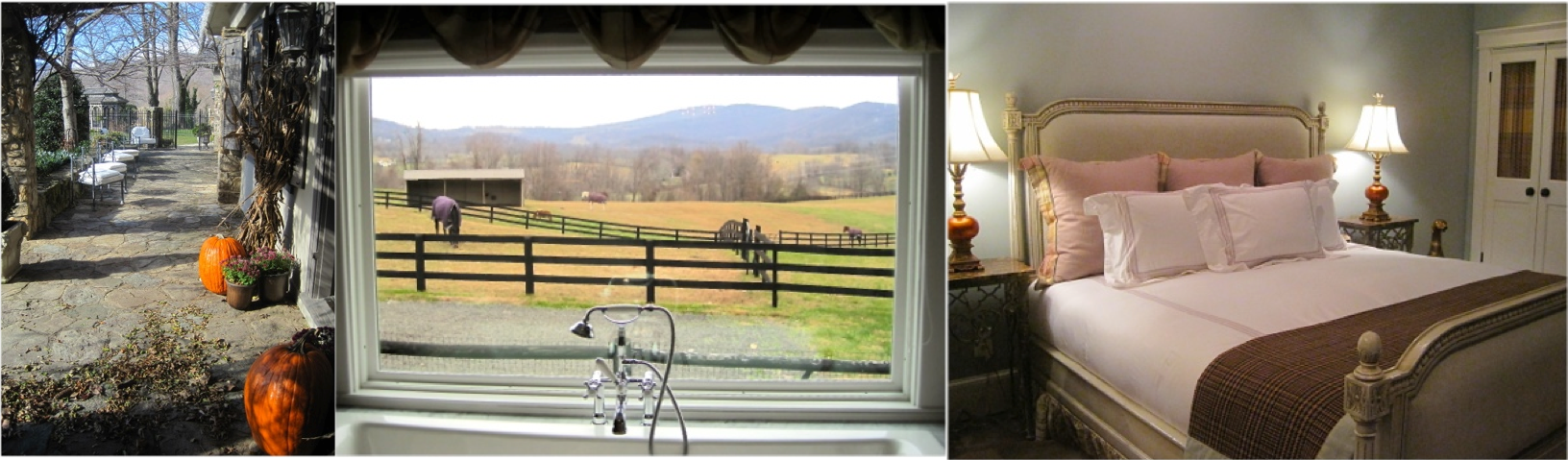
Time for check in and we drive a few short miles to Huntly. A long stacked stone wall signals the entry to Glen Gordon Manor. Don’t look for a sign. The Bed & Breakfast is so understated you won’t see one. Situated below the sight line from the road and beyond a slight rise in the terrain, its discreet profile signals a private country estate. Winter in Virginia’s Piedmont arrives earlier here than in the city and as we come down the long drive we see the neatly stacked cords of wood, covered swimming pool and blanketed horses along with the source of our breakfast, breeds of chickens chosen for the color of their eggshells, skittering around in the backyard.
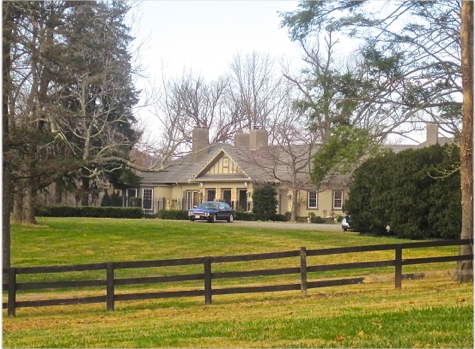 Glen Gordon Manor in Huntly, Virginia – Photo credit Jordan Wright Originally built in 1833 as a Wells Fargo stagecoach stop, the Gordon family later converted the house to a hunting lodge frequented by the Prince of Wales and his wife, Baltimorean socialite Wallis Simpson, and their tony pals. Since then the manor has been lovingly reconfigured from residence to inn without losing any of its aristocratic identity. You enter under an arbor, where we saw the twitching tail of an elusive cat named Oreo, into a large center hall. We are greeted by owner Dayn Smith with a glass of wine and an invitation to relax beside the fire in the grand Hunt Room.
Dayn Smith and his wife, Nancy, are the manor’s proprietors. Full of genuine warmth, they look like they just popped out of the pages of Town and Country. Their nephew Trent, who is equally as charming, helps with cooking, serving and seeing to guests’ needs. Dayn comes to innkeeping through his years as an award-winning executive chef and owner/entrepreneur of several high-profile restaurants in Puerto Rico – his wife from her years as a nurse tending to VIP clientele in an exclusive New York plastic surgeon’s practice. Their gracious manner is reflected in the elegant details of the manor and the sumptuous cuisine. We immediately sense we are in the lap of luxury and we curl up like kittens beside the roaring fireplace.
The inn’s rooms are tastefully adorned with good art, great books, antiques and sumptuous linens, but the piece de resistance is the food. Though open only a short time, the area is already abuzz with talk of Dayn’s refined French cuisine and his delectable sauces. On off nights they host a members-only “Supper Club” that has diners eagerly rebooking as soon as a new evening’s festivities is proposed.
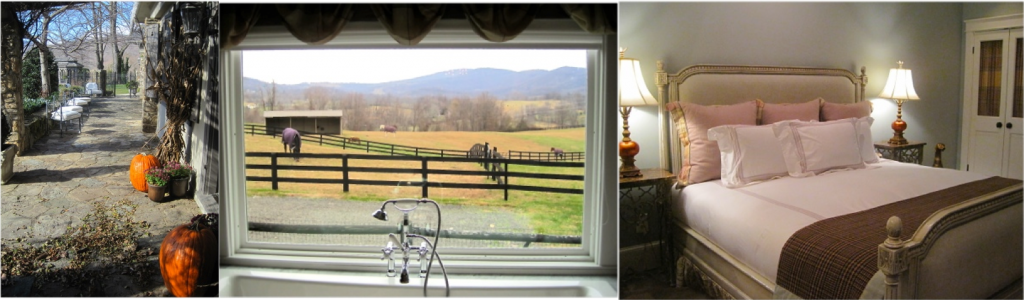 The Windsor Suite at Glencroft Cottage at Glen Gordon Manor – Photo credit Jordan Wright Our quarters are a few hundred feet down the driveway in the recently redesigned Glencroft Cottage Windsor Suite. The suite is tastefully appointed with a lavish bathroom and large tub situated beside a picture window looking out over the mountains, meadows and stables. We dress for dinner. And when we arrive at seven, the dining room is already lively.
Since the menu is chef’s choice the only decision we need to make is if we would like our five-course dinner paired with wines from the manor’s wine cellar. Dayn is partial to French wines, which suits us just fine.
We begin with a Willm Alsatian Blanc de Noir Crémant made from 100% pinot noir grapes. It is accompanied by an amuse bouche in the form of Aleppo-crusted quail with tiny potatoes fried in sumptuous duck fat. We are swooning already. The palate teaser is followed by cream of parsnip soup with chive spuma topped with crispy parsnip chips and paired with another Willm Alsatian wine – a Pinot Blanc Reserve.
A seasonally correct roasted pumpkin salad arrives constructed of local garden greens, jamón Ibérico, Manchego cheese and toasted pepitas dressed in a balsamic reduction. We continue with our fish course – steelhead trout nestled in a tangle of carrots, leeks and fennel and dotted with a dill beurre blanc and complemented by a glass of Bandol, a rosé from Mas de la Rouvière. If I were at home I would have thrown up my hands and called for my uncle, but who would turn down sheer rounds of veal cheek ravioli with truffle and wild mushroom ragout and delicate Brussel sprout leaves served with a Côtes du Rhône, Les Champauvins from Alain Jaume et Fils. And who in their right mind would resist apple gallette with caramel ice cream and caramel Anglaise and apple butter heightened by a Dow’s 10 year-old tawny port? It was an extraordinarily creative and outstandingly sublime meal, prepared with a light yet skilled hand and reflective of the superb ingredients and the chef’s mastery of sophisticated culinary techniques. We resume our contented feline positions after dinner, lingering by the fire and visiting with other equally impressed dinner guests.
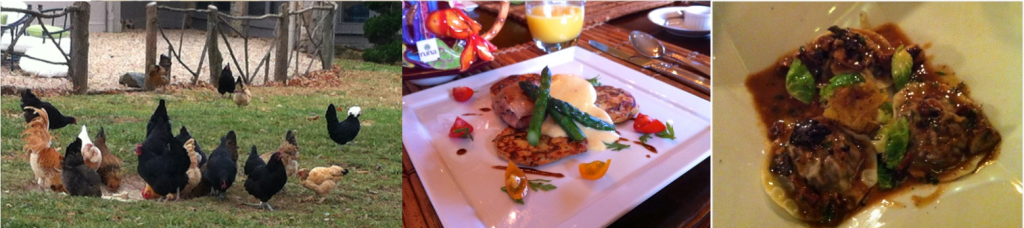 Organic Chicken Egg Layers – Four course breakfast – Five course dinner paired with wines – Photo credit Jordan Wright The following morning a four-course breakfast awaits us in the sunny dining room – fresh orange juice, seven-grain oatmeal with milk spuma, Greek yogurt with raspberries and blueberries and wild rice pancakes topped with an orange yolked poached egg, Hollandaise and asparagus. Thank you little chickens. We are tempted to linger but unfurl ourselves and embark on our mission, armed with gift lists to complete.
Glen Gordon Manor, 1482 Zachary Taylor Highway, Huntly, VA 22640. www.glengordonmanor.com
Sperryville
Though Rappahannock Cellars winery is just around the corner we drive a few miles to the town of Sperryville, which lies beside the curvaceous South Fork of the Thornton River. We head for The Shops at the Schoolhouse where we find Coterie, which is defined by a group of artisans and designers housed in a series of rooms. Look for beautiful handmade leather belts, bags, jackets, medieval-style leather corselettes and dreamy full-length naturally dyed linen dresses perfect for wearing with cowboy boots. In the garden room we find unusual new and vintage outdoor ornaments. The whimsical hand made woolen figures, owls and elves, are particularly enchanting. Pick up a few boxes of Cocoa Bella hot chocolate blend for a perfect hostess gift.
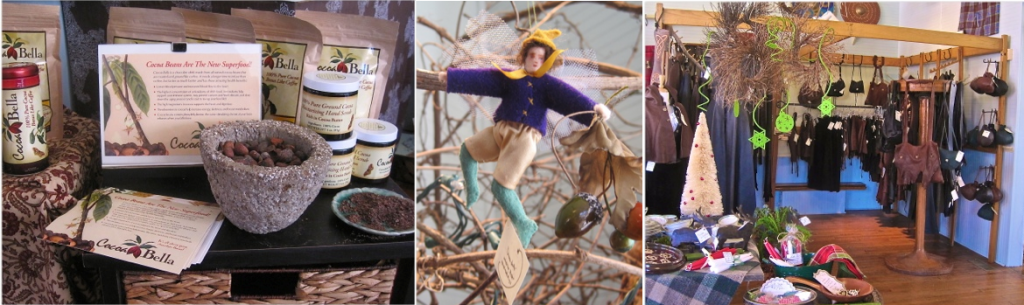 River District Art Shops in Coterie – Cocoa Bella – Monkey Business – Artisans Market – Photo credit Jordan Wright Wandering around I found a few well-priced antique paisley throws, garden artifacts and collectibles in Monkey Business and I meet Rebecca Abecassis proprietor of the Knit Wit Yarn Shop. Rebecca carries an astonishing array of fine yarns and knitting supplies along with fair trade teas, jewelry, handknit hats, gloves and scarves.
Across the way is the River District Arts, an artist collaborative laid out in a series of spaces similar to Alexandria’s Torpedo Factory. Explore the open studios to find original art, photography, pottery and crafts. In the Artisans Market two exhibition galleries showcase regional artists and one-of-a-kind Virginia crafts. You’ll come upon Café Indigo for yummy soups, sandwiches and light fare. Pumpkin cupcakes were the flavor of the day, but the choices vary daily. After the holiday parade in Washington on Sunday, December 2nd they are planning an artist reception featuring the Small Works show. Sip a glass of mulled cider and meet the artists.
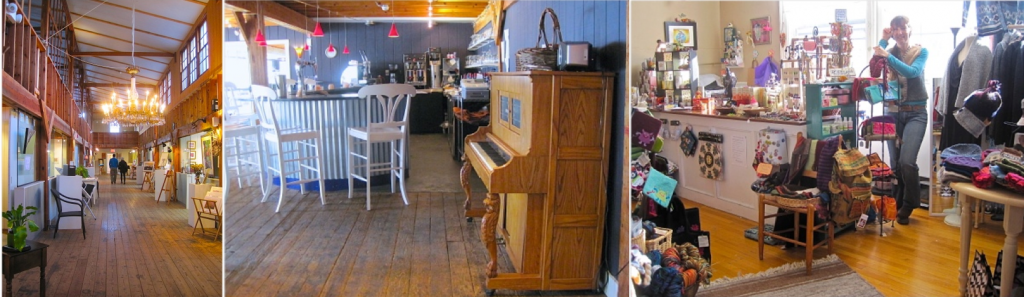 River District Arts – Cafe Indigo – Knit Wit Yarn Shop at Sperryville – Photo credit Jordan Wright In the heart of the historic village is Rudy’s Pizza side by side with Thornton River Grille and the Corner Store. Warning: Do not leave town without having pizza at Rudy’s. It is the gold standard in Italian pies and once you have had it you will be forever comparing other versions to it. Repeat: Have this pizza. You will thank me.
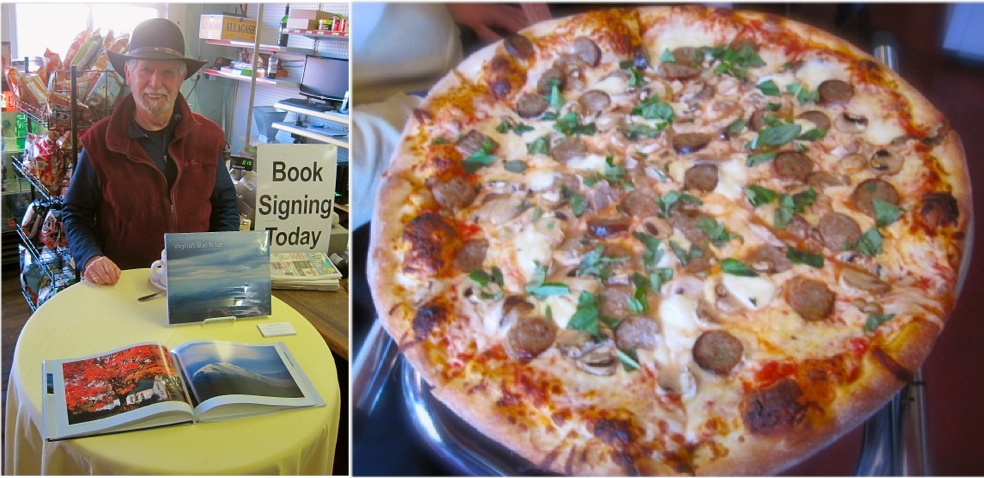 Author Ted Pellagatta signing books at the Corner Store – Rudy’s Pizza in Sperryville – Photo credit Jordan Wright We perused the aisles of the Corner Store discovering freshly made Hatfield pork sausage, Russian black bread, cheeses and local yogurt – picnic provisions for another day – when I ran into WJLA meteorologist and local resident, Bob Ryan, who had dropped by to say hello to his pal, local photographer Ted Pellegatta, at the counter signing his book – Virginia’s Blue Ridge – A Pictorial Journey.
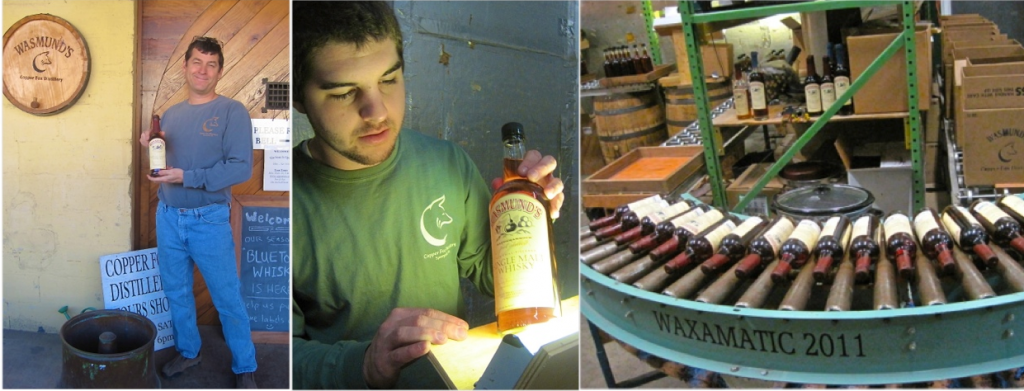 Founder Copper Fox Distillery Rick Wasmund – Bottle Labeler and Wax Cap Sealer – Photo credit Jordan Wright But we are focused on gifts today so we trot down the road a piece to the Copper Fox Distillery for a few bottles of Wasmund’s Applewood Aged Single Malt Whiskey and their Copper Fox Rye Whiskey. Rick Wasmund is an old friend who lives above the distillery with his beautiful new wife and baby daughter. He showed us around the property and proudly told us his small-batch whiskies are now being exported to England and Scotland. Now that should tell you something about the caliber of his product. If you have a few minutes take the complimentary tour where you’ll taste the both the raw and toasted barley and learn about the process of making whiskey. It’s highly informative and the fumes are intoxicating.
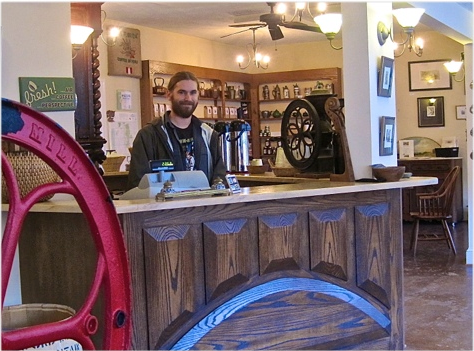 Tucker Rogers musician son of Margaret Rogers owner of Central Coffee Roasters – Photo credit Jordan Wright A mile or so further down Route 211 is the cozy Central Coffee Roasters. Margaret Rogers is the engaging and well-traveled owner who along with her musician son, Tucker, roast the coffee on site, greet visitors and hold tastings.
Amissville
As you head back to DC, drive along Route 522 (which becomes 211) and on to Amissville. There are no little shops to browse but some wonderful tasting rooms where you can pick up a few bottles of wine and wine accoutrements. Wasn’t that on your list too? Stop in at Rappahannock Cellars in Huntly, Narmada Winery and Gray Ghost Vineyards & Winery in Amissville.
Back to the city we go after a thrilling weekend in the country filled with real memories of the holiday spirit and a car laden with treasures. Move over Santa this sleigh is full!
Jordan Wright
November 9, 2012
Special to The Alexandria Times
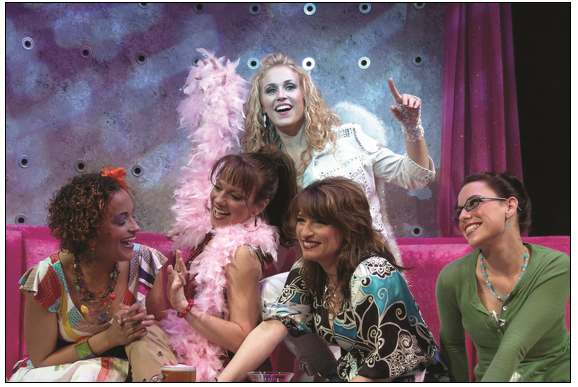
Sisterhood is alive and well and coming to the Carlyle Club in Alexandria. For two nights only the city’s most sophisticated nightclub will be taken by storm by five rip-roaring tell-it-like-it-is women in Girls Night: The Musical! The production, written by British playwright, author and television producer Louise Roche, has toured throughout Britain and the U.S. to rave reviews, with Applause Magazine describing it as “Desperate Housewives meets Mamma Mia”. In it the all-female cast including Anita, Carol, Kate, Sharon and Liza, invites gals and their pals to spend a wild girls’ night out, and to sing, dance and sip on cocktails at a karaoke bar.
Director and Production Supervisor, Sonya Carter, whose unique experience as an International Risk Manager for American Express has informed her career, has racked up over 250 performances on tour and Off-Broadway playing one of the women in the production. In a recent interview Carter talked about the show and its effect on audiences.
Jordan Wright – What was the playwright’s original inspiration?
Sonya Carter – Louise Roche saw a musical in London and she saw all these women in the audience laughing and having a good time and thought, “I could do this. I could reach these women.” It’s actually about five women that she knew. She wrote about her own experiences and as a result she created these five characters that everyone can relate to. She’s really quite brilliant and the show has had great success in the UK playing in large venues. When our producer Tim Flaherty saw it, he went out and purchased the US rights.
How long have you been doing this show?
I’ve been with the show since the U.S. premiere in 2007 in Scottsdale, AZ.
You came from an executive position in the corporate world. What prepared you for life as a performer and director?
Oh my goodness! Life is life and people are people. Whether you’re in an executive arena or you’re in theatre, it’s all about reading them. My executive experience gave me a lot of patience and taught me to use my words wisely. That is a very good lesson. I reached a point in my life after I had been in corporate for many years when I wanted to do something else and I auditioned for the show and I got the part. For a while I did both.
What are some of the funniest or most heart-warming stories you have heard from audience members after the show?
Every show is different because we break that ‘fourth wall’ between the performers and the audience. You really get a different response every night. I’ve had so many women come up to me afterwards and say things like, “I was battling cancer and this is the first time I’ve laughed so hard that I’ve cried from happiness.” The show is so much about relationships between girlfriends and sisters and moms. People have told me, “I lost my best friend and you were able to make me laugh. You remind me of her.” It’s very heartwarming to be able to impact people that way to make them happy to bring them joy.
How do the cast members prepare before the show? What revs them up?
We’re dealing with a comedy here and the dressing room shenanigans are pretty funny. Most of these girls are naturally funny. In the dressing room everyone has her own routine. Somebody will do a silly dance or play music or do a chant. They really do have to connect, because on stage they’re best friends. These girls travel together, share hotel rooms and laugh and cry together. They really have learned to love each other and all their idiosyncrasies over 20-plus years. It’s really great to see.
Is there any audience participation?
Plenty! But it’s not intrusive. We allow you to speak back, to dance and sing. We throw out boas and give tiaras to some.
Over the years you have played three of the five roles. Which is closest to your personal experience?
Well, I’m a little bit of each one. But the first part I played was Louisa. She’s always going for the laugh. In that respect I relate to her a lot. Though there are issues Louisa has where I hope I don’t! Kay’s the schoolteacher. She’s shy but during the show she comes out of her shell and really loosens up after a little wine. Anita is the most complicated character. She has such a big heart. I’d like to think that I relate to her loyalty to her friends.
The characters are really universal. Every night people will say, “ I am you, or I am her, or my friend is like Carol.” They go on down the line. Sometimes we get large groups of women, moms and daughters or co-workers and after the show they’ll come around and take pictures with the character they most identify with.
Who are your favorite comediennes?
I really like Tina Fey. I think she’s absolutely brilliant. I love her writing. Loved her book! She’s my standout. From the past I like Carole Burnett and Lucille Ball, who I grew up with and can watch over and over again.
Does Louise Roche have any other productions in the works at this time?
She does have a few. She actually wrote a Girls Night Two that’s currently touring the UK. And we are having the US premiere this week of another show she wrote called Big Pants and Botox. It’s a one-woman show that is very poignant and funny and sweet.
What do you want women to experience with this show?
I want women to have a good time to leave the day-to-day things behind and not to worry about tomorrow! To take time for yourself and bring your sister, your mom, your friends to a really great show, because life is really short and you’ve got to laugh!
Is it only for women?
The show has all the great girl anthems like “I Will Survive”, “It’s Raining Men”, “Lady Marmalade” and more. But men don’t need to be afraid to come. There’s no male bashing. If anything they’ll get a bit of an education. Sometimes when I’m on stage I will hear a man laughing louder than any woman!
Girls Night Out: The Musical! will be at the Carlyle Club on November 29th and 30th at 8 pm. For tickets and dining information call 703 548-8899 or visit www.TheCarlyleClub.com. There will be a special girl’s night drink menu and dinner service begins at 6:30pm. Street parking is available or adjacent garage parking is $5.00 per car. The club is located two blocks from the King Street Metro.
Jordan Wright
November 26, 2012
Special to The Alexandria Times
What merriment is in store for us this holiday season? Well some are naughty (R-Rated) and some are nice (G-Rated) but check my quirky ratings for special notations. Here’s all the holiday drama you’ll need in a host of scintillating Christmas shows nearby.
 Broadway Christmas Carol – Michael Sharp,Tracey Stephens and Jacob Kidder. Photo courtesy of MetroStage. It’s getting to be a habit at MetroStage with the third annual mad hilarious A Broadway Christmas Carol. The tidy three-person cast of Michael Sharp, Jacob Kidder and Tracey Stephens trills harmonious whilst decking the halls with lots of show tunes and dizzying costume changes in this delicious dose of Christmas spoof. Under the musical direction of Howard Breitbart, this screamingly funny pastiche is rated SGIFB for “Sophisticated Grownups with Intact Funny Bone”.
From November 15th through December 23rd; Thursdays and Fridays at 8pm; Saturdays at 3pm and 8pm; Sundays at 3 and 7pm. For tickets and information call 800 494-8497 or visit www.metrostage.org. 1201 North Royal Street, Alexandria, VA
 A Christmas Carol – Photo courtesy of LTA The Little Theatre of Alexandria revives their time-tested production of A Christmas Carol. Directed and adapted by Rachael Hubbard, this Charles Dickens’ classic will warm the cockles of everyone’s heart. Replete with elegant Victorian costumes, the accursed curmudgeon Ebenezer Scrooge, and the adorable Tiny Tim, you can almost smell the chestnuts roasting as ghostly guides transport you through Christmas past, present and future. Settle in beside a crackling fireplace along with wassailing couples to relive this Currier & Ives picture postcard depicting the true meaning of Christmas. Rated RCV for “Required Christmas Viewing”.
From November 30th through December 16th, Thursdays and Fridays at 8pm; Saturdays and Sundays at 3pm and 5pm. For tickets and information call 703 683-0496 or visit www.TheLittleTheatre.com. 600 Wolfe Street, Alexandria, VA 22314
After a day of shopping and dining Signature Theatre, located in the heart of Shirlington Village, will be the perfect spot to jolly up with glass of wine and a Christmas-inspired cabaret.
 “Holiday Guys” – Marc Kudisch (left) and Jeffry Denman. Photo courtesy of Signature Theatre Three-time Tony Award nominee, Mark Kudisch and Astaire Award nominee, Jeffry Denman pair up in Holiday Guys – a limited run holiday show complete with song, dance, and silliness. Special performance schedule: December 11th at 7:30pm; December 12th at 7:30pm; December 13th at 8:00pm; December 14th at 8:00pm; December 15th at 2:00pm and 8:00pm; December 16th at 2:00pm and 7:00pm.

Also at Signature and back again, by popular demand, is the festive series Holiday Follies. Featuring a wonderful wintry line-up of special guest performers, along with a host of Signature’s closest friends and artists, there’s never been a better way to keep company on a cold night. Special performance schedule: December 18th at 7:30pm; December 19th at 7:30pm; December 20th at 8:00pm; December 21st at 8:00pm; December 22nd at 2:00pm and 8:00pm; December 23rd at 2:00pm and 7:00pm.
Both shows are rated HXS for “Hip Xmas Special”. Tickets for Holiday Guys and Holiday Follies are on sale online at www.signature-theatre.orgor through the Signature Box Office at 703 573-SEAT. 4200 Campbell Avenue, Arlington, VA 22206
 Best Christmas Pageant – Photo from Synetic This holiday season Synetic Theater will present The Best Christmas Pageant Ever starring the Synetic Teen Ensemble. In this irreverent comedy about an annual Christmas pageant the usually festive celebration by the Sunday school children has gone awry. The Herdman family, a bunch of rotten, misbehaving, swearing, bullying kids take part in the Christmas Pageant and all chaos breaks loose. Can the church learn to love even its most wayward children? It could be a total disaster, or it just might be The Best Christmas Pageant Ever!
The show is rated GKCI for “Gives Kids Cool Ideas”. Special performance schedule: December 15th at 2pm; December 16th at 11am; December 21st at 10am and December 22nd through the 27th at 11am. Family friendly indeed! For tickets and information call 800 494-8497 or visit www.synetictheater.org. 1800 South Bell Street, Arlington, VA 22202
Jordan Wright
November 5, 2012
Special to The Alexandria Times
The Soul Collector brings us into the Cleveland, Ohio junk-strewn home of two African-American men, Darnell (Chaz D. Pando) and his uncle Cedric (DeJeanette Horne). It’s 1972 and the men are city sanitation workers. Cedric has raised the boy since his parents died in an auto accident. We are greeted by a set filled with nostalgia of the day – old skis, a Snoopy phone, a sled, mementoes of everyday life plus shelves of figurines – the sort ladies kept on fireplace mantels.
Darnell is an untalented but doggedly aspiring Motown songwriter whose passion for music is turning Christmas carols into love songs while plunking out the melodies on a tiny child’s piano. He is locked in a time warp since the day he lost his parents in a Christmas Eve auto accident when he was a child. Cedric has a different plan. He hopes Darnell will be his partner in a chicken wing restaurant. “This is a calling,” he insists trying to convince his nephew. “Maybe it’s the wrong number!” snaps Darnell urging his uncle to forget about waitresses sporting huge chicken wings.
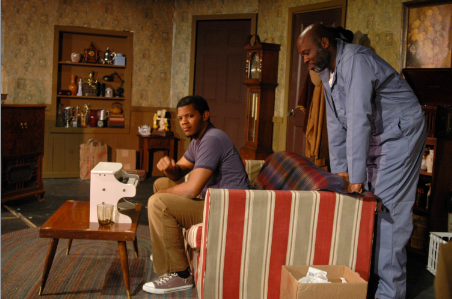 Chaz Pando (l) as Darnell and DeJeannette Horne (r) as Cedric – photo credit to Michael deBlois Their neighbors, Mr. and Mrs. Coleman (played by Donnell S. Boykin and Kecia A. Campbell respectively), are both their landlords as well as their close friends, visiting the apartment and delivering some of the funniest lines of the show.
When a shape-shifting spirit pops out of a box and into their lives, they agree to join forces to help her back to life. Claire (played by Lolita-Marie) is cursed by two spirits with unrequited deaths – a man who’s a washed-up Jewish talent agent and a Japanese girl killed in Nagasaki in World War II. They decide to care for her by confronting their fears, speaking truth to their lives and letting go of past wrongs.
Washington, DC playwright and actor David Emerson Toney has written a haunting yet redemptive story in comic drama form using a mash up of familiar themes from The Jeffersons, In Living Color (where Toney was a staff writer in the ‘90’s) and Sanford and Sons as a stepping off point. He has kept the feistiness and the ethnic humor we remember from these beloved characters from the 70’s hipster genre, but in this play our characters are have more developed personalities and the plot has deeper import. We can no longer treat them as one-dimensional comedic figures, but are compelled to climb into their skins and even more into their souls.
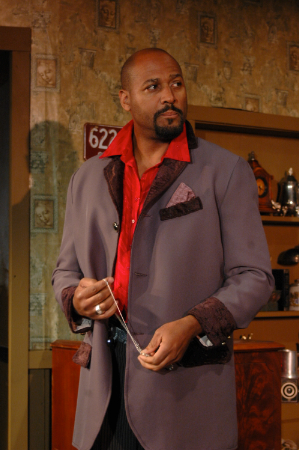 Cris Dinwiddie as Wisher – photo credit to Michael deBlois When Wisher (Cristopher Dinwiddie) appears in the guise of a morlock threatening to co-opt their lives and wreak vengeance they must rise to each other’s defense. Dinwiddie is brilliant, plumbing the depths of evil personified.
Director Deirdre Starnes has assembled a wondrous cast with no weak links. And kudos to Set Designer/Master Carpenter/Co-Lighting Designer, Frank Pasqualino, who has his masterful handprint on this dramatic production. It’s a perfect piece for Port City Playhouse – deeply affecting coupled with powerful acting. I would see it again for the crack performances if only I could steel my mind against its haunting imagery.
At The Lab at Convergence, 1819 North Quaker Lane, Alexandria, VA 22302. Performances continue on these dates – November 9, 10, 13, 16, 17 at 8pm and November 10 and 17 at 2pm for matinees. For tickets and information call 703 838-2880 or email PortCityInfo.com for reservations or visit www.portcityplayhouse.org.
November 2012
Jordan Wright
Special to www.dcmetrotheaterarts.com, www.broadwaystars.com, and www.localkicks.com
The Federalist – A Peaceful Retreat in the Heart of Downtown
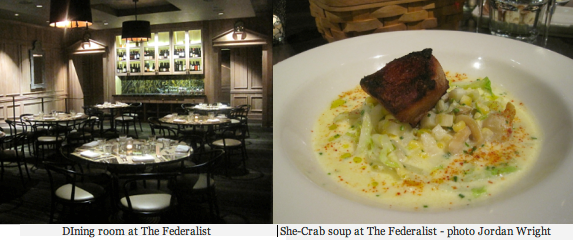
What an eclectic array of events in just the past few weeks! Here are some highlights. We cozy into a leather banquette for a quiet, civilized and very elegant dinner at The Federalist in The Madison hotel where Chef de Cuisine Harper McClure put us in the right frame of mind for our madcap road trip. Soups start us off – cauliflower bisque and an aromatic she-crab soup with nubbins of lump crabmeat. My partner went for the Shenandoah lamb loin with celery root purée while McClure kindly indulged me with a special vegetarian plate of Alsatian braised arrowhead cabbage, sautéed chanterelle mushrooms, roasted Brussels sprouts, glazed cippolini onions, Carolina Gold rice and corn drop biscuits, while I try to pack in a week’s worth of veggies.
Upscale and Downscale on the Road
In the morning we’re off to Atlantic City, New York City, and Long Island too for a quick trip down memory lane. No, we were not the advance team for Hurricane Sandy! But it has felt somewhat eerie this week as we view disaster photos from the very roads we traveled and places where we stayed, trying to keep in contact with our New York friends who have lost power. But for now we are blissfully ignorant of the devastating forces lurking a mere fortnight away.
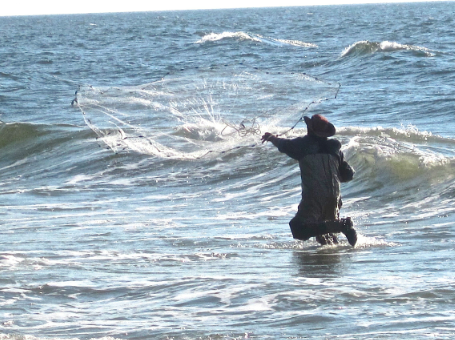 Latino fisherman casts his net into the Atlantic off the coast of Margate, NJ – Photo by Jordan Wright After a sun-drenched ride we disembarked at the glam resort Revel. Its blue glass windows shimmer forty-eight stories skyward upping the wow factor in Atlantic City. The resort has five restaurants from some of the region’s top chefs, but we were headed for Robert Wiedmaier’s Mussel Bar and Michel Richard’s Central Michel Richard both of who have their original outposts here in DC. The plan is to visit each one over the following two evenings.
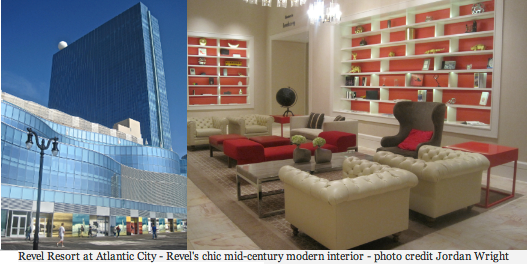
But first a few words about the hotel. It is a breathtaking $2.4 billion curvilinear building designed by Architechtonica – the über modernistic design firm whose Brickell Avenue high-rise offices were featured in “Miami Vice” , setting the tone for that show’s hipster vibe. No glitzy faux-Venetian Vegas-inspired schlock here. This luxury property was decorated in the trendy retro mid-century modern style. I expected to see the Dino and Sammy and the rest of the original rat pack from the “Oceans 11” in their slender-cut suits.
Our first night was spent at Mussel Bar, a Flemish gastro-pub where we found an edgy macho vibe, where Wiedmaier’s Harley Davidson is slung atop the room-length bar and chandeliers are cobbled together from rope and old bottles. Skull graffiti is carved in some of the tables. Skulls are very stylish this year and not on account of Halloween. Try the house private label Belgian beer, Antigoon, a crisp light ale that sports a graphic of a giant with severed hand. No cause for alarm. Brabo, the name of one of Wiedmaier’s Alexandria restos, is a much-revered hero from Belgian mythology.
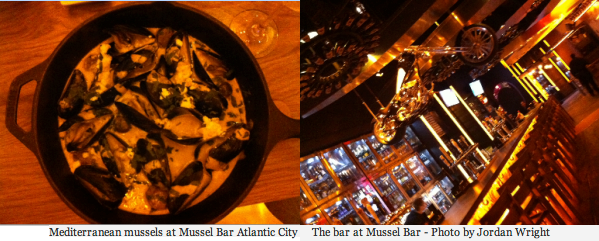
Expect braised meats and root vegetables served en casserole at this time of year; fresh local oysters, clams, lobsters and mussels, of course; as well as house-made charcuterie and addictive pommes frites. It’s Belgian meets American regional.
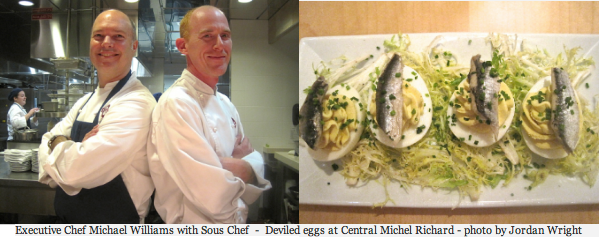
Central Michel Richard is its polar opposite. A brightly lit curvaceous blonde wood nest with an open kitchen, chef’s table and dining bar, it features casual French cuisine. Deviled eggs topped with freshly pickled sardines, a chopped salad with mustard vinaigrette, and a beef filet-derived steak tartare were more than satisfying, especially after a cone filled with Richard’s signature gougeres– melt in your mouth cheese bites perfect for snacking with a martini – or “martillery” as we fondly call them at home.
Lunch took us to White House Subs for an Italian cold cut special made with fresh Italian bread. The 65 year-old temple to naugahyde and formica is a must visit. The walls are lined with celebrity habitués from the 50’s on up – a tribute to its great subs and loyal following. We settled for half a sub each for $6 bucks a pop.
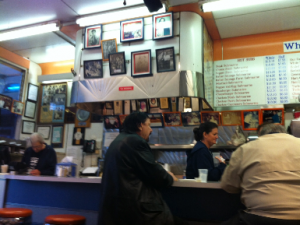 White House Sub Shop in Atlantic City – Photo by Jordan Wright On to New York City to Wall Street and the Battery. We pass the new World Trade Center construction in the pouring rain and walk along one of the rare cobblestone streets left in Manhattan. Our destination was brunch at the 250 year-old Fraunces Tavern. An inn cum history museum, it is one of the most fascinating locales in the city, adjacent to the National Museum of the American Indian’s George Gustav Heye Center, and one I had somehow overlooked in all my years in the city. This pre-revolutionary spot is where George Washington gave his inaugural address and later his farewell address to his officers of the Continental Congress. During the Revolution it was the site of the first U.S. Treasury and the Departments of Foreign Affairs and War. A meeting place for the Sons of the American Revolution it is Manhattan’s oldest surviving building and part of the American Whiskey Trail.
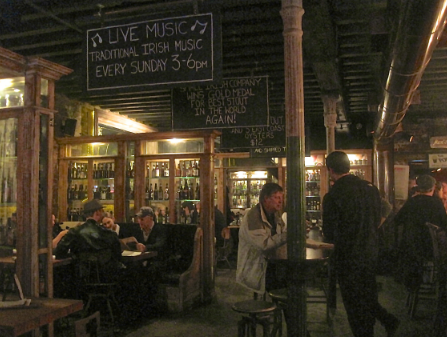 The Bar at Fraunces Tavern – Photo by Jordan Wright Our fixed price brunch allotted us two Bloody Marys, one entree and a dessert. George and Martha, had they partaken, would have approved. I had the creamy smoked haddock chowder and the Irish Breakfast with sausage, blood pudding, bacon, eggs and baked beans, while my partner opted for the tavern’s buttery-crusted turkey pot pie and goat cheese, pear and cranberry salad. After downing two bloodies I forgot to photo the desserts – homemade pie with homemade ice cream.
Later that evening we repaired to the Lower East Side to a Keith McNally spot called Schiller’s Liquor Bar – all white subway-tiled walls with antique fittings and signage from the turn of the 20th C. After seeing the photos from Hurricane Sandy with the neighborhood underwater, I hope the place is still up and running as it was pouring cats and dogs that night and we had to leap over puddles on tiny sidewalks.
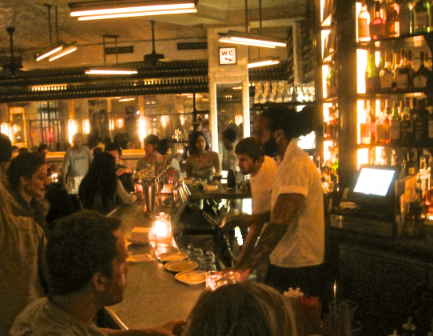 The scene at Schiller’s Liquor Bar on the Lower East Side – photo by Jordan Wright The place was crowded, cold and damp and all about the cocktail. We kept our coats on. Tables were a few feet from the constantly opening door. I vaguely recall a too-sweet bourbon sour, which the bartender crankily corrected. Dinner was forgettable pasta, quickly downed while being stink-eyed by a hostess eager to turn the tables. No dessert. We fled like thieves in the night.
Avant Le Deluge – Dodging an Impending Hurricane Sandy
Morning brought breakfast at a friend’s home on Long Island – real New York Everything bagels, scrambled eggs and baked ham too – before taking off on a tour of the island and my old homestead. It looked exactly the same as we drove up the long circular driveway and begged entry. A surprised and kindly eighty year-old couple were entirely amenable to our visit. Turns out they are the same family that bought the home from my parents and have raised 14 children in a house where we two kids once cavorted like puppies throughout the home’s ten bedrooms.
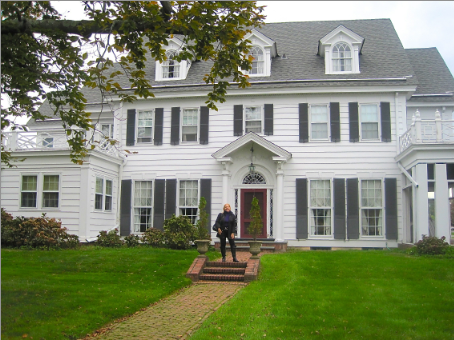 Visiting my childhood home on Long Island – Photo by Roy Wright Around the corner we stop in at The Chowder Bar. Sixty-six years in the same spot, the clapboard cottage perches unceremoniously beside the Maple Avenue Dock,a dozen or so yards from the old ferry boats to Fire Island. They still serve the best clam chowder on the island for a few bucks and warmed the cockles of our hearts on a blustery day.
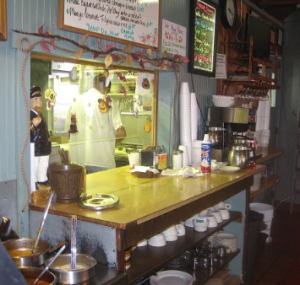 The Chowder House voted the best chowder on Long Island – Photo by Jordan Wright In the evening we took dinner with friends in Massapequa, a small mid-island town that boasts numerous Italian restaurants both high- and low-end. We drive along Broadway, the main drag, past mom-and-pop storefronts with traditional pasta makers, pizza joints, bakers, butchers and delis – all Old Country Italiano. At Fra Amici Pizzeria & Ristorante it’s pasta night and the special three-course dinner is $11.95. Caesar salads crisscrossed with olive oil-drenched anchovies, hearty minestrone soup crammed with zucchini and kale, and baskets of just-baked Italian bread cover the small table. Shortly huge bowls of steaming pasta piled high with meatballs the size of baseballs arrive. The tender orbs of veal and beef in homemade “gravy” as they call marinara sauce in these parts, melt in our mouths.
From a list of over fifteen types of pasta dishes I choose linguini alla vongole. I have eaten this dish all over seaside Italia and anywhere in the United States near a bay or ocean. I’ve had it prepared in the shell with Cherrystones, Little Necks or canned clams. I know my alla vongole like a fish knows its scales. I look down at my plate. There beforeme is a sure half-pound of rough chopped whole fresh clams, whole cloves of tender garlic sautéed in butter and parsley and pasta enough for four. I am thinking Jonah and the Whale. I am thinking I am the big fish and this is my odyssey and as such I need to act my part. Como incredibile!
We all took a deep breath, dove in to our respective pasta and truth be told made room for dessert though I cannot imagine how – cannoli and Italian cheesecake followed by mugs of frothy cappuccino. I am still dreaming of it. Readers, for the love of Mike, please let me know if there is anything in our area with “my-Nonna’s-in-the-kitchen” real-deal Italian dishes like this.
Cookie Monsters at Peace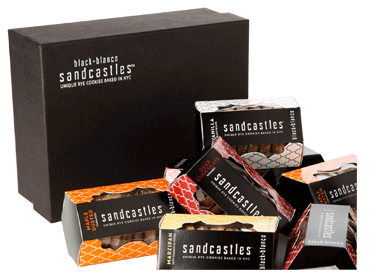
Fueling us along during our time in the car were the heavenly New York City Black + Blanco cookies. We tried all four exotic flavors of the buttery Moroccan-inspired ‘sandcastles’, as they call them. The mad delicious sweets are gluten-free – though Lord knows not calorie-free. Made with rye flour and virgin coconut oil they are entirely vegan. No eggs, no dairy. Choose from Maple Dusted Cardamom, Vanilla Black Sesame, Marzipan or Deep Chocolate Infrared infused with smoked paprika. After each box we were still unable to pick a clear winner. We’ll keep trying till we can.
Chinese Master Hu Comes to the Mandarin Oriental DC
 Master Hu
Shaolin Kung Fu Master
Mandarin Oriental, Sanya Back in town an exclusive booking at the Asian-inspired The Spa at Mandarin Oriental with Shaolin Kung Fu Master Hu awaited us. Master Hu is from Henan Province and is a Master of Qi Gong and Medical Qi Gong as well as massage and meditation which are his specialties. Master Hu has been on a multi-city tour, teaching students in both the martial and the cultural arts of China, and he was only in Washington for a few days before traveling on to the Mandarin Oriental in Chicago.
Our private class was an 80-minute Shaolin Zen Tea Ceremony that addressed health and a holistic diet regime. The result is to stimulate the senses and bring the student back to nature through the serving of tea as a means to meditate together. It seeks to harmonize the mind and body through a spiritual experience conducive to finding your inner self.
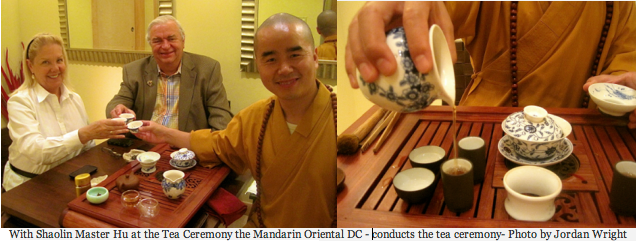
After watching Master Hu’s intricate ceremony of making, steeping and serving several white and green teas – one being the smoky lapsang souchong from the Fujian Province of China – he told me his name means ‘tiger’. I asked him what ‘foo’ means. “It means happy,” he translated. “Oh well, my dog’s name is Foo Foo,” I offered. “Means very, very happy!” he giggled nearly falling off his chair. His charm is contagious. We sipped and grinned right along with him.
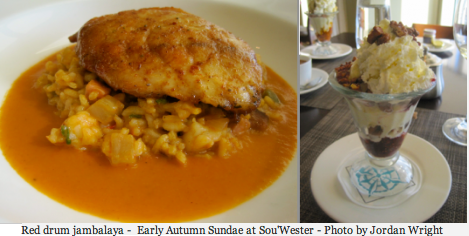
Later we floated off to lunch at the hotel’s Sou’Wester and sat at a table overlooking the harbor while watching the yachts bobbing on the Potomac along Maine Avenue. Feeling blissed out and in a nether realm of consciousness, I dreamily ordered the Pan-Seared Red Drum, a local fish served atop jambalaya and Anson Mills Carolina Gold rice, finishing with the entirely-over-the-top Early Autumn Sundae of port-roasted figs, candied walnuts and clover honey ice cream. We drifted like autumn leaves back to our car and workaday reality, while thoughts of a chestnut sorbet not chosen were luring me back before the season’s end.
Partying with Phoenix – An Insider’s Report
A day of food and fun hosted by friends from the Phoenix CVB was on the agenda earlier this month and I wouldn’t have missed it for the world. A chance to have a private luncheon prepared by Mitsitam’s Executive Chef, Richard Hetzler at the National Museum for the American Indian (NMAI)that I knew would prove to be indelible.
 The pond in autumn at NMIA – photo by Jordan Wright Our small group settled into a private dining room off the Main Cafeteria at tables swathed in bronze silks. Host Greg Stanton, the Mayor of Phoenix, had been summoned to the White House that morning, following the previous night’s third Presidential debate, and he was running a tad late. Trays of totopos, appeared with guacamole and peppery spreads with baked vegetable chips. I toyed with a cool prickly pear agua fresca.
Stanton arrived around then apologizing for his late arrival. He’s a good-looking, energetic man-on-a-mission eager to dispel the bad press Arizona has gotten of late. He’d heard one of us had googled up the piece about his experiment to live on a week’s worth of food stamps. I raised my hand. I had been impressed by his sensitivity and drive even before our meeting. He said we probably wouldn’t want to hear about his trip to the White House. My hand shot up again and said, “Yes, please, Mr. Mayor, we would.” “Well,” he recounted, “everyone’s chests were pretty puffed up after the previous evening’s success.” And you could almost feel as though you’d been there too.
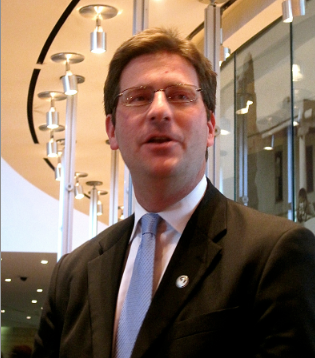 Phoenix Mayor Greg Stanton Lunch began with curls of cedar wrapped around seared salmon belly – the most buttery part of the fish – the poached red roe scattered like confetti over the top, the skin-on filet leaning against butternut squash bread pudding. (Note: Hetzler achieves a crisp skin by first removing, pressing and quick searing it on a flattop grill and then reassembling the whole.)
Later a chestnut-stuffed goose terrine, sweet potato corn pone and wilted Brussels sprout leaves finished the coterie of appetizers smoothly paired with an Argentine Viognier. Buffalo filet came glazed with fig must and clusters of plump shrimp sparkled with aji peppers and yellow yucca causa, a distinctive Peruvian dish derived from the Incans.
Hetzler showed off all the season’s glories with cauliflower-mashed potatoes made with buttermilk and horseradish, and a squash and Barlett pear gratin served in a pretty casserole. We were a feather’s-breadth from heaven sipping a Chilean pinot noir when dessert was presented in the form of an aromatic acorn squash tart perfumed with sage and huckleberry honey plus a don’t-shoot-the-messenger apple crumble. Take note budding chefs! This is how one of our city’s finest chefs celebrates fall’s bounty using indigenous and sustainable foods.
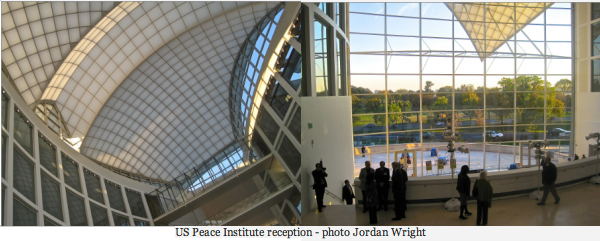
A few hours later a cocktail reception was held at the United States Institute of Peace (USIP). This dramatic ultra-modern winged structure, which took three years to complete, is the newest addition to Constitution Avenue. It features a glorious undulating glass roof called the Ansary Peace Dove. On this night they would throw open the doors for an event that was not a peace-related program or conference and guests were head over heels to see it from the inside.
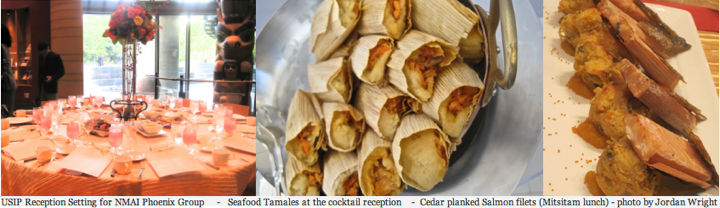
Copper casseroles filled with lavish dishes were set up around the sun-drenched room. What I remember most is the posole, chicken braised in mole sauce, seafood tamales and crab cakes with pumpkin seed aioli, though there were countless other delights in the cavernous space. After thoughtful remarks by the returning Mayor Stanton, Suwaimaa five-time world champion Hoop Dancer accompanied by a native drummer, performed for the riveted guests.
 Five-time World Champion Hoop Dancer Suwaima and Drummer – photo Jordan Wright I Love to Eat – James Beard Comes to DC
This is the last weekend for the short run of Round House Theatre’s fabulous I Love to Eat, the one-man show on the life and times of iconic chef James Beard. In 1946 before Julia Child, Guy Fieri and the Food Network, there was Beard, America’s first TV chef. His NBC show was “Elsie’s Kitchen Tips”, named after the show’s sponsor Elsie the Cow, whose messages drop down to the stage á la Groucho Marx’s secret word delivering duck.
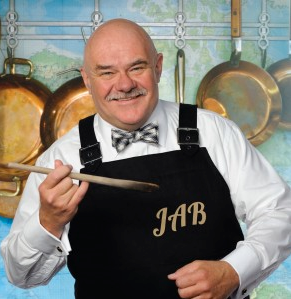 Nick Olcott photo by ClintonBPhotography. James Beard kitchen photo © Krishna Dayanidhi, courtesy of The James Beard Foundation. Actor and successful DC-based director, Nick Olcott, channels Beard in all his catty, charming, culinarily knowledgeable glory. To prepare for the role Olcott prepared dishes from Beard’s many cookbooks and blogged about it – his knife skills on the set confirm his year long rehearsal for the role. The set is Beard’s kitchen. A world map signifying his world travels is hung alongside dozens of gleaming copper pans. Stainless steel worktables frame the stage and retro Princess phones are at every corner.
The gourmand enters grandly through a refrigerator in pomegranate-hued Chinese silk pajamas, frost clouds billowing behind. He takes a call from an admirer in Kansas concerned about her dish. “Gird your apron a little tighter,” he advises. “It’s not Easter – no need to bring it back from the dead!” The dialogue is familiar and intimate and we feel we’re a fly on the wall of his life where in his vernacular nonsense is “twaddle” and approval is “really tops” “You can get away with anything if you are amusing!” he admits. Wise words from a sage cook.
At Round House Theatre, 4545 East-West Highway, Bethesda, MD through November 4th. For tickets and information call 240 644-1100 or visit www.RoundHouseTheatre.org.
Jordan Wright
October 29, 2012
Special to The Alexandria Times 
Warren Ives is a young, handsome, well-educated Wasp on the rise. His budding career as a futures trader at Shearson-Lehman is all but guaranteed in Wall Street’s storied halls. With his editor girlfriend, Lesley Rosen, an erstwhile Jew who works at the esteemed publishing house of Harper and Row, they acquire a converted former temple on the Lower East Side of Manhattan planning to live there in loft-style splendor. They are from all outward appearances, a typical upwardly mobile New York couple.
From the moment they move in they become captive to strange Hebrew chanting coming from an unknown source within the temple. They befriend their local grocer, Morris Lipkind, inviting him into their newly modernized space to witness the eerie sound. The aging Lipkind who worshipped in the shulwhen the neighborhood once had the largest Jewish community in the country, regales them with tales of the former synagogue and its members, eventually identifying the voice as coming from its former cantor. He translates the words of the chant, “Build your house the way it was.” This ominous news becomes the hinge on which the plot turns. News that affects the couple’s relationship as it wrestles with complex and universally familiar issues of faith and spirituality.
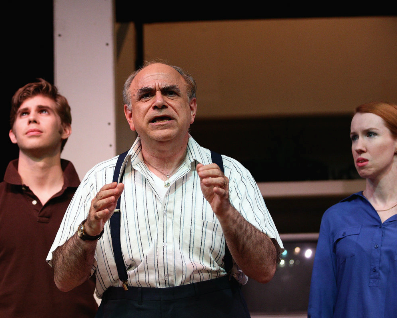 James Myers (Warren Ives), Steve Rosenthal (Morris Lipkind) and Heather Benjamin (Lesley Rosen) – Photo by Shane Canfield You shouldn’t expect author and playwright Ira Levin, who penned such notable suspense and horror stories like Rosemary’s Baby, The Stepford Wives and Deathtrap, to hand you a pretty package tied up in a Bendel’s bow. Cantorial centers around a young man’s discovery of his spiritual self and his subsequent obsession with its origin. A tender and deeply affecting story – it is perhaps more in the vein of Hesse’s Siddartha – played with moving intensity by James Myers (Warren Ives), Heather Benjamin (Lesley Rosen) and Steve Rosenthal, whose portrayal of Lipkind is riveting, Yiddish-inflected hilarious and linguistically convincing. Of particular note is actor John Shackelford in a small but pivotal role as Warren’s estranged politician father. It’s always a thrill to experience Shackelford’s versatility and nuanced performances. Also memorable are the hauntingly beautiful cantorial vocals by actor/singer Rick Flint.
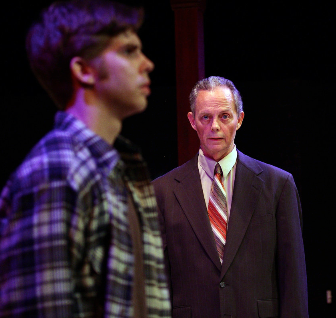 James Myers (Warren Ives) and John Shackelford (Williams Ives) – Photo by Shane Canfield The entire production boasts tightly crafted theatrical elements starting with the design team of Ken and Patti Crowley who have transformed not only the stage in their bold lighting plan, but have also included the very theatre walls. Their use of uplights, downlights, lights to highlight props, spots, and stage lights all in rich jewel tones combine with Set Designer, Dan Remmers evocative set to make a spare yet dramatic architectural design in this well-acted ethnic comedy slash drama slash personal journey. See it!
Through November 17th at The Little Theatre of Alexandria, 600 Wolfe Street. For tickets and information call the box office at 703 683-0496 or visit www.thelittletheatre.com.
|