Cary Pollak for Whisk and Quill
September 12, 2013
Those of you who have enjoyed summertime performances at the Wolf Trap National Park for the Performing Arts here in the Washington, DC area know that enjoying a picnic on the lawn before the show is part of the fun. At one such outing I was commandeered to provide dessert and was eager to bring something both beautiful as well as delicious. The friends I was joining that evening tend to think that the presentation on the picnic table is almost as important as the one on stage. With that challenge in mind I made a large French tarte with freshly baked crust, pastry cream, summer fruits and a shiny apple glaze. This stunning final act is perfect for dining al fresco or at home at a formal dinner party.
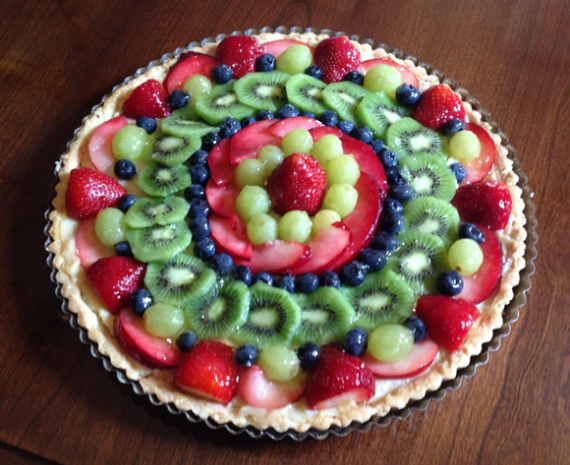
12 ½ inch tart with strawberries, green grapes, red plums, blueberries and kiwi fruit
The origin of the modern fruit tart is less than clear, but it is known that French and Italian Renaissance chefs developed several pastry doughs still popular today. The Propre New Booke of Cokery published in England in 1545 contains a recipe for making “shorte paest for tart” that would look familiar to today’s pastry chefs. Most likely the first fruit tart to gain notoriety as an individually named dessert was created by the Tatin sisters for the restaurant in their hotel in the village of Lamotte-Beuvron, France in the late 1800’s. This upside down apple tart with caramelized fruit concealed beneath a pastry crust, was made famous after the sisters’ demise by the iconic Maxim’s in Paris, where it was called for the first time, “Tarte Tatin.”
Fruit tarts can be made in any home kitchen. It’s easier than expected and well worth the effort. You will need a French tart pan with a removable bottom, a stand mixer and a food processor. The electric appliances are not entirely essential in that these tarts were made for decades before such conveniences were invented. For some cooks there is a tactile satisfaction to cutting cold pieces of butter into flour by hand to create the dough, but the speed of an electric food processor transforms the tart making process from daunting to doable.
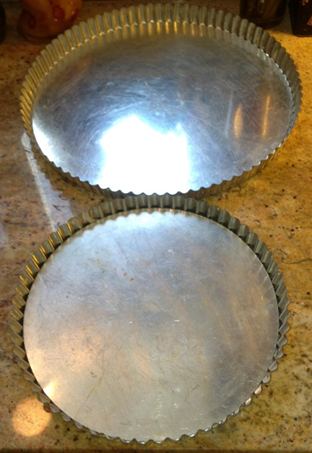
French tart pans produce impressive results, but they must be handled with care. Always lift them by the edges. The removable bottom makes it easy to pop off the rim and place the tart on a dish when it is ready to be served. But if you attempt to lift the pan by the bottom at any point before that, the rim can slip off and the tart slide to the floor. At that point you could be muttering curses far stronger than “Sacre bleu!”
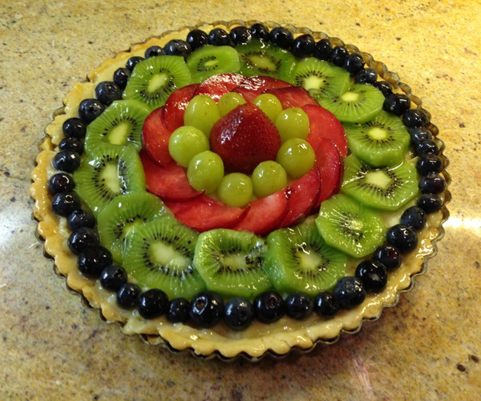
9 ½ inch tart with strawberry, green grapes, red plums, kiwi fruit and blueberries
The main types of pastry dough used in French cooking are pâte brisée, pâte sucrée and pâte sablée, all of which consist mostly of butter and flour. The first is a standard pie dough; the second, as the name implies, contains more sugar; and the third is a more coarsely textured dough reminiscent of sand. There are so many variations in the recipes that can be found for each, that the distinctions tend to blur. The following recipe is not definitive and can be tweaked to your liking. It makes enough dough for two 10-inch tart pans.
[color-box]Pâte Sablée 2 ½ cups of all-purpose flour
1 tablespoon of sugar
16 tablespoons of butter, very cold and cut into cubes
1 large egg, stirred slightly to break up the yolk
¼ cup of water
½ teaspoon salt[/color-box]
Preheat oven to 375 degrees. Butter the inside of a tart pan and dust it with flour tapping out any loose flour. Place the dry ingredients into a food processor fitted with the chopping blade and pulse briefly to combine. Add butter and pulse for several seconds at a time until the mixture resembles coarse meal. Add liquid ingredients and process until the dough is formed. Divide the dough into two equal parts, wrap each in plastic wrap and refrigerate for 20-30 minutes.
On a floured board roll out one of the dough portions into a disk one inch larger than the 10-inch tart pan. It is best to use a standard French rolling pin, which is a wooden cylinder 19- or 20-inches long and just under two inches in diameter. It gives greater control and a larger working surface than the more familiar type of rolling pin with the two small handles on either end. The dough can then be transferred to the tart pan by placing the rolling pin in the middle of it, folding it over the pin, then raising it up and lowering it into the pan. Lift up the dough that overlaps the pan a little bit at a time so that you can press the dough into the edge between the bottom and the rim, all around the pan. Make sure that the dough is flush against the rim and of uniform thickness all around. Use a sharp paring knife to trim the dough flush with the edges of the pan.
A common instruction at this point is to line the pan with parchment or wax paper weighted down with pie weights or dried beans and bake for about 20 minutes. Remove paper and weights and continue baking for about 10 minutes until the crust is golden brown. A short cut I prefer starts by making sure the crust is well pricked to allow for steam to escape rather than form bubbles during the baking process. Cut strips of foil into two-inch by six-inch sections. Fold them in half lengthwise and bend them into a curved shape. Place them end to end in upside down “V’s” around the perimeter of the crust, so that they form a loose fitting “tent.” This will prevent the edges of the crust from browning more quickly than the bottom. In about 25 minutes the crust should be uniformly golden brown without the need for a second trip to the oven, but be sure to watch the crust, not the clock. You may have to remove the foil for the last few minutes to make sure the fluted edges are done.
The vanilla pastry cream (crème patissière) is a cooked filling that should be solid enough to support a layer of fruit and glaze. As with French pastry dough the recipes vary from cookbook to cookbook. The one below is a more traditional type in that the starch used is flour. Other recipes use a mixture of flour and cornstarch or cornstarch alone.
[color-box]Vanilla Pastry Cream 5 egg yolks
½ cup of sugar
¼ cup of all-purpose flour
1 ½ cups of milk
2 teaspoons of vanilla extract[/color-box]
Using an electric mixer with a whisk attachment, mix the yolks for a few seconds. Add the sugar, then the flour, and beat to a thick paste. Heat the milk in a pot just until it comes to a boil. Continue beating while pouring the milk slowly into the bowl, and add the vanilla. Transfer the mixture back to the pot and simmer for two minutes, stirring constantly, to cook the flour. Cool the pastry cream by placing it in a bowl and covering the surface with wax paper to prevent the formation of a crust. Refrigerate if you wish to speed up cooling.
Fill the pastry crust with an even layer of pastry cream. Now you are ready for the creative part. You could make a tart that features only your favorite fruit, or you could assemble many colorful fresh fruits. The latter could be used to create a random spattering of different fruits, or a number of sections, each devoted to a single fruit. Better still, find the center point of the tart (with a tape measure if necessary) and build from there. Think in terms of concentric circles and contiguous or overlapping fruits. The tart is your canvas and the fruits are your paints.
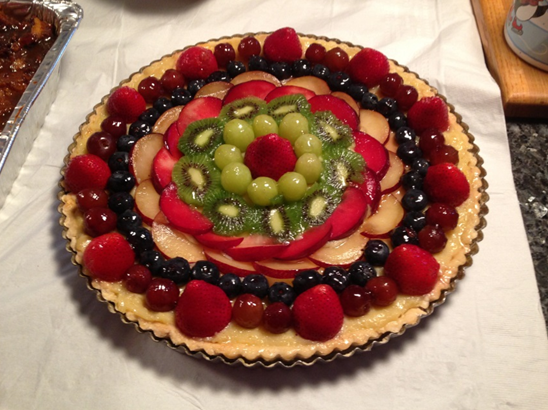
12 ½ inch tart with strawberries, red and green grapes, blueberries, black and red plums and kiwi fruit
Speaking of painting, the final step is to brush on a glaze. This preserves the color and freshness of the tart and adds a beautiful sheen. Melt down jelly in a pot with a little water. Let it cool until it is no longer hot, but still liquid enough to be applied with a pastry brush. I like to use apple jelly, but you can also use apricot, which is clear enough in color and light enough in flavor to enhance, rather than compete with the fruits.
A gorgeous fruit tart is something you will want to share with your friends. Don’t be alarmed if you feel a tug of hesitation when guests are ready to cut the first slice. Be sure to snap a picture to immortalize your masterpiece. That way you can preserve your tart for posterity…and eat it too.
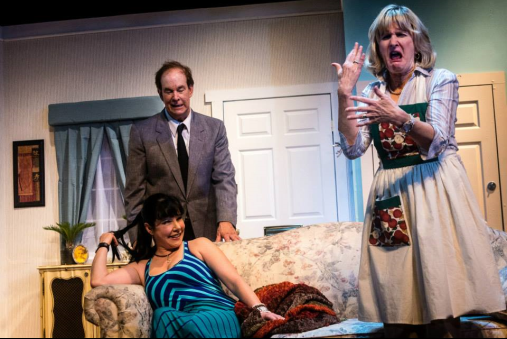
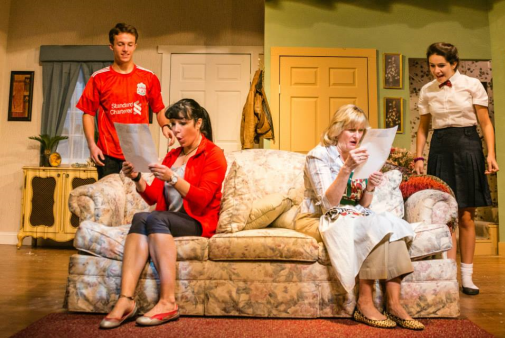
What’s The Little Theatre of Alexandria without a Brit Wit comedy in its repertoire? For its 2013 fall season opener it has chosen Caught in the Net, a rollicking romp by the wildly successful British playwright Ray Cooney about a husband’s marital deception. And this one’s a doozy.
Mike Baker as John Smith, Annie Ermlick as Barbara Smith (Center) and Tricia O’Neill-Politte as Mary Smith – Photo credit Tabitha Rymal – Vaughn
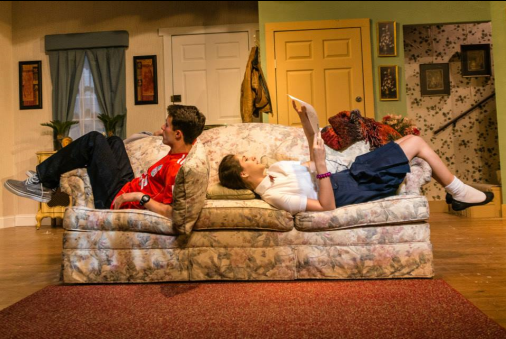
John Smith (Mike Baker) has spent his marital life leading two lives with two wives – one in Streatham, the other in Wimbledon. He has a teenage child with each. Gavin Smith (Luke Markham) lives with his mother Barbara (Annie Ermlick), while Vicki Smith (Eliza Lore) resides with her mother Mary (Tricia O’Neill-Politte). John races back and forth between the two families, juggling his affections like a Chinese plate twirler. The trouble begins when the teens find each other on the Internet and uncover an odd coincidence. Each has a father named John Leonard Smith, age 53, taxi driver.
Luke Markham (Gavin Smith) and Eliza Lore (Vicki Smith – Photo credit Tabitha Rymal – Vaughn
The teens become fascinated by their shared knowledge and Vicki invites Gavin to tea at her home. John is appalled, or as he puts it, “horrified, mortified, petrified and crucified,” should they meet. He tells Mary that Gavin must be a sexual pervert and locks Vicki in her room. Thus begins the farcical shenanigans of John’s subterfuge and many disguises, as he tries to keep his family members from running into each other. Little white lies lead to evasions and outright fabrications as John digs his self-imposed grave.
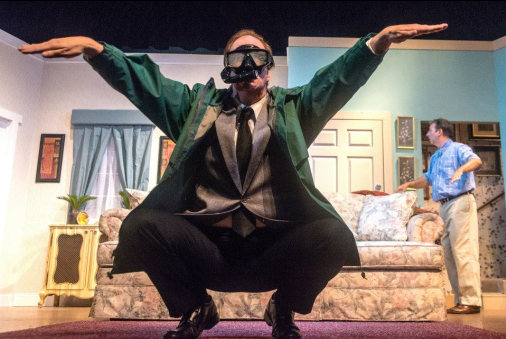
Mike Baker (John Smith) and Paul Tamney (Stanley Gardner) – Photo credit Tabitha Rymal – Vaughn
Mike Baker presents us with a pitch perfect portrait of the harried husband caught a web of lies. In one particularly brilliant scene, faking a wrong number to conceal his identity from one of his wives, he puts on a Chinese accent, rattling off countless dishes at a furious clip to keep Barbara at bay. In another phone call Baker employs a German accent all to the relentless pace of sight gags, pratfalls and a stream of hilarious one-liners. Mary, “He’ll kill himself.” Stanley (Paul Tamney), their longtime boarder and John’s comrade-in-tomfoolery, “That would solve all our problems!”
When Stanley’s doddering, half-blind and senile grandfather, played handily by Richard Fiske, is enlisted in the scheme to keep the beautiful Barbara at bay, he rises to the occasion. “I have a curious urging in my loins,” he exclaims while lusting after her with arms outstretched.
Director Eleanore Tapscott, who recently returned to the DC area from New York where she directed Shakespeare and Moliere for the Westside Repertory Theatre, and her Co-Producer, Alan Wray, steer a terrific cast in this masterful comedy of sex, lies and mistaken identities.
Special mention to Set Designer, Michael deBlois, for the seven-door set lending the production a note of mass hysteria as the characters alternately chase and avoid each other across a central living room.
Through September 28th at The Little Theatre of Alexandria, 600 Wolfe Street. For tickets and information call the box office at 703 683-0496 or visit www.thelittletheatre.com
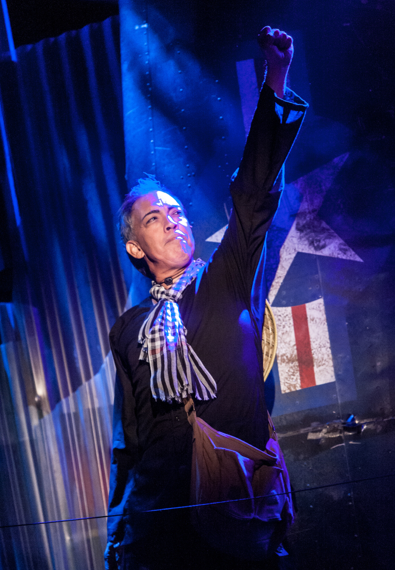
Thom Sesma plays the French-Vietnamese club owner who refers to himself as The Engineer in “Miss Saigon” Photo: Christopher Mueller.
With the Vietnam War as dramatic backdrop, Miss Saigon, presents a poignant tale of doomed love amidst the horrors of war. This well-known re-interpretation of Puccini’s classic opera, Madame Butterfly, with music by Claude-Michel Schönberg and lyrics by Richard Maltby, Jr. and Alain Boublil, has become one of the longest running shows ever to hit the American stage – – in no small part because of the thousands of Amerasian children called “Bui-Doi” that continue to be part of the greater tragedy.
It’s Saigon in the spring of 1975 near the close of the ‘Great Undeclared War’ when Chris, a young Marine meets Kim, an innocent country girl forced into a life of prostitution. In a strip club named Dreamland Chris’s buddy, John, buys her attentions, giving her to the forlorn Chris who is searching for meaning in a world gone mad.
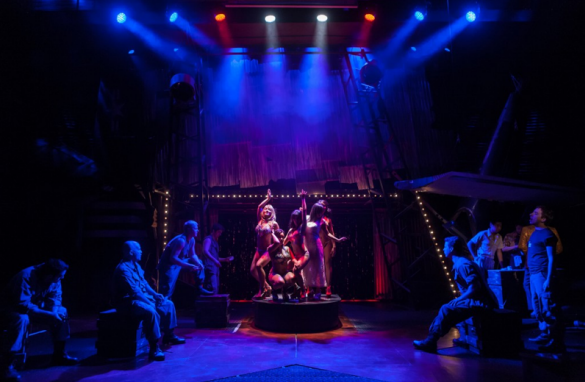
The cast of “Miss Saigon” welcomes you to Dreamland, the Vietnamese nightclub where bargirl Kim will meet American GI Chris. Photo: Christopher Mueller.
The club’s owner, a crafty con man they call, ‘The Engineer” senses the men’s interest and ups the price. “Men play the moon to get fresh meat,” he snickers. Thom Sesma plays the sleazy Svengali to the hilt, delivering a memorable in-your-face performance filled with equal parts charm and smarm. “The Heat is On in Saigon” is a number aswirl in strippers, beefy Marines and lounge hustlers, but especially notable for the introduction of Gigi (Cheryl Daro) the sexy pole-dancing queen of the strippers who is crowned Miss Saigon. When Gigi, Kim and the bar girls commiserate in “The Movie in My Mind”, a song later reprised, we are forced to recognize their despair.
In one fateful night Chris and Kim find love amidst the ruins and pledge to spend their lives together. Gannon O’Brien (who took over the role of Chris on press night) showed engaging sensitivity and starry-eyed innocence against the fierce pathos of Kim as played by Diana Huey. Huey is an outstanding actress and singer whose compelling portrayal of a young woman fighting for her dignity and that of the couple’s love child in a country ravaged by war and uncertainty, is magnificent. Her delivery of “Sun and Moon” to their son, Tam, is a master class in character immersion.
A warm welcome from the girls of Dreamland (from left: Tamara Young, Katie Mariko Murray, Cheryl Daro, Diana Huey, Eunice Bae) in “Miss Saigon” Photo: Christopher Mueller.
Theatergoers will be wowed by this brilliantly crafted production. Signature Theatre’s award-winning Director, Eric Schaeffer, has assembled a cast and crew in spectacular synch. Kudos to Sound Designer Matt Rowe for the rhythmically clanking and stomping devil-masked dancers and thundering helicopter rotors in the iconic scene of the last plane out of Vietnam, and Lighting Designer Chris Lee’s blood red expression of Communist rule, neon-lit B-girls cavorting erotically, and a hauntingly evil nightmare sequence of the Commissar’s ghost. Special effects run the gamut from wind to smoke and create an atmospheric ambiance that envelops the audience in a sensory explosion. And with thirty-four spectacular musical numbers to orchestrate, Music Director Gabriel Mangiante accomplishes a herculean task using both classical and Asian instrumentation.
In this iconic show with plenty of memorable acting to rave over, Diana Huey, Thom Sesma, Christopher Mueller as Thuy, and Chris Sizemore as John, give the performances of their lives.
Chris Sizemore, playing the American soldier John, sings of reuniting families through international aid work (“Bui Doi”) in “Miss Saigon” Photo: Christopher Mueller.
Highly recommended.
Through September 29th 2013 at Signature Theatre (Shirlington Village), 4200 Campbell Avenue, Arlington, VA 22206. For tickets and information call 703 820-9771 or visit www.signature-theatre.org.
Fabio Trabocchi insists his new restaurant Casa Luca Vino E Cucina is a tribute to his roots in the Le Marche region, which also happens to be the land of truffles. “I grew up very poor and this is the food we had on our table,” he told me in a recent phone conversation. Now I’m not one to challenge a gentleman’s pentimento, but if you go by the dishes here, you will say the peasants ate very well…very well, indeed. Certainly I did on a recent visit.
Trabocchi who is far and away one of the most respected Italian chefs in the country has opened what he calls a “casual dining” experience, which is to say it is not the fine dining of Fiola, his first restaurant in Washington, DC, nor that of the Medici family table. On the other hand don’t expect massive platefuls of meatballs and spaghetti – – this is not your mamma mia’s kitchen.
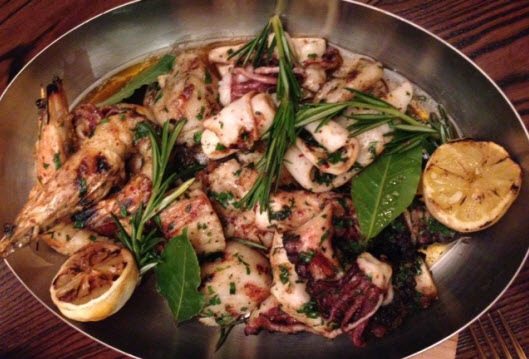
Grigliata Mista di Pesci
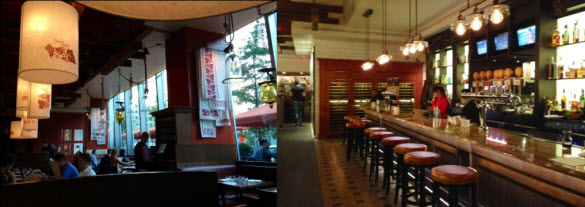
Soft light bathes the high-ceilinged space, from the pendant lamps to the floor-to-ceiling windows overlooking 11th Street. It is a contemporary Euro vibe with a nod to the past from blowups of old family photographs. Red accent walls and grape motifs dot the room on table runners hanging from wrought iron racks to linen lampshades sporting the restaurant’s logo. Half moon banquettes offer an intimate retreat much like they do at Fiola, while window tables and outdoor seating are cherished spots for people watching.
We cooled our heels with a lovely cocktail from celebrated local mixologist Jeff Faile, who has been jockeying back and forth between the two restaurants as the staff gains their footing.
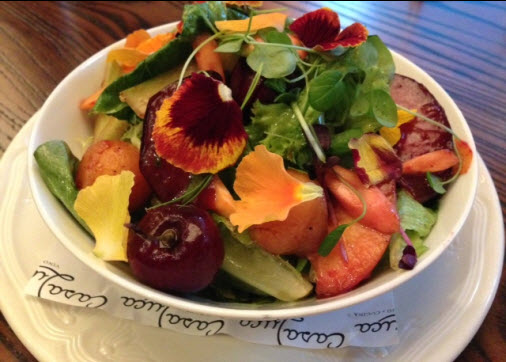
Stone fruit salad from Casa Luca
The china here is worth mentioning as it is purposely and charmingly mismatched. While plates range from white china in classic 19th C patterns or 50’s modern, soup vessels are made from old wine bottles and delicate flowered saucers appear to have been plucked straight from auntie’s breakfront. It is what you would expect to see if you were in someone’s home in the country…in Italia, that is.
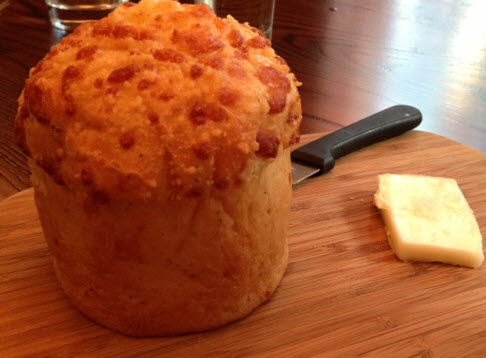
The Marche Classic Cheese Bread with buffalo butter
Begin with some bread. It is not to be ignored. The “Marche Classic Cheese Bread with Buffalo Butter” is a rich, glistening, cheesy, crust-topped mega-muffin served with a steak knife and an elongated pat of butter. The butter may be superfluous, but it is certainly the point. Do it justice. I can only assume the buffalo reference comes from the water buffalo from which mozzarella di buffala is made, but I’m a bit fuzzy on the menu’s translation.
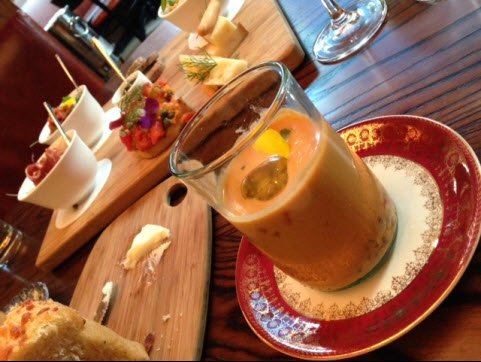
Maria Trabocchi, Fabio’s beautiful Spanish wife, created the recipe for the restaurant’s gazpacho, one of the most delectable versions this epicurean has ever lapped up. Garden vegetables are finely diced and crunchy on the bottom half. Then the same combination of tomatoes, peppers, onions and garlic is slightly pureed and floats on top. A tiny pool of aromatic olive oil rests on the surface to smooth out the flavors. It is perfection.
Maria’s gazpacho in foreground
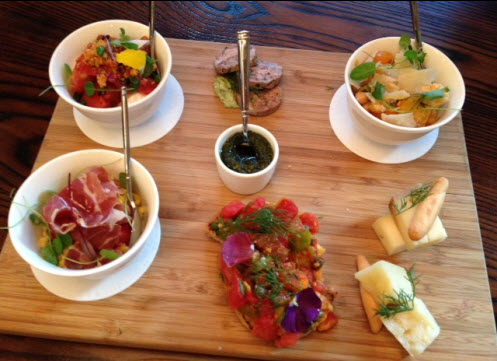
There is a listing of piccoletti to tantalize the diner. We could not decide on which alluring small bites to choose from and so requested a smattering of each, including a chunk of manchego in rosemary and olive oiland canestrato pecorino with a few rounds of fennel salami. The cazzimperio is a slice of toasted bread piled high with meltingly ripe tomatoes piled high with capers, fennel sprigs, olives, peppery pansies and a hint of garlic – a veritable blizzard of sensuous flavors. Little cups held jewel-like salads one of sweet corn, prosciutto and mint, another of heirloom tomatoes and stracciatella, the third of burrata and tomatoes with pesto.
An assortment of piccoletti
A salad of tender greens, plums, peaches and cherries arrived adorned with colorful pansies and dressed with a whiff of vinaigrette that spelled orchard meets field in the loveliest way.
If you are looking for Trabocchi’s renowned gingered lobster ravioli, which I have written about before on these pages, you won’t find it here. These are rustic regional pastas fatta in casa. Expect some to be earthy and unrefined like smoked gnocchi with duck ragu and cremini mushrooms – – not terribly summery for my taste but a well known Le Marche dish – – or soupy like Campanelle inBrodetto with prawns. Grilled scottadito, defined as “finger burning” on the menu, are smoky, juicy, fat-laden lamb chops that beg to be picked up by the bone and gnawed over but only if dining al fresco beneath a trellis of grapevines, not supplied here.
Grigliata Mista di Pesci is a dish that embodies summer holidays whiled away along the Italian coast. Mixed grill of locally caught seafood is found most anywhere along the sea, be it Adriatic or Mediterranean. And for me Trabocchi’s way with seafood evoked sun-filled days spent seaside and starry nights of dining on the beach in sight of pastel-colored fishermen’s boats. For this dish gorgeously tender octopus, briny head-on shrimp, golden-seared sea scallops and the daily catch are grilled over a wood fire and tossed with fresh bay leaves, rosemary, parsley, olive oil and charred lemon halves. Ahhhh. La dolce vita! Could life be any sweeter than this?
Sicilian Cassata at Casa Luca
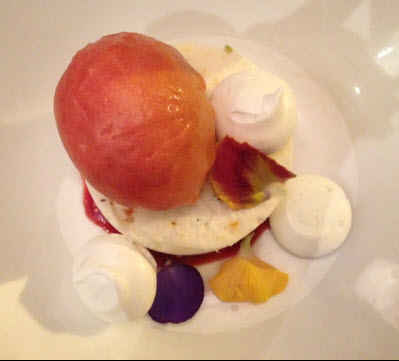
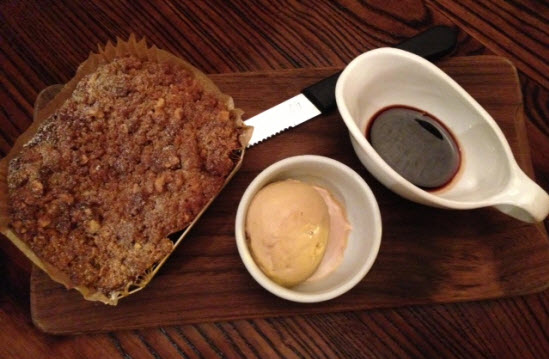
After much to-ing and fro-ing we settle on three desserts (all in the name of research, dear readers, because we are stuffed to the gills). We are steered towards the Ciambellone di Nonna Palmina, a hazelnut coffee cake sounding more like a breakfast treat. The surprising combination of caramel gelato and vin cotto to pour over the cake, assure us it is not. Sicilian Cassata is a colorful concoction of pistachio and orange semifreddo, a firm ice cream, with baby meringues and strawberry-campari sorbetto decorated with the ubiquitous pansies as is the Luca Macedonia –stone fruits and the sorbetto of the day. Each dish is beautiful in a carefree way as if tossed together with flower petals gleaned from the kitchen garden. If this is how the peasants are eating these days, I wonder what it’s like to be a duke!
Hazelnut Coffee Cake with caramel gelato and vin cotto
Casa Luca adheres to its casual definition by offering nearly two dozen wines at $28.00 a bottle with a few selections by the glass or carafe including the Tuscan Donna Laura Sangiovese the restaurant keeps on tap. But go for the limoncello with strawberry, one of four varieties of vin dolce,or one of five grappas from Poli,produced by a 5th century Veneto family since the 1800’s. And buon appetito!
Get Your Mad Men On
Photo credit – Harald Gottschalk
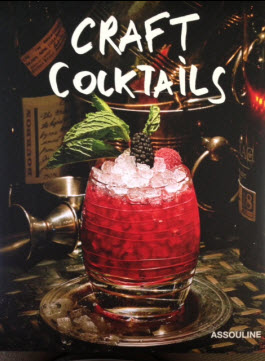
Craft Cocktails is writer Brian Van Flandern’s latest homage to the hand-crafted cocktails enjoyed pre-Prohibition – – a period between 1920 and 1933 when talented bartenders fled to Europe in droves, Eliot Ness and “The Untouchables” chased mobsters and moonshiners, and a hatchet-wielding Carrie Nation ransacked her way into speakeasies all under the guise of the Volstead Act banning “intoxicating liquors’ throughout the U.S. Given today’s fascination with these throwback cocktails, it’s difficult to fathom what it was like to live in the shadows just to get a little drinkie pooh.
In his follow-up collection Van Flandern, who has been named one of the “Top Ten Hotel Bartenders in the World” by Travel and Leisure Magazine, selects a few fellow bartenders from New York’s top craft cocktail lounges to join in the fun by contributing some of their recipes to the “mix”. Death & Co., PDT (Please Don’t Tell), Employees Only and Clover Club in Brooklyn are the four bars that meet his approval for innovative drinks, retro-chic ambiance and high standards of service. Mr. Van Flandern is very particular…and that should come as no surprise to those who have sampled his creations at the Bemelmans Bar at The Carlyle Hotel; The Worldship, the private residential luxury liner that plies the high seas; and Per Se, where he fine tuned his art at Thomas Keller’s Michelin three-starred restaurant in New York City.
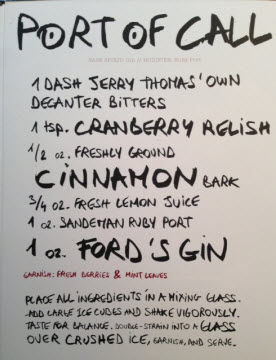
Recipe for “Port of Call” cocktail by Brian Van Flandern
Filled with quirky-charming hand-written recipes naming the exact liquor brands along with specific instructions on how to achieve the perfect drink, Craft Cocktails is written as a companion guide to Vintage Cocktails, an earlier book in the same vein, that featured a revival of elegant handmade cocktails by the noted mixologist. Lavish photographs of the finished and garnished cocktails in period settings and in Baccarat crystal glassware are by Harald Gottschalk.
So get your shakers and stirrers out, and as the uncompromising Mr. Van Flandern would say, “Bottoms up!”
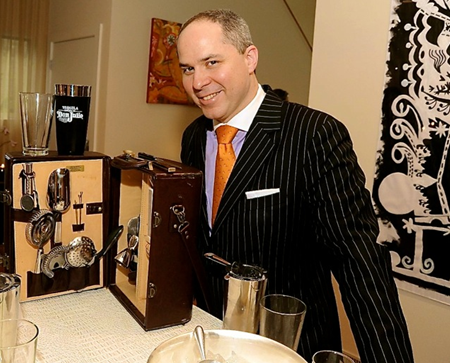
The debonair Brian Van Flandern with his cocktail kit
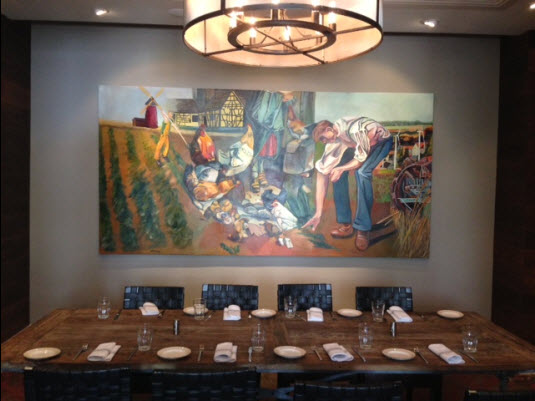
One of the private dining rooms. Painting by Brian T. Dang
Uber Restaurateur Ashok Bajaj Has a New Baby
When it comes to cooking up success, Ashok Bajaj has a formula that could well be called the ‘ultimate dish’. It’s simple, really. Hire a talented chef, train your staff to a fare-thee-well, commission a trendy architect to design a stylish restaurant, and put it in a high-end location with plenty of foot traffic. What could go wrong? Not a blessed thing, as it turns out.
Over the past twenty-five years, Bajaj, a transplant from New Delhi whose training at the Taj Hotels, Resorts and Palaces prepared him well for DC’s kingmakers, has been showered with umpteen awards from industry titans to magazine editors, who track his latest ventures like Bengal tigers. Earlier this year Bajaj was named “Restaurateur of the Year” by Washingtonian Magazine, an accolade bested only by his recognition by the James Beard Foundation, Forbes, CNN and GQMagazine.
So what’s nopa got that sets it apart from the others? To begin with nopa’s Executive Chef, Canadian Greg McCarty, who has brought along his impressive resumé. Before landing in DC he spent six years alongside celebrated chef, Jean-George Vongerichten at the luxurious Bahamian restaurant Dune, later trotting off to Manhattan to open Nobu 57 and assisting renowned restaurateur Drew Nieporent on a number of special projects.
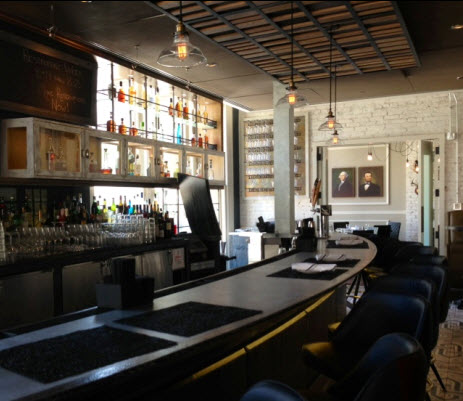
The zinc bar
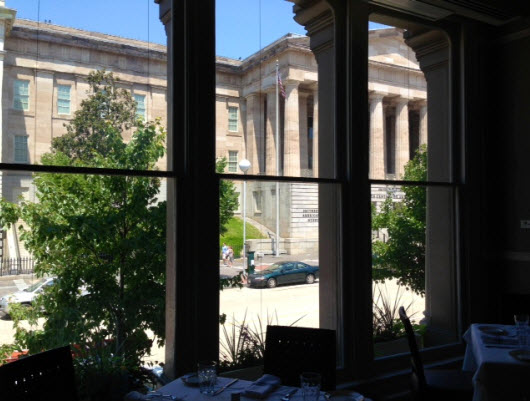
Described as an American brasserie, nopa’s fresh decor has beautifully transformed its earlier incarnation as Zola. Martin Vahtra, the resto’s swank designer has swept away the heavy velvet drapes to reveal a series of light-filled dining rooms with white-washed brick walls, rustic wooden beams, and a black-and-white original mosaic tiled floor beside the zinc bar to reveal a unique space that can now highlight the historic building’s distinctive architectural elements.
Let’s have a cocktail, shall we? The bar’s designer cocktails are surprisingly well priced at ten dollars and list six under two categories “The Classics” and “Signature Cocktails”. “Blood and Sand” is an updated version of the original using Black Bottle Scotch Whiskey with LuxardoCherry Liqueur, Dolin RougeVermouth and blood orange puree and “Red Envy” is an exotic concoction of El Dorado Rum, Heitz Cellar Ink Grade Port from the Napa Valley, lime and Fee BrothersChocolate Bitters. But the warm day spells gin to me, and the “800 F & Tonic” sports Plymouth Gin, house-made tonic and lavender with a ginger infusion to spice it up.
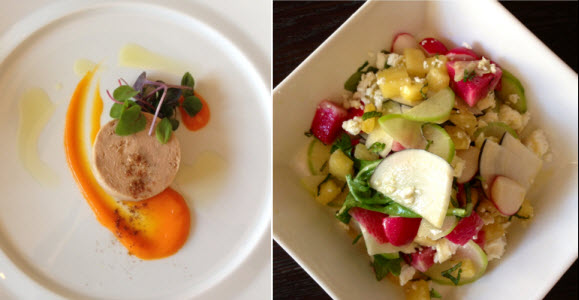
Because of its Penn Quarter proximity to the International Spy Museum and other local attractions, the menu ranges from family friendly choices like burgers and vegetarian options like the veggie bánh mi sandwich with cauliflower purée and a fresh herb salad, to fine dining and designer drinks. At a recent lunch I found some hits and a few misses. Foie gras terrine with a swoosh of carrot ginger purée was addicting, but the bluefish paté was disappointing, the negligible amount of fish in the spread renders the whole thing inconsequential and its accompanying triangles of earthy Russian-style black bread become far too ponderous a vehicle, especially when the bread basket has such alluring choices.
Nopa – Foie gras with carrot ginger swoosh – Spring radish salad with pineapple, mint and feta
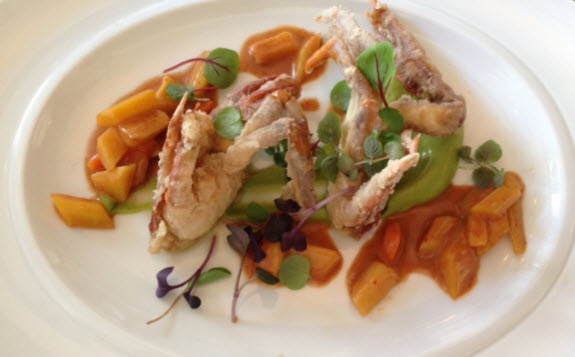
Gazpacho seems to be the only soup offered. Unfortunately it was blended into the consistency of a breakfast smoothie and the crunch of summer vegetables unexpressed. But crispy soft shell crab with avocado basil purée was precisely on point as was the sprightly radish salad with chunks of pineapple, feta and mint.
Soft shell crab with avocado basil purée
When it comes to fish the chef treats it with a gentle respect, no doubt from his days in the Bahamas preparing fresh catch with a French chef, and a glazed Chilean sea bass with tender baby eggplant and wasabi pea mash was everything one would hope it would be – the sweet taste of the fish balanced against smoky soft eggplant and a hint of fire from the Japanese horseradish.
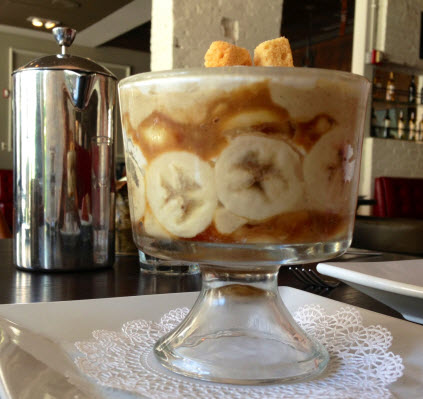
At this point dessert beckoned and it was, well, cute! Tasty fried cherry hand pies with crushed raspberry icing – the sort of thing grandma would toss into a cast iron skillet and a creamy dreamy version of banana pudding that was reminiscent of a church picnic.
I could say what a long strange trip it’s been, when reflecting on last night’s Grace Potter concert at Wolf Trap. With her band the Nocturnals the indie group performed a reimagined form of vintage psychedelia and hard-driving rock that hasn’t been heard since the heady days of the Fillmore West in the late 60’s.
Grace Potter & the Nocturnals. Photo courtesy of Wolf Trap.
You have to wonder what’s taken Potter so long to emerge as one of the most promising hard rock, blues and country stars we’ve seen since Grace Slick and Stevie Nicks stole our hearts with the same raw emotional style. Maybe it’s because Potter is too beautiful with her swirling, head tossing, mane of honey blonde hair and legs way out to the next county. Or maybe it’s because we can only imagine men tearing the guts out of their guitars to find notes that only the Eric Claptons of the world could unleash. Is the male-dominated rock world ready to accept a woman who can write her own music, dance like Isadora Duncan on LSD, play both keyboards and guitar, and sing with as pure and powerful a voice as has ever been heard on a rock stage? Oh yes, it is. And a packed house at Wolf Trap proved it last night.
Playing songs from their latest album, The Lion The Beast The Beatas well as earlier material, Potter showed off powerful wailing leads on her signature Gibson Flying V guitar and haunting notes from a Hammond B3 organ, all the while creating a bold new sound built on the old yet without ever sounding retro.
Clad in a sizzling hot platinum lamé bat-wing sleeve gown that revealed her long legs with a slit up to there, Potter and the Nocturnals opened with “I’ve Got The Medicine That Everybody Wants”. Later she gave a grateful shout-out to a guy named Sandy she knew would be at the concert and who’d introduced her parents, Sparky Potter and Peggy Sparks, to each other back in 1969 by explaining, “That’s why I’m here!” She later introduced locally born tenor saxophonist, Ron Holloway, who came on stage for a duet on “Treat Me Right” with the sentiment, “We go back to the days of hard drinking and hard touring.”
The Nocturnals consisting of Matt Burr (drums/vocals), Scott Tournet (guitar/bass/keyboard/vocals) and Benny Yurcot (guitar/bass/vocals) are as tight as they come and it shows. During one number the entire band dropped their instruments and held a group drumming session on Burr’s drums. In others Potter traded fiery licks with her fellow guitarists and gave tribute to the Jefferson Airplane with the number, “White Rabbit”.
Trombone Shorty & Orleans Avenue. Photo courtesy of Wolf Trap.
Famed musician Trombone Shorty & Orleans Avenue, opened the show. Born Troy Andrews in the Treme section of New Orleans, he’s performed with U2 and Green Day and recently played at the White House in celebration of Black History Month. His 2011 album For True features Jeff Beck and Warren Haynes. Andrews, who calls his sound “Supafunkrock”, opened with “American Woman” amping up the crowd with his fierce horn and a rumbling bass. Amazing lead guitarist, “Freaky” Pete Murano, and a back up horn section gave it the stuff soul was made of. There were George Clinton-style funkadelic 60’s riffs using a wah-wah pedal from Murano coupled with Shorty’s signature staccato repetitions in which he appeared to split notes into fractals ending in long breath-averse wails on the trombone. Though Andrews’ style gallivants around the musical map, there’s a bottom line Chicago horn sound going down, especially on power numbers like Ray Charles “I Got a Woman Way Over Town”.