|
|
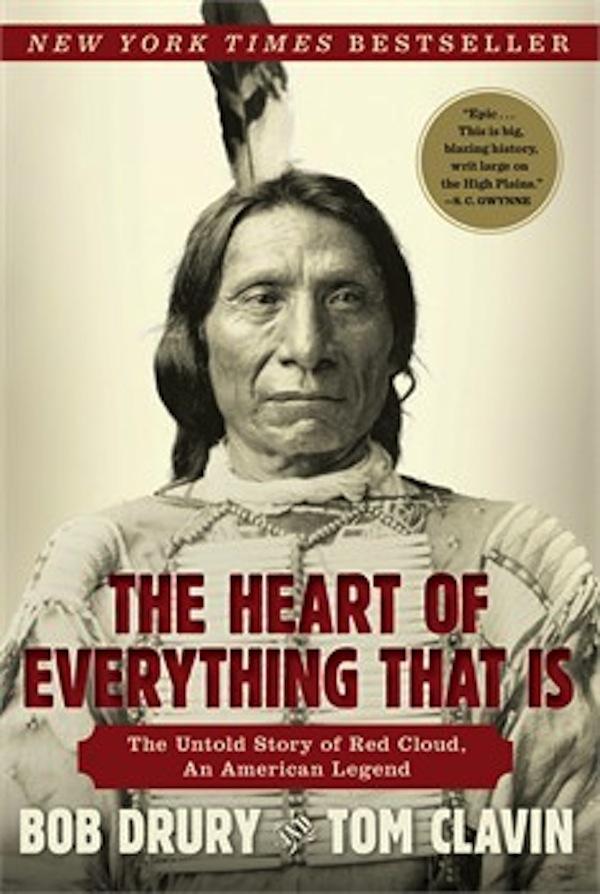
The writing team of Bob Drury and Tom Clavin are best known to their readers as American military historians. Noted for turning out impeccably researched chronicles, their books range in coverage from World War II and Korea to the Vietnam War and usually grace The New York Times bestseller list. But for all their military acumen, the two had overlooked one of the biggest stories in American history: That of Chief Red Cloud, who led the Western Sioux Nation to victory against the U.S.The Heart of Everything That Is: The Untold Story of Red Cloud, an American Legend (Simon & Schuster, November 2013) was born.
Before that, Drury and Clavin had been kicking around a few ideas for their next subject when they found themselves at the Marine Corps Base at Quantico as they accepted an award for Best Nonfiction from the Marine Corps Heritage Foundation.
“After the ceremony a Marine said to us, ‘You do know about the only Indian to win a war against the United States?’ ” Drury told Indian Country Today Media Network. “We said we were familiar with the Battle of Big Horn and other well-known battles. And then he said, ‘I didn’t say battle, I said war! An entire war.’ And I thought, Why didn’t we know about that?”
The Marine then told them about Red Cloud, chief of the Western Sioux Nation. The two were stunned to discover that the warrior in question was not Geronimo, Sitting Bull or Crazy Horse—proud fighters who most schoolchildren are taught about. They knew then that they had their next book.The Heart of Everything That Is tells Red Cloud’s story in his own words (he related his tale to a third party before he died) and lays out a riveting timeline of the period.
In researching his life, the authors uncovered a wealth of material from diaries and letters written by U. S. military officers and their wives and children, and wilderness trackers, plus a treasure trove of historical information gleaned from the letters and journals of the pioneers who crossed the Great Plains during the 1800s. Indian Country Today Media Network caught up with each author recently to gain insight into what compelled them to learn more about Red Cloud and write, “His overall leadership, his organizing genius, and his ability to persuade contentious tribes to band together…had enabled perhaps the most impressive campaign in the annals of Indian warfare.”
Your book is meticulously researched, full of the smallest details of life on the American Plains. What surprised you most in your studies of that period?
Clavin: The biggest surprise was how little we know of Red Cloud in our popular culture. We know a great deal about Geronimo, Cochise, Sitting Bull and Crazy Horse. But Red Cloud wasn’t discussed at all in our history books. As we did more research we discovered stories of his exploits and of his importance in Sioux society and their culture and history.
It was shocking to us that he was little more than a footnote to what we know about the American West. It’s been mostly the white academics and white scholars who have written about the Indian. The Indian point of view has been mostly through the observation of others, as with Frances Parkman’s The Oregon Trail.
What drew you to the story of Red Cloud?
Clavin: I was reading a description of the Fetterman massacre and Red Cloud and thought I was pretty well versed in eighteenth-century history. But ultimately when we decided to take on the story of Red Cloud, it became a four-year journey.
Drury: We saw his life was rich during the period of Manifest Destiny. It told of a way of life that had gone on for a millennium. We were accustomed to interviewing living people. But what we found was almost like Twitter, everyone kept a journal back then. Tom went to all the historical societies and university libraries out west and found so many letters. Some of the documents were so fragile that we had to handle them with gloves. Reading these journals was like interviewing living people. It was an amazing discovery. For example, no one knew how the Indians ‘treatied’ with each other.
Would the Plains Indians have survived without the trading posts and contact with whites?
Clavin: They probably would have survived much better! The trading posts were very destructive to them. They seduced the Indians from finding their own food and clothing, which they had always done. It also introduced alcohol to them and brought diseases they had no immunity from, like smallpox and cholera.
What was Red Cloud’s legacy to the Sioux?
Clavin: Once he retired as a military leader and after he could see the growing military power of the white people, he wanted to be sure that the Lakota Sioux and their children had education and medical care. He was an advocate in Washington for funds and other resources to come back to the reservation.
What does the book’s title mean?
Clavin: The Lakota Sioux name for the Black Hills ispaha sapa. The area straddles the border between Wyoming and Southwestern South Dakota. They considered it their sacred territory—where they came from. The translation is “the heart of everything that is.”
Does Red Cloud have descendants?
Clavin: Tribal leaders have been descendants of Red Cloud, the leader of the Oglala Sioux, who was considered their leader until he died in 1909. Then it was Jack, his son, then James, his son, then Oliver Red Cloud, his son who died this past July at 93. His son, Lyman, was supposed to take over as leader, but died two weeks later. I have heard there is now a vacuum in terms of their spiritual figurehead.
Do they still live on the Pine Ridge reservation?
Clavin: Quite a few still do. Though some also attend school outside of the reservation and marry outside, there are still grandchildren and great-great- grandchildren living there.
What surprised you the most in your research?
Drury: Well, there were so many things that surprised me. For example, we have the Alamo, the Battle of Big Horn and the Fetterman fight, which somehow had gotten lost in the mists of time. The story is about the demise of one nation, Red Cloud’s nation, and the rise of another nation, the continental power of the United States—and in the middle of it was the Fetterman fight.
Another was old Jim Bridger, the self-taught trapper and explorer. Why were Daniel Boone, Davy Crockett, Kitt Carson and all these iconic figures mentioned in our American history books but not Bridger? I think he is the most fascinating character in the book because his story lends so much to the book’s narrative. He and Red Cloud lived almost parallel lives on this vast continent. During this period mapmakers described the vast interior of the country as the great American desert. But during their lifetimes we annexed Texas, fixed the Canadian boundary, defeated Santa Ana and took over many of the western and northwestern states. All of a sudden we were becoming a nation, and at the same time Red Cloud was in charge of what whites considered a nation. So it was inevitable that these two nations were going to clash. And this was witnessed by Jim Bridger and Crazy Horse, among others of the period. I wonder to this day why he is not up there in the pantheon of Western pioneers.
What is your takeaway?
Drury: If we had just honored that final treaty, because Red Cloud’s war never really ended, even though he signed a treaty. It still continues in the courts today, because we broke so many treaties. But if we had just honored that final treaty that ended Red Cloud’s war, this would be a better country today for everyone.
So why did two white guys think they could write about the history of American Indians?
Drury: My only answer is I didn’t serve in World War II, but that didn’t stop me from writing Halsey’s Typhoon and doing a good job of it. I didn’t serve in the Korean War but that didn’t stop me from writing The Last Stand of Fox Company, and I was even too young for Vietnam, but that didn’t stop us from writing Last Men Out. So in the same sense I don’t think color, age or creed matters when you’ve got a ripping good yarn. And this one’s a great saga with epic sweep.
Read more at
http://indiancountrytodaymedianetwork.com/2014/03/16/heart-everything-chief-red-clouds-untold-story-revealed-154026?page=0%2C2
Jordan Wright
March 17, 2014
Special to The Alexandria Times
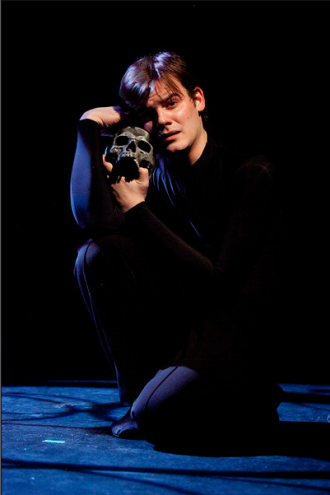 Alex Mills as Hamlet. Photo by Koko Lanham. As far as this critic is concerned Synetic can do no wrong. How could you fault their electrifying choreography, their spectacular dancers or their break-the-mold interpretations of the classics…especially in their noted Silent Shakespeare series. Theatre critics from the New York Times to the Washington Post have rained down superlatives on them and they have garnered 24 Helen Hayes Awards and 92 nominations to prove them right. Hamlet…the rest is silence is the production that started it all – – a magnificent journey that took hold of our collective psyches a decade ago. For those of us who are already converts, it’s a trip down memory lane. For newer audiences it is a ticket to the ensemble’s evolution and a view through the looking glass into their groundbreaking productions.
I’d suggest brushing up on your Hamlet before you go. The program doesn’t explain the plot. You’ve only got a listing of the scenes to go on – “Something is Wrong in the State of Denmark”, “Murder Most Foul”, “To Be Or Not To Be”, etc. and with such innovative interpretations and no dialogue you could get lost in the translation, as they say.
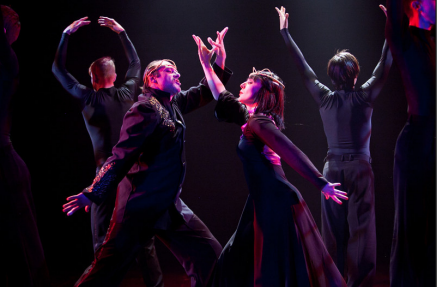 Irakli Kavsadze as Claudius and Irina Tsikurishvili as Gertrude with Ensemble. Photo by Koko Lanham. In a play that presents revenge, romance, and tragedy without words, it is up to the dancers, the lighting and the sound design to convey complex emotions. And here it is done in a whirlwind of riveting pantomime, garish lighting and mood altering music – all coordinated to lend a somber tone and element of danger.
Costume coordinator Claire Cantwell has chosen funereal black and gunmetal grey with splashes of blood red, while lighting designer Brittany Diliberto bathes the set with midnight blue, poison green and fiery red, to echo the nefariousness of the characters’ motives. Sound designer Irakli Kavsadze pulls out all the stops, using heavy backbeat rock, New Age, classic, military flourishes, and an eerie tango for Claudius (Irakli Kavsadze) and Gertrude (the magnificent Irina Tsikurishvili, who is also the ensemble’s co-founder and choreographer) to frame the macabre machinations. Watch for Irina Kavsadze, a sensuous pre-Raphaelite beauty who plays Ophelia. Her portrayal of the devoted daughter, who shows her love for Hamlet in an early scene where the two lovers tenderly mirror each other’s hands and bodies, is powerful counterpoint to her fiery solo as Ophelia descending into madness.
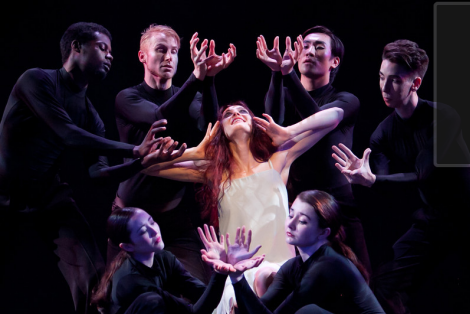 Irina Kavsadze as Ophelia with Ensemble. Photo by Koko Lanham. The dancing is flawless, as expected. Can anyone say anything new about the caliber of excellence Synetic offers? Alex Mills digs deep into the role of the conflicted Hamlet to pull out an intricately crafted portrait of a megalomaniacal madman. Just remember this is not typical of the high-flying, production-on-steroids Synetic of today. It is a spare yet focused reinvention – – the one that brought the world to their doorstep. And it plays out like a journey to the center of the earth smack after the Big Bang.
Through April 6th at Synetic Theater, 1800 South Bell Street, Arlington in Crystal City. For tickets and information call 1-866-811-4111 or visit www.synetictheater.org.
Jordan Wright
March 10, 2014
Special to The Alexandria Times
 Anna Fagan (Catherine) and Chuck Leonard (Robert) –
Photos by Matt Liptak Catherine (Anna Fagan) lives with her professor father in an unsettling world of mental illness somewhat reminiscent of the film A Beautiful Mind. Robert (Chuck Leonard), a brilliant mathematician whose elegant formulas and research on prime numbers have dazzled his peers, believes aliens are sending him messages through the Dewey Decimal System. He suffers from major depression and psychotic episodes that Catherine fears could be genetic. “Crazy people don’t ask each other if they’re nuts,” he explains when she holes up in her room reading fashion magazines.
When Hal (Josh Goldman), a former student of Robert’s, “He’s on the infinite program,” Robert jokes, comes to their home in hopes of discovering publishable formulas, Catherine, a math whiz in her own right, gets suspicious that Hal might be stealing the material to self-attribute and we watch as she spirals into a depression of her own. But the pair needs each other. Their discussion of Sophie Germaine, an actual 18th C mathematician who hid her genius by writing under a man’s name, portends things to come. Could Catherine be as brilliant as her famous father?
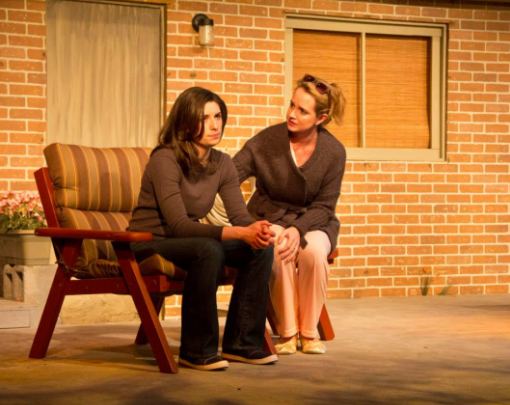 Anna Fagan (Catherine) and Elizabeth Keith (Claire) – Photo Matt Liptak When her sister Claire (Elizabeth Keith) shows up at the family’s suburban house to make funeral arrangements, she insists her Catherine cannot handle life alone and determines to take her sister back with her to New York City to seek psychiatric help.
Proof, set in the 1990’s, switches back and forth over a four-year period and covers Catherine’s close relationship with her father, her testy but compliant relationship with Claire, and her curious partnership with Hal. The tidy four-person cast handles complex emotional turns with ease in this Pulitzer and Tony Award-winning play written by David Auburn.
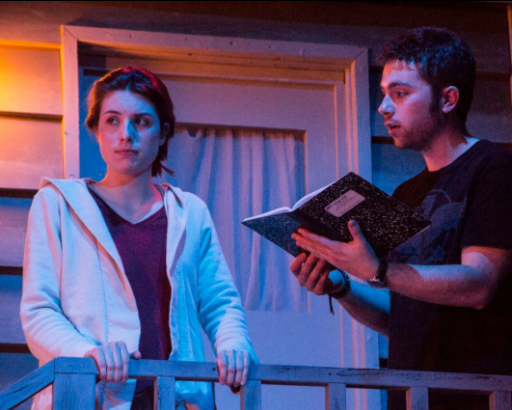 Anna Fagan (Catherine) and Josh Goldman (Hal) – Photo Matt Liptak In a deeply engrossing script tinged with wry comedy, the play explores mental illness as related to genius and presents a storyline as complicated as it is uplifting. Susan Devine, who consulted with the National Alliance on Mental Illness and Flint Hill School teacher William VanLear to gain insight on the topic, directs an impressive cast that has both the strength and confidence the story demands. Leonard, who himself is a director and reminds this reviewer of John Cleese, captures the humor and subtleties of his role, while Fagan demonstrates her total immersion in a tricky role that swings from upbeat to somber at the drop of a hat. Goldman, who has appeared in several LTA productions, proves he has an impressive range – – while Keith, another LTA alum, gives a shining performance as the self-centered sister.
Through March 29th at The Little Theatre of Alexandria, 600 Wolfe Street. For tickets and information call the box office at 703 683-0496 or visit www.thelittletheatre.com
Jordan Wright
March 10, 2014
Special to The Alexandria Times
 British Invasion. Andile Ndlovu, Corey Landolt, Chong Sun, Jared Nelson. Photo Steve Vaccariello Can ballet and British rock music coexist? The answer, surprisingly, is yes! And it took an American based ballet company to pull it off. In an exciting night filled with the music of arguably the two greatest rock bands that ever crossed the pond The Washington Ballet presented their highly original concept at the Kennedy Center. In the first of a three-part program Choreographer Christopher Bruce took twelve iconic Rolling Stones’ songs and brought them to life.
In “Little Red Rooster”, an old Willie Dixon blues song, the men wore jewel-toned velvet blazers and straight-legged pants strutting about like Mick Jagger and thrusting their chins in and out to lure the women, led by Francesa Dugarte who were having none of it. When they got to the lyric “dogs begin to bark and hounds begin to howl” they mimicked wild dogs in a piece that was as cohesive as it was splashy.
The dancing, often performed en pointe or incorporating intricately executed duets, included interpretations of different dances of the period from the Jitterbug to the Watusi. There was even a brief brush with twerking in “Paint It Black”.
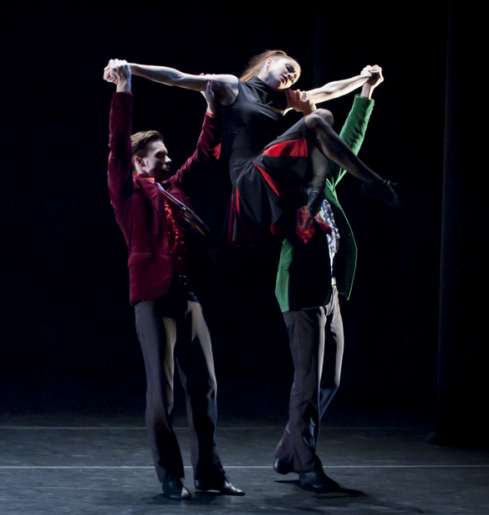 Jade Payette, Jonathan Jordan and Nayon Iovino in Rooster by Theo Kossenas The sylphlike Morgann Rose was sensational in “Ruby Tuesday”. With her blazing red hair flowing freely she was captivatingly powerful in one of many such strong female roles throughout the evening’s program.
In “Lady Jane”, starring Brooklyn Mack in the 18th century-styled song, dancers performed a courtly minuet and couples paired off as at a dansant. In “As Tears Go By” a ring-around-the-rosy dance gave an evocative meaning to the lyrics “I sit and watch the children play”. Lyrics weren’t always strictly interpreted. Often the dance referenced the mood or the moment in a dreamlike way.
In the second portion of the program the music of Kurt Weil and Bertholt Brecht, of “Mack the Knife” fame, and the lilting lieder of Frederic Chopin was played on solo piano by Glenn Sales and delivered by soprano CarrieAnne Winter and mezzo soprano Shelley Waite who traded off half a dozen pieces in operatic splendor. A particularly interesting song selection was the jazzy and tragic ballad ”Surabaya-Johnny”, one of Weill’s songs made famous by Marianne Faithfull, one of Mick Jagger’s early loves, danced by Corey Landolt. Another melancholy song, also recorded by Faithfull, was “Je ne t’aime Pas”. Sung in French and danced in a duet, it was an especially harmonious blending of music and motion as the dancers, choreographed by Christopher Wheeldon expressed the haunting music.
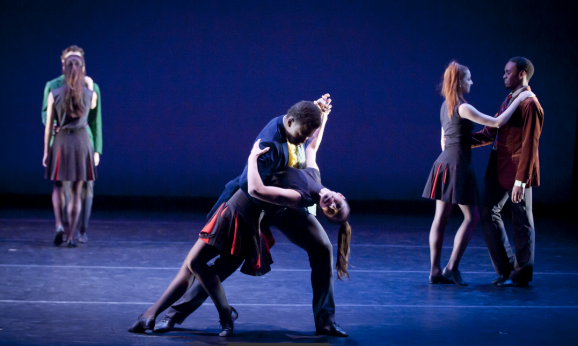 Rooster (C.: Brooklyn Mack, Jade Payette) by Theo Kossenas Twelve Beatles’ tunes followed interpreted by famed Choreographer Trey McIntyre whose tender rendition of “Mother Nature’s Son” again showed Brooklyn Mack executing massive leaps with a soft and joyful expression. “Ob-la-di, Ob-la-da”, performed by the entire ensemble using angular Gumby doll movements, was perhaps the most comic of the numbers. In “Strawberry Fields” heightened energy matched the psychedelic era of the Beatles, while “Julia”, the “ocean child”, was danced magnificently by Maki Onuki whose surreal marionette-like motions appeared to make her float above an aqueous stage.
So you might ask, “Does rock music go with ballet?” Well, if the hootin’, hollerin’ and thunderous applause accompanying the standing ovation was any measure, than that would be a resounding “Yes!”
Jordan Wright
March 6, 2014
Special to The Alexandria Times
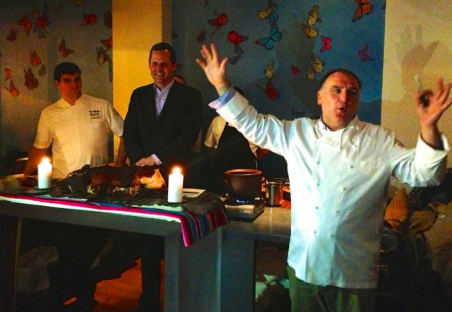 Jose Andres Kicks Off Oyamel’s Tequila & Mescal Festival The Greatest Mexican Fiesta in DC
James Beard Award-winning Chef José Andrés and his partner Rob Wilder are at it again with the seventh annual Oyamel Cocina Mexicana’s Tequila & Mezcal Festival celebrating the heritage of these unique Mexican spirits. Beginning March 10th and continuing through March 23rd, Chef Colin King will highlight the flavors of Oaxaca and Jalisco, Mexico with a fabulous special menu and new tequila and mezcal cocktails. It all gets underway with a kickoff party on Monday, March 10th from 6 to 9pm along with live Latin music from Montuno. Food stations set up around the entire restaurant will pay tribute to Mexico’s exciting street food culture serving guacamole with comal-fired tortillas, whole baby pig cochinita tacos, street-style ceviches, goat leg barbacoa, esquites and comal-fried quesadillas. All to the strains of live Latin music from the band Montuno. Tickets for this event are $60.00.
 Cocktail Rosa de Oaxaca and Agave en Lena – Photo credit Greg Powers agava on lena
Cool cocktails created especially for the two-week fiesta include the signature Oyamel Margarita and an assortment of tequila and mezcal specialty cocktails – – the Naranja Dulce, Limón Partido, made with Reposado tequila, chamomile, orange blossom honey and roasted lemon; the El Jarocho, with Añejo tequila, house-made ancho chile pepper liquor and Cocci Americano Rosa; the Rosa de Oaxaca, made with Mezcal, hibiscus, raspberry and lemon, and the Agave en Leña, with Mezcal, Benedictine, agave nectar and house-made Oyabitters.
 Cocktail Miramir and El Jarochoc – Photo credit Greg Powers For the tastings and Q&A events there are samples from Del Maguey Mezcal with founder Ron Cooper; Siembra Azul Tequila with founder David Suro: and more from Maestro Dobel Diamone Tequila, Pierde de Almas Mezcal and Tequila Ocho. To learn more about the two-week festival visit oyamel.ticketleap.com/tequila-mezcal-festival.
Complimentary tequila & mezcal tastings will be held from 4pm – 6pm on March 11th -13th and March 17th – 20th. After the each tasting event the restaurant will host an intimate dinner featuring Ostiones con Salsa Piquín, oysters on the half shell, topped with salsa piquín, onion and cilantro; Ceviche Estilo Culiacán, marinated bass with Serrano, lime, onion, cilantro, tomatillos and house-made hot sauce; Ceviche de Chamoy, sliced Hawaiian Ono dusted with chile piquín, with mango and chile mulatos, chamoy, peanuts, cucumber, onion, lime and cilantro. Other highlights include Encurtidos, a variety of pickled winter vegetables with tomatillo, queso cotija and chile piquín; Cueritos, pork skin and chicharrons dressed with lettuce, lime, cilantro and salsa Cascabel; Veal Breast Birria, a braised veal breast with refried Rebosero beans, salsa guajillo, lettuce and radish, as well as Jalapeño Escabeche Relleno con Carne Seca, pickled jalapeños stuffed with dried beef and topped with chopped tomatillos.
Just think — by Cinco de Mayo you should be able to dazzle your peeps with your exceptional knowledge of all things to eat and drink Mexican!
Let the World Be Your Oyster
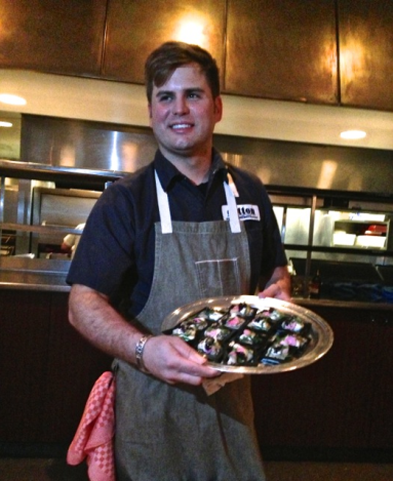 Chef Cory Bahr of Cotton Restaurant Those were the words on the Gulf Oyster Industry Council’s swank invitation for a party at Acadiana where oyster shuckers, chefs (Chopped winner Cory Bahr among them), iconic restaurateurs and industry pros came together with the East Shellfish Grower’s Association to celebrate the coveted mollusk and ready the troops for Mardi Gras. The best of the bivalve was served to over a hundred guests including Senator Mary Landrieu, author and political strategist Donna Brazile, and WUSA9’s Andrea Roane.
On the raw side were Point aux Pins from Bayou La Batre, Alabama and Karako Bay rock oysters from St. Bernard, LA served up alongside local oysters from Rappahannock Oyster Co. and a unique oyster from Cape May, New Jersey whose meat was pearly white. Side tables held oyster condiments from mignonette and red cocktail sauce (heaven forbid!) to tartar sauce for the fried oysters.
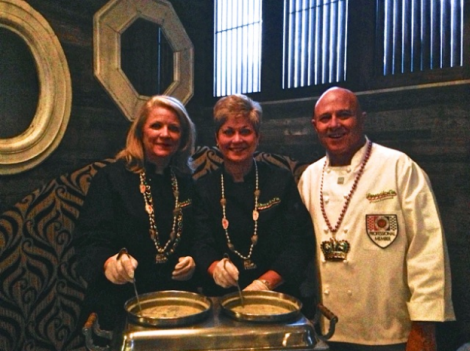 Randol’s Serves Up Oyster Rockefeller Soup Using Bay Courant oysters from Lafourche, Louisiana Randol’s of Lafayette, Louisiana served up their lusciously rich Oyster Rockefeller Soup; Cory Bahr of Cotton in Monroe, LA created Whipped Parmesan Cheese Gulf Oysters with sea beans, radish and caviar; Ruffino’s famed Baton Rouge Chef and Cookbook Author Peter Sclafani made Open-faced Oyster Ravioli; Drago’s of Metairie, LA Head Chef Tommy Cvtanovich made their signature Oyster Voisin, and all while servers passed around the best crab cakes ever from Acadiana’s Executive Chef Jeff Tunks. I even ran into transplanted native son David Guas of Bayou Bakery who gave me a few tips on making muffulettas for an upcoming Mardi Gras party.
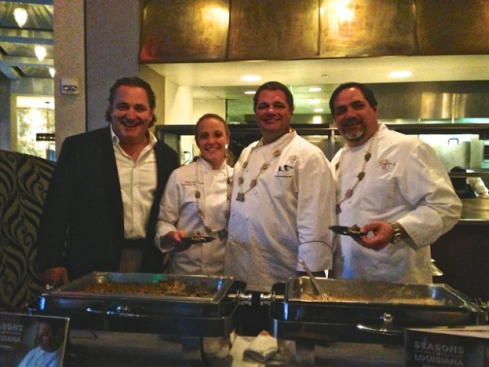 Chefs Peter Sciafani, Katie Gross and Gino Sciafani from Ruffino’s While shuckers were as busy as alligators in a chicken house, P&J Oyster Company President Al Sunseri talked with Whisk and Quill about the merroir of oysters. “Each Atlantic and East Coast oyster comes from the same species, Crassotrea virginica, yet oysters from different waters don’t taste alike,” he explained. “There’s a big difference in salinity and texture from inlet to cove and bay to bayou in Louisiana.” Sunseri should know. His family business has been operating in New Orleans’ French Quarter since 1876.
Before we left Chef Randol graciously gave us permission to print his restaurant’s recipe for their fabulous Oyster Rockefeller Soup. “Why not! You’re far enough away,” he assured us.
 Oyster Rockefeller Soup RANDOL’S OYSTER ROCKERFELLER SOUP
- 4 tablespoons of butter
- ½ a diced onion
- ½ a green bell pepper
- 1 rib of diced celery
- 3 tablespoons of all-purpose flour
- 1 cup chicken or vegetable stock
- 1 pint of heavy whipping cream
- ½ pint of fresh Louisiana oysters w/ juice
- 1 teaspoon of ground red pepper
- ¼ teaspoon each of white pepper, dried basil, dried thyme
- 8 ounces of chopped frozen spinach (drained)
- ½ ounce Pernod
- kosher salt to taste
Melt butter in a 4-quart saucepan. Add onions, bell pepper and celery and sweat until translucent, being careful not to brown. Stir in the flour and cook until dissolved. Add chicken stock, red pepper, white pepper, basil and thyme and reduce by one third. Add in the heavy cream and chopped spinach and reduce by half. Add the oysters and their juice and simmer for 5 minutes. Finish with Pernod and season to taste with kosher salt. Serve in a toasted bread bowl. Serves 4-6.
Photo credit Jordan Wright
Jordan Wright
March 3, 2014
Special to The Alexandria Times
 Adam is played by Richard Isaacs, Luke by Fred Dechow – Photo credit Michael deBlois. When Luke (Frederick Dechow) and Adam (Richard Isaacs) meet at a rooftop party in New York City they click, despite their disparities. Luke is a young aspiring actor and “cater waiter”, and Adam once an aspiring writer wallows in a mid-life crisis at a dead end job at his friend Holly’s candle shop. Though they have opposing views, Luke prays after sex and Adam is a dyed-in-the-wool atheist, they move in together. And though Adam feels as though all the end-of-the-world stuff and the who’s-going-to-heaven and who’s-going-to-hell routine is “a bit Vegas”, when Luke has a life-threatening accident Adam must take into account Luke’s religious philosophy.
Geoffrey Nauffts’ comic drama Next Fall, first brought to Broadway in 2010 by Producers Elton John and David Furnish, examines the opposing forces of conflict and sacrifice within a relationship in a script filled with wry wit, a steady stream of funny lines and deadpan sarcasm.
 Brandon by Andy De, Arlene by Gayle N. Grimes and Holly by Suzanne Martin – Photo credit to Michael deBlois. The play opens in a waiting room at New York’s Beth Israel Medical Center where Brandon (Andy De), Holly (Suzanne Martin), Arlene (Gayle Nichols-Grimes), Butch (Cal Whitehurst) and Adam await news of Luke’s condition. Adam has to figure out how to deal with Arlene and Butch, Luke’s homophobic parents who don’t know their son is gay. For the rest of the play the action shifts back and forth from the men’s Bleeker Street apartment, where the men’s relationship begins to strengthen despite their differences, to the hospital where Adam must hide their love from Luke’s parents.
In a clever technique Director Rob Batarla transitions the thirteen scene changes from hospital to apartment and back with music of the period and projections of grainy black and white photographs of the men throughout their five-year relationship.
 Adam is played by Richard Isaacs, Luke by Fred Dechow, Butch by Cal Whitehurst – Photo credit to Michael deBlois There are awkward exchanges between Arlene and Adam as when she surprises him by confessing her fears and a not very pristine past while Adam struggles to comprehend Brandon, Luke’s former boyfriend, who practices gay sex yet doesn’t believe in a gay relationship. Notwithstanding the proclivity of the three gay characters, the play addresses familiar themes of faith, commitment and love.
The cast in this provocative production is in synch throughout. Dechow plays Luke with subtlety and restraint, Isaacs gives Adam an endearingly derisive quality using a vast repertoire of facial expressions, and Martin imbues Holly with charm and verve. Whitehurst and Nichols-Grimes, both well known in the local theatre community, craft characters that reveal depth as well as empathy.
At Port City Playhouse at The Lab at Convergence, 1819 North Quaker Lane, Alexandria, VA 22302. Remaining performances are on the following dates – February 28, March 1, 7, 8, 11, 14, & 15 at 8pm. Matinees on March 8 & 15 at 2pm. For tickets and information visit www.portcityplayhouse.org.
|