|
|
Jordan Wright
Special to Indian Country Today Media Network
April 15, 2012
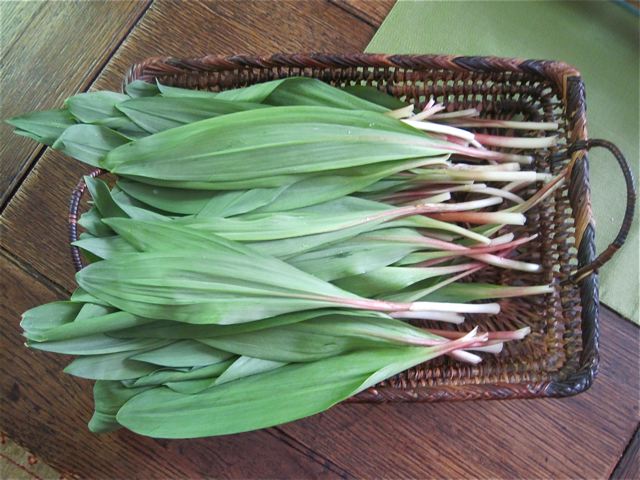 A mess of ramps ready for the pan - photo credit Jordan Wright In Qualla Boundary, high up in the Great Smoky Mountains of North Carolina, springtime means foraging for emergent greens. The Eastern Band of Cherokee has always used the tender shoots, chockfull of minerals and Vitamins A and C, as both tonic and food source – an antidote for winter’s ailments as well as sustenance.
Some of the earliest wild edibles are sochan (a relative of the green-headed coneflower), watercress, branch lettuce, creasy greens and ramps – the most treasured of all. Big Cove tribal council member Bo Taylor gives the Cherokee word “anitse” for all spring greens and “wast” to refer to ramps.
A small adaptable plant that grows only at elevations of 3,000 feet or higher, the noble ramp (Allium Tricoccum – Liliacae) is venerated by the southeastern Cherokee who passed down its virtues to the early settlers. “According to our tradition we use ramps to cleanse the blood from toxins built up over the winter months,” Cherokee tribal elder Don Rose explained.
Throughout local communities there is a movement afoot to preserve, protect and propagate the plant that has a brief season in the deciduous woods before the tree canopy reappears. Horticulturalist and ethnobotanist Kevin Welch, who heads up the Center for Cherokee Plants, has created a project in Qualla called “The Backyard Ramp Patch”. “Each spring we distribute small bags of ramps filled with around 50 bulbs for home gardening.”
His wife and collaborator, Sarah McClellan, who is the Project Director and Educator at the Cherokee Reservation Cooperative Extension Center and coordinator of the Cherokee Native Plant Study Group is enthusiastic about the program. “We have distributed over 70,000 bulbs so far. It’s our ninth year and we are supplying to 150-200 families each year.” They are not taken from the forest. McClellan buys the ramp bulbs and seeds from Ramp Farm Specialties in Richwood, West Virginia.
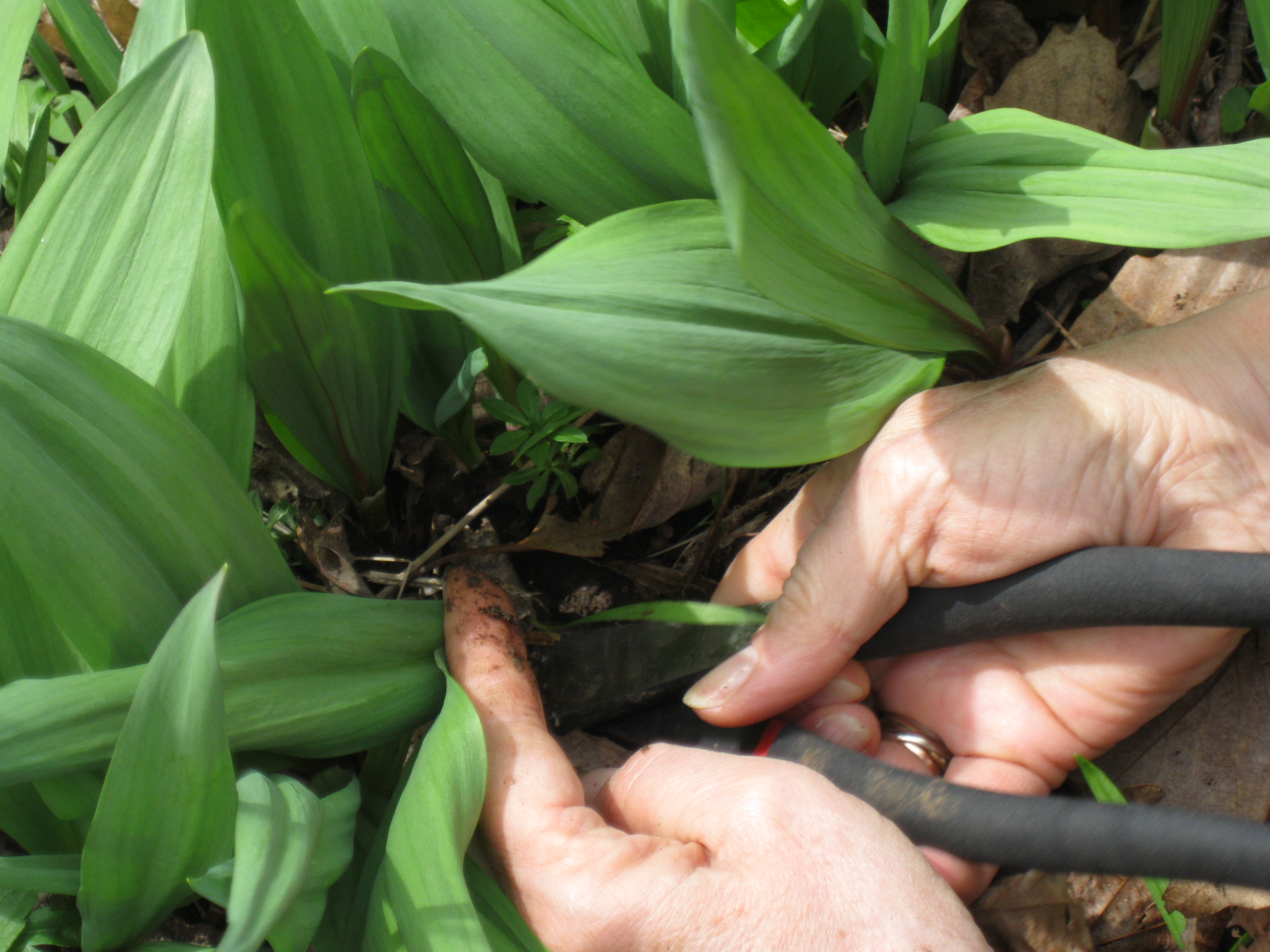
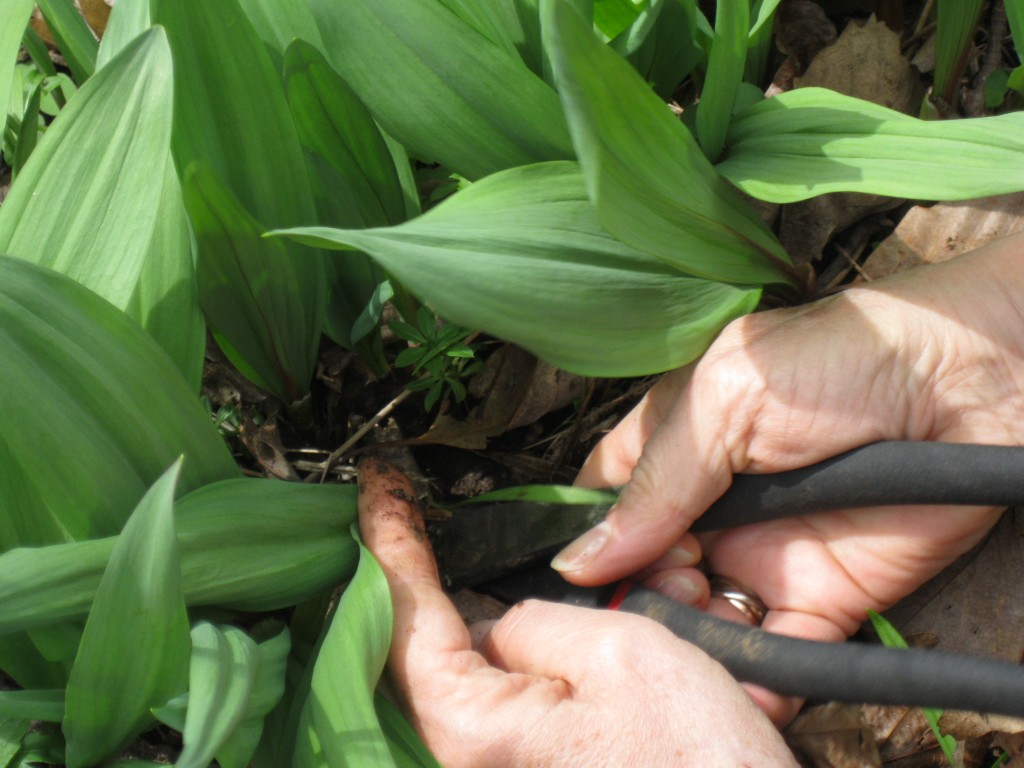 Harvesting Ramps - Photo credit Jordan Wright Welch talks about the proper way Indians harvest them in the wild. “The best method allows ramps to grow back from its roots. Rather than pull up the entire plant, they loosen the soil around it, then reach down into the soil with a knife and cut off a ¼ inch or so of the bulb just above the roots, leaving the roots in the soil to grow a new plant. Thus ramps continue to flourish. When pulled up by the roots, like onions from the garden, whole stands of ramps disappear,” he cautions.
Each year the community hosts “Rainbows and Ramps” in April. Janice Wildcatt, who runs the early spring event and acted as my guide during a recent trip to Cherokee, NC, explains, “The festival has been going on for 30 years. It’s a celebration for the tribal elders, who can no longer get into the woods to pick their ramps. Before the visitors arrive we give them a free meal of ramps and local trout and other traditional foods. It’s comfort food. Way back it was more like a simple pot luck, but it has grown in popularity and for the past two years we have served over 700 visitors a year.” Entertainment is part of the experience and this year’s festivities included the Head Start Traditional Dancers along with the Old Antioch Gospel Singers and the Mountain Traditional Cloggers.
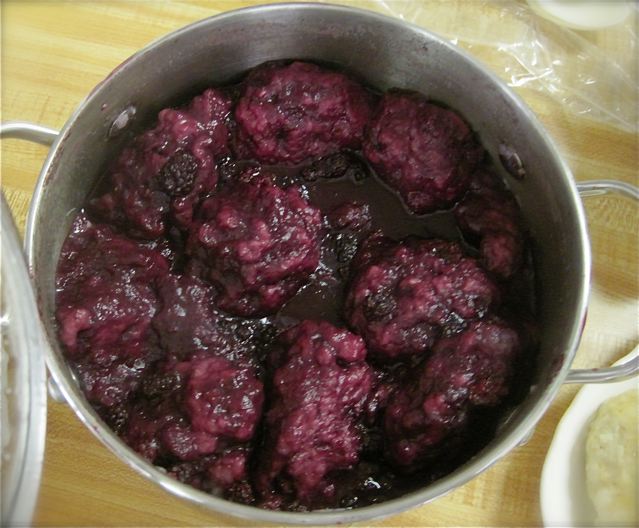 Blackberry dumplings - photo credit Jordan Wright During my stay I was invited by several tribal members to join them in a dinner showcasing traditional Cherokee foods. The women who are generous in the community with their time and culinary talents laid out a splendid buffet of their delicious dishes. Nikki Nations, a local landscape artist, cooked up fatback, blackberry dumplings, fried potatoes and lye dumplings; Alice Kekahbah, who lived and worked for the BIA for 30 years, prepared her fried sweet potatoes and sochan; Bessie Wallace, President of the North American Indian Women’s Association (NAIWA) Cherokee Chapter, brought sweet tea; Hattie Panther made bean dumplings; and my tourism guru, Janice Wildcatt, sautéed up a mess of ramps with scrambled eggs. It was a convivial evening among the ladies who caught up on local happenings. After supper we drove over to Big Cove where we spotted two of the recently reintroduced elk herd peacefully grazing alongside the road.
 Elk in Big Cove, Cherokee, NC - photo credit Jordan Wright Ramps are frequently described as having an acquired taste akin to onions mixed with garlic, and are often referred to as “wild leeks”. At some ramp fests they even hand out mouthwash, called the “Scope cure”, to counter what they say is the lingering odor.
Returning from Cherokee we spent a few days at our family homestead along the Blue Ridge Parkway in the Appalachian mountains of southwestern Virginia. Beside a small spring I located a stand of ramps that had been planted over 30 years ago. Bearing in mind the Cherokee way of sustainability, I harvested a small bunch, carefully leaving the bulbs intact underground for next year’s crop. After rinsing the dirt off the leaves and drying them, a quick chop and sauté in butter revealed them to be even milder than scallions and with a delicate aroma of garlic. The only thing missing was the trout.
Jordan Wright
Special to Washingtonian Magazine – April issue
April 2012
If you think the Philly food scene is all cheesesteaks, snapper soup and Italian water ice – you’ve missed the gastronomic explosion in Love City, although if cheesesteak is your thing Barclay Prime will satisfy for $100 a pop under crystal chandeliers. (www.barclayprime.com) Here are some ways to celebrate the city’s gastronomic delights.
Where to stay
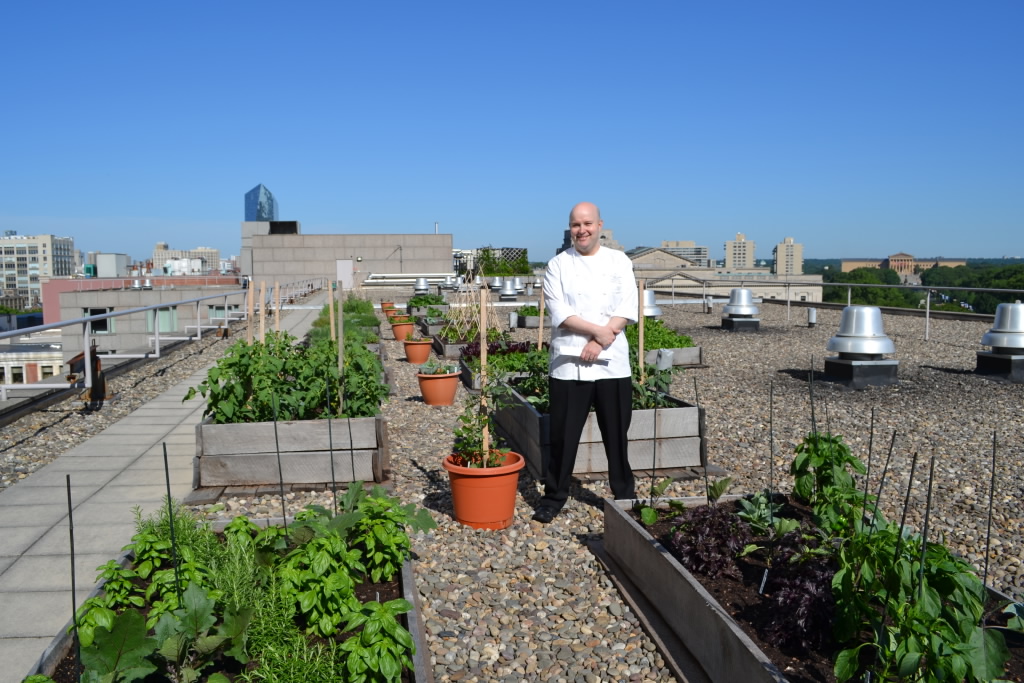 Executive Chef Rafael Gonzalez at the Four Seasons Hotel rooftop garden - Photo credit Jordan Wright Check in at the Four Seasons Hotel, whose executive chef plucks herbs and veggies from their rooftop garden. (www.fourseasons.com/Philadelphia) The luxurious Old World style property is centrally located at Logan Square.
The Hotel Palomar near Rittenhouse Square is modernist chic. Leopard bathrobes and complimentary nightly wine receptions are replete with truffled popcorn. (www.hotelpalomar-philadelphia.com)
Dining and Drinks
The restaurant scene once dominated by Iron Chef Jose Garces known for Amado and Distrito, and the prodigious over-achiever Stephen Starr (of his 20 restos, five opened this year), has upstarts nipping at their heels.
Current scene-stealers are Fish, Fork, La Croix, Bibou, the revamped Oyster House, Meme, White Dog Café and Vetri, though George Perrier’s Le Bec Fin still reigns as the bastion of French haute cuisine.
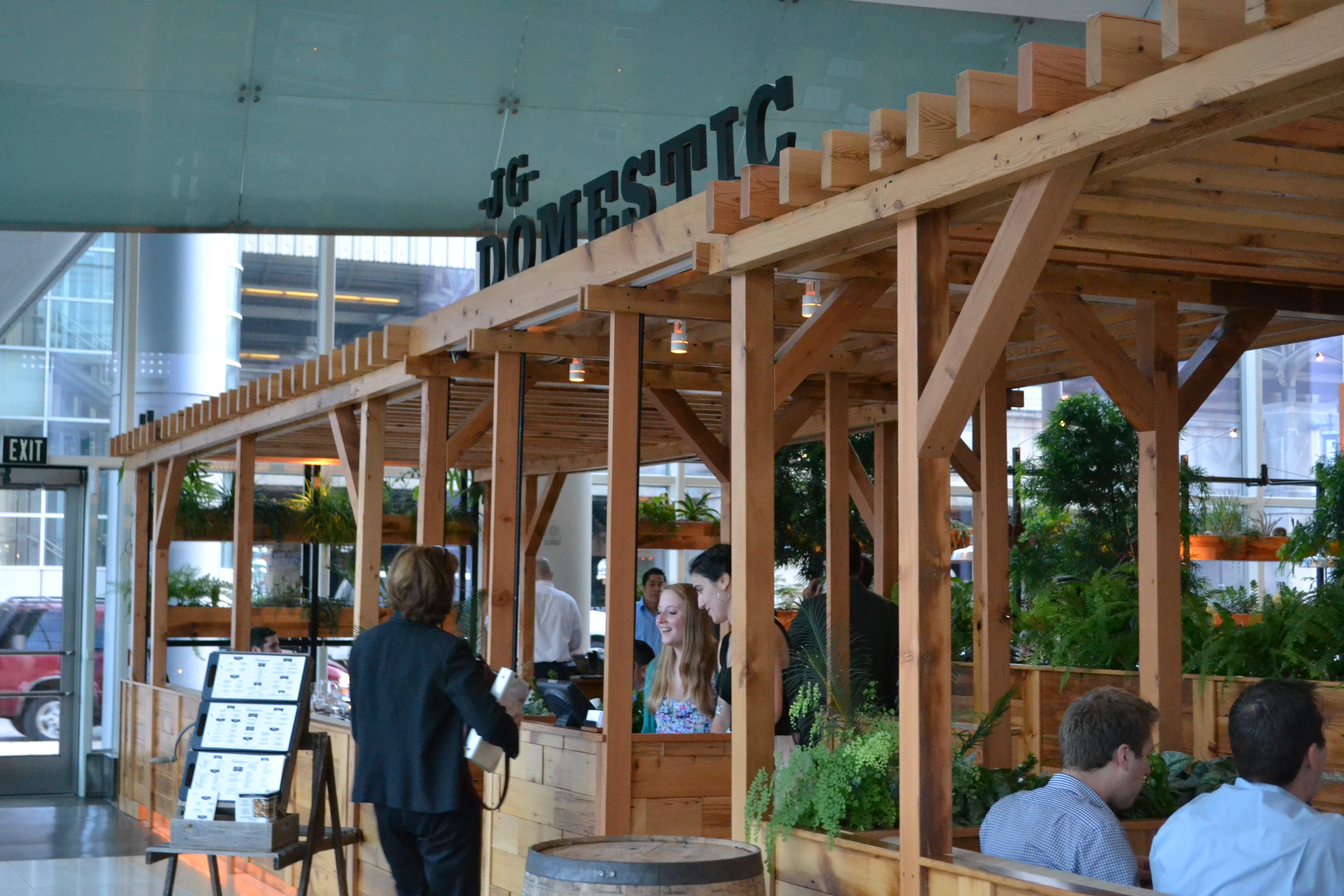
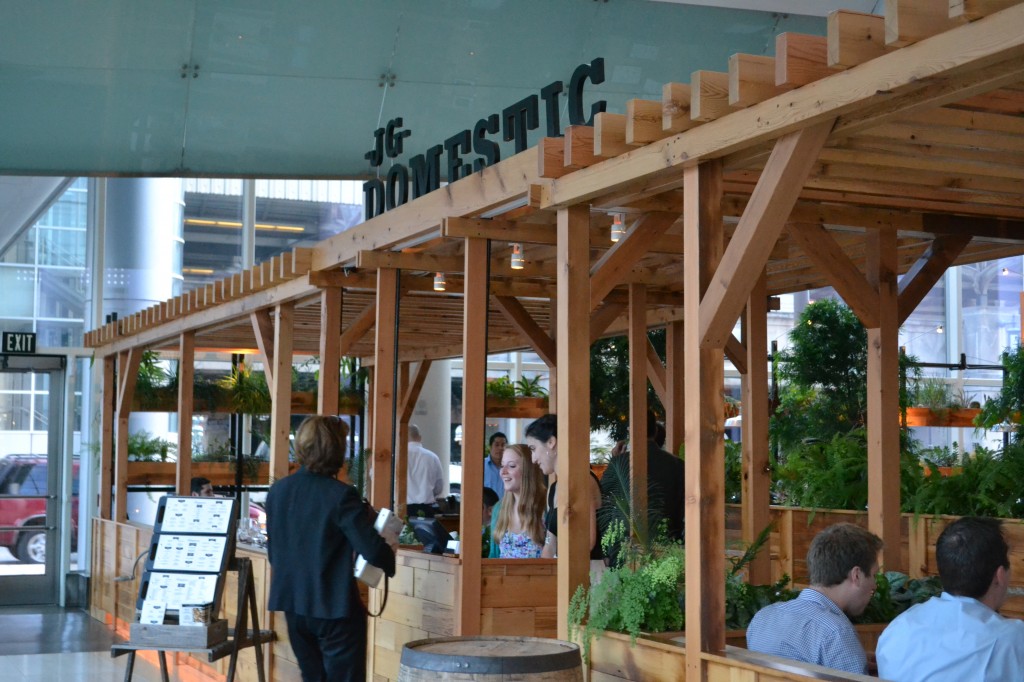 JG Domestic in the Cira Centre - Photo credit Jordan Wright Garces channels The French Laundry at JG Domestic in the Cira Centre for American farm-sourced dining. The menu changes seasonally, but look for Wagyu carpaccio and lobster cappuccino, the Griggstown Farms roast chicken is a standout, plus the yummy bourbon caramel beignets. (www.jgdomestic.com)
Zahav is a modern Israeli-inspired gem. Try the persimmon salad, oxtail soup with fenugreek, Brussel sprouts with whipped feta or a perfect lamb kebab dotted with pistachios. Save room for the hazelnut and date rugelach. (www.zahavrestaurant.com)
Chef, author and television personality, Walter Staib, whose three-time Emmy-winning PBS program “A Taste of History” has been nominated for a James Beard Award this year, is the owner of the elegant City Tavern. Opened in 1773, the original tavern was host to George Washington, John Adams, Benjamin Franklin and Thomas Jefferson, but you can dine there on Staib’s 18th century style gourmet cuisine today. (www.citytavern.com)
On Washington Square the new Talula’s Garden is an enchantingly rustic spot known for their spectacular cheese menu. Try salmon with roasted sunchokes and pancetta or lobster pie with lobster anisette sauce. (www.talulasgarden.com)
In the heart of the theatre district the Walnut Street Supper Club appeals to the Mad Men crowd with a super-glam retro nightclub featuring live entertainment from “I-passed-the-audition!” singing servers. Dishes lean toward Italian specialties and steaks and goes from rack of lamb to lobster ravioli. (www.walnutstreetsupperclub.com)
Around the corner the hot bar scene is El Vez with its dazzling Vegas vibe bar mounted with an illuminated motorcycle. Slip into a plush banquette for a cold Pacifico or blood orange margarita. A ‘50’s draw-draped photo booth for guests documents the visit. (www.elvezrestaurant.com)
Across the street and named number one by National Geographic on their list of the “Top Ten Places in the World to Get Ice Cream”, is Capogiro Gelato Artisans. Try their Cioccolato Scuro, Bananas Foster or Philly Cheesecake flavors. (www.capogirogelato.com)
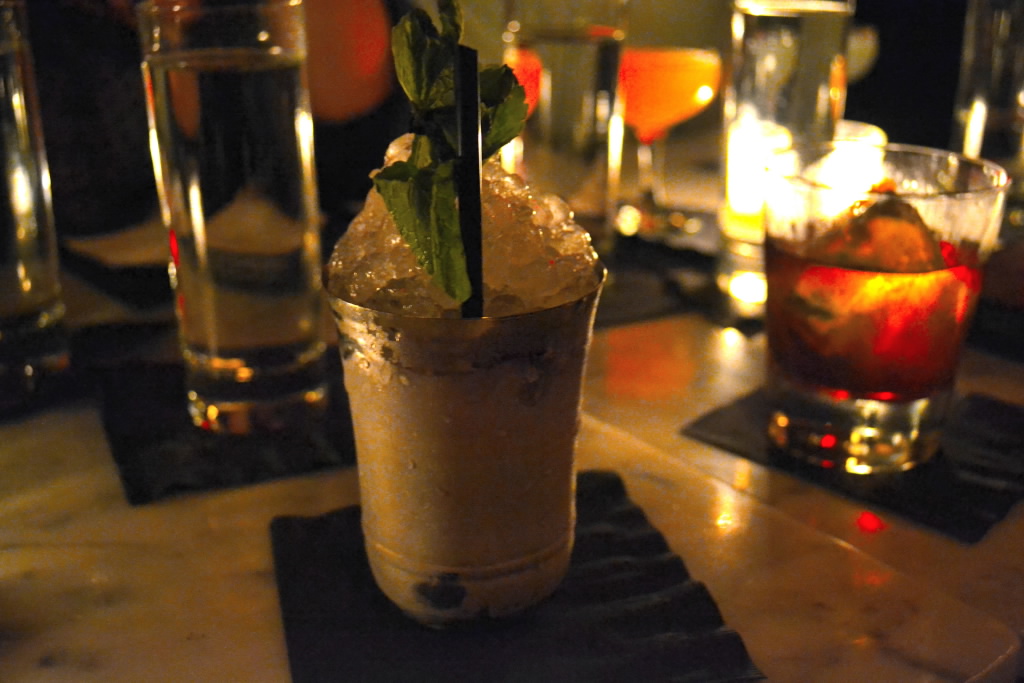 The Mint Julep at Franklin Mortgage and Investment Company - Photo credit Jordan Wright Cocktails are the main attraction at Franklin Mortgage and Investment Co. a one-time Prohibition era speakeasy with upscale ingredients and herbal infusions. Indulge in a ‘Blonde Redhead’ or ‘Drums in the Deep’. (www.thefranklinbar.com)
For the best taps in town sample the suds at Hawthorne’s Beer Boutique or tour the tasting rooms at the Yards or the Philadelphia Brewing Company where the beers are crafted on site.
Farmers Markets
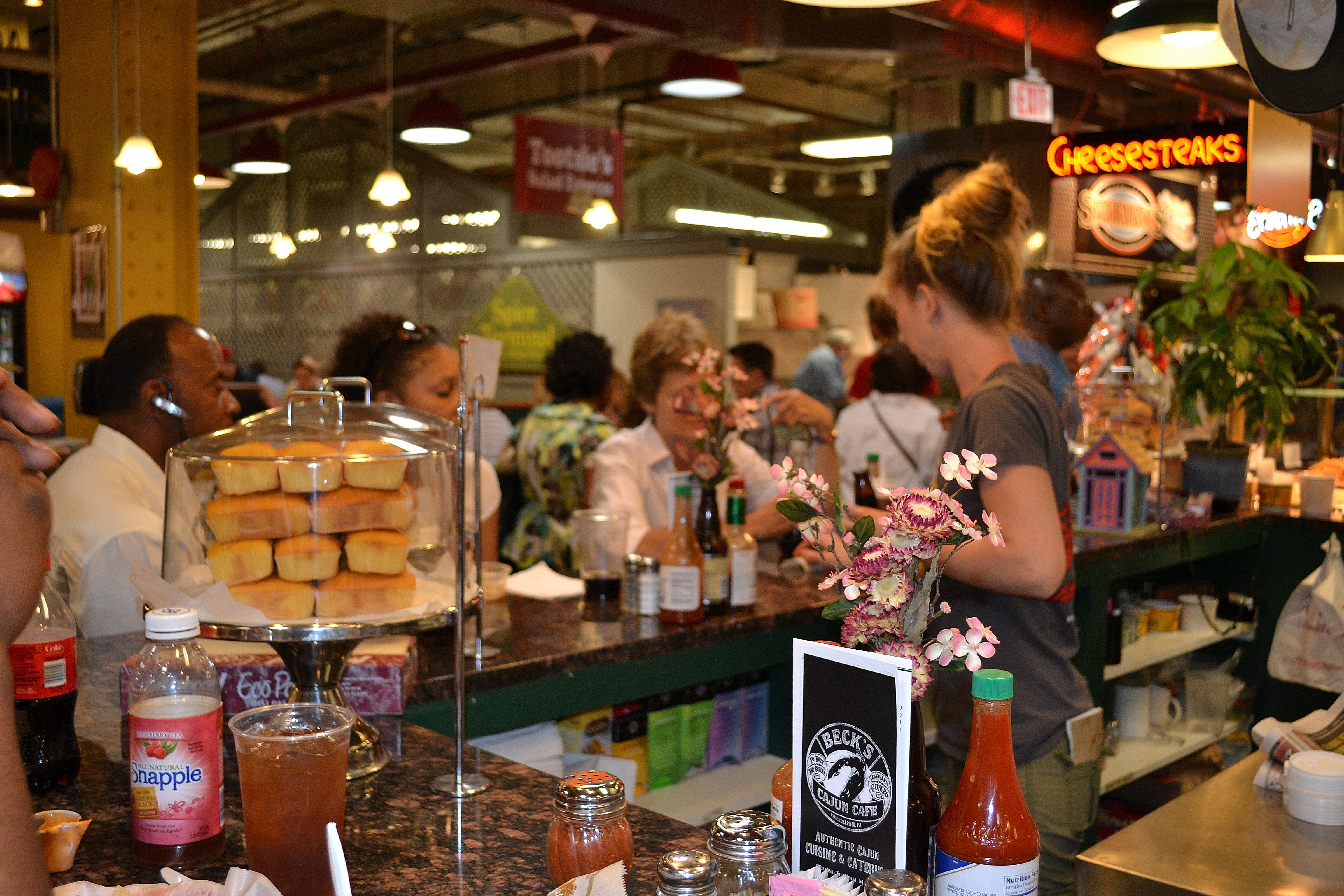
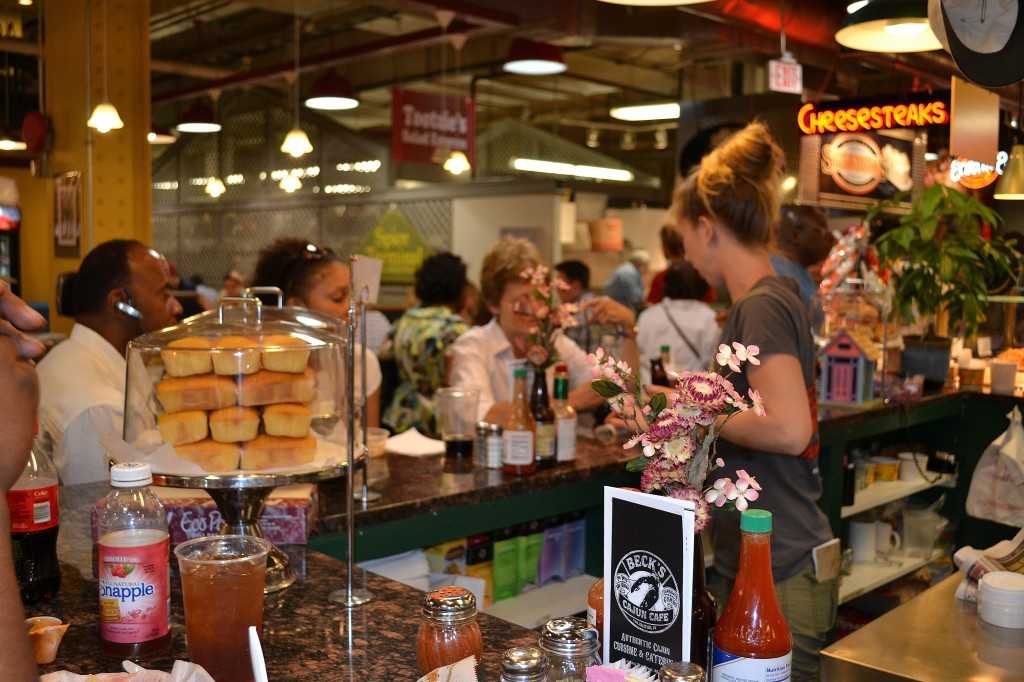 Beck's Cajun Cafe in the Redding Terminal Market - Photo credit Jordan Wright Right in the heart of Philadelphia is the Redding Terminal Market the oldest farmers market in the US. Built in 1893 it’s a bustling bazaar chock-a-block with farm-sourced delicacies from Pennsylvania Dutch cakes and pies to pickles and spices. Chill out with a dozen briny bivalves at Pearl’s Oyster Bar or chow down on Cajun jambalaya, Southern BBQ, French crepes or Italian hoagies at over 15 dining counters.
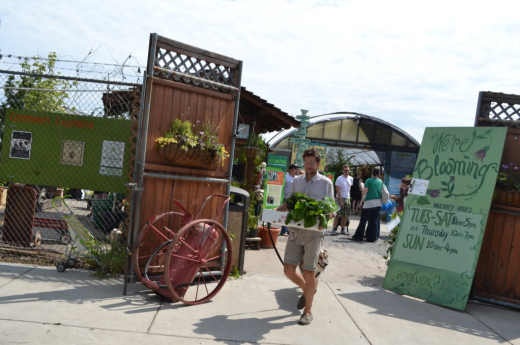 Greensgrow Farm - Photo Credit Jordan Wright While Headhouse Farmers’ Market and Greensgrow Farm grow and sell on site, The Food Trust, with its network of 35 farmers markets around the city, promotes local farmers and budding entrepreneurs.
Over on Baltimore Avenue in what’s know as the University District grab a coffee or Maplehofe Dairy hot chocolate and bagels at the Milk and Honey Market and hit the nearby Clark Park Farmers’ Market on Thursday afternoons and Saturday mornings to satisfy your inner locavore. If the weather permits, you can picnic in the adjoining park.
Current Art Scene
Don’t miss the newly relocated The Barnes Foundation, scheduled to open on Logan Square May 19th. www.BarnesFoundation.org
Or tour the Philadelphia Museum of Art’s “Van Gogh Up Close” exhibit –an exclusive in the US that runs till May 6th. (www.philamuseum.org)
Food Truckers Heat Up the Night
 Night Market Philly - photo credit www.nightmarketphilly.org As the weather warms up Night Market Philly kicks off the season with monthly food truck parties. Twitter followers get regular updates. Standout food truckers are Garces’ Guapo’s Tacos, Pitruco for wood-fired pizzas, Mini Trini featuring Trinidadian flavors, Viva Las Vegans for custom veggie burgers, Tyson Bees for Asian fusion, and Bui’s for Vietnamese.
Dessert lovers like Little Baby’s Ice Cream flavors like Cardamom Caramel or Earl Grey’s Sriracha; Sugar Philly for Spicy Mexican Chocolate Cake; or go for French Macarons; and Nutella cupcakes from the Buttercream truck. Former Roots drummer and Philly native, QuestLove, is rumored to be launching a soul food truck featuring Origami Wrapped Buttermilk Fried Chicken.
Sunday Brunch and Italian Market
Linger for Sunday brunch at Daniel Stern’s R2L with sweeping bird’s eye views of the city from the 37th floor of Two Liberty Place on Rittenhouse Square. (www.R2Lrestaurant.com)
The Dandelion Pub is Stephen Starr’s ode to a traditional Irish pub. Sundays feature roast beef and Yorkshire pudding. www.thedandelionpub.com
On the way home stop at Philadelphia’s 100-year old Ninth Street Italian Market. Grab cheeses from Di Bruno’s and Claudios, hand rolled pasta and sauces from Talluto’s and sausages from Fiorella Bros., and specialty game meats and pates from D’Angelo Bros. Open from 8 till 2 on Sundays. (www.phillyitalianmarket.com)
Jordan Wright
April 6th, 2012
Hop on In
Seems like the holidays stacked up on us this year. It’s times like these we wish we were still in school or had paid federal holidays. But noooo – we’re still hopping around finding the best places to hang out, clink your drink and tuck in. So if you haven’t made Easter or Passover dinner plans yet, here are a few choices.
Go Greek
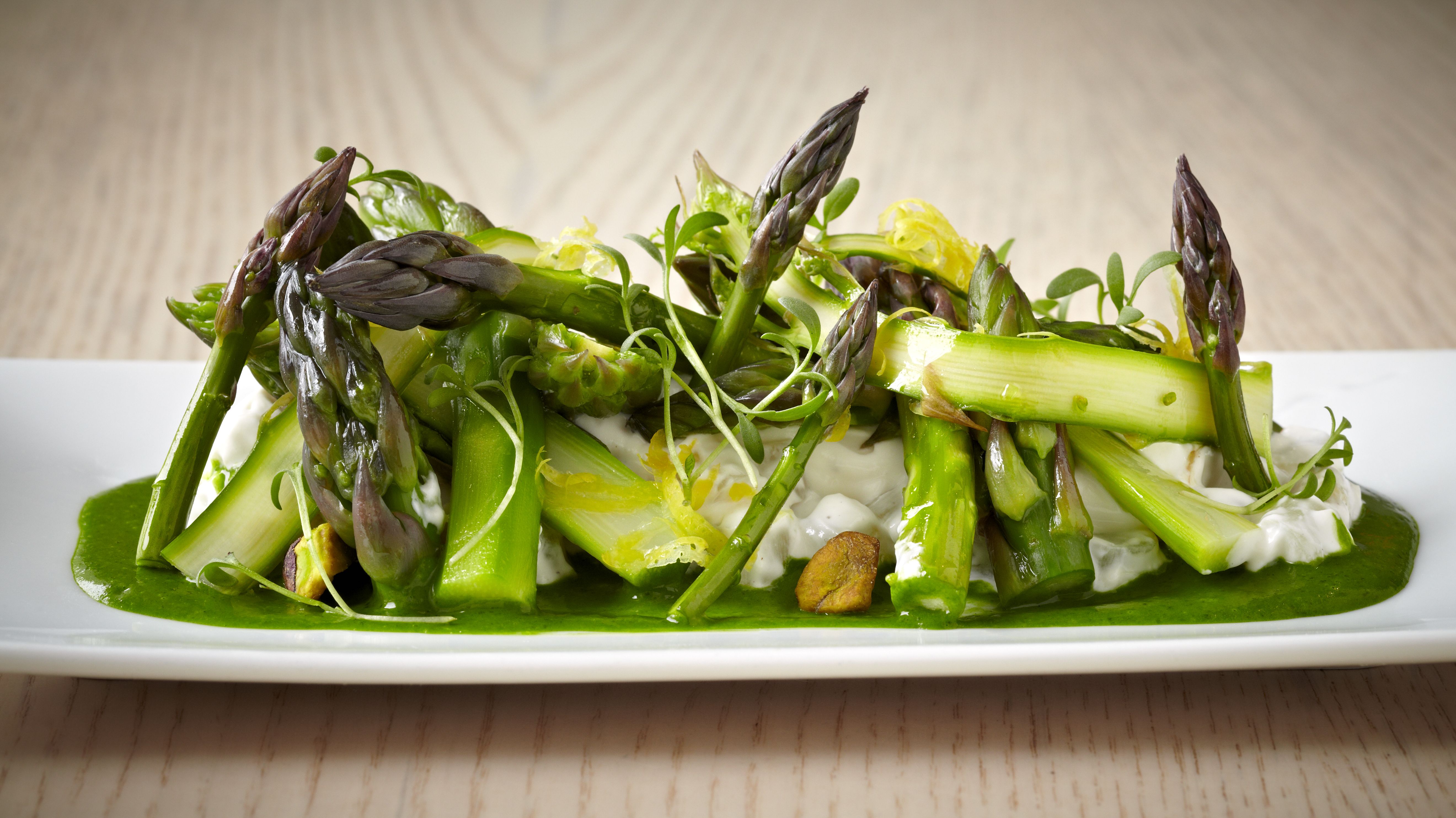
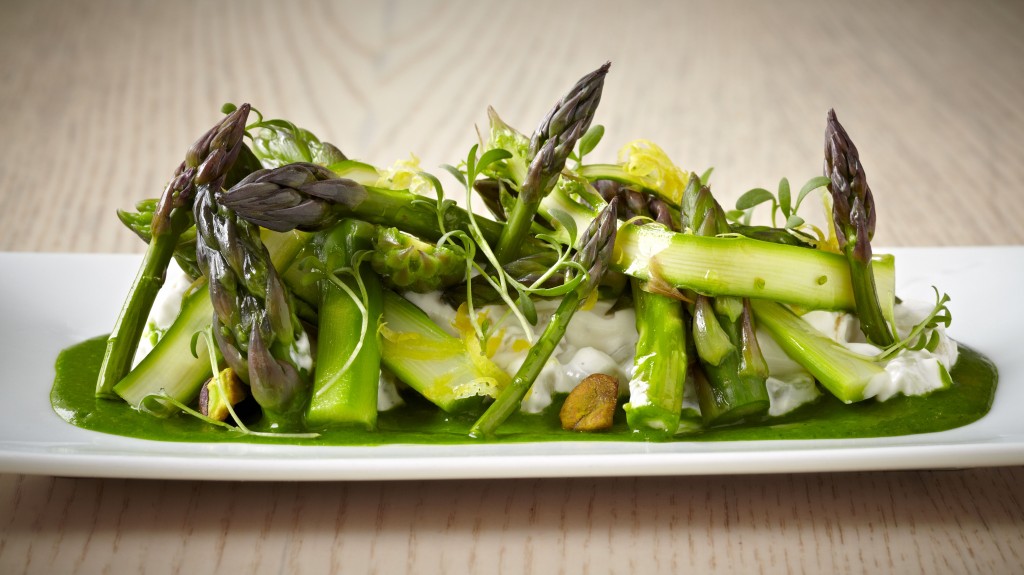 Asparagus Salata - Photo credit Greg Powers Zaytinya is doing it up Mediterranean style with a Greek Easter festival that runs from April 8th through April 22nd. We dropped in last week for an advance sampling of some of the scrumptious dishes and they are totally wow! Head Chef Michael Costa is taking full advantage of the resto’s spit roaster to cook Sprarangia, a flame cooked lamb shoulder – all crispy and charred and tender at the same time. He serves it with Mayritsa a traditional Easter soup made from lamb’s liver (sign me up!), caramelized onions, rice, egg and lemon broth; a palate-cleansing salad of white asparagus tzatziki, pistachios and green asparagus; and Spanakorizo, rice pilaf with spinach puree and preserved cherry tomatoes and feta. Try the glossa – a rich dish of lamb’s tongue, potato skordalia, green olives, celery and candied pistachios.
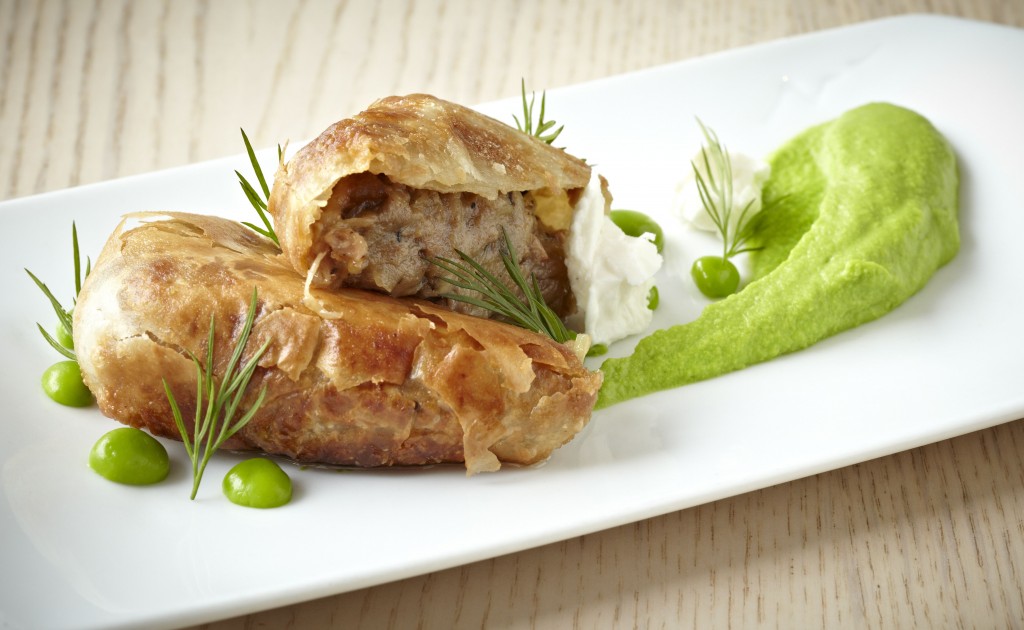 Lamb Kleftico - Photo credit Greg Powers These Greek Easter cookies are so craveable and packed to go for later or a hostess gift if you have that much self-control. For those of you who live and die for these heavenly sweets you can choose from – paximadakia, pastoules, spiced walnut cookies in honey syrup, and kourabiedes baked with a hint of Metaxa.
Why Cook Kosher When You Can Make Reservations?
Seems like keeping kosher is getting harder and harder for working Washingtonians – so little time so little space and nowhere to store all those dishes. But Passover celebrants – do not despair. Let a trained French chef keep you and your family kosher in style. Just bring your own afikomen.
Chef Michel Laudier of Tragara Ristorante in Bethesda, once top toque at Georgetown’s tony Rive Gauche, is preparing a traditional Kosher-style (without chametz) Passover menu featuring homemade gefilte fish with fresh horseradish and chicken soup with matzah balls to start. Entrees like grilled salmon or veal chops are tempting, but save room for a Passover roulade with strawberries and whipped cream doused with Sabra liqueur or haroset ice cream in a meringue shell with honey caramel sauce.
Jeepers Creepers Where’d You Get Those Peeps
It’s too late to get your dark chocolate-dipped Peeps at ACKC. Apparently we’re not the only ones that thought this was a super cool idea. As of this morning they were completely sold out. Instead we dashed across the bridge to the Peeps store in National Harbor and got them in turquoise, pink, purple and yellow. Now our guests can dip their own at the table with my favorite Icelandic chocolate. Finger licking approved.
Ham vs. Lamb – An Easter Dinner Quandary
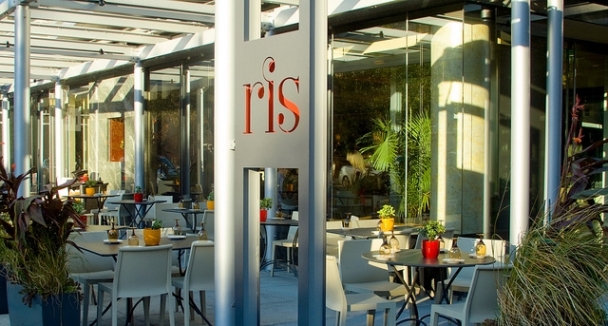 The patio at RIS Ris Lacoste is cooking up her sophisticated Modern American Cuisine for Easter at her eponymously named restaurant RIS, well located near the Kennedy Center. Start with chilled pea soup with lemon, crab and mint, followed by a delicately prepared salmon sampler with smoked trout, smoked steelhead trout caviar, smoked New Brunswick salmon, salmon rillettes and salmon cucumber tartare. How luscious! It’s a ham-or-lamb choice of entrees – a duo of lamb both shank and rack with a Shiraz sauce or a puff pastry-crusted ham Wellington. I suggest a nice Willamette Valley pinot noir with either one. Cross the finish line with a meltingly tender coconut cake and take a nice long walk along the river.
Very Cherry Patio Finds
The stunning Sofitel’s Lafayette Square patio is open for the season and they’re serving these delish mojitos through the month of April. I can’t believe we got the secret recipe from Head Bartender extraordinaire Vincent Gernigon!
Sofitel’s Cherry Mojito
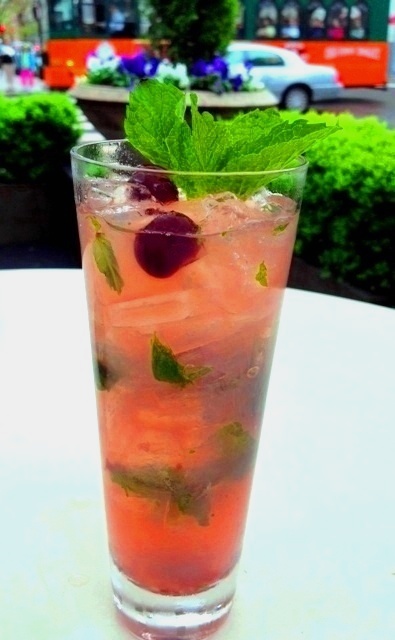 Cherry mojito from the Sofitel Hotel DC - photo courtesy of D. Murphy
2 oz Bacardi Cherry Torch
¾ oz Fresh Squeezed Lime Juice
Cerises griottine (aka Griottines Morello Cherries from France, a type of sour cherry with a dark skin)
Splash of Soda Water
Fresh mint leaves
2 Teaspoons of Granulated White Sugar
Muddle fresh mint and cerise griotte in a shaker. Add granulated sugar. Add Bacardi Cherry Torch along with some ice. Shake well to bruise the leaves. Pour into a highball glass topped off with soda water. Garnish with cerise griotte and a spring of fresh mint. A votre santé Vincent!
Jordan Wright
March 26, 2012
 The Travel Channel's Samantha Brown signs programs - photo credit Jordan Wright 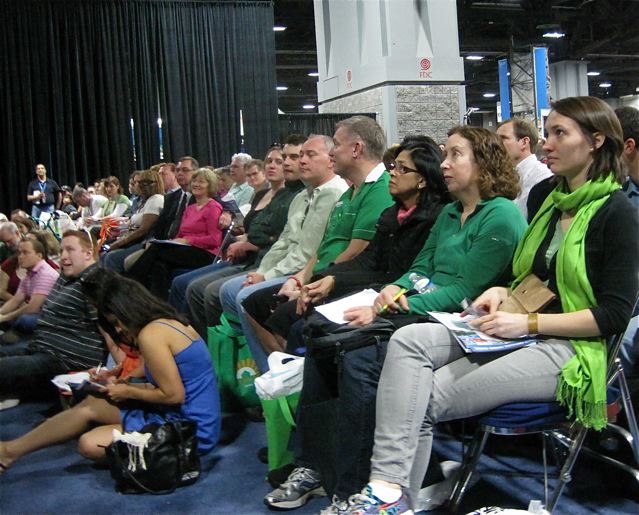 Packed and rapt audience at the Travel and Adventure Show - photo credit Jordan Wright
Travel and Adventure Show in DC
The thrills and chills at the Travel and Adventure show at the convention center last week were not from the food (a few vendors kept us from near starvation), but a myriad of exhibitors luring us to climb mountains, scuba dive, zip line or go on safari in South Africa.
Seasoned travelers Samantha Brown of The Travel Channel; Pauline Frommer of the famed Frommer’s Travel Guides; Patricia Schultz author of 1,000 Places to See Before You Die; and Marc Peyser, Editor at Frommer’s Budget Travel magazine, were on hand to give tips to a packed and rapt audience. Sam, as her fans call her, was her adorable, ever-effervescent, elfin self – even prettier in person, if you can imagine that.
 Rock wall climbers at the Travel and Adventure Show in DC - photo credit Jordan Wright  Scuba practice at the Travel and Adventure Show - photo credit Jordan Wright Dining with Two Presidents, one First Lady and a James Beard Award Nominee
During a private luncheon last month our first FLOTUS Martha Washington regaled me with tales of her life with George, and their elegant style of non-stop entertaining. The afternoon featured an historical menu drawn from the estate’s records of the Washingtons’ favorite foods and created as a tribute to the General and his wife by chef, author and television personality, Walter Staib.
Here’s what he prepared starting with a refreshing raspberry shrub. Vol au vent prepared with Virginia ham and Rappahanock oysters; West Indies pepper pot soup with Scotch bonnet peppers and cheese straws; local sturgeon collops (quite lavish with sturgeon going for $300 a pop these days) stuffed with Maryland crab; a trilogy of turkey – pot pie, stew and terrine with mushrooms and pecans, and a casserole of sweet potato and apple; finally the legendary “Excellent Cake” from Martha’s recipes, a many-layered affair made with black tea, spiced rum syrup and orange buttercream icing, and an array of scrumptious 18th century tarlets, cookies and shortbreads. It’s no wonder Staib has been nominated for a James Beard Award this year!
Staib, whose critically acclaimed Emmy-winning program “A Taste of History” on PBS, came down from his City Tavern restaurant in Philadelphia to prepare the six-course luncheon to celebrate the opening of “Hoecakes and Hospitality” a new exhibit about food and entertaining at the Mount Vernon Estate, Museum and Gardens in Virginia.
Opened in 1773, the original City Tavern played host to George Washington, John Adams, Benjamin Franklin and Thomas Jefferson, but you can dine there on Staib’s 18th century style gourmet cuisine today. www.mountvernon.org.
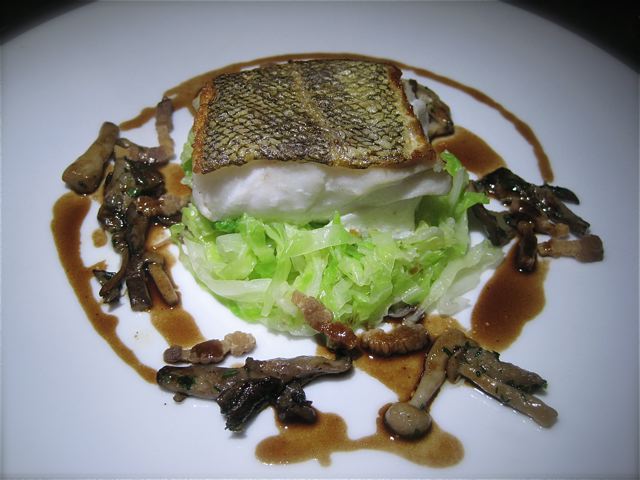 Pave of roasted cod with Savoy cabbage, lardons and mushrooms at The Jefferson - photo credit Jordan Wright This week at The Jefferson hotel in the Private Wine Cellar at the Plume Restaurant I dined with Thomas Jefferson. Well not quite, but all his favorite foods in a seven-course dinner as interpreted by Chef Chris Jakubiec. Sommelier Michael Scaffidi, formerly of the French Laundry, purposefully selected seven vintages, from the hotel’s extensive wine collection of 1,300 labels, to echo Jefferson’s travels.
Despite the current scandale about foie gras (now banned in California) who could say “non” to fois gras parfait paired with 1993 Zilliken Forstmeister Riesling Auslese, followed by a cool mint-scented English pea soup with pea mousse and pea shoots accented by an Albarino from Bodegas Adega; and a rich gratin of braised rabbit. On to a distinctive pave of roasted cod with a “red” Cumieres champagne made from the pinot noir grape; filet of beef with truffled pommes dauphine indelibly charmed by an exquisite Massolino Barolo; and summed up with Jefferson’s favorite floating island served with Klein Constantia “Vin de Constance” from South Africa. So yummy! Gilding the lily were chocolate mignardises served with Blandy’s Malmsey Madeira. If only we had booked a room for the night. Sigh…
The hotel will be offering “Jefferson’s Journey Tasting Menu” from April 10th through April 14th. To view the rest of the delectable dishes and wine pairings go to www.jeffersondc.com.
Ramping It Up For Spring
Throughout March and April all eight Chop’t Salad DC locations are using the seasonal delicacy ramps in a vinaigrette available for any of their create-your-own salads. The ramp, a mash up between garlic and leeks, has a very short season to tempt you. In addition three spring salads take you to Morocco, Sardinia, and the American Southwest.
Try the roasted Moroccan Cobb made with farro, roasted carrots, parsnips and cauliflower on a mix of romaine and spinach with charmoula vinaigrette; or inspired by Italy’s beautiful island of Sardinia, the Sardinian, a unique rendition of the classic Caesar salad made with organic baby kale, FreeBird grilled chicken, Fiore Sardo Cheese, flatbread crisps, and romaine lettuce with a lemon Caesar
dressing. Or giddyap to the Southwest with the Four Corners Cobb
made with FreeBird chipotle chicken, rattlesnake beans, cotija cheese, avocado, tortilla chips, and romaine and served with green onion cilantro vinaigrette. So healthful, so spring! For locations visit www.choptsalad.com.
Jordan Wright
March 23, 2012
Special to The Alexandria Times
 Jay lies in his mother's lap in 1964 boat image - Photo courtesy of Jay Alvarez Beginning April 4th MetroStage will present the compelling tale of one family’s escape from Cuba. The one-man drama is written, directed and performed by Jorge Alvarez whose parents crossed the 90 treacherous miles across the Straits of Florida by boat to Florida’s shores in 1964, five years after Castro came to power. Once a glamorous island destination, where socialites and celebrities frolicked in glittering nightclubs and casinos and where headliners from around the world entertained both the famous and the infamous, the island became a communist outpost, riddled with poverty. Landowners were stripped of their property, and those who could, fled, making their way – mostly in rickety boats – to freedom in America.
The show has been playing to sold out audiences in New York and is currently under development as a musical. I spoke to Alvarez by phone to learn about the process of writing his play.
Jordan Wright – How old were your parents when they left Cuba?
Jorge Alvarez – They were forty and I was around five. My brothers and sisters were here already. They had already taken the “Peter Pan” flights. [Code name for the Catholic-sponsored CIA project of “freedom flights” that brought over 14,000 children from Cuba to Miami – days before regular direct flights were cancelled.] My father was an avid sport fisherman and had his own boat. Sadly we later found out that another family who left that same night was caught.
JW – Who encouraged you to tell the story?
JA – First of all I’m not a writer, this is the only thing I’ve ever written. I’m an actor. And this was just written through me.
I grew up listening to the stories. I was in California at the lake in Franklin Canyon Park near Beverly Hills where Opie from The Andy Griffith Show threw the stone in the opening sequence, and I was listening to tapes of my father telling the old stories. I started writing down conversations that I imagined between my parents. But then I put it away for two years. Around October of 2009 I had a reading of the play for the first time. I said, “I wrote this thing and I’m looking for someone to shape it for me.” Theresa Gambacorta [actress, playwright, director] gives me her card and says, “I’ll do that.”
It’s really a love story – love of country, of family – an American story. I didn’t set out to write a political piece of theatre. It’s a story about this particular family at this particular time in history. I think that’s why it is resonating with so many people. It’s not a commentary on Fidel or the United States.
Here in NY we have a reception after the show and I go out and meet the audience. Quite often people want to share their stories or their grandmother’s story. They really connect on a visceral level on what it’s like to be an American, no matter what their nationality.
JW – I understand it will become a musical. Can you talk about that?
JA – A full musical score is being written for the play by Paquito D’Rivera who is a legend – a jazz musician who has 13 Grammys, is a Kennedy Center honoree as a Living Jazz Legend, and was awarded the National Medal for the Arts.
JW – How do you think that will change the impact of the story?
JA – Part of the beauty of the show is its spareness. It’s really storytelling. But as a musical, in my gut, I think it’s going to be amazing. Cuba is going to be really hot, hot, hot with Antonio Banderas about to play Fidel Castro in a movie.
JW – How do you feel about bringing the show here?
JA – I’m so excited. I lived there for ten years when Dupont Circle was my old stomping ground. I got my acting legs in DC when I trained at Studio Theatre and the Shakespeare Theatre’s Summer Workshop. Later I worked there and at Source and did “Shear Madness” at the Gala Hispanic Theatre. I love Washington!
This interview was conducted, condensed and edited by Jordan Wright.
At MetroStage from April 4th through April 22nd 1201 North Royal Street, Alexandria, 22314. For tickets and information visit www.metrostage.org.
March 19th, 2012
Jordan Wright
Special to The Alexandria Times
 John Lescault as the enthusiastically delirious “Brother Russia”. Brother Russia is a great big full-out rock opera – of that there is no quibbling. With music by Dana Rowe and book and lyrics by John Dempsey – collaborators on the Witches of Eastwick and The Fix – its world premiere at Signature Theatre presents twenty-seven full-throated emotional numbers sung by eleven cast members – most doing double duty in multiple roles – in a tightly directed show with lots of romance, razzle-dazzle, a dash of gender bending and a soupcon of Slavic philosophy. But the play-within-a-play has me conflicted.
It opens with a ragtag group of touring actors, whose impresario translates as more Svengali than the purported mystic Rasputin the playwright would like you to believe. “Tonight’s story is the most Russian of all stories. It is my story!” he declares. And so the wheelchair-bound modern-day megalomaniac who calls himself Brother Russia rewrites history to suit his vanity and his second-rate cast.
 Natascia Diaz, as Anastasia, the Tsar’s daughter, sings "Crush Me" in the world premiere of "Brother Russia".  Rachel Zampelli (as the Witch) discovers young Grigori (Doug Kreeger), a “Child of the Wood” in "Brother Russia". John Lescault is tremendous in his portrayal of Brother Russia. He is the glue that holds the overly wrought piece together. Doug Kreeger plays his alter egos, both Sasha and Grigori. Kreeger is vocally and emotionally commanding, in a role that keeps him onstage through his rise from a lowly Siberian village to the luxurious Winter Palace in St. Petersburg and the massacres of the Russian Revolution. I hate to be a spoiler but he dies three times, twice by poisoning, but also stabbed, shot and other niceties to please the Brother Russia’s whimsical story telling. It is dizzying the amount of times he is brought back to life. “Compare an hour of life to death’s eternity,” he oddly proclaims.
In a tale of love and war, the show takes elements from the days of Czar Nicholas as well as classic Russian folk tales and convolutes them into total fiction. Is that good or bad? In any case it’s got plenty of the required murder, mayhem and sex wrapped up in royalty and peasants. If only it were told straight.
My issue with the show is that it swings in and out of quasi-history and into sheer fiction, batting about the audience’s emotions like a tennis ball in perpetual motion. No sooner are you invested in the characters and cozily enjoying a sweeping period piece, than they are lobbed back at you with sarcastic asides provided by the blustery and capricious Brother Russia and his disgruntled cast members including Nicholas played by the captivating Russell Sunday who is fierce in red patent leather platform heels.
 Grigori (Doug Kreeger, holding basket) is happily greeted by a group of strangers for his healing powers. Pictured left to right: Stephen Gregory Smith, Erin Driscoll, Russell Sunday, Rachel Zampelli. But don’t toss the baby out with the bathwater yet. The music is terrific and memorable, especially “The Spirit and the Truth”, “Elsewhere”, “I Belong to You” sung by Anastasia and Grigori and the show stopping “I Serve No Man” sung by Grigori.
Just don’t expect it to follow any semblance of Russian textbook history. This musical comes across as a mash-up of Mel Brooks Springtime for Hitler, Dale Wasserman’s Man of La Mancha and the Broadway version of Victor Hugo’s Les Miserables. And if you like those shows – and who doesn’t? – that’s not all bad. It’s certainly got all the boxes-checked requirements of a hit Broadway show, yet one that is suffering from an identity complex. One can only hope for some editing of this meandering two and a half hour show before it is considered a fait accompli.
Through April 15th at Signature Theatre (Shirlington Village), 4200 Campbell Avenue, Arlington, VA 22206. For tickets and information call 703 820-9771 or visit www.signature-theatre.org.
|