The news was worrisome and unexpected. A sudden trip to the hospital sent Phantom lead Chris Mann in for an emergency appendectomy, thus delaying media review night for an extra week. For the many who ask why we haven’t reviewed a show you’ve already seen, the reason is simple. An embargo exists for critics until the official press night. So even if we were to see a show on opening night, we couldn’t post our reviews until the day after press is brought in. So we waited and fretted for another week.
The Company performs “Masquerade.” Photo by Matthew Murphy.
But we needn’t have worried if Mann would be up for the task. He was. In spades. And on steroids. His powerful voice and physical prowess were not one bit compromised. The surprise came in the program on a tiny slip of paper announcing that the lead role of Christine Daaé would be filled by Julia Udine’s understudy Kaitlyn Davis. Again worries were quickly brushed aside in the first number, “Think of Me”, when Davis wowed the audience in a splendid display of her acting abilities and gorgeous, multi-octaved voice.
The promise of an exciting new production of Andrew Lloyd Webber’s long-running, multiple Tony Awarded opera slash musical, was kept by Producer Cameron Macintosh and the unusually named Really Useful Group, along with Director Laurence Connor. It is lavish and lush and as eerie as you’d expect. Thankfully there are no phantoms to jinx it.
Katie Travis (Christine))and Chris Mann (The Phantom). Photo by Matthew Murphy.
The beauty of this show about a haunted Parisian opera house is that it is still thrilling. Webber’s music and Charles Hart’s lyrics grab you from the get-go and its sense of imminent danger keep the audience enthralled. As for its premise, I won’t attempt to examine the irony of a young ballerina thrust into a lead role as an understudy. (Truth was stranger than fiction on this night!) Or a young girl’s need for a muse to guide her to stardom as Webber did with Sarah Brightman, the cast’s original Christine. That would be too facile.
Just let yourself be taken away by the sweeping music of the night conducted by James Lowe and Dale Rieling, the eye-popping sets by Paul Brown, the pyrotechnics and illusions by Paul Kieve, and the dreamy 19th century costumes by the late Maria Björnson. The New Year’s Eve danse macabre in the song, “Masquerade” is absolutely mesmerizing.
Anne Kanengeiser (Madame Giry). Photo by Matthew Murphy
Look for clues like the 666 lot number on the chandelier at the opera house’s auction, the singerie period music box and the flurry of anonymous notes to the producers insisting they cast Christine in the lead or else murder and mayhem will ensue. It does and it’s as enthralling and haunting as Paule Constable’s eerie lighting design.
Highly recommended.
Through August 20th at the Kennedy Center, 2700 F St., NW, Washington, DC. For tickets and information call 202 467-4600 or visit www.Kennedy-Center.org.
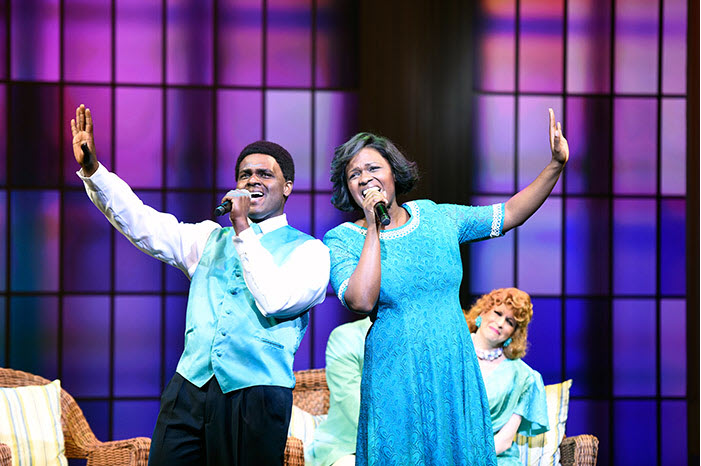
(L to R) Juan Winans as BeBe, Deborah Joy Winans as CeCe and Kirsten Wyatt as Tammy Faye Bakker in Born for This: The BeBe Winans Story, which runs July 1-August 28, 2016 at Arena Stage at the Mead Center for American Theater. Photo by Greg Mooney, courtesy Alliance Theatre.
Checking out the program before curtain up, I counted 27 original numbers with two reprises. How would we get through all these tunes, I pondered? But BeBe Winans, who wrote the music and lyrics, uses snippets of songs to underpin his story and what a surprising saga it is.
Working alongside of Director and Co-Scriptwriter, Charles Randolph-Wright (Motown the Musical), the collaborators regale us with the four elder Winans brothers’ rise to fame which came before BeBe (played by real life nephew, Juan Winans) and sister CeCe’s (played by real life niece, Deborah Joy Winans) road to glory on the The PTL Club.
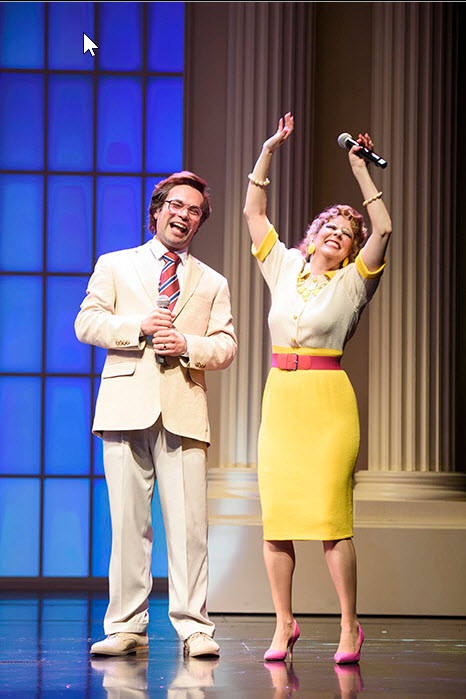
(L to R) Chaz Pofahl as Jim Bakker and Kirsten Wyatt as Tammy Faye Bakker in Born for This: The BeBe Winans Story, which runs July 1-August 28, 2016 at Arena Stage at the Mead Center for American Theater. Photo by Greg Mooney, courtesy Alliance Theatre.
Back in the 80’s the PTL (Praise the Lord) Television Network show was the number one global evangelical Christian station then hosted by the illustrious Jim and Tammy Faye Bakker. For those of us who thought of the Bakkers as “whitebread” as they come, the story stunningly reveals that it was Tammy Faye and Jim (Chaz Pofahl as Tammy’s straying husband) who sheltered the gospel singing teens from the racist threats of the station’s Southern listeners who preferred cutesy, saccharine singing groups like Up With People.
Clearly BeBe and CeCe’s early success is inexorably linked to the Bakkers who raised the kids as their own and are as intrinsic to the story as that of the Winans’ own family. It also provides us with some of the funniest lines. As Winan’s mother Cynthia puts it when she discovers they’ve been signed to the show, “Ooh! Those are some crazy Caucasians!”
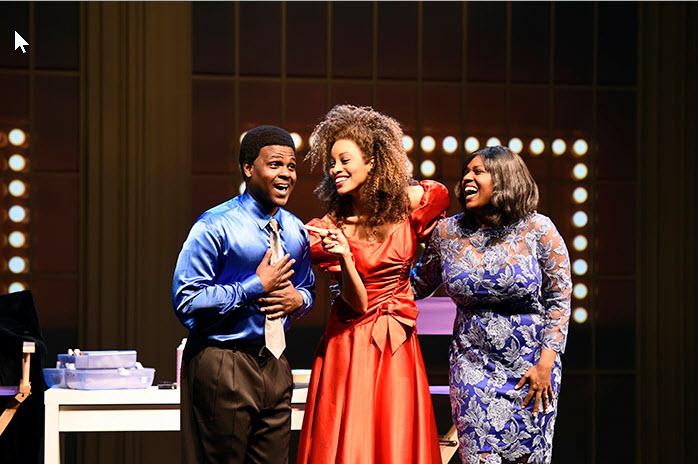
(L to R) Juan Winans as BeBe, Kiandra Richardson as Whitney Houston and Deborah Joy Winans as CeCe in Born for This: The BeBe Winans Story, which runs July 1-August 28, 2016 at Arena Stage at the Mead Center for American Theater. Photo by Greg Mooney, courtesy Alliance Theatre.
Much of the action takes place on Set Designer, Neil Patel’s rendering of PTL’s live stage where teleprompters urge listeners to donate and Tammy Faye (Kirsten Wyatt) skitters around shrieking “Thank you, Jesus!!!” in capital letters affectionately referring to the Winan kids as her ‘chocolate drops’ or ‘chocolate babies’. Her ignorance notably preceding her affection for the teens. Wyatt is phenomenal as Tammy Faye and plays it to the hilt, just as Tammy did in real life and the show overflows with highlights both lyrical and emotional. Artistic Director Molly Smith calls it a “story of faith and redemption”, and the arrival of Whitney Houston (Kiandra Richardson), a close friend and advisor to the Winans, seconds that claim.
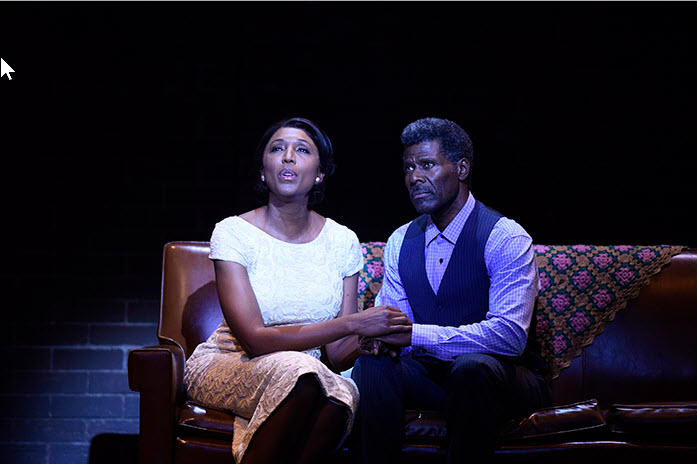
Outstanding are Nita Whitaker, as Mom Winans, whose spellbinding crystal clear voice shows itself on “Seventh Son”, Milton Craig Nealy as Pop Winans, the no-nonsense dad who triumphs in “I Got a Home”, Brad Raymond with the Teddy Pendergrass voice as brother Ronald, and BeBe and Penny (Alison Whitehurst) BeBe’s White girlfriend, dueting on “Forbidden Love”, a ballad destined to become a classic.
(L to R) Nita Whitaker as Mom Winans and Milton Craig Nealy as Pop Winans in Born for This: The BeBe Winans Story, which runs July 1-August 28, 2016 at Arena Stage at the Mead Center for American Theater. Photo by Greg Mooney, courtesy Alliance Theatre.
Costumes by famed Broadway designer William Ivey Long (Hairspray, Cinderella, Crazy for You) are totally spot on, especially for Tammy Faye if you remember those shoulder pads that launched into outer space, and the cutesy matching outfits of the PTL singers. Long and Wig Designer Lashawn Melton follow the styles of BeBe and CeCe as their wardrobe and hairstyles become ever more sophisticated with Houston’s assistance.
As it stands now, the musical is overly long – 2 ½ hours – even with the short songs. But how to cut the rich, lush tones of these voluptuous voices and the come-to-Jesus gospel sounds of the Winans? And who would want to?
Highly recommended.
Through August 28th at Arena Stage, 1101 Sixth St., SE, Washington, DC 20024. For tickets and information call 202 488-3300 or visit www.ArenaStage.org.
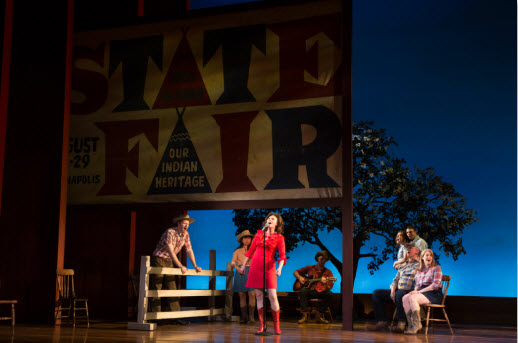
Katie Klaus (State Fair Singer) and the company of the national tour of THE BRIDGES OF MADISON COUNTY. (Photo by Matthew Murphy)
A huge applause erupted from the audience at the Kennedy Center when it was announced that the show’s composer, orchestrator and lyricist, Jason Robert Brown, would conduct the evening’s performance. The three-time Tony Award-winning Brown, who also tours as a singer and pianist, brought both energy and depth to this lush, sweeping score and the 9-piece orchestra’s response was as palpable as the performances.
The Bridges of Madison County, the 2014 Broadway smash hit musical, evolved from Robert James Waller’s 1992 best seller of a married Italian immigrant who meets a handsome photographer documenting the covered bridges of Iowa for National Geographic. It is a tender love story of mutual passion, appreciably devoid of the syrupy schmaltz that often passes as romance in this genre. Leading man, Andrew Samonsky as Robert, who has movie star good looks and spectacular tenor’s pipes, is just part of the appeal. Another is the steely charm, wry delivery and soaring operatic voice of Elizabeth Stanley as the conflicted housewife and mother, Francesca.
Over a period of four days, while husband Bud (Cullen R. Titmas) takes the children Michael (Bryan Welnicki) and Carolyn (Caitlin Houlahan) off to the Indiana State Fair to show Carolyn’s prize steer, the strangers connect. And oh, how they connect.
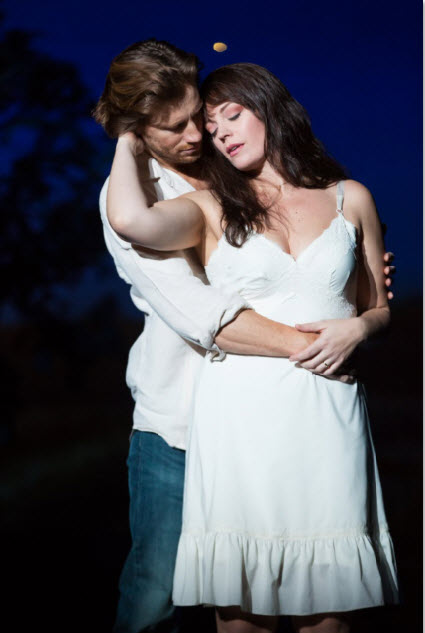
Elizabeth Stanley (Francesca) and Andrew Samonsky (Robert) in the national tour of THE BRIDGES OF MADISON COUNTY. (Photo by Matthew Murphy)
In their exploration of one another’s motives, Robert sings, “Temporarily Lost”, admitting he has been looking to restore the light in his life. By the ninth number, “The World Inside a Frame”, Samonsky’s heart-stopping solo, he has learned to trust again and Francesca regains her lust for life. She is Italian after all. (In a particularly seductive scene, Francesca removes Robert’s crisp white shirt from his tight blue jeans and a woman’s excited gasp could be heard throughout the theater to the audience’s delight.)
That Robert’s truck hasn’t left the farm in four days is well-noted under the watchful eyes of Marge (Mary Callanan), Francesca’s true friend, and Marge’s husband Charlie (David Hess), family friends who live within binocular range. Callanan is wondrously comic as the neighbor who revels in Francesca’s forbidden tryst, while trying to get a rise out of her spouse in a what-would-he-do-if-it-was-her scenario.
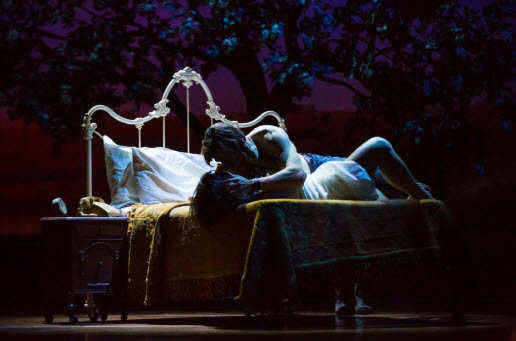
Andrew Samonsky (Robert) and Elizabeth Stanley (Francesca) in the national tour of THE BRIDGES OF MADISON COUNTY. (Photo by Matthew Murphy)
Bartlett Sher’s tight direction and Donald Holder’s superb lighting are crucial to the effect as many of the scenes play out on alternate sides of the stage sequentially as steamy love scenes unfold around a kitchen table or a large wrought iron bed. Michael Yeargan’s pastorally-evocative sets animate the rural setting.
Through it all we root for the lovers to hightail it arm-in-arm into the gathering twilight in this fairy-tale fantasy. We can dream. Can’t we?
Highly recommended for its sensuality, brilliant singing and indelible score.
Through July 17th at the Kennedy Center, 2700 F St., NW, Washington, DC. For tickets and information call 202 467-4600 or visit www.Kennedy-Center.org.
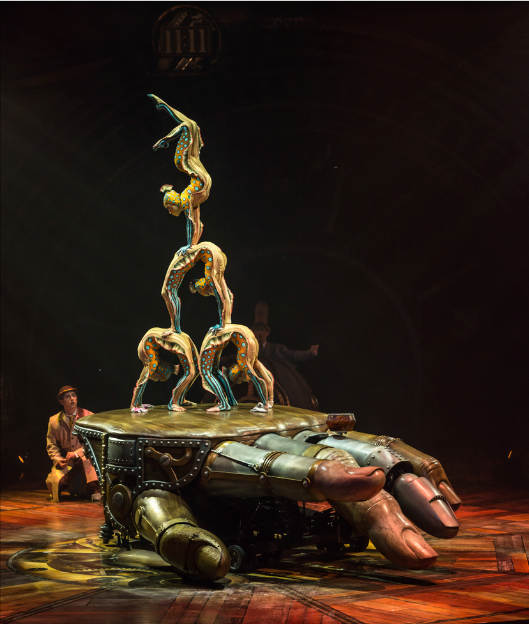
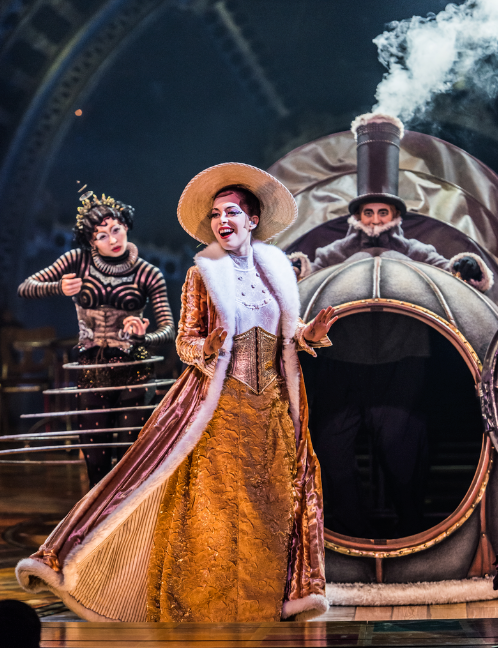
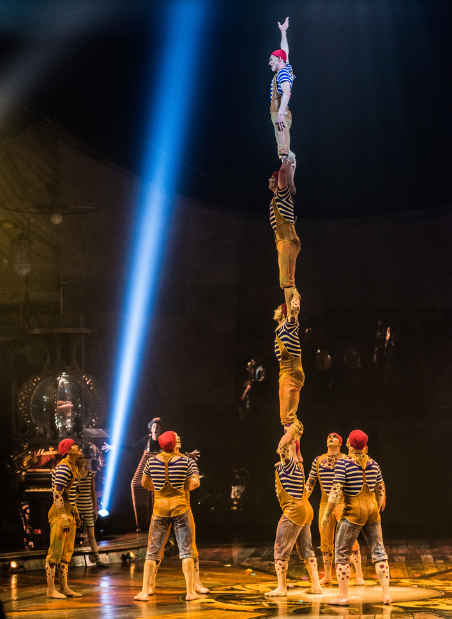
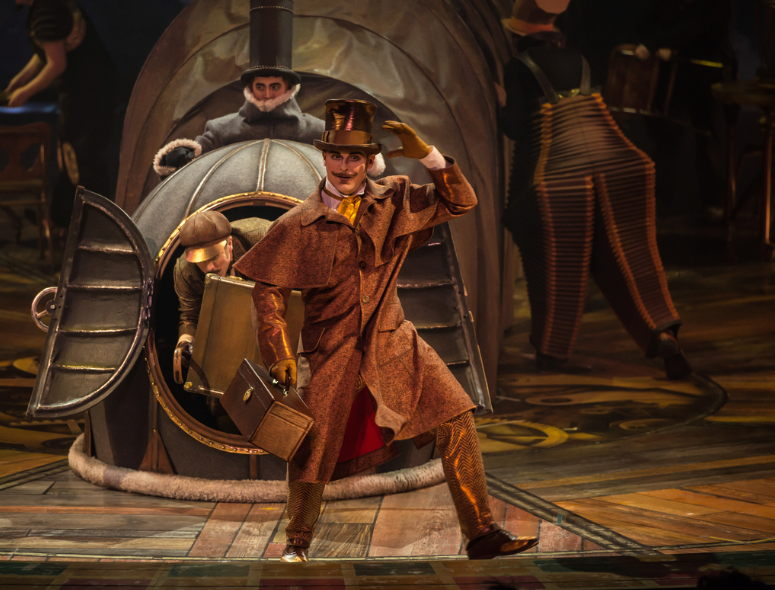
Steam Punk – as in Victoriana science fiction meets techno wizardry – is the quirky new style of Cirque de Soleil’s show, Kurios – Cabinet of Curiosities arriving in Tysons Corner on July 21th. The story, set in an alternate yet familiar past, features a voyage Jules Verne would have envied. Think leather goggles, steam train gadgets and a spectacular array of tricked out props.
The tale of Kurios takes us on a journey into a deeper realm neatly hidden inside the larger-than-life curio cabinet of the “Seeker”. Within this Dr. Caligari-like cabinet he finds a hidden, invisible world where he encounters bizarre curiosities that begin to animate.
Unlocking this Pandora’s box unleashes a collection of otherworldly characters who step into his makeshift mechanical world. The outlandish, yet quite benevolent, creatures turn his world upside down with a touch of poetry and and a ton of humor in an attempt to ignite the Seeker’s imagination and discover a parallel universe. Heart-stopping and brilliantly imagined, it’s a magical journey worth taking.
Written and directed by Michel Laprise, Kurios leads us into the birth of technology during the late 19th century and on a journey into the fantastical minds of the inventors of the great Industrial Age. Laprise, a former actor, director and artistic director, who started his own theatre company in Montreal and trained at the National Theatre School of Canada, has been with Cirque for the past 16 years. He also worked with Madonna on her Super Bowl XLVI halftime appearance and later directed her MDNA tour. He recently sat down with this writer for a brief interview.
You were a Special Events Designer on Cirque’s specialty shows. How did you transition into becoming a director of a large scale production?
I had ten years of theatre myself and pitching to raise money. The department grew and they offered me the job.
How would you describe the story of Kurios?
It’s about a scientist, The Seeker, who looks through the portal at a time when electricity was bringing the world together.
There are 46 artists in Kurios. How are the artists chosen?
In the beginning they were pre-selected through 3-minute demos, and later improvisation auditions. Later I discovered that by directing them, the artists performed better, allowing us to really see their skills. It became a workshop where I honed my director’s abilities.
How long does it take to put together these complex productions?
It took two years of choreography and theatricality and being in the training studio each day to get ready for Kurios. In addition, on site we have a director, two coaches and a captain who continue training the artists every afternoon.
What’s different about this show?
When we started to create it we had heard from our audiences that we were becoming predictable. So I eliminated everything that was habit and predictable. We took out traps and turntables, and the artists are now closer to the stage and the audience can connect to the characters. We also do a tribute to Shelley’s Dr. Frankenstein. It all came out of an 80-page scenario.
Talk about the cool steampunk props?
The props speak to the art of recycling. I wanted it to look low-tech to make it very genuine. This show uses 426 props – the most props of any Cirque show ever.
What’s new about the music?
We have the A Team! The composer, Raphael Beau, comes from Paris and every note is a vulnerability.
What are you working on now?
Last October I started working on my next show for Cirque in Buenos Aires where I spent three months putting together Soda Stereo. It’s based on the legendary Latin rock band and debuts in 2017.
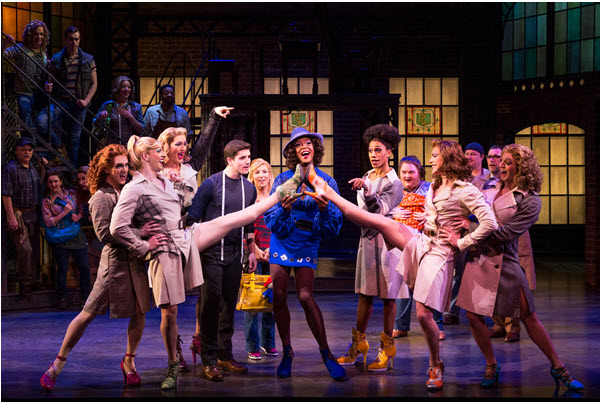
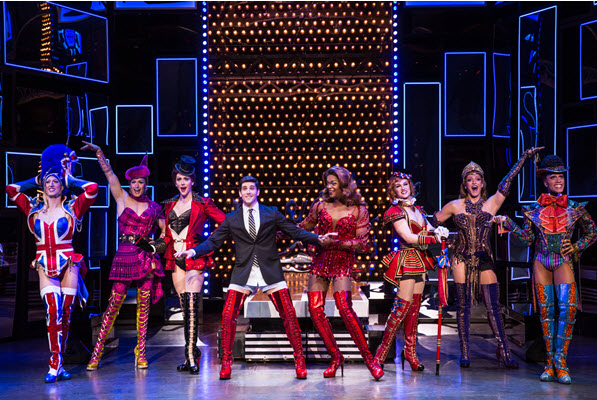
‘Kinky Boots’ National Touring Company. Photo by Matthew Murphy.
A beacon of hope shone down mightily onto the stage at Kennedy Center’s Opera House this week. It was more than hope, really. It was a balm for the soul of Orlando’s LGBTQ community and their friends and supporters around the world. A clearing of the clouds, if you will – if only for a few hours.
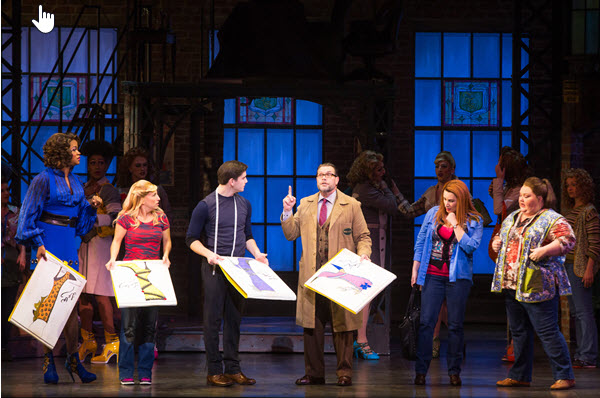
In this timely story of tolerance, love and self-acceptance, Lola (J. Harrison Ghee), a black drag queen from the seedier side of London, performs with her chorus line of queens. When, in a stroke of fate, she meets Charlie (understudy, Adam Kaplan, who appeared to be struggling in the role), the reluctant scion of a fourth generation shoe factory in the hinterlands, she schools him in ‘dragdom’ and what it means to be absolutely fabulous in six-inch high-heeled boots. When she alludes to the challenge of strutting her stuff in ladies’ boots, ill-designed to support the weight of a man, Charlie becomes sympathetic to her plight.
(l to r) Macho Don (Aaron Walpole) the floor manager and George (Jim J. Bullock). Photo by Matthew Murphy.
Intrigued by Lola, soubriquet “Kinky”, and the idea of making boots for a niche market, he offers her the job of Head Designer at his factory. Unfortunately, it’s run by a crew of narrow-minded blue collar workers. Lola, bullied by the male workers tries to fit in by wearing suits instead of dresses – a transition that falls flat. Hoping to present Lola’s racy designs at the shoe show in Milan, the workers, especially the females of the crew who are enamored of Lola’s femininity, get on board. Macho Don (Aaron Walpole) the floor manager and George (Jim J. Bullock) the numbers cruncher remain reluctant. And therein lies the rub.
Contrary to what you may imagine, the romance in Playwright Harvey Fierstein’s six-time Tony Award winning musical is not between Charlie and Lola, but with Charlie’s fiancée, Nicola (Charissa Hogeland), who has grander ideas for their future in real estate development, and one of his employees Lauren (Tiffany Engen) who believes in his dreams. Guess who wins out.
Jerry Mitchell, who received the Tony Award for his choreography in the original Broadway production, both directs and choreographs this production, along with famed Costume Designer Gregg Barnes, Scenic Designer David Rockwell and Lighting Designer Kenneth Posner.
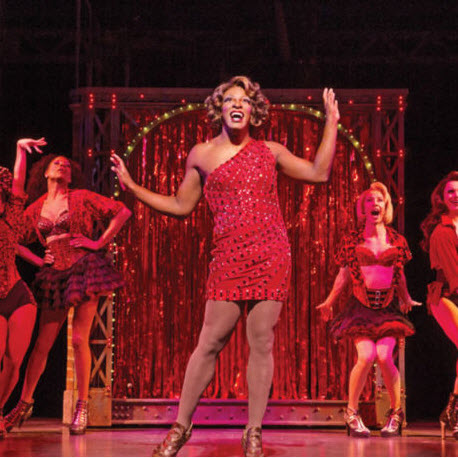
Lola (J. Harrison Ghee) and her Angels in ‘Kinky Boots.’ Photo by Matthew Murphy.
Ghee is a force of nature. Fierce and fabulous with a leggy, Amazonian frame that complements an astonishingly versatile voice, he delivers a show-stopping performance tinged with raw emotion. The duet with Kaplan in “Not My Father’s Son” is especially spell-binding. And Engen too, will steal your heart with her solo, “The History of Wrong Guys”. And should you ever question what drives men wild, Lola (aka Simon) sets us straight in “Sex Is in the Heel”, adding, “Red is for sex, and sex shouldn’t be comfy.” Got it?
‘Kinky Boots’ National Touring Company. Photo by Matthew Murphy.
Through it all, pop diva Cyndi Lauper’s show-your-true-colors score is as sustaining as a hummingbird’s heartbeat and her emotionally-stirring ballads and electrifying show tunes add up to a winning night of crazy, funny, wonderful theatre.
Highly recommended for, according to Lola, “Ladies and Gentlemen, and those who have yet to make up their minds.”
Through July 10th at the Kennedy Center, 2700 F St., NW, Washington, DC. For tickets and information call 202 467-4600 or visit www.Kennedy-Center.org.
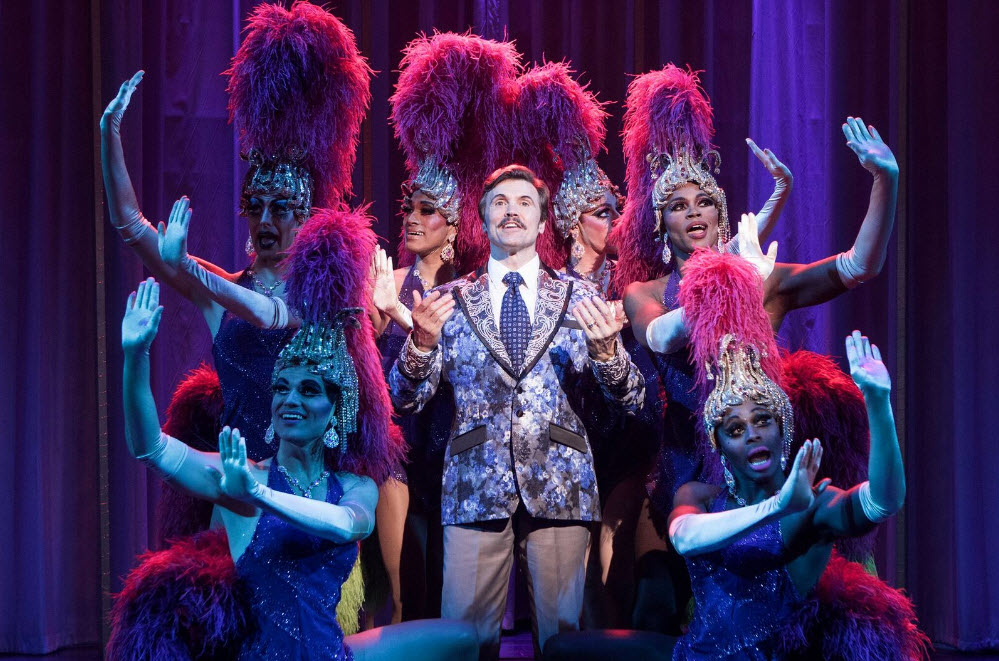
Brent Barrett (Georges) with Sam Brackley, Jay Westin, Isaiah Young, Ethan Kasnett, Darius Delk, Phil Young. Photo by Christopher Mueller.
A marabou boa-filled extravaganza blew into town with Matthew Gardiner’s La Cage Aux Folles. As glitzy as Vegas, as chi-chi as its French Riviera setting, and as campy and flamboyant as Jerry Herman and Harvey Fierstein intended, this six-time Tony Award-winning musical comedy hits all the right notes. Director Gardiner doing double duty as choreographer, takes on the story of two gay men with a nightclub in Saint-Tropez, where, as we all know, anything goes. At least that’s what Cole Porter taught us.
Georges, the straight-looking one (Is there an app for that?) and the club’s emcee, is played by Brent Barrett, who looks and sings like a young Robert Goulet. His paramour and right-hand man/gal is Albin, stage name Zaza, whom actor Bobby Smith portrays like the metamorphic stages of a caterpillar to a butterfly and the killer instincts of a shark.
DJ Petrosino (Jacob) and Paul Scanlan (Jean-Michel). Photo by Christopher Mueller.
Georges has a son, Jean-Michel (Paul Scanlan), the result of a quickie with a showgirl in a one-night-only heterosexual fling. The problem is the dear boy wants to introduce his dewy-eyed fiancée, Anne (Jessica Lauren Ball) and her ultra-conservative parents to his father and jet-setting mother. What ensues is a sort of gay version of Meet the Parents, with Georges, Albin and their snippy maid Jacob (DJ Petrosino). “I thought I hired a butler!” quips Georges. Keep your eyes on the hilarious Petrosino who is a first class scene stealer.
Bobby Smith (Albin). Photo by Christopher Mueller.
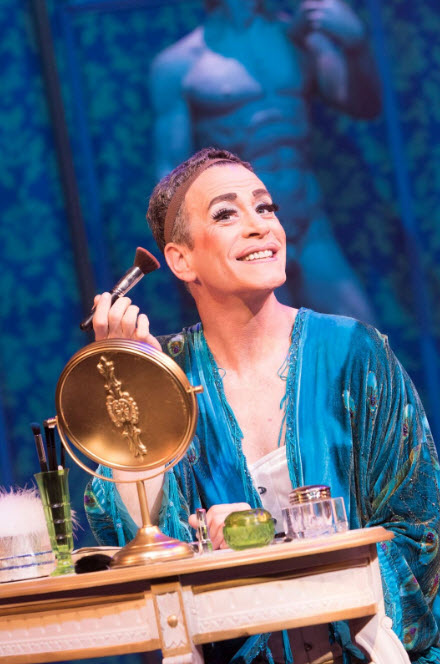
It takes place within the confines of their first floor nightclub and second floor home, with an occasional stroll along the shore to reminisce. Scenic Designer Lee Savage has upped the wow factor by giving us an insider’s view of the drag club’s green room. Two dressing rooms bracket the stage and we become voyeurs to the cross-dressing performers, primping and preening in various stages of undress.
Ethan Kasnett (Chantal). Photo by Christopher Mueller.
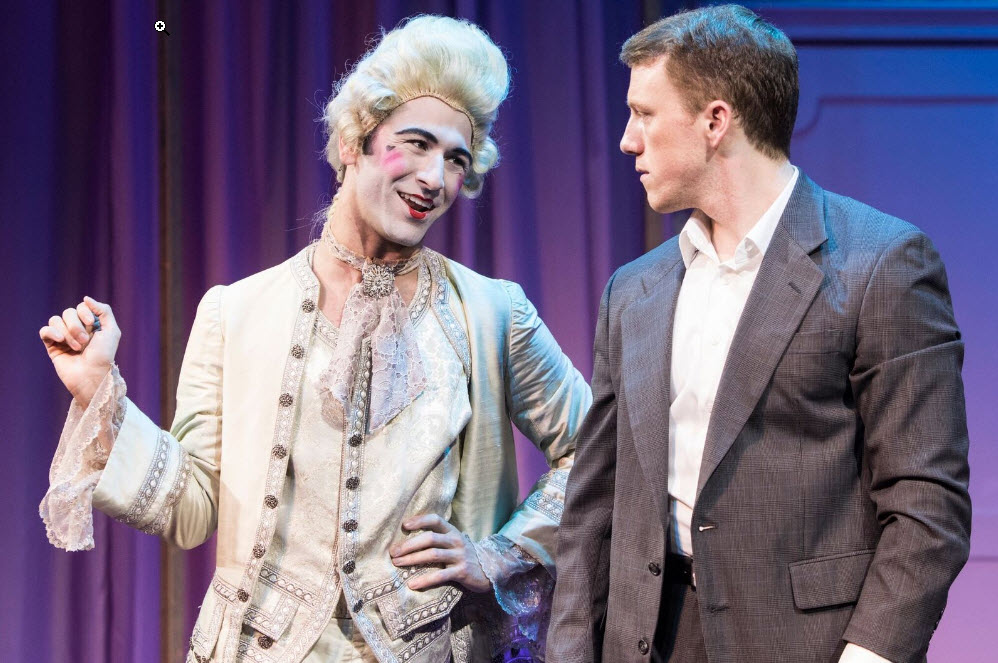
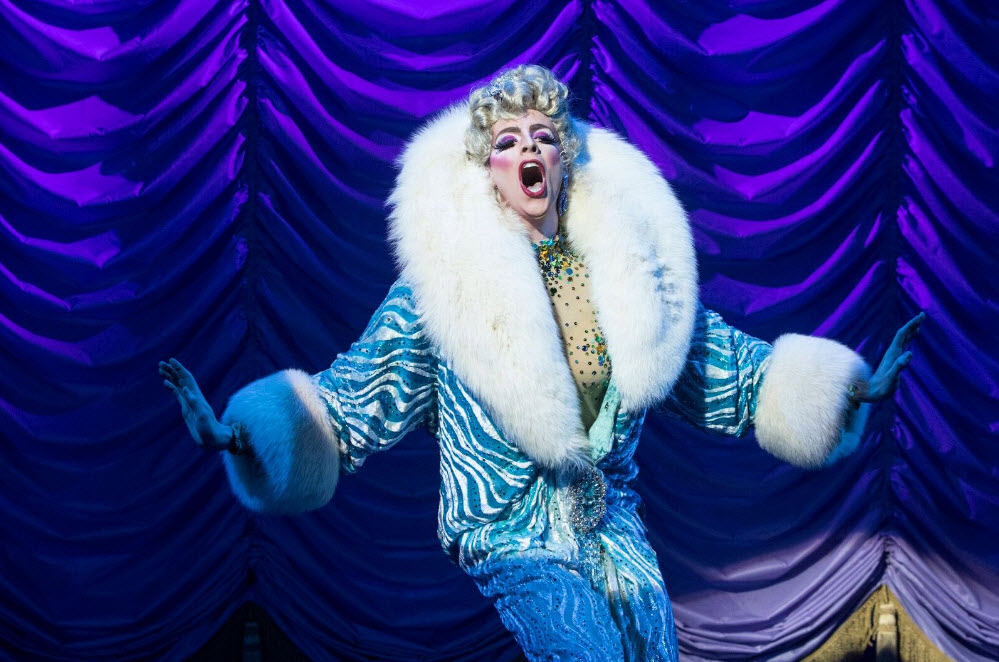
But this show is not all show. There are no lip-synching Diana Ross lookalikes in this line up of gender-bending chorines. This is the real deal. Hey, even Jesus makes an appearance, but I’ll keep the surprise. No one here is, to borrow a phrase, ‘resting on pretty’. Gardiner has cast some extraordinary performers with pipes that can go from alto to soprano in a New York minute, fantastic dance skills (Did he really? OMG to the full splits and high kicks) and GQ-worthy bodies too. Big applause to the supporting cast of Les Cagelles: Sam Brackley, Darius R. Delk, Ethan Kasnett, Jay Westin, Isaiah W. Young and Phil Young. How they transform themselves into glam divas is alone worth the price of admission! Extra ‘chicken cutlets’ (gel inserts) all around. And an additional hats off to Frank Labovitz’s over-the-top, ab fab, feathered and sequined costumes, and Anne Nesmith’s endless assortment of towering wigs.
But there’s a plot here too and notwithstanding the lights (kudos to Jason Lyons) and sound (hats off to Lane Elms) we are treated to one of the year-to-date’s best performances by Bobby Smith, in a tour de force portrayal of Albin, the headlining drag performer whose boundless love and sacrifice teaches us the ultimate truth of what “family” really means.
Highly recommended for its tender love story and comic relief in the midst of our turbulent times.
Through July 10th at Signature Theatre (Shirlington Village), 4200 Campbell Avenue, Arlington, VA 22206. For tickets and information call 703 820-9771 or visit www.sigtheatre.org.