The Prom
Where Love Conquers All
The John F. Kennedy Center for the Performing Arts
January 8, 2022
By: Jordan Wright
 Courtney Balan, Patrick Wetzel, Bud Weber and Emily Borromeo in The National Tour of THE PROM. Photo by Deen van Meer. 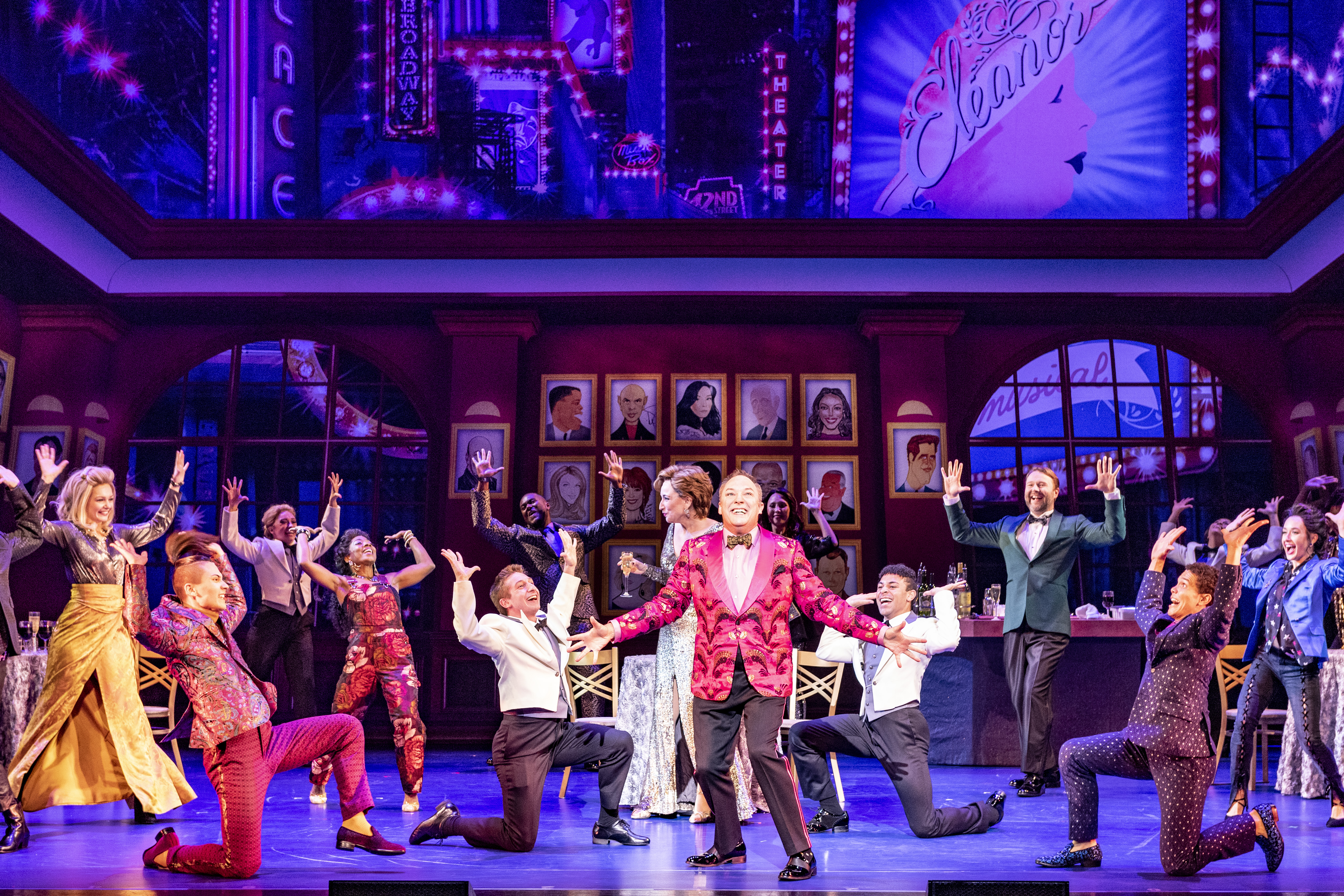 The Prom, Music by Matthew Sklar, Book by Bob Martin and Chad Beguelin, Lyrics by Chad Beguelin, Directed and Choreographed by Casey Nicholaw
cast: Kaden Kearney (Emma), Kalyn West (Alyssa Greene), Courtney Balan (Dee Dee Allen), Patrick Wetzel (Barry Glickman), Emily Borromeo (Angie Dickinson), Bud Weber (Trent Oliver),
Sinclair Mitchell (Mr. Hawkins), Ashanti J’Aria (Mrs. Greene) and Shavey Brown (Sheldon Saperstein). Photo by Deen Van Meer. 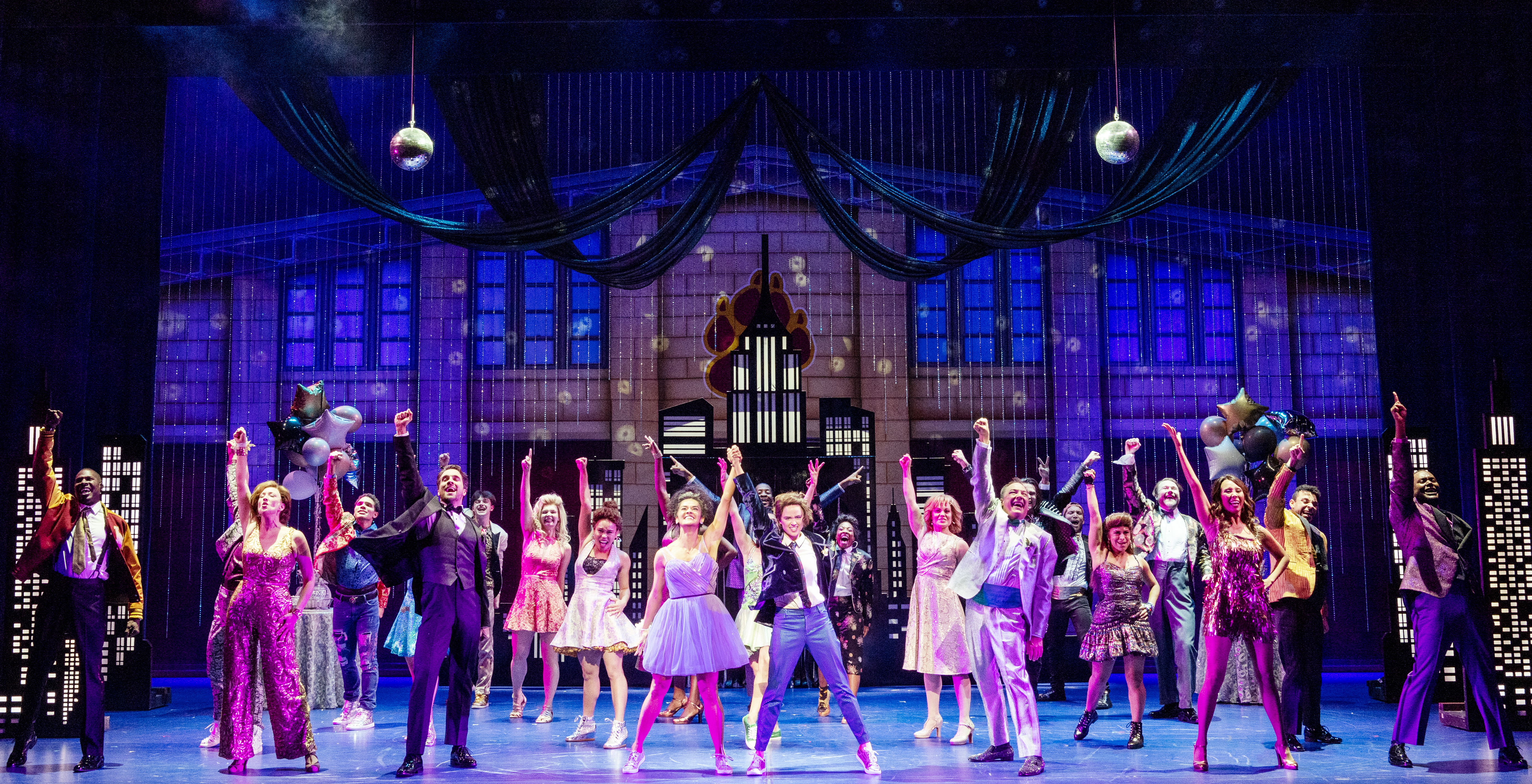 The Prom, Music by Matthew Sklar, Book by Bob Martin and Chad Beguelin, Lyrics by Chad Beguelin, Directed and Choreographed by Casey Nicholaw
cast: Kaden Kearney (Emma), Kalyn West (Alyssa Greene), Courtney Balan (Dee Dee Allen), Patrick Wetzel (Barry Glickman), Emily Borromeo (Angie Dickinson), Bud Weber (Trent Oliver),
Sinclair Mitchell (Mr. Hawkins), Ashanti J’Aria (Mrs. Greene) and Shavey Brown (Sheldon Saperstein) Straight off, I want to say that although The Prom tackles serious subject matter and it handles it with the flat out fun of a confetti bomb. This story of two teenage lesbians forbidden to attend their school’s senior prom is no joke. It is set in Indiana, that bastion of Conservatism where alternative lifestyles are unacceptable and school regulations are governed by the PTA.
In New York the glamorous Broadway musical star Dee Dee Allen and her co-star Barry Glickman, a prancy-and-proud-of-it queen, are having a bad day. While at Sardi’s, reading the next day’s reviews of their latest show, they learn The New York Times has murderously panned it and tagged them as “aging narcissists”. Hoping to change that perception (in Dee Dee’s case it’s true), they agree to find a social issue to publicly support. Checking what’s trending online – climate change, poverty, etc. – they seize on the viral Twitter issue of the prom. With that as their cause celebre, they head to Indiana with their publicist Sheldon, waiter/actor and Julliard grad Trent, and chorus girl Angie to drum up support for the teens and garner favorable publicity for themselves. Did you know thespian rhymes with lesbian?
Alyssa is still in the closet to her mother who heads up the PTA and is dead set against gay couples at the prom. Yes! We’ve got trouble. Right here in River City! Her girlfriend, Emma, is out and supported by Principal Hawkins who vows to fight the PTA mothers calling it a civil rights issue. How they resolve it, becoming activists in the process, is the hopeful message of this endearing musical.
The young company is absolutely adorable. You just want to hug every last massively talented one of them. And their dancing, thanks to fabulous choreography by Director/Choreographer Casey Nicholaw, is exceptional. Kaden Kearney gracefully embodies the zeitgeist of Emma and is well-bracketed by Patrick Wetzel as the hilarious, gay role model Barry; Courtney Balan as the marvelously ballsy diva Dee Dee; and eye candy handsome Bud Weber as waiter/actor Trent Oliver who squelches the haters with buckets of charm and bible excerpts.
With Emily Borromeo as Angie; Ashanti J’Aria as Mrs. Greene; Sinclair Mitchell as Mr. Hawkins; Olivia Cece as Kaylee; James Caleb Grice as Nick; Jordan Alexander as Kevin; Sheldon Saperstein as Shavey Brown; Ashley Bruce as Olivia Keating; Brittany Nicole Williams as Shelby; and Kalyn West as Alyssa.
Book by Bob Martin & Chad Begulin; Music by Matthew Sklar; Lyrics by Chad Beguelin; Scenic Design by Scott Pask; Costume Design by Ann Roth and Matthew Pachtman; Sound Design by Brian Ronan and The Kennedy Center Orchestra.
Through January 16th. For tickets and information call 202 467-4600 or visit www.kennedy-center.org.
Ain’t Too Proud
The Kennedy Center for the Performing Arts
By: Jordan Wright
January 1, 2022
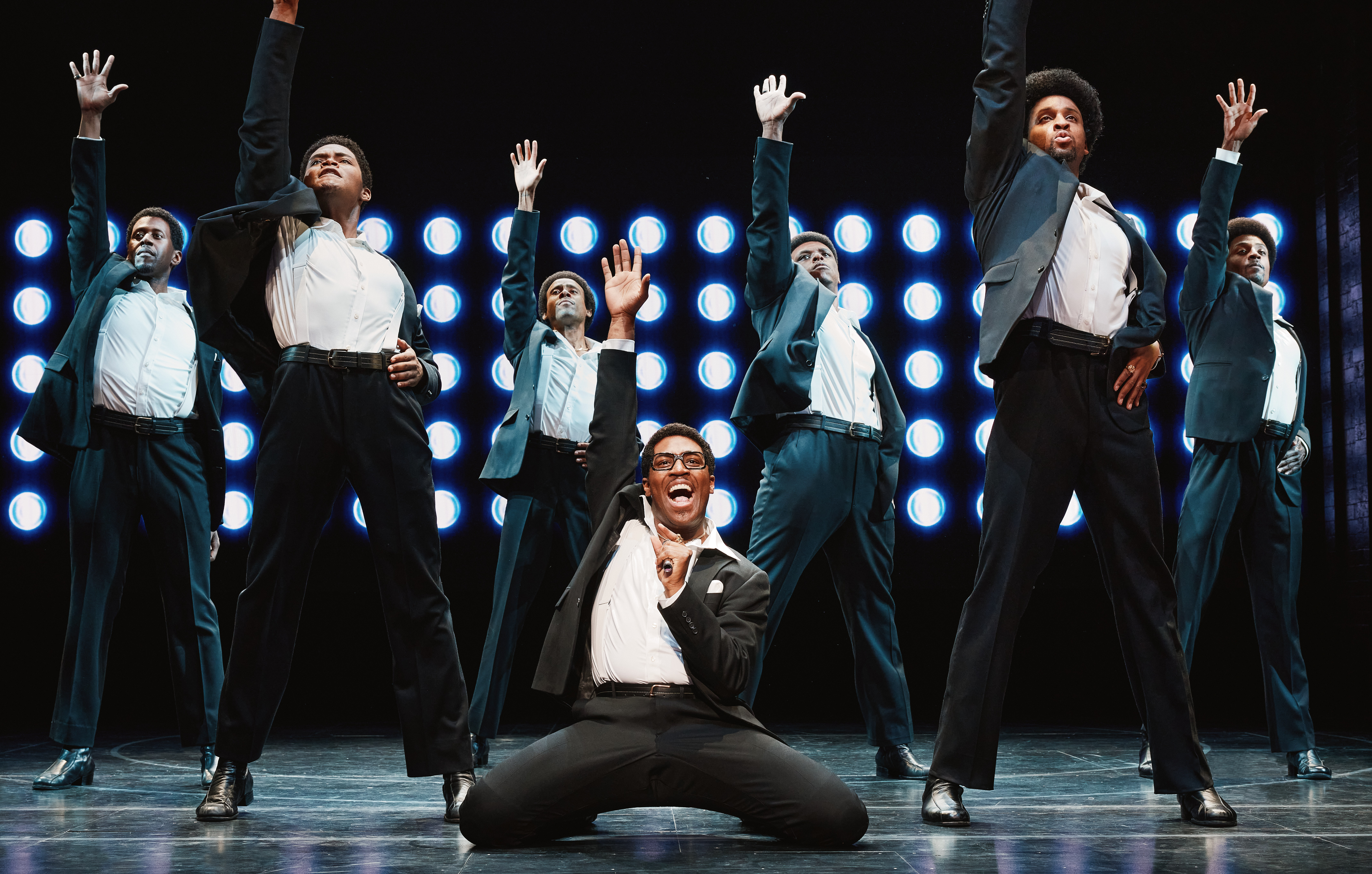 National Touring Company of Ain’t Too Proud – © 2021 Emilio Madrid  (left to right) – Elijah Ahmad Lewis, Marcus Paul James, Jalen Harris, Harrell Holmes Jr., James T. Lane from the National Touring Company of Ain’t Too Proud © 2021 Emilio Madrid A Soul-filled Journey Packed with Hits
Jam-packed with hits from America’s number one R&B/Soul/Funk/Pop group of the 50’s, 60’s and 70’s, this bio-musical from the Berkeley Repertory Theatre is a blast-from-the-past, an oldies-but-goodies bonanza. Told through the eyes of Otis Williams (Marcus Paul James), the group’s founding member, the story takes us on a top-of-the-pops journey from the original foursome’s Detroit roots on Euclid Avenue through its heyday under producer Berry Gordy with songs written by Smokey Robinson (Lawrence Dandridge). Through the years the group gained and lost members like David Ruffin (played by the spectacular Elijah Ahmad Lewis), Eddie Kendricks (a riveting Jalen Harris), Melvin Franklin (the silken bass of Harrell Holmes, Jr.) and Paul Williams (James T. Lane).
Though the story guides us through their triumphs and tragedies, and the multiple group member replacements, over the years, the show hangs on their hits – hits that a generation of us danced to, made out to and even got married to back when we grooved to the lyrics of their love songs. They fought through racist attacks in the Deep South hoping to become crossover artists. “You never know who is hating you and singing along to your records,” Otis decries.
Don’t think for a minute that the audience was a bunch of aging baby boomers clinging to memories of their teenage years. That couldn’t be farther from the truth. I checked out the audience – who were tapping their toes, mouthing the lyrics (Yes, under our masks!) and bobbing their heads – and they were all ages, every race. You just can’t sit still to this concert-style bio-musical. Certainly not while watching those slickly-choreographed and tightly-synchronized dance movements.
Amassing an astonishing 31 platinum hits in their decades-long journey, the group created the sound that backgrounded family BBQs, birthdays, dance parties and early discos – songs listened to in cars and parks and on street corners where quartets sprung up like weeds. There is so much joyfulness in the early music – “My Girl”, “I Can’t Get Next to You”, “If You Don’t Know Me by Now”, “Cloud Nine” and so many more. When the scene changed with the death of Martin, John and Bobby, the group’s music reflected that fraught time with “War”, “I Wish It Would Rain” and “Ball of Confusion”.
The musical is backdropped with period-centric projections by Peter Nigrini of Sponge Bob Square Pants and Amélie fame and choreographed to a gold standard by Sergio Trujillo known for his work on Jersey Boys and On Your Feet. Familiar with Dancing with the Stars? Orchestrations are by the TV show’s 17-year veteran musical director, Harold Wheeler with music directed by the legendary Kenny Seymour. Multiple Tony Award-winning Director Des McAnuff puts it all together and it’s as tight as the group’s pegged trousers and slim fitting sharkskin jackets and the sequin-gowns worn by Diana Ross and The Supremes who make an appearance along with Tammi Terrell, all of whom are costumed by Paul Tazewell veteran designer of Hamilton and a ton of other blockbuster Broadway hits.
I’d copy the playbill for you word for word if I could, because the cast includes some of the most successful and talented Black performers whose voices, bios and acting chops, are well known in musical theater, film and TV. These are multi-talented actors from the Broadway productions of Motown: The Musical; Beautiful: The Carole King Musical; Memphis; Sister Act; The Scottsboro Boys and The Lion King with voices and moves to die for.
Book by Dominique Morisseau. Based on the book “The Temptations” by Otis Williams with Patricia Romanowski. Music and lyrics from The Legendary Motown Catalog featuring the Kennedy Center Opera House Orchestra led by Jay Crowder.
Highly recommended!!!
Through January 16th at The Kennedy Center for the Performing Arts, 2700 F St., NW, Washington, DC. For tickets and information for future shows call 202 467-4600 or visit www.Kennedy-Center.org.
Once Upon a One More Time
Inspired by the Music Performed and Recorded by Britney Spears
Shakespeare Theatre Company
By: Jordan Wright
December 23, 2021
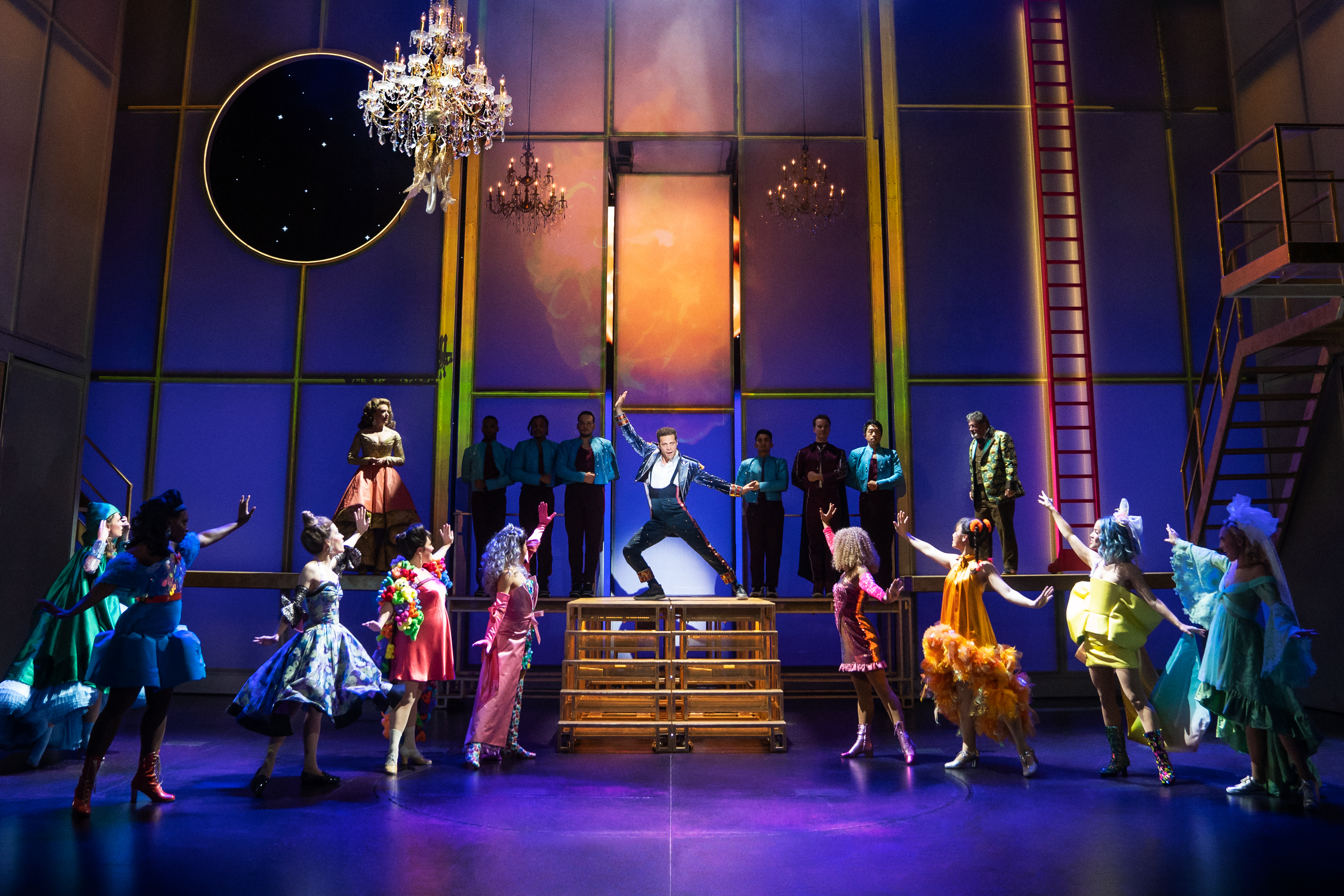 Justin Guarini (center) and Company
(credit: Matthew Murphy) Going in I wondered if I would know any of the pop diva’s songs. It turns out a few were instantly recognizable, though you need not have them on your playlist to have heard them somewhere. This is the direction bio-musicals have been taking lately. Sourcing songs that are already tried and true. Add backstory and it’s on. For Once Upon a One More Time the writers chose “Pop Princess” Britney Spears who inspired this musical. No surprise she would get her due. With hundreds of millions of records sold worldwide, the show should bring in legions of her fans. So, far be it from me to critique a show that has already broken all box office records at the Shakespeare Theatre Company.
There are shows I felt were not ready for their expected B’way debuts, which is where this is headed as soon as we can get past this damn pandemic. And I fear this could be one of them. Most, by the time they open in New York, have been trimmed down, beefed up, graced with better lighting, slick video projections and new sets. I hope this run will give the show the polish it needs before it hits the big time. Again, haters keep your claws drawn. It’s only my opinion. Stick with me.
What I did find was a wonderful plot that echoes the “Me Too” movement – before little girls grow up and face misogyny, glass ceilings and male domination. It’s Keone and Mari Madrid’s creative direction and Jon Hartmere’s book that shoots down that clichéd fantasy and teaches girls about self-empowerment in a light-hearted and tuneful way. For decades, these fairy tales have been eagerly served up to little girls from the time they can sit still long enough to listen to a bedtime story. “Your prince will come and your dreams of being rescued by a tall, dark and handsome (and rich) man will be realized,” we tell them. This version destroys the myth that Prince Charming will come along and solve your lack of confidence, money and/or singlehood. Of course, these fairy tale girls are ravishing and conveniently, have a prince in their neighborhood. Oh, how we indoctrinate little girls into being subservient to men. This should dispel that myth in a heartbeat.
Here the wicked stepmother, who equates female empowerment with witchcraft, features prominently as do the snippy stepsisters, Belinda and Betany. Drawing on Betty Friedan’s feminist book, “The Feminine Mystique”, the Original Fairy Godmother alerts Cinderella to the power of activism and self-actualization and she encourages them to go on strike against the curmudgeonly Narrator. “If you wanna hang on to your slippers,” OFG advises Cinderella, “you gotta learn to put your foot down.” This is where I totally buy in.
Accordingly, Prince Charming has few redeeming social qualities. He is a womanizer who is charming, handsome and vapid but never has an actual name in any of the fairy tales. Think about that! There are silly jokes, sight gags, physical comedy and tons of dance numbers with some of Spears’ songs created with new lyrics designed to underpin the plot. Other songwriters like Pharrell Williams and Katy Perry have contributed material. What this all has to do with Britney’s real life, I have no idea, although I suppose you could connect it to her court case against her father – appointed her conservator years ago and recently defeated in court. That’s a sort of happy ending in and of itself.
The huge cast features Briga Heelan as Cinderella; Brooke Dillman as Original Fairy Godmother; Aisha Jackson as Snow White; Belinda Allyn as Belle; Justin Guarini as Prince Charming; Wonu Ogunfowora as Rapunzel; Morgan Weed as Princess and the Pea; Jennifer Florentino as Little Red Riding Hood; Selene Haro as Gretel; Amy Hillner Larsen as Goldilocks; Emily Skinner as Stepmother; MiMi Scardulla as Belinda; Tess Soltau as Betany; Raymond J. Lee as Clumsy/Prince Ebullient; Ryan Steele as Prince Erudite; Stephen Brower as Prince Suave; Stephen Scott Wormley as Prince Affable; Joshua Johnson as Prince Brawny; Kevin Trinio Perdido as Prince Mischievous; Michael McGrath as Narrator; Adrianna Weir or Mila Weir as Little Girl.
Creative Design and Choreography by Keone and Mari Madrid; Creative Consultant David Leveaux; Scenic Design by Anna Fleischle; Lighting by Sonono Nishikawa; Costume Design by Loren Elstein; and Sound Design by Andrew Keister.
Through January 2, 2022 at Shakespeare Theatre Company’s Sidney Harman Hall, 610 F Street, NW, Washington, DC. For tickets and information call 202 547-1122 or visit www.ShakespeareTheatre.org.
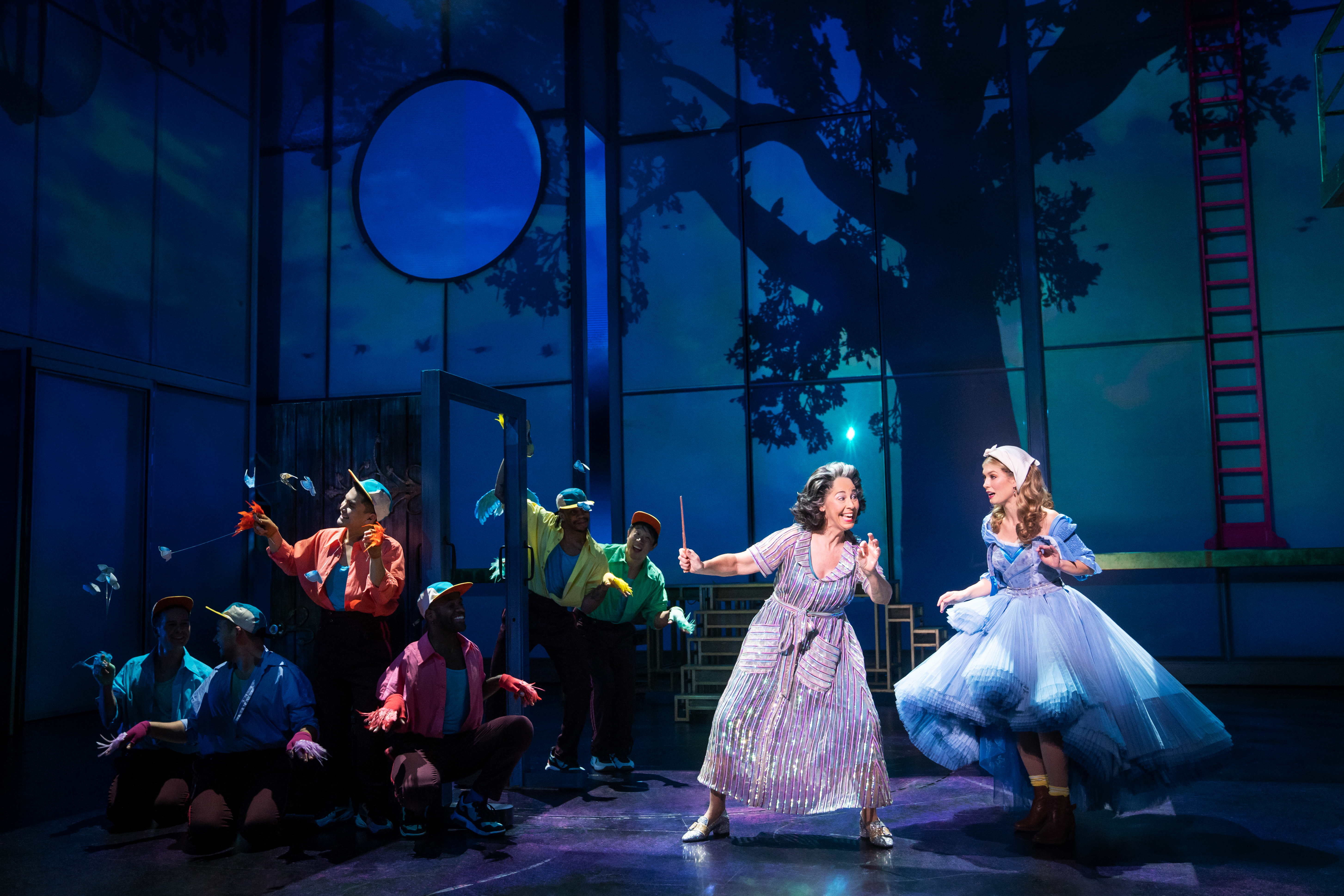 Brooke Dillman, Briga Heelan and Company
(credit: Matthew Murphy) 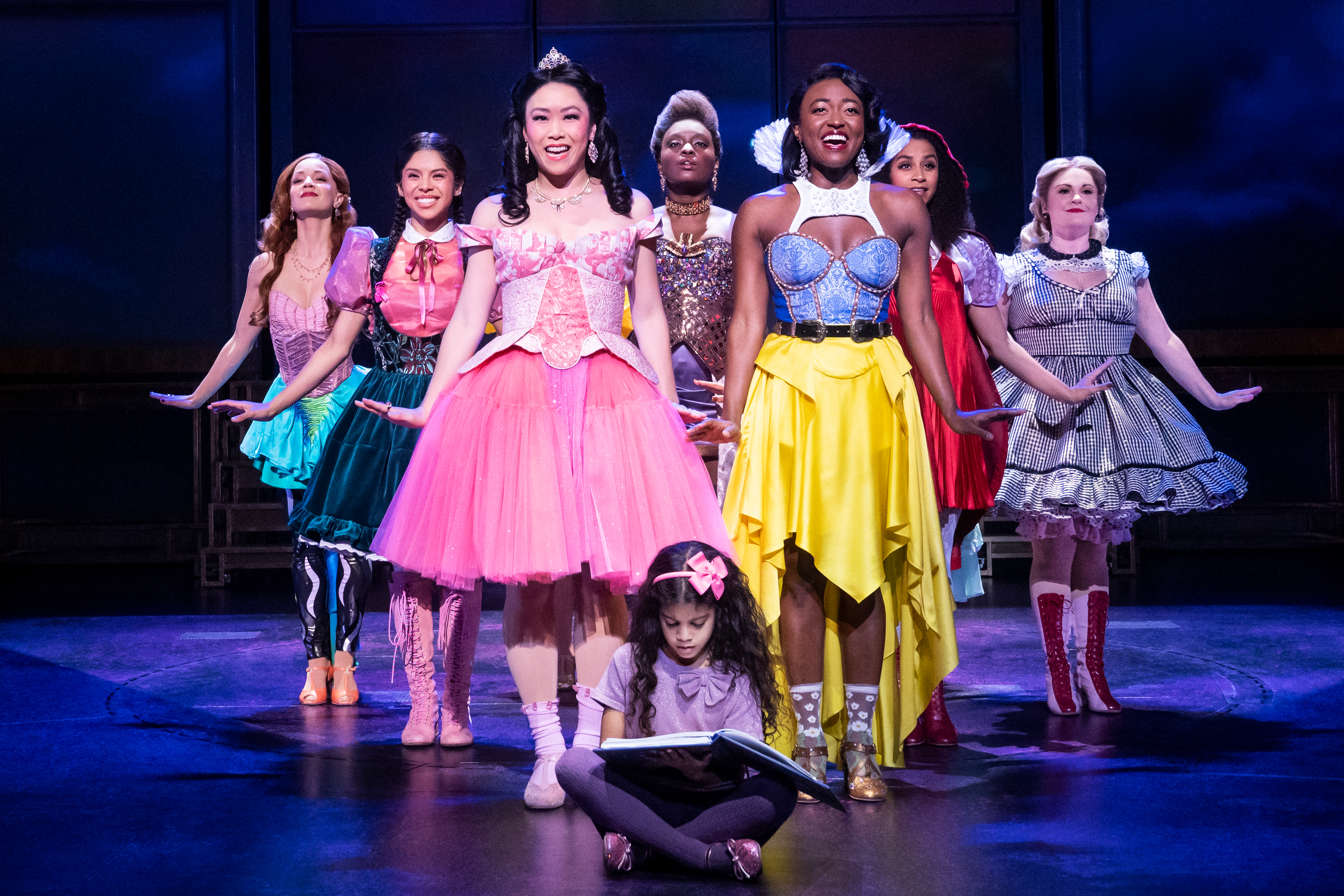 Cast of Once Upon A One More Time
(credit: Matthew Murphy)
Beautiful – The Carol King Musical
Kennedy Center
December 17, 2021
By: Jordan Wright
 Four Friends Big News: Sony Pictures has announced that the film adaption of Beautiful will be produced by Tom Hanks, Gary Goetzman and Paul Blake.
Where were you when you first heard The Righteous Brothers sing “You’ve Lost That Lovin’ Feeling” or “Will You Still Love Me Tomorrow” by The Shirelles? Maybe you were dancing cheek-to-cheek with the one you loved. Or maybe you were groovin’ to “Locomotion” by Little Eva or “Up on the Roof” by The Drifters – all these songs written by Brooklyn-born Carole King and her then husband, Gerry Goffin. Working for music producer Don Kirshner, known as “The Man with the Golden Ear”, their partnership produced hit after hit keeping them on the pop charts throughout the 60’s.
During their early career lyricist Gerry and the precociously talented composer Carole churned out hits at Aldon Music, a music publishing house and hit factory in New York’s Brill Building, where they worked side-by-side in friendly competition with fellow hitmakers, Cynthia Weil and Barry Mann.
Beautiful tells the story of their romance, marriage and tumultuous breakup and chronicles their struggles and successes, ending with Carole’s solo career, which broke the pop mold with the release of her first album – the four-time Grammy Award-winning, “Tapestry”.
This latest national tour opens with Carole on piano at Carnegie Hall. She is singing “So Far Away”, accompanying herself and showing confidence with her trademark masses of wavy, golden hair and gowned in a blue-flowered maxi dress.
It was not always so for the shy, yet ambitious, teen who wrote songs for the top Black artists of that era. The story then takes us back to the beginning of Carole’s career, when as a whip-smart sixteen-year old Carole bucked her Jewish mother, Genie, to peddle her tunes in the Big Apple where she has an auspicious meeting with Kirshner.
A medley of hits from the 50’s includes some of the greatest and most memorable hits from that era – “Poison Ivy”. “Love Potion #9”, “Yakety Yak” and “One Fine Day” to name just a few. The Drifters make an appearance dressed in their flashy sharkskin suits and skinny ties and The Shirelles in their beaded gowns performing their greatest hits. Little Eva who was plucked from obscurity (she was Carole and Gerry’s babysitter) and the fictitious Janelle Woods, a glamorous pop singer who becomes Gerry’s extramarital lover.
In this musical evolution of Carole’s life there are 27 numbers backed by a 6-piece band, which sounds like an entire orchestra. That’s just fine as you’ll most likely be singing along under your mask, tapping your toes and recalling your first dance, first kiss or heaven forbid your first breakup. For me the goosebumps kicked in with “Some Kind of Wonderful”. Gerry and Carole’s first duet, and The Righteous Brothers big number, “You’ve Lost That Lovin’ Feeling”.
Scenic Designer Derek McLane captures the mood with a wall of instruments and mid-century modern furniture in Carole’s home and office. Lighting Designer Peter Kaczorowski tricks out the musical numbers with hundreds of neon lights.
Sara Sheperd clones Carole as sincerely as humanly possible, especially letting loose her powerhouse voice on her biggest hits – “Natural Woman” later covered by Aretha Franklin and Mary K. Blige – and “Beautiful”. The musical reflects Carole’s coming of age as an independent composer and soloist who emerged from pain and loss to find joy and recognition as an artist in her own right.
A must see musical!!!
Starring Sara Sheperd as Carole King; James D. Gish as Gerry; Matt Loehr as Don Kirshner; Sara King as Cynthia Weil; Rachel Coloff as Genie Klein; and Ryan Farnsworth as Barry Mann.
Book by Doug Mcgrath; Words and Music by Gerry Goffin & Carole King and Barry Mann & Cynthia Weil; Sound Design by Brian Ronan; Costume Design by Alejo Vietti.
Through January 2, 2022 at the Kennedy Center for the Performing Arts, 2700 F Street, NW, Washington, DC. For tickets and information visit www.Kennedy-Center.org.
 Carnegie Hall  The Drifters  The Shirelles
Seven Guitars
Arena Stage
By: Jordan Wright
December 14, 2021
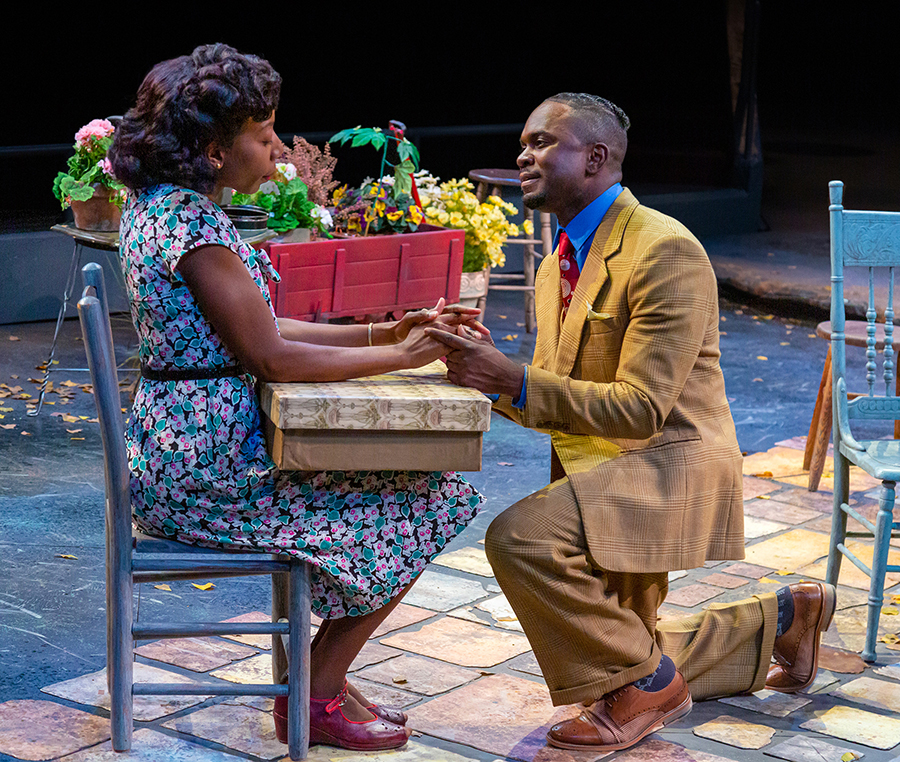 Joy Jones and Roderick Lawrence in August Wilson’s Seven Guitars at Arena Stage running November 26 – December 26, 2021. Photo by Ryan Maxwell Photography. 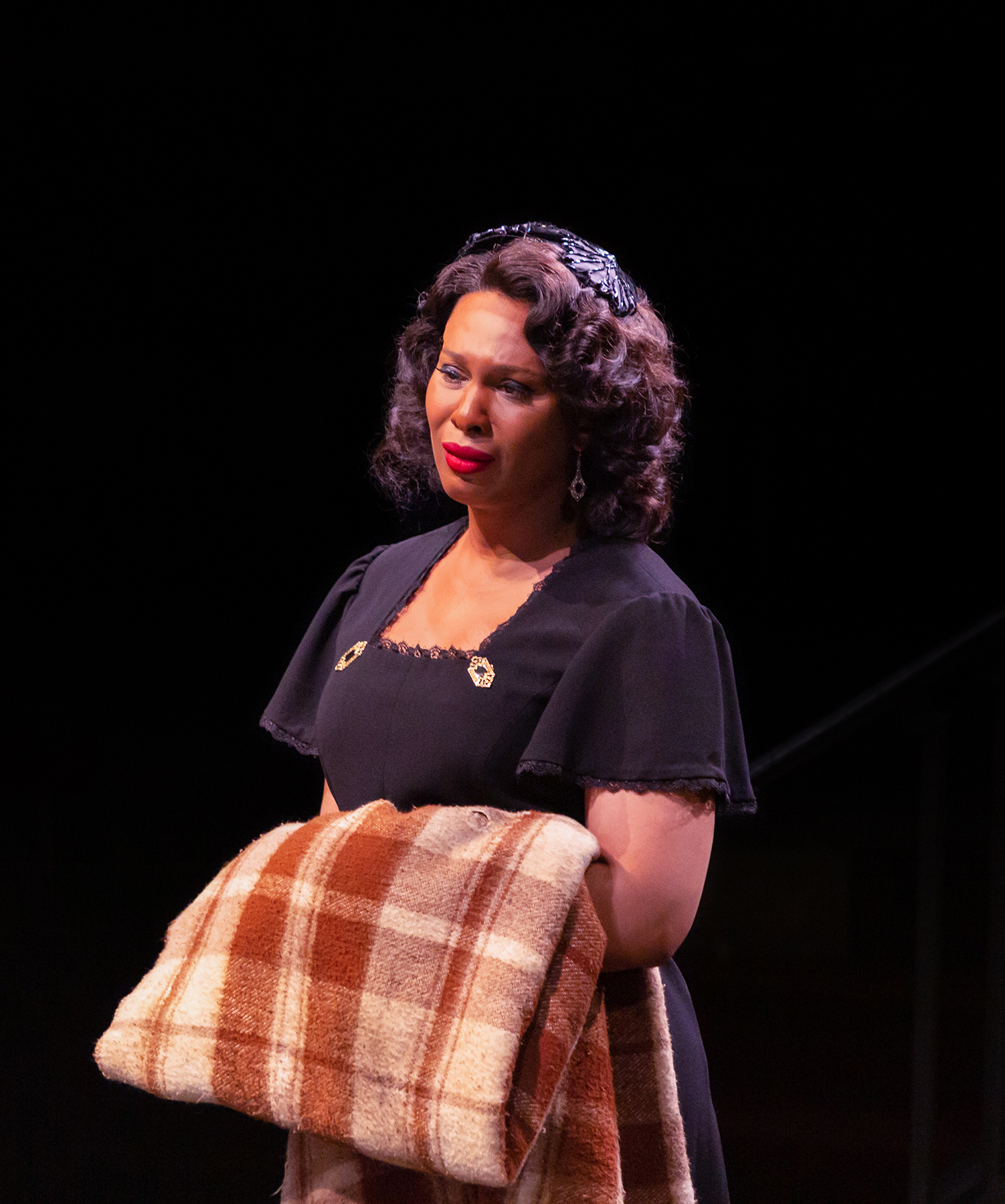 Dane Figueroa Edidi in August Wilson’s Seven Guitars at Arena Stage running November 26 – December 26, 2021. Photo by Ryan Maxwell Photography. 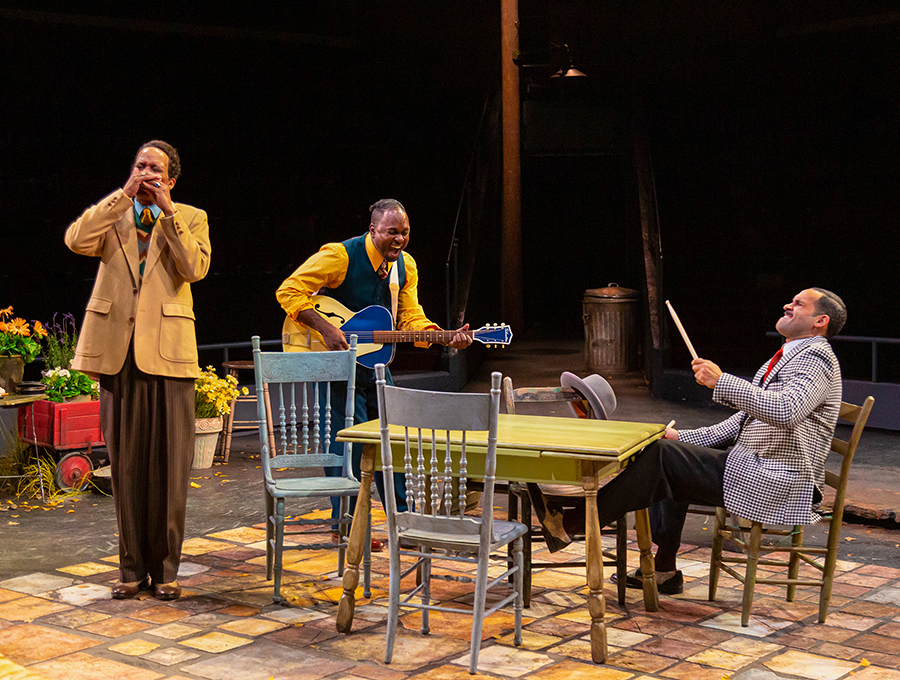 Michael Anthony Williams, Roderick Lawrence and Eden Marryshow in August Wilson’s Seven Guitars at Arena Stage running November 26 – December 26, 2021. Photo by Ryan Maxwell Photography. 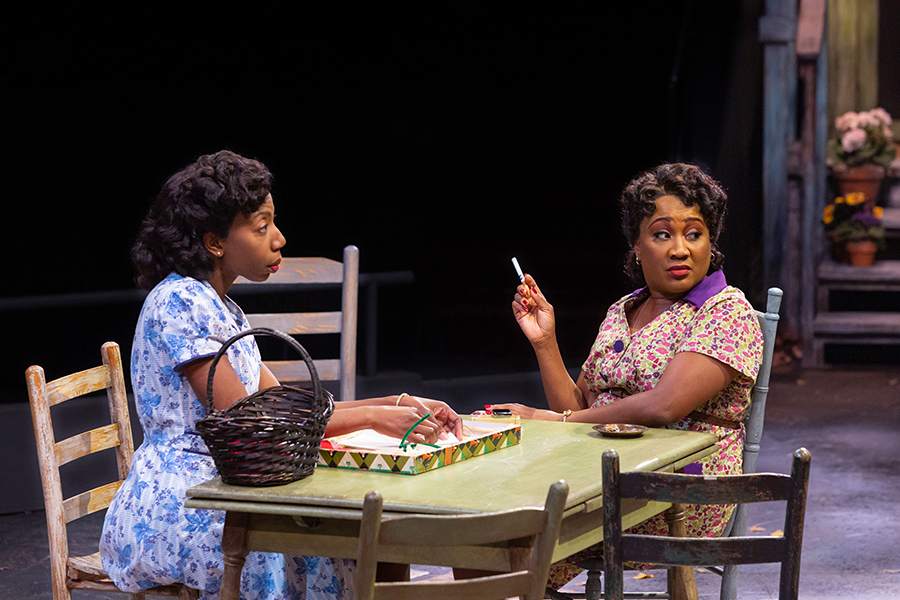 Joy Jones and Roz White in August Wilson’s Seven Guitars at Arena Stage running November 26 – December 26, 2021. Photo by Ryan Maxwell Photography. I always feel privileged to enter the imagination of August Wilson – a world of finely drawn characters of the American Black experience. There you’ll find gamblers and street women, hustlers and laborers, dreamers and murderers – all artfully intersecting in a convoluted crescendo of pain and joy. It’s the church ladies and the faithful Wilson knows to rely on to smooth out societal wrinkles – to offer hope in times of soul crushing adversity and mind-numbing oppression.
In Wilson’s world, events occur in lowly places – around a kitchen table, in a backyard, an alley or a gypsy cab station. He finds the ordinariness of daily life and explores it to the fullest. It’s the streets and the common man he knows best, and his canny talent for leaning in gifts us with nuggets of truth amid the everyday chatter.
In Seven Guitars we sit at a simple wooden kitchen table alongside Floyd and Vera, Louise and Canewell and Red. Advice and cake are given freely yet danger is always around the corner in the Hill District of Pittsburgh, Pennsylvania where Wilson grew up in the mean streets listening to the rhythm and rhyme of his people. Wilson uses the perils of pride and poverty to tell his compelling stories. Listen closely, as he did.
It’s the 1940’s and blues singer, Floyd Barton, has scored a hit record and the Savoy Studio wants him back to record another, but he’s broke and won’t leave without Vera, the heartbroken woman he cheated on, who no longer trusts him. “A man that believes in himself, still needs a woman who believes in him,” Floyd tells her. His band members, Red and Canewell, want the assurance they’ll get paid before accompanying him to Chicago. Hedley is the dark horse, an outsider who speaks of mystical powers and dreams of owning his own plantation. Louise holds all the wisdom cards and the sharpest wisecracks. She is played brilliantly by Roz White, whose delivery is so spot on she earns several bursts of instantaneous applause.
Seven Guitars is set in the round which allows for a lot of motion especially for a smallish cast with a fixed set. Frustratingly, given Hedley’s Jamaican accent and that he faced away from where I was sitting for nearly the entire production, I was able to hear only a smattering of his lines. Nevertheless, actor David Emerson Toney’s body language was powerful enough to impart the gist of his words.
Arena’s ongoing presentations of Wilson’s American Century Cycle plays, a ten-part series that chronicles 100 years of the African American experience, is an admirable commitment to the American canon of the greatest plays ever written and one that we should all support.
A superb cast under the immensely talented direction of Tazewell Thompson. With Roderick Lawrence as Floyd Barton; Joy Jones as Vera; Eden Marryshow as Red Carter; Dane Figueroa Edidi as Ruby; and Michael Anthony Williams as Canewell. Set Design by Donald Eastman; Costume Design by Harry Nadal; and Lighting Design by Robert Wierzel.
Through December 26, 2021 at Arena Stage, 1101 Sixth Street, SE, Washington, DC 20024. For tickets and information visit www.ArenaStage.com. For a safe theater experience, all COVID-19 protocols are strictly adhered to including proof of COVID vaccination and photo ID and masks worn inside the theater throughout the performance.
Tootsie
Broadway at the National Theatre
December 9, 2021
By: Jordan Wright

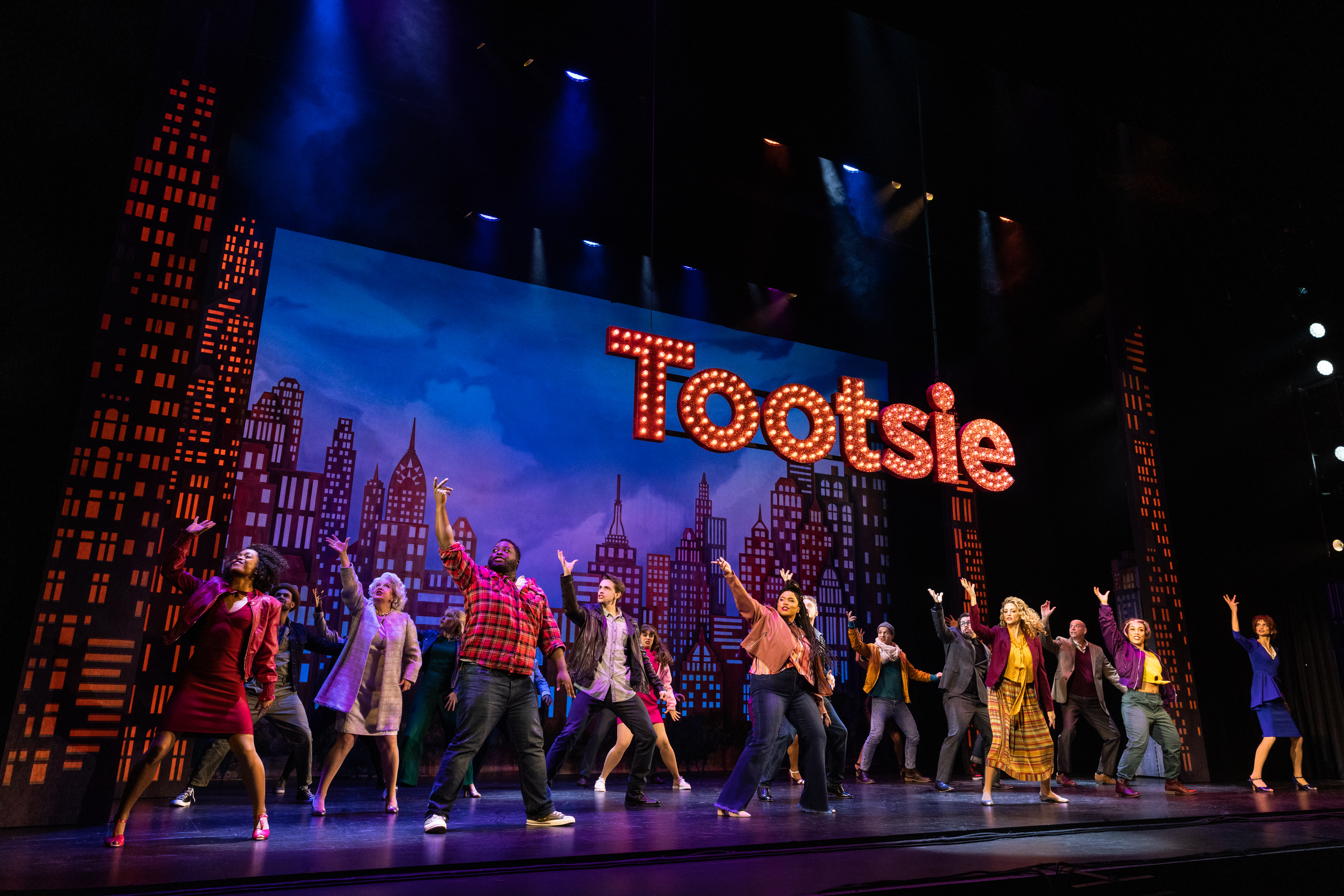 Cast of Tootsie at The National Theatre 
Ah, struggling actors who work in restaurants in New York City. Sound familiar? That’s the premise for Tootsie, the musical-within-a-musical based on the original story by Don McGuire and Larry Gelbart. You probably remember the blockbuster movie by the same name starring Dustin Hoffman as the actor who becomes a drag queen in order to land a role in a musical. Co-star Jessica Langesnagged an Academy Award for Best Supporting Actress in her role as the girlfriend. In 2018 Composer David Yazbek turned it into a musical. And, by the by, that’s Yazbek of Broadway’s smash hits The Band’s Visit; The Full Monty; Dirty Rotten Scoundrels and more. Robert Horn, who wrote the book won the 2019 Tony, Drama Desk, Outer Critics Circle and New York Drama Critic’s Circle Awards for his work on Tootsie.
According to his agent, 40-year-old Michael Dorsey, erstwhile waiter at Steakhouse on the Bone, is persona non grata at auditions. His insistence on demonstrating his “truth” has gotten him tossed out on his ear from every production in town and casting agents are weary of his egotistical outbursts.
Frustrated and demoralized, he decides to try out for a female part using the stage name Dorothy Michaels. He, as she, catches the eye of Rita, the producer who appreciates a feisty female and despite the protestations of the director gets the lead role – rewriting the entire script in the process and falling head over heels for a female cast member who admires this tough cookie.
What I didn’t know going in was that this was as much a comedy as a musical. Think Mel Brooks funny. Think Sondheim’s A Funny Thing Happened on the Way to the Forum. Now you’ve got the picture. This show is a gag-a-licious funfest from opening lines to the final curtain. Twenty-one fabulous songs spotlight the performers artistry and put us in the mood for a rom-com on female empowerment wrapped in a love story. And, although there are no big names in the cast, they are all superb. Lead actor, Drew Becker, emerges as a new funny face and accomplished singer. Kudos too to comedienne Peyton Reilly as his gal pal, Sandy Lester, “I just learned a new yoga position – downward spiral!”, and Jared David Michael Grant who slays as his roomie, Jeff Slater. Check your funny bone for his second act number, “Jeff Sums It Up”.
Thanks to Tour Set Designer, Christine Peters, it has all the dazzling sets you’d expect for a full-on B’way production plus an 11-piece orchestra led by Andrew David Sotomayor.
Directed by Dave Solomon with Choreography by Denis Jones and Costume Design by William Ivey Long.
Additional cast members include Ashley Alexandra as Julie Nichols; Lukas James Miller as Max Van Horn; Kathy Halenda as Rita Marshall; Steve Brustien as Stan Fields; Adam Du Plessis as Ron Carlisle; Alex Ruiz as Carl; Connor Allston as Stuart; and Dominique Kempf as Suzie.
Totally embraceable Tootsie runs through December 12th at The National Theatre 1321 Pennsylvania Avenue, NW, Washington, DC. For tickets and information visit www.BroadwayATTheNational.com. All COVID-19 safety protocols in place for a safe theater experience.
|