|
|
Jordan Wright, June 2010
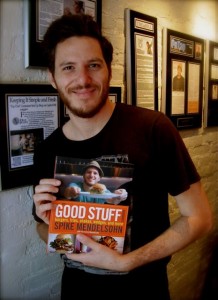 Keeping it real: Spike with his new cookbook - photo by Jordan Wright Last Monday morning I watched Spike Mendelsohn on ABC’s Good Morning America from the luxury of my bed. He was doing a food demo on the sidewalks of New York with fellow Greek, George Stephanopoulos. Spike’s a down-to-earth real deal guy who’s greatest appeal is, that no matter how famous he has become, he will still shake your hand, look you in the eye and flip your burger. Then he’ll stick around to make sure you liked it.
Five days earlier I spoke with him at The Good Stuff Eatery, his restaurant on Capitol Hill, along with a small group from the press, gathered for the launch of “The Good Stuff Cookbook”. Surrounded by baskets of his Farmhouse Bacon Cheeseburgers, crunchy tender Village Fries, and tall frosty Toasted Marshmallow milkshakes, he is humbled as usual by the attention lavished on him. I’ve always been impressed with Spike, his work ethic and his accessibility. He is naturally giving and open. I’ve watched him jump from behind a searing grill at the Capitol Skyline Hotel pool on the hottest day of summer to hand off a burger and fries to a passing guest. He wants to please everyone.
His new books were stacked for signing on a small table. A word bubble floated aimlessly over my head, “Can a cookbook with hamburger recipes really captivate jaded foodies in a fresh and creative way?” The answer would hang in the air until I returned home.
He begins as most authors do, with acknowledgements of agents’ guidance and chefs’ inspiration. But it is in his warm descriptions of family, and the integral part they have played in his culinary career, that tell of Spike, the man. “The restaurant is the epitome of family,” he avows. His sincerity is palpable.
There is a tender tribute to sister and co-author, Micheline, to whom he writes “To say I could never have done this book without you, is like calling the sky blue.” His grandfather, “Papou, whose love was like an heirloom passed down,” and grandmother, “Zas” who started his love of food and people since the day he first washed dishes in the family’s restaurants, are showered with his adoration and respect. They taught him well. He has become a man who believes in inclusivity, a generous ambassador of his food knowledge and philosophy. Nobody is surprised at this.
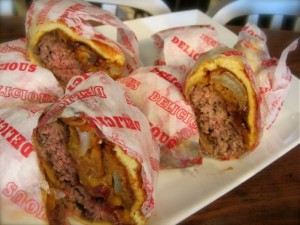 Farmhouse bacon cheeseburger - photo by Jordan Wright. If you’ve ever eaten in his lines-out-the-door Good Stuff Eatery you know that he has reached people by serving honest, homey, un-pretentious food…albeit with an original twist. There are no less than eleven different takes on mayonnaise in the book, from Chipotle to Pomegranate and my personal favorite, Old Bay.
From long-time New Yorker pal and grill partner, Brian, he gets Big B’s Baked Beans. Uncle D’s Chili and Cheddar Burger is a thankful nod to Great Uncle Denny. On the lighter side there are Grilled Watermelon, Yuzu and Feta Salad and Fried Goat Cheese, Dried Cranberry and Almond Wedge Salad…where the Greek influence shines brightly.
The restaurant’s recipe for their popular Village Fries speckled with fresh chopped rosemary and thyme is given here along with the “Michelle Burger”. Hers features ground turkey mixed with mango chutney, green apples and chipotle chiles and served on a multi-grain bun. The “Prez Obama Burger”, pays tribute with a juicy beef burger, applewood-smoked bacon and crumbled blue cheese topped with Horseradish Mayonnaise and Red Onion Marmalade. The Obamas love this place!
Southerners will relish his take on fried chicken in his recipe for Fried Chicken Burger with Smoked Bacon, Gingered Honey Mustard, and Sauteed Collard Greens. It’s a Sunday-go-to-meetin’ supper-on-a-bun.
There are plenty of useful tips throughout the book. Two pages of photos plus directions on cutting perfect onion petals…one of his signature items. It’s his delicious rendition of onion rings that keeps the batter tight to the onion, while the onion petal itself retains its integrity, still meltingly tender and fully cooked. I’ve always wondered how this was done.
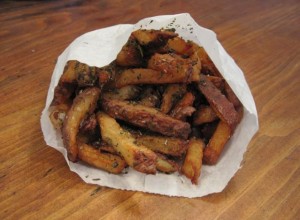 Village fries from The Good Stuff Cookbook - photo by Jordan Wright. Rivetingly lush photographs by Joel Shymanski, capture the intimacy of the moment between the arrival of the hot, smoking, gooey, oozing, herbed, slathered dish and the split second before you pop it in your expectant and salivating mouth. The images taken so close up, you might want to eat the page before you read the recipe.
Many of the dessert recipes are perfect for on-the-go entertaining. Cherry-Apricot Jam Blondies and Vietnamese Coffee Brownies speak directly to the popular “pick-up sweets” geared towards picnics and grill-outs. Imagine Cardamom and Caramel Popcorn on the lawn at your next Wolf Trap concert. Yes, it’s trendy, but oh so cute.
I’m saving the best for last when I tell you that the scrumptious milkshakes, floats and malts served in the restaurant are revealed to the reader. Twenty-two glorious pages of creamy, mouth-watering ice cream treats to freeze your brain. Hallelujah! This stuff is so good it should be illegal. Sign a waiver to yourself before you try it at home. “Plan a party”, Spike entreats his readers. There’s plenty of the “Good Stuff” to go around.
From The Good Stuff Cookbook (John Wiley & Sons, Inc.). Here’s a recipe for Spike’s all-around burger sauce:
Good Stuff Sauce
makes about 2 cups
2 cups Homemade Basic Mayonnaise
2 tablespoons ketchup
2 tablespoons molasses
2 tablespoons rice vinegar
1 teaspoon salt
Add the mayonnaise, ketchup, molasses, vinegar, and salt to a food processor or blender. Puree until smooth. The sauce can be refrigerated in an airtight container for up to 1 week.
For questions or comments on this story contact Jordan@WhiskandQuill.com or visit www.WhiskandQuill.com.
Jordan Wright, Nibbles and Sips, June 2010
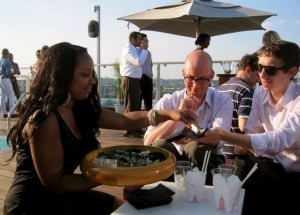 Sushi served by the skyline - photo by Jordan Wright 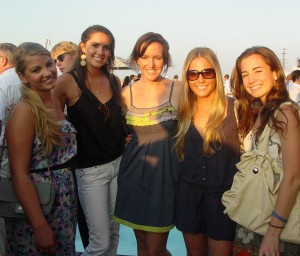 Washington Life magazine interns - photo by Sara Mosqueda How do you gauge the start of summer? If you’re downtown try Donovan House’s rooftop pool, perched atop Thomas Circle with spectacular views of the city. Pair it with an orange crush sunset and a smooth breeze fluttering over party dresses and pink button-downs.
At Washington Life’s summer bash last night we had Zentan Chef Jamie De Oca’s Spicy Tuna Sushi and Scallop Sushi with fresh ginger, Singapore Slaw served in little Chinese take-out boxes and Crusted Vegetable Dumplings.
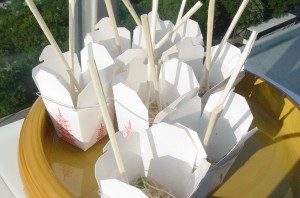 Savory appetizers from Zentan - photo by Sara Mosqueda DC DJ Seyhan Duru kept it hot and “Pirate Punch” made with Absolut Raspberry Vodka kept it cool.  DJ Seyhan Duru spinnin' and grinnin' - photo by Jordan Wright So cute and yummy!
Jordan Wright, Nibbles and Sips, June 2010
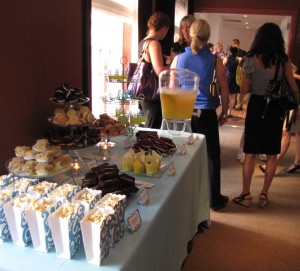 The Sugar Cube sweets - photo by Eileen Campbell 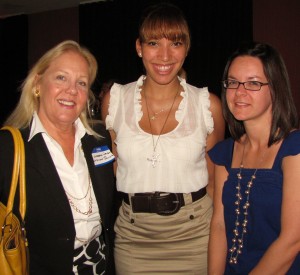 From left: Jordan Wright, fashion reporter for Washington Examiner Marie Coleman, photographer Kristina Hopper - photo by Eileen Campbell This week the luxe Lorien Hotel played host to Alexandria’s Old Town Boutique District’s get-together and campaign for “Shop Local Alexandria”. Darling girls in darling dresses from the best boutiques in town gathered to bond over nibbles and sips.
Brabo Tasting Room in the hotel’s complex served “Napa”tizers and delicious charcuterie to compliment the wine and fresh lemonade. Alexandria confectionary, The Sugar Cube, brought their Red Velvet Devil Dogs, Lemon Almond and Chocolate Peanut Butter Whoopie Pies, that were downed faster than you can say, “Let’s shop!”
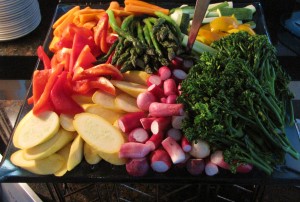 Brabo Tasting Room's crudetés beautifully displayed - photo by Eileen Campbell
Jordan Wright
The Georgetowner
August 2009
 Photo by Jordan Wright Farmers markets spark our culinary imagination, nourish our communal spirit, and excite our artistic creativity in the kitchen. The lavish bounty of the field stacked chock-a-block, evokes images of country roads dotted with rural farmhouses and red barns. We gaze adoringly at the summer’s abundant cornucopia while our inner sybarite emerges full-blown and we stand urban-ready to do battle with pots, knives and glass canning jars glinting. Awaiting our dreams are velvet-skinned peaches, crusty loaves of Kalamata olive bread, crates of jewel-like eggplants and juicy tomatoes.
 Photo by Jordan Wright - Copper Pot Food Company's summer-in-jar Nectarine and Bourbon Jam Consider the humble tomato. The fruity flesh a palette of epicurean possibility. Until recently only hybrids such as “Big Boy”, “Early Girl” and “Roma” could be found in the marketplace, but now, countless varieties of heirloom tomatoes are cultivated by our local farmers. In Penn Quarter’s small but mightily impressive market, I found a myriad of tomato treasures like “Green Stripes”, red and yellow “Brandywines” and “Black Cherries”, tiny globes of pop-in-your-mouth sweetness. These open-pollinated non-hybrids are luscious with the bygone field flavor of prized tomatoes. I pondered the possibilities of a dinner alfresco.
Would it be a colorful ratatouille simmered with the headliners of the current season, green beans, onion, garlic and eggplant? Jim Breger of Anchor Nursery grows a heritage Sicilian eggplant variety called “Rosa Blanca” that would do nicely.
Angel hair pasta, tossed with quick-sautéed garlic and cherry tomatoes in all three colors from Mountain View Farm, could then be dressed with a fruity olive oil, scattered with ribbons of basil and crowned with curls of Parmegiano-Reggiano shaved a la minute. The larger tomatoes might be stuffed with celeriac remoulade or used in gazpacho. And taking us into the winter months, a dehydrator could preserve the Romas for use in pesto and served atop bruschetta, while canning would afford us crisp “bread and butter” pickles or dilled beans to prolong summer’s memory.
 Photo by Jordan Wright - Enjoying the day at Penn Quarter Farmers Market
Like schoolboys out on recess, neighborhood chefs were everywhere at this market with some of the same thoughts in mind. Chef Andy Kitko of the newly opened Cedar, located at the top of the street, is already receiving rave reviews for his creative use of seasonal ingredients with a French influence. Would the melons have been for his Chilled Melon Soup with lobster and basil? Maybe the berries were for his Strawberry Pavlovas with lemon curd and passion-fruit-coconut sorbet.
I met Chef Terri Cutrino of Café Atlantico, joshing around with the other chefs while picking up her order for the restaurant. “Every Friday night the café does a farmers market dinner, a three-course meal using ingredients found here at the market. This week I’ll make “ciccioli” a sort of pork rillete,” she revealed.
Emily Haas of Black Rock Orchard, who was generously handing out samples of her fruits, told me, “The chefs have won me and the other farmers over. We used to be swamped by them. Now they place their orders ahead and they’re ready when they get here.” Her ripe nectarines would be perfect for my ginger nectarine cobbler topped with Dolcezza’s artisanal Lemon Ricotta Cardamom gelati and her “Golden Donut” peaches, with their mango and apricot overtones, could dovetail well into a peach and blackberry galette and incorporate two ingredients in abundance now. www.dolcezzagelato.com
From Oyamel Restaurant I encountered Executive Chef Joe Raffa and cohort Chef Luis Montesinos,  Photo by Jordan Wright - Executive Chef Terri Cutrino of Cafe Atlantico enjoys a laugh with fellow chefs who affably showed me their cache of nopales (cactus pads) that they planned to grill, pickle or salt, then puree with pineapple juice for use in salads. When queried about the unusual choice of pineapple juice, Raffa grinned, “I grew up in Hawaii!”
At Wollam Gardens’ booth I spied Chef Brian McPherson of Poste Moderne picking up the restaurant’s flower order… sprays of fragrant Casablanca lilies.  Photo by Jordan Wright - Chef Brian McPherson of Poste Moderne with lilies It was on to the Bread Ovens at Quail Creek Farms and its breathtaking array of baked goods. The choices seemed endless. Here you could find ciabatta, savory and mixed berry tarts, peach and blueberry muffins, pagnotta, giant boule, pane pugliese, brioche, rustic Italian potato bread and iced apple cookies with golden raisins and pecans…a veritable crescendo of fresh baked delights. They’re also known for their seasonal soups. Try a Virginia Peanut soup with crabmeat and country ham or a lovely and cool Vichyssoise. You’d have to venture far afield to Burke, VA, Loudoun County or Annapolis to find them in another market. www.QuailCreekFarm.com  Photo by Jordan Wright -- Chef Nathan Anda of Red Apron Butcher Shop The Copper Pot Food Company, on hand with its farm-fresh line of handmade batches of jams, brought Nectarine and Bourbon Jam, White Fig and Balsamic Vinegar Jam, Strawberry and Vanilla Jam and Peach and Prosecco Bellini Jam to spread on your favorite bread or use as a decadent topping for ice cream. It tastes like summer in a jar. www.copperpotfoodcompany.com
Another standout was the Red Apron Butcher Shop. Here Chef Nathan Anda has created a line of authentic hand-cut house-cured meats unlike anything I’ve ever seen. Anda, who formerly cheffed at Tallula and EatBar, displayed his charcuterie, which included soppressata, guanciale, pork belly, prosciutto, pepperoni, bresaola, sopressa, corned beef and something called “tesa” that was new to me. “It’s like pancetta with the skin,” he helpfully offered. www.redapronbutchery.com
Penn Quarter Farmers Market – Thursdays, April 2nd through December 17th – 3 pm till 7 pm. 8th Street between D and E Streets NW, Washington, DC – For a list of other participating famers and producers go to www.freshfarmmarkets.org.
For comments or questions write Jordan@whiskandquill.com or go to www.whiskandquill.com.
Jordan Wright
May 2010
 Three-star Michelin mixologist Brian Van Flandern with hostess, Lani Hay - photo by Jordan Wright On a balmy evening last week at the home of Lani Hay, President and CEO of Lanmark Technology, guests gathered around Michelin three-star mixologist, Brian Van Flandern, for a lesson in margarita-making. On the white croc-skin topped bar Van Flandern had laid out all the necessary accoutrements for professional bartending: jiggers, shakers, strainers, ice scoops, crystal pitchers of fresh-squeezed lime juice and freshly-cut lime wedges, including his preferred Don Julio Tequila and light agave syrup. Large silver bowls of ice were ready for eager guests who lined up to measure, ice down, shake, pour and garnish the perfect classic margarita in preparation for their own summer parties.
The natty and knowledgeable consultant, Van Flandern, who creates cocktails for the iconic Bemelmans Bar at New York’s posh Carlyle Hotel, Thomas Keller at Per Se, Michel Richard at Citronelle, and Chef Mario Batali, had arrived at Ms. Hay’s chic Palisades home for a private dinner and launch of his book, “Vintage Cocktails” by Assouline Publishing.
Prosper and Martine Assouline, whose elegant imprint of luxury books and works of art are found in boutiques in Paris, New York, Los Angeles and Las Vegas, were on hand to celebrate the moment with a dinner menu that was designed around a progression of dishes paired with classic cocktails from the book.
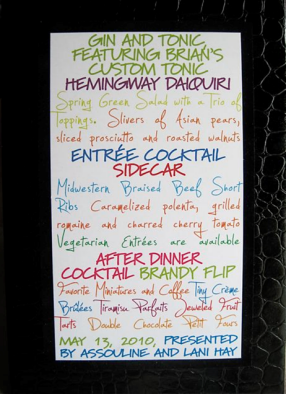 Pairing cocktails with dinner courses - photo by Jordan Wright “Acid, alcohol and sugar,” Van Flandern instructed his mixologists-in-training. “It’s all about the balance,” he advised while the sloshing and clacking sounds of a battery of Boston shakers filled the room. Everyone had their own Hawthorne strainer to hold back the ice for the straight-up margaritas. A quick tasting was recommended to perfect the balance, and it was down the hatch. “Bottoms up!” he exhorts.
In an interview, the debonair Van Flandern, who grew up in nearby Chevy Chase, described a few of his techniques and ingredients for some of his spectacular cocktails. A purist to the bone, to craft his exquisite “Tonic and Gin”, designed for New York’s Per Se, he uses ground chinchona bark from the Amazon rainforest. And he makes his own maraschino-style cherries, using dehydrated Bing cherries reconstituted in hot water, “They taste just like cherry pie! “ counseling me to “Be sure to save the liquid, add sugar and reduce to make a simple syrup for infusing spirits.”
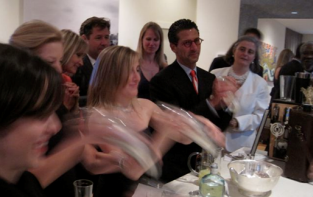 Guests mixing margaritas with Brian Van Flandern - photo by Jordan Wright I wondered where the word “cocktail” originated and why some cocktails are referred to as “vintage” or “classic”. He explained that, “at one point in history a certain cocktail gained global popularity and becomes a classic or is destined to become one because of all the publicity it has garnered.”
The term, “mixologist” has been usually regarded as pretentious and taboo in the industry, but since a renaissance of the cocktail, he assures me bartenders are embracing the coinage.
“2004 was the 200th anniversary of when the word “cocktail” first appeared in print. And now great bartenders around the world are looking to chefs for direction and focusing on balancing acid to sugar. They are using fresh ingredients, hosting spirits education, and researching the histories of the specific distillation techniques. Even the terroir and culture behind where different spirits are made are taken into consideration in developing flavor profiles to create delicious and original cocktails.” A trend likely to continue.
While working with Chef Thomas Keller at Per Se in New York City, Van Flandern lowered the ethanol content of the spirits and paired his cocktails with dinner courses creating food-friendly cocktails and earning a four-star rating from noted New York Times food writer and wine critic, Frank Bruni.
Designer Cocktails
Since I misspent some of my salad days at the Bemelmans Bar in the Café Carlyle where Van Flandern reigns, I asked him to share an original cocktail he has created for the iconic watering hole in the past.
“Sex in the City” Cocktail – On the cover of “Vintage Cocktails” is a photograph of a pretty pink sugar-frosted rim cocktail he calls, “The Bradshaw”, named after Carrie Bradshaw of “Sex in the City”. Little known is that real life actress, Sarah-Jessica Parker and husband, Matthew Broderick, had their first date here. To mark the occasion and the drink was designed for her using Don Julio Blanco Tequila, fresh lime juice, simple syrup and the pink-colored passion fruit-infused spirit X-Rated Vodka. The recipe is just in time for, “Sex in the City 2”, and should be served at all the private screenings around town.
Here are a few more of his creations to add to your repertoire:
Tiffany and Co. Cocktail – For his design of “The Official Cocktail” for Tiffany and Co. he mixes blue Alize, fresh lime juice, pear vodka, a drizzle of cane sugar syrup and Moscato d’Asti. When presented it was served in a champagne flute and tied with a white silk ribbon around the base.
Dolce and Gabbana Cocktail – For the launch of their “Light Blue” perfume, he mixed Ciroc Vodka with Granny Smith apple cider and citrus peels, adding cedar wood from a distillation he created using the shavings from a cedar wood clothes hanger.
Van Flandern’s advice at what to expect when imbibing at a bar serving hand-crafted cocktails, “We’re entering into a new “Golden Age” of the cocktail. If you order a cocktail and it’s not to your liking you should let the bartender correct it.”
For question or comments on this article contact Jordan@WhiskandQuill.com .
Jordan Wright
May 2010
Healthy Snacks Fuel Local Garden Volunteers
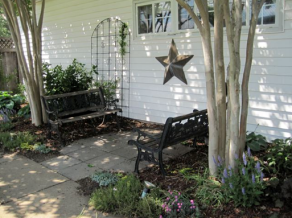 Under the crape myrtles at the Del Ray Artisans Gallery - photo by Jordan Wright Under the guise of calling power bars and lemonade food reporting, I’ll relate last week’s triumph at Alexandria’s Del Ray Artisans Gallery’s gardens, which I have been curating with a small but dedicated group of gallery members for the past ten years or so. The single-story clapboard gallery charted its renaissance on a dirt-and-trash-strewn lot where our all-volunteer gardeners have helped to transform the blighted property into an award-winning garden often featured on Del Ray’s House and Garden Tour. Usually we have eight to ten folks during spring and fall to weed, plant, mulch and prune, keeping the grounds up to snuff for the Gallery’s monthly shows. 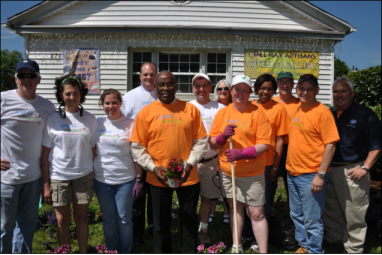 Mayor Bill Euille and SunTrust and King Street Wireless Volunteers at the Del Ray Artisans Gallery for Spring Garden Cleanup - photo by Jay This year we got herculean help from a batttalion of volunteers. From SunTrust Bank: Steve Truitt, Brian MacDonnell, Bob Dail, Jill Fields, Chris Hartman, Lori Caumeil, Mark Leonard, Lauton Brown, and Jim McCormack. From King Street Wireless: Remy Kauffmann, Allison DiNardo, Robert DiNardo, Judy Harmatz and Bruce Kauffmann.
What an amazing, upbeat, cheerful and hard-working group they were. We thank them all for their participation. Drop by and see the results!
Though we are not on this year’s tour, make sure to stop by and visit the gallery and sit along the garden path on the benches beneath the crepe myrtles. And, if you’re of a notion, there might be a few weeds left for the plucking.
This year Del Ray’s House and Garden Tour is this Saturday, May 22nd from 11am to 5pm. Go to www.delraycitizen.org for tickets. Or visit www.thedelrayartisans.org.
|