Jordan Wright
November 26, 2011
Special to Indian Country Today Media Network
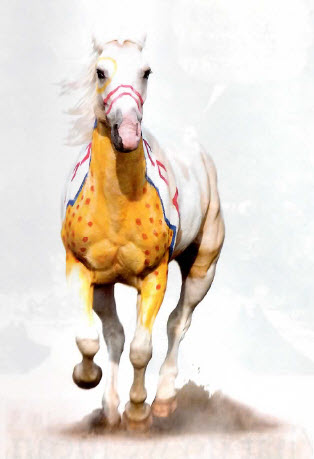 Crow War Pony painting by Kennard Real Bird, Crow
Out of the earth
I sing for them,
A Horse nation
I sing for them,
out of the earth
I sing for them,
the animals
I sing for them.
Sung by Lone Man of the Teton Lakota – From the book “A Song for the Horse Nation”, edited by Emil Her Many Horses (Oglaa Lakota) and George P. Horse Capture (A’aninin).
As much poem and prayer as personal tribute, this song shows the respect and reverence American Indians have accorded the horse. For the past three centuries this noble beast has been indispensable to their existence during times of war and peace, altering the landscape of daily life for its caretakers.
The bond between the horse and Native peoples is the focus of the National Museum of the American Indian’s recently opened exhibition, “A Song for the Horse Nation” in Washington, DC. Originally shown on a smaller scale in New York City in 2009, the show has grown to include a sixteen-foot tall Lakota tipi adorned with horse and warrior hand-painted pictographs and fifty additional objects, along with life-size horse and dog statues displaying a Tsisistas/So’taeo’o (Cheyenne) travois ca. 1880, a type of sled made of wood, pigment and hide, commonly used for transporting goods and people.
Rifles belonging to Geronimo (Chiricahua Apache), Chief Joseph (Nez Perce) and Chief Rain-in-the-Face (Hunkpapa Lakota) are also highlights of this spectacular exhibition.
Winter Count on cloth by Long Soldier (Hunkpapa Lakota), ca. 1902. Fort Yates, North Dakota. Muslin cloth. With the advent of the domesticated horse came an unparalleled defense for the Plains warriors, who could ride great distances as well as provide an expeditious escape from the firepower of advancing troops. It served as a vehicle for transport of possessions and people and allowed tribes to roam more freely during hunting season affording them more leisure time to pursue art, spirituality and philosophy. Primitive pictographs of horses painted on muslin reflect daily life, showing the versatility of the horse for hunting and battle as well as horse raids and courtship.
Horses were bred not only for daily use – the hunting of bison was made considerably easier while mounted on horseback – but also for trade, proving to be an excellent commodity in exchange for food, eagle feathers and tobacco. We learn from the exhibit that in the 1800’s a single horse could be traded for 10 guns, 5 tipi poles or several pack animals.
Though the exhibition features objects predominantly from the 18th and 19th Centuries, two of the oldest objects on display are a Spanish Conquistador helmet from the late 1500’s-early 1600’s, on loan from the Autry National Center, and a Seneca comb from around 1600 made of antler with a carved figure of a horse from the George Gustav Heye collection.
Drawing from the museum’s extensive collection of horse trappings as well as artifacts, artwork and personal accounts, are a Menominee wood saddle carved in the shape of a horse ca. 1875; a Northern Cheyenne quilled horse mask; No Two Horns (Hankapapa Lakota) dance stick; a Lakota hide coat embroidered with horse motifs; and historic photographs from the museum’s archives. Along with elaborately beaded regalia and tribal objects, are also stunning works from contemporary artists.
 Glass horse mask, 2008, by Marcus Amerman (Choctaw, b. 1959), New Mexico. Multicolored glass. Glass horse mask, 2008, by Marcus Amerman (Choctaw, b. 1959), New Mexico. Multicolored glass.
Marcus Amerman’s (Choctaw) multicolored glass horse mask is a particularly dramatic piece that echoes the celebratory beaded masks still used in rodeos and mounted parades. The sculpture shares space with “Crow War Pony”, a spectacular photograph by Brady Willette of a war pony, painted in tribal symbols, by artist, rodeo bronco buster and horse whisperer, Kennard Real Bird (Crow) whose family’s ranch lies alongside The Little Big Horn River in Montana, and who is known for his annual reenactment of the Battle of Little Big Horn that draws visitors from around the world. The painted pony is named “Cool Whip”. Trained by Real Bird, the palomino was eventually sold to a family in Minnesota where he has garnered his own notoriety.
It is fitting that Emil Her Many Horses is the curator of this equine exhibit. A member of the Oglala Lakota nation of South Dakota, Her Many Horses is a specialist in Central Plains cultures. His paternal great-grandmother was called Many Horses Woman, meaning she owned many horses, a symbol of wealth and generosity.
“All horses used by Native Americans throughout North America and Canada originally descended from 25 Andalusian horses brought over by Christopher Columbus on his second voyage in 1493 to Hispaniola [now the Dominican Republic] in the West Indies, eventually making their way through Mexico and Florida and into North America where Plains peoples adopted the horse,” he explains.
“A display map shows California horses going up North, and then the French and Dutch to the East Coast later. With the Pueblo Revolt horses came into Native hands, and then it would be the Navaho, the Arapaho, the Pueblos and the Commanche who have horses. Then they are traded up North, but the Commanche are known to also trade them up to the Shoshone.
I think what we tried to show was really the impact of horses and hunting, because with horses you were able to secure more game such as buffalo and if you could secure more game you had more resources. Since if you didn’t have horses you were hunting buffalo on foot. So the thing that happens is that tipis become bigger because you have more time to make a tipi.
In warfare, other communities who may have been an ally in the past, if they had this resource and you wanted it, it would cause conflict with people that were once allies. But horses also helped in preventing the onslaught of the cavalry and settlers. It kept them at bay.
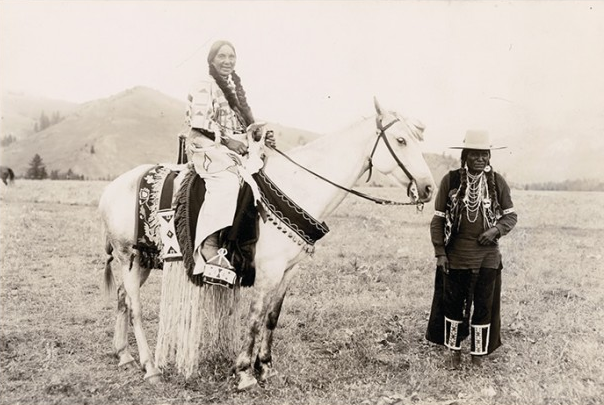
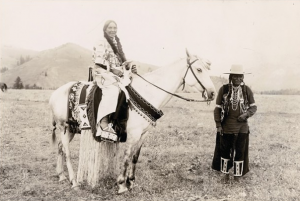 Possibly Chief Eagle of the Salish (at right), with an unidentified woman on horseback, ca. 1905, St. Ignatius, Montana, on the Flathead Reservation. Horses also would have an impact on how you traveled. It was either the woman or the dog that would have to carry the material while the men were guarding as they moved camp, because at any time they could be attacked by an enemy scouting party. So it was either the dog or the woman that would carry the material. But when the horses came it made for a swifter getaway. You could be out of there much quicker than to try to wrangle a dog.”
When asked what he hoped visitors would take away from this exhibition, he offers, “It really is the close association with horses that we still have today. For some the horse is very vibrant, still a part of their communities. For some of us it will always be a part of us through our stories, our culture, and our artwork even though we no longer own any horses. But they’re still rich in our culture, our memory and our knowledge.
“A Song for the Horse Nation” runs through January 7, 2013 at the National Museum for the American Indian in Washington, DC. For more information visit www.AmericanIndian.si.edu/exhibitions/horsenation.
Jordan Wright
December 2010
Special to the Washington Examiner and San Francisco Examiner
This year brought the usual Food Network celeb cookbooks, “The Barefoot Contessa How Easy Is That?” (Random House) by Ina Garten, Rachel Ray’s “Look and Cook” (Clarkson Potter), Giada De Laurentiis’ “Giada at Home: Family Recipes From Italy and California” (Crown), and “Tyler Florence Family Meal” (Rodale Books). PBS gave us Eric Ripert with “Avec Eric” (Wiley). The book follows Ripert’s journeys through France, Italy, California and the Grand Caymans and is based on the show of the same name. Also from PBS and based on the TV series “Cooks Illustrated”, we read over 350 pages of “The America’s Test Kitchen Cookbook” (Boston Common Press). Well not read…but gleaned for future reference. From The New York Times we hoisted a weighty compendium of 1400 recipes culled from their voluminous archives. Amanda Hesser’s “The Essential New York Times Cookbook” (Norton) reflects 150 years of the classics with a few new spins. It’s a keeper culled from the country’s most distinguished food writers.
Intriguing books, curiously unnecessary books, and books with practical yet grisly techniques continued to pour in throughout the year. We were instructed in how to butcher our own pig in “Cleaving: A Story of Marriage, Meat and Obsession” (Little, Brown) by Julie Powers; how to drink wine like a pro in “Secrets of the Sommeliers” (Ten Speed Press) by Rajat Parr a terrific read and on Kindle too; and the complex chemistry of baking in “How Baking Works” (Wiley) by Paula Figoni, a comprehensive textbook for professional bakers that includes in-depth reviews, discussion topics for the hard-core, and experiments that unfortunately add up to a book drier than a cup of corn starch.
This year there’s even an app for your iPhone or iPad from Mark Bittman. With 2,000 recipes, meal-planning ideas and 400 photos, his “How To Cook Everything” (Wiley) is at your fingertips for $1.99. Now that’s a bargain I can’t refuse.
But along with some culinary chaff came the heart of the grain, the bone’s marrow, the pan’s drippings. In revelations, anthologies, and flat-out edgy innovations by chefs and traveling food writers that bring wisdom and light to the process, there is true inspiration for us all…the inspiration to approach our kitchens with a commanding and steady posture and cook like a whirligig with a whisk.
Here’s a list of 2010 cookbooks that should be on your gift list or if you subscribe to the one-for-me-one-for-you approach to holiday shopping and I do, on the shelf in your personal library.
Baking
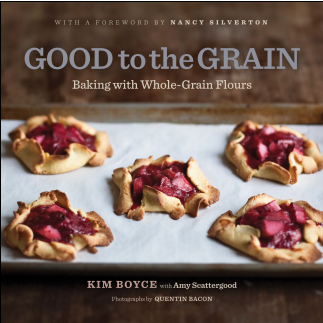
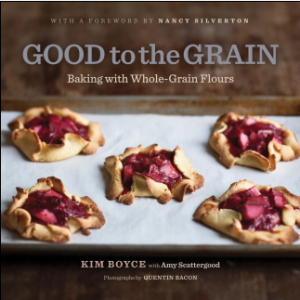 Good to the Grain - Kim Boyce Kim Boyce’s “Good to the Grain” (Stewart, Tabori & Chang) – A lushly beautiful book by a former pastry chef at Spago and Campanile in LA and contributor to Bon Appetit, Boyce incorporates whole-grain flours in all her baking. Working with barley, kamut, amaranth, quinoa, buckwheat and other hearty grains to create recipes like Pear and Buckwheat Pancakes, Apricot Boysenberry Tarts made with rye flour, and Ginger Peach Muffins made with oat flour. She’s even figured out a way to get wheat flour not to toughen up in the baking process.
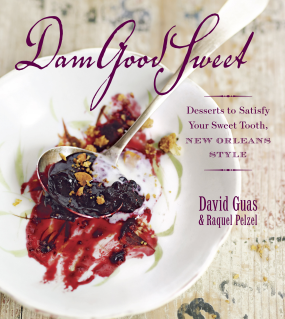
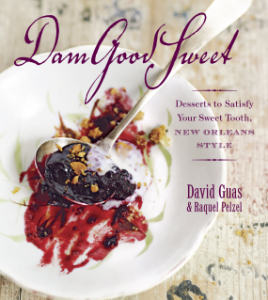 Dam Good Sweet - David Guas I love a book by a chef who knows their ingredients, lore and territory. In David Guas’ “Dam, Good Sweet” (Taunton) written with Raquel Pelzel, he corrals them all with his memories of his growing up in Louisiana. Memories of “Nanny”, his great-aunt on Aunt Boo’s side of the family, and her mayhaw preserves; pickin’ pecans off the ground in New Orleans’ Elysian Fields with Granny, and reminiscing about McKenzie’s Pastry Shoppe and their familiar chocolate-covered turtles, inform his stories. But it’s his old school N’awlins recipes like Buttermilk Beignets and Bananas Foster along with newer creations like Lemon-Herbsaint Poppers made with the New Orleans anise-flavored liqueur and Ponchatoula Strawberry & Brown Butter Shortcake that’ll have you breaking out your rolling pin in no time. Guas has recently opened Bayou Bakery Coffee Bar and Eatery in Arlington so you can taste the goods before you buy the book.
Local lawyer-turned-baker-turned-entrepreneur, Warren Brown owns seven CakeLove bakeries in our area. In his second cookbook, “United Cakes of America” (Stewart, Tabori & Chang), Brown takes us on a cake baker’s journey to all 50 states plus Puerto Rico (Rum Cake) and DC (Cherry Trifle). From Mississippi he gives us Mud Cake; from Maine, Whoopie Pies; from Virginia, a Pineapple Upside-Down Cake in a skillet; from Georgia, Coca Cola Cake; and for all you cupcake fans, Avocado Cupcakes from California. Your Cousin Mary’s state cake will be in here too and there are plenty of useful tips from this experienced baker even for those who have just discovered their ovens.
“Baked Explorations” (Stewart, Tabori & Chang) by former admen and partners in the Brooklyn, NY bakery they call Baked, Matt Lewis and Renato Poliafito have upped the ante with their latest collection of classic American desserts reinvented. In this book they tease you with Caramel Apple Cake, torment you with Almond Joy Tart, and lure you with Aunt Sassy Cake made with pistachios and iced with Honey Vanilla Buttercream. The wildly popular duo, the darlings of Oprah and Martha Stewart, reveal their highly sought-after recipe for their famous Sweet & Salty Brownies. As for me, I’ll make the Caramel Popcorn with Peanuts and Chocolate for this year’s at-home Oscar night party.
Ethnic and Regional Cuisine
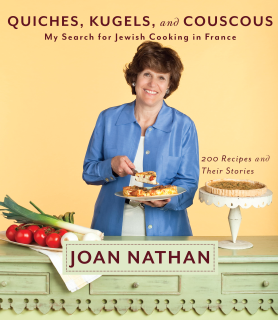
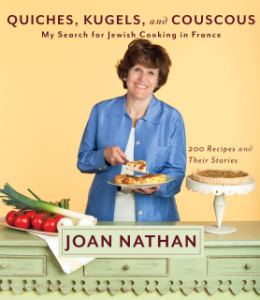 Quiches, Kugels and Couscous - Joan Nathan Doyenne of Jewish cookery and lover of all things French, acclaimed Washington DC author, Joan Nathan, combines the two in her eleventh cookbook, “Quiches, Kugels and Couscous: My Search for Jewish Cooking in France” (Knopf). Nathan prepares the reader by providing centuries-old historical context for the creation, preservation and tradition of Jewish cookery in France. Thankfully the book offers far more than the catchy three-dish alliterative title suggests to the reader. Among the more than 200 recipes that have their origin in Spain, Morocco, Portugal, Germany and the Mediterranean, you’ll find such gems as Paul Bocuse’s Black Truffle Soup Elysée, tweaked by Nathan’s kosher re-interpretation; Baba au Rhum from the tiny 16-seat restaurant, Les Arômes outside of Marseilles; and a recipe for a hearty Alsatian Choucroute from a doctor in Strasbourg. This is the sort of treasured cookbook writing that will inspire home cooks to experience Jewish food and its culture.
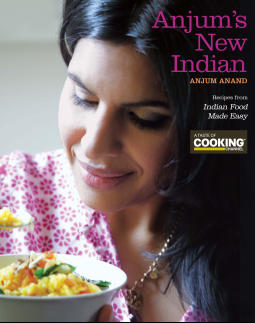
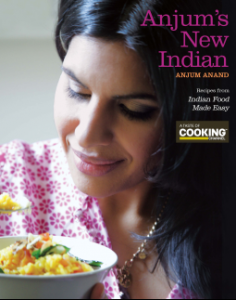 Anjum's New Indian - Anjum Anand “Anjum’s New India” (Wiley) by Anjum Anand, host of the Cooking Channel’s Indian Food Made Easy is an exotic yet accessible book for getting a handle on Indian regional cuisine. Anand is better known in the UK, though she has cooked at the Mondrian Hotel in LA and Café Spice in New York. Her simple modern recipes like the rich Mogul dish Red Lamb Shank Korma and Dried Pomegranate Chicken along with her vindaloos, biryanis and tikkas make this the perfect book for the novice experimentalist. There’s even a recipe for Anand’s version of French fries, called Gujarati Fries with Cashews that calls for cumin, turmeric, sesame seeds and mango powder.
Dorrie Greenspan’s “Around My French Table: More Than 300 Recipes from My Home to Yours” (Houghton Mifflin) is written in Greenspan’s charming conversational style, which is like cozying up with Dorrie in her Parisian kitchen. The award-winning food writer and chef whose familiar voice is frequently heard on NPR’s “All Things Considered” and “The Splendid Table” comes to us with a wealth of knowledge and secrets about the French culinary style she has perfected with the expertise and mentoring of France’s greatest chefs.
Mixology
The stunningly beautiful “Vintage Cocktails” (Assouline) by three-star Michelin mixologist Brian Van Flandern makes you want to break out the silver cocktail shaker. Natty and knowledgeable Van Flandern shakes it up old school while he exhorts, “Bottoms up!” The cover features “The Bradshaw”, an artisanal cocktail he created for Sarah-Jessica Parker and Matthew Broderick on their first date at the Café Carlyle’s Bemelman’s bar where Van Flandern mixes up classics with a twist like the Sidecar and Tuxedo Martini or the re-trended Pink Lady and Negroni.
Carnivores Only
Just in time for the season of stews, soups and slow-cooked meats comes Jean Anderson’s “Falling off the bone” (Wiley). A six-time best cookbook award winner, Anderson is a lifetime member of the James Beard Hall of Fame. Divided into beef, veal, pork and lamb sections it gives you such mouth-watering recipes as Austrian Goulash, Tuscan Veal Pot Roast in Lemon Sauce, Slow Cooker Blanquette de Veau, Russian Crumb-Crusted Veal and Beef Loaf with Sour Cream Gravy, and Jade Soup with Pork and Veal Dumpling Balls. I’m looking at the Deviled Short Ribs as my first foray into the winter’s menus. Let’s see…four more icy snow-dune months left to cook these stick-to-the-ribs recipes and enough variety to keep it interesting.
Grillin’ and Chillin’
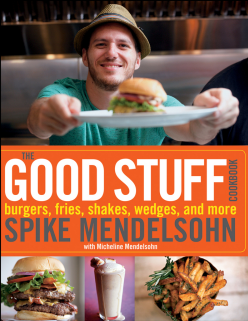
 The Good Stuff - Spike Mendelsohn with Micheline Mendelsohn In “The Good Stuff Cookbook: Burgers, fries, shakes, wedges and more” (Wiley) local chef and former Top Chef contestant Spike Mendelsohn reveals his restaurant’s recipes for his 12 signature mayonnaises, 23 burgers including the Michelle Burger and Prez Obama Burger (both big fans of his Good Stuff Eatery restaurant here in DC), along with his Root Beer Float and ever-popular Toasted Marshmallow Shake. Gorgeous close-ups by DC photographer Joel Shymanski, capture the intimacy of the moment between the arrival of the hot, smoking, gooey, oozing, herbed, slathered dish and the split second before you pop it in your expectant and salivating mouth. Fire up the grill, fryer and blender with this party-on-every-page burger bling cookbook!
Food Writing
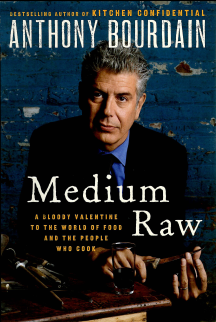
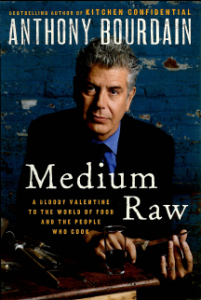 Medium Raw - Anthony Bourdain Edgy bad boy and acerbic wit, Anthony Bourdain, host of the Travel Channel’s “No Reservations” loves to upend the food world and strip off the damask tablecloths. In his latest reveal, “Medium Raw: A Bloody Valentine to the World of Food and The People Who Cook” (Harper Collins), he keeps the food fight center stage with a collection of essays that takes you past the glitz and glamour of our epicurean crystal palaces and into the belly of the beast, as he lasers in on noted chefs like Alice Waters and David Chang. A bloody good read!
Special to Washington Examiner
Up Close With Jordan Wright of Whisk and Quill
October 2010
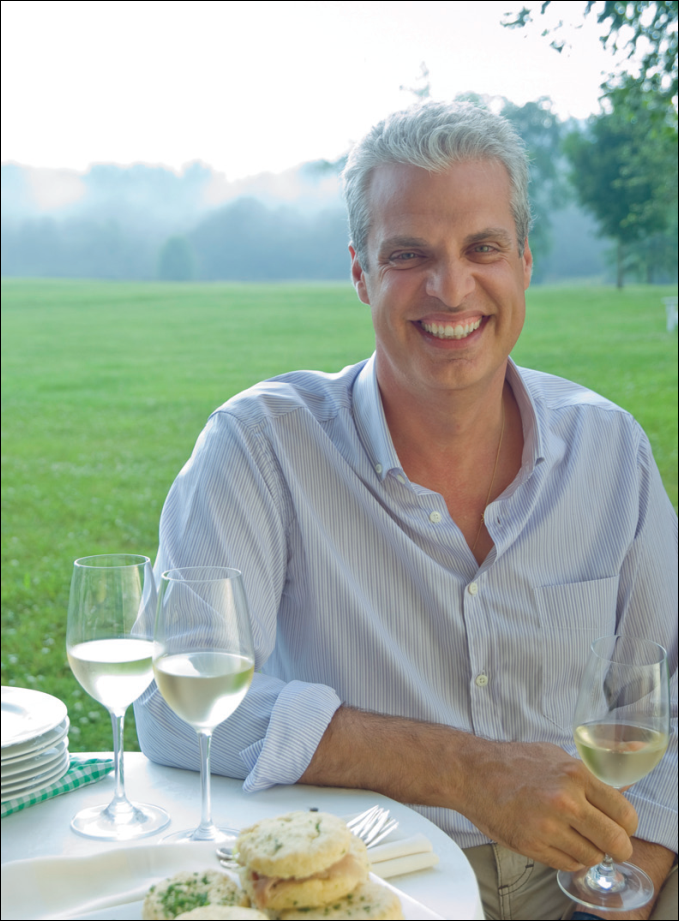
 Eric Ripert - photo credit Angie Mosier Based on his popular eponymous PBS TV program “Avec Eric”, the book follows culinary superstar and top toque, Eric Ripert, as he explores the culture and tradition of select regions of Italy, the Cayman Islands, New York and California. In his quest to celebrate the bounty of the regions to he loves so well, “AVEC ERIC: A Culinary Journey with Eric Ripert, Featuring Over 100 Simple Recipes “(Wiley), mirrors the show’s sense of adventure and Ripert’s deep appreciation for local and seasonal ingredients.
Part travelogue, part cookbook compendium, it contains over 100 new recipes drawn from Ripert’s most recent journeys. It is filled with snapshots from the fields and waters he traversed, and the hunters and watermen he met and cooked with. Handwritten notes and hand-drawn illustrations give the book a uniquely personal feel reflecting his convivial spirit and the inspiration behind his approach to each dish.
His outpost in Washington, DC is West End Bistro by Eric Ripert.
Jordan Wright – I loved your latest book. Reading it I felt as though I had been on a wonderful trip.
Eric Ripert – It is like going on vacation but staying home. It’s a good reflection of what we have done in the last season.
JW – Your Zen approach to food, approaching it by its origin and terroir and visiting its source, heralds the next generation of chefs. How have your recent journeys informed what you do in the kitchen today?
ER – If you consider cooking an art, inspiration has to come from somewhere, from your surroundings as a chef. I am inspired by the products, the seasons and the people I interact with. It’s kind of a strange process but I digest the information and then, when I create, it comes out in a dish. It always works for me and it’s the same for a lot of chefs. I teach my cooks how to be aware and how to be inspired by where they are.
JW – Your previous book, “On The Line”, was an energetic minute-by-minute account of the running of Le Bernardin and its kitchens…a detailed primer for any high-end restaurant, owner or server. With your newest book, you take the reader with you on your culinary journey to share in your travels. What would you like to say about your latest book?
ER – Well, I loved it! I wanted to do a documentary on the life of our restaurant but in book form instead of filming with a camera. I wanted to pay homage to my team at Le Bernardin. The idea was to be inspirational to young people in our industry and to demonstrate what goes on behind-the-scenes.
JW – I understand you began your career at La Tour d’Argent in Paris. Was that under owner Claude Terrail? I knew his nephew, Patrick, in New York when he ran L’Etoile and in Beverly Hills when he owned Ma Maison.
ER – Yes, and Patrick is back in Paris now managing La Tour D’Argent.
JW – What unique products did you discover while writing this book that you now use?
ER – We discovered a lot of products during our experience – especially conch and black fin tuna in the Cayman Islands. [Ripert’s restaurant, Blue, is located on Grand Cayman Island in the Ritz-Carlton Hotel].
JW – Your remarks as a guest judge on “Bravo’s Top Chef” have been informative and useful to the contestants. What sage advice do you have for up and coming chefs? And would you hire any of the cooks from the show?
ER – Sure, if they are looking for a job and we have some openings! My advice is if you are coming into our industry you need to make sure you have the passion for cooking, and not for becoming famous. You have to work hard, be humble and be open-minded.
JW – I saw you in May at the Warner Theatre in Washington, DC with your cohort, Anthony Bourdain, who wrote the forward to this book. It was a fabulous evening – totally sold out. The audience couldn’t get enough of the live Q and A. I learned that night that you have been waiting to get drunk with The Rolling Stones! Has that happened yet?
ER – Not yet. One can only hope.
JW – What international cuisine would you next like to experience in your travels?
ER – I love Japanese cuisine and would love to spend more time in Japan, Thailand and Vietnam.
JW – In what direction do you think in-home cooking is going?
ER – I think it has been lost a little bit in the past decade, but is coming back strongly because of the recession. People are more inclined to cook at home now because of the influence of cooking shows and celebrity chefs. Today we see more and more people looking for sustainable ingredients, good quality ingredients, and being more concerned about their source.
JW – What can we expect in Season 2 of Avec Eric?
ER – You’ll see more inspiration, more cooking and more fun. We shot in the Caribbean, in Virginia and Upstate New York and Italy too. In Virginia we went to Urbanna to see the soft-shell crabs and visited Wallace Edwards and Sons in Surry for the hams. Later we shot an episode with Patrick O’Connell at The Inn at Little Washington.
JW – What would you prepare to seduce a beautiful woman?
ER – First of all I would try to find out if she has allergies! Then I would prepare something savory, flavorful, light and refined, of course.
JW – What historical person would you most like to dine with? And why?
ER – The Dalai Lama.
JW – Didn’t you just cook for him on his recent visit to New York?
ER – Yes, but I didn’t eat with him!
JW – What did you serve?
ER – I gave him wild salmon served in a light broth infused with a lot of herbs and spices and with summer vegetables. And he ate it all!
JW – You had a bit of a mishap during one of your visits in Italy. What are your new and improved plans the next time you run into a wild boar?
ER – To have a gun with me! Though, no, no, no, maybe not, I’m not a hunter. But I’d like to be close to a big tree that I could climb up in.
This interview was conducted, edited and condensed by Jordan Wright.
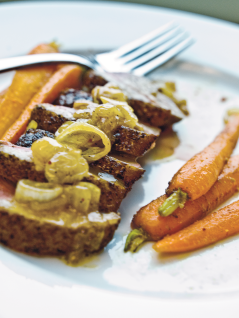
Recipe for Spice-Crusted Duck Breast by Eric Ripert for “Avec Eric”
SPICE-CRUSTED DUCK BREAST WITH ORANGE-HONEY GLAZE AND CUMIN-SCENTED CARROTS
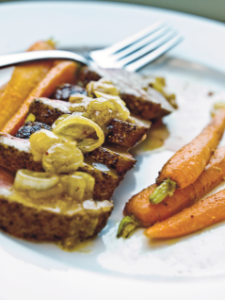 Spice-Crusted Duck Breast with Orange-Honey Glaze and Cumin-Scented Carrots My visit to a bee sanctuary in Sonoma, California inspired me to start cooking more with honey. It is a versatile ingredient that adds a nice, fl oral sweetness.
SERVES 4
CUMIN-SCENTED CARROTS
1 ½ pounds baby carrots, peeled
2 tablespoons unsalted butter
1 teaspoon honey
1/3 cup water, approx.
1 teaspoon ground cumin
pinch of cayenne pepper
fine sea salt and freshly ground black pepper
½ lemon
SPICED DUCK BREAST
1 teaspoon ground coriander
½ teaspoon ground cumin
½ teaspoon ground star anise
½ teaspoon ground white pepper
pinch of cayenne pepper
4 (6- to 8-ounce) boneless duck breast halves, trimmed
fine sea salt
1 tablespoon canola oil
2 shallots, thinly sliced
½ cup fresh orange juice
¼ cup fresh lemon juice
1 tablespoon honey
2 tablespoons unsalted butter
Place the carrots in a large skillet with the butter, honey, and about cup of water. Heat over medium-high heat and season the carrots with cumin, cayenne, salt and pepper. Cook, stirring occasionally, until the carrots are lightly caramelized and tender, about 20 minutes. Finish the carrots with freshly squeezed lemon juice.
Stir together the coriander, cumin, star anise, white pepper and cayenne pepper in a small bowl to blend. Season the duck breasts on both sides with salt, then coat the skin side of the duck breasts with the spice mixture, forming a crust.
Divide the canola oil between 2 sauté pans and heat over medium heat. When the pans are hot, gently place 2 duck breasts, skin sides down, in each pan. Lower the heat to medium-low and cook until the skin is golden brown and crispy, 12 to 15 minutes. Turn the duck breasts over and continue cooking for 3 to 4 minutes for medium-rare. Transfer the duck breasts to a cutting board to rest. Return the pans to the stove.
Divide the shallots between the pans and cook over medium heat until soft, about 5 minutes. Add the orange juice, lemon juice and honey, dividing equally. Simmer to reduce by half, about 8 minutes. Finish the pan sauce by whisking in the butter and seasoning to taste with salt. Combine the sauce into one pan.
Thinly slice the duck breasts crosswise and place the duck slices on 4 plates. Spoon some of the sauce over the duck and serve with the roasted carrots.
Special to Washington Examiner
Jordan Wright
October 2010
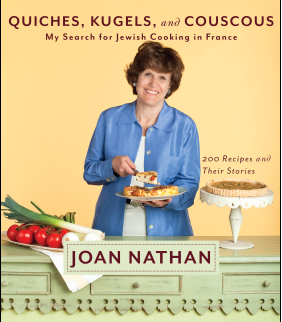 Book cover (Joan Nathan) It was what I call a pajama day. A damp, grey, stay-at-home kind of day. Leaves the color of wet tobacco clung to car windows like parking decals and the fruits of the hackberry and hawthorn trees stained the sidewalks with their juice. The chill of autumn came early, bringing with it a light drizzle after a long night of steady rain. But this was not a day for burrowing beneath the duvet. A visit to the Washington, DC home of Joan Nathan, the great lady of Jewish cookery, was on the calendar and nary a dark cloud would put the squeeze on a much-anticipated luncheon date with the acclaimed author. I was looking forward to discussing her soon to be released eleventh book, “Quiches, Kugels and Couscous – My Search for Jewish Cooking in France” (Knopf).
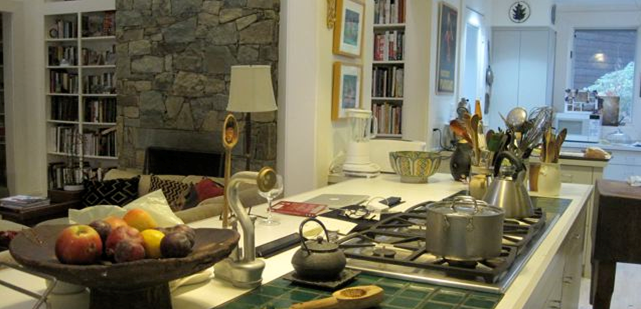
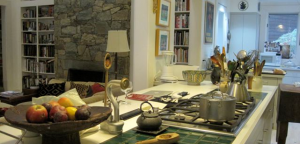 The kitchen at the Washington DC home of Joan Nathan - photo by Jordan Wright I entered her well-appointed kitchen, chock-a-block with family mementoes, children’s drawings, books and artifacts, and immediately was smitten with the aroma of her anise-scented oatmeal bread wafting across the room. I ask you, no, I dare you to tell me that there is anything more welcoming than the scent of freshly baked bread.
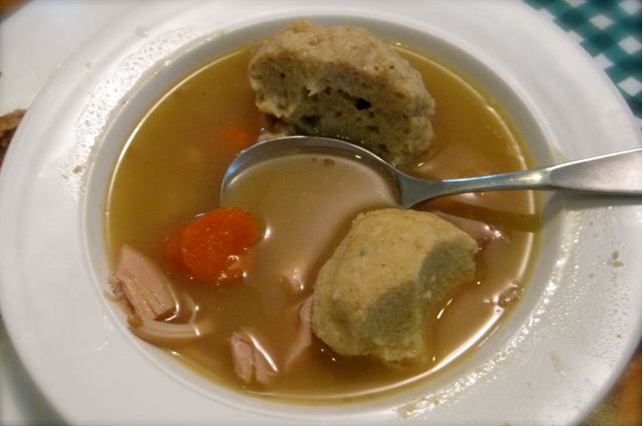
At a long wooden table before my gourmand-weary eyes rested a bowl of Nathan’s homemade chicken soup with two golden orbs afloat. Redolent of carrots, ginger and nutmeg and bathing in a clear broth with chunks of light and dark chicken meat, the matzo balls glistened irresistibly in the wide white bowl. Curiously each one seemed formed by a different hand, the result I assumed of two separate test kitchen efforts.
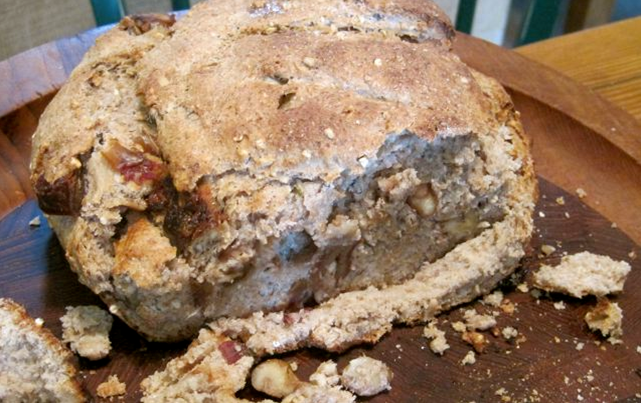
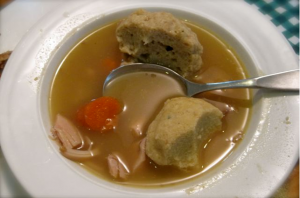 Chicken soup with two types of matzo balls - photo by Jordan Wright One wore the sylvan appearance of a white truffle, all nubbly and crevassed, while the other was smooth and evenly formed – the color of an Asian pear. The matzo balls were the handiwork of the renowned regionalist food writer and they were simple and glorious at the same time. To accompany the soup, a large round loaf of oatmeal bread studded with dates and walnuts was pulled from the oven. “Thump it for doneness.” Nathan cautioned her assistant, and the hollow sound reached into the adjoining dining room. The hot crusty loaf was served with Nathan’s favorite Plugra butter and a green salad with slices of red beets from her local farmers market.
Joan Nathan has been the sole voice of Jewish cooking in America since 1975 when her first book, The Flavor of Jerusalem, was published while she was living and working in Israel for Mayor Teddy Kollek. After she moved to New York City she was one of the founders of the ethnically diverse Ninth Avenue International Food Festival when she worked first under Mayor John Lindsay and later Mayor Abe Beame. Here in Washington her decades-long commitment to local food kitchens like Martha’s Table and DC Kitchen, where she is known for her fundraising “Sunday Night Suppers”, a collaborative dining series with Alice Waters, Tom Colicchio and José Andrés, has endeared her to those in the slow food community.
Many know Nathan from her nationally syndicated PBS show, Jewish Cooking in America with Joan Nathan and as a regular contributor to The New York Times Food Arts Magazine. A two-time James Beard award winner, she is scholar, memoirist and cook in this latest venture.
“France is the link from Israel to America, as far as Jewish food, because Ancient Israel is where all of our foods started before going to Europe and then coming to America. Jewish cooking in France is closer to the original cuisine,” she explained.
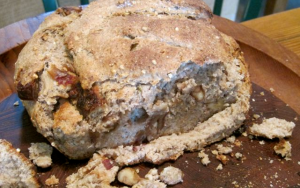 Anise-scented oatmeal bread with dates and walnuts - photo by Jordan Wright She prepares the reader by providing centuries-old historical context for the creation, preservation and tradition of Jewish cookery in France. To understand how certain foods and methods of preparation evolved throughout France, Nathan shows it is necessary to know how the Jewish culture both influenced and was influenced by French cuisine. Not only did they trade in beans, sugar, barley, garlic and other precious foodstuffs, but they brought exotic spices, the art of making fois gras, carp served with sauce verte, and even introduced hot chocolate to the French culinary experience.
Thankfully the book offers far more than the catchy three-dish alliterative title suggests to the reader. Among the more than 200 recipes that have their origin in Spain, Morocco, Portugal, Germany and the Mediterranean, you’ll find such gems as Paul Bocuse’s Black Truffle Soup Elysée, tweaked by Nathan’s kosher re-interpretation; Baba au Rhum from the tiny 16-seat restaurant, Les Arômes outside of Marseilles; and a recipe for a hearty Alsatian Choucroute from a doctor in Strasbourg.
Nathan’s approach to the recipes is very forgiving, allowing the cook to substitute ingredients. “It depends on what’s in the fridge,” she offers. “I think the important thing about cooking is that it should be quick but not processed.” In her mission to find and preserve recipes throughout France, she fills the book with firsthand stories from farmers, shopkeepers, home cooks, professional cooks and Holocaust survivors. This is the sort of treasured cookbook writing that will inspire cooks to experience Jewish food and its culture. The book itself took nearly 4 ½ years of travel, research and recipe testing to deliver to her distinguished culinary and literary editor, Judith Jones, who was also editor to the late Julia Childs.
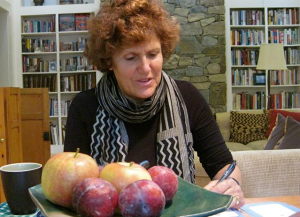 Lunch at Joan Nathan's among the bookplates - photo by Jordan Wright As Nathan hand signed 400 bookplates for an upcoming book tour, we ate and spoke of food, family, religion and politics and the cities in which we have lived, traveled, worked and cooked. And as the day went on we nibbled on a large wedge of Comté accompanied by apples, plums and organic maple honey caramels from Sugar Revolution.
Here is her tasty recipe for Moroccan chicken from this marvelous new book.
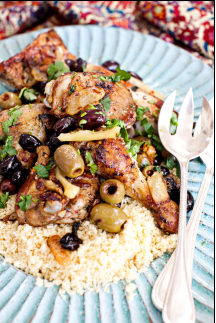 Moroccan Chicken with Olives and Preserved Lemons - photo credit Katie Stoops from the cookbook Moroccan Chicken with
Olives and Preserved Lemons
When Celine Bénitah cooks this dish, she blanches the olives for a minute to get rid of the bitterness, a step that I never bother with. If you keep the pits in, just warn your guests in order to avoid any broken teeth! Céline also uses the marvelous Moroccan spice mixture ras el hanout, which includes, among thirty other spices, cinnamon, cumin, cardamom, cloves, and paprika. You can find it at Middle Eastern markets or through the Internet, or you can use equal amounts of the above spices or others that
you like. To make my life easier, I assemble the spice rub the day before and marinate the chicken overnight. The next day, before my guests arrive, I fry the chicken and simmer it.
4 large cloves garlic, mashed
Salt and freshly ground pepper to taste
1 teaspoon ground turmeric
1 to 2 tablespoons ras el hanout
1 bunch of fresh cilantro, chopped
4 tablespoons olive oil
One 3½- to- 4- pound chicken, cut into 8 pieces
1 teaspoon cornstarch
1 cup black Moroccan dry-cured olives, pitted
Diced rind of 2 preserved lemons
Mix the mashed garlic with salt and freshly ground pepper to taste, the turmeric, the ras el hanout, half the cilantro, and 2 tablespoons of the olive oil. Rub the surface of the chicken pieces with this spice mixture, put them in a dish, and marinate in the refrigerator, covered, overnight. The next day, heat the remaining 2 tablespoons olive oil in a large pan. Sauté the spice- rubbed chicken until golden brown on each side. Stir the cornstarch into 1 cup water, and pour over the chicken. Bring to a boil, and simmer, covered, for about 20 minutes. Add the olives, and continue cooking for another 20 minutes. Sprinkle on the preserved lemon, and continue cooking for another 5 minutes. Garnish with the remaining cilantro. Serve with rice or couscous.
Yield: 4-6 Servings.
Preserved Lemons (Citrons Confits)
Preserved lemons are an indispensable item in my pantry cupboard. I use them all the time and believe they are best made at home. Although I have tasted lemons preserved in water or an equal mix of lemon juice and water, I much prefer them preserved in pure lemon juice. Many people scrape out and discard the pulp when using the lemons, but I often include the preserved pulp. I blend a preserved lemon in with my hummus, sprinkle the rind on grilled fish, and stuff my chicken with a whole lemon, and
I dice preserved lemons and mix them into salads, rice dishes, and vegetables. In addition to regular lemons, you can also use Meyer lemons or, as Irene Weil does, even kumquats.
8 lemons (about 1½ pounds)
About ½ cup kosher salt
,1 cup fresh lemon juice, plus more if necessary 2 tablespoons olive oil
.
Cut off the very ends of each lemon. Cut each one lengthwise into quarters, cutting to but not through the opposite end. Sprinkle
2 tablespoons of salt into the cut sides of each lemon. Put the lemons in a large jar (it’s fine if you have to squeeze them
in, because they will shrink), and cover completely with lemon juice. Let sit for a day. The next day, if they are not covered with lemon juice, pour a thin film of olive oil over the lemons. This will help keep them sealed while they preserve. Put the jar in the refrigerator and allow to cure for 2 to 3 weeks. Before using, scrape off the pulp if desired.
Yield: 8 Preserved Lemons
Jordan Wright to Washington Examiner
September 2010
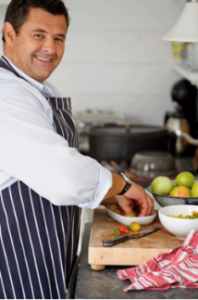 Laurent Tourondel’s latest book touts the merits of local farmers markets. (Photo Courtesy of Wiley) Back when dinosaurs roamed the earth, as I like to tell it, we all ate what was in season. It was a time when few people had refrigeration in rural areas in the United States and in many countries around the world they still do not. The home kitchen had its icebox back then, a hulking wooden closet with heavy steel latches, not much more than a cooler really, that kept milk, eggs and butter chilled but wasn’t good for much else. All other foodstuffs were purchased daily at the local market or delivered. Each Monday the iceman would pull into the driveway, snatch a block of ice off his truck with huge iron tongs, and heave it into the icebox through an outside door on the kitchen porch. We still had one back in the 50’s before it was converted into a refrigerator.
It was typical to wait ten months before tucking into a garden-fresh tomato or a handful of cherries. There were no hydroponically grown super-veggies back then and the advent of summer meant more than an end of school days and a dip in the ocean. Winters were devoted to pining for sweet corn and fresh greens and dreaming of ways to prepare them. I know this sounds austere, but such was the way of life.
Before the dawning of the Kelvinator, we could only count on frozen fish or meat and Bird’s Eye peas to tide us over. We spent fall and winter dreaming of what most of us now take for granted in the supermarkets of today. With the advent of refrigerated shipping, transcontinental flights and mega-farms we now live in a world where we can feast on everything from corn and watermelon in winter and spring lamb all year round. While snowflakes fall we cut up fresh papaya and strawberries for breakfast and cook up Chilean sea bass for dinner. Is there anything left for us to dream about?
Now we can turn to Laurent Tourondel for seasonal direction in the kitchen. Known for the popular BLT Restaurants (Bistro Laurent Tourondel), he was named Bon Appetit’s “Restauranteur of the Year” in 2007. He has worked at Relais and Chateaux’s three Michelin-starred La Maison Troisgros in France and at Cello in New York City. This summer he opened the casual outpost, LT Burger, in tony Sag Harbor, NY and still serves as Executive Chef at Brasserie Ruhlmann in New York City. His first two very successful cookbooks were Bistro Laurent Tourondel and Go Fish.
In his third and latest book, penned with Charlotte March, Fresh From The Market – Seasonal Cooking from Laurent Tourondel, (Wiley), Tourondel accords the seasons their respective bounty and exhorts his readers to do the same. He adheres elegantly to the philosophy held by many of our best chefs to let a few choice ingredients drive the attitude of the dish. As a result his book is a primer on cooking in the simple French way of allowing an entire platter of in-season green beans with walnuts, a green salad and baguette with cheese to be a meal. And while dessert may be optional, wine is most assuredly not.
When I first read this book my impulse was to toss out a good chunk of my library, so taken have I been by its merits. But before you think that it is only about what you can grow in your kitchen garden or purchase from your local farmers market, you will need to be more expansive in your thinking. For above all Tourondel is a fine French chef, accustomed to working with truffles, partridge and foie gras. So dream accordingly, if you will.
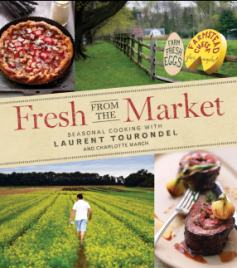 Photo of book cover - All photo credits to Quentin Bacon In a recent conversation with Tourondel he spoke of his new book, a hopeful meeting with Escoffier and the future of the American table.
Jordan Wright – I found your latest cookbook to be beautifully presented and replete with exquisitely tweaked French classics. What was your inspiration?
Laurent Tourondel – Really I like the seasonal product more than anything else. I was trying to create something fun for people to read and cook from.
JW – I understand you like to follow the evolving trends in food. What do you see for dining in the near future? And what ingredients will be driving your dishes?
LT – I think better and fresher products from the market. I think the evolution is about more organic product and to eat in a simpler way, with less preparation…to make dishes with a clean finish. People are asking for healthy food. Not necessarily vegan or vegetarian but healthier.
JW – What are your greatest day-to-day challenges?
LT – To cook for my girlfriend! But seriously, to teach people about what I do. That is the challenge of today.
JW – When you’re at home what do you crave the most?
LT – Cheese…a lot! And peanuts.
JW – If you were trying to impress a beautiful woman what would you prepare?
LT – Something light I think…perhaps my steamed lobster with a ginger lime broth.
JW – What famous or historical personage would you like to dine with?
LT – Henry IV, because he was crazy and he had great parties!
JW – If Escoffier came into your kitchen today what would you like to ask him?
LT – A million questions. I’d want to know what he thought of some of the newer ingredients he would be unfamiliar with and how he would choose to use them. And also I’d like to cook for the guy of course.
JW – What advice would you give to a new restaurant owner?
LT – Try to give people what they want, don’t just do the restaurant for yourself.
JW – What advice would you give to recent culinary graduates?
LT – Give yourself a destination of where you want your culinary career to go. Don’t go everywhere.
JW – Can you tell me about your new cookbook?
LT – I’m very excited about doing a seasonal cookbook. It was a long process because we had to do it season by season to obtain the right ingredients. I think it came out great!
Recipe from Fresh From The Market by Laurent Tourondel
Steamed Lobster in Gingered Lime and Scallion Broth with Baby Bok Choy
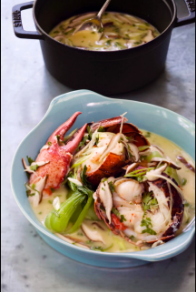 Steamed Lobster in Gingered Lime-Scallion Broth with Baby Bok Choy from Fresh From The Market - photo credit Quentin Bacon The combination of ginger and lime results in a truly enchanting flavor, which is well suited for both savory and sweet dishes alike. This very light broth pairs quite well with other shellfish, such as shrimp and mussels, or firmer white fish.
SERVES 6
6 live lobsters, 2 pounds each
1/2 cup Chablis or another dry white wine
3 cups Vegetable Stock (page 304)
6 shiitake mushrooms, stemmed and thinly sliced
2 tablespoons matchstick-size strips peeled fresh ginger
11/2 tablespoons ginger juice (see page 96)
6 baby bok choy
4 tablespoons cold unsalted butter, diced
4 scallions, thinly sliced on the bias
2 tablespoons chopped fresh cilantro
2 tablespoons freshly squeezed lime juice
Zest of 2 limes
Pinch of cayenne pepper
Prepare the broth
Holding the lobster body in 1 hand and the tail in the other hand, twist the lobster until the body
and tail separate.
Repeat with the remaining 5 lobsters. Using the back of a chef’s knife, crack the claws off the
lobster bodies just below the knuckles. Reserve the bodies for making lobster stock or freeze
them for another use.
Bring a large saucepan of water to a boil over high heat. Add the lobster claws and cook
until the shells become bright red and the claw meat is just barely cooked through, about 8
minutes. Transfer the claws to a bowl of ice water.
Once cool, remove the claw meat from the shells.
Using a chef’s knife, cut the lobster tails in half lengthwise and discard any intestines that
may be clinging to the tail.
Leave the meat in the shells. Bring the Chablis to boil in a large saucepan. Add the lobster tails,
flesh side down, and the vegetable stock. Cover and cook until the lobster meat is just barely
cooked through, about 3 minutes.
Remove the tails from the broth.
Using a fine-mesh strainer, strain the broth into a clean medium saucepan over medium heat.
Add the shitake mushrooms, ginger, and ginger juice to the broth and simmer until the ginger
is soft, about 3 minutes. Strain the broth again through a fine-mesh strainer and into a large
saucepan, reserving the mushrooms and ginger.
Finish the broth
Bring a medium pot of salted water to a boil over high heat. Add the bok choy and cook until
crisp-tender, about 3 minutes.
Immediately transfer the bok choy to a bowl of ice water and allow to cool.
Using an immersion blender, blend the cold butter into the strained broth until emulsified.
Return the reserved mushrooms and ginger, lobster claw meat, and blanched bok choy to the
broth along with the scallions, cilantro, lime juice, lime zest, and cayenne and continue to cook
over low heat for 2 minutes.
To serve
Divide the lobster tails among 6 large shallow bowls. Arrange the claw meat and 1 bok choy
over each lobster tail. Spoon the sauce and vegetables over the lobster tails and claws and serve.
Wine suggestion
Serve this dish with an exotic white Rhone blend that offers rich flavors of guava, minerals,
and Asian spices, such as Tensley, “Blanc,” 2007, Santa Barbara County, California.
Jordan Wright
May 2010
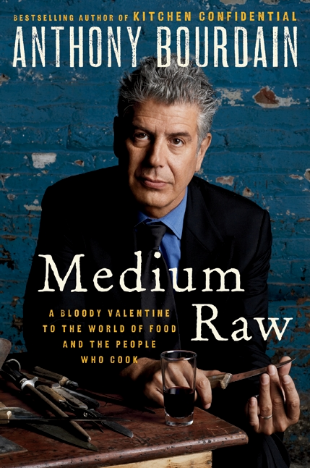 Anthony Bourdain author and host of Travel Channel’s “No Reservations” is the consummate dinner guest. As the host of Travel Channel’s “No Reservations”, Anthony Bourdain is the consummate dinner guest. An endearing enfant terrible, with a peripatetic wanderlust to rival Darwin and a puckish swagger that would make Bluebeard seem as docile as a clam, he slurps and sups the world’s melting pot in dogged pursuit of ethno-gastronomic delicacies. With cheerful I’ll eat-anything-you-put-in-front-of-me sangfroid, he lustily relishes fish brains, ant larvae, pig’s eyeballs, or sparrow liqueur and the like on his adventures to far-flung locales. For his endless curiosity he has garnered a devoted audience, three Emmy nominations and penned eight bestsellers, including the deliciously lurid ”Kitchen Confidential”.
In his latest memoir, “Medium Raw: A Bloody Valentine to the World of Food and the People Who Cook” (HarperCollins), due out next month, he threatens to yank the delicate scrim off noted chefs. Alice Waters, David Chang, and “Top Chef” winners and losers will feel the sting of the provocateur’s barbs.
The gritty and endearing Bourdain, appears at the Warner Theatre on May 21st for one night only with cohort and chef/restaurateur, Eric Ripert of DC’s Westend Bistro and famed NYC’s Le Bernadin for an evening of tale-swapping and secrets of restaurant skullduggery.
In a recent interview he spoke to me about his life, his new book and his upcoming appearance in Washington, DC.
Jordan Wright – You take inordinate pleasure in poking the prevailing food fashionistas, uncovering the raw underbelly of restaurants, and snubbing the establishment. What propels you on to your next adventure?
Anthony Bourdain – I have a restless and curious mind, and as much as I might not like to face it, I’m probably becoming the food establishment at this point. But I do it because I can. It’s my nature. I get angry when I see abuse, and ecstatic when the experience is great.
I enjoy traveling. I like chefs and get paid to do what I like doing. And, thankfully, I’m not expected to behave or be diplomatic. I’m clearly very lucky and very foolish to do what I do and thankfully I can benefit from low expectations. With Eric [Ripert], he and I have a lot in common, but he has the burden of a reputation to protect and I don’t.
JW – Your independent take-no-prisoners style of writing is delightfully anarchic. What makes for a good food writer in your opinion?
AB – Certainly a willingness to step out of one’s comfort zone. If you’re writing about food, it’s very, very important to like and appreciate the people that make your food…also a lack of snobbery, definitely honesty, and to not be willfully disingenuous. If you really enjoy eating food I don’t think you have to know about food. That will come. But you should be passionate about it. Be an honest broker with an open mind and an open heart. I think some of the most dynamic writing on food is obviously coming off the blogosphere.
JW – The chimera is a fabulous fire-breathing monster with the head of a lion, body of a goat, and tail of a serpent. Would you eat it and how would you prepare it?
AB – If I were surprised by it as a guest in someone’s home in a developing country, I would accept it out of politeness, rather than offend my host. Though if I were to prepare it, I’d cook it low and slow with a bottle of good wine.
JW – You’ve eaten your way throughout the four corners of the world what fusion would you create that hasn’t yet been done?
AB – I’m generally not a fan, I think it’s dangerous territory. But two of my favorite restaurants are in New York, Momofuku Ko and Momofuku Saam, which use French, Southern American, Italian and Korean fusion. It’s utterly fantastic, perhaps because it breaks all the rules.
JW – There have been three books written about Louise Brooks. One is her autobiography in which she speaks of my grandfather as her greatest paramour. You said that Louise Brooks would be a preferred dining companion at your last supper? Why did you choose her?
AB – I enjoyed her autobiography “Lulu in Hollywood” and saw two of her films. I think she was a fascinating, and an extraordinarily forward-thinking and independent woman, especially for her times. She struck me as someone with interesting things to say and who would be a powerful presence at the dining table.
JW – On to the more mundane… What are your favorite restaurants in DC?
AB – Any restaurant that Jose Andres is associated with. I love Minibar! I love Michel Richard and Bob Kinkead’s place! Oh my God! Who am I leaving out? Oh, and El Pollo Rico! And Eamonn’s too in Alexandria!
JW – What do you cook at home?
AB – Cooking pasta makes me happy. Maybe a steak, but I like to use one pan and keep it simple. I have so little time to spend with my family. In NYC I just pick up the phone and I can order Japanese, Thai, Chinese, and French…or a human head delivered!
JW – What foods would you like to see more of in the US?
AB – I like bottarga very much and jamon Iberico. And I know it’s a dream, but more unpasteurized raw milk cheeses, especially really stinky ones from France and Italy…and artisanal sausages from Sardinia.
I’m a sushi slut, so, I’d say more high quality sushi…though maybe not, because of the over-fishing. As an institution I would like to see Singapore-style hawkers’ centers. That would be a great development for our country.
JW – What importance do you accord to ambiance, food, and service to define a successful restaurant?
AB – These days I like ambiance and service as unobtrusive and informal as possible. What I really appreciate at Momofuku Ko is you’re getting two-star Michelin food over a counter, directly from a cook who’s wearing a dishwasher’s shirt. That’s awesome!
I don’t need flowers and china and expensive silverware, unless you’re talking about French Laundry or Per Se. I am breathless with admiration for those two. But more often then not it’s about the food. If I’m comfortable without a tie, I’m more likely to be enjoying my food. I’d just as soon be in cut-offs and bare feet.
JW – You’ve experienced foods from cultures that no outsider will ever taste. Please choose from the following answers. If an ivory-billed woodpecker was struck by a car and lay by the roadside, as I was on my afternoon stroll, I would:
A) Try to revive it
B) Call the local bird rehabilitator
C) Fire up the grill
D) Go for the eyeballs first
AB – Call the bird rehabilitator.
JW – Oh my, you are a romantic!
AB – I like cute animals.
JW – What can you tell me about your new book?
AB – I am living in a state somewhere between suspended animation and mortal terror. It comes out June 8th and I have no idea how it will be received. I’m pretty sure there are going to be people pretty angry with me, but it’s too late to stop it now. Talk to me in two months! Right now I’m really looking forward to coming to DC to do this rare gig with Eric.
For tickets to “No Reservations: An Evening with Anthony Bourdain and Eric Ripert” visit www.WarnerTheatre.com
This interview was conducted, condensed and edited by Jordan Wright. For questions or comments contact [email protected].
|