Jordan Wright
June 2017
All Photo Credit: Jordan Wright
It’s been a whirlwind of restaurant openings, cookbook launches (more on those in a separate post), and embassy parties throughout the spring. If you’ve been missing our updates, it’s because we’re catching our collective breaths.
Barbecue, Y’all
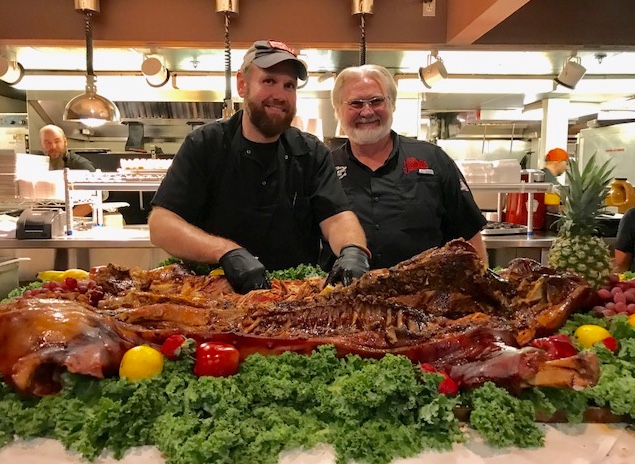
Myron Mixson (right) with Head Pitmaster and co-owner John Bennet on “Whole Hog” night
Myron Mixon’s Pitmaster Barbeque opened in Old Town Alexandria and we got there on whole hog night. Mixon, whose BBQ competitions take him to far-flung American cities, heads to Old Town once a month to host his special “pig out” events (Check the restaurant’s website for the next one).
We saw a number of large groups who evidently make it a party night with friends and family. And now we know why! The four-time World “Memphis in May” BBQ champ has won over 220 Grand Championships and is the two-time New York Times best-selling author of “Smokin’ with Myron Mixson: Recipes Made Simple” and “Myron Mixson’s BBQ Rules: The Old-School Guide to Smoking Meat”. The congenial Mixson knows how to put his customers in hog heaven. Mixson describes his water-smoked barbecue, prepared in a smoker of his own design, as a combination of flavors and sides from North Carolina, Texas, Virginia and South Carolina. Don’t try to pin him down to one region. He won’t have it.
Mixson has an assortment of sauces. What BBQ joint doesn’t? But, good as they are, they were completely unnecessary. The flavor was locked deep inside the meat.
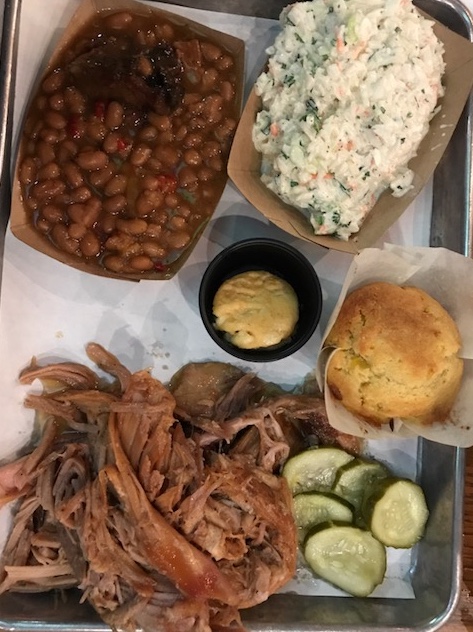
Pulled pork, cole slaw, baked beans with peaches, and cupcake cornbread with orange maple butter
Cooking in his father’s BBQ carry out joint since he was nine years old, he has been raising the stakes on other competitors for years. Last year Mixson won another. perhaps more serious, contest when he was sworn in as mayor of his hometown of Unadilla, GA.
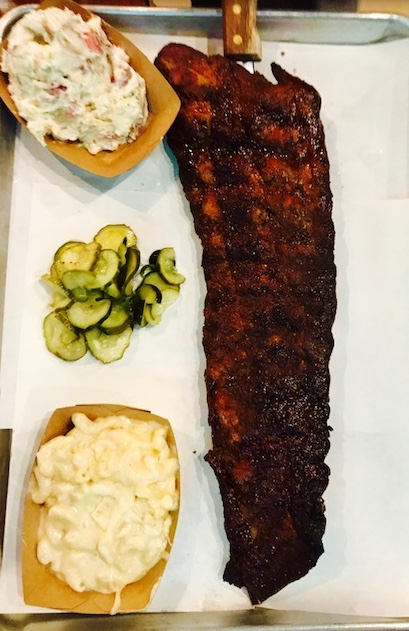
Ribs, potato salad, mac and cheese and pickles
Faves: Pimento cheese, the ribs, the ribs, the ribs, cupcake cornbread (a large crusty muffin served with killer orange maple butter), potato salad, pulled pork stuffed deviled eggs, house made fresh pickles, and chocolate pie.
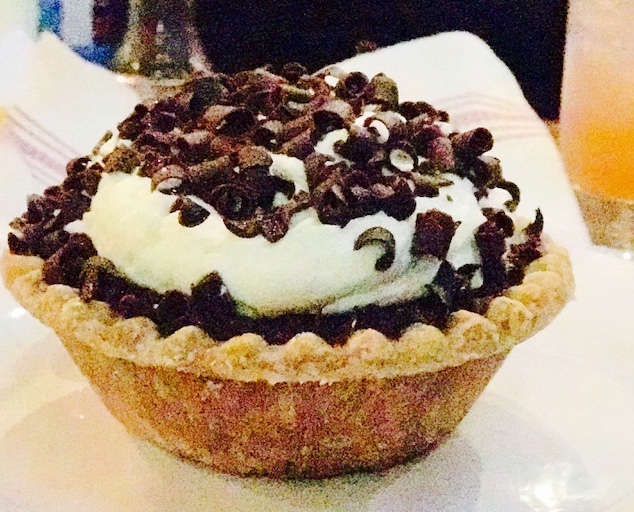
Chocolate Pie at Myron Mixson’s Pitmaster Barbecue
Good Food Mercantile at Union Market Features Fine Food Crafters
With a host of mostly local products to taste at this terrific event we wandered the aisles looking for new and game-changing products. To our delight we found some super-original, award-winning, artisanal products at this pop-up event at Union Market’s Dock Five.
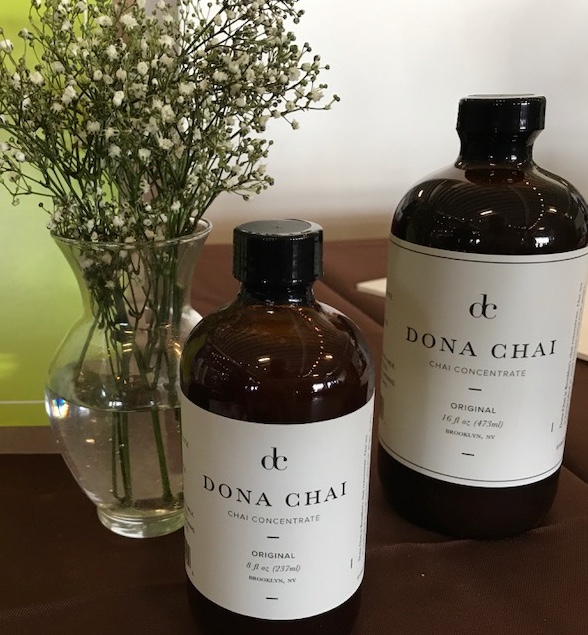
Dona Chai – chai tea concentrate
Dona Chai, Brooklyn, NY – Chai tea concentrate.
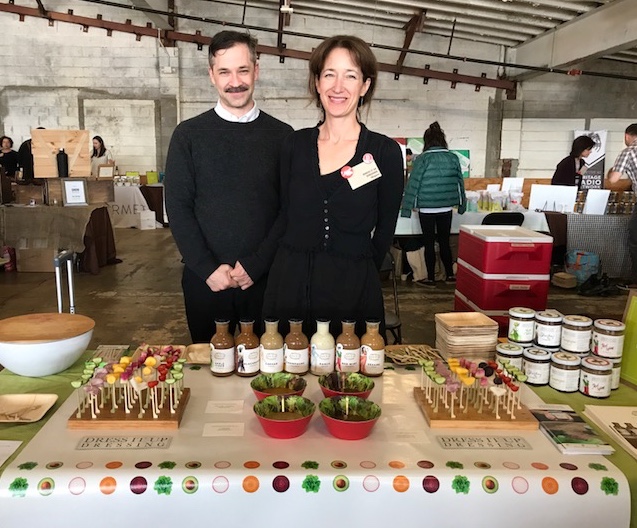
Sophia Maroon of Dress It Up Dressing
Dress it Up Dressing, Chevy Chase, MD – Salad dressings with a pedigree – loved the “Champagne Vinaigrette” and “Blackberry Vinaigrette”.
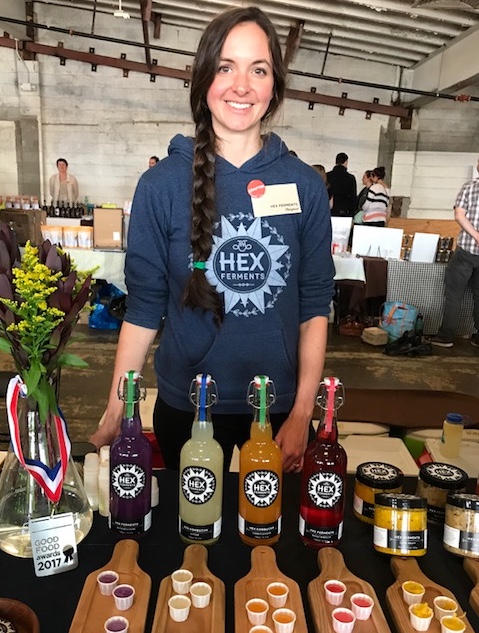
Kombucha and fermented veggies from Hex Ferments
Hex Ferments, Baltimore, MD – Try the “Miso Kimchee” and “Sea Kraut” made with sea veggies. They also make three flavors of tasty kombucha in gift-worthy bottles. Loved the Carrot Juniper and Ginger.
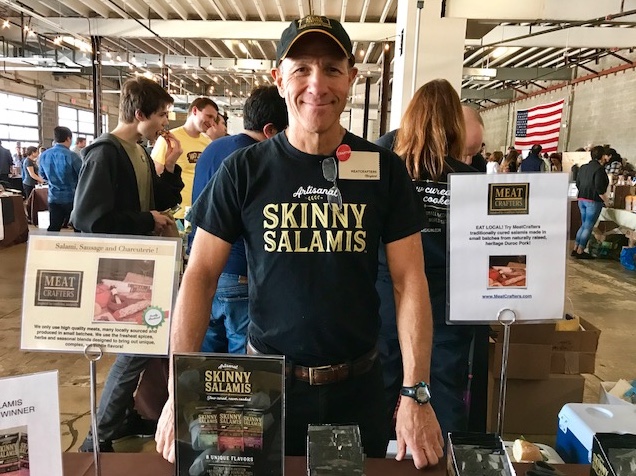
Mitch Berliner shows his new line of MeatCrafters’ Skinny Salamis
MeatCrafters, Hyattsville, MD – “Skinny Salamis” – made from Duroc pork. Took them to a party and watched them disappear. In several varieties – Black Angus Beef, Truffle (pork), Street Cart Sharma (lamb), Merguez (lamb), Spicy Chorizo (pork) and Casbah (pork), they’d be amazing with beer cheese or a hot cheese dip.
Eliot’s Adult Nut Butters, Portland, OR – Simply crazy about the “Spicy Thai Peanut Butter “– perfect for Sesame Peanut Noodles – and the “Espresso Nib Peanut Butter” – fold into soft ice cream or use in S’mores.
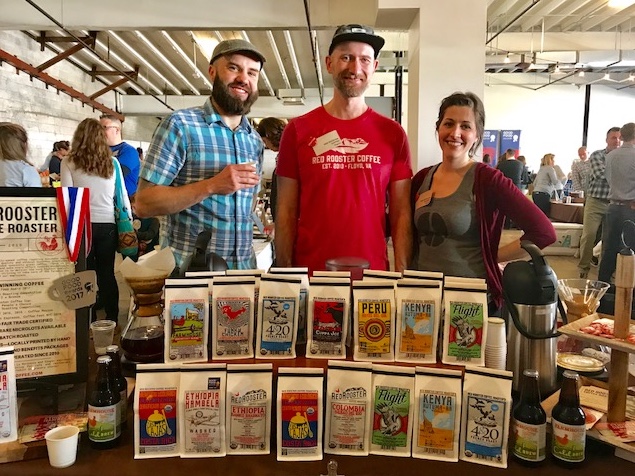
The team from Red Rooster Coffee Roaster with owner Haden Polseno-Hensley (center), Master Roaster Tony Greatorex (left) and Sales Mgr. Jolie Greatorex (right)
Red Rooster Coffee Roaster– From the hippest town in Virginia – Floyd. Small batch roasted, the organic and fair trade certified green beans are sourced from Ethiopia, Kenya, Peru, Columbia, and Costa Rica and roasted in Floyd by this family-owned business.
Regalis Foods, NY, NY – A gourmet line of truffles, caviar and Carabinero prawns – from Ian “Truffle Boy” Purkayastha.
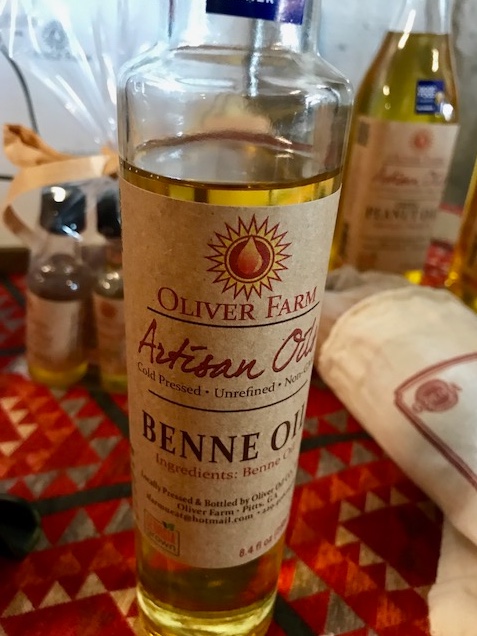
Oliver Farm Benne Oil
Oliver Farm, Pitts, GA – Cold pressed, award-winning, Southern artisan oils in flavors like pecan, benne, green peanut, sunflower, and pumpkin. They also mill the hard-to-find pecan flour and benne flour.
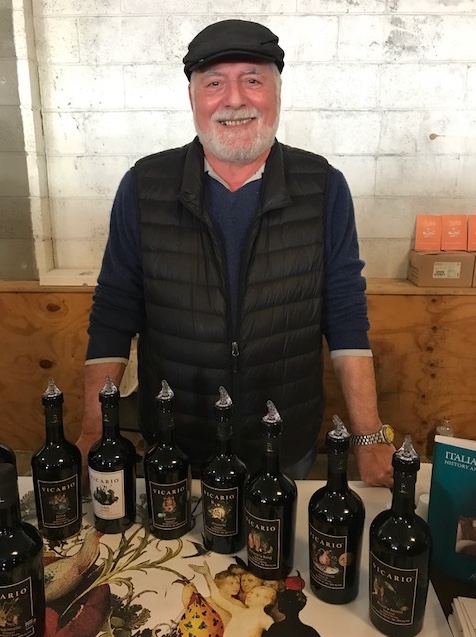
Renato Vicario of Vicario Wine and Spirits
Vicario Wine and Spirits, Greenville, SC – Wines, liqueurs and olive oil from Renato Vicario and Janette Wesley’s vineyard in Italy.
Update Leesburg
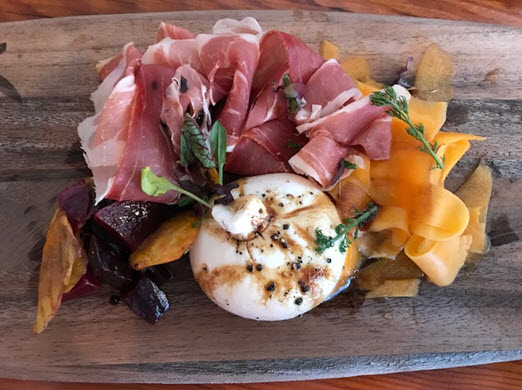
A beautiful charcuterie board
In Leesburg, Virginia we found two spots of note – The Wine Kitchen, located in the historic district, where Chef Tim Rowley prepares farm-to-table modern cuisine with a superb wine program in a casual atmosphere,
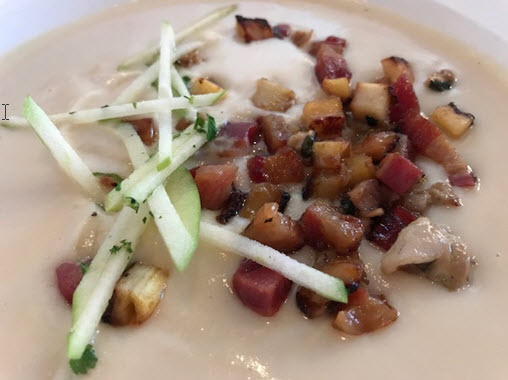
Cream of Parsnip Soup with lardons
and The Conche, a chocolate-themed restaurant housing a 300-square foot chocolate laboratory. The Conche is the newest venture from owner and celebrity chef Santosh Tiptur of DC’s Coco Sala.
Visit Colorado
The spring, summer and fall are the times I prefer visiting Colorado. I’m not a skier. Enough said. In the spring the wildflowers are magnificent, carpeting the hills and fields in all their glory. The summer is when the Arts are abloom with concerts and festivals throughout the state. Rodeo, anyone? And autumn begins the high season for skiers and leaf peepers.
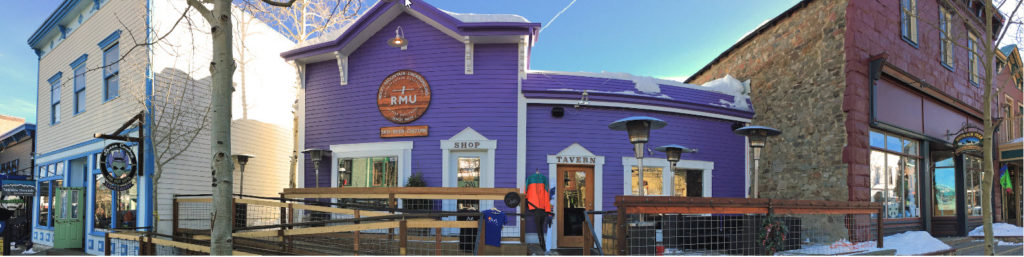
Rocky Mountain Underground ~ Photos courtesy Breckenridge Tourism
The state divides itself up into nine regions – from the Plains in the Northeastern part of the state due west to the Northern Front Range to the Denver and Fort Collins area, then down through the Rockies where Vail, Aspen, Breckenridge and Steamboat Springs lie. From there go south to Paonia and the Grand Valley AVA of Grand Junction. Cortez is situated in the southwest corner adjacent to New Mexico. Two federally recognized American Viticultural Areas (AVA) are in West Elks in Paonia and Grand Valley near Grand Junction where many of the state’s finest food products come from these areas.
Recently the good folks from Visit Colorado held a press reception at The Kennedy Center to show off some of their crafted beverages to include indie beers, wines, sodas and ciders.
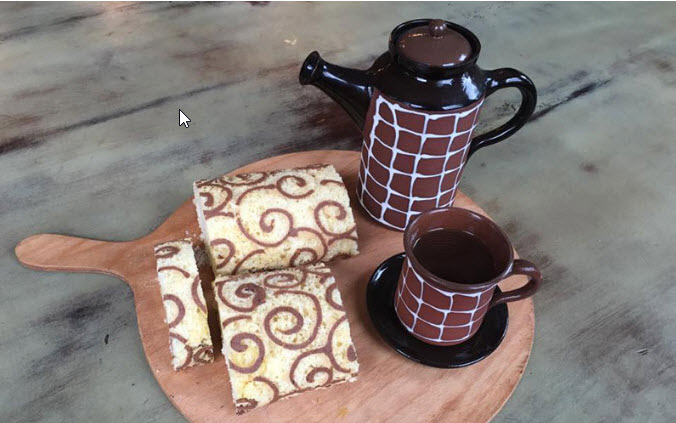
Mom’s Baking Co introduce some tradition Czech Recipes and other modern European flavors ~ Photos courtesy Breckenridge Tourism
They also had an array of specialty foods and brought Café Aion Chef/Owner Dakota Soifer, one of Boulder’s leading chefs, to prepare dishes from these products.
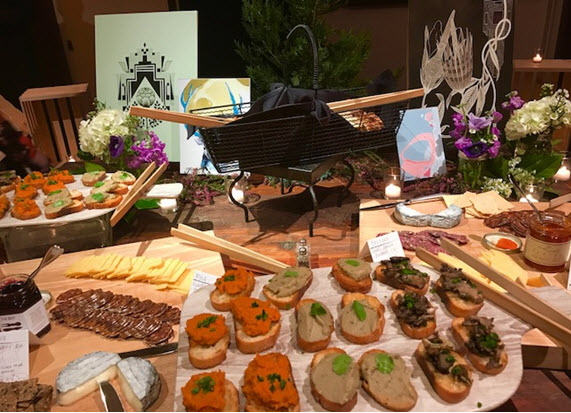
A bountiful display of Colorado’s best cheeses, meats, breads and chocolates ~ Photo credit Jordan Wright
Cheeses and lamb were front and center, as you’d have expected. Faves: James Ranch’s “Belford”, a butterscotch inflected cheese, and Avalanche Creamery’s handmade goat cheeses “Cabra Blanca”, a Tomme style cheese and “Finocchiona” with fennel and black pepper overtones. Tequila truffles courtesy of Telluride Truffle.
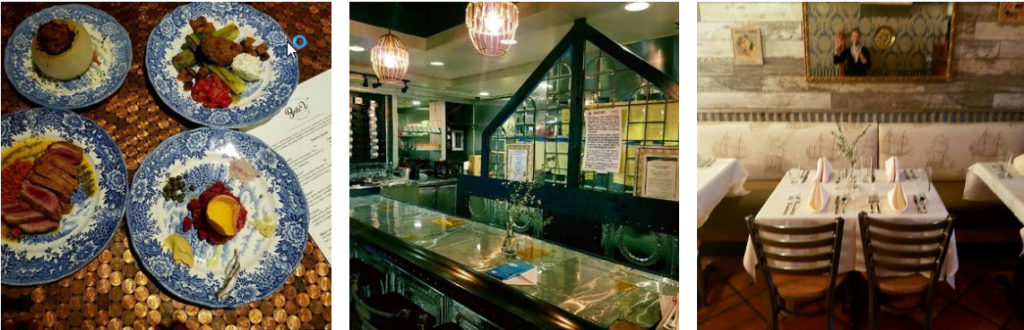
Breckenridge French-inspired bistro Belle V. with family recipes from southern France ~ Photos courtesy Breckenridge Tourism
The evening culminated with a rousing concert in the Opera House given by the Boulder Philharmonic.
Red’s Table Is a Fun Bike/Hike Away
Named after their grandfather “Red”, the brothers Ryan, Patrick and Matthew Tracy are thrilled to come “home” to the area they were raised to open Red’s Table. Located in the South Lakes Village Center in Reston overlooking beautiful Lake Thoreau, this lively neighborhood spot features a large patio overlooking both the lake and the bike/walk trail.
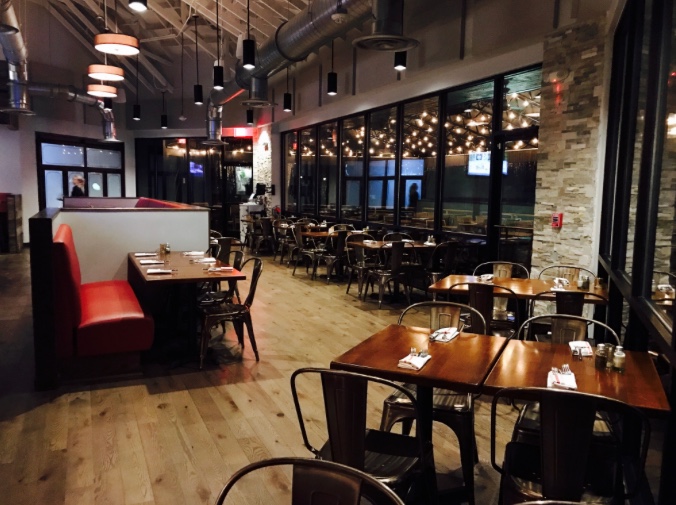
Red’s Table in Reston
Recent hire Executive Chef Kevin Ettenson returns to the area after working at hotels to head up the full-service restaurant.
Last week Ettenson switched to a summer menu adding some lighter dishes – burrata salad, watermelon salad, catfish with creole sauce over pasta, shrimp seviche, and fried green tomatoes. Pastry Chef Chris Works adds a new dessert called “Sundae Brunch”. It’s made with pieces of banana French toast chopped into squares, then fried and served with homemade butter pecan ice cream, bourbon caramel sauce and whipped cream.
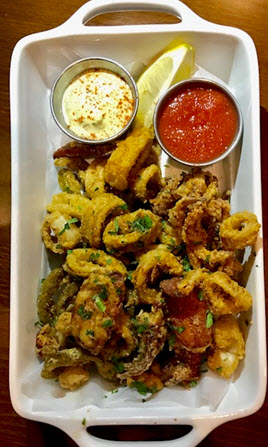
Fried calamari at Red’s Table
The eclectic menu aims to please both the casual diner and the more discriminating palate with dishes that range from burgers, crab cakes and house made charcuterie to risotto style spring vegetable farro and steaks with beef from Virginia farms. The bar boasts excellent craft cocktails as well as a wide-ranging wine and beer program featuring over a dozen local beers. Right about now I’d go for the sangria chockfull of fresh fruits.
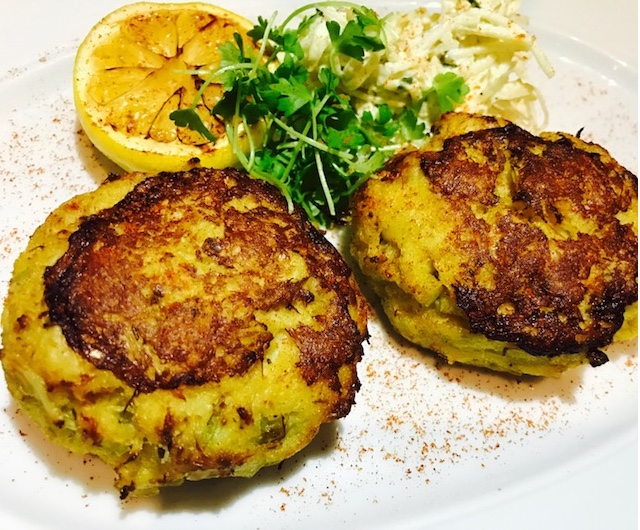
Jumbo crab cakes at Red’s Table
Brunch is serious here. Faves: Hangtown Frittata, Fried Oysters with Stone Ground Grits, Sausage Biscuit Sliders and a wealth of fresh seafood from the raw bar. The espresso blend coffee is from Monument Coffee Roasters in Manassas and it’s exceptional.
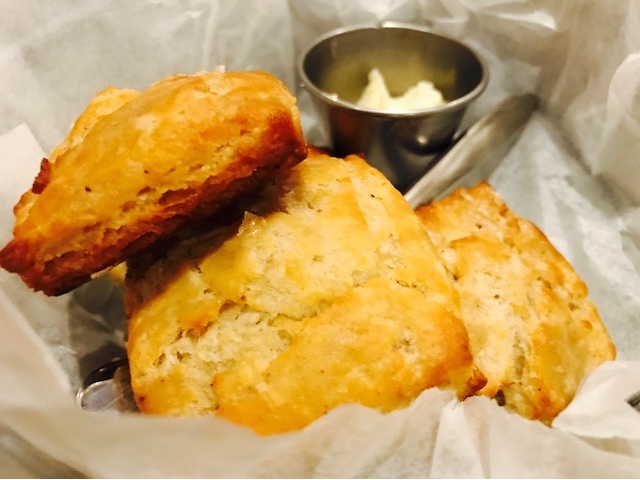
House made biscuits at Red’s Table
All breads and desserts, including an assortment of gelati and sorbets, are made in-house under Work’s direction.
If you plan to walk or bike after dining, enjoy either the Reston Red Trail (2.1 miles) around Lake Thoreau or the Turquoise Trail (4.74 miles) on Lake Audubon. If you’re on Metro get the Silver Line to the Wiehle-Reston East Metro exit onto Sunrise Valley Drive on the south side of the Metro. There is an off road path with a cross over to the back patio of the restaurant. It’s only one mile away from the South Lakes Village Center.
Tredici Enoteca Wows Dupont Circle
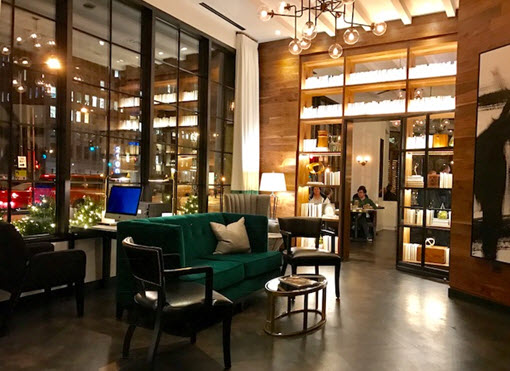
The green velvet sofa beckons at Tredici Enoteca
Sleek and chic, Tredici Enoteca has been a posh destination since it transformed in January. Located in Dupont Circle’s four-star St. Gregory Hotel it is a sophisticated multi-level space that reveals a bespoke library for lounging, a central fireplace with white marble surround under high coffered ceilings and space age chandeliers. A curving dark walnut stairway guides you to the topmost level overlooking the kitchen.
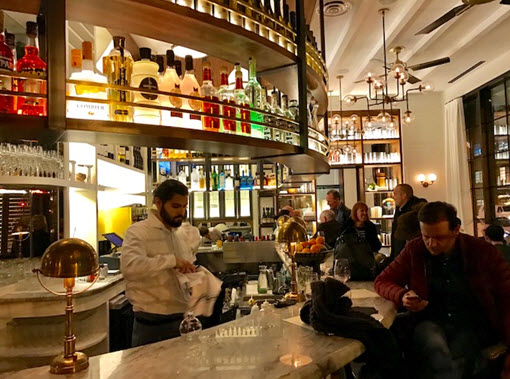
The lively bar at Tredici Enoteca
Antique mirrors and prints from a private collection adorn the walls, and a green velvet sofa coupled with black leather chairs at the entrance to the subway-tiled bar beckons you to sit a spell. It is one of the prettiest places in town. Skylights and a view to the street brighten up the brass-accented bar where you’ll want to try the smoked whisky cocktail.
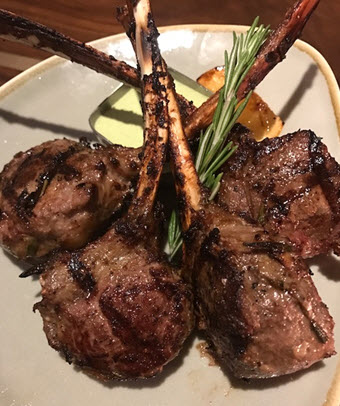
Double lamb lollipops at Tredici Enoteca
The menu leans towards Mediterranean coastal fare with plenty of small plates if you just want to graze.
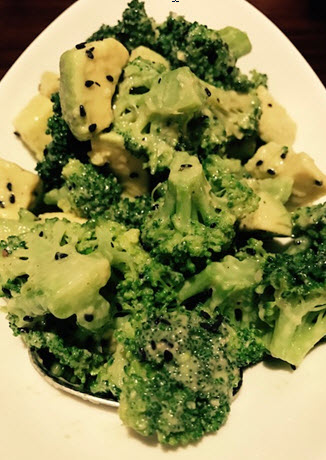
Broccoli and avocado salad at Tredici Enoteca
Executive Chef Carlos Aparicio, who came down from Philadelphia where he helmed restaurants for Marc Vetri and Stephen Starr, has brought his style and experience to the eclectic cuisine.
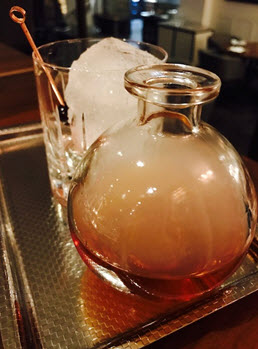
“The Tredici Dutch” smoke infused cocktail
Faves: Mixologist Israel Nocelo’s “The Tredici Dutch” – smoked infused rye whisky, Carpano Antica vermouth with house bitters and Luxardo cherry.
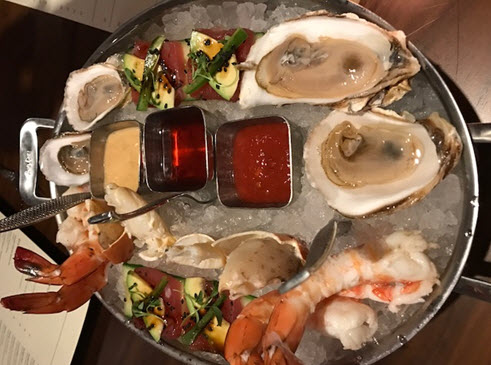
Fresh from the raw bar at Tredici Enoteca
Seafood samplers, mushroom toast, an unusual salad of broccoli and avocado with a sesame dressing, lasagna with lamb ragu, gnocchi, charred double lamb chops, squid ink tonarelli featuring cockles,
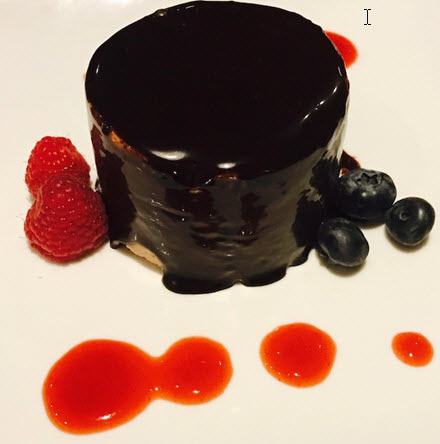
Chocolate mousse cake at Tredici Enoteca
and a decadently delicious chocolate mousse cake draped in ganache. Menu items may change by season.
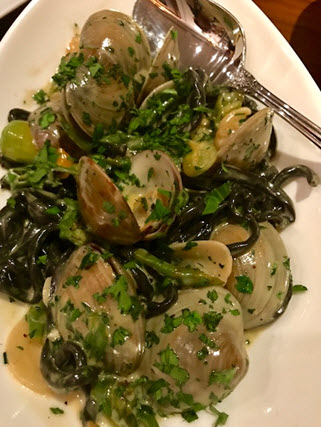
Steamed cockles atop squid ink pasta at Tredici Enoteca
Taiwan Ambassador Flies in Top Chef for Exquisite Eight-Course Dinner
One of the most beautiful residences in the Cleveland Park district is the 26-room Georgian Revival mansion “Twin Oaks” where the Taiwanese ambassador entertains. Situated on 18-plus acres high atop a hill behind the National Cathedral, the home, built in 1888, originally served as the summer residence of Gardiner Greens Hubbard, the founder of the National Geographic Society. For nearly eight decades it has served as a host property welcoming many U. S. presidents and countless international guests through its doors.
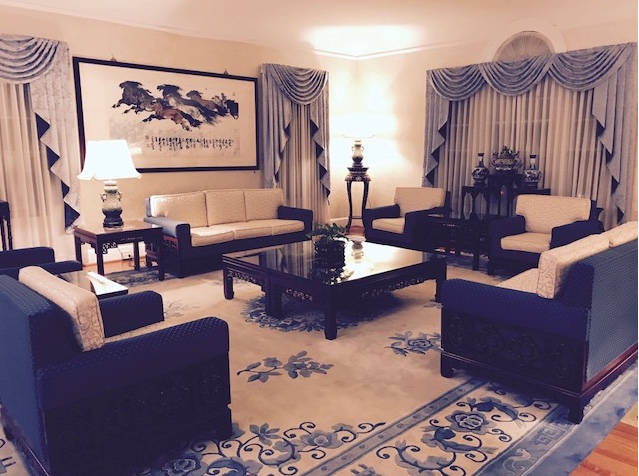
One of several drawing rooms at Twin Oaks
Many priceless antiques including imperial rosewood carved furniture with dragon motifs once belonging to the Empress Dowager, as well as a magnificent painting from the Ch’ing period that graces the elegant blue accented drawing rooms.
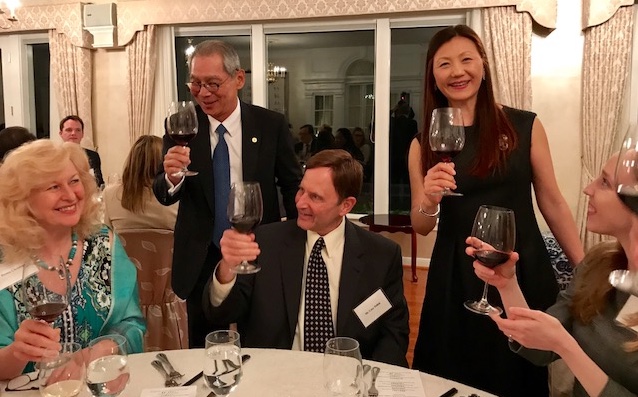
Ambassador and Mrs. Stanley Kao toast “80 Years of Elegance” with guests Donna Christenson and Cary Pollak
This spring evening ROC Ambassador and Mrs. Stanley Kao hosted a remarkable evening to celebrate “80 Years of Elegance”. It called for a very special chef and the Ambassador had flown in Chef Yi-Jia Liu(劉宜嘉) long reputed for his exceptional culinary skills, in particular his Zhejiang cuisine expertise, for which he has won numerous prestigious culinary awards. His signature dish “Shaoxing Chicken” is one of the highest rated dishes in Taiwan.
In promoting Taiwanese culture, Liu has showcased his cooking in the United States by invitation of the Overseas Community Affairs Council. Currently Liu is the Executive Chef of the Howard Plaza Hotel’s Yangtse River Restaurant in Taipei.
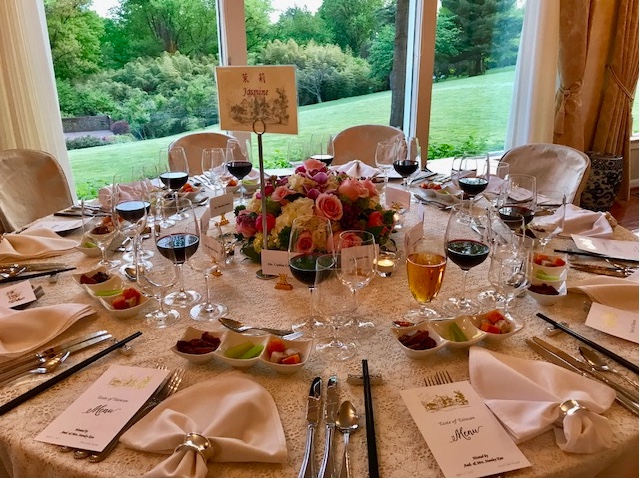
Dinner celebration at the Taiwan ambassador’s residence
Gold embossed napkins depicting “Twin Oaks” graced the lace covered, candlelit tables along with bouquets of roses and hydrangeas.
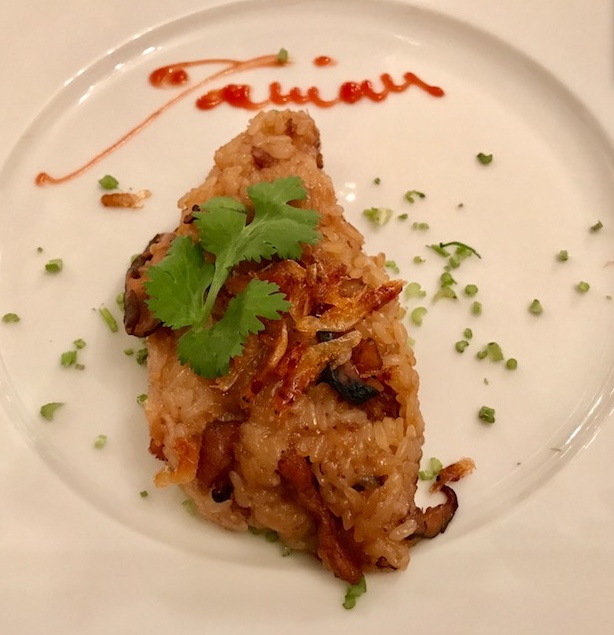
Shaoxing Chicken
Chef Liu’s unique dishes had names such as “Welcoming Flowers of Salmon, Cuttlefish, Chicken and Beef Tendon”, “King Crab Soup with the Flavor of an Ancient Royal Dynasty”, “Taste of Lobster in the Atmosphere of Twin Oaks”, “Rice with Sakura Shrimp and Faint Aroma of Winter” and “Delight of Yin (Sesame Mochi) and Yang (Pork Dumpling)”.
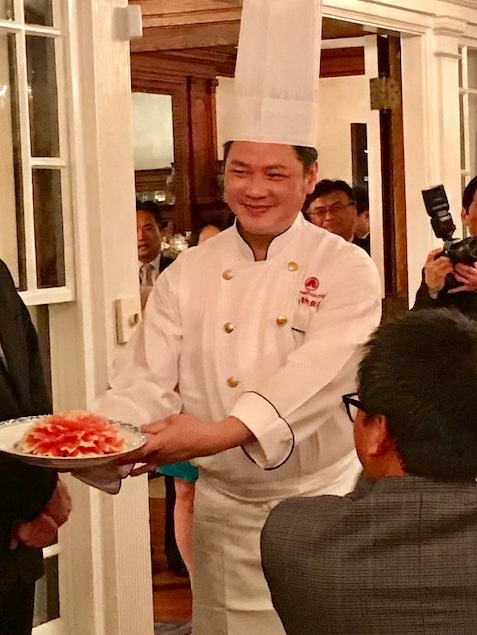
Chef Liu shows his carved vegetable flower to great applause
For the guests’ entertainment tenor Jason Ma, Deputy Director of the Congressional Liaison Division, sang the theme song “Nella Fantasia” from the movie, The Mission.
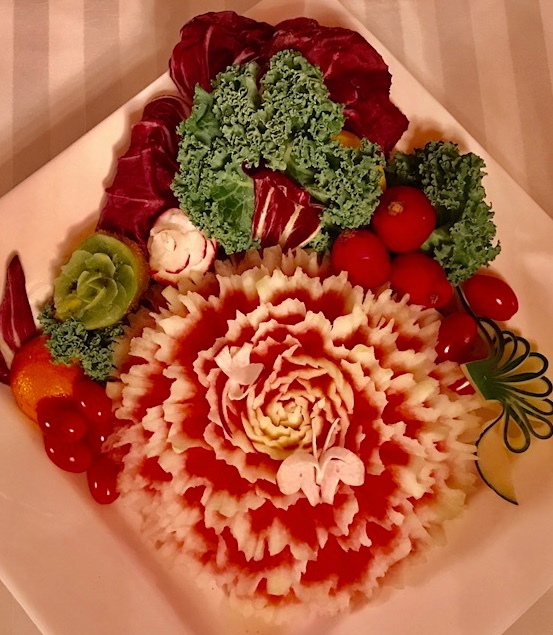
Chef Liu’s carved watermelon chrysanthemum
It was a magical night filled with delectable dishes, hand-selected wines, scintillating conversation and a few shots of the very potent Taiwanese fermented sorghum liqueur!
Afghan Embassy Highlights Theatre, Poetry and Music with Food and Festivities
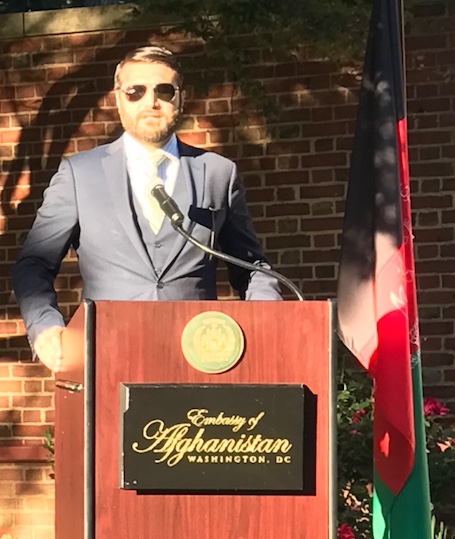
Afghan Ambassador Hamdullah Mohib gives opening remarks
H. E. Ambassador and Mrs. Mohib hosted a sumptuous dinner to announce their participation in “Women of Troy/Voices of Afghanistan”, a cross-cultural collaboration set in the world’s longest contemporary field of war.
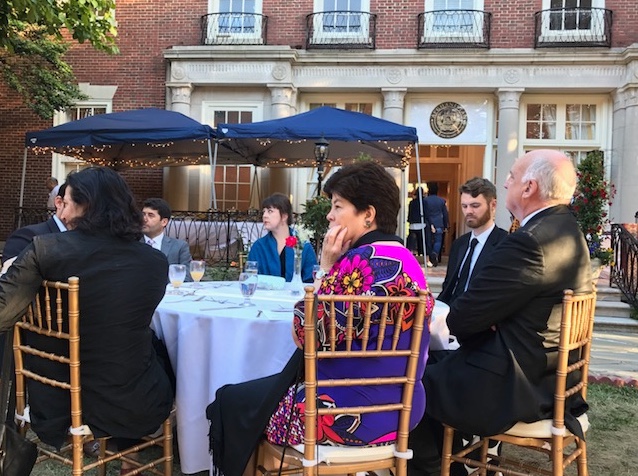
Guests enjoy the entertainment at the Afghan Embassy
Over a dozen performers will participate in the January 2018 event with many of the women coming from Afghanistan. The special project will be produced by the Alliance for New Music-Theatre led by Susan Galbraith, the creator, co-writer and director, with poet and writer, Yalda Baktash. Alliance for New Music – Theatre is the “Theatre in Residence” at Dupont Underground, DC’s new subterranean arts and culture center under Dupont Circle.
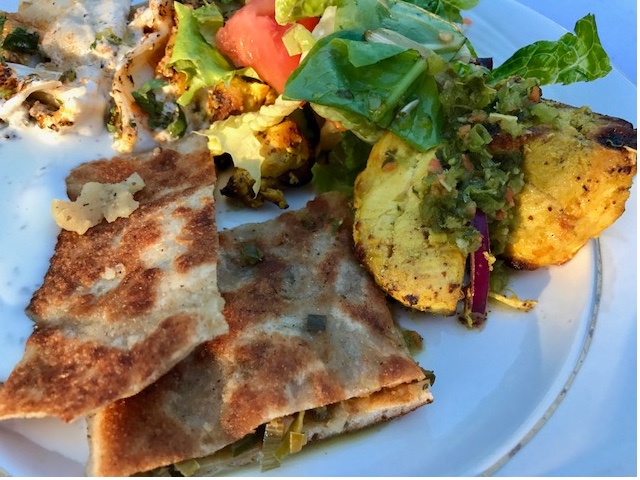
Afghani delights of kebab, bolani and pilaf
The dinner introduced us to bolani (pronounced bo-lah-nee), a delicious stuffed flatbread filled with herbs, green onions and potatoes along with many other Afghan delicacies.
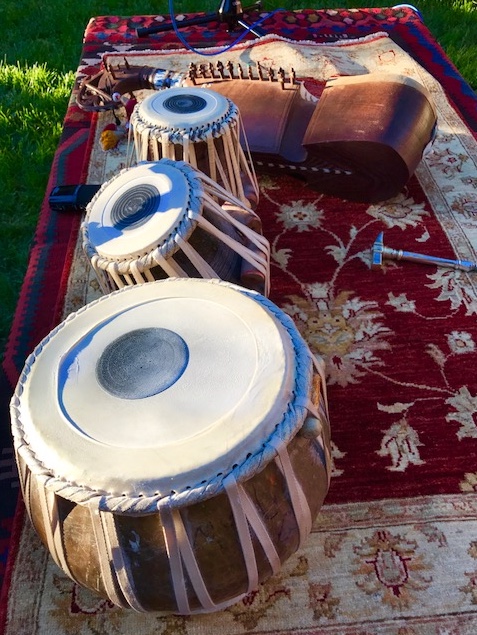
Afghani instruments
Milad Yousofi, a composer and Rubab (a lute-like instrument) player who works in Afghan folk, World Jazz and Fusion music, gave a concert with accompanied by a hand drummer. We particularly admired the craftsmanship of gorgeous carpets and Afghan jewelry that Zamani House of Heritage had on display.
Get updates for Alliance for New Music-Theatre .