|
|
Daphne’s Dive
Signature Theatre
February 15, 2022
Jordan Wright
Special to www.TheZebra.org
Pull up a Barstool and Enjoy “Daphne’s Dive” Now Playing at Signature Theatre
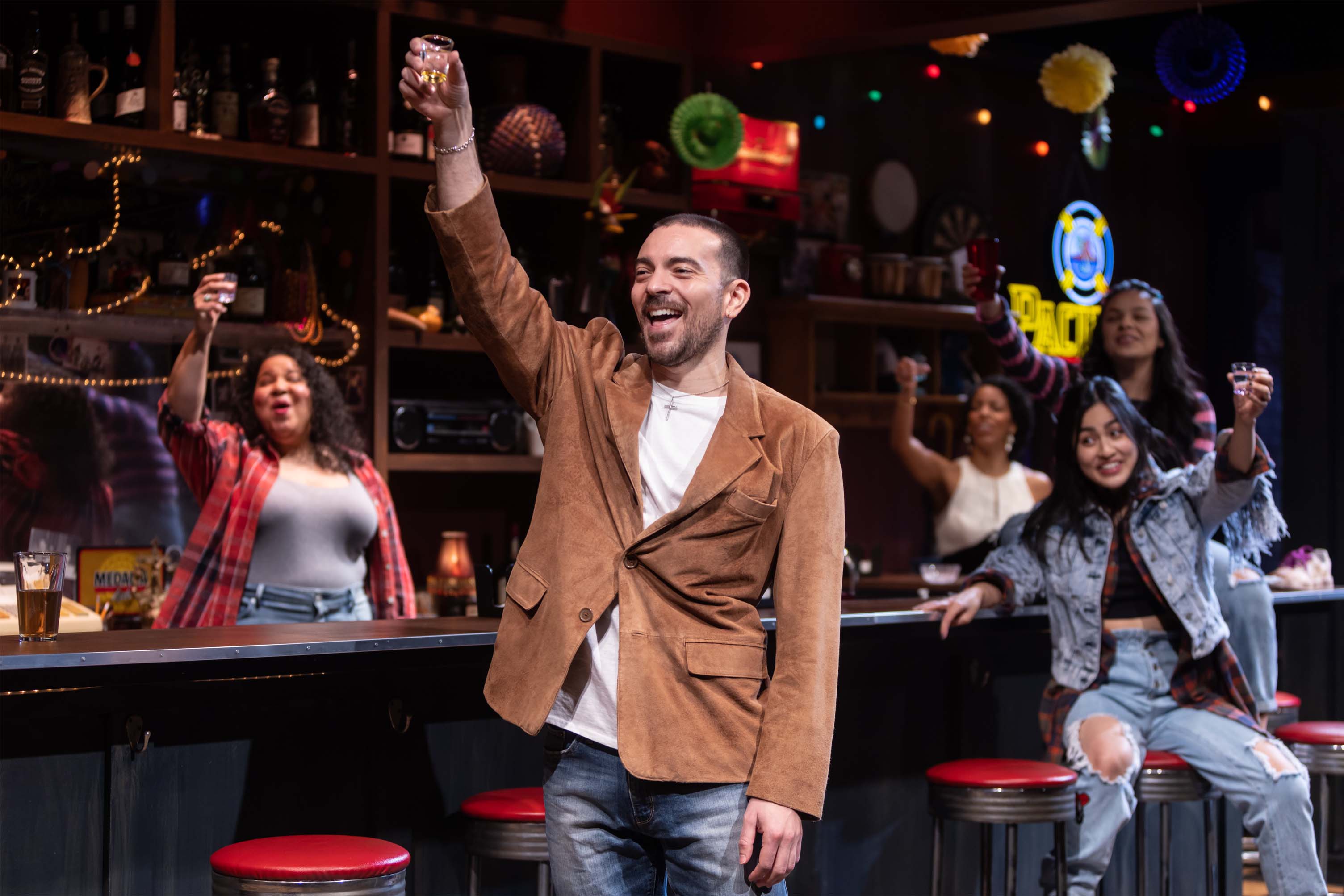 Rayanne Gonzales, Jonathan Atkinson, Yesenia Iglesias, Jyline Carranza, Quynh-My Luu, (Photo by Christopher Mueller) Have you ever been to a dive bar? And I don’t mean Cheers. If not, you should enter the world of Daphne’s Dive. In this exciting work Playwright Quiara Alegría Hudes offers us a barstool at a Puerto Rican-centric dive bar on Philly’s seedier side and she has filled it with the most colorful characters this side of San Juan.
There’s Daphne (Rayanne Gonzales), the full-throated, take-no-prisoners owner with a heart of gold and years of hard luck; Jenn (Quynh-My Luu), the political activist who openly admits to a messiah complex though nicely tempered by her adorableness; Rey (Jefferson A. Russell), the leather-clad biker looking for love; Inez (Yesenia Iglesias), married to dapper businessman slash politician, Acosta (Dylan Arredondo), and finding her independence; Pablo (Jonathan Atkinson), the dumpster-diving artist; and Ruby (Jyline Carranza), Daphne’s stepdaughter, who is growing up surrounded by a quirky family of barflies.
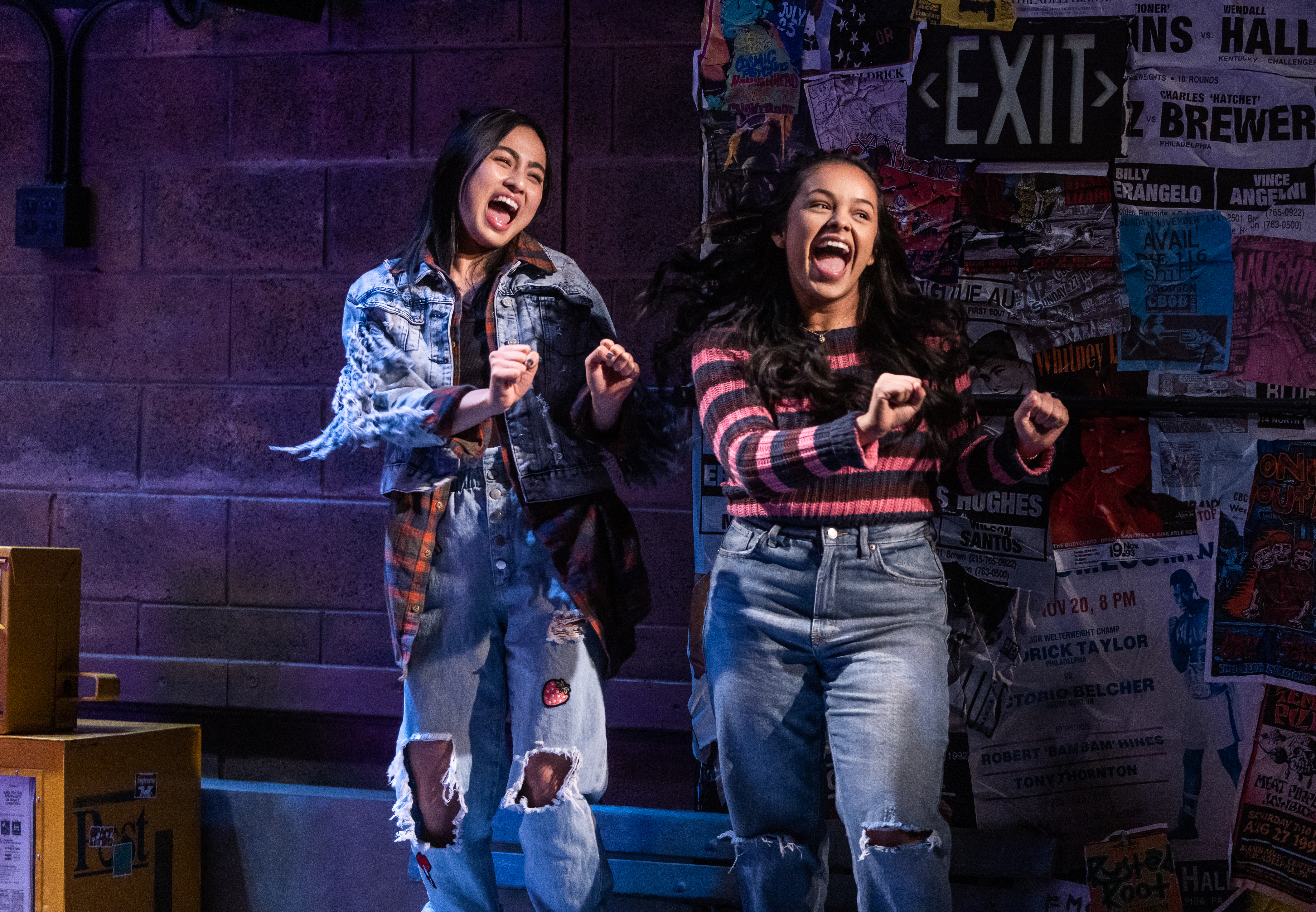 Quynh-My Luu and Jyline Carranza (Photo by Christopher Mueller) Their story begins in the 1990’s and goes through the 2000’s – so a lot of major life changes for all the characters. What keeps it barreling along is how they navigate these curve balls with the help of their tight-knit bar familia. Watching them evolve and interact, alternately challenging and supporting each other through the worst of times and the worst of disagreements, is both heartwarming and fraught. It’s a bird’s eye view into a unique cultural dynamic – one that Hudes invites us to appreciate and understand. As for Hudes’s street cred, she wrote the book for In the Heights so she knows barrio life and is a two-time Pulitzer Prize nominee.
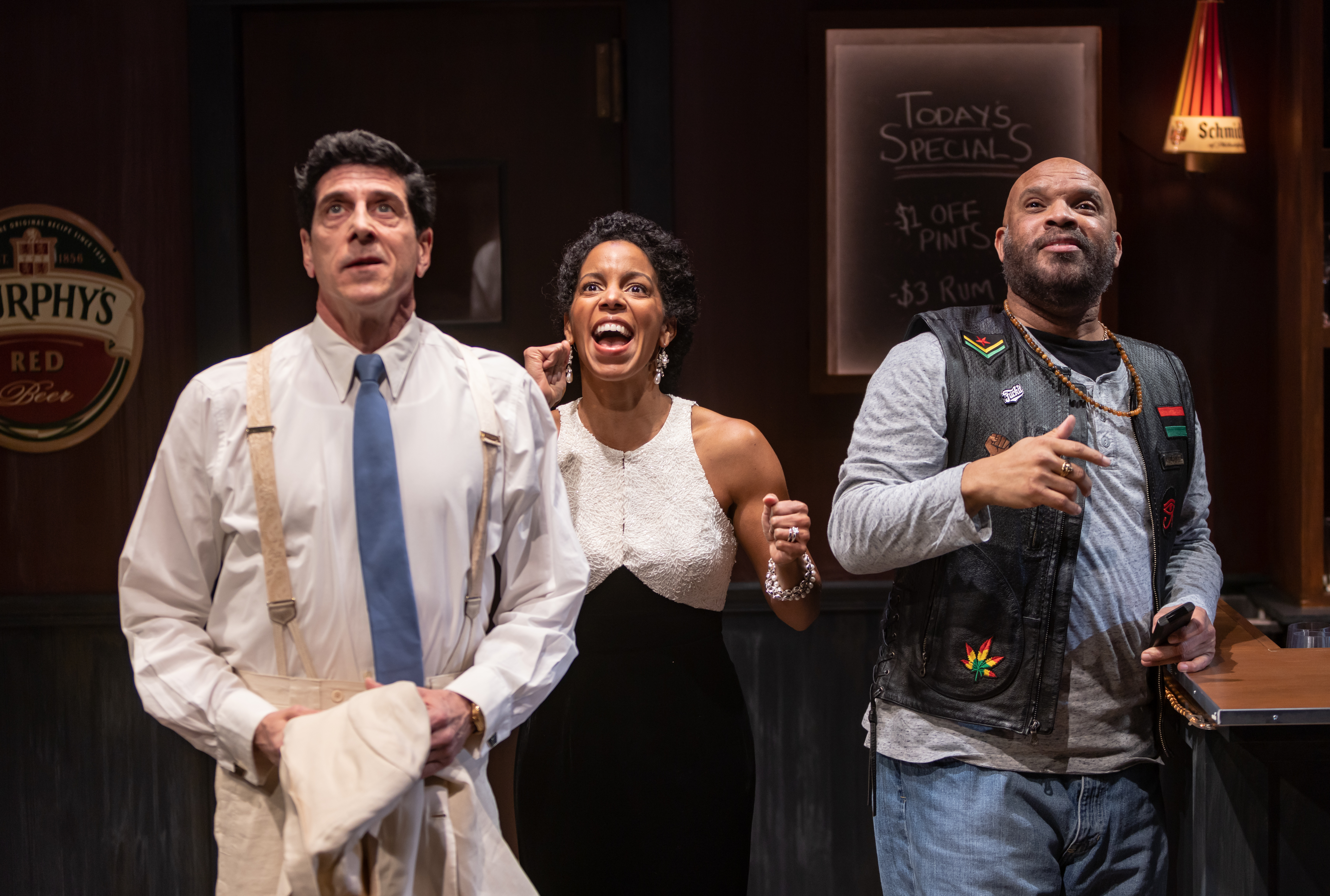 James Whalen, Yesenia Iglesias, and Jefferson A Russell (Photo by Christopher Mueller) Director Paige Hernandez’s friendship with Hudes began at the Kennedy Center with Hudes’s production of Barrio Grrrl! and continued as Hernandez searched for some of Hudes’s lesser-known plays to bring to the attention of Signature audiences. This is exactly the sort of uplifting yet serious diversity that audiences are searching for. Set in the intimate ARK theater, it’s an up-close-and-personal experience putting the audience mere feet from the stage.
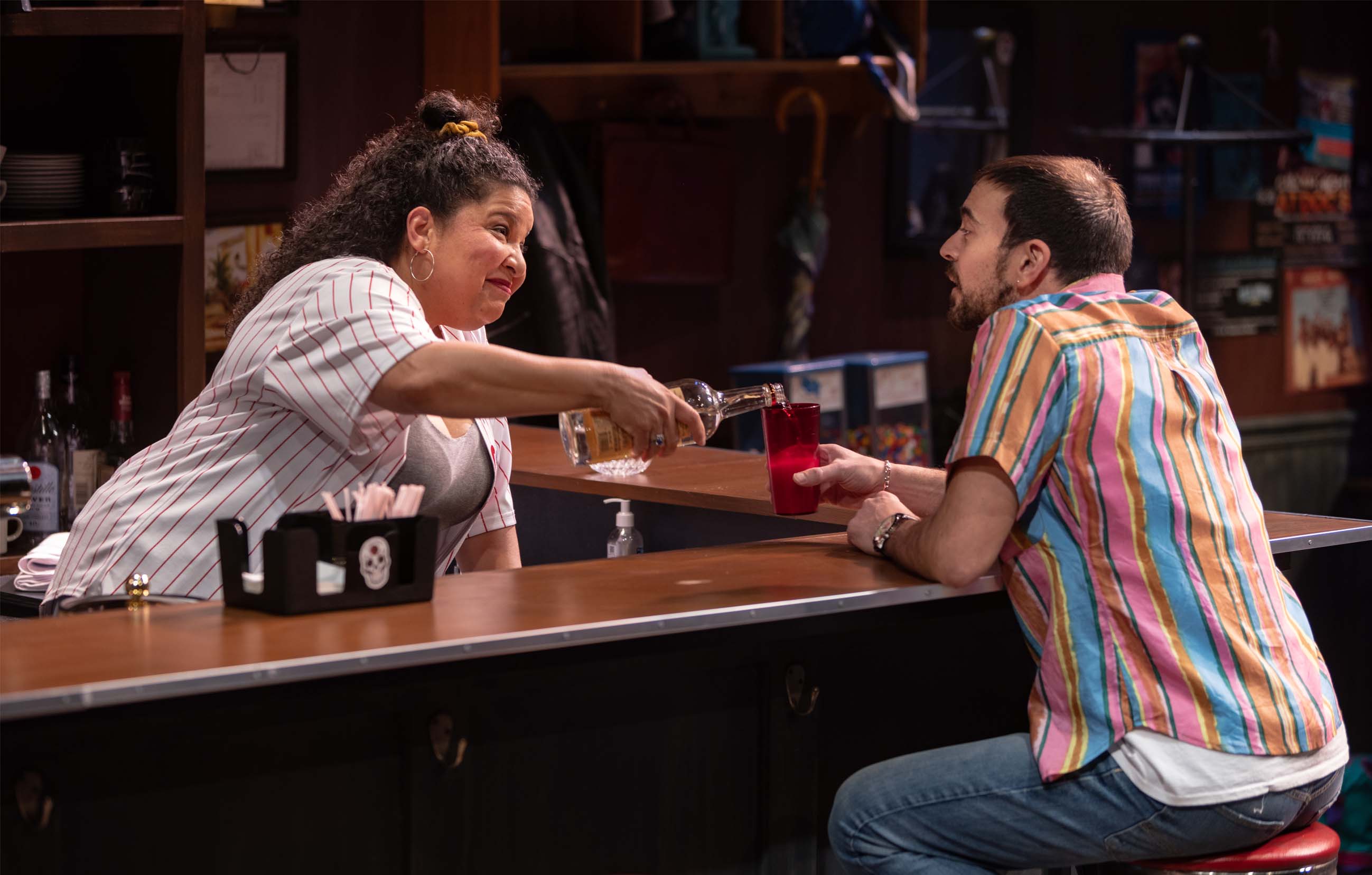 Rayanne Gonzales and Jonathan Atkinson (Photo by Christopher Mueller) The excitement is further enhanced by Scenic Designer Meghan Raham and Lighting Designer John D. Alexander who together create a credibly dingy bar decorated with neon bar signs, funky period beer ads, shelves of cheap booze and what appear to be actual working beer taps. Pacifico anyone?
You’ll seat-dance to the hot rhythms of their Latino music, laugh at their drinking games, and marvel at their personal transformations inspired by Jenn’s motto of “Peace, Liberty, Ecology and Democracy”.
This cast is phenomenal! See it!!!
P.S. Sig’s lobby bar has reopened. Plan ahead!
With Costume Design by Moyenda Kulemeka and Sound Design by Kenny Neal.
Through March 20th at Signature Theater, 4200 Campbell Avenue (in the Village at Shirlington), Arlington, VA 22206. For tickets and information visit www.SigTheatre.org or call the box office at 703 820-9771.
Change Agent
Arena Stage
Jordan Wright
February 6, 2022
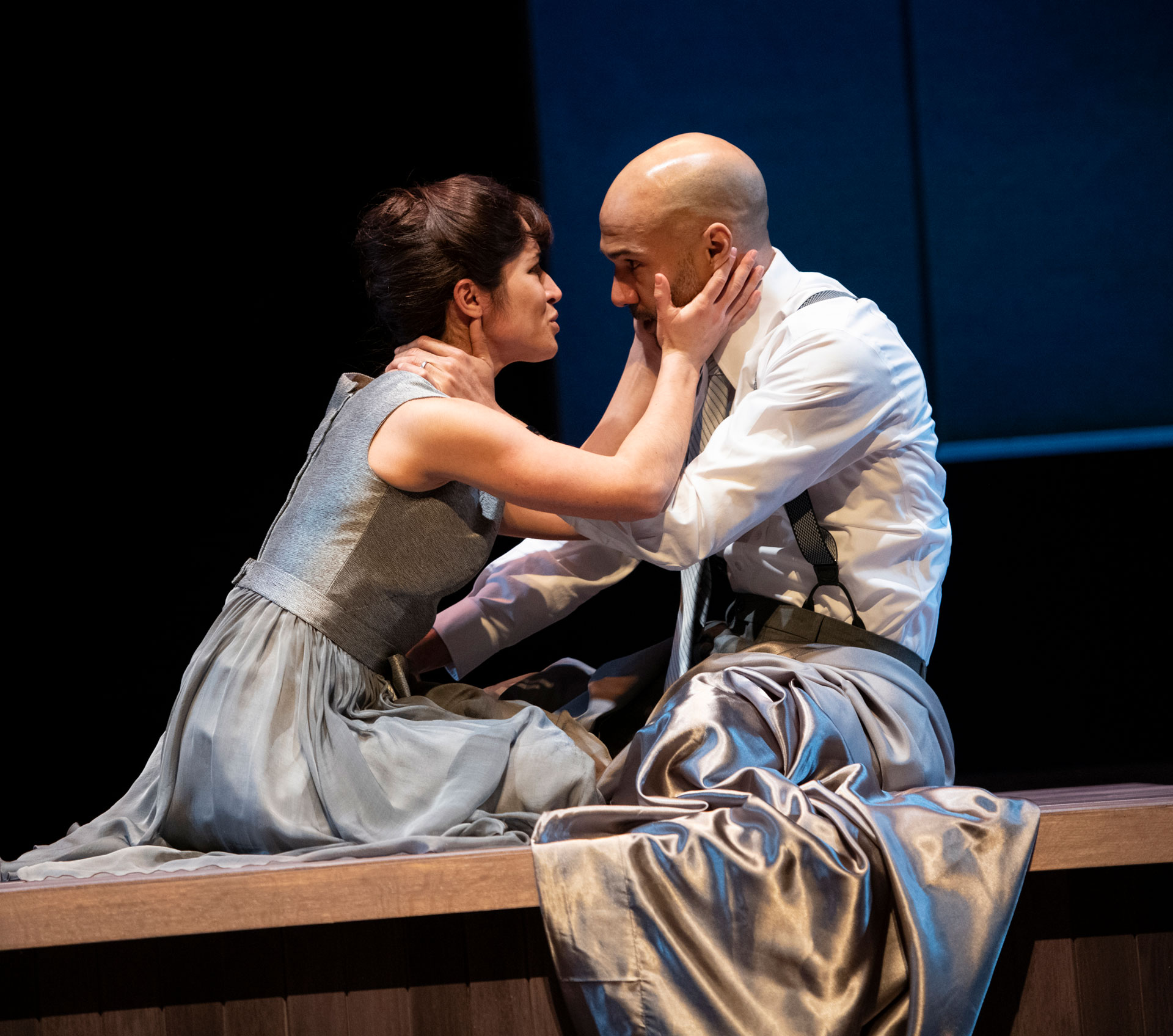 Andrea Abello and Luis Vega in Change Agent at Arena Stage running January 21 – March 6, 2022. Photo by Margot Schulman. Playwright Craig Lucas’s Change Agent follows John F. Kennedy’s meteoric rise to the presidency from his political evolution and inner circle coterie to his battles with CIA Director Allan Dulles. Along the way we learn of the backstabbing tactics of Washington Post journalist Joseph Alsop and his legendary salons where he peddled his influence amid the powerbrokers. Much of this was well-documented, but the darkest revelations didn’t surface until after Kennedy’s assassination in 1969. Change Agent pulls us back into that turbulent period, touching on the McCarthy HUAC hearings, Allen Dulles’s control of the CIA and J. Edgar Hoover’s influence on policy as a backdrop to Kennedy’s (Luis Vega) rise to power, and it hints broadly of their conspiracy to murder JFK for not adhering to their clandestine operations.
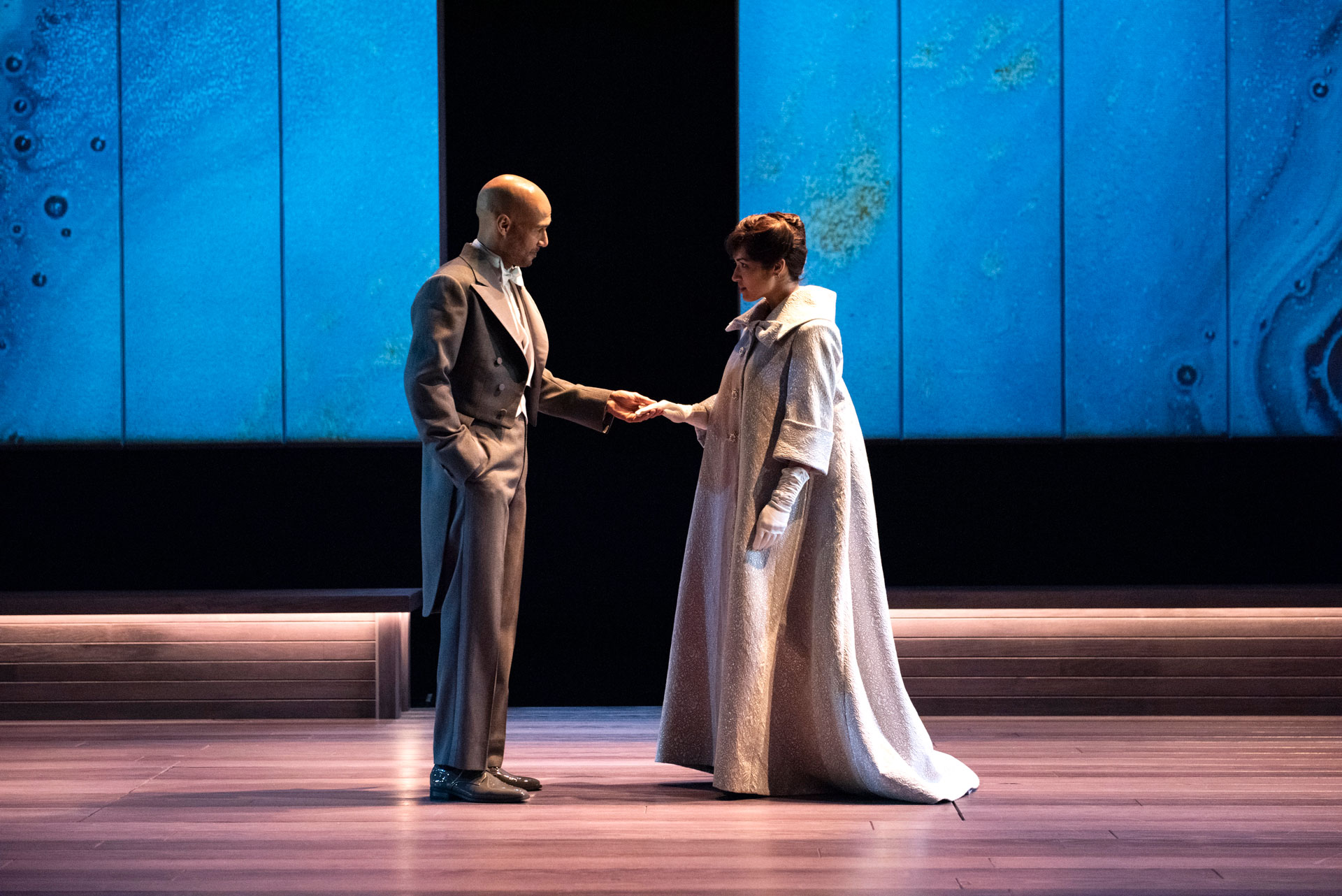 Luis Vega and Andrea Abello in Change Agent at Arena Stage running January 21 – March 6, 2022. Photo by Margot Schulman. Framed by Kennedy’s strained relationship with Jackie and his rumored affair with socialite and artist Mary Pinchot Meyer (Andrea Abello), the drama captures the diabolical war-mongerers who undermined Kennedy’s desire to lead the country towards a more progressive, anti-racist climate. If you’re familiar with some of these full-blown theories, you know they can lead down a rabbit hole you may not want to travel.
Lucas also acts in the role of Director and some of his decisions make for a slog as the characters’ love lives, affairs and party-going seem less than necessary. As for this as a period piece, others of Arena’s Power Play series have been more focused, more dramatically staged and more indelibly acted as they should be given the weighty political subject matter. If you’ve followed the farrago of conspiracies surrounding the assassination of JFK, this lays it all out with a smidgen of this and a dab of that without once mentioning Jack Ruby or Lee Harvey Oswald.
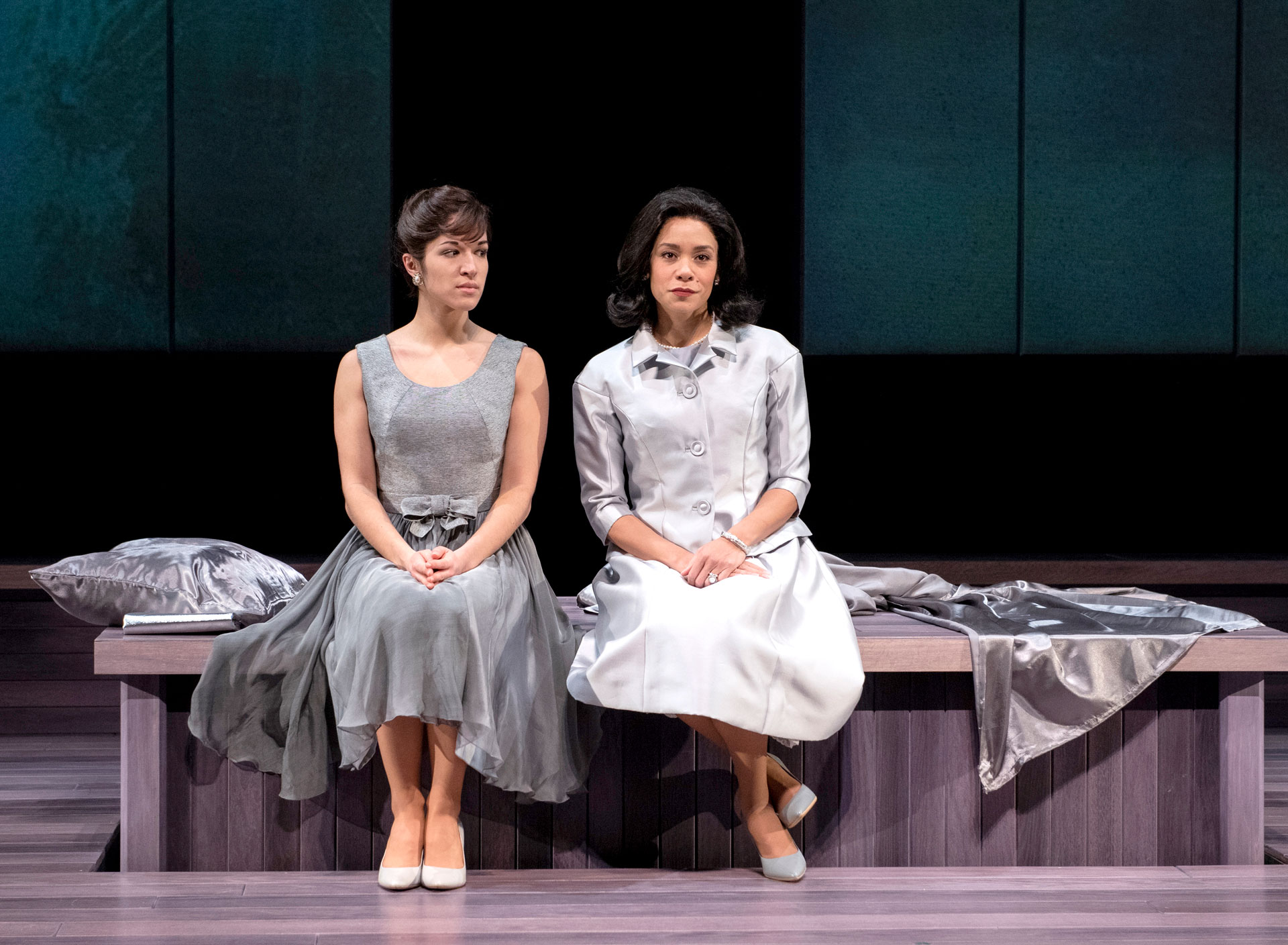 Andrea Abello and Kathryn Tkel in Change Agent at Arena Stage running January 21 – March 6, 2022. Photo by Margot Schulman. The story takes us from 1936 to 1965, America – from JFK’s boarding school days meeting the spitfire and liberal activist Mary Meyer (a curious mention is Mary’s studies under famed American artist Kenneth Nolan) to the Kennedy family tragedies, and through WWII into the tony watering holes of Provincetown and Georgetown leading up to Kennedy’s time in the White House. Tension hangs over Mary and Jack’s affair along with her marital difficulties with Cord (Jeffrey Omura) her McCarthy-loving, CIA husband. Mary calls it, “living with what we cannot bear.” In this telling, Jackie appears to condone their affair and she and Mary are the best of pals. Here everyone is deeply flawed, and everyone has a secret agenda. Welcome to Washington!
With Kathryn Tkel as Jackie and Regan Linton as Cicely.
Set Design by Wilson Chin; Costume Design by Alejo Vietti; Lighting Design by Cha See; Original Music and Sound Design by Broken Chord; Projection Design by Caite Hevner.
Through March 6th at Arena Stage in the Kogod Cradle – 1101 6th Street, NW, Washington, DC 20024. For tickets and information visit www.ArenaStage.org
The Simon & Garfunkel Story
Broadway at The National Theatre
By: Jordan Wright
January 30, 2022

It wasn’t until the 60’s when Paul Simon and Art Garfunkel abandoned their early rock and roll efforts and tapped into the zeitgeist of that era to create their unique folk rock sound. As schoolmates they had spent time together in Queens, New York listening to the Everly Brothers and seeking their own groove. When they found it, they became one of the biggest-selling groups in the history of popular music. With a story-telling style, unusual harmonies, perfect pitch and angelic voices they came to be known for their deeply emotional, soul-baring lyrics.
Framed by full-stage images and videos from the most generation-defining moments in American history, we glean a deeper understanding of their musical journey and the lyrics that moved millions of listeners. Unfortunately, there is no program offered for this national tour, so no way to hail the individual performers who portray Art and Paul, though they were spot on in cloning both the depth and signature harmonies of the duo’s original voices. Praise too for the 4-piece (plus Paul on electrified acoustic guitar) backup band who nailed all the hot licks.
As their individual personalities emerged and grew, from time to time they parted ways. Art to London, Paul remaining stateside. But when “The Sounds of Silence” climbed the top of the charts and stayed there, they reunited and became fixtures on the music scene with huge hits like “Scarborough Fair”, “Homeward Bound”, “Mrs. Robinson”, “Bridge Over Troubled Water” and “Feelin’ Groovy” against the background of the Vietnam War protests, the space race and the civil rights movement. Years later they separated again becoming successful solo acts.
Unlike other bio-musicals with a made-up plot and large casts, The Simon & Garfunkel Story plays out like a concert by one of the country’s most enduring groups who over the course of their lengthy careers went on to earn them music and humanitarian awards. Unlike most of today’s massive concert venues, experiencing it at The National, a stunning historic yet intimate-feeling theater, the audience can plug in to the emotionality and sheer beauty of their music. I counted 27 numbers, but there may have been more. Again, no program and only a two-night run. For fans of this iconic American duo with the purest harmonies this side of heaven, this is the epicenter.
Visit www.TheSimonandGarfunkelStory.com for upcoming performances on their US/Canada national tour.
The National Theatre is located at 1321 Pennsylvania Avenue, Washington, DC 20004. To visit the theater, you must be masked and vaxxed. Strict COVID protocols are in place. For information on upcoming shows go to www.BroadwayAtTheNational.com
The Prom
Where Love Conquers All
The John F. Kennedy Center for the Performing Arts
January 8, 2022
By: Jordan Wright
 Courtney Balan, Patrick Wetzel, Bud Weber and Emily Borromeo in The National Tour of THE PROM. Photo by Deen van Meer. 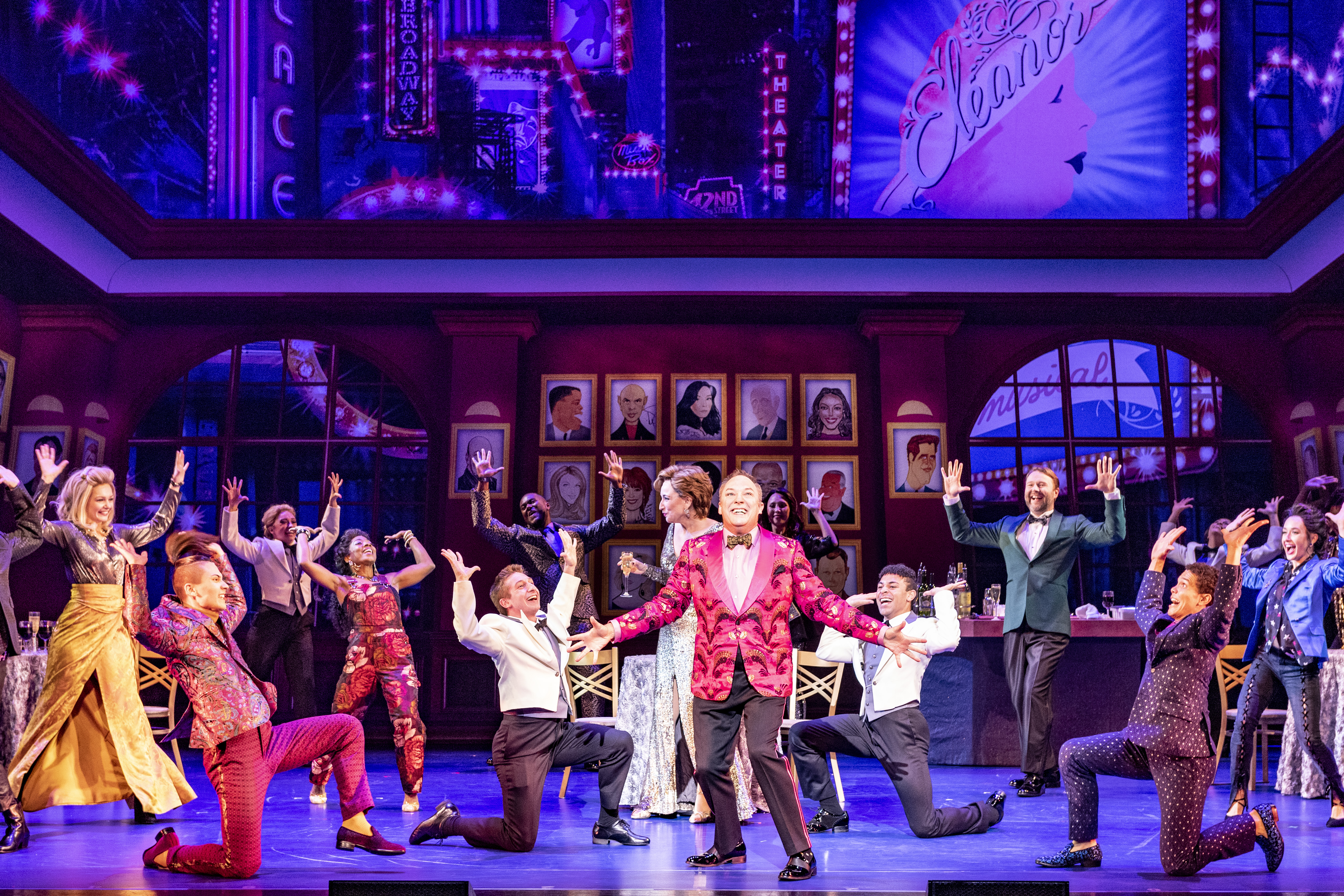 The Prom, Music by Matthew Sklar, Book by Bob Martin and Chad Beguelin, Lyrics by Chad Beguelin, Directed and Choreographed by Casey Nicholaw
cast: Kaden Kearney (Emma), Kalyn West (Alyssa Greene), Courtney Balan (Dee Dee Allen), Patrick Wetzel (Barry Glickman), Emily Borromeo (Angie Dickinson), Bud Weber (Trent Oliver),
Sinclair Mitchell (Mr. Hawkins), Ashanti J’Aria (Mrs. Greene) and Shavey Brown (Sheldon Saperstein). Photo by Deen Van Meer. 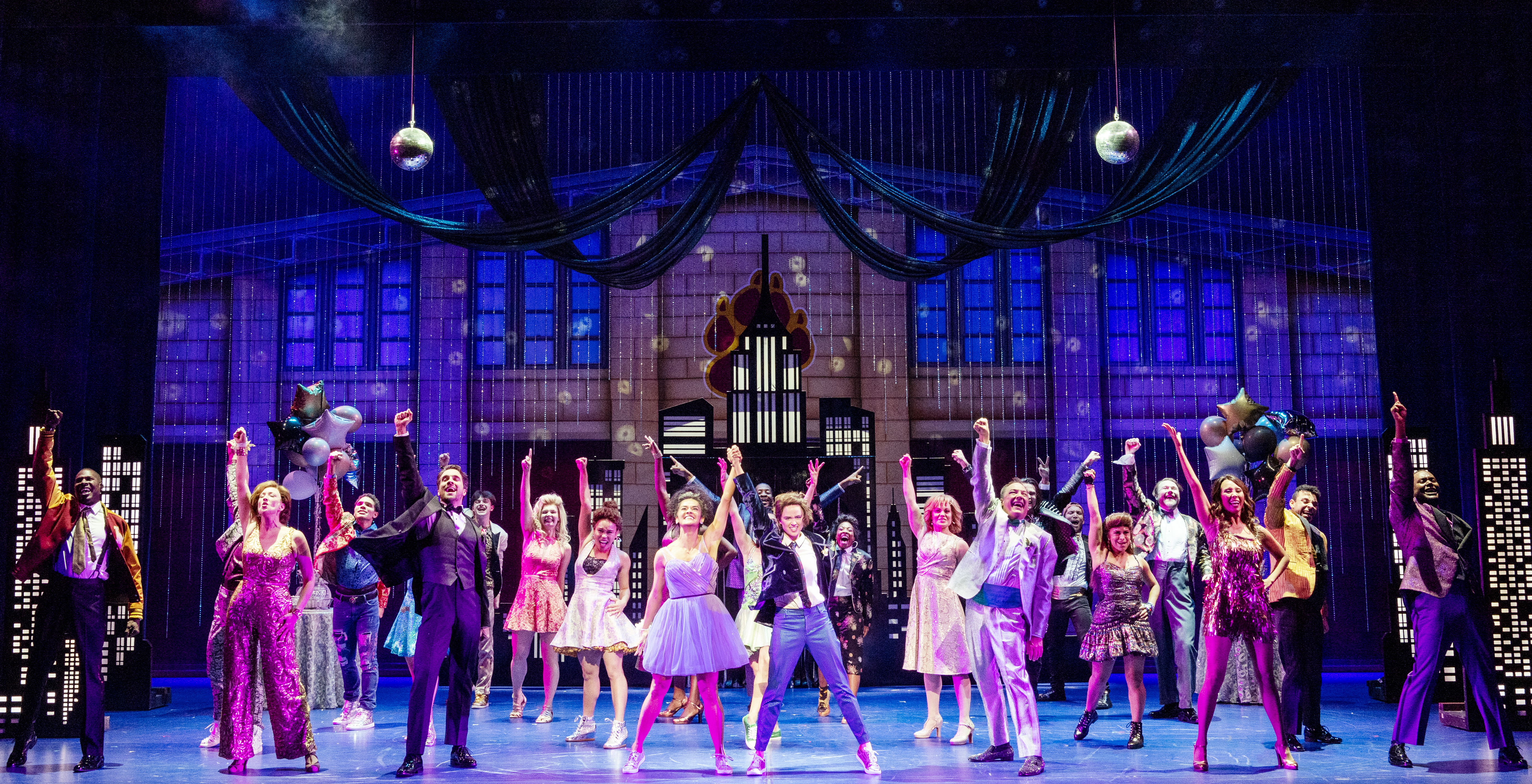 The Prom, Music by Matthew Sklar, Book by Bob Martin and Chad Beguelin, Lyrics by Chad Beguelin, Directed and Choreographed by Casey Nicholaw
cast: Kaden Kearney (Emma), Kalyn West (Alyssa Greene), Courtney Balan (Dee Dee Allen), Patrick Wetzel (Barry Glickman), Emily Borromeo (Angie Dickinson), Bud Weber (Trent Oliver),
Sinclair Mitchell (Mr. Hawkins), Ashanti J’Aria (Mrs. Greene) and Shavey Brown (Sheldon Saperstein) Straight off, I want to say that although The Prom tackles serious subject matter and it handles it with the flat out fun of a confetti bomb. This story of two teenage lesbians forbidden to attend their school’s senior prom is no joke. It is set in Indiana, that bastion of Conservatism where alternative lifestyles are unacceptable and school regulations are governed by the PTA.
In New York the glamorous Broadway musical star Dee Dee Allen and her co-star Barry Glickman, a prancy-and-proud-of-it queen, are having a bad day. While at Sardi’s, reading the next day’s reviews of their latest show, they learn The New York Times has murderously panned it and tagged them as “aging narcissists”. Hoping to change that perception (in Dee Dee’s case it’s true), they agree to find a social issue to publicly support. Checking what’s trending online – climate change, poverty, etc. – they seize on the viral Twitter issue of the prom. With that as their cause celebre, they head to Indiana with their publicist Sheldon, waiter/actor and Julliard grad Trent, and chorus girl Angie to drum up support for the teens and garner favorable publicity for themselves. Did you know thespian rhymes with lesbian?
Alyssa is still in the closet to her mother who heads up the PTA and is dead set against gay couples at the prom. Yes! We’ve got trouble. Right here in River City! Her girlfriend, Emma, is out and supported by Principal Hawkins who vows to fight the PTA mothers calling it a civil rights issue. How they resolve it, becoming activists in the process, is the hopeful message of this endearing musical.
The young company is absolutely adorable. You just want to hug every last massively talented one of them. And their dancing, thanks to fabulous choreography by Director/Choreographer Casey Nicholaw, is exceptional. Kaden Kearney gracefully embodies the zeitgeist of Emma and is well-bracketed by Patrick Wetzel as the hilarious, gay role model Barry; Courtney Balan as the marvelously ballsy diva Dee Dee; and eye candy handsome Bud Weber as waiter/actor Trent Oliver who squelches the haters with buckets of charm and bible excerpts.
With Emily Borromeo as Angie; Ashanti J’Aria as Mrs. Greene; Sinclair Mitchell as Mr. Hawkins; Olivia Cece as Kaylee; James Caleb Grice as Nick; Jordan Alexander as Kevin; Sheldon Saperstein as Shavey Brown; Ashley Bruce as Olivia Keating; Brittany Nicole Williams as Shelby; and Kalyn West as Alyssa.
Book by Bob Martin & Chad Begulin; Music by Matthew Sklar; Lyrics by Chad Beguelin; Scenic Design by Scott Pask; Costume Design by Ann Roth and Matthew Pachtman; Sound Design by Brian Ronan and The Kennedy Center Orchestra.
Through January 16th. For tickets and information call 202 467-4600 or visit www.kennedy-center.org.
Ain’t Too Proud
The Kennedy Center for the Performing Arts
By: Jordan Wright
January 1, 2022
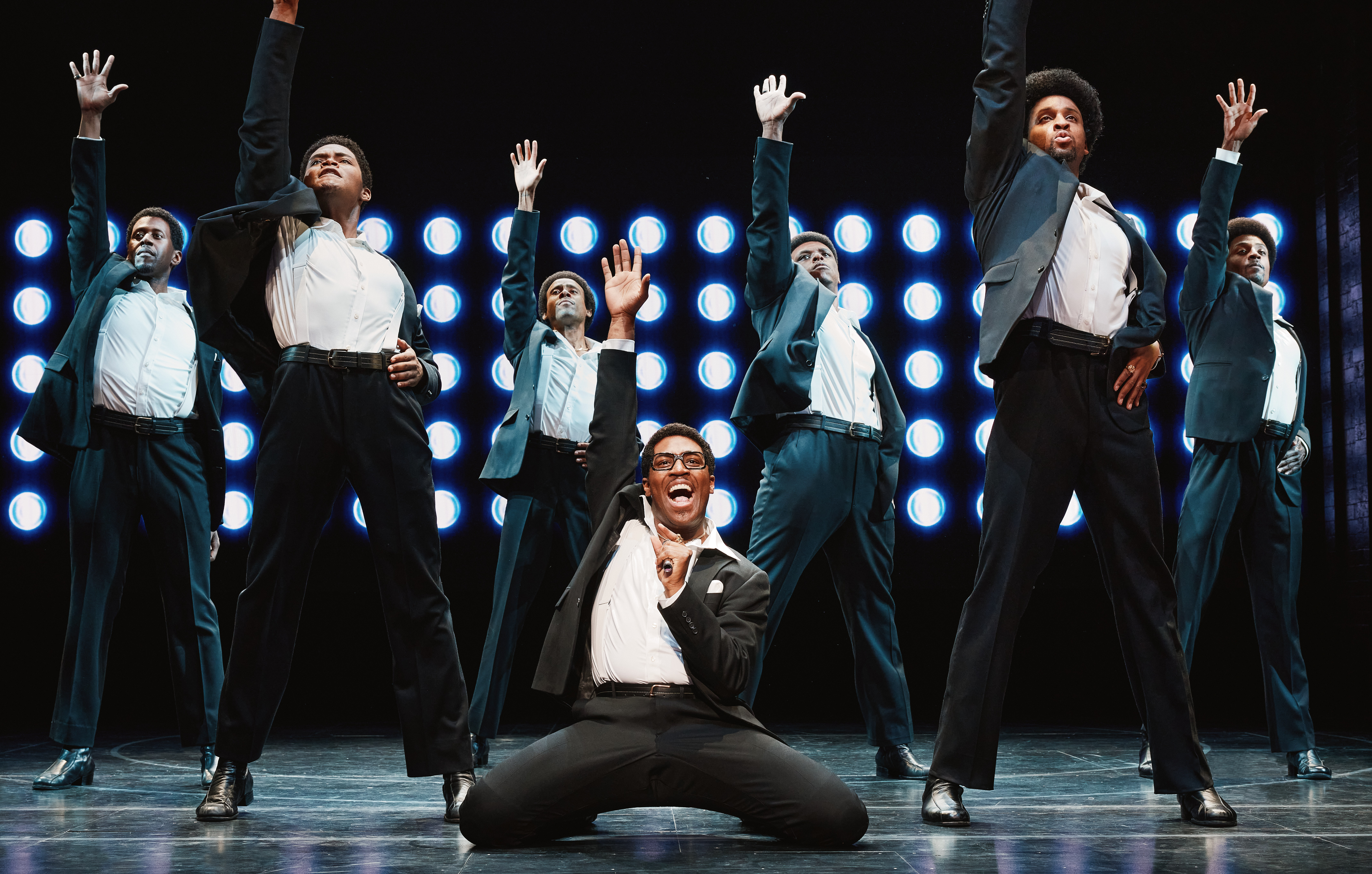 National Touring Company of Ain’t Too Proud – © 2021 Emilio Madrid  (left to right) – Elijah Ahmad Lewis, Marcus Paul James, Jalen Harris, Harrell Holmes Jr., James T. Lane from the National Touring Company of Ain’t Too Proud © 2021 Emilio Madrid A Soul-filled Journey Packed with Hits
Jam-packed with hits from America’s number one R&B/Soul/Funk/Pop group of the 50’s, 60’s and 70’s, this bio-musical from the Berkeley Repertory Theatre is a blast-from-the-past, an oldies-but-goodies bonanza. Told through the eyes of Otis Williams (Marcus Paul James), the group’s founding member, the story takes us on a top-of-the-pops journey from the original foursome’s Detroit roots on Euclid Avenue through its heyday under producer Berry Gordy with songs written by Smokey Robinson (Lawrence Dandridge). Through the years the group gained and lost members like David Ruffin (played by the spectacular Elijah Ahmad Lewis), Eddie Kendricks (a riveting Jalen Harris), Melvin Franklin (the silken bass of Harrell Holmes, Jr.) and Paul Williams (James T. Lane).
Though the story guides us through their triumphs and tragedies, and the multiple group member replacements, over the years, the show hangs on their hits – hits that a generation of us danced to, made out to and even got married to back when we grooved to the lyrics of their love songs. They fought through racist attacks in the Deep South hoping to become crossover artists. “You never know who is hating you and singing along to your records,” Otis decries.
Don’t think for a minute that the audience was a bunch of aging baby boomers clinging to memories of their teenage years. That couldn’t be farther from the truth. I checked out the audience – who were tapping their toes, mouthing the lyrics (Yes, under our masks!) and bobbing their heads – and they were all ages, every race. You just can’t sit still to this concert-style bio-musical. Certainly not while watching those slickly-choreographed and tightly-synchronized dance movements.
Amassing an astonishing 31 platinum hits in their decades-long journey, the group created the sound that backgrounded family BBQs, birthdays, dance parties and early discos – songs listened to in cars and parks and on street corners where quartets sprung up like weeds. There is so much joyfulness in the early music – “My Girl”, “I Can’t Get Next to You”, “If You Don’t Know Me by Now”, “Cloud Nine” and so many more. When the scene changed with the death of Martin, John and Bobby, the group’s music reflected that fraught time with “War”, “I Wish It Would Rain” and “Ball of Confusion”.
The musical is backdropped with period-centric projections by Peter Nigrini of Sponge Bob Square Pants and Amélie fame and choreographed to a gold standard by Sergio Trujillo known for his work on Jersey Boys and On Your Feet. Familiar with Dancing with the Stars? Orchestrations are by the TV show’s 17-year veteran musical director, Harold Wheeler with music directed by the legendary Kenny Seymour. Multiple Tony Award-winning Director Des McAnuff puts it all together and it’s as tight as the group’s pegged trousers and slim fitting sharkskin jackets and the sequin-gowns worn by Diana Ross and The Supremes who make an appearance along with Tammi Terrell, all of whom are costumed by Paul Tazewell veteran designer of Hamilton and a ton of other blockbuster Broadway hits.
I’d copy the playbill for you word for word if I could, because the cast includes some of the most successful and talented Black performers whose voices, bios and acting chops, are well known in musical theater, film and TV. These are multi-talented actors from the Broadway productions of Motown: The Musical; Beautiful: The Carole King Musical; Memphis; Sister Act; The Scottsboro Boys and The Lion King with voices and moves to die for.
Book by Dominique Morisseau. Based on the book “The Temptations” by Otis Williams with Patricia Romanowski. Music and lyrics from The Legendary Motown Catalog featuring the Kennedy Center Opera House Orchestra led by Jay Crowder.
Highly recommended!!!
Through January 16th at The Kennedy Center for the Performing Arts, 2700 F St., NW, Washington, DC. For tickets and information for future shows call 202 467-4600 or visit www.Kennedy-Center.org.
Once Upon a One More Time
Inspired by the Music Performed and Recorded by Britney Spears
Shakespeare Theatre Company
By: Jordan Wright
December 23, 2021
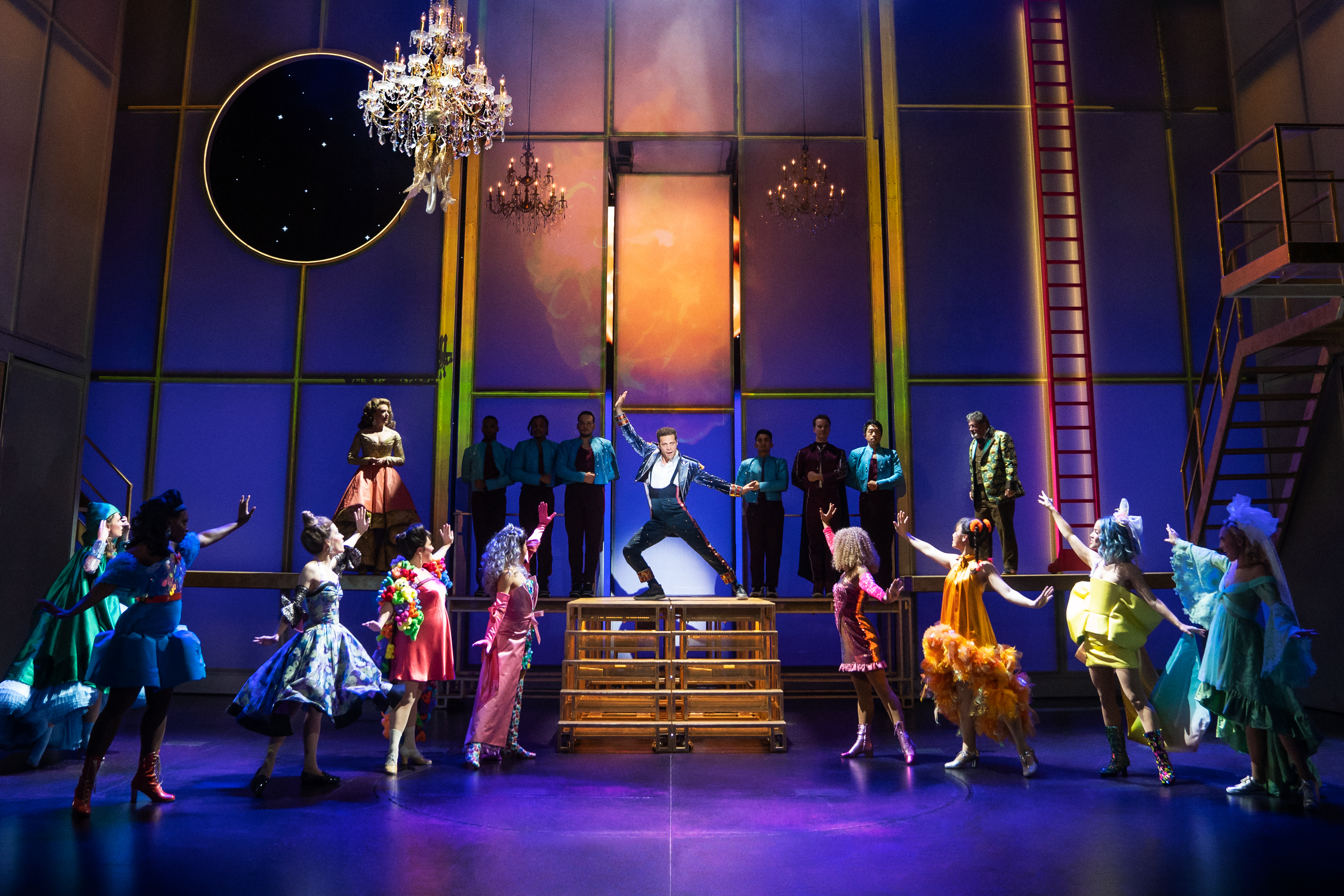 Justin Guarini (center) and Company
(credit: Matthew Murphy) Going in I wondered if I would know any of the pop diva’s songs. It turns out a few were instantly recognizable, though you need not have them on your playlist to have heard them somewhere. This is the direction bio-musicals have been taking lately. Sourcing songs that are already tried and true. Add backstory and it’s on. For Once Upon a One More Time the writers chose “Pop Princess” Britney Spears who inspired this musical. No surprise she would get her due. With hundreds of millions of records sold worldwide, the show should bring in legions of her fans. So, far be it from me to critique a show that has already broken all box office records at the Shakespeare Theatre Company.
There are shows I felt were not ready for their expected B’way debuts, which is where this is headed as soon as we can get past this damn pandemic. And I fear this could be one of them. Most, by the time they open in New York, have been trimmed down, beefed up, graced with better lighting, slick video projections and new sets. I hope this run will give the show the polish it needs before it hits the big time. Again, haters keep your claws drawn. It’s only my opinion. Stick with me.
What I did find was a wonderful plot that echoes the “Me Too” movement – before little girls grow up and face misogyny, glass ceilings and male domination. It’s Keone and Mari Madrid’s creative direction and Jon Hartmere’s book that shoots down that clichéd fantasy and teaches girls about self-empowerment in a light-hearted and tuneful way. For decades, these fairy tales have been eagerly served up to little girls from the time they can sit still long enough to listen to a bedtime story. “Your prince will come and your dreams of being rescued by a tall, dark and handsome (and rich) man will be realized,” we tell them. This version destroys the myth that Prince Charming will come along and solve your lack of confidence, money and/or singlehood. Of course, these fairy tale girls are ravishing and conveniently, have a prince in their neighborhood. Oh, how we indoctrinate little girls into being subservient to men. This should dispel that myth in a heartbeat.
Here the wicked stepmother, who equates female empowerment with witchcraft, features prominently as do the snippy stepsisters, Belinda and Betany. Drawing on Betty Friedan’s feminist book, “The Feminine Mystique”, the Original Fairy Godmother alerts Cinderella to the power of activism and self-actualization and she encourages them to go on strike against the curmudgeonly Narrator. “If you wanna hang on to your slippers,” OFG advises Cinderella, “you gotta learn to put your foot down.” This is where I totally buy in.
Accordingly, Prince Charming has few redeeming social qualities. He is a womanizer who is charming, handsome and vapid but never has an actual name in any of the fairy tales. Think about that! There are silly jokes, sight gags, physical comedy and tons of dance numbers with some of Spears’ songs created with new lyrics designed to underpin the plot. Other songwriters like Pharrell Williams and Katy Perry have contributed material. What this all has to do with Britney’s real life, I have no idea, although I suppose you could connect it to her court case against her father – appointed her conservator years ago and recently defeated in court. That’s a sort of happy ending in and of itself.
The huge cast features Briga Heelan as Cinderella; Brooke Dillman as Original Fairy Godmother; Aisha Jackson as Snow White; Belinda Allyn as Belle; Justin Guarini as Prince Charming; Wonu Ogunfowora as Rapunzel; Morgan Weed as Princess and the Pea; Jennifer Florentino as Little Red Riding Hood; Selene Haro as Gretel; Amy Hillner Larsen as Goldilocks; Emily Skinner as Stepmother; MiMi Scardulla as Belinda; Tess Soltau as Betany; Raymond J. Lee as Clumsy/Prince Ebullient; Ryan Steele as Prince Erudite; Stephen Brower as Prince Suave; Stephen Scott Wormley as Prince Affable; Joshua Johnson as Prince Brawny; Kevin Trinio Perdido as Prince Mischievous; Michael McGrath as Narrator; Adrianna Weir or Mila Weir as Little Girl.
Creative Design and Choreography by Keone and Mari Madrid; Creative Consultant David Leveaux; Scenic Design by Anna Fleischle; Lighting by Sonono Nishikawa; Costume Design by Loren Elstein; and Sound Design by Andrew Keister.
Through January 2, 2022 at Shakespeare Theatre Company’s Sidney Harman Hall, 610 F Street, NW, Washington, DC. For tickets and information call 202 547-1122 or visit www.ShakespeareTheatre.org.
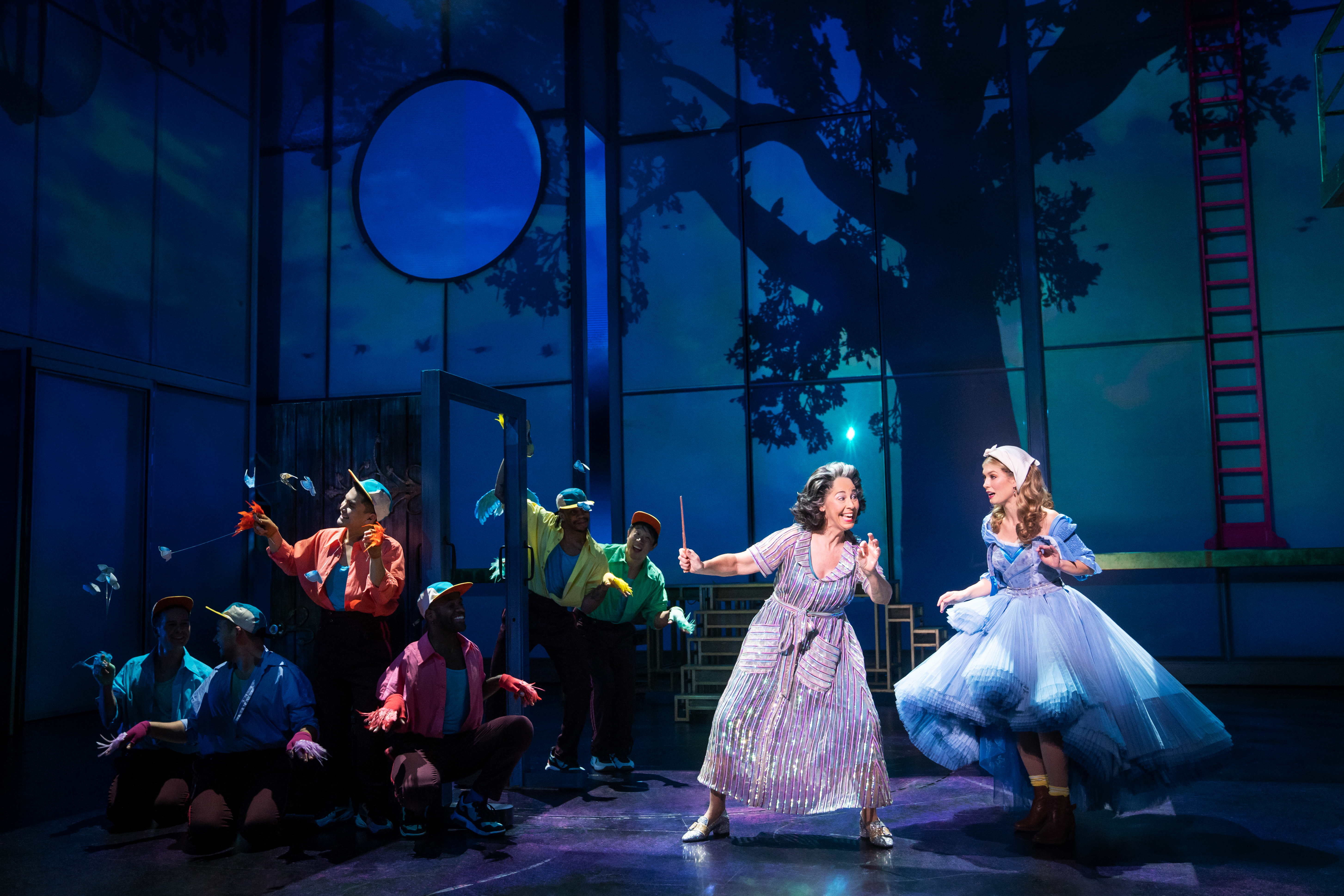 Brooke Dillman, Briga Heelan and Company
(credit: Matthew Murphy) 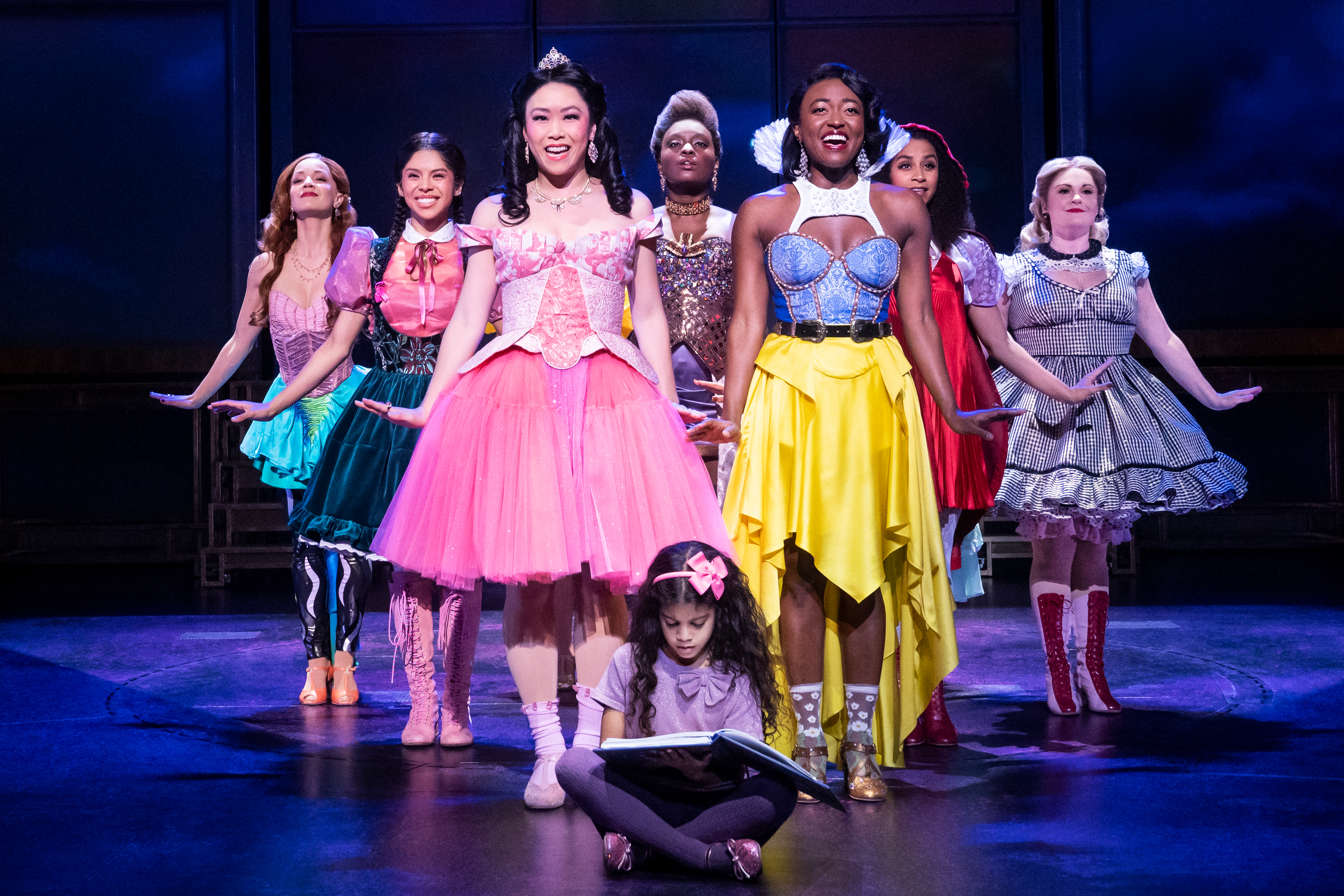 Cast of Once Upon A One More Time
(credit: Matthew Murphy)
|