Categories

Find Us

Books, Books, Books and Recipes

Jordan Wright
November 2017

 King Solomon’s Table ~ The Sioux Chef’s Indigenous Kitchen ~ Rasika – Flavors of India ~ Virginia Barbecue ~ The Potlikker Papers ~ Appalachian Appetite ~ The Faerie Handbook ~ Moonshine ~ Middle-Earth: From Script to Screen

 If there’s a theme to this year’s crop of food and spirits books, it’s ethnically-driven, historic and authentic – with a dollop of fantasy.  Like travelogues, they offer an authentic glimpse into the past.

KING SOLOMON’S TABLEA Culinary Exploration of Jewish Cooking from Around the World, Joan Nathan (Alfred A. Knopf 2018).  This weighty and thoroughly comprehensive cookbook is Nathan’s most exciting to date.  Edited by the late, much lauded Judith Jones with forward by Alice Waters, this compendium of forgotten recipes represents the many interpretations of the cuisine of the Jewish diaspora.  As both historian and cook, Nathan, known as the grand dame of Jewish cookery, is relentless in her research.  Through her extensive world travels into home kitchens and restaurants, she pries loose well-guarded, family recipes – many formulated with locally available ingredients.  Her contextual and personal fore-stories to each recipe provide the kind of reading real cooks relish.  www.aaknopf.com

Green Chile Relleno Latkes

yield: 12 latkes
12 whole green chiles, such as Anaheim, Poblano, or Hatch
12 ounces (340 grams) white cheddar or Jack cheese, sliced width wise into 12 short pieces
2 pounds (1.11 kilos) russet or baking potatoes (about 3 large), peeled
1 medium onion, peeled
2 large eggs
Bd to V cup (30 to 55 grams)
panko or regular breadcrumbs or matzo meal
Salt and freshly ground pepper to taste
Vegetable or grape-seed oil for frying

1. Preheat the oven to 375 degrees and line a baking sheet with foil. Put the whole chiles on the baking sheet and roast for 40 minutes to an hour, flipping every 20 minutes, until the chiles are blackened all over. Let cool and then remove the stems and skin from each chili, leaving them as intact as possible. Then cut a slit almost the full length of each chili and carefully pull out the seeds. Put a piece of cheese inside each chili.
2. While the chiles are roasting, make the latkes, keeping the potatoes in cold water until ready to grate them.
3. Starting with the onions, alternately grate some of the onions in a food processor fitted with a steel blade or on the large holes of a large box grater and some of the potatoes on the smallest. (Doing it in this order will keep the
potato mixture from blackening.) When you have finished, put the potato and onion mixture into a clean dish towel and squeeze out the water into a medium bowl, allowing the potato starch to settle at the bottom. Carefully pour off the water, but leave the potato starch at the bottom of the bowl.
4. Once the liquid has been drained, put the potato mixture back in the bowl with the potato starch that has accumulated in the bottom. Add the egg, the breadcrumbs or matzo meal, and salt and pepper to taste and mix well.
5. Heat an inch of oil in a frying pan. Drop about 2 heaping tablespoons of mixture for each latke into the skillet and fry for a few minutes, turning

THE SIOUX CHEF’S INDIGENOUS KITCHENSean Sherman with Beth Dooley (University of Minnesota Press 2017).  Famed Oglala Dakota chef, Sean Sherman, brings his years of experience foraging game, fish and wild ingredients for authentic Native American fare to his first cookbook.  I have been vicariously following Sherman’s nationwide nose-to-tail dinners on Facebook throughout the year, especially a six-course dinner at the James Beard House.

Maple–Juniper Roast Pheasant
Čhaŋháŋpi Tiktíča na Ȟaŋté úŋ Šiyóša Čheúŋpapi
Serves 4 to 6

When I was growing up on the Pine Ridge Reservation, we stocked our freezers with pheasant and grouse. We’d see them darting across the dirt roads into the dry brush. They were as common as the red-winged blackbirds perched on the fence posts.

Overnight dry brining seasons and helps this especially lean bird to become tender and succulent. The technique also works with grouse and guinea hens.

2 small pheasants
1 tablespoon coarse salt
2 tablespoons maple sugar
1 teaspoon sumac
1 teaspoon crushed juniper
¼ cup Rendered Duck Fat, page 105, or sunflower oil
1 cup fresh cranberries
½ cup Corn or Turkey Stock, page 170, or vegetable stock
3 tablespoons maple vinegar
2 griddled apple halves for garnish (optional)

The day before, rinse the pheasants and pat dry with paper towels. To dry-brine, generously season with the salt, maple sugar, sumac, and juniper. Place on a roasting pan or deep plate in the refrigerator, uncovered, overnight.

Preheat the oven to 500°F. Place the pheasants breast side up in a medium roasting pan. Rub a generous amount of the duck fat under the skin of the birds and over the outside of the skin. Put half the cranberries into the cavity of the pheasants and spread the rest in the pan. Pour the stock and vinegar into the roasting pan. Roast for 15 minutes. Reduce the heat to 350°F and baste the pheasants with the pan juices. Continue roasting until the skin is crisp, the juices run clear, and a meat thermometer inserted in the thigh reaches 155°F, about 30 to 45 more minutes. Allow to stand at least 10 minutes before carving.

Carve and drizzle with the pan juices before serving with the griddled apples.

Substitute 2 tablespoons cider vinegar and 1 tablespoon maple syrup for the maple vinegar.
For the griddled apples, slice the apples in half horizontally, brush with a little sunflower or walnut oil, and griddle cut side down in a hot skillet or frying pan until lightly browned, about 3 to 5 minutes.

Rendered Duck Fat

Carefully remove all the skin and fat from the duck breasts, cutting close to, but not touching, the meat. Once the fat and skin are removed, cut into 1-inch chunks. Place the skin, with its fat, into a heavy-bottomed skillet or Dutch oven. Set the pan over low heat and slowly cook, stirring occasionally, until the skin has crisped and its fat has changed to liquid, about 45 minutes. With a slotted spoon, remove the crisped skin (cracklings) and drain them in a bowl lined with paper towels. Allow the liquid fat to cool to room temperature, then strain through a fine-mesh sieve lined with cheesecloth into a bowl or a clean glass jar.

Corn Stock

Save the corncobs after you’ve enjoyed boiled or roasted corn on the cob or you’ve cut the kernels for use in a recipe. Put the corncobs into a pot and cover with water by about 1 inch. Bring to a boil and partially cover. Reduce the heat and simmer until the stock tastes “corny,” about 1 hour. Discard the cobs. Store the stock in a covered container in the refrigerator or freezer.

Fish, Game, Meat Stock

We make stock with just about everything in the larder, including vegetables (except greens) and bones (even smoked fish bones). Essential seasonings:

Juniper
Sage
Cedar
Mint

Juniper and cedar are aggressive flavors, so add seasoning with a light touch. You can always add more later on. Then add enough water to cover the ingredients completely and set over a low flame until the stock is flavorful. Cooking time will vary depending on the amount of liquid and the ingredients, but most stocks require cooking at least 2 to 3 hours.

Wild Rice Cakes
Psíŋ Aǧúyapi Sáka na Hoǧáŋwičhašašni Ašótkaziyapi nakúŋ Waȟpé Skúya Yužápi
Makes about 4 to 6 cakes

These are our go-to cakes for breakfast, as a snack, and as the base for a well-seasoned bison braise or duck. They’re especially good topped with smoked fish and our bright lemony Sorrel Sauce, page 64. Make them tiny for an appetizer or big for dessert slathered in maple-berry sauce.

The recipe for these couldn’t be simpler. It’s just overcooked wild rice, pureed into a thick dough. We like to stir in a little cooked wild rice for texture. Once shaped, these will keep several days in the refrigerator, so feel free to make them ahead. Leftovers may be re-crisped in a low oven until warmed through.

2 cups cooked wild rice, page 81
About 3 cups water
Pinch salt
Generous pinch maple sugar
3 to 4 tablespoons sunflower oil or more as needed

Put 1½ cups cooked wild rice and water into a saucepan, reserving ½ cup. Place over high heat, bring to a boil, and reduce the heat to a simmer. Cook until the rice is very soft and the water has evaporated. Drain. In a food processor fitted with a steel blade, puree the rice into a sticky dough. Place the dough into a medium bowl and work in the salt, sugar, and the remaining cooked rice.

Scoop out a scant ¼ cup dough for each patty and shape to rounds about ½ inch thick. Heat the oil in a heavy skillet and brown the patties about 5 to 8 minutes per side until lightly browned. Transfer the patties to a baking sheet and place in a warm oven until ready to serve.

Squash and Apple Soup with Fresh Cranberry Sauce
Wagmú na Tȟaspáŋ Waháŋpi nakúŋ Watȟókeča T’áǧa Yužápi
Serves 4 to 6

This rich, flavorful soup has a creamy texture without cream. We use the small, tart crab apples that grow in backyards and along the borders of farm fields.

2 tablespoons sunflower oil
1 wild onion, chopped, or ¼ cup chopped shallot
2 pounds winter squash, seeded, peeled, and cut into 1-inch cubes
1 tart apple, cored and chopped
1 cup cider
3 cups Corn Stock, page 170, or vegetable stock
1 tablespoon maple syrup or more to taste
Salt to taste
Sumac to taste
Cranberry Sauce, page 108, or chopped fresh cranberries for garnish

Heat the oil in a deep, heavy saucepan over medium heat and sauté the onion, squash, and apple until the onion is translucent, about 5 minutes. Stir in the cider and stock, increase the heat, and bring to a boil. Reduce the heat and simmer until the squash is very tender, about 20 minutes. With an immersion blender or working in batches with a blender, puree the soup and return to the pot to warm. Season to taste with maple syrup, salt, and sumac. Serve with a dollop of Cranberry Sauce.

Recognition for his decades-long efforts as chef and educator has been given by National Public Radio, Guardian UK, Saveur and the New York Times.  Sherman has just started a non-profit, NATIFS.org (or North American Traditional Indigenous Food Systems).  In an email from last week, Sherman shared his exciting news. “We are actively fundraising, searching for an Executive Director, and looking for the building that will be an Indigenous Food Hub and the heart of the non-profit.

The building will house an indigenous restaurant under the non-profit that will be open to the public and used as a live training center to teach restaurant skills.  The building will also have an education and research component called, The Indigenous Food Lab, which will offer classes and training on all parts of the indigenous food system curriculum we’ve been working on.  We are expecting to find a building this year and begin building out as soon as possible.”  In addition, he will open an indigenous focused restaurant in the new Waterworks Project in downtown Minneapolis along the river by the historic Stone Arch Bridge, the site of many spiritual and historic places for the Dakota people. www.upress.umn.edu

RASIKA – FLAVORS OF INDIA Ashok Bajaj/Vikram Sunderam/David Hagedorn (Ecco 2017).  The combination of mega-restaurateur Bajoj, James Beard Award-winning chef Sunderam and food writer and author David Hagedorn affords a back-of-the-house peek into a restaurant that has become a sensation.  The book has tons of gorgeous photos and recipes for vegetarians (and vegans too) including one of the restaurant’s most popular dishes, Palak Chaat.  The book methodically leads the reader into explanations and descriptions of exotic Indian spices, followed by a section of cocktails and ‘mocktails’ and a myriad of recipes, many from the restaurant’s signature dishes.  A former chef and recipe writer for the Washington Post, co-author Hagedorn writes in a clear and detailed style to make these delicious recipes easy to accomplish.  www.eccobooks.com

MASALA POPCORN
Vegan
Makes about 6 cups

This popcorn, which we offer with drinks in Rasika’s cocktail lounge, is a take on the indian snack chiwda, a sweet and savory mix often made with fried poha (puffed rice), dried fruit, nuts, spices, and herbs. There are many ways to make it and people add whatever they like—maybe corn flakes, coconut chips, chana dal. It’s a mainstay during Diwali, much like you’d have Chex Mix during the American holiday season.

If you don’t want to use the microwave popcorn, make it the old-fashioned way, following directions on the package of kerneles to make 6 cups of popcorn.

One 3.2 ounce back microwave popcorn
(Movie theater butter flavor or plain and salted), popped according to package directions)
2 tablespoons canola oil
1 teaspoon fennel seeds
1 teaspoon coriander seeds
1 teaspoon cumin seeds
1 teaspoon coarsely chopped fresh Thai green Chili
10 (1 ½ inch) fresh curry leaves (more if smaller), whole or cut crosswise into thin strips.
¼ teaspoon Kashmiri chili powder
¼ teaspoon ground turmeric
1/8 teaspoon asafetida
¼ teaspoon sugar
¼ teaspoon salt
Place the popcorn in a large bowl.
In a small saucepan, heat the oil over medium-high heat until it shimmers. Add the fennel seeds, coriander seeds, and cumin seeds and let them crackle. Stir in the green chili, curry leaves, Kashmiri chili powder, turmeric, and asafetida. Pour the mixture over the popcorn. Add the sugar and salt and stir or toss to coat evenly. (Keep tossing as you eat it to distribute the spice.)

Chicken Green Masala
Serves 4

This is a riff on a Goan dish called chicken cafreal, which was brought to Western India by the Portuguese from their African colonies. (Cafreal is a Portuguese word meaning “in the African way.”) In the traditional recipe, chicken, whole or cut into bone-in pieces, is marinated in spicy green masala paste and then roasted. We decided to use the same ingredients and flavors, but to cut the chicken into bite- size, boneless pieces. This makes a much cleaner presentation and provides plenty of sauce for rice and bread. Despite its spiciness, or maybe because of it, Chicken Green Masala is one of the most popular dishes at Rasika.

Cooking the chicken uncovered rather than covered after the cilantro puree is added helps maintain its brightness.
For optimal flavor, make this dish many hours in advance, preferably the day before, and reheat it, although the sauce’s color will become darker.

Cilantro Puree
4 cups coarsely chopped cilantro, including stems
1 cup packed mint leaves
10 medium fresh Thai green chilies, coarsely chopped
½ teaspoon ground turmeric
½ cup fresh lemon juice
1 cup water

Chicken
1 tablespoon green cardamom pods
1 teaspoon whole cloves
2-inch cinnamon stick, curshed
2 tablespoons canola oil
1 cup finely chopped yellow onion
2 pounds boneless, skinless chicken (breast and/or thigh), cut into 1-inch cubes
½ teaspoon ground turmeric
1 ½ teaspoons salt
1 cup sunweetened coconut milk
Cucumber Raita (page 269), for serving

Plain Basmati Rice (page 217) and Naan (page 247), for serving

  1. MAKE THE CILANTRO PUREE: In a blender, combine the cilantro, mint, green chilies, garlic, turmeric, lemon juice, and water and blend on high speed to make a smooth puree. Run the blender for several minutes; the finer and smoother the puree, the better.
  2. MAKE THE CHICKEN: In a spice grinder, grind the cardamom pods, cloves, and cinnamon stick into a powder.
  3. In a heavy- bottomed pot or Dutch oven, heat the oil over medium- high heat until it shimmers. Sauté the onion, stirring frequently, until soft but not browned, about 3 minutes. Stir in the chicken, turmeric, and salt. Cover the pot and parcook the chicken for 5 minutes, stirring occasionally. Stir in the cilantro puree, coconut milk, and cardamom/clove/cinnamon powder and bring to a boil. Cook uncovered for 5 minutes, stirring occasionally, until the chicken is cooked through.
  4. Serve with cucumber raita, rice, and naan.

VIRGINIA BARBECUE – A HISTORYJoseph R. Haynes (American Palate 2016).  A member of the Patawomeck Indian tribe of Virginia, Haines is the consummate researcher you wish you had time to be.  Combing through dusty archives and pouring over old recipe books, he proves that barbecue originated in Virginia with Native Americans.  The book is rich with historic detail including old illustrations, archival photographs and posters advertising barbecue suppers.  A must for backyard grillers looking for Virginia bragging rights. www.historypress.net

Wesley Jones, born enslaved in 1840, was a South Carolina barbecue cook. In 1937, at the age of ninety-seven, he shared his old southern barbecuing technique and recipe:

Night befo’ dem barbecues, I used to stay up all night a-cooking and basting de meats wid barbecue sass [sauce]. It made of vinegar, black and red pepper, salt, butter, a little sage, coriander, basil, onion, and garlic. Some folks drop a little sugar in it. On a long pronged stick I wraps a soft rag or cotton fer a swap, and all de night long I swabe dat meat ’till it drip into de fire. Dem drippings change de smoke into seasoned fumes dat smoke de meat. We turn de meat over and swab it dat way all night long ’till it ooze seasoning and bake all through.


THE POTLIKKER PAPERS – A FOOD HISTORY OF THE MODERN SOUTHJohn T. Edge (Penguin Press 2017).  It’s not a simple matter to tie up the history and culture of food in the South, but Edge keeps us riveted throughout.  As director of the Southern Foodways Alliance and James Beard Award-winner, Edge understands the politics and prose of Southern cooking. “‘Potlikker’ was an early euphemism for the polyglot of racial politics that is the South,” he explains.  He gives props to the early pioneers of modern Southern cooking and tells tales from Fanny Hamer to Kentucky Fried Chicken founder Harland Sanders and Paul Prudhomme.   A regular contributor to Garden & Gun magazine and winner of the James Beard Foundation’s M. F. K. Fisher Distinguished Writing Award, Edge proves that Southern cooking is what makes America great! www.thepenguinpress.com


APPALACHIAN APPETITE – RECIPES FROM THE HEART OF AMERICA Susi Gott Séguret (Hatherleigh Press 2016).  Séguret’s French culinary school education informs her love for the wild and foraged ingredients from the hills of Appalachia and Madison County.  In this heartwarming love story of all things Appalachian, she shares recipes from well-known Southern chefs and old-time song lyrics from her deep love of the region she calls home. www.hatherleighpress.com

Tiller’s Molassie Cake
Katie Hoffman, Historian 

Ingredients:
2½ cups all-purpose flour
1½ teaspoons baking soda
1 teaspoon salt
1 teaspoon cinnamon
1 teaspoon cloves
½ teaspoon powdered ginger

For the Sorghum Mixture
1 cup “molassie” (sweet sorghum syrup)
½ cup melted butter (the original recipe calls for Crisco)
½ cup sugar
2 eggs

Preparation:
Preheat oven to 375°F and grease and flour a 9×13-inch pan. In a large bowl, whisk together the dry ingredients. Add the sorghum mixture and stir. Then, at the last minute, stir in 1 cup boiling water. The batter will be very thin. Pour it into the greased and floured cake pan. Bake for about 30 minutes. Use a cake tester to determine doneness. Do not overbake. (Or if you do, make the butterscotch sauce and no one will ever know!)

For the Butterscotch Sauce 

Ingredients:
1½ cups brown sugar
2/3 cup corn syrup
4 tablespoons butter
¾ cup evaporated milk 

Preparation:
Bring sugar, syrup, and butter to a boil, then let cool. Add the milk slowly, stirring constantly. Pour evenly over the top of the warm cake. Much of the sauce will sink in, but you will get a beautiful shiny glaze over the top.

THE FAERIE HANDBOOK – AN ENCHANTING COMPENDIUM OF LITERATURE, LORE, ART, RECIPES AND PROJECTS – (from the Editors of Faerie Magazine 2017). Faerie lore is not something that was on my radar until this lovely book landed on my desk. Written by editor-in-chief Carolyn Turgeon and the editors of Faerie Magazine, one of Barnes & Noble’s top-selling lifestyle magazines. Who knew? They have a readership of 28,000. This lovely lavender linen-wrapped book traces the history of fairies from literature to pop culture. Featuring a well-curated array of vintage and contemporary fine art and photography, fashion pieces, essays, do-it-yourself projects and holiday recipes. www.harperdesignbooks.com

MOONSHINE – A GLOBAL HISTORYKevin Kosar (The Edible Series, Reaktion Books, UK 2017).  A Washington, DC alcohol policy wonk, Kosar counts this as his second book on the topic of spirits.  His first foray into writing about his favorite topic was Whiskey.  Illustrated with photographs of early American backwoods stills, caricatures of moonshiners and illegal booze busts, Kosar proves that moonshine is a global phenomenon begun by ancient civilizations. Here we learn of the rum runners, gangsters, mountaineer moonshiners and Prohibitionists who peppered the industry when it was illegal and untaxable.  A fun read with cocktail recipes for the uninitiated, Kosar writes, “Many recipes were developed in the U. S. during Prohibition to mask the taste of poorly made moonshine.”  Thankfully we’ve come a long way from those days.  www.reaktionbooks.co.uk

MIDDLE-EARTH: FROM SCRIPT TO SCREENBuilding the World of the Lord of the Rings and The HobbitDaniel Falconer (Harper Collins 2017).  For the fantasy-minded, this massive 512-page book is an ode to the original set of “friendly folk”, Peter Jackson’s crack, creative team and art directors, who conceptualized the impossible bringing J. R. R. Tolkien’s magical trilogies to the big screen.  It’s the consummate compendium for those eager to glimpse behind the scenes and learn the secrets behind the cinematic making of Middle Earth – its innovative visual and special effects that lead to its garnering 17 Academy Awards.  Insider glimpses into set decoration, costume design, locations and character development, include hundreds of photos and concept illustrations from the closed set.  Ring Trilogy geeks will learn how sets were built brick by brick and digitally pixel by pixel, including how multiple shooting units functioned. www.harperdesignbooks.com


Holiday Happenings

Jordan Wright
December 1, 2017
Special to The Alexandria Times

Synetic Theater ~ MetroStage ~ The Little Theatre of Alexandria ~ ICE! at National Harbor ~ Christmas at Mount Vernon ~ Signature Theatre ~ Symphony Orchestra of Northern Virginia 

Raven Wilkes (Babysitter), Justin Bell (Hansel), and Sharisse Taylor (Gretel) Photo Credit: Johnny Shryock

Raven Wilkes (Babysitter), Justin Bell (Hansel), and Sharisse Taylor (Gretel) Photo Credit: Johnny Shryock

Hansel and Gretel at Synetic Theater During the bustle of holiday crowds, Gretel tries to keep her brother, Hansel, out of trouble while their babysitter leaves Gretel to fend for them both. As Hansel embarks on his own wonder-filled exploration of his everyday surroundings, he and his sister fall into a magical realm that takes them far away from home. In this wordless production, the well-beloved Grimm fairy tale embraces the fantastical through the eyes of those who see the world through a different lens.  Directed and choreographed by Elena Velasco and Tori Bertocci.  Through December 23rd at 1800 South Bell Street, Arlington in Crystal City.  For tickets visit www.synetictheater.org.

Christmas at the Old Bull and Bush

Christmas at the Old Bull and Bush

The Old Bull & Bush at MetroStageOriginally staged in the Old Vat Room at Arena Stage writer, director, and actor Catherine Flye will be transferring her 9-person troupe to a circa 1912 replica of the famed Hampstead, England pub to jolly up your holidays with food, 35 songs, jokes, dance, a sing-along and an abbreviated reenactment of Dickens’ Christmas Carol.  With Christmas crackers, British beers and sausage rolls for purchase, the classic British music hall entertainment runs through December 24th at 1201 North Royal Street, Alexandria, 22314.  For tickets visit www.metrostage.org.

Larry Grey as Fezziwig and Hannah Pecoraro as Mrs. Fezziwig and cast ~ Photo credit Michael DeBlois

Larry Grey as Fezziwig and Hannah Pecoraro as Mrs. Fezziwig and cast ~ Photo credit Michael DeBlois

A Christmas Carol at The Little Theatre of Alexandria – In a fresh interpretation by director Eleanor Tapscott, enjoy a return of the Christmas classic by Charles Dickens. Ebenezer Scrooge, a miserable Victorian humbug, travels with diaphanous ghostly guides (beautifully choreographed by Ukranian Victoria Blum) through Christmas past, present, and future to find the true meaning of the holidays.  Complete with special effects, Victorian carols and Tiny Tim. Through December 16th at 600 Wolfe Street.  For tickets call 703.683.0496 or visit www.thelittletheatre.com.

Rudolph the Red-Nosed Reindeer atICE!” at the Gaylord National Resort & Conference Center – A 9-degree winter wonderland carved from over two million pounds of ice, a Christmas Village, merry-go-round, Glacier Glide ice skating rink, “JOY” – an eye-popping, Broadway-style holiday musical show, nightly snowfalls and dancing fountains at this first-class holiday destination.  Additional events are a Mistletoe Mixology class, Build-A Bear Workshop, photos with Santa, Cookies with Mrs. Claus and so much more. Through January 1st at 201 Waterfront Street, National Harbor, MD 20745.  For tickets and event times visit www.GaylordNationaltickets.com.

Photo credit Melissa Wood

Photo credit Melissa Wood

Christmas at Mount Vernon Tour George and Martha Washington’s mansion by candlelight and make merry with 18th century dancing, fireside refreshments and caroling.  Meet Aladdin the Camel, watch holiday fireworks on December 15th and 16th, hear period music, experience a military encampment and more.  For tickets and event times visit www.MountVernon.org.

Holiday Follies at Signature Theatre – Starring jazz singer Ines Nassara, David Rowen (Signature’s Diner) and Katie Mariko Murray (Signature’s West Side Story) singing classic holiday songs.  Through December 16th at Signature Theatre, 4200 Campbell Avenue, Arlington, VA 22206.  For tickets visit www.SigTheatre.org.

The Symphony Orchestra of Northern Virginia in collaboration with the Office of the Arts presents a “Friday Evening Chamber Concert Series”.  The next concert “A Brass Christmas” is scheduled for Friday, December 15th at the Durant Arts Center, 1605 Cameron St.  For online tickets visit http://bit.ly/2vSKXRd.  Tickets are also available at the door.

The Real Americans ~ Mosaic Theater Company of DC Atlas Performing Arts Center

Jordan Wright
November 27, 2017 

Dan Hoyle ~ Photo credit Mosaic Press

Dan Hoyle ~ Photo credit Mosaic Press

If you saw Vicuña and the American Experience (through December 3rd at Mosaic) and you’re still itching to understand Trump voters, then journey with award-winning impressionist and playwright Dan Hoyle throughout America’s Heartland where Hoyle met some of these mindless flag-wavers.  Adopting the accents and gestures from mall rats and military vets to hipsters, techies and Christian fundamentalist right wingers, Hoyle is the man of a thousand voices.  In his search for folksy wisdom under the woodpile of America, this talented physical comic dons their personas in a one-man whirlwind of impressions.

Dan Hoyle ~ Photo credit Mosaic Press

Dan Hoyle ~ Photo credit Mosaic Press

That Hoyle actually undertook his courageous, 100-day voyage in a van with the idealism of Dorothy from “The Wizard of Oz”, as opposed to say, hipster Jack Kerouac, is what sets it apart from your typical wise guy comedian.  He conceived his plan with a deep need to make sense of the direction of our nation’s political landscape.  His sincerity is palpable and raw.

Dan Hoyle ~ Photo credit Mosaic Press

Dan Hoyle ~ Photo credit Mosaic Press

Traveling through bayous and hollers and Midwestern farms to urban outposts, Hoyle comes across redneck pride, thick with ignorance and anger.  He interviews wacky conspiracy theorists and tries to make sense of Ramon, the street-wise Dominican.  These “real Americans” are also ordinary Americans whose isolationism circumscribes their views.  Logic, reason and science are frighteningly absent in their approach to politics and their choice of candidates.  Hoyle suggests the formation of an “anti-ignorance task force” requiring citizens to read at least three books per year.

Dan Hoyle ~ Photo credit Mosaic Press

Dan Hoyle ~ Photo credit Mosaic Press

He actualizes his experiences through on-the-road phoners and meetups with his liberal, latte-drinking New York City peers who have an equally zero-tolerant, isolated view of the world beyond city limits.  Directed by and developed with Charlie Varon and performed in black box format, it was first produced in 2015.  Since then Doyle has updated the piece to reflect our post-presidential election malaise, touching on the opioid addiction crisis and the effects of Trump world.

Dan Hoyle ~ Photo credit Mosaic Press

Dan Hoyle ~ Photo credit Mosaic Press

Funny and poignant.  Recommended.

Through December 22nd, 2017 in Lab II at the Atlas Center for the Performing Arts, 1333 H Street, NE, Washington, DC 20002.  For tickets, info on post show discussions, special rates and discounts visit www.MosaicTheater.org or call the box office at 202.399.7993 ext. 2.

Twelfth Night ~ Shakespeare Theatre Company At Sidney Harman Hall

Jordan Wright
November 22, 2017

Antoinette Robinson as Viola - Photo credit Scott Suchman

Antoinette Robinson as Viola – Photo credit Scott Suchman

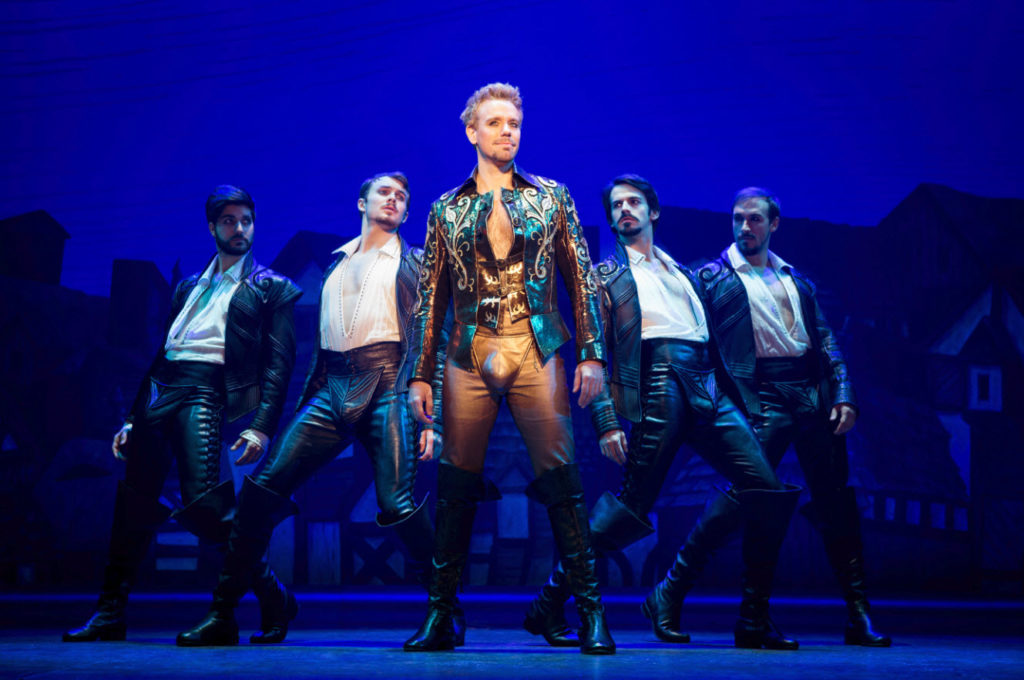
The last words you’d expect to hear while settling into your seat for Twelfth Night, are an airline boarding announcement.  “Thank you for choosing Shakespeare,” the disembodied voice offers up to the audience.  But this is the unorthodox journey you are about to embark on in Director Ethan McSweeney’s fantastic in-flight interpretation of Shakespeare’s text (okay, it’s a tad over-emphasized) and his modern-day application.  In Feste’s own words, “Nothing that is so, is so.”  Count on it.

McSweeny, along with Set Designer Lee Savage, gives us one of the company’s most exciting openings to date.  STC’s soon-to-retire Artistic Director Michael Kahn long ago mentored McSweeny who was told by Kahn to come back in 20 years.  He has.  And it’s paid off handsomely.

Hannah Yelland as Olivia and Antoinette Robinson as Viola in Twelfth Night by Scott Suchman. Photo credit Scott Suchman

Hannah Yelland as Olivia and Antoinette Robinson as Viola. Photo credit Scott Suchman

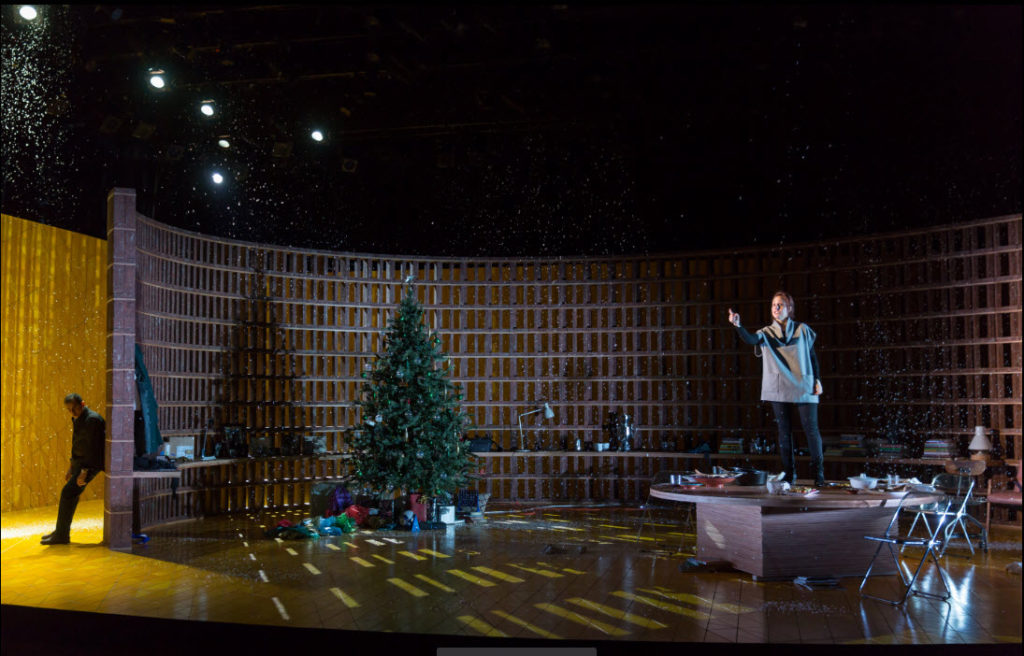
Set in an international departure lounge our characters line up for airport security checkpoints only to soon be tossed about like ragdolls when a freak snowstorm throws their plane off-course.  Viola (Antoinette Robinson) surrounded by the plane’s lost baggage, regains consciousness amid the blowing snow.  If at this point you aren’t sitting straight up in your seat with your jaw hanging open, go home.  If you are, then you’re in for a wild ride worthy of “Alice’s Adventures in Wonderland” meets Fellini.

McSweeney has chosen a modernist stage setting never before utilized in Sidney Harman Hall.  Side walls are stripped away to reveal the theater’s original configuration when it was once expected to double as a concert venue.  It is surprisingly beautiful with dark wood paneling, high walls, viewable side walkways, and elevated catwalk.

Andrew Weems as Sir Toby Belch, Derek Smith as Malvolio and Hearth Saunders as Feste in Twelfth Night by Scott Suchman ~ Photo credit Scott Suchman

Andrew Weems as Sir Toby Belch, Derek Smith as Malvolio and Hearth Saunders as Feste. ~ Photo credit Scott Suchman

Though you are undoubtedly familiar with the play’s plot of unattainable love – the Countess Olivia of Illyria (Hannah Yelland) loves Malvolio (Derek Smith) who becomes imprisoned in a dog carrier while sporting full Scottish regalia (he misinterpreted the memo), and Viola loves Sebastian (Paul Deo, Jr.) who thinks she’s his male page, Cesario, etcetera, etcetera.  Here, Fabian (Koral Kent alternates with Tyler Bowman) is imagined as a wanton child, expected to do Sir Toby’s bidding.  There is enough mistaken identity to keep us intently intrigued and plenty of cleverly conceived costuming by Jennifer Moeller to bedazzle and amuse.

Jim Lichtschedl as Sir Andrew Aguecheek in Twelfth Night. Photo credit Scott Suchman

Jim Lichtschedl as Sir Andrew Aguecheek. Photo credit Scott Suchman

Cowardly Sir Andrew Aguecheek (Jim Lichtscheidl) is portrayed as a wannabe rock star and sports-minded dilettante – think polo, tennis, fencing – who along with Sir Toby Belch (Andrew Weems), a slovenly, bathrobe-clad, karaoke-singing drunkard in love with Maria (Emily Townley), manage to provide enough comic relief for two plays.  Together they lean heavily on cocktails from the on-board beverage cart and lines of cocaine to fuel their madcap revels while Orsino (Bhavesh Patel) and Curio (Matthew Deitchman) whirl about on scooters, entering and exiting the scene in flashy, slim-cut, brocade suits.  To remind us this was written in 1602 with a holiday theme, a Christmas tree figures into a hide-and-seek skit of insanely hilarious proportions.

But it is Feste played brilliantly by Heath Saunders who grounds the goings-on with original music by composer Lindsay Jones.  Saunders, who in real life plays twelve different musical instruments, plays bass and guitar here.  His dulcet voice both anchors and ameliorates the lunacy.

Highly recommended.

At the Shakespeare Theatre Company’s Sidney Harman Hall through December 20th at 610 F Street, NW, Washington, DC 20004.  For tickets and information call 202 547-1122 or visit www.ShakespeareTheatre.org.

Nina Simone: Four Women ~ Arena Stage

Jordan Wright
November 18, 2017
Special to The Alexandria Times

Harriett D. Foy (Nina Simone) in Nina Simone: Four Women, Photo by C. Stanley Photography.

Harriett D. Foy (Nina Simone) in Nina Simone: Four Women, Photo by C. Stanley Photography.

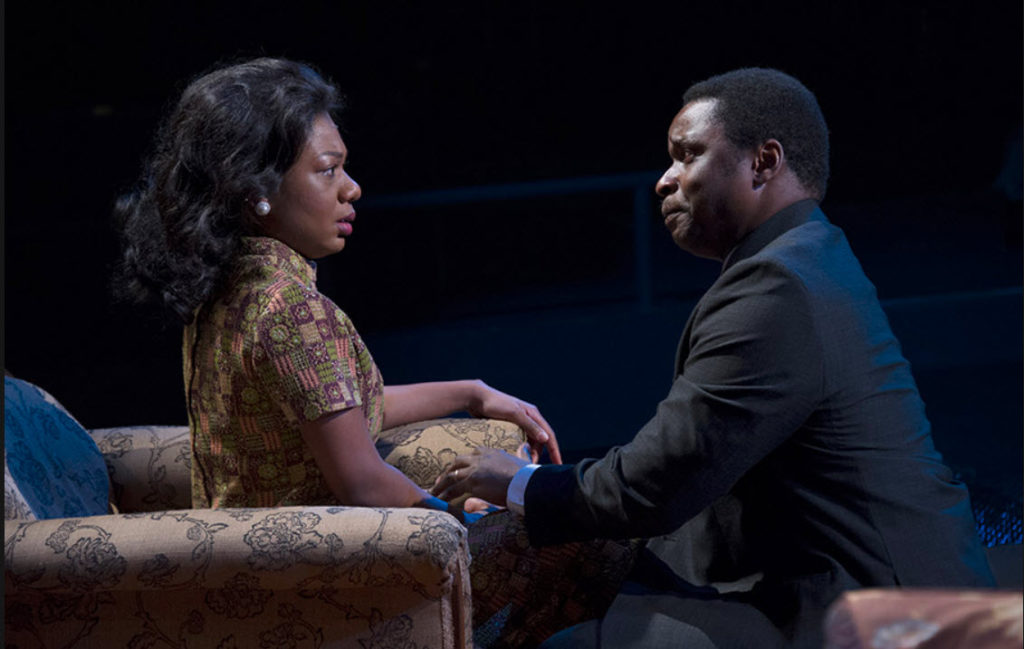
There’s no getting around one of the darkest moments in American history, when four African-American girls were murdered by white supremacists in the 16th Street Baptist Church bombing of 1963.  There’s also no getting around that it continues unabated in present day America.  Playwright Christina Ham’s deeply emotional and highly relevant play, Nina Simone: Four Women, directed by Timothy Douglas, gets to the heart of this tragedy by focusing on Nina Simone, the jazz singer whose bluesy songs made her popular in in both white and black America.  For Simone (Harriett D. Foy), this horrific event in Birmingham, Alabama and the murder of Medgar Evers in Mississippi, galvanized her into speaking out through her music.  Inspired, Simone sets about writing “Mississippi Goddam”, her iconic civil rights anthem about the slaughter of the little girls.  “I want that song to cut folks like a razor,” Simone proclaims.

(L to R) Toni L. Martin (Sephronia), Harriett D. Foy (Nina Simone), Felicia Curry (Sweet Thing) and Theresa Cunningham (Sarah) in Nina Simone: Four Women. Photo by C. Stanley Photography.

(L to R) Toni L. Martin (Sephronia), Harriett D. Foy (Nina Simone), Felicia Curry (Sweet Thing) and Theresa Cunningham (Sarah) in Nina Simone: Four Women. Photo by C. Stanley Photography.

While she works on her composition, she encounters three women also hiding within the confines of the church.  Each speak of this devastating tragedy through different eyes.  Auntie Sarah (Theresa Cunningham), a longtime church member, is a matronly, black woman (she would say ‘colored’), who has lived her life respectably – dutiful to her white employers and a strong believer in the power of religion.  Sephronia (Toni L. Martin), is an activist, a girl of mixed race (she would say ‘high yellow’).  She takes inspiration from Martin Luther King, Jr. and the protest movement.  Lastly, Sweet Thing (Felicia Curry) is a street hooker, a rough-and-ready ghetto girl with a switchblade and a heap of anger.  Each woman brings a unique perspective to what it means to be black in America.  Each one has her own truth.

We see Simone as the consummate artist, a woman of conscience who has been radicalized by the inequality and injustice she has faced throughout her career.  She tells the others, despite her success she has doubts and self-loathing, “Every day I have to conjure myself into a queen.”

(L to R) Toni L. Martin (Sephronia), Felicia Curry (Sweet Thing) and Theresa Cunningham (Sarah) in Nina Simone: Four Women. Photo by C. Stanley Photography.

(L to R) Toni L. Martin (Sephronia), Felicia Curry (Sweet Thing) and Theresa Cunningham (Sarah) in Nina Simone: Four Women. Photo by C. Stanley Photography.

With music directed and arranged by Darius Smith, who also accompanies the women on piano, their lush harmonies and deliberate delivery ensure that no one will miss hearing the lyrics nor their fierce intent as this fine cast scrolls through gospel hymns, jazz tunes and protest songs including Simone’s “Sinnerman”, Oscar Brown, Jr.’s “Brown Baby”, Simone’s co-written anthem, “Young, Gifted and Black”, and of course its eponymous song, “Four Women”.  Choreography by Lady Dane Figueroa Edidi captures the spirit of African dance and old-time church revivals.

A powerful, brilliantly crafted, musical tribute to a woman and a movement.

Recommended.

Through December 24th at Arena Stage, 1101 Sixth St., SE, Washington, DC 20024.  For tickets and information call 202 488-3300 or visit www.ArenaStage.org.

RIP David Cassidy November 21, 2017 ~ An Interview with David Cassidy

Jordan Wright
September 25, 2012
Special to The Alexandria Times

David Cassidy, pictured in 2009, rocketed to stardom as Keith Partridge on the ABC series 'The Partridge Family'. (AP Photo/Dan Steinberg)

David Cassidy, pictured in 2009, rocketed to stardom as Keith Partridge on the ABC series ‘The Partridge Family’. (AP Photo/Dan Steinberg)

In the six decades David Cassidy has been in the limelight, he has worked in television, theater and live concerts as a musician, actor, songwriter, singer, director and producer.  That’s a lot of crossover.  But when you’re the son of theatrical and TV royalty Jack Cassidy and Evelyn Ward you could say, “Well, kids, that’s showbiz!”

From the tender age of eight Cassidy started touring and performing in summer stock productions along with his parents, landing his first Broadway role before he was a teenager.  Many of his fans literally grew up with him in the ‘70’s as the adorable heartthrob Keith from the long-running, now syndicated sitcom, The Partridge Family, where he and stepmother Shirley Jones were the only two cast members to actually sing on the show’s ten albums.  With over 30 million records sold worldwide his career has taken him back to Broadway and on to Vegas, transcending his pop star status.  Currently concerts take him on the road nearly 200 days a year, though he admits he’ll be cutting back on lengthy tours in future.

Cassidy and his five-piece band’s October 6th appearance at The Birchmere in Alexandria will be the last stop in the States on his eight-month tour before traveling to England where he will perform for over ten thousand people a night.  I spoke to him by phone this week from his base in upstate New York.

Jordan Wright – How has the U.S. leg of your tour been?

David Cassidy – I’ve had the greatest summer I can remember.  I’m with my band of eight years.  The audiences have been great.  I can’t explain it.  I’ve never enjoyed playing as much and the momentum keeps growing.

JW – Are you looking forward to playing The Birchmere?

DC – The wonderful thing about The Birchmere is it is one of the most legendary places in the U.S. to play.  It’s genuine and earthy.  Some of the greats have played there.  It reminds me of the Bottom Line in New York.  There are virtually no other venues I play that are so intimate.  The management and the backstage crew and the vibe are so great.  It has that true blues, rock and roll sort of authenticity.  My band [including guitarist Dave Robicheau of the The Monkees] said, “Let’s go back there!”

JW – How much of the show is new music?

DC – Virtually none.  But I do songs that are a part of my journey.  My fans come to hear the songs they love.  I don’t do the same show every night.  That’s not me.  I like to interact with the audience and keep it spontaneous.

JW – Who are your musical influences now?

DC – The same that have been my influences before.  I like John Mayer and Sting, as an incredible writer, bass player and singer.  My earlier influences were Rogers and Hammerstein, Gershwin, Cole Porter, Bobby Darin.  But when I became a teenager it was the Beatles.  I remember the night I turned twelve was when I first heard them.  The next day I bought an electric guitar.  I knew from the time I was three I wanted to become an actor.  I was in acting school in New York and my first professional job was on Broadway.  I played blues in garage bands when I was younger and I loved B. B. King and Buffalo Springfield, who played at my high school.  The Beach Boys were another favorite and I became good friends with Carl Wilson.  Later Brian [Wilson] and I wrote a song together.  I got to play with my musical heroes and became good friends with John Lennon and Yoko Ono.  I played with him a few times when he was making the Rock ‘n’ Roll album in the 70’s.  I think John and Paul were the greatest songwriting team ever.  And Yoko has such an amazing soul.

JW – Your son, Beau, and daughter, Katie, are in show business.  Do you support their showbiz careers?

DC – I do now.  I didn’t support them earlier when her mom wanted her to be Brittany Spears.  Now she’s done five TV series, Gossip Girl was one, and some films. I’m very proud of the work she’s done.  My son has been studying at Michigan State, Boston University and NYU.  He’s a very talented musician and songwriter in a band called The Fates.  I heard their first few songs and the stuff is remarkable.

JW – Are you excited about your upcoming Lifetime Achievement Award at the Film, Recording & Entertainment Council’s Star Gala in November?

DC – I say this humorously and somewhat sarcastically.  If you do enough work and stick around long enough and don’t give up, you pick yourself up a few times and then someone says, “What about this guy?”  I’m very flattered by it.  And because I’ve been accused of being a workaholic, I’ve finally backed off from working 52 weeks a year.  I tell my kids and in talks at colleges and schools, it’s never been about the money, and I appreciate working so much more now.  Because if you’re going to write and produce and direct with a lot of people with a lot of talent, it makes a difference if they have a strong investment in it.

JW – What’s next for you?

DC – I plan to do at least one more album.  I have a concept that I have never fully explored that I’d like to work on.  It’s not about the multi-platinum records anymore.  Before I only focused on the end result – now I like to take my time.

This interview was conducted, condensed and edited by Jordan Wright.

David Cassidy performs one night only at The Birchmere on October 6th.  For tickets visit www.ticketmaster.com.  For venue information visit www.birchmere.com.  The Birchmere is located at 3701 Mount Vernon Avenue, Alexandria VA 22305