The Georgetowner/Downtowner
From Wright on Food
Jordan Wright
April 2010
 Chef/Owner Joel Thevoz of Main Event Caterers - photo by Jordan Wright Swiss-born and raised, Joel Thevoz, hit Washington in the mid-80’s with a business degree and a briefcase full of fresh ideas. Coming off la vida loca in Costa Rica and Mexico, where his on-the-fly dinners were highly praised by friends and neighbors, he had decided to settle down to a serious culinary career.
With his wife and partner, Nancy Goodman, they launched Main Event Caterers in 1995 on K Street in Georgetown. Ten years later they were to bring their ever-expanding operations into Arlington, VA, where their stunning cuisine and lavish events garner rave reviews and an ever-increasing upscale clientele.
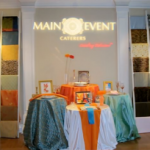 Main Event Caterers - 2010 Caterer of the Year award winner by Catering Magazine - photo by Jordan Wright They ran their company like every other top-tier caterer until three years ago, motivated by Al Gore’s groundbreaking film, “An Inconvenient Truth”, they had a epiphany and took their successful company to higher level…one with a conscience…where green is the new black. It would hail a new dynamic for Main Event Catering and reflect their growing ecologic awareness.
Now in the vanguard of a new aesthetic, where style meets substance, this sophisticated caterer is a leader in the green revolution, as they continue to be recognized with a growing list of local and national green business awards that reflect their commitment and the calibre of their cuisine. To add to their accomplishments, this year they won the coveted “Caterer of the Year” award from industry giant, “Catering Magazine”.
I spoke with the passionately eco-knowledgeable, Joel Thevoz, and toured the 20,000 sq. ft. facility with its gleaming stainless steel demonstration kitchen-in-the-round, 25-foot floor-to-ceiling wine wall and extensive culinary library featuring a precious archive of leather-bound Gourmet Magazines dating from 1946.
Jordan Wright – How long have you been on the green bandwagon?
JT – We started out being aware of our impact in this world about 3 years ago. The Green Movement was just getting started here and, for us, that set the pitchfork in the ground in terms of thinking about what we do and how we do it.
There was one very impactful moment for us. It was a day when we were winding up after an event that used disposables. And at the time I was very proud of using the best quality plastics. I took a look at our truckload worth of waste and plastic garbage from this one event and I was literally sick to my stomach. I thought this stuff is going to last forever. What can we do better?
JW – What did you do to change your company’s way of doing business?
JT – That moment set the tone for a period of discovery. We wondered, “Can we find products that are biodegradable?” It was right about the time when cups made from cornstarch by-product became available. I had seen them used in an airport in England and brought some back with me. 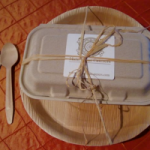 For events using disposables - Balsa wood cutlery, palm frond plate and recyclable box from Main Event Caterers - photo by Jordan Wright But it was a real challenge to find these things in the US. We started digging around and discovered they were making plates from dead palm fronds in India. They are sandwich-pressed using steam into these flat shapes with a bit of curvature to make a plate. Then they are hand-scissored to size.
Finally we could eliminate all plastics from our catered service, and now we only use biodegradable palm plates, balsa wood cutlery, washable glassware and other biodegradable products for our events using disposables. Also we use purified water in jugs in place of mini plastic bottles.
JW – How do you recycle?
JT – We bring large recycling cans onsite, and all our staff is trained to separate out recyclables like paper, cardboard, tin, glass and plastic. Then it gets brought back here where we take it to the recycling center. It does add to the workload of an event, but we still do it effectively.
We also decided to add solar concentrators to the roof over the individual offices to bring in light and we are now replacing all our metal halide lights with T5 lights that use a minimal amount of electricity and are motion-sensitive. This way they shut off when someone leaves the room. The floors here are bamboo, the ice machines use filtered water and we clean and press all our linens to lessen our carbon footprint.
To be carbon-neutral we buy carbon credits to offset all the energy that is used, as with our trucks going to and from events. Also we calculated the approximate employee commute for the whole team and buy carbon credits to offset all those greenhouse gases, so that now we are 100% carbon-neutral. We’ve been doing that for three years.
JW – What other ways have you found to save energy?
JT – For one thing we compost our food matter to make high-quality soil that we distribute to our community, and we collect and store all of our used cooking oil, that we donate to a local biodiesel cooperative.
Also we wanted to subsidize wind power. So we purchase an equivalent amount of electricity from a wind farm. And though it is off-site, it gives us the advantage of being technically wind-powered. It tells the energy company that we are serious and we want to spend our money on clean energy…because unless you prove with dollars that there is a desire to purchase alternative energy, they won’t listen. We’ve seen how it creates momentum when a lot of companies get involved.
JW – Have you figured out how much more it costs to do business in this way?
JT – We have a general idea, and of course the start-up costs were quite high, but it is far outweighed by the amount of business we receive from clients that are like-minded. Companies and individuals who like what we are doing eventually gravitate to us and we feel rewarded.
We live happy and it has paved the way to the next stages in our development. It’s given us the knowledge and the confidence and introduced us to organizations that have things to offer us that are above and beyond anything else that we’ve done so far.
JW – What are some of the newest technologies that you’ll be using?
JT – Lately we find we are becoming a sort of incubator for green solutions.
Not long ago we had a visit from a gentleman based in Florida and began to talk about using geothermal. I mentioned how our dishwasher pushes out gallons of 180 degree water and it just goes down the drain. He told us we could divert it and harness it. Ultimately his company designed a product for us using heat exchange and we’ll be testing it here. The plan is to have it up and running in a few weeks.
In a nutshell we will be running “grey” water alongside the city water pipes to super-heat municipal water. The fresh and “grey” water don’t mix together. There are membranes between the two of them. But in this way we can take the 65 degree water from the county and introduce it through our ”grey” water cisterns before it goes into the pipes. Eventually it will raise the temperature of our instant hot water for our washing machines two-fold to 130-160 degrees. It will save us a lot on gas usage.
JW – Is that a cost to the city?
JT – No, we handle it all from here. We’ll build a tank and the city water will go right through it.
We’re also looking at placing these huge cisterns beside our buildings to gather and harness the rainwater from our roofs. Imagine! They can collect up to 40,000 gallons per month of water. What we want to do is use those tanks for latent energy.
We subscribe to a train of thought that the future of this world is based upon communities building vertical farming. We have these flat roofs here and we are in the process of designing a rooftop garden with greenhouses to grow all our own vegetables and herbs. We have at least 6,000 square feet of roof space. We want to prove that it can be done and share the plots with the community.
The greenhouse will be hydroponic and aeroponic which is a system NASA developed that uses an oscillator that is introduced into a water tank. You create a certain vibration and it renders the water into a mist. You can then push that vapor, with pressure, into a system of canals or closed chambers in which the roots of your vegetables thrive without soil. Every intermittent three minutes the pipes are filled and then flushed. It works like a rainforest. The plants grow at 2-3 times the speed.
JW- What about the “terroir” – the taste imparted to the vegetables from the soil and its minerals? Won’t that be missed?
JT – We can introduce that into the water by making a slurry from our compost and extracting the minerals out in liquid form to fortify the water, or we can buy organic feed to add to it.
Our last initiative will be to crush our glass and smelt it in kilns and create recycled glass slabs to use for platters and bowls. We are interested in inviting others, even our competitors, to see how we are doing this. We look to inspire others.
JW – What do you see for the future of catering?
JT – I foresee in the next few decades that we’ll move towards a more vegan and a more raw diet and a more healthful nutritious diet. So we’re making a small push to increase our vegetarian options and training ourselves to be better at cooking those options for our clients that want them, and for the future of our planet too.
This interview was conducted, condensed and edited by Jordan Wright.
Jordan Wright
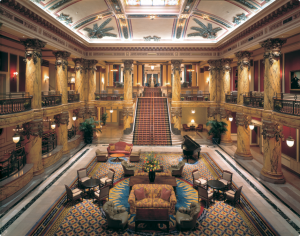 The Jefferson Hotel Rotunda Brunch at The Jefferson Hotel in its magnificent columned Rotunda, where ceilings soar to seventy feet, is an over-the-top event. Guests come from miles around to enjoy the finest gourmet Southern cuisine and this spring I wrote glowingly about my experience.
Recently I returned to The Jefferson eager to revisit this splendid property, replete with Tiffany glass ceilings and sweeping Scarlett O’Hara staircases, and to stay where luminaries like Elvis and F. Scott Fitzgerald; actors Morgan Freeman, Sarah Bernhardt and Charlie Chaplin and no less than the great explorer, Sir Edmund Hillary, had wined, dined and reveled…presumably after his Everest climb. After all, if nine American presidents and Sheryl Crow thought it had a cool vibe, I knew I would too.
After a short drive from Washington, we crossed the cobblestone drive to the elegant portico. Valets whisked off our bags and seamlessly ushered us in. Along the way we were warmly welcomed by every staff member we passed. In fact, throughout our stay we wondered if they hadn’t confused us with the hotel’s owners or long lost cousins returning to the fold, so very genteel was the staff’s daily attention.
As one of one of the last remaining bastions of Southern hospitality, everything about this hotel spells graciousness and grandeur. Built in 1895 by Major Lewis Ginter, a visionary in the extreme, to compete with Europe’s grand hotels, it featured more luxuries than the QE2 and Titanic put together. The Beaux Arts architecture is breathtaking, the life-size marble statue of Thomas Jefferson, awe-inspiring and the alligators intimidating. Well, actually the alligators aren’t there any longer, but not so long ago they roamed the lobby. Memorialized on the dining room staff’s cute blue and green silk ties they have been revered and adopted as the hotel’s iconic mascots.
Richmond has been enjoying a stunning renaissance of late. Big tobacco no longer dominates and the story on everyone’s lips is the success of Virginia Commonwealth University. To accommodate its 32,000 students VCU has bought up and restored many of the old warehouses and historic Victorian homes that had fallen into disrepair and the city now boasts the largest contiguous Victorian neighborhood in the US.
The revitalization appears all over town in areas like Shockoe Slip and Tobacco Row along the waterfront, where old tobacco warehouses have been turned into shops and offices and in Carytown, the Museum District and the Fan District where you’ll find hip nightspots, coffee houses, quirky boutiques and charming restaurants. I loved the too too fabulous Can Can Brasserie, housed in a former bridal salon, which will have you believing you’re dining at Paris’ La Coupole, and Zeus Gallery Café, a tiny bistro, next to Chadwick and Son Orchids, in the fashionable museum district serving brilliant food.
But foremost on my mind for this quick visit was the redesign of both menu and décor of The Jefferson’s famous restaurant Lemaire. Nine months shuttered, its reopening was greatly anticipated.
Executive Chef Walter Bundy had his early culinary training on a family farm along the Chesapeake Bay where he learned to tend a garden, hunt, fish and prepare meals from what was available. Later he was to learn Southern coastal cuisine on North Carolina’s Outer Banks and train at Mark Miller’s Coyote Café in Santa Fe and Thomas Keller’s French Laundry in Napa Valley. He has a keen and dedicated sense for local ingredients in his dishes and he keeps a small herb and vegetable garden behind the hotel where he gleans ingredients for his dishes.
In recent years Lemaire had become stodgy and out-of-date, attracting an older crowd known to preserve their traditions under glass. So when the menu was changed to attract a hipper crowd they feared they might lose their loyal though waning clientele. Instead Richmond’s scions and well-heeled doyennes have embraced the smaller portions and innovative cuisine and the place is filled with a mix of old and young establishment Richmonders flocking to the lively bar before dinner.
It was there we sampled hand-crafted cocktails like ‘Two Grapes”, a sublime concoction of Tomio Junmai Ginyo sake, St. Germain elderflower liqueur and red grapes…quite irresistible…and enjoyed along with Jamerson Farms braised rabbit egg rolls and Kite’s Country Ham with a sweet tangy dipping sauce of spicy orange marmalade and rabbit liver mousse on a caramelized brioche.
With great anticipation we left our nibbles and sips and went to table where we entered into a profound understanding with some Rappahanock River oysters, a locally farmed oyster which I adore and sourced earlier this year for my Inaugural menu. We enjoyed the “Sting Rays” 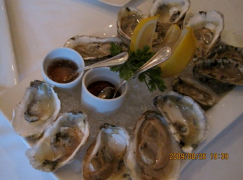 Sting Rays and Old Salt oysters at Lemaire - photo credit Jordan Wright and “Old Salts”, briny and beautiful, and the ginger-crusted Virginia soft shell crab atop a cous cous tower stacked with watermelon and avocado mousse and highlighted with chili oil. A peppy 1999 J Brut sparkler from the Russian River paved the way and we were off. Wine Director, Ben Eubanks, took savvy charge of the pairings for us during our dinner.
Beef tartare, with local lettuces and horseradish cream charmed us with a 2008 Mas le Dame rose Les Baux-de-Provence., while a 2008 Lawson’s Dry Hill Pinot Gris Marlborough complemented the fried green tomatoes, Silver Queen corn, Surry sausage (a Virginia favorite) and Gulf shrimp succotash with sunflower shoots and buttermilk blue cheese cream.
Three things to note: Tender and velvety-leaved sunflower sprouts are becoming a favorite of mine; rose is coming into its own again and I intend to write more about it in another column and finally, I would eat this delicious dinner all over again and right this minute, for this cuisine, canonized by the great hostesses of Virginia, is as beloved as a favorite child.
A petit cadeau from the chef arrives: A Hanover tomato gazpacho shooter with Chesapeake Bay blue crab, watermelon and a drizzle of basil oil spelling s-u-m-m-e-r to the max.
It is no secret that I am a fan of real stone-milled corn grits…not the soupy, breakfasty, diner-style puddle…but the toothsome kind, a close neighbor to polenta. And Lemaire, paean to the cherished cooking of the South, serves their antebellum Carolina grits with seared ocean scallops, sautéed spinach and fire-roasted tomato sauce. As a pleasing counterbalance a 2005 Enotria Barbera from Mendocino shone over all. My partner chose the curry-scented lamb loin that strode alongside of cauliflower mousse, garlic rapini and fresh local huckleberry jus that harmonized with a 2002 Romero and Miller Rentas de Fincas Rioja Reserve. You just knew the riojas were coming, now, didn’t you?
At last we chose a dark chocolate terrine with scattered wild berries and sabayon sauce and a huckleberry semifreddo to crown this exquisite repast. 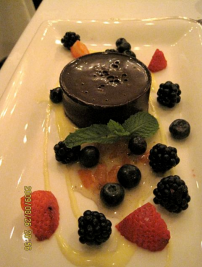 Chocolate terrine with wild berries and sabayon sauce at Lemaire - photo credit Jordan Wright Dining at Lemaire that evening I detected a warm camaraderie. Shared smiles and nods from other diners created the sense that everyone in the room held the same secret…that we were all there for a very special reason. It was a remarkable and unique experience.
In the morning we scampered out to Independence Golf Club, a Tom Fazio designed course just twenty minutes out of town in Midlothian. Its Jeffersonian-styled clubhouse, known as the Charles House, is home to the Museum of Virginia Golf History and is chock-a-block with trophies and memorabilia from tournaments passed. We opted for the nine-hole course. Since, even with a breeze and shaded paths, the heat was stifling. This club has both an eighteen and a nine-hole course. Notwithstanding, we were the only wilted wimps on the nine.
Later in the day we opted for a tour of the famous Hollywood Cemetery, known as one of the more intriguing historic venues in Richmond. US Presidents James Monroe and James Tyler; Confederate President, Jefferson Davis; six former governors and a heap of noted southerners are interred here in a cemetery of over 200 hilly acres. Recently they instituted guided Segway tours of the grounds and, after a few minutes of required instruction, we were ready to “roll” with Mr. Butterworth as our guide. E. L. is a certified guide trained by the Historic Richmond Foundation, and he was a veritable encyclopedia of Virginia arcana. He regaled us with both on and off-the-record tales of this cemetery perched above the beautiful James River. We took in the cool breeze off the mighty river and saw Belle Isle where picnickers were splashing, swimming and wading from rock to rock.
The following day we toured Agecroft, a remarkable 17th century Tudor house brought by sea and train from Lancashire, England and painstakingly reassembled here. Housing one of the nation’s finest collection of 16th and 17th century furnishings, this estate and its elegant Elizabethan gardens are a must see. In summer they present a Shakespearean festival under the stars.
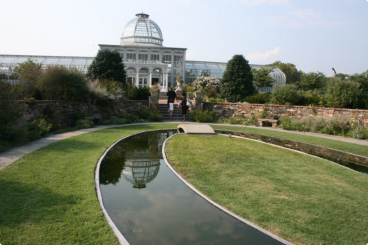 Lewis Ginter Botanical Garden - photo credit Jordan Wright On our way home we stopped at the Lewis Ginter Botanical Garden which has blossomed into a world-class 82 acre garden featuring an enormous conservatory with tropical orchid wing; Bloemendaal House, the antique-filled ancestral home of the Ginter family; a children’s garden; the Lace House Garden with its hand carved gazebo; the Sunken Garden inspired by ancient Rome; the Healing Garden with medicinal plants; and many other separate gardens to explore. A community kitchen garden project, staffed by local volunteers, donates more than 500 pounds of fresh produce each summer to the Central Virginia Foodbank.
Our two-day two-night stay showed us a small snapshot of Richmond and we plan to return soon and often to explore more of the city. Before you plan your trip visit the sites below for more information on these and other attractions.
www.visitrichmondva.com
www.jeffersonhotel.com
www.cancanbrasserie.com
www.lewisginter.org
www.segwayofrichmond.com
www.agecrofthall.com
For comments or questions write Jordan@whiskandquill.com.
Jordan Wright
January 2010
I was nearly raised in a palace in the rugged highlands of Northern India.  A palace in India When my model/artist/writer/socialite mother found herself smack-dab in the throes of a divorce in the swinging ‘60’s, she threw herself Eva Tanguay-style into New York’s social whirl attending the opera, ballet and nightly galas. Invitations by the handful would appear daily on heavy vanilla card stock from every hostess and charity committee in town. It was at one such soiree that she met a very distinguished man who began to ardently court her.
 Narendra Singh Sarila at the Harry Ransom Center, University of Texas, where he gave a presentation based on his book about the partition of India. Enter the Maharajah Narendra Singh from the Princely State of Sarila, who had still retained his palace with its many lands and servants, though along with many other rulers when independence ended the days of The Raj, he had been stripped of a great deal of the usual privileges and status. I was fifteen, wildly impressionable and safely ensconced in an all-girls boarding school. On holidays I would often see the elegant maharajah when his trusty manservant would fill the kitchen with the alluring aromas of exotic curries in our East Side apartment. This was my first introduction to Indian cuisine aside from the occasional tandoori chicken my mother would whip up in her small clay pot when the cooking spirit moved her.
On my tiny bunk bed in a frigid dormitory in New England I dreamed of life in a palace. I conjured up halcyon days of jewels and robes, elephant hunts and lavish parties. What fodder for a young girl’s fecund imagination! As it happened he had a handsome son about my age. Now I had a vested interest.
In letters home I began my indelicate campaign of pleading and cajoling, hoping to sway my mother to marry him. Eventually the maharajah returned to India pressing my mother through the mails to accept his proposal. One day a massive tiger-skin rug, postmarked Sarila, arrived. I felt certain such an extravagant gift would seal the deaI, but my mother was far less moved, and alas, it was not to be after a prince showed up on our doorstep and trumped the dear maharajah. But that’s another story for another day.
It’s a curious thing how memories will come flooding back after so many years, triggered by a mere morsel, but this is what happened to me, in a most unlikely place, as I sampled the Indian cooking sauces produced by a small company named Stonehouse 27 Spice Company on the cement floor of a convention hall in Washington, DC where I occasioned to meet the owner of a fledgling company out of Germantown, Tennessee.
 Sharon Fernandes creator of Stonehouse 27 Indian cooking sauces - photo by Jordan Wright Sharon Fernandes descends from a family accustomed to bridging cultural divides. A trained engineer, she was born in what is now called Mumbai of a British father and Portuguese mother who worked as a caterer. Later she made her home in Dubai and Australia where she received her degree from the Royal Melbourne Institute of Technology.
A few years ago she had a slap-to-the-forehead moment. “My right brain and left brain finally hooked up,” she says of her epiphany and decision to start the company. “I created the line for my family. I wanted them to have the best.”
Her six beautiful sauces made using stone-ground spices reflect her combined heritage. In a recent phone call she told me that she grew up eating steak and potatoes. “A part of India is all Christian and we love our pork and beef,” she explained. “With that in mind, I made my line of sauces compatible with meats and seafood.”  Gourmet sauces from Stonehouse 27 Spice Co - photo by Jordan Wright Working daily on-site from start to finish in the cooking process she explains, “Everything is done in a very staged approach – one step at a time. At first I tasted over a dozen types of onions before selecting the perfect one for its flavor and consistency. I now get all my onions from Oregon and we sauté them for two hours, allowing them to achieve just the right texture and deepest flavor, before the garlic is added. It all gets just the right amount of cooking as it would in a home or restaurant.”
Her mild Tamarind and Garlic sauce for shrimp and vegetarian dishes and a more delicate Cilantro and Coconut sauce for fish like tilapia, flounder and cod reflect the care she puts into the sauces. A hotter Cashews and Cream sauce, a medium heat Tomato and Chiles sauce and the more spicy Dates and Tamarind sauce are designed to go with meats like beef, lamb and pork. I like that the dishes take only minutes to prepare but taste as though you have been slaving away all day.
Sharon is very proud of the fact that only agave nectar and California dates are used for sweetening and no salt is added keeping sodium levels very low unlike other prepared curry sauces on the market. “People try to compensate for bad-tasting products by adding salt. So I don’t use any salt and there is only the naturally occurring sodium from the lemons, limes and tamarinds in the sauces.”
Stonehouse 27 Spice Company’s Indian Cooking Sauces are not yet available in our immediate area though plans are underway. In the meantime Sharon has kindly offered Whisk and Quill readers free shipping on three jars or more if purchased online. Use the code WhiskandQuill10 to get a dollar off too.
 Chef Willis Underwood of McNulty's 7 Fruit Chutney - photo by Jordan Wright To complement your curry, do try McNulty’s 7 Fruit Chutney, another recent discovery of mine. Fifty years ago North Carolina native Margot Walser started making this condiment during the holidays in her home kitchen from an 80-year-old family receipt. Chockfull of fresh-picked peaches, plums, golden raisins, honeydew, apples, grapes, pineapples and spiced with ginger it is hand-made in small batches as it has always been. Distinctive, flavorful and toothsome it has no preservatives or additives. Toss out the syrupy and gelatinous jelly-like chutneys. This is the gold standard. Find it in Dean & De Luca and some Whole Foods or online.
So here’s my plan…a Bollywood-inspired party. Just ring up your friends, slip in a DVD and whip up some curry in the comfort of your own home. Pretty soon you’ll be having dreams of India too.
For cooking ideas and to order the all-natural Indian sauces, go to:
www.stonehouse27.com
For the heavenly chutney:
www.mcnultyschutney.com
For questions or comments on this article email Jordan@WhiskandQuill.com or visit www.WhiskandQuill.com
Jordan Wright
The Georgetowner/Downtowner
December 2009
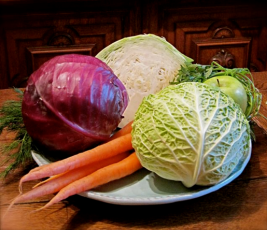 Cabbages and carrots with dill and Granny Smith apple - photo by Jordan Wright Consider the humble cabbage. After a soul-stirring dish of sarmale lovingly prepared by my Romanian acquaintance, Madame Pourchot, I thought long and hard on its cross-cultural worth. Sarmale are simple fare, cabbage rolls, stuffed with ground pork, beef or veal and rice then slow-cooked with tomatoes and herbs. A vegetarian version replaces the meat with carrots, mushrooms and Parmesan and loses nothing in tender sublimity. The pilgrimage-worthy menu began with Hungarian mushroom and potato soup cradling a dollop of sour cream, then latkes, crisp potato pancakes with applesauce on the side, then both the meat and vegetarian versions of sarmale and plenty of hearty oat bread and sweet butter. The meal was crowned with a fluffy rum-infused ginger marmalade bread pudding with sultanas.
Madame Pourchot served this simple yet elegant dinner last week to over thirty guests whose eyes grew wide with amazement, with several pleading in earnest to be adopted by her, before the last fork was set down. Oh, yes, I was one of the potential adoptees!
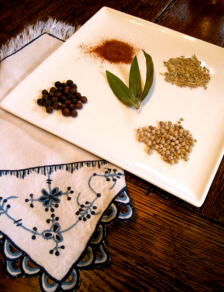 Spices frequently used in preparing cabbage - Juniper berries, Hungarian paprika, fennel seed, white pepper and bay leaves - photo by Jordan Wright There is a place for cabbage in nearly every culture. Syria calls cabbage rolls mihshi malfuf and uses lamb, seasoned with allspice, mint and pomegranate molasses. Ukranians call it holubtsi and top it with a cheesy béchamel sauce. In the late 14th C the legendary chef Taillevent convinced King Charles V to eat his first cabbage – a matter of historical significance and recordation. One of France’s most traditional dishes showcases the earthy flavors of choucroute, the hearty Alsatian dish made with pork, duck, sausages and sauerkraut. Scented with bay leaves, caraway seeds and juniper berries and served with grainy pommery or tarragon mustard it is a peasant’s dish fit for a king.
Contemporary cooks can claim a working knowledge of Asian cabbages like bok choy and Napa. But sauerkraut can be traced back to Chinese “sour cabbage”, cabbage soaked in rice wine in order to preserve it for the winter. Think Korean kimchi, with its infinite pickled varieties. Health magazine named it as one of its top five, “World’s Healthiest Foods”.
 Hearty crusted breads - photo by Jordan Wright From Lorenza de’ Medici’s cookbook, “The Renaissance of Italian Cooking” I found cabbage rolls from the Lombardy region called involtini di verza, from Marcella Hazan, salsicce col cavolo nero, sausages with black cabbage, though she translates that to red cabbage for the American cook. In the Tuscan region of Italy cavolo nero, the rare black cabbage or kale, is much preferred. It is a prehistoric wild plant. When the central stalk is harvested mini-black cabbages are produced on it resembling a corsage.
“Please to the Table – A Russian Cookbook” by Anya Von Bremzen and John Welchman describe Moldavian verza cu brinza, green cabbage baked with feta, and kislosladkaya krasnaya kapusta, a dish of sweet and sour red cabbage stewed in cherry vinegar with onions, cloves, apples and nutmeg…the perfect accompaniment to roast goose or pork.
To some the bouquet of cabbage cooking is anything but beckoning. Corned beef and cabbage comes to mind. But to others it harkens the origins of gastronomic civilization when meats were flung onto the fire and vegetables added in communal ritual to fill out the stewpot. Now ethno-botanical research has shed light on Bronze Age lake dwellers around Lake Zurich who ate cabbage.
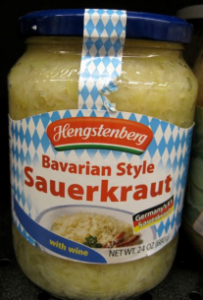 German-style sauerkraut with wine - photo by Jordan Wright Cabbage was thought to have originated in the Mediterranean regions where Egyptians raised altars to it, and Greeks and Romans believed it cured every disease from paralysis to pleurisy, including hangovers, a suggestion not to be ignored! In fact there are more myths and mysteries surrounding cabbages dating as far back as the third century B.C. Babies are said to have been found under the spreading leaves and we all know the fairy tale depictions of the stork in mailman’s cap, beak clamped down on a cloth sling wrapped around a newborn, and flying over the proverbial cabbage patch. Do Cabbage Patch Kids ring a bell?
Thomas Jefferson raised twenty-two varieties of cabbage in his magnificent gardens at Monticello. But his pride and joy was the Savoy cabbage. I’ll raise a toast to that! A more noble vegetable can hardly be found and I recommend it to the cook, as that is the preferred variety in Europe.
So enjoy your brassica oleracea capitata any way you prefer. One of my recipes, and the meat version of Madame Pourchot’s, follows.
CABBAGE AND GREEN APPLE SLAW
Chef Jordan Wright
1 ½ pounds of Savoy or green cabbage trimmed and shredded by knife into ¼ inch strips
2 Granny Smith apples, cored and thinly sliced or chopped
1 or more tablespoons of caraway seeds
1 cup of golden raisins or dried cranberries
¼ cup of chopped Italian flat leaf parsley
Sea salt and fresh cracked white pepper to taste
Make a vinaigrette of apple cider vinegar, honey and light olive oil or canola and a bit of lemon juice. Pour over slaw and refrigerate for an hour. Toss with parsley and serve cold with pork, duck, sausages or turkey.
MADAME POURCHOT’S SARMALE
1 large jar of pickled cabbage leaves * or one large head of cabbage plus one package of sauerkraut (half to place on the bottom of the pot and half over the top of the rolls)
1 pound each of ground pork, beef and veal from the farmers market
1 large onion, chopped
4 or more garlic cloves, minced
2 tablespoons each of thyme, oregano and parsley (less if using dried)
1 cup of rice, rinsed
2 tablespoons of Celtic salt
2 tablespoons of fresh cracked black pepper
1 large 28 oz. can of crushed tomatoes or, in summer, three cups of fresh chopped tomatoes, peel and all
* Pickled cabbage leaves are sold at the Cosmopolitan Grill on Route 1 south of Old Town Alexandria or the Russian Gourmet in Reston, Rockville, McLean and Alexandria.
Mix these ingredients together for the first stage.
Stuff into pickled cabbage leaves (or you can make your own). Take about a tablespoon of the mixture and place it into the cabbage leaf. Wrap the leaf around the filling, turning in the sides as you roll up, and place tightly together into a deep pot that has been prepared with oil and a layer of shredded cabbage and chopped bacon or ham. Line them up around the pot in layers. When you are done cover with additional shredded cabbage or sauerkraut (the sourer the better) and ½ cup of oil and bacon or ham and peppercorns, oregano and thyme. Cover and boil for two hours over low to medium heat.
Taste one and, if the rice is done, add the tomatoes and simmer over low heat, or in the oven without a lid, until the top caramelizes. Serve with sour cream or plain, thick yogurt.
Sarmale are the traditional dish for all holidays, especially Christmas. According to Madame Pourchot, the smaller the sarma the more skilled you are as a cook! “Poftat buna!” she says, Romanian for bon appetit!
For questions, comments or additional recipes contact Jordan@WhiskandQuill.com or visit www.WhiskandQuill.com.
Jordan Wright
The Georgetowner/Downtowner
October 2009
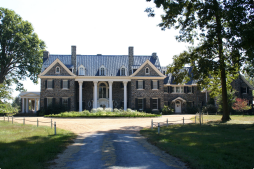 Ayrshire Farm Manor House - photo credit Ayrshire Farm I recently received an intriguing invitation to judge a beef tasting competition at the magnificent Ayrshire Farm in Upperville, VA. Participating would be the American Livestock Breeds Conservancy, Humane Animal Care, Slow Foods USA, Chefs Collaborative and dozens of cattle ranchers, who brought their heirloom beef for the tasting, would be in attendance. It was all to be held at Ayrshire Farm, a picture perfect farm that is a working model for the sustainable breeding and natural raising of farm animals.
Ayrshire Farm, which prides itself on raising rare and endangered breeds on 800 rolling acres that most pigs, cows, turkeys and chickens could only dream of, is owned by Sandy Lerner, the co-founder of Cisco Systems, the networking systems giant. They employ strict organic farming methods and their livestock and vegetables are raised without hormones, pesticides or antibiotics. In 2004 they became the first farm in Virginia to meet Certified Humane Raised and Handled standards.
Although the trip fell on the same days as our tenth anniversary plans, we hoped to combine the two events. We were invited to overnight in the manor house a country mile from the two spots we wanted to revisit…the church where we wed, and Welbourne, a neighboring estate where our wedding party had stayed and celebrated on that memorable weekend.
So on a sparkling fall day with a suitcase full of nuptial reveries and a palate for beef, we set off from Alexandria to the foothills of the Blue Ridge Mountains to experience Ayrshire Farm as guests in this private home and connoisseurs of beef.
On our first evening we were hosted at the Hunter’s Head tavern in the town of Upperville. The pub serves delicious organic steaks, pork and chicken from the farm and authentic British pub fare like “bangers and mash” and “bubble and squeak”, and a not-to-be-missed dessert called sticky toffee pudding. Executive Chef Rob Townsend oversees the tavern, the Home Farm Store in Middleburg, a posh catering division called Home Farm Catering, and the myriad of events hosted by Ayrshire Farm and Lerner herself.
 Calico companions at Ayrshire Farm- photo credit Roy Wright We returned to the fieldstone manor under a starry sky and tumbled into an antique silk-draped bed with two affectionate calico cats as our companions…nuzzling and purring us to sleep. (The walls of the manor are covered with venerable American and English oil paintings of horses and other animals. A small hand crafted leather book placed bedside told the provenance of the charming feline portraiture in our bedroom.)
 Heritage cattle at Ayrshire Farm The following morning we toured the farm along with some of the ranchers and their spouses and viewed the pristine conditions under which the livestock are kept. We walked across fields where the endangered 13th century breed of Ancient White Park cattle and Scottish Highlands and Holsteins grazed contentedly, down lanes with hoop houses that held late-season tomatoes, past row upon row of newly planted winter vegetables, barns housing massive Shire horses and filled with antique carriages. The turkeys were as curious to see us as we them and they ratcheted up their barnyard cacophony as we went by. On another lane we saw mountains of rich, natural compost that any gardener would give their eyeteeth for, thirteen different breeds of chickens and some rare breed 19th century Gloucester Old Spot hogs with their suckling piglets. And a partridge in a pear…well, not really.
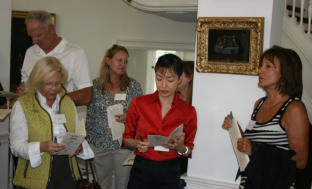 The judges deliberate - from left - Jordan Wright, Akiko Katayama and Nora Poullion - photo credit Roy Wright Back at the manor the tasting was set out and I met my fellow judges. Nora Poullion, a pioneer and champion of environmentally conscious cuisine in our area and who helped develop our area’s earliest farmers markets (In 1999 her eponymous Washington, DC, Restaurant Nora, became the first certified organic restaurant in America.) and Akiko Katayama, the pretty and petite judge from Food Network’s “Iron Chef America”. Katayama is a Japanese food writer and expert on the Japanese and American beef industries. She writes for 17 different outlets in her native Japan.
Selected New York strip steaks were prepared identically and small pieces were threaded onto skewers and placed in warming trays for the tasting. There was keen anticipation in the air as everyone filed into the grand dining hall. We judges went first, filling our plates with the secret numbered samples and retiring to the conservatory to deliberate on the beef’s merits or inadequacies based on flavor and texture. Most of the beef proffered was grass-fed, though Ayrshire Farm prefers to finish off the feeding cycle with grain for the last few months.
Some beef was too lean or earthy tasting, some chewy and some lacking tenderness. It was an interesting exercise but my hands down favorite was breed number three on my list of ten entrants. We returned with our findings to learn the name of the winner.
 Ayrshire Farm heritage Bronze turkey - photo credit Ayrshire Farm Visiting ranchers, who had sampled their own, as well as their competitors’ product, computed their findings. When the tally was in Ayrshire Farm’s Ancient White Park and Highland beef came out the over-all winners.
After a simple but lovely lunch beneath the portico and amidst late-flowering roses we enjoyed the fading light and conversation with our fellow guests. It was an uplifting experience to be in the company of these enlightened farmers who respect animals and how they are raised for our consumption. I met fellow concerned chefs who source local and organic food, humane butchers who sell only organically raised meats and poultry and founders and preservers of the sustainable food movement. And so it was with a renewed regard for the dedicated guardians of our food supply that we trotted down the road in celebration of our tenth year anniversary and our hope for the future of the American farm.
Ayrshire Farm has three breeds of heritage turkeys pre-brined and ready for Thanksgiving, Midget Whites, Bronzes and Bourbon Reds. You can pick them up at the Home Farm Store at the light in Middleburg or
online at the address below.
www.homefarmstore.com
www.huntersheadtavern.com
For Home Farm Catering contact: Rob Townsend
www.ayrshirefarm.com
www.certifiedhumane.org
www.slowfoodusa.org
For questions or comments on this article contact Jordan Wright or visit www.whiskandquill.com
By Jordan Wright
Published – LocalKicks.com
September 2, 2009
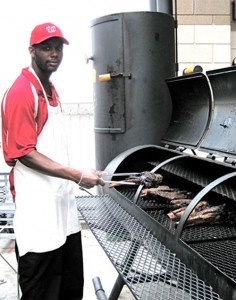 Photo by Jordan Wright/Local Kicks Our first stop was Teddy’s Barbeque, where all the meats are hickory smoked. Pulled pork, pulled chicken and beef brisket sandwiches compete with “The Rough Rider Rib,” a monster beef short rib prepared in true Carolina style…brined for 12 hours and then slow-smoked for another 12 hours.
Today’s ballparks have become strike zones with batting and pitching cages, food destinations, Build-A-Bear Workshops, sports arenas, PlayStation pavilions and baseball venues all in one.
Did I mention baseball? Yes, they have that too.
If you haven’t been to a game lately I highly recommend it. Sports fan or not, you’ll be a convert by the time the game’s over. It’s great for a family (very unlike the rowdy and often R-rated crowds at a football game) or whiling away an evening with a date.
I had a chance to sample the food at Nationals Park last week and it was a real eye opener. Professional chefs are creating some wonderful and imaginative stadium food…so delicious that people are showing up at the ticket office and buying the cheap seats ($5), just to get into the park, for some of this mouth-wateringly smokin’ food.
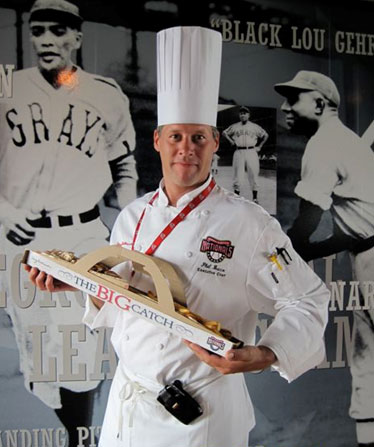 Photo by Jordan Wright/Local Kicks In earnest we approached the foot-long Crab Louie. At $18 a pop it may seem a little pricey until you realize that it’s all lump crabmeat. If you’re accustomed to the greasy $7 slices of pizza at FedEx Field, you are in for a complete overhaul of your sports venue mindset.
Unlike FedEx Field, which has private high-end ticket holder restaurants within the stadium for their club seat and sky-box patrons only, Nationals Park has fabulous choices for food all over the stadium. Most of these spots even have a direct view of the game with outdoor awning-covered seating or indoor and air-conditioned with a sight line enjoyed through sliding glass panels.
While FedEx offers in-seat service for their pricey club seat ticket holders, Nationals Park encourages all its guests to walk around and enjoy the game from a number of different viewing areas and to eat your way around the park. With so much to choose from it’s great fun to get there early and eat at your leisure.
Since it is necessary to have kid approval for ballpark food, my grandson, Jacob, a perpetually hungry 11 year-old, was recruited for the sake of this review.
Our first stop was Teddy’s Barbeque, where all the meats are hickory smoked. Pulled pork, pulled chicken and beef brisket sandwiches compete with “The Rough Rider Rib,” a monster beef short rib prepared in true Carolina style…brined for 12 hours and then slow-smoked for another 12 hours. I am challenging all readers to let me know if they have ever had better anywhere.
Did I mention the smoked corn on the husk, baked beans, slaw and potato salad sides? We are just getting started here.
In earnest we approached the foot-long Crab Louie. At $18 a pop it may seem a little pricey until you realize that it’s all lump crabmeat (Try making this at home. I priced a pound of lump at $33 today!), and four people could share this for a lovely lunch. Comes with extra crispy Old Bay seasoned french fries too.
Next we tried a Cuban sandwich that fit right into my “foodcation” concept. Skip the flight to Miami and cab to Calle Ocho, you can enjoy a “medianoche” right here.
We continued our street fair approach to dining with a stop at a recent addition, The Kosher Grill. Along with kosher hot dogs it features falafel, knishes and Middle Eastern shwarma. Are you still with me?
If you’re wistful for the annual summer Feast of San Gennaro, now in its 90th year, in New York City’s Little Italy (the sentiment always floods over me at this time of year), you couldn’t do better than to have the Italian Sausage sandwich here. It is one of my all-time favorites and they hit it out of the park…fennel-infused sausage, sautéed red peppers and onions, soft Italian roll and all.
 Photo by Jordan Wright/Local Kicks Did I mention the smoked corn on the husk, baked beans, slaw and potato salad sides? We are just getting started here.
In case you thought ballpark food was all hotdogs and peanuts, at this hip stadium they have healthy snack alternatives like veggie burgers, shrimp burgers, boxes of carrot and celery sticks, fresh fruit bowls, fruit smoothies and more. Makes a parent feel almost nutritionally religious taking the little ones to see a game.
Here you’ll find so many different locations to pause, eat, drink and watch the game you needn’t sit in your seat at all and some fans never do. At the Red Porch, a restaurant open to all ticket holders, they carry beer on tap from around the country…like Dogfish from Delaware, Bell’s Kalamazoo Stout from Michigan and Flying Dog Old Scratch Amber from Maryland to mention a few.
With different food from the rest of the park, this sit-down menu has everything from Bacon Blue Cheese Burgers and Quesadillas to Chinese Chicken Salad and Jerk Chicken Wings.
Not to miss dessert our adventure took us onward to two DC faves, Gifford’s Ice Cream and Edy’s Grand Ice Cream stands for a sweet treat. We both loved the park’s, made in Italy and shipped over fresh, Italian gelati. “One mocha chocolate chip, one strawberry, please.” Later we kept our cool with frozen lemonade. It just couldn’t get any better.
Kid verdict: a lot of lip-smacking, barbeque sauce finger licking, more than a few “Oh yeah, that’s what I’m talking about!” responses, juicy-cool refreshing fruit snack smiles and a big thumbs up for all the food.
By the way, the Nats crushed their opponents that day…9-2.
Email the writer at jordan@whiskandquill.com
|