Jordan Wright
October 27, 2011
Special to Indian Country Today Media Network
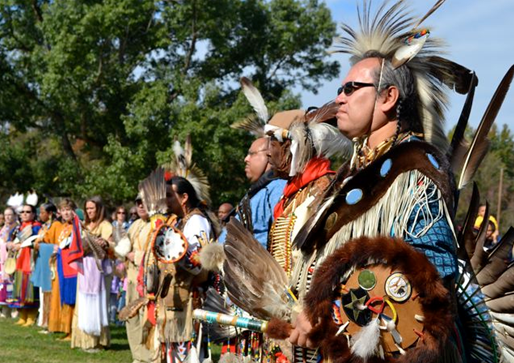 Opening ceremonies at Patuxent River Park's American Indian Festival - photo credit Jordan Wright On an autumn afternoon with the sun at its apex in a clear blue sky, we traveled down a country lane to Maryland’s Patuxent River Park. Silhouetted against the deep green of the pines and American holly, the trees had begun their brilliant burst of color, the crimson of the dogwood, the lemon yellow of the tulip poplar and the pumpkin orange hue of the sugar maple. A tantalizing aroma of venison stew and fry bread hung in the cool crisp air, and cars had begun forming long rows in the freshly mown fields.
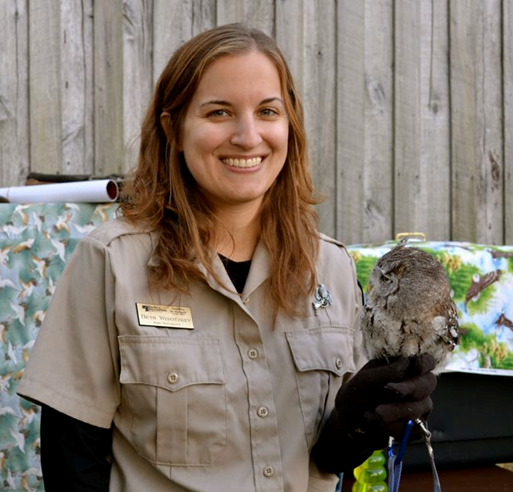
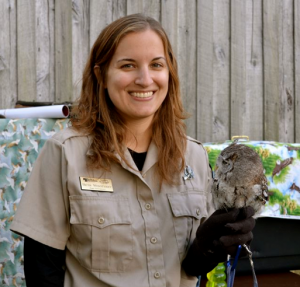 Park Service Naturalist Beth Wisotzsky with baby owl - photo credit Jordan Wright Set on 7,000 acres of protected woodland and watershed, the park meanders along twelve miles of the Patuxent River – a picture of wild natural beauty set on formerly owned Piscataway Indian lands. At the park’s Visitors Center are Indian projectile points, axe heads, and artifacts from colonial times that have been uncovered throughout the sanctuary. As part of the site the Jug Bay Wetlands Sanctuary with its lush vegetation and noted bird sanctuary is a haven for naturalists, especially during fall wildfowl migration.
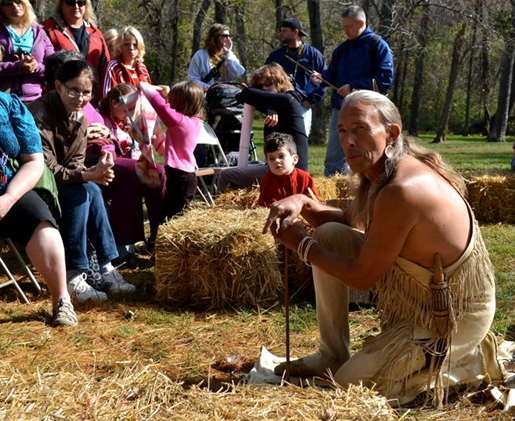
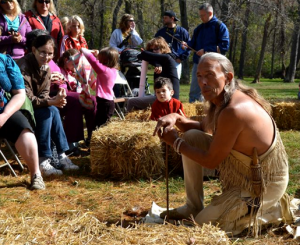 Primitive Life Skills instructor, Daniel "Firehawk" Abbott teaches friction fire - photo credit Jordan Wright The event, billed as 3rd Annual American Indian Festival is not what you’d call a traditional pow wow. It has been created as a promotion and celebration commemorating American Indian and Alaskan Native Heritage Month. The Maryland Natural and Historical Resource Division, who hosted the festival with the Clearwater Nature Center and Watkins Nature Center, directs its attention to non-Natives, reaching out through teaching and hands-on instruction in traditional and modern Native American dancing, artisanal crafts, sports and music. Over 2,000 attendees had gathered, eager to learn everything from weaving and archery to tips on how to research their Native American roots.
“We like to have a lot of hands-on participation and no competition, just cooperation and the sharing of knowledge and lore,” says Karen Marshall the event’s coordinator in Prince George’s County for the National Park Service. “The park service makes sure that all activities are staffed and directed by members of the Indian community,” she adds.
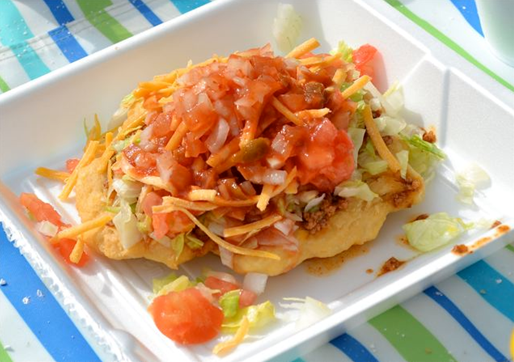
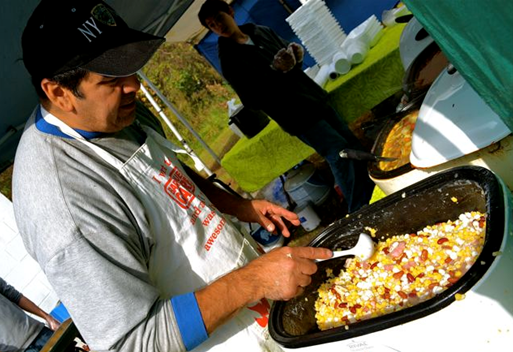
 Fry bread taco - photo credit Jordan Wright 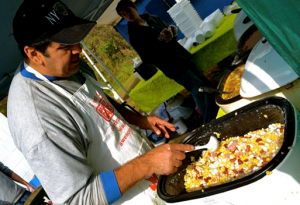 Steven Hill stirs the Ojibwe Corn Soup - photo credit Jordan Wright A large central stage held two groups of performers who sat facing each other in small circles while the Buffalo Hill Singers chanted in unison to the throbbing drumbeats of the Youghtanund and Turtle Creek Drummers, their incantations giving rhythm to the movements of the hoop and jingle dancers. The audience gathered around tapping and bobbing along to the beat.
During the day several nationally known Native Americans were featured in the program including emcee and hoop dancer Dennis Zotigh, of the Kiowa Santee Dakota and Ohkay Owingeh tribes; author and horse trainer Dr. Ray Charles Lockamy Cherokee; genealogist and family historian Margo Lee Williams, Cherokee; and NMAI advisor and local Native American tourism promoter Rico Newman, Piscataway Conoy tribe, who demonstrated the art of beading and finger weaving. Families wandered around the exhibitions or sat near the stage enjoying traditional foods, storytelling and bareback horse riding demonstrations.
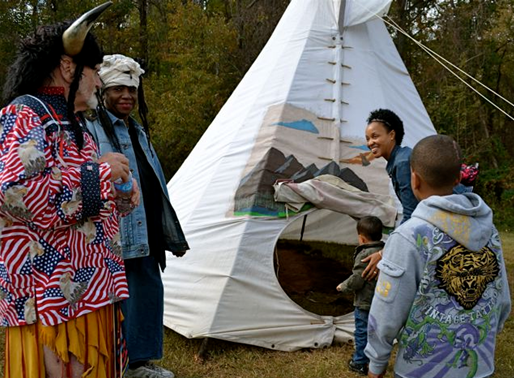
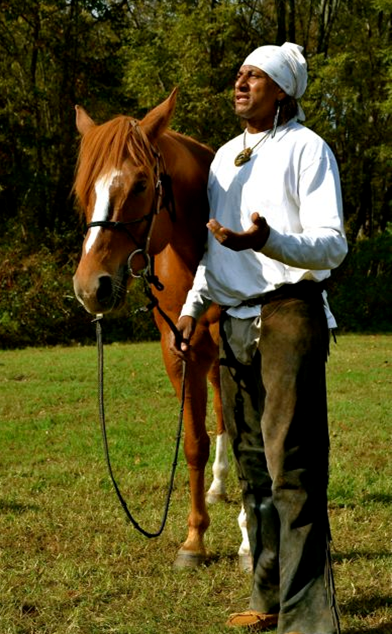
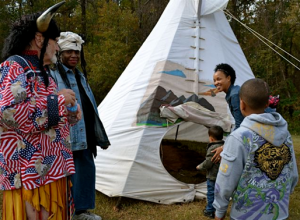 Awaiting entry to the tipi - photo credit Jordan Wright 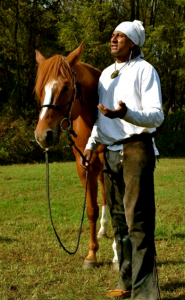 Dr. Ray Charles Lockamy weaves tales of his youth - photo credit Jordan Wright “It’s very important to have a first person interface with those that are knowledgeable in tribal practices and lore and to learn about Indians where they are rather than watching TV or reading books,” advises Dennis Zotigh who works with the National Museum of the American Indian on Native cultural events.
The Clearwater Natural Dye Group brought a spinning wheel to spin wool from the oldest breed of sheep in North America. And there were samples of the Navaho Churro sheep’s wool tinted with natural plant dyes that had been extracted from Osage oranges, achiote and onion skins to create a myriad of soft-hued colors for the weaving of clothes or blankets.
A former dairy barn became a rustic backdrop for park service naturalists and their “Birds of Prey” exhibit featuring a tiny owl, an American bald eagle and a kestrel along with other local species. Scattered around the grounds were long tables staffed by Scout troops and a host of volunteers teaching families how to make cornhusk dolls, weave baskets and string beads as keepsakes.
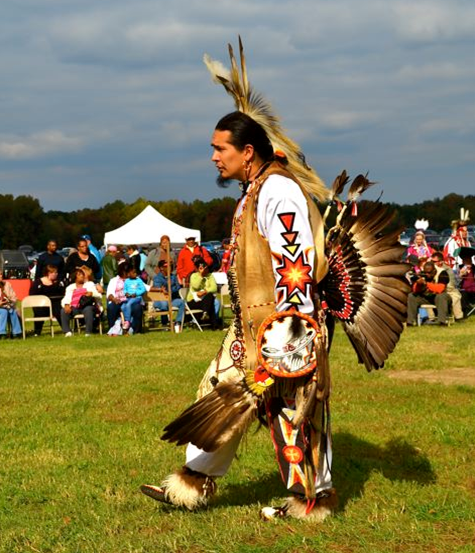
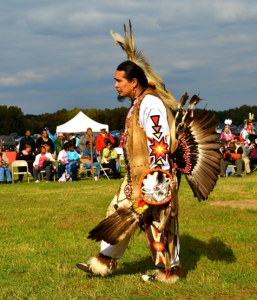 Head Dancer - photo credit Jordan Wright Contributing to a day rich in culture Daniel “Firehawk” Abbott, of the Nanticoke Tribe of Eastern Maryland, a teacher of primitive life skills at Historic Jamestowne in Virginia, was in period deerskin clothing. Encamped beside a wooded area he demonstrated the technique of friction fire and other native skills while families, perched on hay bales, listened raptly. Abbott brought his astonishing private collection of Mid-Atlantic Coast artifacts reflecting an extensive array of museum-quality prehistoric tools, weaponry, animal pelts, basketry, ceramics and model prehistoric shelters for visitors to marvel at and to experience hands on.
Cantering through a field on his chestnut horse, Dr. Ray Charles Lockamy pulled up sharply and dismounted before his awaiting audience. He began to weave stories of his upbringing and the horse in Indian life, explaining its use as both protection from danger (by crouching under its belly) and its use in hunting.
While atop a grassy ridge, an archery range was popular with bow and arrow fanciers who lined up to receive instruction, children waited their turn to clamber inside a tipi. Bob Killen of the Pocomoke Indian Nation, builder of the 14-foot tipi, patiently answered questions about Indian life in the Chesapeake region. Storytellers Zak “Between Two Worlds” and Joseph “Stands With Many” invited others to join them around the fireside with Native-spun tales of how bats came into our world and other curious descriptions of the origins of animal life.
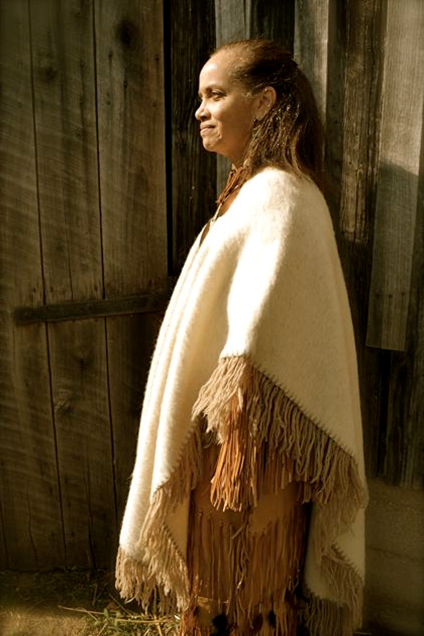
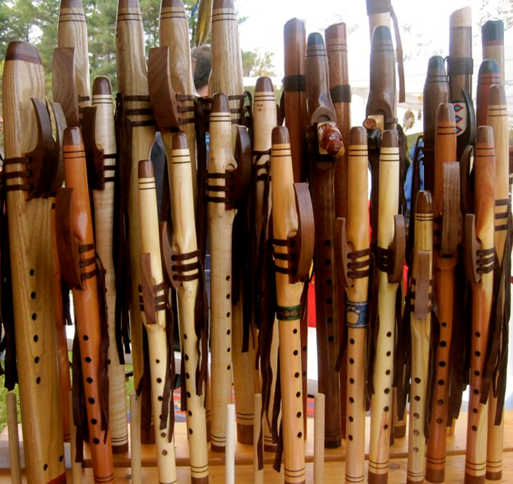
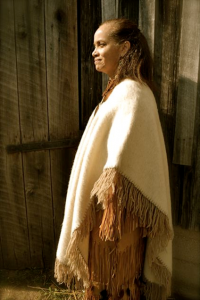 Cherokee historian and genealogist, Margo Williams - photo credit Jordan Wright 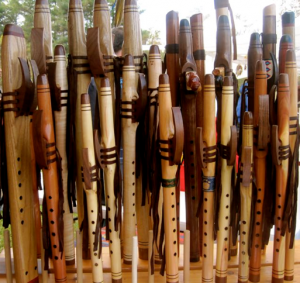 Redbird Flutes handmade by Roger Bennett - photo credit Jordan Wright Closer to the artisans and vendors musical strains could be heard from Master Flute Maker, Roger Bennett of Redbird Flutes and well-known performer and flutist Ron Warren. Shango Chen ‘Mu and ‘Mahdi played a mystical form of World Music with Tibetan bowls, flutes and a modern steel drum called the Hang.
As the day came to a close and artisans packed up their wares, folks drifted back to their modern day vehicles carrying with them their newly made crafts and a wealth of newly acquired knowledge of Native life. We all left with a stronger sense of community from a peaceful afternoon spent in the woods sharing Native American culture.
For information on Patuxent River Park and the Jug Bay Wetlands Sanctuary in Upper Marlboro, MD visit http://www.pgparks.com/page332.aspx
Jordan Wright
October 10th, 2011
Indian Country Today Media Network
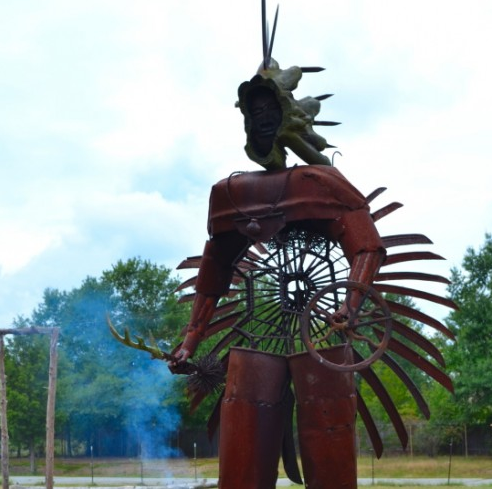 Piscataway Sculpture - Photo credit to Jordan Wright When the harvest moon rises over the Potomac in early autumn, it is a slow aqueous climb that silhouettes the shoreline and turns the river’s blue-green waters into the color of molten obsidian. Under the same amber moon in 10,000 B.C. prehistoric people plied the waters in dugout canoes carved from tulip poplar and built their bonfires along the coastal marshes. They combed the primordial forests hunting for fish and game not unlike the Piscataway tribes who have called these lands their home for over 500 years and whose history still threads through the region like the rivers and creeks that crisscross the land.
The Beaver Clan, as they are known, inhabit a modern world in an area of Southern Maryland, graced with thousands of protected acres of woodland and coastal waters lining the Potomac, Anacostia and Patuxent Rivers and on out to the Chesapeake Bay. It is rich with the history of tribal occupation and the early colonists. Whether you travel by foot, car, bicycle or kayak these are some of the ways the modern explorer can sense, see and relive Maryland’s ancient past while enjoying its fall colors.
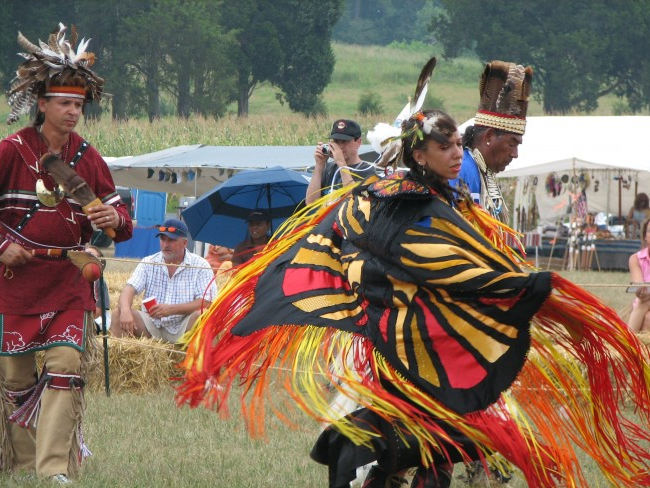 American Indian Heritage Day dancers at Jefferson Patterson Park & Museum Prince George’s County
Late this summer archeologists completed a major dig in the Zekiah Swamp that lies beside Mattawoman Creek, south of Waldorf, MD. Their stunning discovery was the long-lost Zekiah Fort, built in the 17th Century for the Piscataway by Governor Charles Calvert, the third Lord Baltimore, it was used to protect the tribe from incursions by the Susquehanna, Seneca and Iroquois.
The location of the fort offers living proof of Piscataway existence in the region since 1200 A.D. The researchers unearthed Native American pottery and glass trading beads side by side with arrowheads made from English brass, a 17th-century English clay pipe, and a silver belt hanger for an English soldier’s sword. Currently the secret location is under the aegis of St. Mary’s College and the Smallwood Foundation, who as co-sponsor of the excavation, hopes to purchase and protect the 95-acre site.
Along Indian Head Highway just outside the Washington DC area the Bryan Point Road takes you to the Accokeek region where according to Captain John Smith’s map of 1612 the village of Moyaone and Mockley Point the principal place for the Tayac and capitol of the Piscataway Nation. Along the road you’ll pass the Alice Ferguson Foundation at Hard Bargain Farm Environmental Center where Alice Ferguson began excavations on her property in 1935 documenting prehistoric encampments through cutting tools, axes, “atlatls” (forerunner of the bow and arrow), pottery, pipes, post mold remnants revealing early stockades and over 600 human skulls in a single ossuary.
On the same road are the Accokeek Foundation, stewards of the 5,000-acre Piscataway Park, and the National Colonial Farm alongside the Potomac River with a view to George Washington’s Mount Vernon home on the Virginia side. Visitors to the farm and park can traverse upland woods and fenced fields dotted with heirloom breeds of cattle, sheep and pigs. At the river’s edge an historical marker describes the history of the Piscataway whose name translates to “where the waters blend”. It overlooks a large field with a burial site and sweat lodge beyond used by the Piscataway Conoy Confederacy and Subtribes and accessible across the wetlands by a wooden boardwalk. Six marked trails provide spectacular views of the river and woodlands. The foundation hosts monthly events to acquaint the public with Native American and colonial traditions with gardening and cooking classes and environmental film screenings. The park and the surrounding area are home to beavers, bald eagles, deer, fox, wild turkey, egrets, osprey, great blue heron and many more of the area’s species. Fishing and boating are permitted at the park.
Charles County
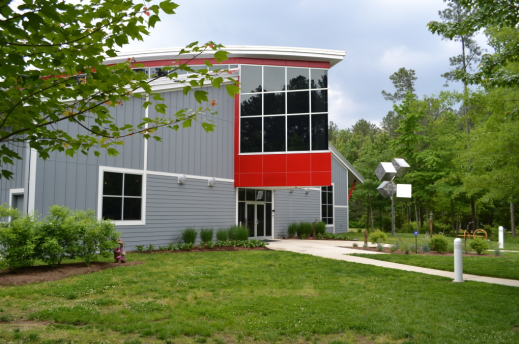
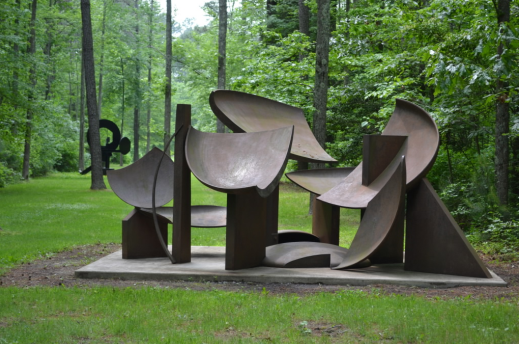
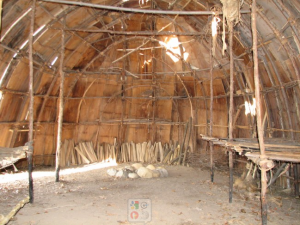
In the nearby town of Waldorf is the home of the Maryland Indian Cultural Center and Piscataway Indian Museum run by the Cedarville Band of Piscataway Indians and directed by tribal chief, Natalie Proctor and her husband Maurice. The five-acre museum site is on an original Nike Missile site. “Moondancer”, a sculpture created by local artist Jim Pollack from old missile parts, reigns beside the fire pit and sweat lodge. The wonderfully informative museum houses hundreds of artifacts from local as well as national tribes and includes descriptions of tribal life in Southern Maryland. A longhouse, the preferred habitation of the local tribes, has been constructed inside the museum. 16816 Country Lane, Waldorf, MD. Visits to the museum are by appointment or during festivals. Call 240 432-5446.
Indian Head, poised at the confluence of the Potomac and the headwaters of the Mattawoman Creek yields further exploration by kayak, standup paddleboat (SUP) or the pedal-driven Hobie kayak along the banks of the Potomac River or on the 23-mile Mattawoman Creek. The nearby Indian Head Rail Trail, designed for walking or cycling, is a 13-mile paved trail one half-mile from the town’s center.
Up The Creek Rentals in Indian Head is open weekends or by reservation during the week and rents all the above equipment. Call 301 743-3733 or 301 743-3506. www.upthecreekrentals.com.
The village of Port Tobacco, once Maryland’s largest seaport and the original site of the Indian settlement of Potomaco is Saint Ignatius Church overlooking the mouth of the Port Tobacco River on a 120-foot bluff. Founded in 1641 it is the nation’s oldest active parish. Inside a unique stained glass window depicts the baptism of Chief Kittamaquund (the “Great Beaver”) – the first Native American Chief to be baptized in the Catholic Church. Piscataway graves can be found in the church’s cemetery and the restored Port Tobacco Courthouse has a small collection of Indian artifacts.
Calvert County
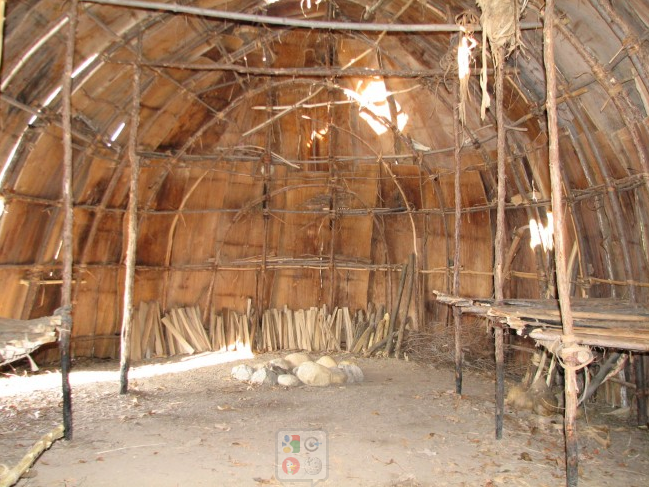
A few miles west of the Chesapeake Bay is the 560-acre Jefferson Patterson Park & Museum in St. Leonard. In 2007 the park recreated an Indian village in commemoration of the 400th anniversary of Captain John Smith’s landing and exploration of the bay and its tidal tributaries. The village, situated beside the Patuxent River, consists of four longhouses, a central fire pit and racks for smoking fish and meat. A cell phone audio tour is available. Activities such as the making of stone tools and clay pots as well as evening campfires are held throughout the year on “Village Days” and the park’s annual American Indian Heritage Day.
The Maryland Archeological Conservation Lab is also located in the park and open to pre-arranged group tours. Over 8 million artifacts are housed here where conservators do restoration and preservation work on site. A Visitors Center provides information on the Paleo-Indians of the region and showcases artifacts from around the state. To plan your visit go to www.jefpat.org.
Jordan Wright
August 2011
Special to Washingtonian Magazine
Solomons Island – A waterside village with hidden treasures.
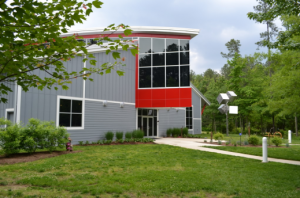 Annmarie Sculpture Garden and Arts Center - Photo Credit Jordan Wright 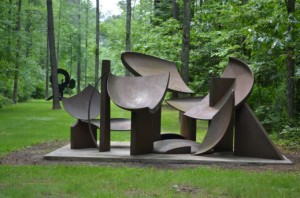 Bronze sculpture at Annmarie Sculpture Garden & Arts Center - Photo Credit Jordan Wright The Scene
Where the Patuxent River meets the Chesapeake Bay sits the village of Solomons Island. The former shipbuilding community has a boardwalk and piers for strolling, antiques shops and art galleries, and bars and restaurants for every taste and a boutique winery to seal the deal.
What to See and Do
Butterflies flit merrily through the border gardens where art and nature coexist at the Annmarie Sculpture Garden & Arts Center. Wend your way along sun-dappled paths to see dramatic bronze and steel sculptures – courtesy of a
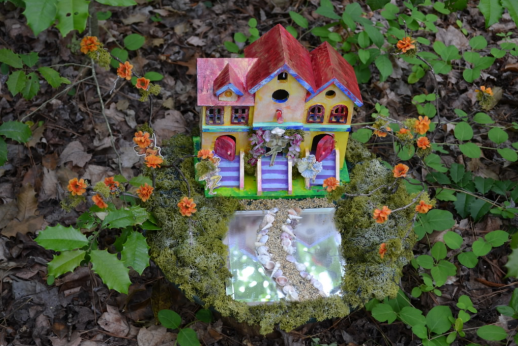
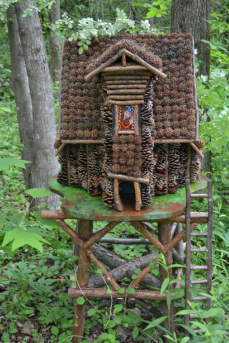
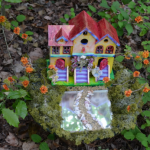 Fairy house 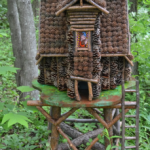 Gnome house partnership with the Smithsonian – displayed throughout the park’s lush 30 acres. A current exhibit, “Fairies in the Garden”, features artists’ fantasies of fairy and gnome houses nestled sweetly in the mossy hollows of trees. Inside the center there’s a small café and works by local artists.
For a day on the water, Bunky’s Charter Boats rents Carolina skiffs and offers fishing excursions; Sail Solomons has 22-foot Catalina capris. Or go to the Patuxent Adventure Center for kayak, canoe and Stand Up Paddleboard rentals.
Where to Eat
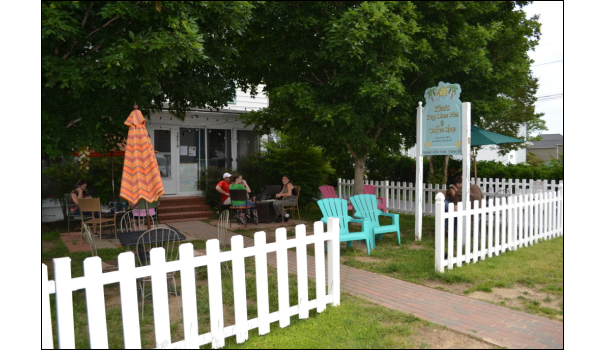
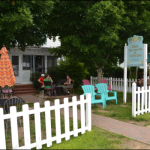 Kim's Key Lime Pies - Photo Credit Jordan Wright Kim’s Key Lime Pie has creative cuisine and sublime pies in a café-like ambience. Across the road Stoney’s Seafood House, famous for its fresh fish and crab cakes, sits on Solomons Pier with beautiful views of the river.
Speed Dial
Annmarie Sculpture Garden & Arts Center, 13480 Dowell Road, Dowell, MD; 410-326-4640. Pet friendly and fully accessible. www.annmariegarden.org.
Bunky’s Charter Boats, 14448 Solomons Island Rd. S.; 410-326-3241 www.bunkyscharterboats.com. Sail Solomons Sailing School and Yacht Charters, 225 Alexander La.; 410-326-4917. www.sailsi.com Patuxent Adventure Center, 13860-C Solomons Island Rd.; 410-394-2770. www.paxadventure.com.
Kim’s Key Lime Pie, 14618 Solomons Island Road S., Solomons Island, MD, 410-326-8469. Stoney’s Seafood House, 1442 Solomons Island Road S., Solomons Island, MD, 410-326-2424
Jordan Wright
August 2011
Special to Washingtonian Magazine
River Riders
408 Alstadts Hill Rd., Harpers Ferry, WVA; 800-326-7238; www.riverriders.com
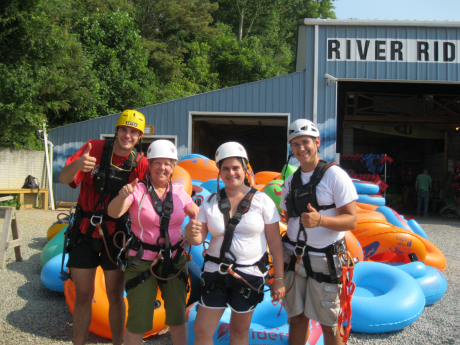
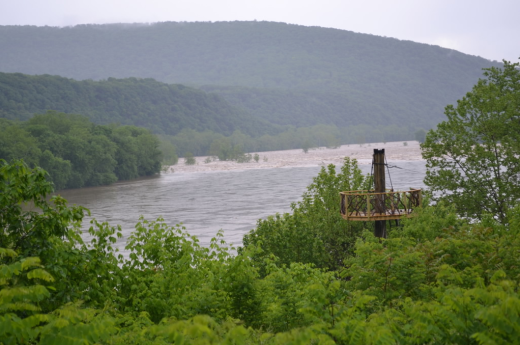 Zipline tower at River Riders, Harpers Ferry - Photo Credit Jordan Wright Harpers Ferry offers lots of outdoor family fun, from hiking to tubing to whitewater rafting. And now, just outside of town, the outfitter River Riders has unveiled its latest adventure: a spectacular zipline canopy tour along the Potomac River.
For three hours, you can fly through the forest and navigate jungle-style suspension bridges alongside breathtaking vistas of river and cliffs. Two guides accompany amateur aerialists to seven giant tower platforms. Try to spot the nest of the resident red-tailed hawk as you soar up to 70 feet. The gravity-defying tour ends in an exhilarating finale as you rappel down to solid ground. If you’ve got more time and energy, River Riders can also set you up on the water: Ply the flatwater in a canoe or kayak, drift in a giant tube, or take on the Class III rapids on a whitewater trip.
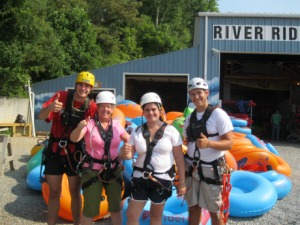 A successful day! Bucket list just got shorter! Hungry? The on-site Front Porch Café, which serves burgers, hot dogs, and other snacks, is your best bet. If you explore Harpers Ferry’s historic district, slide into Scoops Ice Cream Café (173 Potomac St.; 304-535-6654) and get your chill fix with 16 flavors of house-made ice cream.
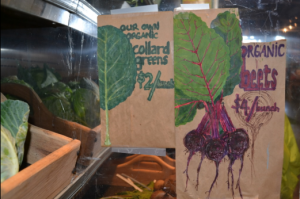 Farm products at Stoneybrook Farm Market - Photo Credit Jordan Wright On the drive to Harpers Ferry or on the way back, you can stop in the tiny town of Hillsboro at Stoneybrook Organic Farm and Market (37091Charlestown Pike; 540-668-9067; www.stoneybrookfarm.org; closed Saturdays), which carries delicious sandwiches and salads, organic produce, artisanal cheeses, and other regional farm products. Get food to go or enjoy lunch on the flagstone patio overlooking the vegetable and flower gardens.
Jordan Wright
Special to The Washingtonian Magazine
May 4th 2011
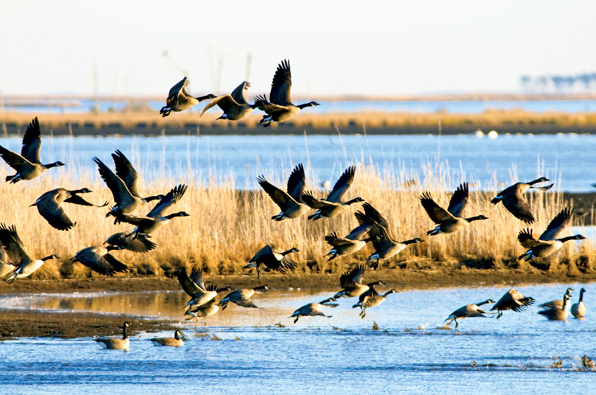
A good sign that winter is over: the return of migratory birds. At Blackwater National Wildlife Refuge in Cambridge, Maryland, you can spot such spring harbingers as warblers, blue- and green-winged teals, and dunlins. The 25,000-acre Eastern Shore refuge is also home to pileated woodpeckers and one of the nation’s largest populations of bald eagles.
You can further explore the refuge’s flatland trails by bicycle, or kayak its tributaries. Blackwater Paddle & Pedal Adventures has rentals; for reservations, call 410-901-9255.
The nearby Hyatt Regency Chesapeake Bay Golf Resort, Spa and Marina boasts its own opportunities to see birds. The hotel’s private nature preserve, the Blue Heron Rookery, lies within its 400 acres. Weekend rates are $199 to $349 a night, suites $399 to $799.
Jordan Wright
Special to The Washingtonian Magazine
May 4th 2011
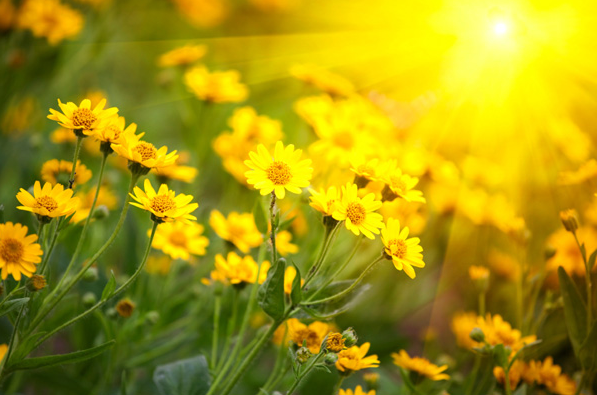
Amateur artists may be inspired to paint after a trip to the Inn at Bowman’s Hill (215-862-8090). The B&B in New Hope, Pennsylvania, is adjacent to a 134-acre wildflower preserve, reached via Washington Crossing Historic Park. In spring, you can follow nearly two dozen trails to see woodlands carpeted in thousands of Monet-hued bluebells. You’ll likely spot elusive red and white trillium along the paths as well as splashes of fiery flame azalea. Guided tours are available.
Location isn’t the inn’s only draw. Pop out of the cozy featherbeds, and, if you’d like, gather your own breakfast eggs from the inn’s chickens. The Bucks County inn is alongside the Delaware River, near the spot where George Washington crossed in 1776, and the area is rich with history, antiques shops, fine restaurants, art galleries, and more.
Weekend rates are $445 to $475 a night including a full breakfast; suites are $575 to $595. For information on the preserve, see bhwp.org.
|