Thank you, loyal readers, for pursuing life’s intriguing adventures with Whisk and Quill in 2010. This December celebrates my third year as a food and travel writer and first year as a theatre reviewer, and it has been an astounding ride full of new friends, evocative memories and secrets revealed. And though my life has gravitated more to the keyboard than cooktop, to the frequent inquiries I say, “Yes! I still enjoy being a private chef.”
In this past year alone my features on food and travel have developed a bi-coastal readership that has rapidly grown from 86,000 “eyeballs” (industry-speak) to over 10 million! A figure quoted directly from one of my editors that baffles and amazes me daily.

Chefs, restaurants, farmers, vintners, caterers and new food products showcased on Whisk and Quill have garnered national attention, posh properties and spas have had their luxuries scrutinized or extolled, and theatre productions have been picked or panned – all without one single advertiser on Whisk and Quill’s website.
As we look ahead to up-and-comers like Greenville, SC’s Vicki Moore of The Lazy Goat; Colorado’s Top Chef finalist and restauranteur Kelly Liken; Charleston’s Sean Brock of McCrady’s and Husk; and veteran chefs like DC returnee, Fabio Trabocchi, all to be featured in the coming months, we offer our deepest gratitude to America’s top toques, Jose Andres, Anthony Bourdain, Eric Ripert, Joan Nathan and Laurent Tourondel who joined in the dialogue with us this past year.
So here’s to 2011 and another year of reporting to inspire, tempt and dazzle you to create your own journeys. Let’s drink a cuppa kindness for the auld year and blow those vuvuzelas for a scintillating and scrumptious New Year!
Warmest regards to all,
Jordan
Jordan Wright
December 1, 2010
Special to Georgetowner
 Michel Richard in his newest kitchen at Michel at the Ritz-Carlton Tysons Little Morso’s Turkish Delights
Morso is a tiny jewel box of a restaurant. Its hip modern décor is sleek, its bar, cozy and chic, its cuisine scrumptious, its prices gentle. A parking lot is right across the street, and it’s in the heart of Georgetown. What more can a hungry, stylish diner ask for?
Favorites: Ezme, a mixture of roasted tomato and pine nuts with orange and red pepper; creamy Babaganoush, the traditional eggplant made with roasted eggplant and pistachio oil; Baked Moussaka; heavenly Wood-grilled Fresh Squid filled with fresh herbs and burrata; perfectly grilled and tender Zatar Spiced Octopus with white bean puree, green olives and cilantro; Lamb Shish Kebap (yes, the spelling seems odd but that’s the Turkish word for roasting) served with bulghur and addictive sweet red onion with zatar and a killer dessert called Irmik Helva that is made with shredded phyllo and pistachios and boasts a semolina custard. It is to die for. I can’t be held responsible if you miss out on this sweet treat!
On the list for next time: eight different kinds of Brick Oven Pides (Turkish-style pizzas); Octopus Pilaf with Swiss Chard and Scallions; Grilled Boneless Whole Branzino; and handmade Manti. Manti are beef dumplings and here they are served with warm yoghurt, paprika oil and sumac. There is also a Swordfish Kebap, which is a fish high in mercury. So if you do have it and it is really good, please only order it once a year!
Glitch: There was a reception in the bar area for around 40 university alumni for the first hour and a half we were there. The manager apologized profusely saying he had planned for only 20 guests. Though it was a cute group of well-mannered alums, the bar is open to the dining area and it can be noisy. If you are planning a romantic evening without a distractingly high decibel count, ask if the restaurant is hosting a reception when making your reservations.
Sweetbite Creamery Poised to Up the Cookie Ante
I was introduced to Ashley Allen and Tricia Widgen, partners in Sweetbite Creamery, at the new Bethesda Central Farm Market where they sold their delicious ice cream sandwiches till the market closed up on November 23 for the season. Now you’ll find them at the Oakton Market in Bethesda and on the menu at the Mayflower Hotel.
The young local entrepreneurs met at George Washington University’s Business School and started their collaboration only a few months ago. They’ve been catering parties and putting together holiday gift packs with assorted flavors, and will even deliver a minimum of one dozen of their original flavors such as Baked Apple Snickerdoodle, Molasses Pumpkin, Sweet Potato and Marshmallow, and Salted Caramel to your home.
Rising Star Chefs Hold Gala Rooftop Tasting
Recently some of the area’s notable chefs including David Varley of Michael Mina’s Bourbon Steak at the Four Seasons, Bertrand Chemel of 2941, Dean Maupin of Keswick Hall at Monticello, John and Karen Shields of Town House restaurant and Benjamin Lambert of Restaurant Nora, prepared a few of their signature dishes on the tented rooftop of Charlie Palmer’s Steakhouse. Out-of-town chef Jason Alley of Comfort restaurant in Richmond, whose Beef Cheeks braised in juniper and ginger beer, was a favorite among some of the food writers. And he gave me his secret: Pork stock for the beef! Road trip to Richmond anyone?
Or maybe you’d prefer to cruise down Route 81 to Chilhowie, VA for Karen Shields’ heavenly Parsnip Candy Ice Cream concoction served with coconut, banana pudding, sponge cake, almond cookie, and lemongrass sorbet. I counted nine separate methods to create this dessert and though all the chefs’ recipes were included in the program, don’t try this one at home unless you want to be chained to your kitchen like a yard dog to a tree.
Each creation, including the swank desserts, was paired with wine, beer or specialty cocktails like the “Mulberry Street” created by PS 7’s mixologist, Gina Chersevani. The early fall evening was hosted by the ubiquitously charitable Todd Gray of Equinox. The winning chef was Matt Hill from Charlie Palmer’s for his Prosciutto-wrapped Canadian Pork Tenderloin with cauliflower puree and preserved cherries.
Kudos that the event overlooking the dome of the US Capitol was as green as could be with recyclable bamboo dinnerware.
Michel Richard Opens Third Restaurant in Tysons Corner
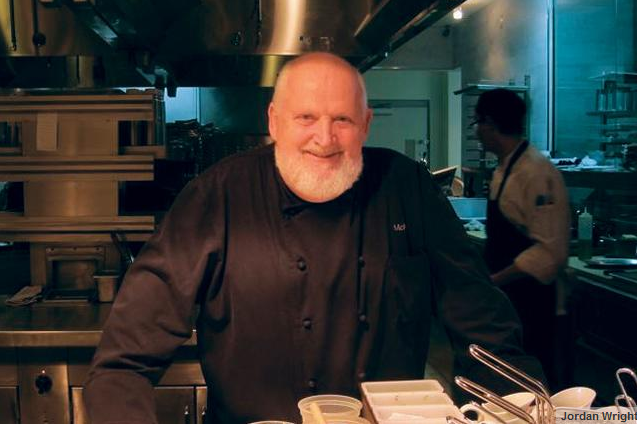
Michel Richard of Citronelle and Central Michel Richard, flush with celebratory glee, served up some delicacies earlier this week at his eponymously named new restaurant in the Ritz-Carlton Tysons Corner. Richard has tapped one of my favorite chefs, Levi Mezick, formerly of The Jockey Club (see my July story on Mezick) to be his Executive Chef.
Zaca Mesa Wines
Brook Williams is the CEO and wine grower at Zaca Mesa Winery and Vineyards nestled in the Santa Ynez Valley. He is a blond blue-eyed California guy with an enthusiasm for wine that came later in life after over twenty years on the financial side of winemaking for super-size wineries like Gallo, Kendall-Jackson and Beringer. You could say he’s a convert in a lot of ways.
For the past seven years, along with winemaker, Eric Mohseini, Williams has nurtured the grapes on the estate’s 750 acres. His wines are 100% estate grown and bottled using sustainable winegrowing practices and organic products.
“When we started out in the 1990s we got our cuttings from Randall Grahm and afterwards discovered they were Viognier not Roussanne,” he told me at a one-on-one wine tasting in the Blue Duck Tavern Lounge where I sampled seven Zaca Mesa wines.
“Later we got cuttings for our syrah from Gary Eberle. Zaca Mesa was the first to plant syrah in Santa Barbara County back in 1978. In fact our syrah sales have gone up 80% this year. It is our most popular seller.”
I found it has a lovely flavor profile of cassis, espresso, mocha and sage, but the 2006 should be put down for a few more years to fully appreciate.
As we spoke we nibbled and sipped over an exceptional charcuterie and cheese platter consisting of a luscious silken prosciutto, mortadella, soppressata, cured olives and tomatoes. Cheeses sampled were Humboldt Fog, Bayley Hazen Blue, Oma from the Von Trapp Farmstead, Nancy’s Hudson Valley Camembert, Organic Red Hawk triple crème made by Cowgirl Creamery, and the local Everona Dairy Piedmont.
I particularly liked the 2006 Roussanne. The grape is a Rhone variety, not well known in the States, but it likely will be soon since it captured a “Best White of Show” at Hilton Head this spring.
Try their award-winning 2007 Z Cuvee made with 57% Grenache, 31% Mourvedre and 12% Syrah with its raspberry, blueberry, blackberry and light pepper notes. I picked it up at the Home Farm Store in Middleburg where I had stopped to order an organic Ayrshire Farm heritage breed turkey for Thanksgiving dinner.
Enjoy these wines with dinner at such top restaurants as the Lafayette Room at the Hay Adams Hotel, Charlie Palmer’s Steakhouse, Black Salt and Veritas Wine Bar where they offer over 70 wines by the glass.
For purchase at Arrowine and Wegman’s in VA, and in DC at Ace Beverage, Cleveland Park Liquor and Wines, and Bell Wine and Spirits.
Rigoni di Asiago Fruit Jams, Honey and Chocolate Hazelnut Butter
It seems every chef in the country is fiddling around with “Nutella” in their desserts. This chocolate hazelnut spread has been a favorite in Italy since its invention in the 1940’s. During the war years, chocolate was pricey and hazelnuts were prolific in the Piedmont region of Italy, and this recipe could stretch out both ingredients.
It debuted in the US three decades ago it has become a popular way to sneak a bit of protein in kids’ diets with a slathering of the “gianduja” spread on toast.
For over 80 years the Rigoni family has produced eight varieties of organic honey (like chestnut, pine and eucalyptus), and seventeen different organic jams (crave the fig, gooseberry and pomegranate) on their ancestral farms in the Cimbrian Plateau of Asiago, Veneto. They have recently brought to the US market an entirely organic version of the spread they call, “Nocciolata”. It adds 15% more hazelnuts than Nutella and is richer, more luscious, and has a deeper flavor, too. Try frosting your cupcakes with it. I did…and it was heavenly and quick!
Special to the Washington Examiner
By: Jordan Wright
October 26, 2010
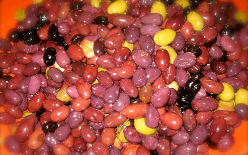 Mixed Olives By all accounts the health benefits of the mono-unsaturated extra virgin olive oil are well documented. As the foundation of the much-lauded Mediterranean Diet, research has shown its high levels of anti-oxidants, good fats and phenols to be necessary to maintain a healthy diet. Okay, we are all in agreement with that.
But scientific testing at the University of California Davis has revealed that a number of the better-known olives oils, labeled “extra virgin” are anything but. Some are diluted and quite a few erroneously labeled as to country of origin. Not only are they compromised by the addition of seed or nut oils or even “pomace” the detritus from olives, but also they also come from countries other than those printed on their labels.
So how can you be sure you’re getting the health benefits from the extra virgin olive oil you purchase? Recently I’ve noticed that the olive oil I’ve purchased in my local market has not been up to snuff. Supermarket store brands labeled extra virgin olive oil have slight flavor variances but the overall quality is lackluster and I want more depth of flavor, more authenticity. I began to wonder why on trips abroad and to olive growing areas like California, the food was so superior to the same dishes that are often replicated and served in restaurants or homes. I began to think about it…perhaps obsess would describe the feeling better…and to seek out explanations.
It began at Agora earlier this summer, a new Dupont Circle Turkish restaurant in Washington, DC, where I found a world of flavor unfolding on my plate. The olive oil they used had a nutty pungent olive essence that was fruity and rich tasting and brightened the traditional mezes. Creamy spreads like htipiti made with roasted peppers, feta and thyme and labneh, a simple dish of Turkish yogurt they serve with diced apples and walnuts came alive with a more robust flavor. Both dishes were drizzled with extra virgin olive oil, but why was there such a dramatic difference in these oft-served Mediterranean dishes?
In a call to Agora’s owner Latif Guler, I discovered the source of the aromatic and flavorful oil that he uses. “It comes from our family olive groves in Foca near Izmir on the west coast of Turkey. These are our own trees and I know the quality,” he informed me. “It was my goal to use this first press oil even before we opened. I told my father who owns a restaurant and hotel in our small village that I had to have it for my restaurant too!”
He explained that it is commonplace throughout the Mediterranean for families to cart olives from their small private groves to local mills, dividing the precious oil among close family members. This short hop from grower to miller insures the quality, origin and purity of the resulting product. And since olive oil is the only oil that can be consumed freshly pressed from the fruit without further processing, like wine, it has its own distinct characteristics.
But for those of us without our own personal olive groves, how can we know what we are buying and how fresh it is?
I started asking around and kicked up a lot of dust. I discovered every chef had a fierce loyalty to particular brands they swore by to enhance and complement the flavor profile of their dishes.
American Chef Marc Collins Shares His Favorite EVOO
Let’s begin in the South with American chef Marc Collins of Charleston, South Carolina’s Circa 1886 Restaurant, whose food is on the posh edgy side. Collins has a predilection for molecular gastronomy and plays with complex techniques to re-interpret regional favorites. He prefers West Coast Products’ brand of extra virgin olive oil, a California company that has been processing locally grown olives since 1937. Lately Collins’ is serving a heart-healthy whipped olive oil “butter” using this oil.
Executive Chef Marc Collins’ Recipe for Olive Oil Butter
65grams (or 2.29 ounces) of Texturas Glice
700ml (or 23.7 fluid ounces) of good EVOO
300ml (or 1.27 cups) of good canola oil
1 tsp sea salt.
Place the glice and all of the oil into a pot and heat to 140˚ F. Remove from the heat source and cool overnight.
The next day take half of the oil mixture and put it into a blender. Grind the salt to a powder and place half of it into the blender as well. Blend on high until creamy and pour into a container. Do this with the other half as well. Chill overnight. Place this mixture into a mixer fitted with a whip attachment and whip on high until double in volume. Check the seasoning. Place in a pastry bag with a star tip and pipe rosettes.
 Top grade olive oil from Spain - photo by Jordan Wright You can order Texturas Glice from: www.tienda.com/food/products
Collin’s favorite EVOO comes from: www.westcoastproducts.net
French Chef Eric Ripert On What Complements His Cuisine
French culinary giant Eric Ripert, the three Michelin-starred owner of New York’s Le Bernardin and star of the PBS series “Avec Eric”, likes to conduct blind tastings every few months along with his sous chefs. They put out the ones they have been cooking with alongside a few other high-end olive oils. He acknowledges that they keep returning to the same two brands, but he has noticed that the flavor can vary with the seasons and changes in the climate in the country of origin. “Even though we are always checking to see if there is a better olive oil for us, we find Sitia which is Greek and Frantoia which is Italian, are the most compatible with our cuisine.”
José Andrés Gives a Spanish Olive Oil Primer
Since Spain produces the most olive oil in the world, my inquiries took me to the most acclaimed Spanish chef in the country for his sage advice. José Andrés, who is currently lecturing at Harvard University told me, “People tend to think about olive oil in what you could almost say is a one dimensional way…as a medium for cooking or frying or for use in salads…but it is so much more. It adds flavor, body or silkiness to the texture of dishes. Beyond that people need to recognize that there is not just one olive oil…but many. There are so many varieties of olives suitable for making oil, each with unique characteristics.”
He further explained, “It helps to think of olive oil the way you think about wine. You would never expect a bottle of Barolo from Italy to taste like a California Chardonnay would you? Why then would you have the same expectation of olive oil? Just like when you are talking about wine, the region, the climate, the conditions, the soil, the topography, all these things impact the oil that winds up in the bottle. Olive oils from Andalucia will be different than an olive oil produced in Navarra.”
I was beginning to see the light when Andrés in full throttle expounded on the resultant differences in flavor from particular olives. “The most important factor is the variety of olive used. Some olives, like Picual from Andalucia, are robust and have a pleasant bitter and peppery edge that tickle in the back of the throat. That makes it preferred for salad or gazpacho, dishes where you want an assertive olive oil flavor. Another variety produced in Andalucia, the Hojiblanca, is slightly sweet and very smooth while still retaining a hint of bitterness. It’s good for desserts and salads. Others like Arbequina, produced in Catalunya, or Empeltre, from Aragon, are softer and more delicate with an almost almond flavor. In general the more golden oils tend to be softer and sweeter and the greener ones more fruity and peppery. Some like Lechin from Andalucia and Cornicabra from the region around Toledo and Ciudad Real are wonderful but a pain to harvest so the production is not as high. Or perhaps the yield is low. Still others have little flavor but have great body and thus are used to beef up blends of olive oil.”
Andrés maintains that there is nothing wrong with a blend of varieties. “In fact much of the olive oils that come from Spain are not single varieties. Play with them and see what works best for you,” he suggests.
At his well-known Washington, DC restaurant, Jaleo, he uses a product by Crismona, which is a blend of Andalusian varieties. At minibar by josé andrés they prefer monovarietals.
Here’s his expert primer on Spanish olive oils.
From the Arbequina olive:
Unio and Castillo de Canena both produce good delicate and fruity Arbequina oils.
From the Hojiblanca olive:
Columela
From the Picual olive:
Castillo de Canena also produces a peppery and robust Picual.
Blended Oils
Nunyez de Prado is a nice blend of Picual, Picudo and Hojiblanca, very Andalusian and from Baena near Cordoba. [Author’s note: I have to say that this is my everyday favorite EVOO]. Marquez de Valdueza is another nice blend that uses Arbequina as well as Picual and Hojiblanca and features the Morisca olive grown in Extremadura.
Italian Chef Bryan Moscatello Looks to the Italian Alps
At this point I needed to find out what an Italian chef would choose and I went to Washington, DC Executive Chef Bryan Moscatello of Potenza who sources his favorite olive oil from the Apennine Mountains of Umbria.
“I like Trevi olive oil,” he asserts. “It has fresh grass and citrus undertones with a nice sharp bite on the finish. It is a small producer and scarce. We have made some great olive oil emulsions lately… an olive oil “sponge” for our tomatoes that is delicious in our cantaloupe soup and wonderful in olive oil madeleines! At Potenza we use it to finish the orecchiette with spicy fennel sausage and broccoli rabe.”
No matter the cuisine, French, Italian, American, Turkish or Spanish, chefs are very particular about how the flavor and freshness of extra virgin olive oil can enhance or detract from the success of their dishes. No tasting panel or scientific testing can improve upon their highly developed and discriminating palates.
So what do we the consumers need to look for when buying olive oil?
Notes From a California Producer
Dan Vecere of West Coast Products, whose groves are located east of the Mendocino National Forest, sells the olive oil preferred by, and best suited to, Chef Collins’ cuisine. The EVOO they sell is produced from Arbequina olives all grown locally in Northern California. The olives are harvested and pressed within 24 hours producing a fresh tasting, high quality extra virgin olive oil. I’ve used this artisanal product, and found it has the perfect balance for American Modern cuisine.
The Scientific Revelations
Twenty years ago the FDA began to find problems with extra virgin olive oil. But it wasn’t until last year that the California State Senate passed a bill mandating the purity of state-produced olive oils, which are also under strict guidelines by the FDA and the California State authority.
Last month in a study by the University of California, Davis Olive Oil Chemistry Lab and the Australian Oils Research Lab, a third party analysis was conducted on olive oils labeled as extra virgin. Using international standards put these oils through eleven different chemical and sensory tests to evaluate everything from oleic acid values to peroxide value, UV absorption and fatty acid profile. These tests are indicators of oil quality, purity, oxidation and whether or not an oil has been adulterated or refined. Sensory evaluation by a “blind” taste panel confirmed that the failed samples had defective flavors, such as rancid, fusty and musty.
Certified tasters, using cobalt blue tasting glasses so as not to be influenced by the color of the oil, evaluated the positive attributes of fruitiness, bitterness and pungency as well as identified defective oils by their flavors.
They found that 69% of the imported oils and 10% of the California oils labeled extra virgin olive oil did not meet the International Olive Council (IOC) and US Department of Agriculture’s taste, smell and chemical makeup standards for extra virgin olive oil.
Dan Flynn, executive Director of UC Davis’s Olive Center, which is part of the Robert Mondavi Institute for Wine and Food Science, warns, “The market now has been flooded with olive oil that has been diluted, blended, and/or not stored properly.”
He acknowledges that California olive oil is more expensive but feels that the one million gallons of EVOO California produces each year is a superior product, “It is like the difference between Dom Perignon or sparkling wine.” He adds, “We feel the California olive oil industry is parallel to the early days of our wine industry here.
Here are some helpful terms he gave me to describe olive oil:
Positive descriptors can be grassy, floral, tropical, nutty buttery or minty with artichoke, green tea, peach, apple or banana notes. Negative descriptors can be earthy, fusty, moldy, rancid, grubby (from olive fly larvae), muddy, woody (from olives that have not been irrigated), or what they refer to as winey-vinegary.
Flynn also let me know that the term “cold pressed” is an archaic term. Preferable appellations are “cold extraction” or “first extraction”.
Here is his advice as to how to select the best olive oil.
1) Look for a dark bottle.
2) Look for a harvest date. Most olive oil should be consumed within a year to 18 months of harvest.
3) Look for the company’s reputation. The US has not had standards in the past. All that will change Oct. 25th when the USDA’s new standards go into effect, though they will be voluntary standards.
4) Typically green oil denotes an early harvest and is more aggressive in flavor. A more golden hue was made later in the season and should taste nutty or buttery.
5) One way is to look for the CA Olive Oil Council’s seal. They are more stringent even than the international standard.
6) The best way is to taste different oils to see which one appeals to you.
That final snippet echoes the advice from our top chefs. And as for buying guidance you can do no better than to follow the wise words of Turkish-born Latif Guler. For pairing olive oil with the cuisine of the country he says, “What grows together goes together.”
By: Jordan Wright
Special to The Washington Examiner
September 5, 2010
 Jamie and Bobby Deen with local winner Kim Porterfield All hell’s broken loose outside these walls. Seventy-five mph straight-line winds tear across fields surrounding the Legg Mason Tennis Tournament venue snapping 100 year-old trees like chopsticks and ripping them from their earthy sockets.
Below us a small army of grounds keepers armed with push brooms uselessly displace three-inch deep puddles that have submerged the courts. From a luxury ark (read: skybox) Jamie and Bobby Deen talk about grilling … something they know plenty about. “Granddaddy made his own 50-gallon drum for grilling at home. All he put on his chickens was lemon and Worcestershire sauce, and they were known far and wide as the county’s best chickens,” Jamie reminisces.
Between ear-splitting thunderclaps and sky-slicing lightning, I learned of their latest adventures and plans for the future. Jamie is putting together a new show called “The Family Table” and Bobby is in development on his own project. They’ll be on separate paths for awhile though still managing the family’s The Lady and Sons restaurant in Savannah, Ga. Together they await the upcoming release of their fourth and latest cookbook, “Take It Outside”.
This spring, “The Boys,” as everyone calls Paula Deen’s sons, debuted their new magazine, “Deen Bros. Good Cooking,” whose target readership aims for a predominantly male audience hopped up on tailgating, grilling and barbecue. “My favorite cut is the bone-in rib eye. I tell everyone, when I’m done cutting, I will pick up the bone and finish it off!” warns Jamie. As for Bobby, “I’ll opt for a big old porterhouse every time.”
The Boys learned a lot about restaurants and cooking styles through their Food Network series, “Road Tasted.” But they knew little or nothing about wine. “We knew enough to get the bottle open. But after a four-day trip to Napa with the guys at Beringer Vineyards, we learned a lot,” Jamie told me. Now they’re traveling around the country for Beringer looking for the “Ultimate Griller” in the Beringer Great Steak Challenge that pairs the best steak recipe with Beringer wine. The battle, with a grand prize of $15,000 and a guest appearance on The Cooking Channel, will culminate this October at the winery’s splendid 1,600-acre Napa Valley vineyards.
As hosts of the nationwide search they were here for the mid-Atlantic regional competition and to announce the Mid-Atlantic winner, Kim Porterfield of Pulaski, Pa., whose delectable Oyster Rockefeller Filets recipe is featured along with the Deens’ Blackberry Head of State Steak recipe.
Oyster Rockefeller Filets
Wine Pairing – Beringer Pinot Noir
 GSC DC 4_Winning Steak Oyster Rockefeller Filets
Filling: One 10-ounce package frozen chopped spinach, thawed and squeezed dry; 1/2 cup shredded Fontina cheese; 2 Tbsp. fresh grated Parmesan cheese; 1/4 tsp garlic salt; 1/8 tsp freshly ground black pepper; 6 8-ounce filet mignon steaks, 1 1/2 inches thick, brought to room temperature. Six slices lean smoky bacon; 2 Tbsp. olive oil; 1 tsp salt; 1/2 tsp fresh ground black pepper. Sauce: 1 1/2 sticks unsalted butter; 4 whole cloves peeled garlic, slightly smashed; 12 large fresh oysters, shucked, rinsed, drained and quartered. Juice of one half of a lemon; 1 tsp Louisiana hot sauce; 2 tsp Worcestershire sauce; 6 slices rustic bread, 1 inch thick; 2 Tbsp. olive oil. Fresh chopped parsley for garnish.
» Directions
Heat grill to high temperature. Combine filling ingredients. Slice a pocket into the side of each steak and stuff with spinach mixture. Wrap bacon around side and secure with toothpicks. Brush steaks on both sides with the oil, and season with the salt and pepper. Place the steaks on the grill and let cook until golden brown and slightly charred, about 4 minutes. Turn and cook another 4 to 5 minutes for medium rare (an internal temperature of 135 degrees F), or to desired temperature. Remove to a platter, tent with foil, and let rest. Meanwhile, in a medium saute pan on the grates of the grill or a side burner, over medium heat (turn down one burner), melt 1 stick of the butter. Add the garlic, oysters, lemon juice, Worcestershire and hot sauce. Cook until edges of oysters start to curl, about 2-3 minutes. Remove from heat and whisk in remaining butter, one tablespoon at a time, to thicken sauce. Remove garlic cloves. Keep warm. Brush bread with oil and grill a few minutes on each side until lightly toasted. To serve, place one filet on each of six dinner plates (remove toothpicks). Spoon the oyster sauce over the steaks. Sprinkle with parsley. Serve with the grilled bread to soak up the yummy juices remaining on your plate!
 The Deen Brothers Blackberry Head of State Steak Tip: If you don’t have fresh blackberries or want to save some money, use blackberry preserves. Save the leftover butter mixture for pancakes the next morning.
4 tablespoons softened butter
2 teaspoons grated lemon zest
1 teaspoon chopped fresh tarragon
1/4 cup blackberries
1/2 teaspoon sugar
4 (8-ounce) beef tenderloin steaks about 11/2 inches thick
3/4 teaspoon salt
1/2 teaspoon pepper
Combine the butter, lemon zest, and tarragon in a medium bowl until creamy. Finely crush the berries and sugar with a fork in a small bowl. Add the berry mixture to the butter mixture, stirring to blend well. Mound the butter mixture into small bowl; set aside.
Spray a grill rack with nonstick spray and preheat the grill to medium-high. Sprinkle the steaks with salt and pepper. Place the steaks on the grill rack and grill, about 5 minutes per side for rare or until desired doneness. Transfer the steaks to a platter. Let rest 5 minutes. Serve with the butter mixture.
Servings: 4
Prep Time: 10 min
Cook Time: 10 min
Difficulty: Easy
Read more at the Washington Examiner:
Special to the Georgetowner and Downtowner
Jordan Wright
August 2010
Ooey, gooey, chewy cupcakes, creamy icing sliding off the tops, finger-licking, oh heck, paperliner-licking good, crumbs caught mid-air and time-warp flashbacks – a retro rewind to the innocent indulgence of old-fashioned cupcakes, where a kid’s eyeballs over-amp in megawatt lust and grown-ups get a tiny dessert sans guilt. Something for the whole family. Something to get us into the minivan and drive for miles only to stand in line…or maybe not.
 Chef Finarelli with Red Velvet Chocolate Port Cupcake batter - photo by Jordan Wright In the midst of all the current cupcake hoo-hah Chef Matt Finarelli breaks away from the pack to say, “Let’s make sophisticated cupcakes and teach everyone how to bake them at home!”
 Andy Hoyle of Republic National Distributing pairs cupcakes with spirits - Photo by Jordan Wright Finarelli, who teaches several cooking classes a week at Open Kitchen in Falls Church, Virginia, in everything from tapas to tamales and pizza to pappardelle, demonstrates an astounding repertoire of international cookery coupled with a keen sense of humor and boyish charm. This month’s single session evening courses have included “Summer in St. Tropez”, featuring Julia Child’s salade niçoise, whole roasted branzino with lemon aioli (author’s weakness) and ratatouille. And for a light dessert, caramelized peaches with peach ice cream and peach chocolate macaroons. How’s that for a foodcation to the South of France at home!
During an island-inspired night class called “Caribbean Dream” participants learned how to prepare grilled lobster, seviche atop avocado, and flaming rummed-up bananas Foster with both pineapple and coconut. It’s no wonder his classes fill up quickly. You are both student and diner!
For his “Adult Cupcakes and Wine Pairing” Finarelli demo’ed and served six of his inspired recipes. Imagine, if you will, red velvet chocolate port cupcakes with vanilla port frosting paired with Terra d’Oro Zinfandel Port from Amador County, CA and dark chocolate and chipotle cupcakes with candied orange peel paired with Banfi Rosa Regale from Strevi, Italy. A bride-to-be with friends in tow came for a bachelorette party and were enjoying a few extra purchased glasses of champagne and port. Yes, you can do that too. How civilized.
Andy Hoyle of Republic National Distributing described and poured for the class of 40 guests, “The cork pops here”, he quipped to an increasingly cheery group. Hoyle took a tricky menu-pairing complementing sweets with spirits. My favorite combination was a pretty prosecco and almond cupcake topped with rosewater and petite flowers. It was served with Kluge Estate Cru, a divine bubbly out of Charlottesville, VA. We heart our champers and this is a lovely one. Here’s your assignment while sipping:
 Prosecco and Almond Cupcakes with rosewater and fresh flowers - Photo by Jordan Wright Prosecco and Almond Cupcakes with Rosewater and Fresh Blossoms
Courtesy of Chef Matt Finarelli of Open Kitchen
Yield ~32 cupcakes
Ingredients:
4 cups cake flour
2 tsp baking powder
1 tsp salt
4 sticks butter – unsalted – softened
3 cups sugar
8 ea eggs
6 Tbsp milk
¼ cup Prosecco
2 tsp vanilla
1/3 cup slivered almonds – well chopped
1 recipe Rosewater Frosting
As needed Edible blossoms (e.g. pansies, marigolds, small roses, cone flowers, herb flowers, lilac, lavender – all pesticide free and well washed.)
Method:
– Preheat oven to 350 degrees, line cupcake pan with papers.
– Sift together flour, baking powder, and salt.
– Beat together butter and sugar in a large bowl with an electric mixer until light and fluffy.
– Add eggs 1 at a time, beating well after each addition.
– With mixer on low speed beat in milk, Prosecco and vanilla until just combined.
– Add flour mixture in 3 batches, beating until just combined after each addition.
– Fold in almonds gently.
– Bake until toothpick comes out clean – about 20 minutes. Cool and top with Rosewater Frosting and then edible blossoms.
Rosewater Frosting
Ingredients:
2 (8-ounce) packages cream cheese, softened
1¾ cups confectioner’s sugar
5 tsp rosewater
Method:
– Beat cream cheese with an electric mixer until smooth.
– Add confectioners sugar and beat on low speed until incorporated.
– Add lemon juice and rosewater and beat until smooth.
Open Kitchen wears many toques. It is a full-service caterer, a cooking school with hands-on or demo cooking classes, a flex-timeshare kitchen for local chefs to launch and grow their own business, and a bistro serving lunch Monday through Saturday, and dinner Thursday through Saturday.
To check class schedules, restaurant hours and timeshare availability visit: www.OpenKitchen-DCMetro.com or call 703 942-8148.
Special to the Georgetowner and Downtowner
Jordan Wright
August 2010
In the blistering heat of a summer’s day a battalion of gardeners in full purple t-shirted regalia toils beneath my window plying their weaponry against the unruly grass. They strive to conquer all they survey with baying mowers, droning blowers and edger wands with the ear-splitting sound of concrete on steel.
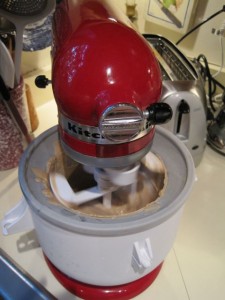 Chocolate Chip Almond Ice Cream- photo by Jordan Wright Adding to their fearsome cacophony, are whining electric drills and triple-octave cicadas telegraphing for the perfect mate. The drills are the worst. Long after the landscapers have moved on and the bugs have cast off their brittle casings, homeowners, spurred by an overdose of DIY shows, will still be building, re-building, repairing, sanding, painting and patching up what seems like every wall and roof in the neighborhood. Did I mention the road crews?
Here in my cool cocoon, I have strategized my own military operation geared to thrash back the blistering temperatures with frosty ice cream treats and luscious fruit cobblers. I consider this an important mission.
A few summers ago Wheeler Del Toro, author of “The Vegan Scoop” was serving up samples of his recipes at National Harbor’s Food and Wine Festival. Founder of the Boston-based Wheeler’s Frozen Dessert Company, Del Toro learned his craft at the posh Berthillon ice cream shop in Paris and turned his knowledge and skills into his own interpretation of the icy confection by using all-vegan ingredients.
Now I am most assuredly not vegan, not by anyone’s definition, but I do try to limit my consumption of dairy products when at all feasible. So this month I finally got around to trying out some recipes from the book. I started out with Del Toro’s Cantaloupe, not rich enough; then the Strawberry, not luscious enough and the berries too chunky and hard. I was really excited about the Red Bean, hoping to replicate any one of the versions I enjoy in Japanese restaurants. Here I met with another failure
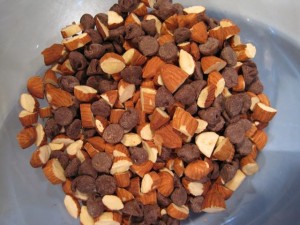 The yummy bits before adding to coffee ice cream - photo by Jordan Wright when I inadvertently used a jar of a red bean paste called for in the recipe, but, alas, didn’t notice the second ingredient on the jar read salt! The whole horrid mess met the drain with a vengeance!
Feeling as though nothing worse could befall my amateur attempts, I hit upon my tour de force…quasi-vegan coffee ice cream with bittersweet chocolate chunks and almonds. ‘Quasi’ since I used Nestle’s chocolate chips… more convenient and economical and I didn’t want to have to jettison a cup of chopped Scharffen Berger if things didn’t go my way yet again.
I became convinced that substituting the arrowroot, called for in the recipe, for cornstarch was the clincher. The final product had a smoother mouth feel and more body. Just remember if you decide to try it my way the ratio is one-part arrowroot equals two- parts cornstarch.
I used Del Toro’s basic Coffee recipe and put in the bits that I like best.
DAIRY-FREE COFFEE ICE CREAM
Adapted from The Vegan Scoop (Fair Winds Press) by Jordan Wright
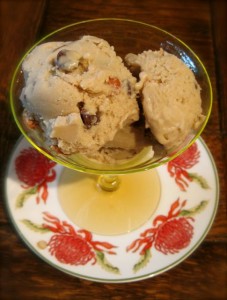 The finished product - photo by Jordan Wright 1 cup (235 ml) plain soymilk [not the light variety], divided
2 tablespoons (16 g) arrowroot powder [or 4 tablespoons corn starch]
2 cups (plain) soy creamer
¾ cup (175 ml) fresh strong coffee [I used decaf]
¾ cup (150 g) sugar
1 tablespoon (15 ml) vanilla extract [I used ½ vanilla and ½ almond]
1 cup semi-sweet or bittersweet chocolate chips or chopped chocolate
1 cup chopped skin-on whole almonds (raw or toasted)
In a small bowl, combine ¼ cup soymilk with arrowroot. Set aside.
Mix soy creamer, remaining ¾ cup soymilk, coffee and sugar in a saucepan and cook over low heat. [This took me forever to heat up so I ratcheted it up to medium] Once mixture begins to boil, remove from heat and add arrowroot cream. This will cause the liquid to thicken noticeably. Add vanilla extract.
Refrigerate mixture until chilled, approximately 2 to 3 hours. Freeze according to your ice cream maker’s instructions. In the last two minutes, while the ice cream is still soft, stir in the chocolate and almonds.
Note: Since this product results in a firmer freeze, it is best to leave the ice cream on the counter for about a half an hour before serving.
FRUIT COBBLER -TRIED AND TRUE AND STUNNINGLY SIMPLE
On weekly forays to the farmer’s market I often find myself lured by the bounty of locally grown produce and come home laden with baskets chock-a-block with far more than I can use up in a day or two. My winter-starved senses crave redemption from anemic supermarket fruit and I cave at the glorious sight of towering tables of berries, peaches, plums and nectarines bursting with vibrant color and flavor and the sweetly floral scent of just-picked fruit.
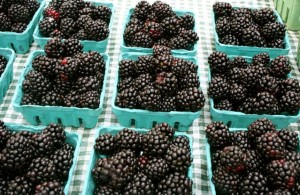 Blackberries - photo by Jordan Wright Lately I have turned my over-buying into a successful solution. At least once a week we are invited to a party or picnic where we are asked to bring a dish to aid our over-burdened hosts in filling out the menu for a large gathering. For years such an invitation has put me into a tailspin as I mentally review my hundreds of go-to recipes to arrive at the perfect offering.
Here are my typical requirements for a summer’s dish: Not too fancy, not too complex and assuredly fail-proof. Won’t melt, easy to whip up with a minimum of on-hand ingredients, cooks up while taking shower, needs no additional on-site preparation, poses no challenge to most food allergies, and is able to withstand brutal temperatures without poisoning the guests.
Notice to gracious hosts entertaining in July and August: You need not alphabetize me to determine sweet or savory. The following dish handed down by my husband’s mother, who is an 87-year veteran of every church, garden and civic club potluck dinner in the Commonwealth of Virginia, is what you can expect.
GRANDMA FREDIA’S FRUIT COBBLER
Adapted by Jordan Wright
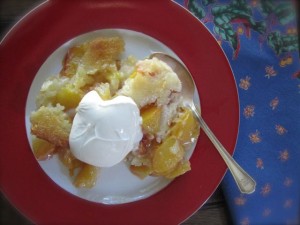 Nectarine cobbler with creme fraiche - photo by Jordan Wright
1 cup self-rising flour (unsifted)
1 cup sugar
1 cup buttermilk
¼ teaspoon of vanilla
1 quart skin-on and sliced peaches (about 6 large) or nectarines (about 8 ) or blueberries or blackberries or a combination of the above
1 stick of butter
Set oven to 350˚. Whisk together sugar and flour. Add buttermilk and vanilla to make a batter. Don’t overmix. Put stick of butter in glass or enamel casserole dish and place in oven until it begins to bubble, about 5 minutes, but keep checking till you get the hang of it. Do not leave the kitchen at this point even to hunt for the sunscreen. Remove dish and place fruits evenly over the melted butter. Pour batter to cover all fruit. Bake for 35 to 45 minutes till nicely browned on top. Remove and set on rack to cool. Now would be the time to wrap the hostess gift.
Serve warm or at room temperature with whipped cream, ice cream or crème fraiche.
|