Jordan Wright
January 17, 2019
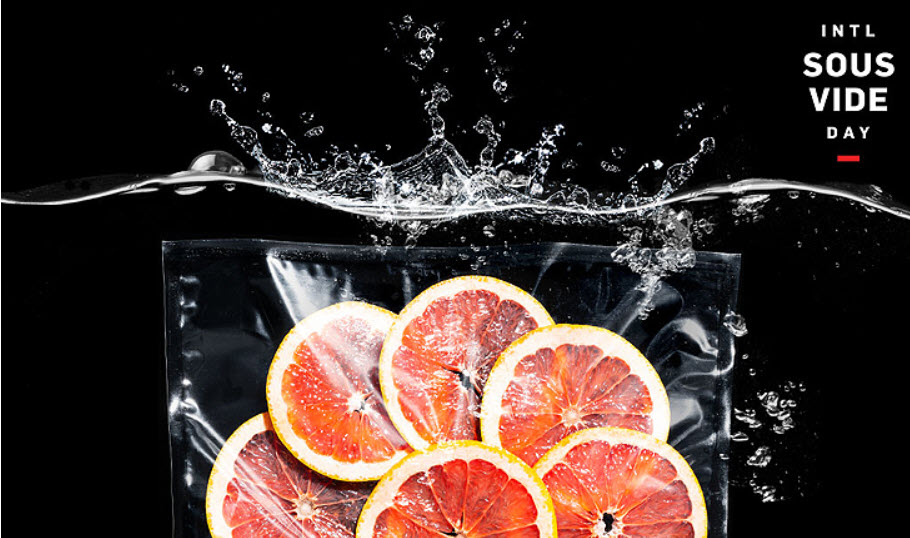
Alexandria-based Cuisine Solutions will commemorate International Sous Vide Day on January 26, 2019. The celebration honors the birthdate of Cuisine Solutions chief scientist Bruno Goussault, the “father” of sous-vide cooking and founder of the Culinary Research & Education Academy (CREA). Sous vide is the revolutionary cooking technique in which food is vacuum-sealed and slow-cooked in hot water allowing food to cook evenly at a precise temperature. This process enhances flavors and maintains the moisture, consistency and nutrients often lost during conventional cooking.
An elegant sous-vide dinner (open to the public) will be served on January 26th at the French Embassy at 4101 Reservoir Road NW, Washington, DC 20007. The celebration begins with cocktails and hors d’oeuvres from 6-7pm. At 7:30pm guests will be seated for a four-course dinner with wine.
The cocktail hour takes guests around the world with artful drinks and perfectly paired hors d’oeuvres at four stations including a USA, France, Thailand and a Dr. Goussault station. One might try the Sous Vide Buttermilk Fried Chicken with braised greens and spiced maple syrup from the USA station; a Smoked Salmon Terrine Wasabi Arugula Salad at the French Embassy station; a Crab Cake with green curry sauce and fresh young coconut slaw; from the Thailand station; and a Sous Vide Pot au Feu and 3 bone short rib, small can, vegetable and broth made with siphonat Dr. Goussault’s station.
Dinner Menu
Course 1 – Salad Trio, Sous Vide Beets with Goat Cheese, Beluga Lentil Salad, Sirloin Carpaccio
Course 2 – Seared St. Pierre with Cucumber Beurre Blanc, Sous Vide Baby Fennel
Course 3 – Duo of Beef Bone-In and Boneless Short Ribs, Celery Root Puree and Pickled Chanterelles
Course 4 – Crème Brulée with Napoleon Caramel Sauce, provided by Le Café Descartes
*Alternatives for vegetarians and GF will be available upon request
Suggested Attire: Cocktail Chic
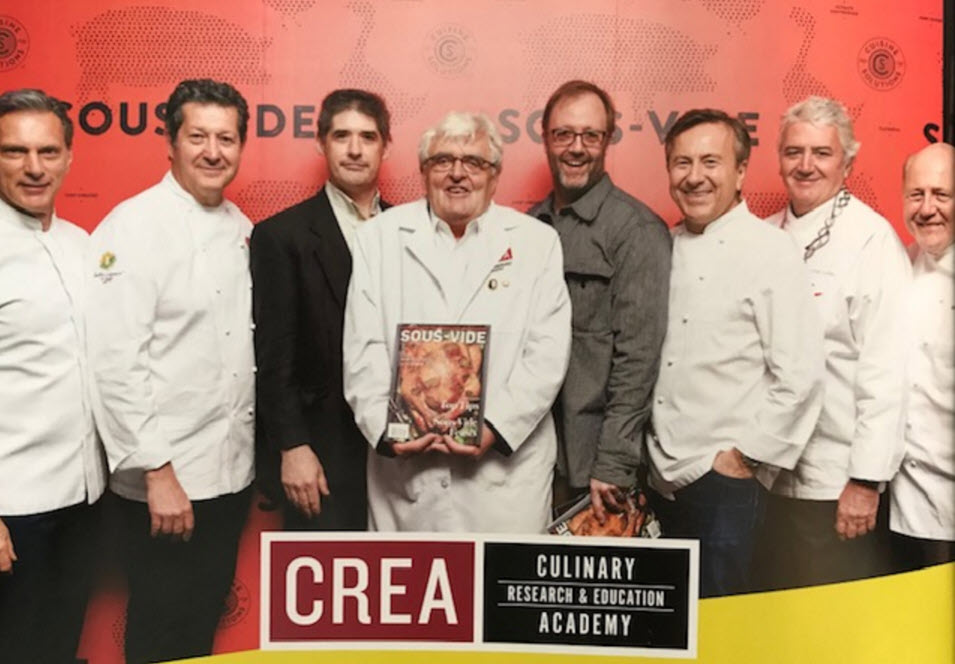
Top chefs from major culinary cities will share their love for sous vide via short, filmed interviews that will be featured on www.internationalsousvideday.com on January 26. From New York City one can watch Wylie Dufresne, David Arnold, David Bouley, Jean-Louis Dumont, Brad Farmerie, Matt Lambert, Herve Malivert, Brian Berger, Nils Norén, and Jamie Simpson; from Washington, D.C., Edward Lee, Kevin Tien, Kwame Onwuachi, Ryan Ratino, Russell Smith, K.N. Vinod and Vikram Sunderam; from Chicago, Phillip Foss, Paul Kahan, Matthias Merges, Micah Melton, Jenner Tomaska, and David and Anna Posey; from San Francisco, Erik Anderson, Kyle Connaughton, and Kathy Fang; from Los Angeles, Marcel Vigneron; from Miami, Brad and Soraya Kilgore, and Douglas Rodriguez; from Austin, Phillip Speer and Nik Yanes.
Additionally, the evening will feature a number of celebratory giveaways, including sous vide circulators and equipment, Cuisine Solutions Premium Sous Vide Cooked Products, Sous-Vide magazine subscriptions, and more. And, of course, each guest will receive a luxe, complimentary International Sous Vide Day swag bag.
All-inclusive tickets are $100 pp. Proceeds benefit the Careers Through Culinary Arts Program, a national non-profit program that educates and guides underserved high school students. Tickets are open to the public. For more information and ticket purchase visit https://franceintheus.org/spip.php?article8955. To learn more about International Sous Vide Day visit http://www.internationalsousvideday.com/.

Jordan Wright
March 15, 2017
Photo credit ~ Jordan Wright
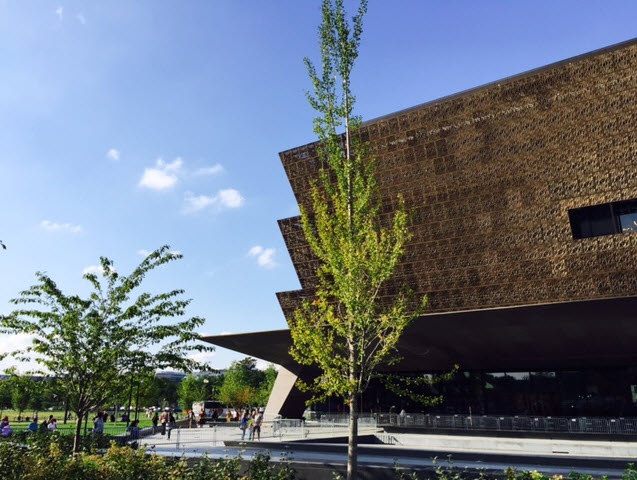 The National Museum of African American History and Culture Jerome Grant is exactly where he’s supposed to be. And for that he exudes gratefulness. As the first Executive Chef of the National Museum of African American History and Culture (NMAAHC), the young chef had long dreamed of working at the newest museum on the Mall. In the works for the past hundred years, the museum at finally opened to the public last September. It seems unfathomable that we ever lived without it. The building’s unique architecture rises both in tribute and testimonial to African Americans and their indelible contributions upon the fabric of this nation. For Grant, its opening was timely, completing his own truly American story of his rise to success at the helm of a new icon to African American culinary roots.
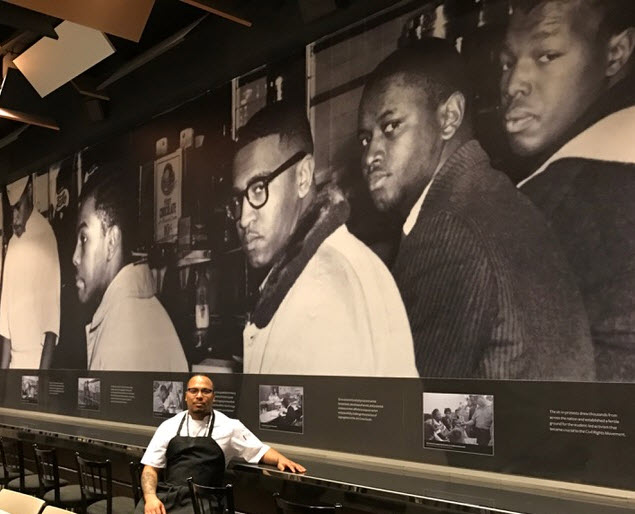 Jerome Grant takes a break at the Sweet Home Cafe Seven years ago Grant began his Washington area career with Restaurant Associates serving as Sous Chef to Richard Hetzler at the Mitsitam Native Foods Café, the award-winning restaurant ensconced in the National Museum of the American Indian (NMAI). Grant was there when Hetzler’s much lauded cookbook, The Mitsitam Café Cookbook, was published. Here he found a mentor in Hetzler who prepared him for the job of running large scale food operations. When Hetzler moved on, Grant took the helm, developing his own approach to seasonal and regional Native American dishes.
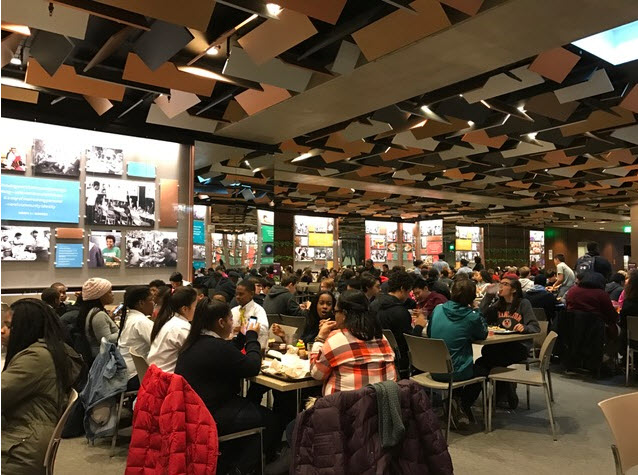 Jerome Grant takes a break at the Sweet Home Cafe In 2013 Restaurant Associates gave Grant a promotion to work at the Castle Café. He wasn’t particularly looking forward to preparing soups and sandwiches, “I went through the motions”, but he accepted with the guarantee of moving over to Sweet Home Café in 2016. Last year under the guidance of RA Culinary Supervisor Albert Lukas and Bravo Top Chef finalist, Co-Host of ABC’s The Chew and NMAAHC Culinary Ambassador Carla Hall, Grant began taking the reins in the pristine 10,000-square foot kitchen.
But before all that the chef watched the museum rise slowly out of the dirt and reflected on his own story. A parallel tale of ancestors making their way to America. In his case two grandfathers who emigrated from the island of Jamaica and came by boat to Philadelphia.
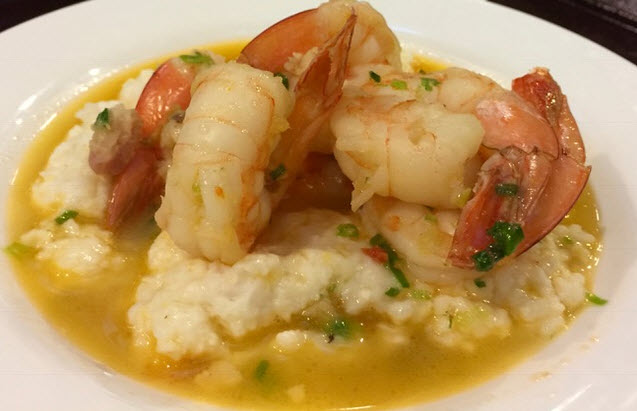 Shrimp and Anson Mills Grits In the beginning Grant worked alongside Lucas to identify the separate regions represented in the café – the Agricultural South, the Creole Coast, the Northern States and the Western Range – each featuring their own historically-influenced dishes. To her credit Hall was positive and supportive, offering suggestions and critiques while texting encouragement as the menu began to take shape.
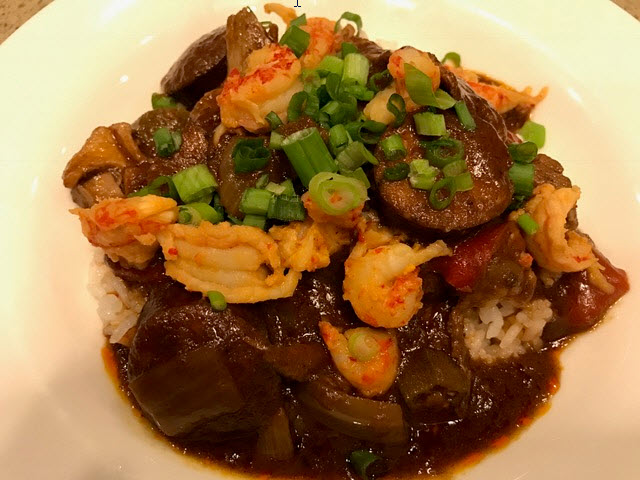 Duck, Andouille and Crawfish Gumbo “People came to eat at Mitsitam more than tour the museum,” he told me. (A 2012 RAMMY Award to the Native American café didn’t hurt.) “Here we have coincided the café to be part of the whole museum experience.” (n. b. The NMAAHC now reports that visitors spend an average of six hours touring the property and 25% of visitors dine at the Sweet Home Café.)
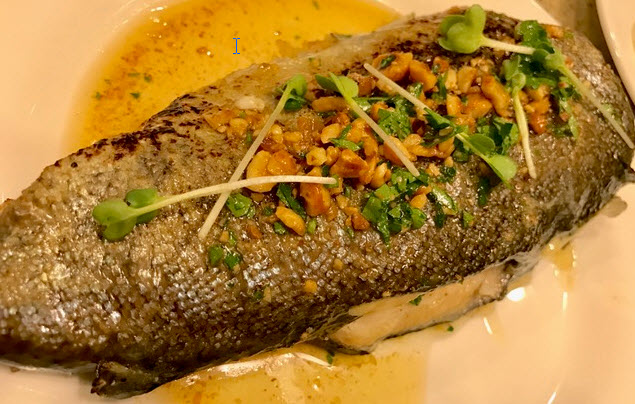 Pan Fried Trout with Hazelnut Butter Before the museum opened its doors Foodways Curator, Joanne Hyppolite asked Grant and Hall for donations to the Gallery. Hall is donating her mother’s cast iron skillet and Grant’s giving his chef’s jacket from opening day. “It means a lot to me to be here. I’m a local kid. I grew up in Fort Washington,” he proudly says. “I believe my position here shows that you can set goals and achieve them,” adding, “Sometimes when I ride my bike here in the morning I get emotional being a part of the history of the culture. I learned to cook for my grandmother and mother and I never thought I’d do something so historical. It’s been a dream come true.”
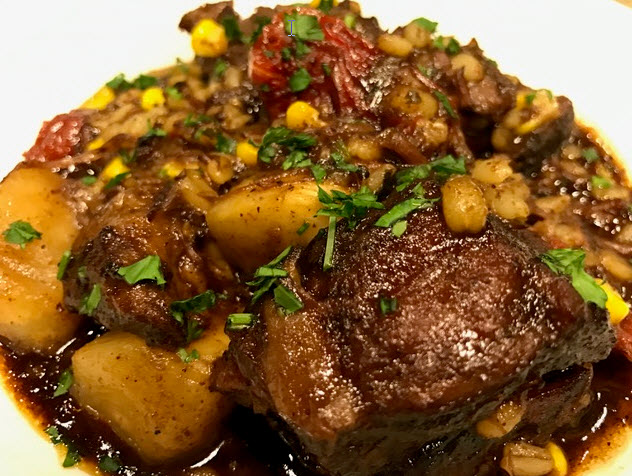 “Son of a Gun Stew” From the start Grant and Lucas set a goal of “low and slow”, taking small batch cooking and expanding it to accommodate larger crowds. The 400-seat cafeteria style restaurant goes through 1,000 lbs. of oxtail every week for its Jamaican Pepper Pot Stew and 200 lbs. of catfish every two days. An Oklahoma made smoker handles 900 pounds of brisket, pork, chicken and cold smoked haddock. When it comes to crackling good fried chicken, it’s made three times daily. And Miss Deon, who heads up cold prep, provides the café’s potato salad recipe.
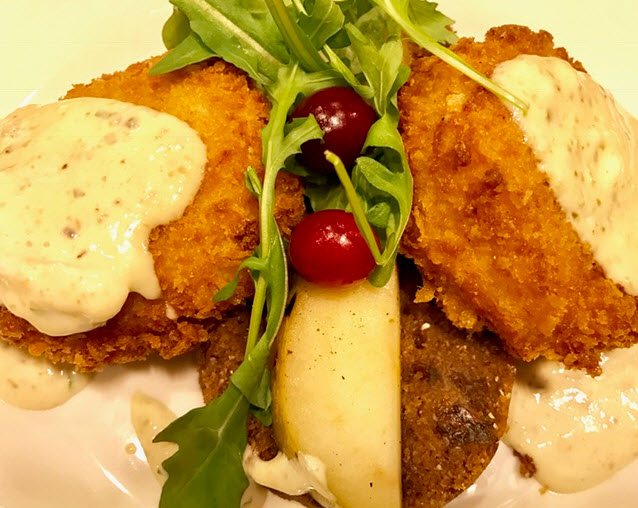 Smoked Haddock and Corn Fish Cakes You’ll find dishes that evoke the South like Brunswick Stew with chicken and rabbit, Lexington Style BBQ pork, and familiar delicacies like pickled watermelon rind and sweet corn pudding. The Creole menu is even more expansive with Duck, Andouille & Crawfish Gumbo, Pan-fried Catfish Po’boys, Shrimp & Grits, Candied Yams and Red beans & Rice. The Northern States menu features Oyster Pan Roast, a dish inspired by Thomas Downing, a New Yorker whose tavern doubled as a stop along the Underground Railway. From the Western Range are two dishes I’ve become enamored of. “Son of a Gun” Stew made of braised short ribs and root vegetables and Pan Roasted Rainbow Trout with Hazelnut Brown Butter that I’d swear comes from a cast-iron skillet cooked over a campfire. Go West, pioneer, if you want the High Mesa Peach and Blackberry Cobbler.
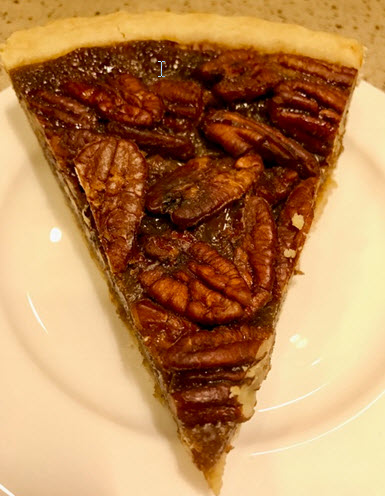 Chocolate Pecan Pie There are exciting new changes on the horizon for the café – an expanded retail operation was successful last Thanksgiving with guests able to purchase whole dinners for takeout. As of this writing you can take home several in-house baked goods including Sweet Potato Pie, Banana Nut Cakes, Corn Loaf Cakes and cornbread. I’m particularly partial to the mouthwatering Chocolate Pecan Pie.
Though it’s a challenge to secure a timed ticket, I have been fortunate enough to have eaten at the café three times, trying nearly every main dish and a few of the desserts too. The dishes are inspiring and rich with the history of African influences on the American culinary culture. And though I’m certain you will find your personal favorites, mine is the best version of Shrimp and Grits (made with Anson Mills grits), I have ever wrapped my mouth around. Soon everyone will be able to avail themselves of all these delicious dishes without timed entry tickets.
Samantha Lee
March 2016
Photo credit – Samantha Lee
Early last November Carlie Steiner, owner and beverage director, and Kevin Tien, owner and executive chef opened Himitsu – a Japanese restaurant with a Latin American and Asian flair, in the Petworth neighborhood of Washington, DC. The duo met at ThinkFoodGroup’s Oyamel on 7th Street where Steiner was bartending and Tien was cooking.
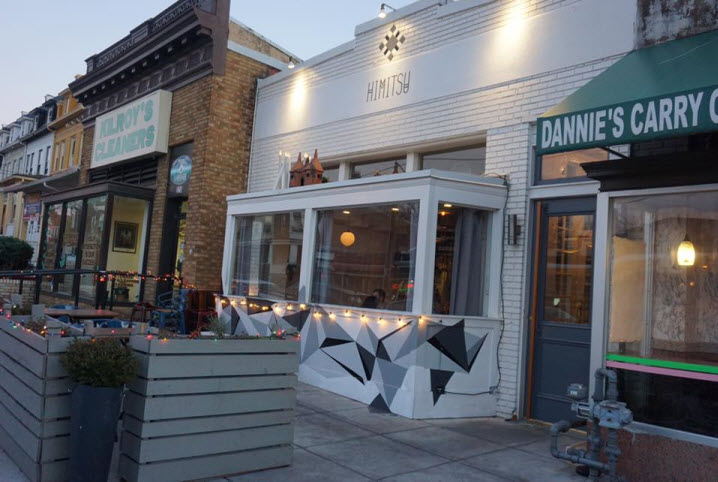
The name “Himitsu” came to them by accident. As curiosity-seekers dropped by during construction, they told them the restaurant’s name was a secret. This was entirely true. In Japanese, the word himitsu means secret. The two liked the name and felt it represented their ideas well.
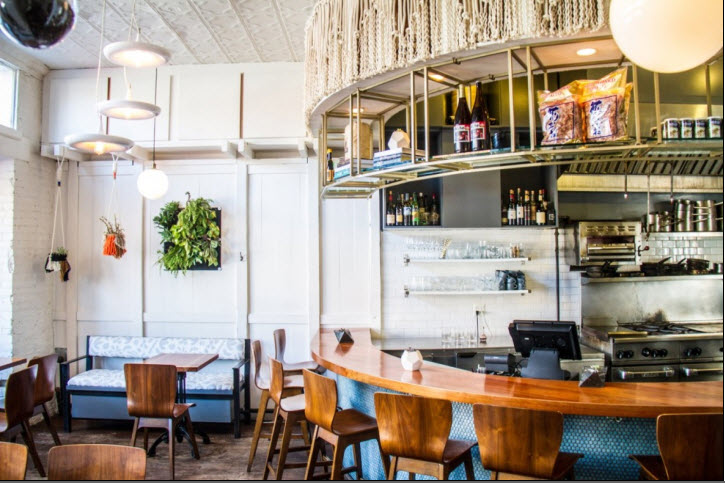
Himitsu enjoys an open kitchen concept that lets diners interact with restaurant staff. With a total of capacity of 24 seats – eight at the bar and 16 in the dining room, it’s cozy and friendly and lightly decorated with potted plants hung from the ceiling.
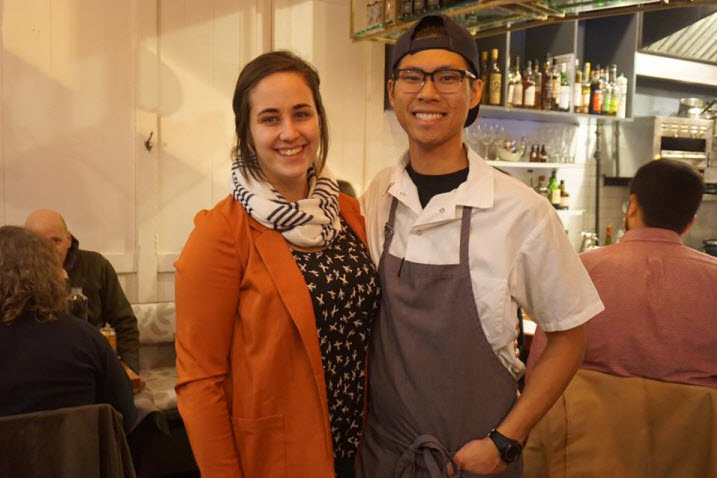 Carlie Steiner, co-owner and beverage director, and Kevin Tien, co-owner and executive chef Prior to opening Himitsu, Chef Tien had graduated from Louisiana State University with a business administration degree specializing in finance. He had cheffed at Tsunami Sushi; was Sushi Chef at Uchi in Houston, TX; Oyamel in DC; Momofuku CCDC; and the crazy-hot noew resto, Pineapple & Pearls. Steiner graduated from the Culinary Institute of America and was Chef of Spirits at Minibar by José Andrés. Their stated philosophy is to operate a kitchen with a smile and a heart full of love and see that translate into their food.
The menu changes daily combining freshness, acidity and herbs, leaning heavily towards Latin American and Asian flavor profiles. The first page features a drink menu with a selection of seven beers, five temperance mocktails, classic cocktails with a twist, and contemporary cocktails. The second page lists an expansive variety of nigiri, makimono, cold appetizers and hot appetizers.
I began with the “Baransu”, a cocktail of sake, smoked green tea, pineapple vinegar and a touch of shisho. I continued with two other cocktails – “Smoked + Iced”, made with lightly sweetened Japanese cherry wood and smoked matcha tea, and “Cinnamon Soda” made with lemon, cinnamon, sparkling water and rose water. My dinner companion remarked that the Cinnamon Soda was a unique and pleasant combination of ingredients.
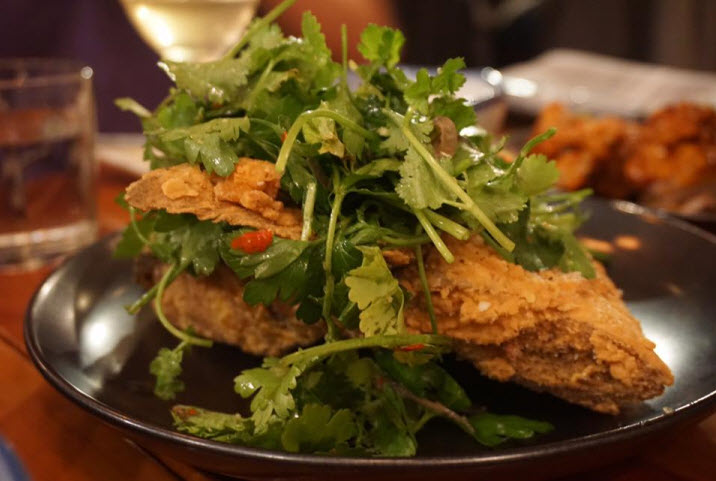
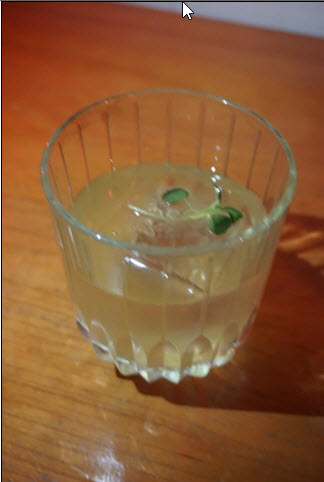 Baransu, Smoked + Iced, Cinnamon Soda The food menu peaked our curiosity due to combination of ingredients and we felt that we should try as many of the items as possible. Chef Tien’s personality and cultural upbringing influenced some of the dishes, especially the Hamachi Kama, which was prepared with lightly deep fried hamachi collar, topped with a variety of herbs, and tossed in a slightly spicy fish sauce vinaigrette and served with two glasses of Manzanilla “Pasada Pastrana” sherry. It was reminiscent of fried catfish dinner from Hanoi with its complement of Thai basil, mint leaves and fish sauce.
 Hamachi Kama The kitchen proved quite versatile with sushi offerings like Supaishi Tuna and Hamachi Zen. The Supaishi Tuna consisted of bigeye tuna, jalapeno, sriracha, avocado, cucumber, and shichimi togarashi (Japanese spice mixture) wrapped in roasted seaweed and rice vinegar-infused Japanese sticky rice with sesame seeds.
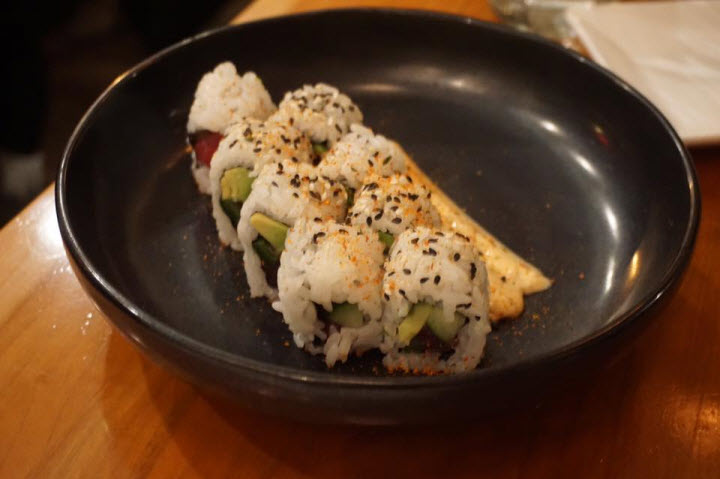 Supaishi Tuna The Hamachi Zen consisted of roasted seaweed topped rice vinegar-infused Japanese sticky rice topped with fresh Japanese yellowtail, micro mustard, crispy shallots, and avocado rolled and sliced. These rolls were served with a yuzukosho, a fancy term for yuzo chili paste. The sushi rice used in the rolls had the perfect texture and temperature and proved to be a satisfying and unique sushi experience.
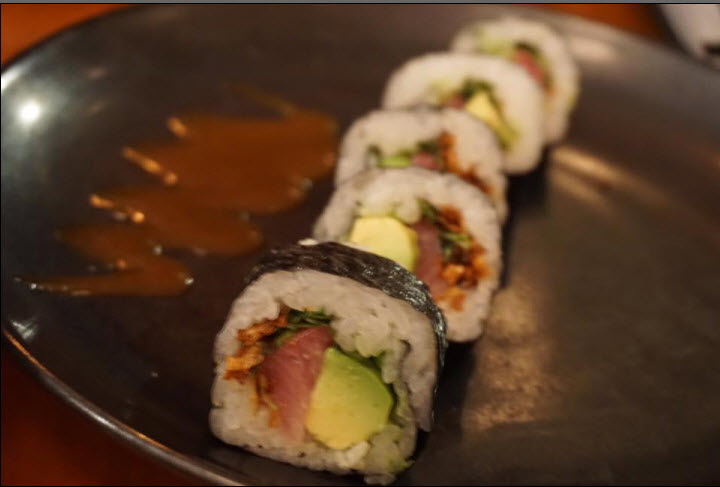 Hamachi Zen From the five “Cold Plates” I sampled the Hamachi + Orenji, Akami + Gohan, and Kawaii Salad.
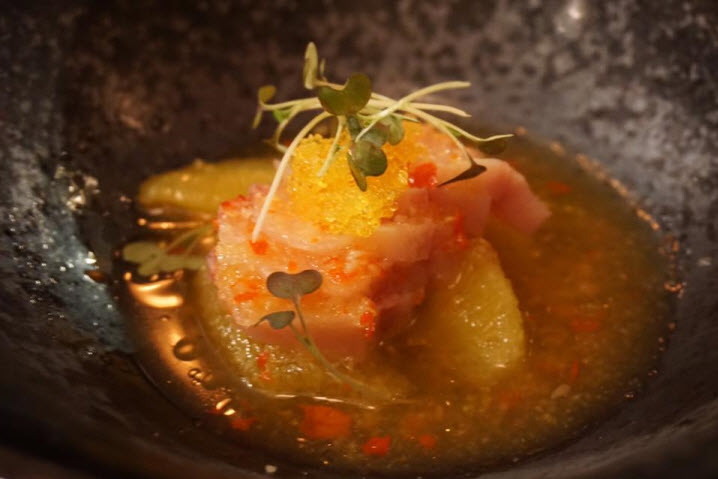 Hamachi + Orenji The Hamachi + Orenji consists of sushi-grade Japanese yellowtail and orange segments. The dish was served in Thai chili fish sauce vinaigrette and garnished with orange and yuzu tobiko. It was a nice balance of sweet and spicy.
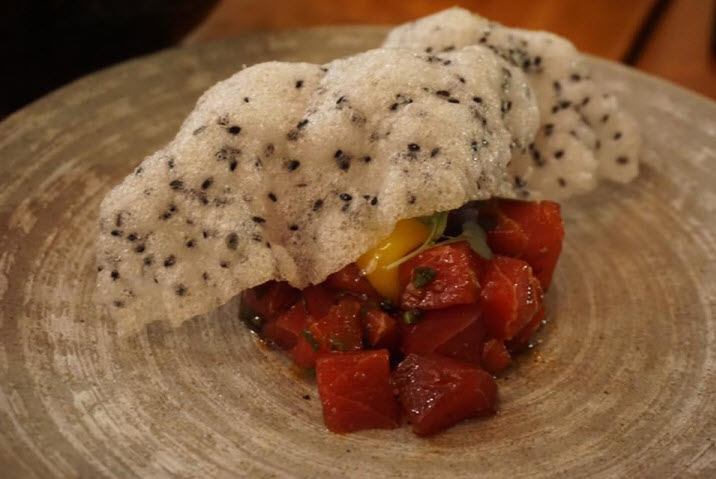 Akami + Gohan The Akami + Gohan is a dish of cubed bigeye tuna tartare mixed with shoyu, ginger, scallion and quail egg, topped with sesame rice cracker. This was my favorite dish of the night.
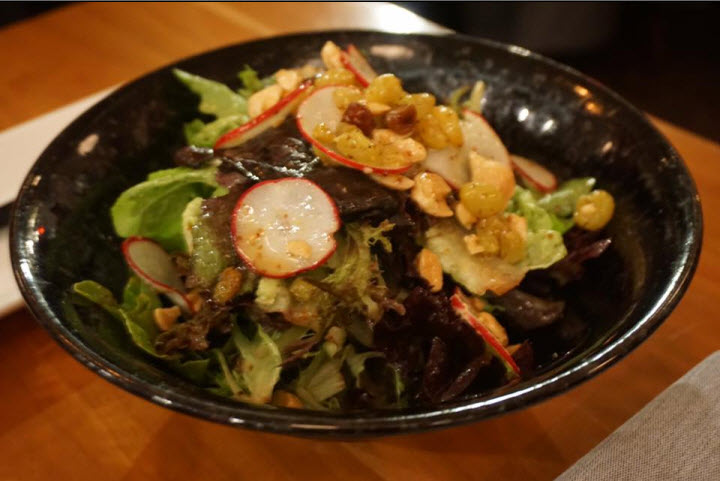 Kawaii Salad The Kawaii Salad consists of baby lettuce greens, radish, yuzu-pickled golden raisins and almonds, evenly tossed in a miso-creole mustard vinaigrette. It reminded me of a salad I had in Tokyo two summers ago.
Among the six “Hot Plates”, I tried the Agedashi Tofu, Ton Ton + Mame, and Karaage.
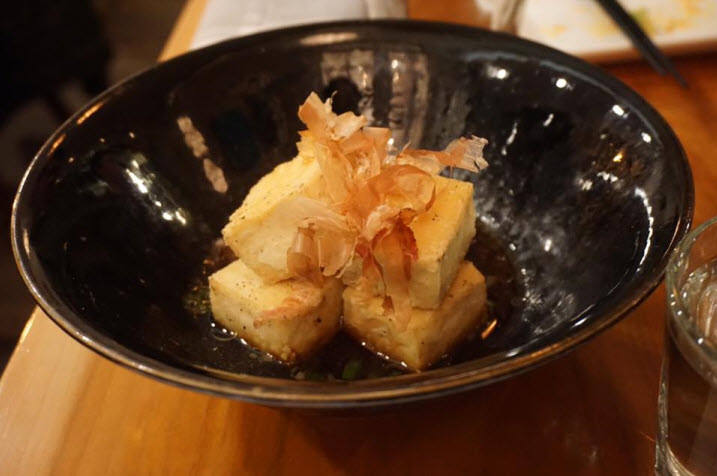 Agedashi Tofu The Agedashi Tofu has deep-fried salt and pepper battered tofu served in a traditional Japanese dashi stock with Chinese scallion ginger and garnished with bonito flakes that moved with the air current.
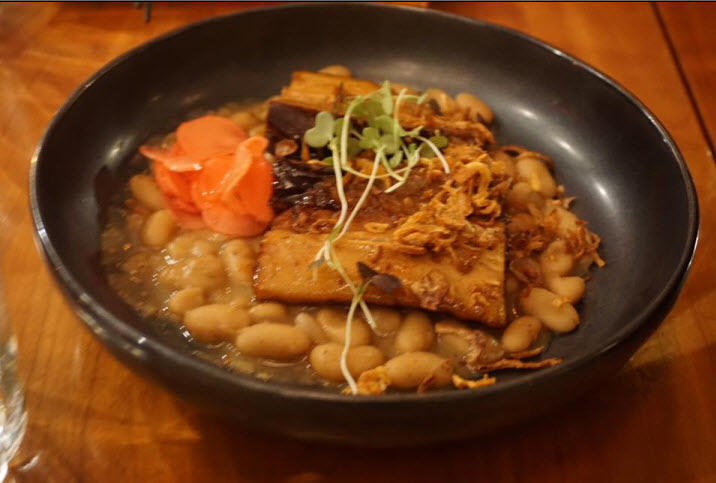 Ton Ton + Mame The Ton Ton + Mame is braised honey-hoisin Chinese pork belly with pork jus marinated ginger-garlic white beans that are garnished with both fried shallots and pickled shallots. This dish reminded me of my childhood eating roasted suckling pig with hoisin sauce as well as my uncle’s braised pig knuckles with rice.
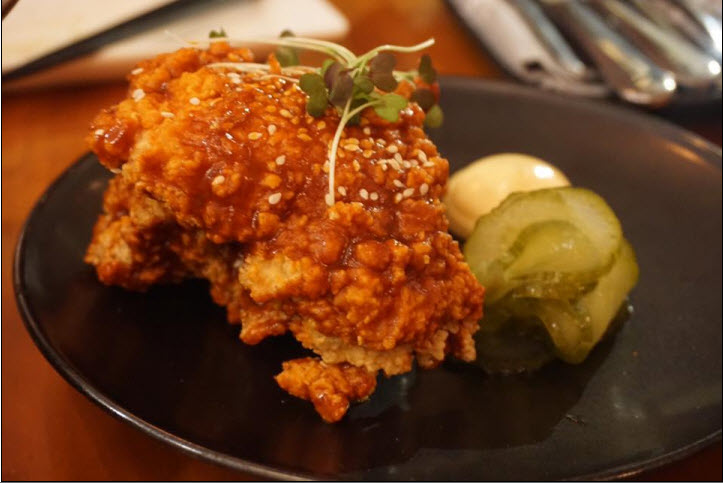 Karaage The Karaage was a delightful combination of Korean gochujang-marinated tender chicken dipped in buttermilk and deep fried, and served with house made sweet pickles and kewpie mayo.
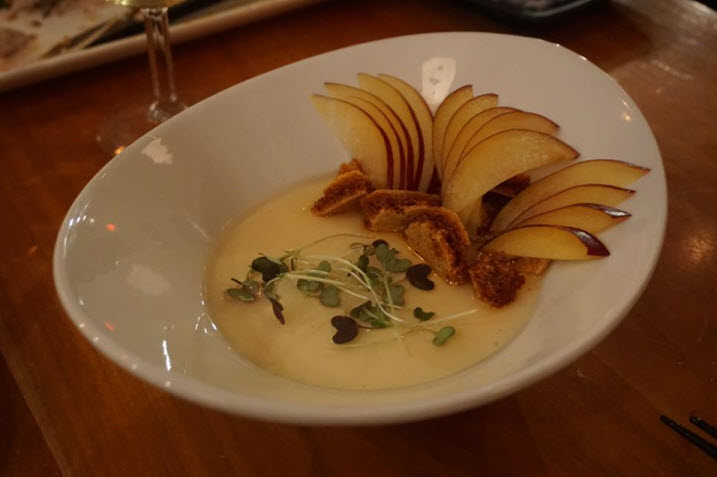 Buttermilk Panna Cotta We ended our meal with a Buttermilk Panna Cotta, which was certainly not your typical panna cotta. This panna cotta was rich in flavor and served in a shallow bowl topped with fresh plum, ginger Szechuan honeycomb candy and matcha oil. Not only was the combination of flavors unusual, but the honeycomb candy was more chewy than expected.
Overall, I enjoyed the various aspects of the restaurant – atmosphere, service, food and drinks. I highly recommend the Himitsu Zen, Hamachi Kama, Akami + Gohan, Kawaii Salad, Ton Ton + Mame, and Karaage. I look forward to returning to Himitsu to explore my taste buds, try new dishes, and enjoy these dishes once more.
Insider’s Tip – The restaurant opens for dinner service at 5pm, Tuesday – Sunday. However, they do not accept reservations and seating is strictly walk-ins. If there isn’t a table for your party size, join the waitlist and they’ll notify you when there’s an opening. Three weeks after opening the place was packed and there was around a 45-minute wait. Since then, it’s gotten rave reviews. Prepare to go early and stand in line.
Himitsu is located at 828 Upshur St. NW, Washington, DC 20011. Ample street parking along Upshur St and its cross streets.
http://himitsudc.com/
Jordan Wright
February 2, 2015
Special to DC Metro Theater Arts
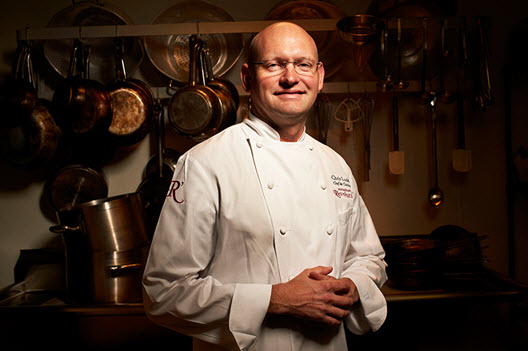 Chef Chris Lusk At forty-one, East Texas native and Johnson & Wales grad, Chris Lusk has seen the ins and outs of a few restaurant kitchens and learned a wide variety of international cuisines. After an externship in an Irish hotel he cooked Tex-Mex at Stephen Pyles’ Star Canyon in Dallas, Asian cuisine at an unnamed restaurant in Florida, and Italian at Otto Enoteca under Mario Batali. Later he worked with the iconic Brennan family’s Foodie’s Kitchen in Metairie and more recently at Commander’s Palace and Café Adelaide where he honed his Creole and Southern-style cooking. He is now Chef de Cuisine at Restaurant R’evolution in New Orleans.
At DC’s Acadiana in a room filled with shuckers, chefs, industry lobbyists and oyster lovers at the Gulf Oyster Industry Council’s Washington, DC event last month, I met Lusk over a platter of his incredible Crispy Oysters Rockefeller.
Jordan Wright – Can you describe the twist you put on the classic dish?
Chris Lusk – Traditionally it would be served on the half shell with a puree of purslane, chives, capers and other greens, then spiked with absinthe. Though it’s often spiked with Herbsaint, it really hadn’t been invented yet. So absinthe is used. Then it would be finished with breadcrumbs. My version has a crust made from dehydrated spinach, chives, green onions, breadcrumbs and Parmesan. Then it’s garnished with more Parmesan and a pesto made of green onions, chives and olive oil then spiked with absinthe. To prepare the oysters we drained the liquor off and marinated them the pesto then rolled in the breadcrumb mix. The crust really adheres to it. Then we flash fry them till oyster begins to plump and it’s still moist inside and crispy on the outside.
What we’re getting at this time of year is a smaller oyster. They go through phases during the year. I prefer to use a medium-sized oyster. At this time of year they are thriving in the cool water and they’re the perfect size and salinity.
You’ve been named one of Esquire magazine’s “Four Breakout Chefs to Watch”, cooked at the James Beard House and won the Louisiana Seafood Cookoff. What’s next?
I don’t know. I have a larger operation and bigger kitchen here with Restaurant R’evolution in New Orleans, and have a lot going on right now. They just opened their second restaurant, Seafood R’evolution outside of Jackson, MS in Ridgeland. It’s similar in concept but with more seafood.
Can you tell us about the dessert you prepared which prompted Esquire’s John Mariani’s to award you the “Best Dessert of 2011”?
It was a white chocolate biscuit pudding, a play on a dish my grandmother made when I was growing up. New Orleans is famous for bread pudding so my spin on it was what I was exposed to as a child where my grandmother used the leftover biscuits from breakfast. I took that inspiration and added white chocolate and a bit of Barq’s Root Beer Syrup on top, it’s an iconic soft drink that once was made here. Then I fried some pecans, which are from around here, as a garnish and I serve it with white chocolate ice cream.
I was very fortunate growing up to be exposed to farming. Growing up I spent summers with my grandparents who were farmers and I learned about canning and pickling using ingredients from the farm. My other grandparents were ranchers and raised cattle and hogs so we made sausage and used different cuts of meat. I’m thankful that I had the opportunity to learn about farming and ranching growing up.
I understand you are continuing your study of both Cajun and Creole cuisines. Can you talk about the differences between these two venerable cuisines?
Creole is more of the refined version of the French, Italian, German, and even African influences and Cajun reflects the more rustic, spicier and bolder flavors. Most Cajun is one-pot meals like jambalaya, gumbos, chicken fricasee and etoufées. What you see in New Orleans are the French dishes indicative of Creole. The use of Pernod, Herbsaint and absinthe lean more towards the Creole side. Although a lot of the lines have become blurred now – – and you can see the Creole and Cajun coming together.
Would you say you’re a fan of Paul Prudhomme, Emeril Lagasse or Justin Wilson?
That’s a hard question because I’m a fan of all of them for different reasons. Justin Wilson gave the first glimpse of what Cajun regional cuisine is. Prudhomme went to the next level with blackened fish, K-Paul’s and Commander’s Palace. He really put it out there on a larger scale. Then Emeril took it one step further. Those three guys have enabled me and my generation and the generation after mine to do what we do in New Orleans. Those guys are the ones that gave the younger chefs the opportunity to push the boundaries.
What are your favorite cookbooks?
I have Lafcadio Hearn and many others. My cookbook collection is all over the place – – Paul Prudhomme, Wilson’s books, Harold McGee and many others have influenced me in my style of cooking, including a lot of ethnic cookbooks that I use in different techniques of frying or pickling – like Japanese for instance. I learn from everyone including my dishwashers and sous chefs. You can never become too educated to learn from someone. Some of the most amazing meals I’ve ever had have been staff meals. The thing about New Orleans is everybody can cook here!
Opened in 1880 Commander’s Palace is one of the great American restaurants of all time. What did you learn while you were there?
That’s when I really started my education apart from culinary school. It really opened my eyes to Southern food. I learned a lot.
What signature dishes are you preparing at Restaurant R’evolution, the French Quarter spot where you are cooking now?
One of the dishes I recently put on was inspired by Vietnamese cuisine. It’s a Hoisin Glazed Grouper tied in with a blue crab pho broth and served with lightly pickled vegetables and rice noodles.
What new ingredients or techniques are on your radar these days?
I’m using lot of Asian ingredients like four different types of soy sauce such as Japanese and Filipino for curing eggs and making marinades, also different types of fish sauce and Indian spices. Sometimes just for myself I make sushi rice with marinated cobia and fresh wasabi. I’m inspired by the Vietnamese fishermen we have here.
Who was your first inspiration in the kitchen?
My grandparents were farmers and raised cattle and grandpa made sausage, things that are very popular now, so I was really fortunate as a child. I lived in a small city but spent summers with my grandparents who had a lot of land. We’d sit around and shuck corn, pick peas and can together. We do a lot of that at the restaurant pickles, jams etc. My grandpa used to clean out Coke bottles and make his own tomato juice and put the caps back on them. Man, that was the best tomato juice I’ve ever had!
What was the first dish you learned to cook and who did you serve it to?
I learned to make scrambled eggs as a child that I served to my mom and dad. I’m sure they were pretty rubbery and overcooked, but they were pretty nice about it.
What famous person would you like to prepare dinner for?
Thomas Keller.
Wow! No stress there.
Ha! No stress in that! I’m a big fan!
Jordan Wright
January 14, 2015
Special to DC Metro Theater Arts
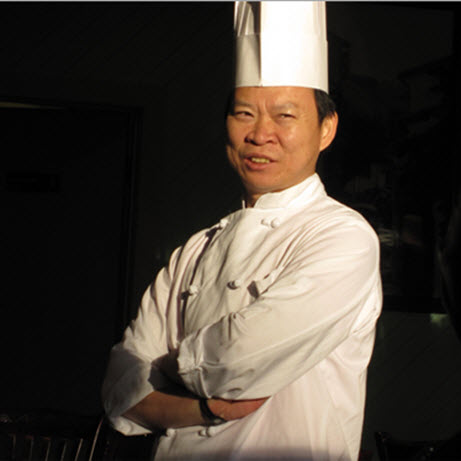 Chef Peter Chang One of the featured chefs for the Sips & Suppers dinners coming up next week is Peter Chang – an elusive chef known for ditching restaurant kitchens like a discardable cell phone. At last he has found in another accomplished chef, Gen Lee, the perfect partner to build an empire. The duo has already opened six successful restaurants around Virginia, with Arlington scheduled to open early February and another outpost in Rockville in March.
I’ve been a lucky duck to sample his cuisine twice in my life – once at a sumptuous banquet when he was the executive chef at DC’s Chinese Embassy in the 90’s, though I wasn’t aware he was the chef that oversaw the dozens of dishes offered at that lavish banquet. Years later on a hot tip I sought out his cooking at an obscure Chinese restaurant in a strip mall at the corner of Duke and Van Dorn in Alexandria.
Chang doesn’t dumb down his food for American palates. And it’s not for the faint of heart. As I recall the dish was the hottest, saltiest and most addictive chili pepper chicken I’d ever experienced. I have never forgotten it. By the time I planned on a return visit, he had scampered off for parts unknown leaving a trail of desperate fanatics in his wake.
Chang, who speaks no English, allows Gen Lee to act as his spokesperson. The two have cooked together for many years.
Whisk and Quill – Do you see everything in a yin/yang balance?
Gen Lee – Yes. It’s always going to be like that for us. In Sichuan Province it is very hot and wet and filled with trees. People who live there have to eat a lot of spicy food that’s why they use the Sichuan peppers.
Does Peter cook in one of the VA restaurants now?
Not on a daily basis. He cooks for parties and special events, but he also checks on every restaurant on a weekly basis. He’s very strict about that. I can’t tell you which restaurant he is cooking in at any given time, but he’s always cooking and he’s always training his cooks to get it right. We’re happy if its 90% right, because our recipes are very, very difficult. We don’t use sauce. For ten years when Peter and I worked as corporate chefs on a riverboat on the Yangtze River, we did the real, real Sichuan there.
How young was Peter when he first started cooking?
He was in high school. He always knew he wanted to cook and he went to cooking school at 18. He always watched his grandma cooking and helped her make lots of vegetarian dishes. You know, we don’t use much meat, but lots of vegetables mushrooms and such.
Does Peter listen to music when he’s cooking?
No, it’s very difficult. Everything is very quick. There are 20 different spices – different ones for different dishes – and it all happens fast.
What are some of the restaurants’ signature dishes?
The cumin lamb chops and bamboo fish, and everyone orders the dry-fried eggplant cut like steak fries.
Would you say your dishes are classic Sichuan?
Yes, it’s his specialty. But, for example, they don’t use lamb chops in China and the difference is the ingredients are better quality here.
Lately American chefs are using Asian ingredients in fusion cuisine and mixing things up. Where do you see this going?
A lot of chefs try it using French techniques. They are not using the real Chinese techniques and that worries me. These chefs are not Chinese. They are Hispanic or Korean. There are only a handful of real Chinese chefs here in America.
Chinese food has been losing favor to Thai and Korean in the past decade or so. Do you hope to bring back Chinese food to its earlier popularity?
Our dream is to bring back the real Chinese food, not just to make money. In a few years we know we can retire, but it’s not about that. Right now we have six restaurants. Already in our Richmond restaurant we are doing 500-600 a day. It’s like a war zone with like 100 people in line every day.
Will you be opening in the Northern Virginia area soon?
Yes, we will have two more restaurants – – one in Arlington and soon after in Rockville.
This interview was conducted, edited and condensed by Jordan Wright.
Dozens of prestigious local, national and world-renowned chefs will prepare the Sips & Suppers dinners on Sunday, January 25th. A separate evening of chef’s treats and cocktails takes place on Saturday, January 24th. Expect appearances by Joan Nathan, Jose Andres and Alice Waters. For further information and to purchase tickets to the fundraiser for Martha’s Table and DC Central Kitchen visit www.sips2015.eventbrite.com and www.suppers2015.eventbrite.com.
Jordan Wright
July 12, 2014
Photo credit Jordan Wright
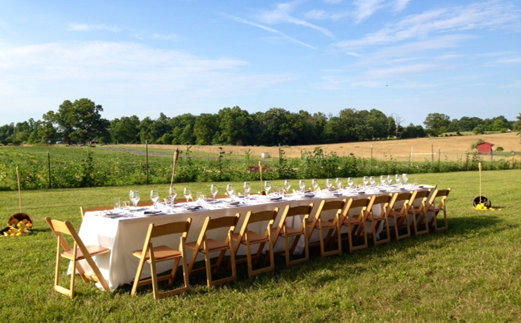 At East Lynn Farm in Round Hill The minute you turn onto Snickersville Turnpike from the John Mosby Highway, the stress of the city begins to fall away like husk off corn. It’s the route I chose to drive to East Lynn Farm in Round Hill, Virginia for a field to plate dinner. In my book driving through a green leafy tunnel, pierced through by the afternoon sun’s golden rays, is a far better introduction to the charms of the countryside than the countless traffic lights, strip malls and gas stations along Route 7. But curving around country lanes and gazing out onto wide swaths of open farmland, allows the spirit to ease mindfully into a more peaceful dimension.
As I pulled into the driveway I noticed a few other guests had already arrived. One of the chefs greeted me from the front porch and steered me to a path behind the historic farmhouse where a long linen-covered table beckoned beneath tall pines. Edging the perimeter of the bucolic scene, farm baskets overflowed with yellow squash. And torches, raised up on bamboo poles, ringed the newly mown grass. On the patio guests introduced themselves and sipped wine in the softening light. Very quickly a shared sense of adventure and camaraderie took hold of the strangers.
Before dinner service farm owner Georgia Ravitz led the twenty or so of us on a brief tour. Surrounded by hayfields dotted with weathered red barns, we strolled down the neat rows of the four-acre vegetable and flower gardens, stopping along the way to nibble on vining peas and spearmint while imagining them in our supper-to-be. On the north end of the gardens pasture-raised chickens foraged on ground insects and a small pond edged in willows afforded ducks and frogs a calm respite from the day’s heat.
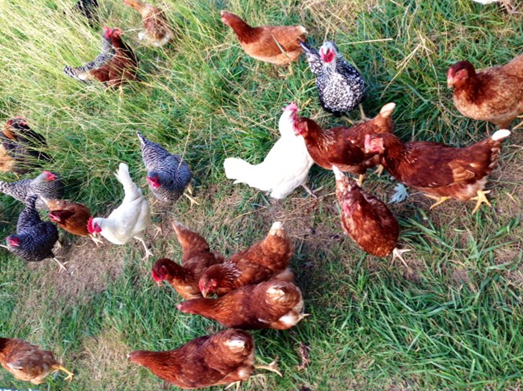 Thank you, chicks Inside the farmhouse’s state-of-the-art kitchen, three passionate chefs and their capable crew were abuzz with activity. Terence Tomlin, Mackenzie Kitburi and Kiril Stavrev had set the stage for their six-course dinner and all hands were on deck.
Kitburi and Tomlin had met at Range, Bryan Voltaggio’s American Modern restaurant in Friendship Heights. Coincidentally they had started their jobs there on the same day and, as Kitburi describes their friendship, “It took Terry awhile to warm up to me, but we’ve been clicking ever since.” Eventually Kitburi told his new friend about an idea he’d been hatching. He wanted to start a company that would stage elegant pop-up dinners in supper clubs and existing restaurants. “I told him about my plans and my vision and he got on board right away,” Kitburi explained. Stavrev, who brought along Marriott and Ritz-Carlton experience, came into the brotherly mix soon after. “He’s a great cook who complements us. We’re definitely on the same wave-length,” Kitburi says.
The company they formed, Capital Taste, is not a caterer per se. As Kitburi sees it, “My vision is to switch up the dining experience with unique menus and themes. I prefer a tasting style menu so people can experience a number of different tastes during one sitting. We want people to come to us for the food. We don’t plan to bring food to people.”
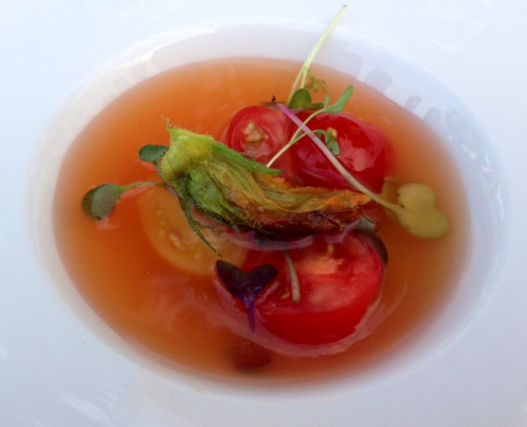
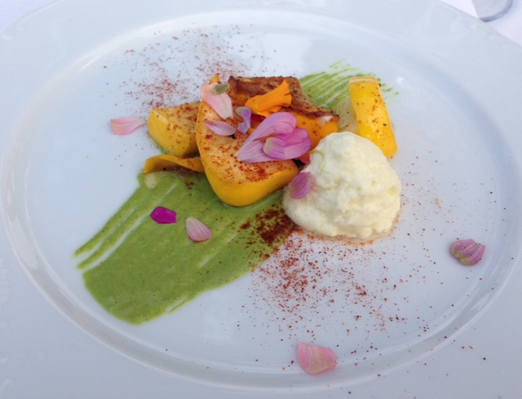 Summer Squash Mousse This evening’s pop-up was the young chefs’ first in a summer series of five farm dinners and it began with a beautiful amuse bouche of watermelon, fennel and mint, followed by zucchini mousse with herbs, and then, a sheer tomato consommé expressed by the fruit and liquid from heirloom tomatoes and crowned by a single squash blossom.
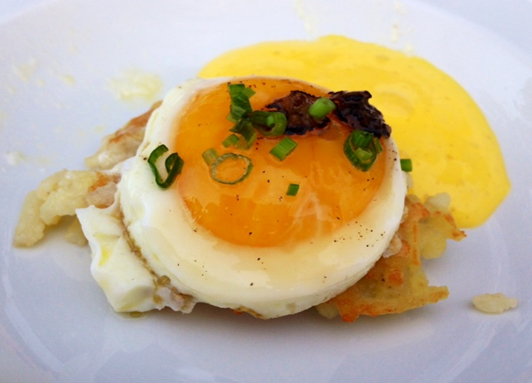
 Tomato Consommé with Squash Blossom Potato rösti topped with a sunny hen egg (Thank you, little chicks!), became a foil for truffle hollandaise. And after segueing the wine pairings from whites to reds, a duo of rack of lamb and lamb sausage with chimichurri and eggplant purée was introduced.
 Sunny Hen Egg on Potato Rosti with Truffle Hollandaise As the light grew dim, candles and torches provided the table’s sole source of illumination, and our fourth course arrived. Slices of the farm’s Angus strip loin steak got the benefit of charred baby Japanese eggplant plus two sauces – a delicate soubise hinting of onions and a glistening summer truffle sauce.
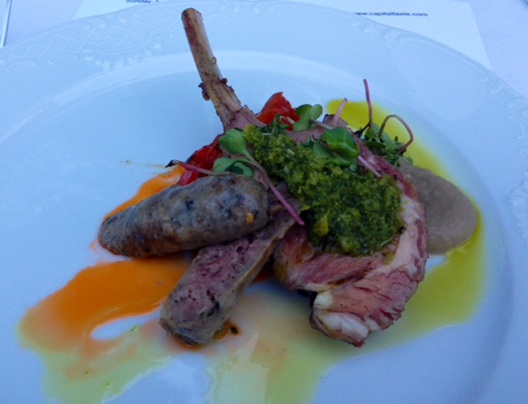 Lamb Rack and Lamb Sausage The lively conversation and breathless compliments paused only when someone remarked on the moon. A zillion stars sparkled in the Western sky as fireflies performed their staccato dance across the darkened horizon, and the final dish was presented. On a magical night where every course had delivered the promise of pasture and garden, the chefs had given the final nod to the harvest with Tomlin’s specialty, vegetable ice cream – one of red beet, the other using white asparagus. Impossible concepts that proved transcendent before melting into a lasting memory.
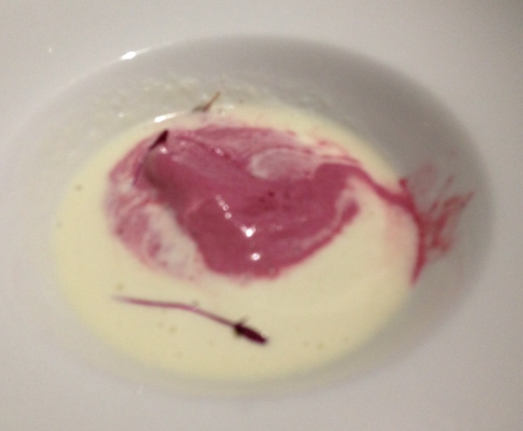 Duo of Red Beet and White Asparagus Ice Creams To dine in such a way is a wonderment. To partake of nature’s bounty expressed in sublime artistry, is truly divine.
The next dinner at East Lynn Farm will be on Sunday evening, July 20th. To book your reservations go to [email protected]. To learn more about the Inn at East Lynn or the farm’s CSA program go to www.EastLynnFarm.com.
|