Jordan Wright March 6, 2019
Photo credit – Jordan Wright
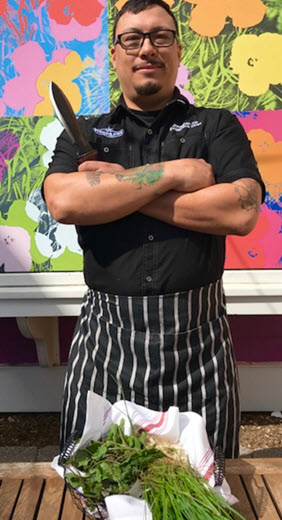
Last October Jonathan Till arrived at Del Ray’s Evening Star to take over as Executive Chef in a restaurant that has been successful serving a mostly local clientele for over two decades and seen its share of chefs. It’s also seen its ups and downs.
Evening Star Executive Chef Jonathan Till
Till brought with him a wealth of experience from his education at the New England Culinary Institute and an internship at L’Espalier in Boston, where he trained under James Beard Award winning chef, Frank McClelland. From there he received an Associates’ Degree in Culinary Arts in 2008 and learned pastry under Certified Master Pastry Chef, Frank Vollkommer, at the Saratoga National Golf Course.
Locally, Till spent two years at William Jeffery’s Tavern, a neighborhood joint featuring pub food, followed by two years as a corporate chef for the Barteca Restaurant Group before they were bought out by Del Frisco’s for a cool $325M.
Before all that, he’d taken a turn or two in fine dining (two months spent picking shells out of crabmeat in a dark room at The Dabney was not to his liking) and farm-to-table. As it turns out, connecting with farmers and growers seemed to suit him far better. At the casual Beekman Street Bistro in Saratoga Springs, New York’s tony arts district he’d enjoyed relationships with local Mennonite farmers, and at the five-star Hermitage Hotel in Nashville he was able to source many of his ingredients from their historic vegetable gardens and private cattle farm.
Till’s curiosity peaked when right out of culinary school he met an old trapper and farmer who taught him how to forage in the wild. He’d come from generations of home canners and wanted to preserve the bounty he culled from the fields and forests. After that auspicious meeting, he began making his own charcuterie and experimenting with wildcrafting and homesteading techniques including learning the pleasures of tapping maple syrup. When I spoke to Till this March, he had just returned from ice fishing in Canada. This week he’ll present Evening Star’s new Spring menu incorporating wild-foraged stinging nettles, garlic mustard greens, and spring garlic. Ramps will appear on the menu in a few weeks. All in due time.
Having seen the Spring menu there are a lot of dishes I’m looking forward to – duck with Virginia buckwheat honey, foraged greens, glazed black soybeans and wild garlic and an inspired dish of American snapper with fava beans, asparagus, morels and uszka dumplings. A planned dessert, Strawberry and Rhubarb Galette with lightly churned cream, sounds positively irresistible.
Who inspired your interest in cooking?
My grandmother was my mentor. She is a third-generation chef in the family who had four or five restaurants. Other family members worked in restaurants too – uncles and aunts – and my mom was a café owner at one time, so my path was pretty much set for me.
Will you be involved in the local farming community?
I’ve been working with Pam Hess the Executive Director at Arcadia [Arcadia Center for Sustainable Food & Agriculture] where I’m learning about what’s grown in Virginia. Next year we will set out a foraging walk to tie into permaculture. I’m very passionate about teaching and educating people and hope to make an impact.
What’s different about the food at Evening Star [ES] since you’ve been there?
Neighborhood Restaurant Group as a whole is going through an overhaul and there are big changes at their other restaurants, like Vermillion and Hazel. The company reviewed their image and went out to pick some of the best chefs they could find.
Describe your style.
How I cook for Evening Star is how I eat home. I want warm, comforting dishes and some lighter things too. When I was approached by ES I was out picking mushrooms. I had just returned from a trip to Europe where I was eating my way around the Continent with my wife and foraging for mushrooms in the Czech Republic.
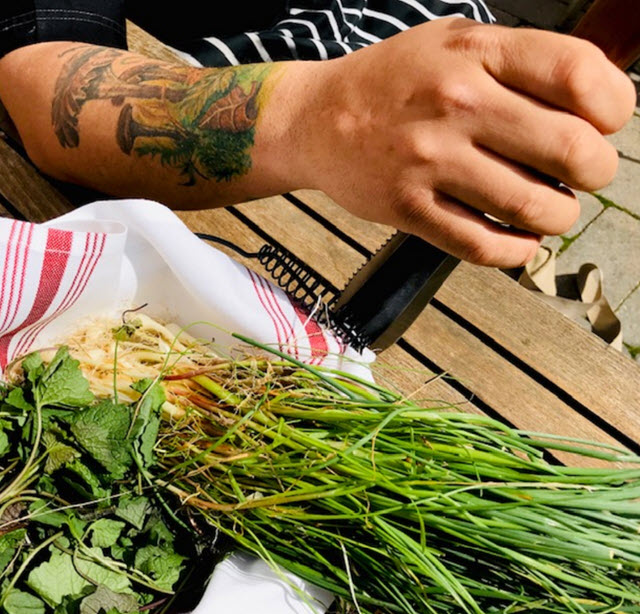
Till’s favorite hori hori knife for wildcrafting
Foraging is a huge part of what I do. I go into the woods and get it for free. This summer I established relationships with local farmers and developed a good connection with them. Since I am new to the area, I had to find spots to go foraging. ES has a rooftop garden, but it only has six inches of soil. We have to get the soil up there using ropes and a bucket. It’s very intense. This winter I set up some grow lights in the basement and started growing microgreens when a supplier wanted to charge me $100 a flat!
I’m using heirloom seeds from Monticello [Thomas Jefferson’s Monticello in Charlottesville is a World Heritage Site] where they have a program called the Thomas Jefferson Center for Historic Plants. They will be using 800 acres of their property just for heirloom crops.
What ingredients have you foraged recently?
I found spring garlic while foraging last week and caught lake trout while ice fishing in Canada.
Are you cautious not to overharvest?
I only harvest one third of what I find. I learned my lesson years ago when I picked all the chanterelles from one patch and it took five years for them to come back!
What’s the most popular dish you can’t take off the menu?
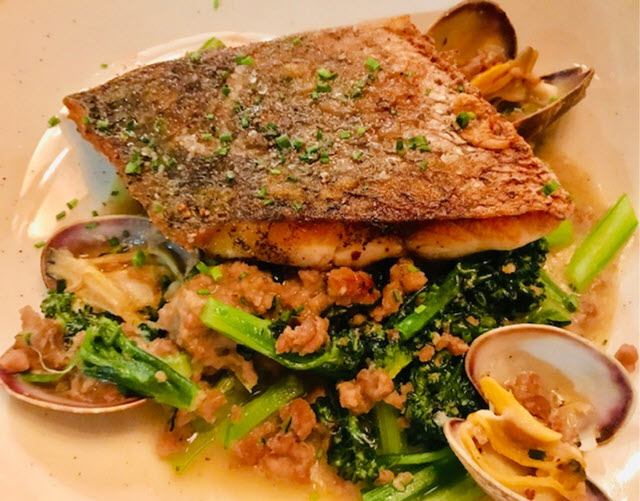
Acorn pasta made with flour from acorns I foraged, has been really popular. Unfortunately, I’m out of the acorns for now. Also, guests seem to not get enough of chicory – brined and seared with black pepper and served with a side of kombucha squash and sage. The pork chop schnitzel and gumbo are favorites now too, and the sea bass served with clams and broccolini.
Sea bass with clams and broccolini at Evening Star
I had the sea bass the other night and it was perfectly prepared with a crisped skin and tender flesh.
It’s important to understand what goes into raising or catching food. I have raised animals and farmed before and it bothers me when people don’t respect the protein.
What do you see as the future of Evening Star?
I’m still getting used to the flow. Seeing how the summer is going to be when we open the patio. The balance is going to be interesting. I plan to be at the farm and continue foraging this summer. Next year I’ll know exactly what to expect.
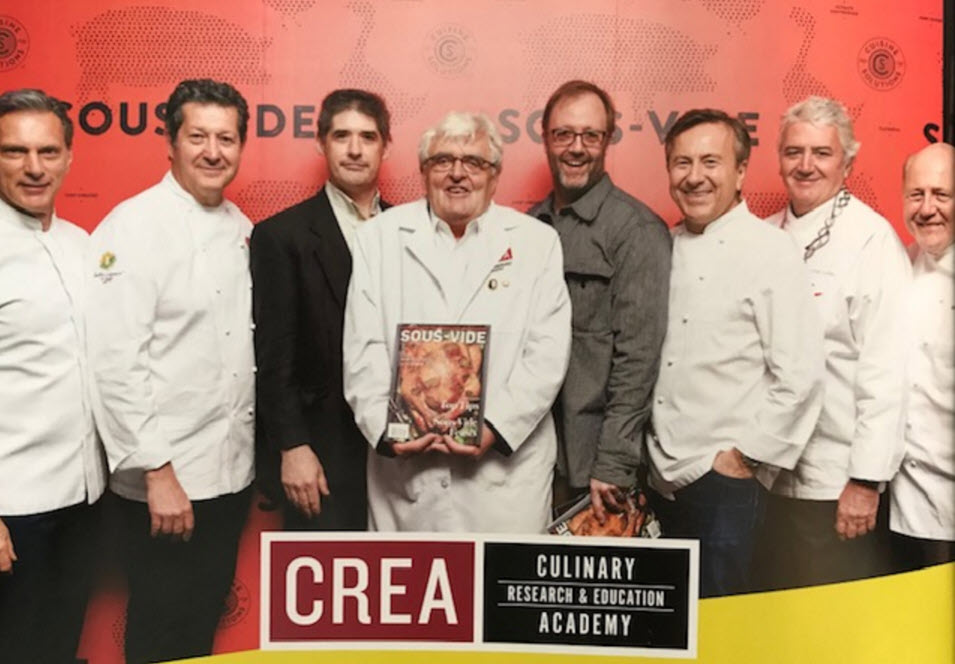
Alexandria-based Cuisine Solutions will commemorate International Sous Vide Dayon January 26, 2019. The celebration honors the birthdate of Cuisine Solutions chief scientist Bruno Goussault, the “father” of sous-vide cooking and founder of the Culinary Research & Education Academy (CREA). Sous vide is the revolutionary cooking technique in which food is vacuum-sealed and slow-cooked in hot water allowing food to cook evenly at a precise temperature. This process enhances flavors and maintains the moisture, consistency and nutrients often lost during conventional cooking.
An elegant sous-vide dinner (open to the public) will be served on January 26th at the French Embassy at 4101 Reservoir Road NW, Washington, DC 20007. The celebration begins with cocktails and hors d’oeuvres from 6-7pm. At 7:30pm guests will be seated for a four-course dinner with wine.
The cocktail hour takes guests around the world with artful drinks and perfectly paired hors d’oeuvres at four stations including a USA, France, Thailand and a Dr. Goussault station. One might try the Sous Vide Buttermilk Fried Chickenwith braised greens and spiced maple syrup from the USA station; a Smoked Salmon Terrine Wasabi Arugula Salad at the French Embassy station; a Crab Cakewith green curry sauce and fresh young coconut slaw; from the Thailand station; and a Sous Vide Pot au Feu and 3 bone short rib, small can, vegetable and broth made with siphonat Dr. Goussault’s station.
Dinner Menu
Course 1 – Salad Trio, Sous Vide Beets with Goat Cheese, Beluga Lentil Salad, Sirloin Carpaccio Course 2 – Seared St. Pierre with Cucumber Beurre Blanc, Sous Vide Baby Fennel Course 3 – Duo of Beef Bone-In and Boneless Short Ribs, Celery Root Puree and Pickled Chanterelles Course 4 – Crème Brulée with Napoleon Caramel Sauce, provided by Le Café Descartes
*Alternatives for vegetarians and GF will be available upon request
Suggested Attire: Cocktail Chic
Top chefs from major culinary cities will share their love for sous vide via short, filmed interviews that will be featured on www.internationalsousvideday.com on January 26. From New York City one can watch Wylie Dufresne, David Arnold, David Bouley, Jean-Louis Dumont, Brad Farmerie, Matt Lambert, Herve Malivert, Brian Berger, Nils Norén, and Jamie Simpson; from Washington, D.C., Edward Lee, Kevin Tien, Kwame Onwuachi, Ryan Ratino, Russell Smith, K.N. Vinod and Vikram Sunderam; from Chicago, Phillip Foss, Paul Kahan, Matthias Merges, Micah Melton, Jenner Tomaska, and David and Anna Posey; from San Francisco, Erik Anderson, Kyle Connaughton, and Kathy Fang; from Los Angeles, Marcel Vigneron; from Miami, Brad and Soraya Kilgore, and Douglas Rodriguez; from Austin, Phillip Speer and Nik Yanes.
Additionally, the evening will feature a number of celebratory giveaways, including sous vide circulators and equipment, Cuisine Solutions Premium Sous Vide Cooked Products, Sous-Vide magazine subscriptions, and more. And, of course, each guest will receive a luxe, complimentary International Sous Vide Day swag bag.
All-inclusive tickets are $100 pp. Proceeds benefit the Careers Through Culinary Arts Program, a national non-profit program that educates and guides underserved high school students. Tickets are open to the public. For more information and ticket purchase visit https://franceintheus.org/spip.php?article8955. To learn more about International Sous Vide Day visit http://www.internationalsousvideday.com/.
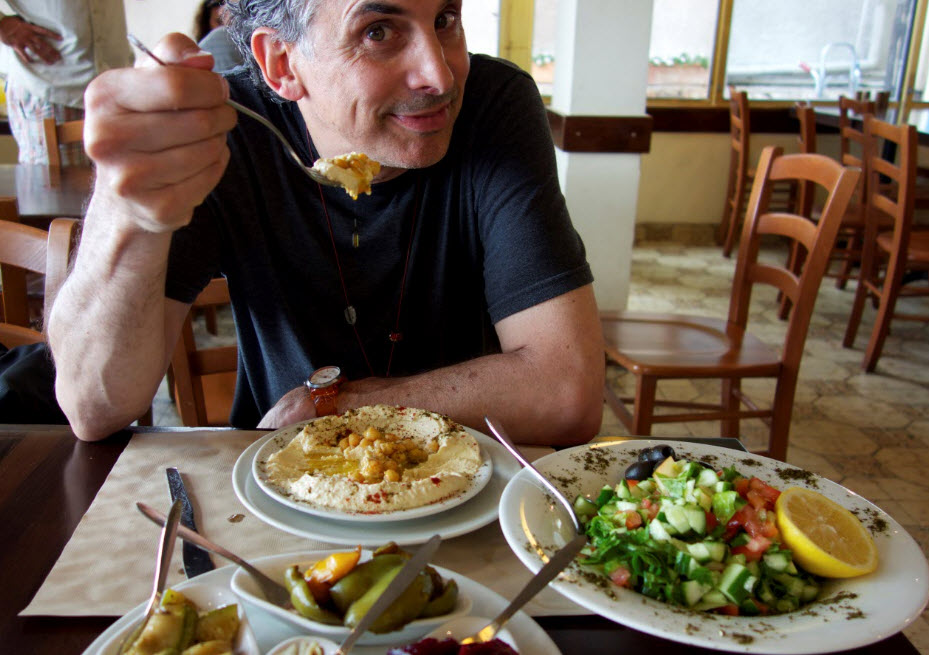
In director Roger Sherman’s latest documentary In Search of Israeli Cuisine (Menemsha Films) we learn there’s a lot more to Israel’s culinary culture than just milk and honey. Our guide is the James Beard Award-winning chef Michael Solomonov who leads us on a journey throughout Israel from an obscure mountaintop restaurant and a city-centric restaurant where Palestinian cooks work the line beside Jewish cooks to seaside cafés, where dozens of varieties of fish are found in vast outdoor markets, to discover the “true” Israeli cuisine through its people.
Roger Sherman – Producer/Writer/Director founder of Florentine Films
Best known for his two Philadelphia restaurants, Zahav and its sister restaurant, Abe Fisher, where he expresses his passion for modern Jewish cooking, the young Israeli chef shows us it’s about more than hummus or falafel and deeper than kugel or chopped liver. The film gets at the root of a culture and its history through its cooks – both amateur and professional – revealing the complexity of a country whose traditions and customs have deep roots, many which descend from outside its borders.
Chef Michael Solomonov – James Beard Award Winner and owner of Zahav
We learn that Israel’s cuisine is informed by dozens of other countries and traditions over centuries of immigration – Jewish, Turkish, Arab, Muslim, Spanish, Mediterranean, Moroccan, Indian, Bulgarian, Christian, Syrian, Lebanese – in a mosaic of 150 different cuisines. The documentary is a love story of sorts – one of the self-determination of immigrants, the rejection of the old ways by Jewish newcomers and the culinary influence of those who reached its shores with their grandmother’s recipes. It is told primarily by chefs and local journalists – and it’s as much a tribute as it is a learning curve. We learn that “Food is not political,” and “Food makes peace.” May it be so.
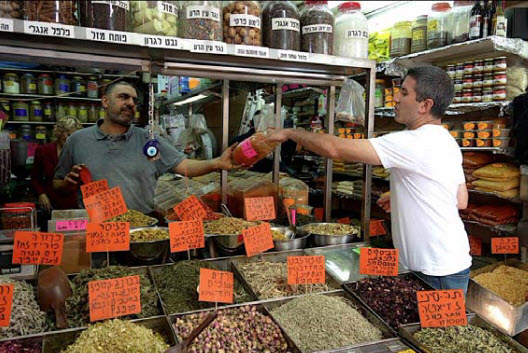
Solomonov purchasing fresh local ingredients
Solomonov takes us into the hills to Rama’s Kitchen, a French-inspired restaurant that forages for sumac to flavor its dishes and sources all its ingredients locally, before traveling north to listen to chef Uri Geremias of Uri Buri in his restaurant by the sea. And there’s a tender segment in the simple home kitchen of a woman preparing the sacred Sabbath meal for her extended family. Noted Jewish-American chef and cookbook author, Joan Nathan, weighs in with her extensive knowledge about the changes in Jewish society where 80% of its citizens are non-religious.
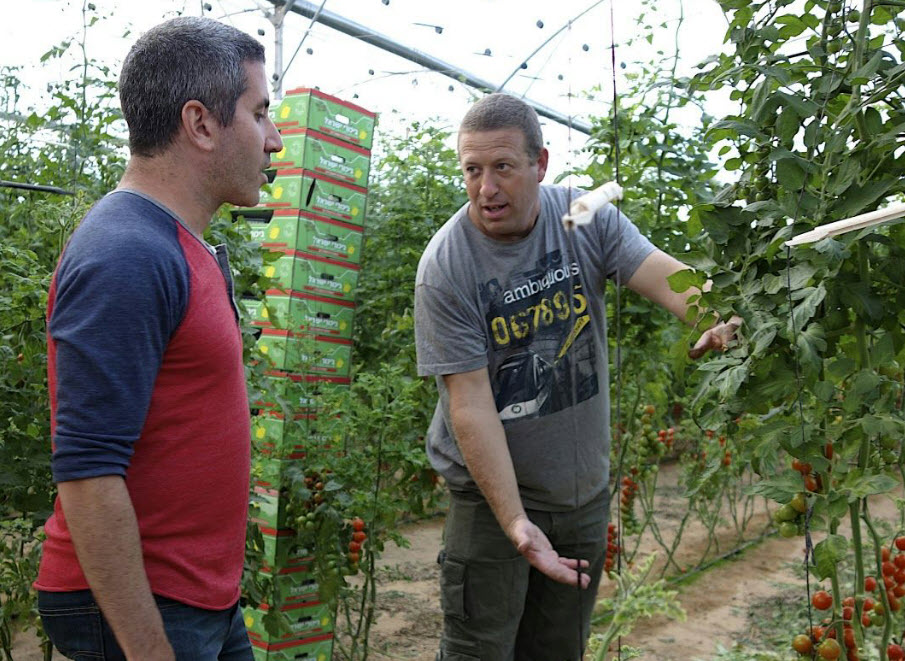
Solomonov visiting country farm ingredients source.
To understand the inspiration for many of these chefs as well as Israel’s home cooks, Ezra Kedem of Arcadia Restaurant in Jerusalem clarifies, “I cook my memories.” From Moshe Dayan’s hybridization of the cherry tomato to the sophisticated irrigation system of stepped dams that water fruit trees, vineyards and olive groves, their gifts to our kitchens are endless.
Running time two hours.
The film will be released in the Washington, DC area this Friday, April 21st at Landmark’s Bethesda Row Cinema. For more information please visit https://www.landmarktheatres.com/washington-d-c/bethesda-row-cinema/film-info/in-search-of-israeli-cuisine
Interview with John Flahavan – CEO of Flahavan’s
March 14, 2017 Jordan Wright
Not all of us will be guzzling Guinness or Harp while wearing shamrock beads and green Pilgrim hats on St. Patrick’s Day. I leave that to those cookie-baking elves. As fanciers of Irish beer, Kerrygold butter and Irish cheddar (how did we ever live without these?), there are other ways to celebrate the Auld Sod. Recently Flahavan’s Oatmeal hit the US market. Their non-GMO and gluten-free products are now readily available in our area and around the country. The company, based in Ireland, boasts a seven-generation provenance. Surprisingly, this is the pre-eminent oatmeal in Ireland, and rated Ireland’s favorite food brand. I loved hearing that it is also Ireland’s oldest family-owned company. Another little-known fact is that Quaker Oats and John McCann’s – the so-called “Irish oatmeal” we see in our supermarkets – are completely unknown there. Oddly enough McCann’s is processed and packaged in the US. So if you want real Irish oatmeal, I urge you seek this product out.
Yesterday I spoke with CEO John Flavahan by phone who rang me from Waterford County, Ireland where the company is based. Due to the blizzard, his flight to the US was cancelled and unfortunately we would not have the opportunity to meet in person. Still I was ready to learn more about his company and hoped to seek clarification of the sometimes-confusing types of oatmeal. John’s Irish lilt was a joy to hear as he lovingly spoke of his ancestors and the history of their centuries-old mill. He is especially proud of the mill’s award-winning approach to sustainable production and renewable sources. Our conversation below is followed by fantastic several recipes to try at home.
Whisk and Quill – As the oldest mill in Ireland, your mill is a veritable anthology of the history of milling in Ireland. How excited are you to introduce your oatmeal to America?
Flahavan’s is the oldest grain mill that is still working in Ireland. Given my family’s long history in milling, I have a great personal interest in history and have enjoyed tracing back the history of the company to 1785. This is when my great, great, great grandfather took over the mill, and it is quite likely that the mill was operating before that. There are records in the 1656 Civil Survey showing that there were two mills in the village of Kilmacthomas, and we believe that the Flahavan’s mill could be one of those mills.
In my quest to know more, I discovered old letters from America dating back to the 1850s and 1860s from a family member (Matthew Kelly) in Chicopee Falls, MA, USA to my great grandfather, Thomas Flahavan. One of these references the political climate among the States following the election of a new US president: Abraham Lincoln, when he described with the ultimate understatement that “The South don’t like him” Matthew went on to describe the taking of Fort Sumter which was the first act of the Civil War and mentioned the rebels attacking towards Washington.
So you can see how our family has been engaged with the USA throughout our history.
We often hear stories of Irish people travelling back to the States with Flahavan’s packed into their suitcases or asking family at home to send care packages over to them in the US. Equally many American visitors to Ireland have discovered our creamy oats while visiting Ireland and contact us to find out if they can purchase our products in the States.
Today, I see great synergy between our values of wholesome, delicious wholegrain goodness and the growing foodie / health trends that America is currently valuing, perhaps more today than ever.
Can you describe the difference between instant, steel-cut or pinhead oats, rolled oats, quick oats, and old fashioned?
Steel Cut Oats are produced at one production stage back from the rolled oats. They are produced using the whole roasted groat, cut with a steel blade just two or three times to preserve a nuttier, richer texture. Steel cut would have the lowest GI.
Quick-to-Cook Steel Cut Oats are the same as Steel Cut Oats, but cut into smaller pieces to enable quicker cooking.
Rolled Oats are the Steel Cut Oats, steamed and rolled into the flat flakes with which you might be most familiar. This process also enables a quicker cooking time of just 3 minutes.
Pinhead oats are effectively the same as steel cut oats. They are known as Pinhead oats in Ireland and as Steel Cut Oats in the US. We do not sell “instant oats” in the US. Our rolled and quick to cook options are so wholesome, unsweetened, quick and simple to make that we believe they suit the busy but health-conscious lifestyles of American consumers well.
What’s the difference between Scottish oats and Irish oats?
One key difference – between not just Irish and Scottish oats, but oats from Ireland’s South East and elsewhere – is the unique microclimate of the South East of Ireland. We use specially selected oat varieties that are perfectly suited to the exceptionally long, damp, mild growing seasons which allow for more complex flavor development.
What do you do with the bran part of the oat?
Our oatmeal is sold as a whole grain without the bran removed. However, we can actually separate out the bran to produce a product called oatbran, which we sell in small quantities in Ireland. It is most commonly used in baking wholesome Irish brown bread but can also be used as a porridge.
What are “oatlets”?
“Oatlets” is not a term that is relevant to the US market. In the Irish market we brand the equivalent of the Rolled Oatmeal US product as “Progress Oatlets”. This is an historical term that dates back to 1935 when Flahavan’s were the first mill in Ireland to begin rolling the steel cut/pinhead oatmeal into flakes in order to reduce cooking times and make the product more relevant to modern living trends. This was seen as very progressive at the time, hence the phrase “Progress Oatlets” was coined. We have registered it as a trademark. In the US, these rolled oats are simply called Flahavan’s Irish Oatmeal.
Most Americans are familiar with Quaker Oats and John McCann’s. Tell us why Flahavan’s is a better choice.
Well, Flahavan’s is still a 100% family owned company with an historic milling tradition and 235 years of experience. We’ve been sourcing our oats from local family farms within 50 miles of the mill for generations. Everyone knows Ireland as having a mild damp climate, particularly in the South East and our local oat growers use specially selected oat varieties that are perfectly suited to these ideal oat-growing conditions. The oat grain therefore develops and ripens more slowly which produces a plumper grain filled with more natural starches thus enabling us to produce a distinctive naturally creamy Flahavan’s oatmeal, with a delicious wholegrain texture.
Smaller scale, sustainable production is also at the heart of Flahavan’s 230-year old milling process. Over 60% of our mill energy comes from our own renewable sources. The millstream was originally channeled along the valley of the River Mahon and was used to power the mill wheel is still used to this day, but we are now using a water turbine installed in 1935 to generate a proportion of our electricity. We also burn the outer shell (the husk) of the oat to generate the steam used in our cooking process and use our own large scale wind turbine to generate electricity to help power the mill.
Flahavan’s produce, package and ship Irish oats worldwide from here. It’s also worth noting that Irish oatmeal consumers would not be very familiar with Quaker or John McCann’s. Flahavan’s is the most popular brand of oatmeal in Ireland, where people eat more oatmeal (60 portions) per capita than in any other country.
Do you process your oats on grinding stones or with steel blades?
Even though we’re a small company we are still relatively modern and use steel blades to produce our oat flakes.
What will I discover about the taste of your Irish oatmeal vis a vis American oatmeal?
You’ll find Flahavan’s oats have a more wholesome texture and a naturally creamier taste than oats grown elsewhere, thanks to the unique Irish microclimate and our distinctively small-batch, slow-roasted, sustainable production methods.
What’s your favorite way to eat oatmeal?
I would sometimes soak the oats overnight for an extra creamy bowl of porridge but I would always use some raisins pre-soaked in apple juice as a topping.
Which of your products is the most popular in Ireland?
Our most popular product continues to be our Flahavan’s Progress Oatlets, which is the very same product that can be found in our Irish Rolled Oatmeal box in the US.
What is baobab powder? I see it listed as an ingredient in one of your recipes online.
Baobab powder is a superfood gaining in popularity in health food circles for its high levels of vitamin C, other vitamins and minerals and a supposed immunity-boosting value. It comes from the raw fruit of the baobab tree, which grows in Africa and some parts of Australia.
In our recipes, we like to maintain a balance between the enjoyment of traditional oatmeal preparations and innovations that authentically reflect the globalizing popularity of our oats. For example, Flahavan’s oats have become popular in South Korea as a healthy source of whole grains and so we have enjoyed developing recipes that honor South Korean flavors, such as Turmeric Kimchi Oatmeal with a Fried Egg.
Do you use oat groats to process your oatmeal?
There is essentially a groat in each individual grain of oat. We slowly kiln these groats twice, while still in their husks, to optimize their flavor and naturally creamy texture. We then remove the husks and cut the groats using a steel blade. To make rolled oats, we then steam and roll the cut pieces into flakes. We power the steamer using our own renewable energy, which has been generated by burning the discarded husks.
What products are available here in the States?
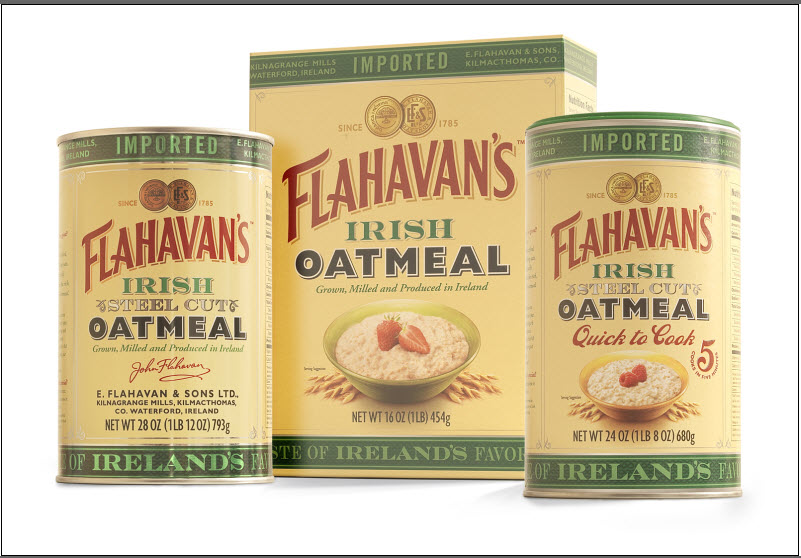
Our product range in the US consists of Flahavan’s Irish Steel Cut Oatmeal; Flahavan’s Irish Quick to Cook Steel Cut Oatmeal (cooks in 5 minutes); and Flahavan’s Irish Oatmeal – our rolled oats that cook in just 3 minutes. In your area, we are in Harris Teeter, some Wegman’s markets and Giant in Landover, MD. It is also available to order from Mybrands.com and amazon.com
What else would you like our readers to know.
We are committed to innovation and sustainability. Flahavan’s is one of the founding members of the Irish Food Board’s Origin Green Programme, the only sustainability program in the world that operates on a national scale, uniting government, the private sector and food producers through Bord Bia, the Irish Food Board. This independently verified program enables Ireland’s farmers and producers to set and achieve measurable sustainability targets – reducing environmental impact, serving local communities more effectively and protecting the extraordinarily rich natural resources that our country enjoys.
We are proud to say Flahavan’s has been recognized on numerous occasions by Irish green industry leaders for our sustainable approach to milling, which in February saw Flahavan’s winning 3 awards at the Green Energy Awards 2017 (Green Food & Beverage Award, Sustainable Green Energy Award and Green Medium-Sized Organisation of the Year).
For us, it’s all about wind, fire and water. Investing in a wind turbine in December of 2015 reinforced our commitment to a sustainable future. We also use a special technique of burning the discarded oat husks that fuel the boiler used in the steamrolling process to make rolled oats. This eliminates the use of diesel fuel. Also, the mill captures the power of the local River Mahon, just as it has done for over 230 years. We are a seventh-generation family company. I am the sixth generation, and my son James and my two daughters, Annie and Ellen, also work in the company.
Flahavan’s St. Patrick’s Day Oatmeal with Irish Whiskey, Honey and Cream Serves 3-4
Ingredients
3¾ cups (900ml) of milk
1 cup (130g) of Flahavan’s Irish “Quick to Cook” Steel Cut Oatmeal
Drizzle of honey
1 tbsp. cream
1 tbsp. Irish Mist Liqueur (or any Irish Whiskey)
Method
Place the oats and milk in a saucepan and bring to a boil.
Reduce heat and simmer for 5-7 minutes until cooked.
1 1/3 cups Flahavan’s Irish Oatmeal (rolled oats)
8 oz. almond milk
1 Tbsp. cocoa powder
1 tsp. ground cinnamon
Agave syrup or honey to taste
1 small banana, sliced and frozen overnight
Handful of popcorn (optional)
Method
Mix the Flahavan’s Organic Irish Porridge Oats, almond milk, cocoa powder, cinnamon and agave syrup/honey in a re-sealable bowl and leave in the fridge overnight.
In the morning, add the banana to the oat mixture, then place in a blender and blend until completely smooth.
If the shake is too thick, add more milk for a thinner consistency. If it’s not sweet enough, add more of your preferred sweetener.
Top with popcorn for some extra-special froth.
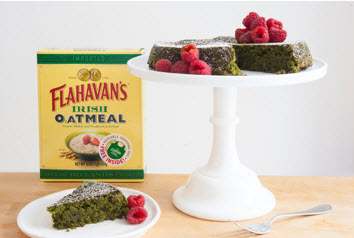
Matcha Green Tea Oat Cake Makes one 9-inch cake
Ingredients
Cake Batter
1 cup coconut flour
2 cups coconut sugar
1 tablespoon cornstarch
1 ¼ cups warm water
½ cup coconut oil, melted
1 cup Flahavan’s Oatmeal
1 cup almond meal
1 ½ teaspoon baking soda
1 ½ teaspoon baking powder
½ teaspoon kosher salt
¼ cup orange juice
½ teaspoon orange blossom extract
4 Tablespoons dried matcha (green tea) powder
Jordan Wright March 15, 2017
Photo credit ~ Jordan Wright
The National Museum of African American History and Culture
Jerome Grant is exactly where he’s supposed to be. And for that he exudes gratefulness. As the first Executive Chef of the National Museum of African American History and Culture (NMAAHC), the young chef had long dreamed of working at the newest museum on the Mall. In the works for the past hundred years, the museum at finally opened to the public last September. It seems unfathomable that we ever lived without it. The building’s unique architecture rises both in tribute and testimonial to African Americans and their indelible contributions upon the fabric of this nation. For Grant, its opening was timely, completing his own truly American story of his rise to success at the helm of a new icon to African American culinary roots.
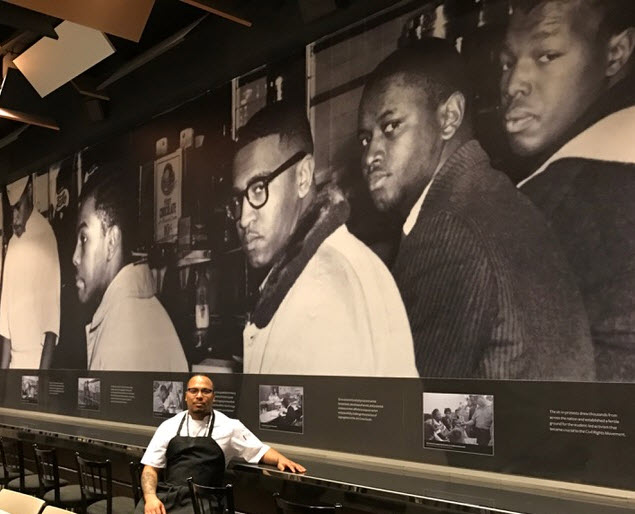
Jerome Grant takes a break at the Sweet Home Cafe
Seven years ago Grant began his Washington area career with Restaurant Associates serving as Sous Chef to Richard Hetzler at the Mitsitam Native Foods Café, the award-winning restaurant ensconced in the National Museum of the American Indian (NMAI). Grant was there when Hetzler’s much lauded cookbook, The Mitsitam Café Cookbook, was published. Here he found a mentor in Hetzler who prepared him for the job of running large scale food operations. When Hetzler moved on, Grant took the helm, developing his own approach to seasonal and regional Native American dishes.
Jerome Grant takes a break at the Sweet Home Cafe
In 2013 Restaurant Associates gave Grant a promotion to work at theCastle Café. He wasn’t particularly looking forward to preparing soups and sandwiches, “I went through the motions”, but he accepted with the guarantee of moving over to Sweet Home Café in 2016. Last year under the guidance of RA Culinary Supervisor Albert Lukas and BravoTop Chef finalist, Co-Host of ABC’s The Chew and NMAAHC Culinary Ambassador Carla Hall, Grant began taking the reins in the pristine 10,000-square foot kitchen.
But before all that the chef watched the museum rise slowly out of the dirt and reflected on his own story. A parallel tale of ancestors making their way to America. In his case two grandfathers who emigrated from the island of Jamaica and came by boat to Philadelphia.
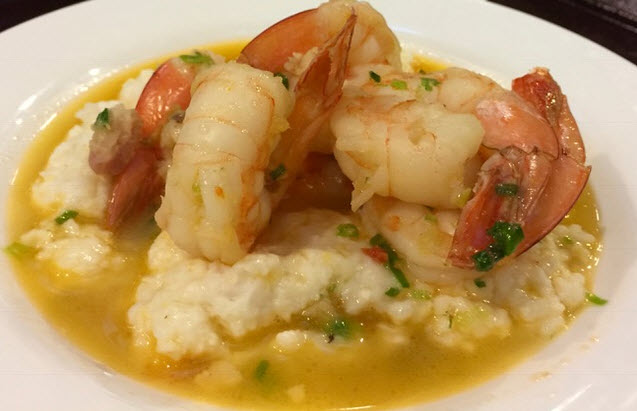
Shrimp and Anson Mills Grits
In the beginning Grant worked alongside Lucas to identify the separate regions represented in the café – the Agricultural South, the Creole Coast, the Northern States and the Western Range – each featuring their own historically-influenced dishes. To her credit Hall was positive and supportive, offering suggestions and critiques while texting encouragement as the menu began to take shape.
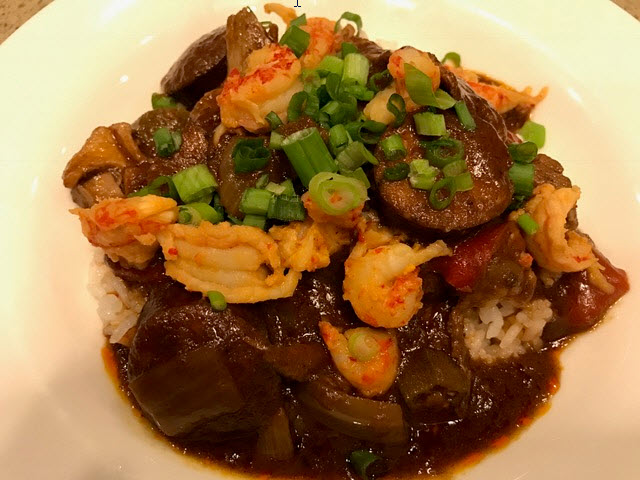
Duck, Andouille and Crawfish Gumbo
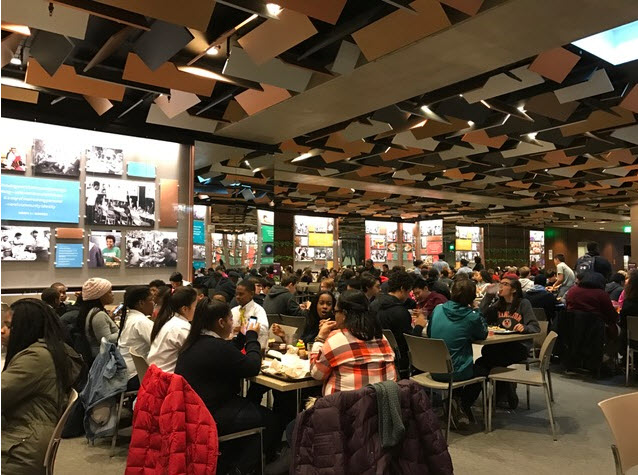
“People came to eat at Mitsitam more than tour the museum,” he told me. (A 2012 RAMMY Award to the Native American café didn’t hurt.) “Here we have coincided the café to be part of the whole museum experience.” (n. b. The NMAAHC now reports that visitors spend an average of six hours touring the property and 25% of visitors dine at the Sweet Home Café.)
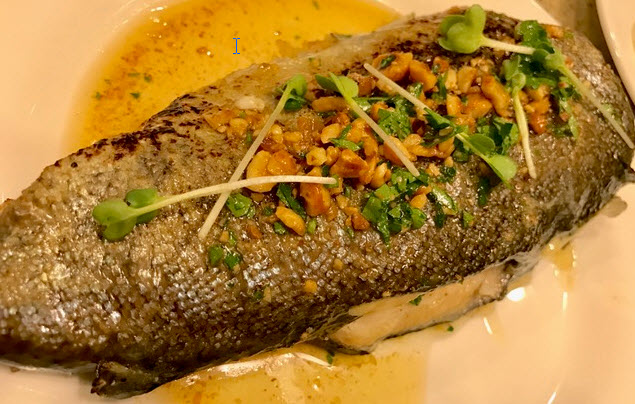
Pan Fried Trout with Hazelnut Butter
Before the museum opened its doors Foodways Curator, Joanne Hyppolite asked Grant and Hall for donations to the Gallery. Hall is donating her mother’s cast iron skillet and Grant’s giving his chef’s jacket from opening day. “It means a lot to me to be here. I’m a local kid. I grew up in Fort Washington,” he proudly says. “I believe my position here shows that you can set goals and achieve them,” adding, “Sometimes when I ride my bike here in the morning I get emotional being a part of the history of the culture. I learned to cook for my grandmother and mother and I never thought I’d do something so historical. It’s been a dream come true.”
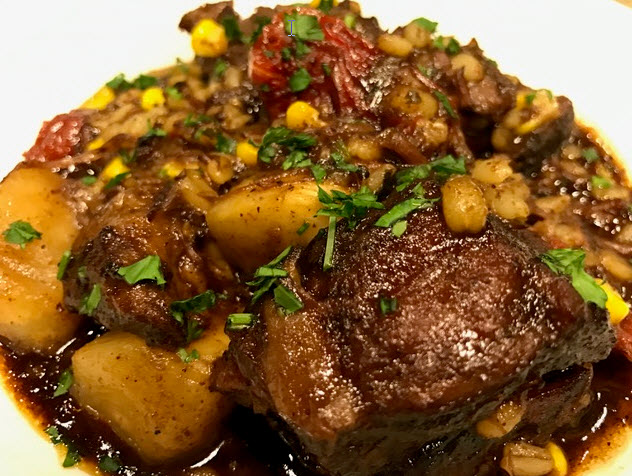
“Son of a Gun Stew”
From the start Grant and Lucas set a goal of “low and slow”, taking small batch cooking and expanding it to accommodate larger crowds. The 400-seat cafeteria style restaurant goes through 1,000 lbs. of oxtail every week for its Jamaican Pepper Pot Stew and 200 lbs. of catfish every two days. An Oklahoma made smoker handles 900 pounds of brisket, pork, chicken and cold smoked haddock. When it comes to crackling good fried chicken, it’s made three times daily. And Miss Deon, who heads up cold prep, provides the café’s potato salad recipe.
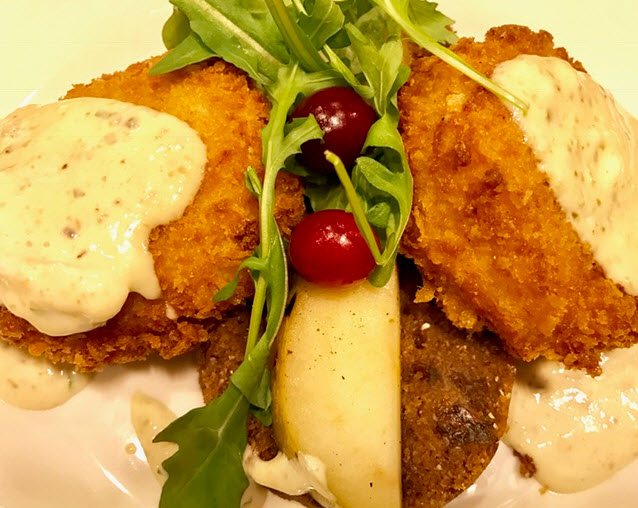
Smoked Haddock and Corn Fish Cakes
You’ll find dishes that evoke the South like Brunswick Stew with chicken and rabbit, Lexington Style BBQ pork, and familiar delicacies like pickled watermelon rind and sweet corn pudding. The Creole menu is even more expansive with Duck, Andouille & Crawfish Gumbo, Pan-fried Catfish Po’boys, Shrimp & Grits, Candied Yams and Red beans & Rice. The Northern States menu features Oyster Pan Roast, a dish inspired by Thomas Downing, a New Yorker whose tavern doubled as a stop along the Underground Railway. From the Western Range are two dishes I’ve become enamored of. “Son of a Gun” Stew made of braised short ribs and root vegetables and Pan Roasted Rainbow Trout with Hazelnut Brown Butter that I’d swear comes from a cast-iron skillet cooked over a campfire. Go West, pioneer, if you want the High Mesa Peach and Blackberry Cobbler.
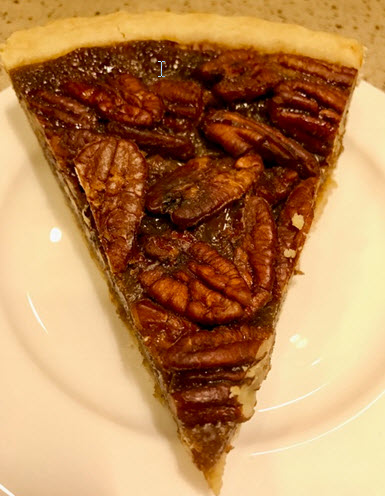
Chocolate Pecan Pie
There are exciting new changes on the horizon for the café – an expanded retail operation was successful last Thanksgiving with guests able to purchase whole dinners for takeout. As of this writing you can take home several in-house baked goods including Sweet Potato Pie, Banana Nut Cakes, Corn Loaf Cakes and cornbread. I’m particularly partial to the mouthwatering Chocolate Pecan Pie.
Though it’s a challenge to secure a timed ticket, I have been fortunate enough to have eaten at the café three times, trying nearly every main dish and a few of the desserts too. The dishes are inspiring and rich with the history of African influences on the American culinary culture. And though I’m certain you will find your personal favorites, mine is the best version of Shrimp and Grits (made with Anson Mills grits), I have ever wrapped my mouth around. Soon everyone will be able to avail themselves of all these delicious dishes without timed entry tickets.
It’s a tricky proposition to categorize Monica Bhide’s new novel, Karma and the Art of Butter Chicken under ‘Cookbook’. Strictly speaking, it is not. There are no indulgent recipes to swoon over as in her 2015 cookbook, A Life of Spice or the two before that, Modern Spice: Inspired Indian Flavors for the Contemporary Kitchen in 2009, and The Everything Indian Cookbook in 2004. A prolific writer, Bhide has penned short stories, fiction and inspirational books, tailoring the latter to an audience eager to follow in her footsteps.
Her pieces have appeared in such prestigious journals as Food & Wine, Saveur, Bon Appetit, TheWashington Post and the New York Times. As a local author, she is a frequent lecturer on the topic of food blogging for the Smithsonian Associates programs and has been a guest speaker at Georgetown University. Equally as impressive, she has been featured in four of the annual Best Food Writinganthologies along with some of the finest food writers in the nation.
Author Monica Bhide
In her latest novel Bhide offers up a sensitive, utterly hilarious portrait of a sweet, idealistic, and somewhat hapless, Indian teenager, Eshaan, whose secret love for a beautiful young woman, Kitt, leads him down a convoluted path to achieve his life’s mission. Eshaan’s altruistic dream is to feed the poor, but until he wins a local TV chef’s competition, he has to navigate major life hurdles with the aid of a page-turning collection of both friends and foes.
Bhide brings us into her world to experience the scents and flavors of India, the heady aromas of frangipani and curry, by offering up these memorably quirky, endearingly fascinating characters in the literary tradition of Armistead Maupin’s Tales of the City. One can only hope this is just the start of an ongoing series about the adventures and misadventures of Eshaan, Lama Dorje, a wise Buddhist monk, Radio Rani, an orphaned servant living in the monastery, and many others who dwell in the blessed aura of Buddha’s Karma Kitchen.
Monica will appear at an upcoming Indian dinner featuring her recipes at The Fourth Estaterestaurant in Washington, DC on December 12th. Some of the recipes are central to the plot of Karma and the Art of Butter Chicken. A signed copy of the book and a compendium of recipes are included in the price. To view the menu and purchase tickets for the dinner, click on this link. www.press.org/events/karma-and-art-butter-chicken-dinner
To learn more about Bhide, order one of her books or view her line of art jewelry visit monicabhide.com.
Monica Bhide’s Butter Chicken
Makes 4-5 servings
1 cup whole-milk Greek yogurt
1 tablespoon peeled, grated ginger
1 tablespoon peeled, minced garlic
2 tablespoons Indian tandoori masala (I recommend Shan Tandoori/ Tikka mix)
1⁄4 cup canned tomato puree
2 tablespoons fresh lemon juice
2 tablespoons melted butter or ghee*
8 skinless, boneless chicken thighs cut into small pieces
Salt, to taste
In a large bowl, mix together yogurt, ginger, garlic, Indian tandoori masala, tomato puree, salt, lemon juice and butter. Add the chicken and mix well. Cover and refrigerate for at least an hour.
Preheat the oven to 400 degrees. Place the chicken in a single layer in a roasting pan. Pour all remaining marinade over the chicken. Roast 20 to 30 minutes, or until the chicken is cooked and the juices run clear.
Remove the chicken from the oven and place all the pieces on a platter. Reserve the cooked marinade in a bowl.
For the Sauce
4 tablespoons butter
1 tablespoon peeled, grated ginger
1 tablespoon peeled, minced garlic
2 medium tomatoes, finely chopped
Salt, to taste
1 serrano chile, finely minced
1⁄2 cup heavy cream
To make the sauce, in a large skillet, heat the butter over medium heat. Add the ginger and garlic. Sauté for about 30 seconds.
Add the tomatoes and cook, stirring constantly. Use the back of a spatula to mash the tomatoes as you go. Continue until the tomatoes are completely mashed and soft, about 10 minutes.
Add the reserved marinade.
Add the salt, chili pepper, and chicken and mix well. Simmer covered for about 10 minutes.
Add the cream and simmer for another minute. Serve hot.