Broadway Star Melissa Errico Will Present “The Story of a Rose: A Musical Reverie on The Great War” a Scintillating Evening of Song and Story at the Rachel M. Schlesinger Concert Hall
Interview with Melissa Errico By Jordan Wright April 18, 2025
Melissa Errico’s Upcoming Show
The Story of a Rose: A Musical Reverie on The Great War will star Melissa Errico in a world premiere performance on May 7th for one night only at Alexandria, Virginia’s Rachel M. Schlesinger Concert Hall and Arts Center. In a unique mix of song and speech of the period, Errico relates the story of the oft-overlooked epoch of World War One in all its complexities. Produced by The Doughboy Foundation the concert benefits its work in support of America’s National World War I Memorial in Washington, D.C. The show is also presented by the Gary Sinise Foundation. Established by actor and humanitarian Gary Sinise to honor our nation’s defenders, veterans, first responders and their families, the organization creates and supports original programming designed to entertain, educate, inspire and support these heroes.
As an actress, recording artist and writer Melissa Errico has been called, at her Carnegie Hall debut in 2022, “a unique force in the life of the New York theater– there’s no one quite like her!” A Tony-nominated actress for her mentor Michel Legrand’s “Amour” on Broadway and star of such Broadway musicals as “My Fair Lady”, “High Society”, “White Christmas”, “Les Misérables”and other smash hit shows, she has come into her own in recent years with concerts and cabarets, touring the world in productions that spin together a vital and witty script with her sublime voice that had Opera News dub her “the Maria Callas of American musical theater.” The songbooks of Stephen Sondheim and Michel Legrand, among others, have been the subjects of her solo concerts. Her 2019 album “Sondheim Sublime” was called, by the Wall Street Journal, “The finest solo Sondheim album ever recorded.” Currently, Errico is touring her new album, the acclaimed “Sondheim in the City” – that will culminate in her London solo concert hall debut at Cadogan Hall on July 12, 2025.
Melissa Errico (Photo/Michael Hull)
She has also recently appeared as Mrs. Patrick Campbell in the play “Dear Liar” at the Irish Rep and premiered the role of Eleanor of Aquitaine last fall in an unforgettable concert at the Metropolitan Museum’s Cloisters, singing a new David Shire/Adam Gopnik musical penned expressly for her. Errico writes regularly about the comic twists and turns in the life of a performer for The New York Times in a series dubbed by the newspaper “Scenes From An Acting Life”.
From Paris, where she appeared last summer with her frequent concert mate Isabelle Georges at the Bal Blomet, to London, where she is a regular at Crazy Coqs cabaret – from the Elysée Palace to the stages of the Grand Rex, Montreal Jazz Festival and Carnegie Hall – she brings her inimitable mind, spirit, voice and soul to audiences around the world.
This orchestral one-woman concert, enhanced with evocative visuals, ravishing period costumes, and an all-star jazz ensemble is a stylish and deep reflection on World War I. Using her own great Aunt Rose as her avatar, and the Ziegfeld Follies that Rose starred in as a frame, Errico recreates the songs, hopes and loves of the people of the time. Additionally, acclaimed Broadway actor/musician George Abud (Lempicka, The Untitled Unauthorized Hunter S. Thompson Musical, The Band’s Visit) assists in a variety of onstage roles.
—————————–
What drew you to this subject matter? Are you a history buff?
As an art history major, I love doing historic recreation on stage. I’ve played Jefferson’s epistolary lover Maria Cosway in a play, and most recently Eleanor of Aquitaine in a new musical by David Shire and Adam Gopnik. So, when Dan Dayton of the Doughboy Foundation approached me about creating a work on stage with music about the Great War, I leapt at it.
Tell me about your Aunt Rose as your inspiration for this new work?
My Great Aunt Rose was a kind of presiding mysterious figure throughout my childhood. She was a Ziegfeld Follies girl of extraordinary beauty and glamour and I recall her red lipstick and constant cigarettes. She was an Italian immigrant newly arrived in the United States when the war began, so she seemed the perfect heroine for our story. Of course, I’ve reworked her story for dramatic purposes, but her essence is true. She was one of that generation of immigrants to America who sought out opportunities. Fortuitously, she was discovered by Ziegfeld in a subway restaurant, and he made her a star. Later she faced tragedies that often come with sudden stardom – the wrong men, the wrong choices and never enough money. The life of a Follies girl was no longer than the life of a rose.
Aunt Rose in Feathers
Where else will you be performing this?
Dan Dayton plans to make it a permanent touring show, so I’d be delighted to take it anywhere that will welcome us. New York, of course, is always the ultimate destination for a show girl of any generation.
What are your plans for promoting this? Are they filming it? Will you be televising it? Touring college campuses?
I’ve been so consumed with creating the show that I haven’t focused on its extensions, but I do hope they make a record of it – live stream or permanent video – and of course I’d go joyfully to any college that wants it, and us.
Melissa Errico
How did you first get into performing? Who were your earliest inspirations?
On my twelfth birthday, my parents took me to a Broadway revival of “On Your Toes”, the Rodgers & Hart show. By intermission I was weeping. It was so compelling. I hardly realized it was a musical comedy – it was just a dream world I needed to enter, like Alice in Wonderland. “Who are these people?”, I demanded of my mother. “How did they get up there?”. I wasn’t being facetious. I needed to know. In a sense, the rest of my life has been about answering that question.
How old were you when you knew this was what you wanted to be?
At 12 I started going to a summer theatre camp, where I got to do one musical after another. I remember being in a student production of “Bye Bye Birdie” and the audience, including my father, a classical musician, was struck by my singing. I discovered I was pretty good at it. So, by the end of my teens, I knew exactly what I wanted to do, and set out to do it. By my early twenties I was already on Broadway. Early success of that kind is both a blessing – you find out what the real thing is like – and a kind of cautionary tale. Throughout my career I’ve found new paths and a desire to include different musical genres.
Melissa Errico
What is it about the American Songbook that you love so much?
It’s funny – when an opera singer like Renee Fleming, sings Schubert or Verdi or whatever, nobody asks them why they like performing that music, or implies that it’s ‘nostalgic’. It’s just part of the musical heritage of humanity. I feel that way about Irving Berlin, Jerome Kern and Cole Porter and Rodgers & Hart and all the rest of the great Broadway songwriters. It’s just great music with wonderful lyrics.
Yip Harburg, whose words I love to sing, once notably said. “A song is an idea turned into an emotion.” When I sing his music or those of other great artists, I sense I’m living in a world of feeling and in a world of wit. That combination brings meaning to my life and, if it’s done right, communicates with an audience of any age or background. Some of my best concerts of American classics have been in Singapore. There’s been nothing like it. I remember reading that the great theater critic Kenneth Tynan once said that people just had to recognize that in the middle of the twentieth century the great European musical traditions had emigrated to America and become the music of Broadway and Tin Pan Alley. I think that’s true.
What drew you to Steven Sondheim and Michel Legrand?
They were the two mentors of my musical life. Sondheim for me is the greatest of the great American songwriters – the most musically complex, the most emotionally intricate, the most demanding, and the most rewarding. I’ve done two Sondheim recordings now – he helped enormously with the first while he was still alive – and I know I still have more Sondheim inside me. Working with him, and for him, on a series of shows – “Sunday in the Park with George” and “Passion” – is still the highlight of my theatrical career. Since I was a girl, Michel had been a part of my life, though he didn’t know it. His music became the seduction music in my household. It’s what my father played to entice my mother. I starred in his one Broadway musical, “Amour” and after it closed, he insisted that we do an orchestral record, which became “Legrand Affair”. Michel was one of those uniquely creative people, I’ve only known one or two, whose art just poured right out of them, unspooling before your eyes. You had to stop him before he forgot the music he had just made! They couldn’t be more unlike, Steve and Michel, the arch-sophisticate gay New Yorker and the ingenuous French jazz lover, one acidic and the other ardent. But I loved them both, still do. I suppose they capture the two sides of my own character, intellectual and romantic.
Melissa Errico Performing
How do you juggle motherhood and traveling?
It’s a constant struggle, as for any mother. I did an essay for The New York Times about being a ‘girl singer’ on the road that tried to capture some of the contradictions. Sondheim wrote about it in the song, “The Glamourous Life!”. It isn’t.
I adore my three daughters – the oldest one is now at Duke University. The twins are getting ready for their own leap away from home. They’re the greatest joys of my life and they lift my heart with their laughter and love and beauty every time I see them. Of course, I worry about being away from them, but I pray that giving them the model of a woman fulfilled by her work makes up for sometimes having to say goodnight on FaceTime.
Melissa Errico with her family
Do you accompany your husband Patrick McEnroe to the tournaments?
When the girls were little, we always made Wimbledon a family holiday. As ‘Mayor of the U.S. Open’, that tournament has become a family event as well. I’ve learned so much about competition, discipline and resilience from being absorbed into his tennis world.
What was it like to go to the Palais in France for a dinner with the President of France?
That was one of the epic moments of my lifetime. It shows you what a girl from Manhasset I still am, that when the invitation arrived to have dinner with the President of France at the Elysée Palace, I wrote back to make sure I was invited. I thought there must have been some mistake, but they couldn’t have been more welcoming or charming. I got to dress up and pretend to be a French aristocrat out of “Liaisons Dangereuses”. I love France and sharing a summer performance date in a Paris cabaret with my friend and frequent partner Isabelle Georges (another Michel protégé) has been one of my most treasured shared occasions.
Interview with Broadway Actor Liz Larsen Now Appearing at Arena Stage in Sarah Silverman’s The Bedwetter – A New Musical
Jordan Wright February 3, 2025
Liz Larsen
For Broadway, film and TV actor, Liz Larsen, a return to Washington, DC and Arena Stage since winning the Helen Hayes Award for Sunday in the Park with George in 1998, it is a very exciting time. In advance of attending opening night for Sarah Silverman’sThe Bedwetter who plays Sarah’s grandmother, Nana, I took the opportunity to chat with her about her career. Full Disclosure: Liz Larsen is my niece.
———
Jordan Wright – In 1998 you performed at Arena Stage in the DC production of Sunday in the Park with George where you played Dot, the female lead, winning the Helen Hayes Award for “Best Actress in a Musical”. So let me just say, after all your years dazzling audiences on Broadway, a Tony nomination for The Most Happy Fella, and a Helen Hayes nom for Baby, we’re thrilled to have you back in town. For those who wonder why we haven’t seen you here in ages, you’ve been on Law & Order in various roles for 15 years plus roles in The Americans, Madoff, Mr. Robot, The Sopranos and many more TV series. On Broadway you were featured in half a dozen major productions. As many of your fans know, your longest Broadway run (six years!) was in The Carole King Musical playing Carole’s mother.
Currently you’re co-starring as Nana in the DC premiere of the Sarah Silverman semi-autobiographical musical, The Bedwetter, based loosely on her eponymous book. Just to let readers know, if they saw its highly acclaimed Off-Broadway run, the show now has a new book with additional music and lyrics by David Yazbek (The Band’s Visit). The role casts you as the grandmother of ten-year-old Sarah who struggles with the embarrassing condition of wetting her bed along with the many stresses kids have when entering a new school and dealing with being an outsider. Let’s talk about your role as the grandmother. Is there another role you might have done in the past to channel a grandmother?
Liz Larsen – I recently played the grandmother in Sunday in the Park with George in LA which was very full circle for me having played Dot. Now I’m playing a lot of mothers of grown children and grandmothers.
JW – Tony nominee, Anne Kauffman is directing. What’s the most challenging part of working with a new director?
LL – Absolutely nothing. She’s fantastic. I know that she trusts me and I trust her. I try to figure out the “voice” of the character with her. There’s a tone to this because it’s heartbreaking and yet it’s hilarious. There’s also a certain style to this piece that needs to be figured out and we’re all doing it on our feet. It’s very collaborative. What I enjoy is playing someone who is a real person. Like when I played Carole’s mother in “Beautiful” I liked learning about her. What’s amazing about Sarah’s mother is that she pulled herself out of a ten-year depression and went on to do great things in theatre.
Liz Larsen as Dot in Arena Stage”s production of Sunday in the Park with George
JW – You’re good friends with Ashley Blanchet who plays Miss New Hampshire and was one of the cast members in the original production. Have you worked with her or any of the other cast or crew members before this production?
LL – Ashley and I worked together in Beautiful. She played Little Eva. And Shoshana Bean, who won a Grammy last night for the “Best Musical Theatre Album” of Hell’s Kitchen, and I played in Hairspray together on Broadway in 2003. Davidand I worked together on Broadway in Dirty Rotten Scoundrels and The Full Monty. [David Yasbek, composer/lyricist of The Band’s Visit, wrote additional music and lyrics for this show]
Liz Larsen
JW – What’s your preparation process?
LL – For this particular show, I practiced a Boston accent and her voice. Because she’s a smoker, I make my voice lower. And I walk a certain way because she’s in her 70’s.
JW – Do you have a routine before you go onstage?
LL – You’re gonna laugh, but gummi bears. They stimulate the saliva and moisten your throat.
JW – Favorite go-to snacks and food cravings?
LL – Just plain milk chocolate – no nuts, no caramel. Every single day of my life! It’s been great being in DC with the theatre across the street from The Wharf. I love seafood and they have great crabcakes here.
Liz Larsen in The Baltimorons
JW – What do you do in the rare times you’re not onstage or on camera?
LL – I like to cook – chicken soup with the whole chicken and matzoh ball soup. When I’m home I cook for my family and friends every night. And I love to read. Currently I’m reading Barbra Streisand’s audible book, “My Name is Barbra”. She narrates it. In it she tells what she ate and what she wore, and I love that. The other thing is swimming.
JW – You travel with your little dog, Finn. Is that for luck or comfort or both?
LL – It’s everything! I can’t be without him. Ashley and Shoshona have their dogs here too.
JW – What’s new career-wise?
LL – For the first time in my life, I was offered the lead in a movie. We shot it in Baltimore and now we’re all going to Austin for SXSW where it’s premiering later this month. It’s a buddy film – a romance. My co-star is 35 years old. I never thought that would happen! In it we spend 48 hours together at Christmas. It’s called the “Baltimorons”. Indie filmmakers Jay and Mark Duplass are the producers and directors.
JW – What is the one role you’d like to play?
LL – There have been roles I wanted to play like Mama Rose, but I feel like the role I’d want to play hasn’t been written yet.
This interview has been lightly edited and condensed.
Interview with Nolan Williams, Jr. Composer, Producer, Lyricist, Playwright, and Cultural Creator
Conducted by Jordan Wright October 6, 2024
Multi-disciplinary artist and long-time DC resident Nolan Williams, Jr. has already achieved more than most people do in a lifetime. At 55 years old the Oberlin College grad is at the top of his game with a slew of media awards from his career as a composer, producer, playwright, lyricist, director, and cultural creator. We first met at the premiere of his 2022 production, “Grace, The Musical” at Ford’s Theatre, when I was reviewing the show that later garnered 11 Broadway World Washington, DC awards, and I have been following his career like a hound dog ever since.
As the inaugural Social Practice Resident at the John F. Kennedy Center for the Performing Arts, Williams, Jr. is the recipient of numerous prestigious awards including the Kennedy Center’s National Performing Arts Committee’s 2019 Arts Advocacy Award.
He is known for composing emotionally stirring, inspirational and uplifting music influenced by musical theatre, gospel, classical music, jazz, R&B, soul and roots music featuring choral and orchestral works.
Many of his works have been performed at the Kennedy Center and are star-studded artistic collaborations with Aretha Franklin, Brian Stokes Mitchell, Audra McDonald, Denyce Graves and Ladysmith Black Mambazo as well as local award-winning artist Nova Y. Payton. He has also collaborated with Patti LaBelle, Chaka Khan, Gladys Knight, Leslie Odom, Jr., Natalie Cole, Raul Esparza, and more.
Williams, Jr. has recently released the PSA “Rise Up & Fight” (click here to watch the award-winning PSA) produced by his NEWorks Productions media company as part of their Freedom Advances campaign. This animated music video and civic anthem is designed to encourage Blacks and minorities to register and vote as well as ‘Post’, ‘Share’ and ‘Like’. It emphasizes the importance of voting to achieve power and change for Black communities in America and has already earned six international film awards, including Best Lyrics Video in the International Music Video Competition, three Awards of Excellence in the Best Shorts Competition and, this past week, the PSA became an Official Selection of the New York Film & Actors Awards.
Previous PSAs include the 2020 multi award-winning social impact video, “I Have a Right to Vote” and the America Song Project, which garnered over 2 million and 1.3 million global hits, respectively. Williams has also produced, directed and co-written the celebrated documentary, “Becoming Douglass Commonwealth,” in commemoration of DC Emancipation Day 2021. This DC Statehood video—which has won ten media prizes—reviews the history and evolution of DC and its search for statehood status. The video features historians, scholars, business leaders, legal scholars, DC leaders, Congressional Representatives, former and current DC Mayors, as well as community activists.
This week I had a chance to talk with this über-creator about his life, his accomplishments and his dreams.
—————–
JW: Does your inspiration come because of the need to connect with the culture or is it the need to educate to impact social change?
NWJ: It’s both. Cultural connection is very important to me because I see great value in our cultural expressions. I’m always looking for ways to lift up our history, culture, practices and traditions. At the same time, I understand the impact music and the Arts have in educating and uplifting our community. I’ve been doing this impact work for 21 years through my company NEWorks.
What haven’t you done yet that you’d like to?
I have other musicals currently in development. And, I want to do a musical recording of the social justice songs I’ve composed – a comprehensive album. I have written many of these songs during my 20-year tenure as Music Producer for Let Freedom Ring, the annual MLK Birthday concert jointly presented by Georgetown University and the Kennedy Center. I want to accomplish that in the next few years.
What’s on the horizon?
We will soon be making announcements about “Grace, The Musical”. I have been retooling it with Nikkole Salter [co-book writer] for the past two years, figuring out what the show wants to be. This past Spring, we did a work session at Arena Stage and a private reading at the Kennedy Center.
I am also excited about my collaborations with the Dr. Phillips Performing Arts Center in Orlando. I have revamped their “6th & Jazz” program, which annually reaches over 16,000 sixth graders in Osceola County—and we’re now looking to expand. And, I have been appointed the first Artist Director outside of the UK for a project called “STROKESTRA”, an organic initiative of music-making that pairs world-class musicians with stroke survivors and their caregivers. It was invented by the Royal Philharmonic in the UK a decade ago. The Dr. Phillips Center is now leading a residency of the project in collaboration with the Royal Philharmonic and Advent Health. It’s a beautiful program purposed to build the spirits of those involved and to facilitate healing and wholeness.
Lastly, in early November, I’ll be in London to witness two of my works being premiered on that side of the pond by the London Symphony under the baton of Maestro Andre Thomas.
How does the music come to you?
In different ways. I find it best to write when I’m inspired by something I read or see. There needs to be some kind of catalyst.
Sometimes it’s a lyric in search of a tune, other times it’s a tune awaiting a lyric. I’ve been very intentional in recent years about not writing as much at the piano, relying more on what I’m actually hearing. At some point I’ll use the piano to refine concepts.
What cultural figures most influenced you as a child?
I was influenced by artists that were writing music that had value beyond entertainment. Like Stevie Wonder who wrote about being “born in hard time Mississippi”. His social commentary stood out to me, and the way in which he used rhythms and harmonies was interesting and novel. He was very much an architect in music.
During my student days at Oberlin College, I saw Gil Scott-Heron in concert. He was the anti-entertainment industry artist. It was clear, a few bars in, this dude writes about what he wants to say. He was not concerned about being commercial. I’ve come to realize how deeply moving that is. That’s part of what has inspired me to leverage the power of music and the Arts for social good – the mission of my company NEWorks– andthe hallmark of the collaborative work we’ve been doing for 21 years with countless artists and arts organizations.
Like Wonder and Scott-Heron, I create and produce art to help shape the world I want to see. I’m hopeful enough to believe music has the power to reach at least one person and that, when it does, it touches the heart.
Who are you most inspired by today?
By this emerging generation of young creatives, many of whom are not household names but are creating art boldly. They are more open to ideas that are different. They are open to collaboration and not hung up by the -isms that most often divide us. With our recent project, Freedom Advances, we are inviting young creatives around the country to manipulate and sample two of our civic anthems, creating new ways to reach their peer groups. We’re calling it our “Rise Up Song Challenge”. We have already received numerous submissions showing how gifted, smart, savvy and creative these young artists are in using technology that is compelling as well as entertaining. I draw inspiration from them.
Would you ever write a modern opera?
It’s funny you should ask that. I have given some thought to the idea. I am open to it. When I traveled to the Met to see Fire Shut Up In My Bones written by Terence Blanchard, who is amazing, I thought, opera is something I’d consider writing.
When you’re composing a piece, at what point does the full orchestration come to you?
It depends. Sometimes ideas will just start to take shape. Other times it’s on the back end. I also love collaborating on my orchestrations because I love how my circle of colleagues help to refine ideas.
How can viewers find your PSA videos? How are they promoted?
My company www.NEWorks.us is the best place. Also, we have a great team that pushes out our projects on the web. We rely on collaboration. We put out our work, then friends tell friends who tell friends. We also use grassroots means to reach people. Schools, regional theaters, artists and community organizations are sharing our videos. We’ve garnered millions of views.
I know you’ve collaborated with celebrity chef Carla Hall on several projects, but what are your favorite foods and favorite local restaurants?
First, I love Carla—she is an amazing friend and supporter.
I like salmon. In our region my favorite version is the blackened salmon at Busboys and Poets www.BusboysandPoets.com although right now, Lydia On H www.LydiaOnHDC.com is my jam. Their Caribbean food is amazing!
Who would you most like to collaborate with on your next project?
It’s a long shot and a dream, but working with Stevie Wonder would be amazing.
And if I’m really dreaming, I’d love to work with Shonda Rhimes because I love her inventiveness – the way in which her concepts and productions showcase her love of the culture, the universality of her work’s appeal, and her standard of excellence.
What haven’t we touched on that you’d like to talk about?
Our “Rise Up & Fight” civic anthem and the commemoration of ‘Freedom Summer’. It’s so important that we focus on the history and significance of that event, especially in this election year.
Sixty years ago, three young civil rights workers – James Chaney, Andrew Goodman and Michael Schwerner – gathered with other volunteers in Mississippi to do important work in a state that was riddled with the plagues of racism and hatred. These volunteers had the courage to go into rural counties and register African American voters and to launch freedom schools that provided supplemental educational opportunities for children. But Chaney, Goodman and Schwerner were arrested on trumped up charges and then released into the hands of the KKK, who abducted and murdered them.
The “Rise Up & Fight” anthem honors these three men and the sacrifices they made with their lives. And it’s a reminder that those of us who believe in freedom must be relentless in our efforts to advance it. We must be engaged in the voting process.
This interview has been condensed and lightly edited.
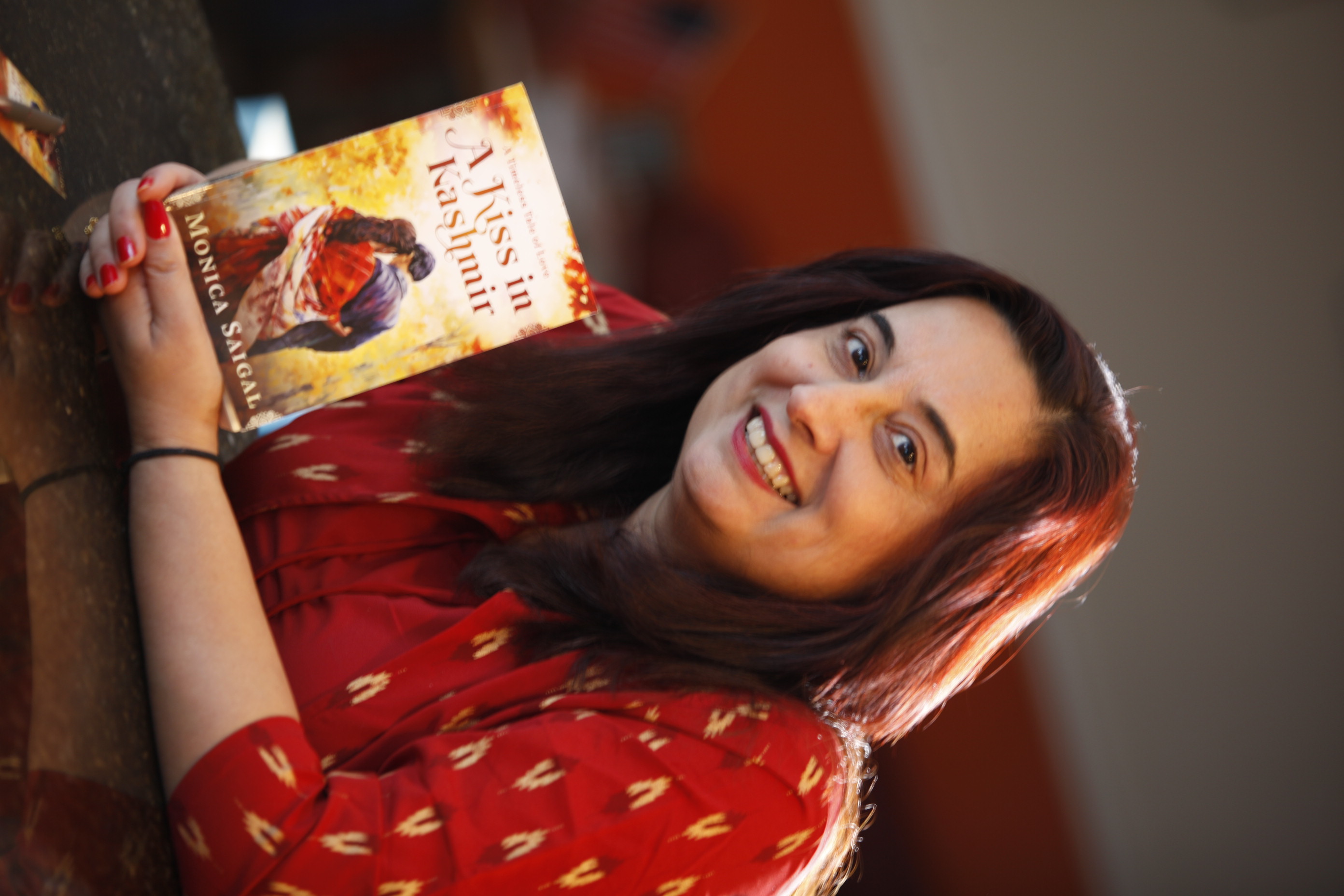
As two Northern Virginia residents with careers in food writing, Monica Saigal and I met through the local food world over a decade ago. Over those many years, I have enjoyed witnessing her transition, or should I say blossoming, from successful cookbook author into novelist of international renown. Saigal’s books garner not only extensive, top-tier media coverage but also excellent reviews. As an award-winning writer, accomplished literary coach, gifted poet, storyteller, keynote speaker and educator, her cookbooks and novels have enjoyed universal appeal.
Last month Saigal, whose full-time gig is Social Media Strategist for a tech company, launched her latest love story/mystery “A Kiss in Kashmir” at the Hilton Alexandria Mark Center Hotel. Over a hundred fans including media were treated to a sumptuous assortment of Indian-centric hors d’oeuvres and desserts designed by the hotel’s Executive Chef Rajeev Sethi. Kashmiri ingredients including cardamom, almonds, saffron and cinnamon were incorporated into these delicacies and a Kashmiri Kahwa tea service was offered as well. The ever-popular local radio celebrity, Kojo Nnamdi, conducted the interview with the two dear friends seated on a lavishly decorated stage befitting an Indian wedding scene.
Book launch event at the Hilton
Desserts served at the book launch
I spoke with Saigal after the event.
Jordan Wright – Are all your novels set in India?
Monica Saigal – “The Devil in Us” was set in the U.S, “The Soul Catcher” is magical realism, and “Karma and the Art of Butter Chicken” was set in Delhi.
JW – Your latest novel “A Kiss in Kashmir” tells a beautiful story of an older couple finding love against all odds. It is a deeply human story filled with romantic emotion. What was your inspiration?
MS – It was very selfish. I wrote the book I wanted to read. I found that most of the books I read weren’t for older people. I wanted to write a story for an older demographic that was realistic and very forward thinking. We sometimes tend to bypass the older generations in our narratives and I think that needs to change. I think people are looking for these stories.
JW – Your novels provide close-ups into the lives, environments, and emotions of many diverse Indian castes as well as those from other cultures. You gift them with intimate emotions and romantic interactions. How do you source these descriptions? Do they come from outside your circle of friends? Are they fantasies or do you draw from stories friends tell you?
MS – When I create a character, I sketch out the psychological profile of the character. Then I ask around to friends to find someone who fits the description and is willing to talk to me. Then I can fill out my profile because I don’t think I can claim to know each individual characters’ personalities. When Kojo read the book, he called me right away because, as an older widower, he identified with that profile. “I would have reacted the same way George [the hero in “A Kiss in Kashmir”] reacted,” he told me.
JW – I know you conduct writing classes for budding authors. How can locals find your schedule?
MS – On weekends I’ll be conducting classes on Healing Modalities. I have a series coming up soon. The classes will be followed by making jewelry, yoga, painting and sound healing. The schedules are posted on my website www.MonicaSaigal.com
JW – Your dialogue shows a vibrancy which contributes to the authenticity of conversations between characters. Do you record conversations while you are out and about? Or do you carry a notebook to jot down quips and quotes?
MS – I learned from many of my novelist friends how to listen and how people speak. It’s active listening. I feel people are looking for insight where there is dialogue. I used to write as if it were theoretical. Now I listen when I go to restaurants. I don’t spy on people! I want to hear how they start a sentence and how they stop a sentence.
JW – Does living in Northern Virginia influence your writing?
MS – I find a lot of serenity where I live. It is beautiful here in Virginia. I’ve lived here for over 20 years and love walking around Meadow Lark Gardens and other local parks. The Japanese have a saying, “Go and bathe in the forest.” That is what Virginia affords me.
JW – In your early writing it was your cookbooks that established your writing career with your reputation for approachable Indian cooking. Can you find all the ingredients you need to prepare your dishes?
MS – Very easily. We used to get ingredients sent from India. Nowadays I can go to the Ashburn area where Patel Brothers has everything including freshly made rotis and pickles.
Jordan Wright March 6, 2019
Photo credit – Jordan Wright
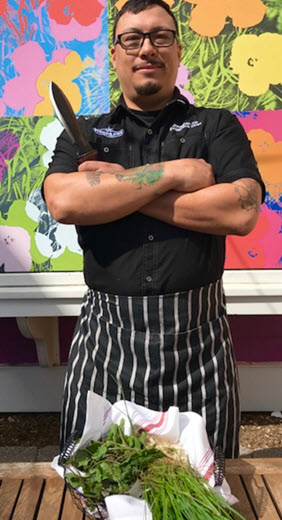
Last October Jonathan Till arrived at Del Ray’s Evening Star to take over as Executive Chef in a restaurant that has been successful serving a mostly local clientele for over two decades and seen its share of chefs. It’s also seen its ups and downs.
Evening Star Executive Chef Jonathan Till
Till brought with him a wealth of experience from his education at the New England Culinary Institute and an internship at L’Espalier in Boston, where he trained under James Beard Award winning chef, Frank McClelland. From there he received an Associates’ Degree in Culinary Arts in 2008 and learned pastry under Certified Master Pastry Chef, Frank Vollkommer, at the Saratoga National Golf Course.
Locally, Till spent two years at William Jeffery’s Tavern, a neighborhood joint featuring pub food, followed by two years as a corporate chef for the Barteca Restaurant Group before they were bought out by Del Frisco’s for a cool $325M.
Before all that, he’d taken a turn or two in fine dining (two months spent picking shells out of crabmeat in a dark room at The Dabney was not to his liking) and farm-to-table. As it turns out, connecting with farmers and growers seemed to suit him far better. At the casual Beekman Street Bistro in Saratoga Springs, New York’s tony arts district he’d enjoyed relationships with local Mennonite farmers, and at the five-star Hermitage Hotel in Nashville he was able to source many of his ingredients from their historic vegetable gardens and private cattle farm.
Till’s curiosity peaked when right out of culinary school he met an old trapper and farmer who taught him how to forage in the wild. He’d come from generations of home canners and wanted to preserve the bounty he culled from the fields and forests. After that auspicious meeting, he began making his own charcuterie and experimenting with wildcrafting and homesteading techniques including learning the pleasures of tapping maple syrup. When I spoke to Till this March, he had just returned from ice fishing in Canada. This week he’ll present Evening Star’s new Spring menu incorporating wild-foraged stinging nettles, garlic mustard greens, and spring garlic. Ramps will appear on the menu in a few weeks. All in due time.
Having seen the Spring menu there are a lot of dishes I’m looking forward to – duck with Virginia buckwheat honey, foraged greens, glazed black soybeans and wild garlic and an inspired dish of American snapper with fava beans, asparagus, morels and uszka dumplings. A planned dessert, Strawberry and Rhubarb Galette with lightly churned cream, sounds positively irresistible.
Who inspired your interest in cooking?
My grandmother was my mentor. She is a third-generation chef in the family who had four or five restaurants. Other family members worked in restaurants too – uncles and aunts – and my mom was a café owner at one time, so my path was pretty much set for me.
Will you be involved in the local farming community?
I’ve been working with Pam Hess the Executive Director at Arcadia [Arcadia Center for Sustainable Food & Agriculture] where I’m learning about what’s grown in Virginia. Next year we will set out a foraging walk to tie into permaculture. I’m very passionate about teaching and educating people and hope to make an impact.
What’s different about the food at Evening Star [ES] since you’ve been there?
Neighborhood Restaurant Group as a whole is going through an overhaul and there are big changes at their other restaurants, like Vermillion and Hazel. The company reviewed their image and went out to pick some of the best chefs they could find.
Describe your style.
How I cook for Evening Star is how I eat home. I want warm, comforting dishes and some lighter things too. When I was approached by ES I was out picking mushrooms. I had just returned from a trip to Europe where I was eating my way around the Continent with my wife and foraging for mushrooms in the Czech Republic.
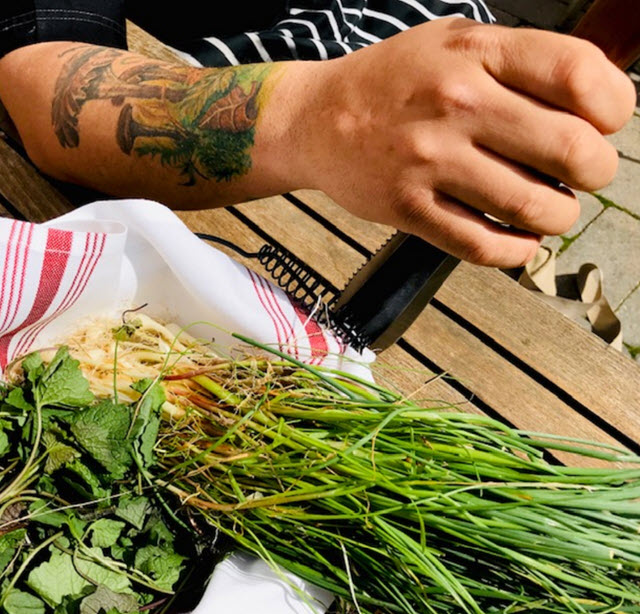
Till’s favorite hori hori knife for wildcrafting
Foraging is a huge part of what I do. I go into the woods and get it for free. This summer I established relationships with local farmers and developed a good connection with them. Since I am new to the area, I had to find spots to go foraging. ES has a rooftop garden, but it only has six inches of soil. We have to get the soil up there using ropes and a bucket. It’s very intense. This winter I set up some grow lights in the basement and started growing microgreens when a supplier wanted to charge me $100 a flat!
I’m using heirloom seeds from Monticello [Thomas Jefferson’s Monticello in Charlottesville is a World Heritage Site] where they have a program called the Thomas Jefferson Center for Historic Plants. They will be using 800 acres of their property just for heirloom crops.
What ingredients have you foraged recently?
I found spring garlic while foraging last week and caught lake trout while ice fishing in Canada.
Are you cautious not to overharvest?
I only harvest one third of what I find. I learned my lesson years ago when I picked all the chanterelles from one patch and it took five years for them to come back!
What’s the most popular dish you can’t take off the menu?
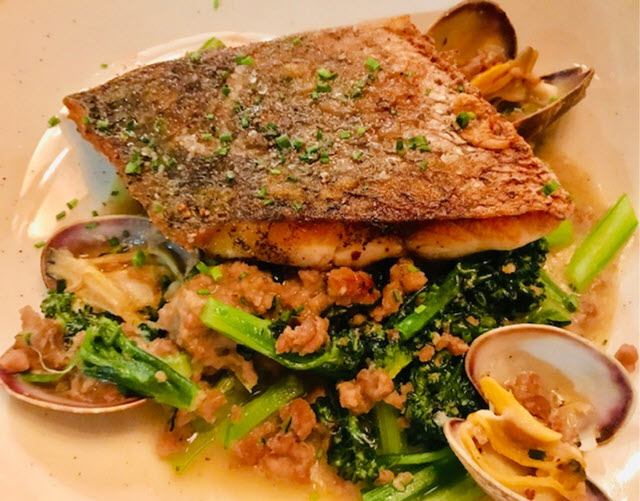
Acorn pasta made with flour from acorns I foraged, has been really popular. Unfortunately, I’m out of the acorns for now. Also, guests seem to not get enough of chicory – brined and seared with black pepper and served with a side of kombucha squash and sage. The pork chop schnitzel and gumbo are favorites now too, and the sea bass served with clams and broccolini.
Sea bass with clams and broccolini at Evening Star
I had the sea bass the other night and it was perfectly prepared with a crisped skin and tender flesh.
It’s important to understand what goes into raising or catching food. I have raised animals and farmed before and it bothers me when people don’t respect the protein.
What do you see as the future of Evening Star?
I’m still getting used to the flow. Seeing how the summer is going to be when we open the patio. The balance is going to be interesting. I plan to be at the farm and continue foraging this summer. Next year I’ll know exactly what to expect.
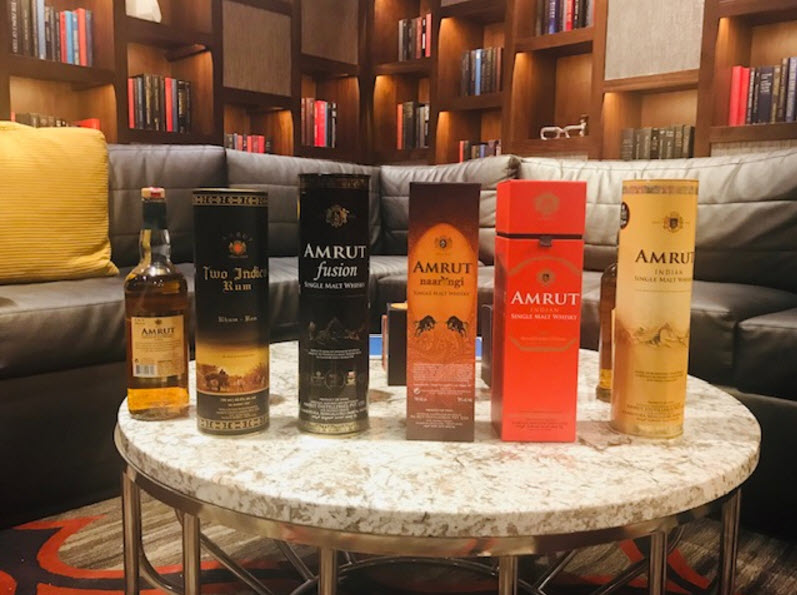
Single malt whisky connoisseurs can rejoice at the news that some of the finest whiskies in the known world have reached our shores from Amrut Distilleries in India. Amrut “Fusion” has been rated “third best” whisky in the world by British whisky writer, Jim Murray, with 97 points from the Whisky Bible who at that time ranked it third in the world. They could also boast of the “Thumbs Up” award from Malt Maniacs and dozens more awards worldwide. A recipient of 92 points out of 4,800 entries by Whisky Advocate, they have consistently beat out the best-known Scottish whiskies in countless blind tastings. Its “Single Malt Peated Cask” has scored a coveted 92 points from the Whisky Bible. In 1987, and despite outsider prejudice, Amrut bravely put its product into these highly competitive Scottish tastings to prove it can compete with the best in its field. They are now the number one whisky in India, despite the country’s longtime preference for Johnny Walker Black, a holdover since the early days of British colonialism.
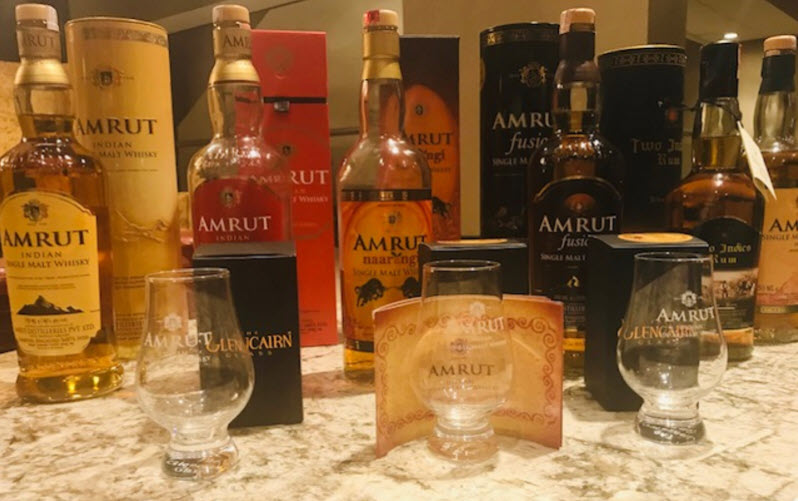
Last month I had the opportunity to taste all of Amrut’s products from their single malt through their entire gamut of whiskies and rums. I didn’t do a blind tasting, because frankly I would have planted my face in the floor, especially as it was a noon tasting and I hadn’t had breakfast. Managing to keep upright throughout, I settled in for a concentrated, thought-provoking experience that would both confound and alter my appreciation of whiskies outside the realm of the best-known brands.
Photo credit ~ Amrut
Made from select Indian malted barley grown in Punjab and Rajasthan, these spirits are distilled in the hot climes of India. They react to those conditions by coming to fruition far earlier than others of their ilk. Their flavors are modified by temperature, added ingredients (spices, citrus peel and the like), the wood used in the casks, Himalayan water from the Sutlej river, and the casks’ former use. These choices are made under the direction of Master Distiller Surrimar Kumar, a 33-year veteran of Amrut and award-winning whisky innovator, and veritable genius in drawing out the complexly crafted, unique personalities he is after. One of Kumar’s creations is Amrut “naraangi” that won “World’s Best Whisky 2018”. Aged three years in an ex-oloroso sherry cask, the single malt is then seasoned with wine and orange peel and aged for another three years.
Did you know that 60-70% of flavoring comes from the barrel? That’s how important the choice of wood is for determining the final profile. So, imagine for a moment using wood from five different species of trees to produce one whisky barrel. These specially designed barrels are used exclusively for their “Spectrum Single Malt Whisky” to be available in 2020. I’ve tasted whisky made in port barrels and sherry barrels (Amrut “Single Malt Whisky Intermediate Sherry” earned 96 points from the Whisky Bible), but this is an exciting new concept. A Special Limited Edition, Amrut “Madeira” aged in Madeira barrels, will be on the U. S. market in time for the holidays.
Neel Jagdale – Chairman of Amrut ~ Photo credit: Amrut
Next year, Ashok Chokalingam, who has been with the company for many years, will take the reins as Master Distiller and Whisky Innovator bringing his own imagination to the company’s growing range of whiskies and rums. At our first meeting he offered up this self-effacing quote. “We are a minnow coming from India,” he told me. Well, this minnow of a company has become a full-grown shark with a high demand for its products that’s currently five times what they can supply. But, no worries. The company’s newest plant will now be able to accommodate its rising popularity. Amrut is now in 45 countries and boasts $3M in annual sales. Surprisingly, the U. S. is the second largest market outside of Europe for “AmrutSingle Malt Indian Whisky”.
AMRUT – Photo credit: Jordan Wright
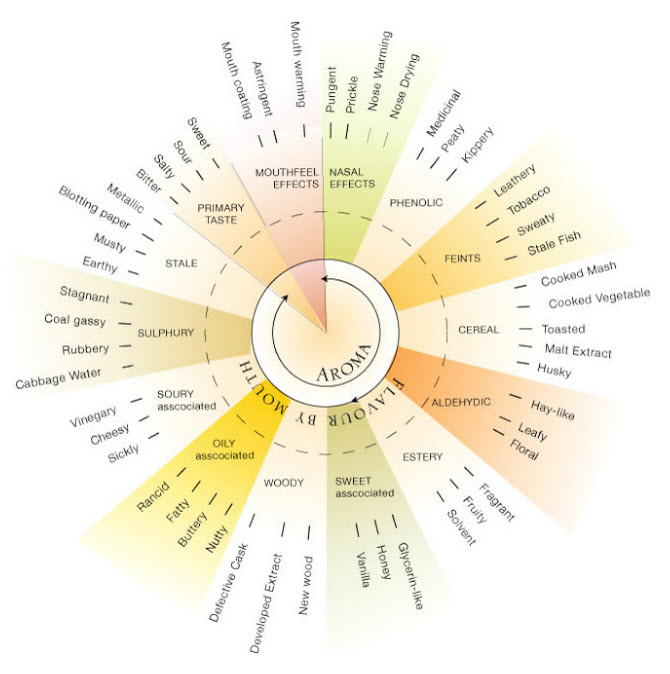
Now I’m no expert in describing the varied flavor profiles of whisky, I rely on my palate and my years of experience tasting spirits from around the world. I leave it to the whisky mavens to create descriptors for these products. They’re the ones that can extrapolate the taste of honey, chocolate, ginger, licorice, chocolate-chip cookie dough, driftwood (?!!!), orange, smoked fish, pepper, barbecued meats, pears, coconut, cherries, plums, raisins, lemons, and on and on. It’s a probably good thing they don’t describe food.
[Color Wheel Credit] ~ Courtesy of Whisky magazine
Because India is the world’s second largest producer of sugar in the world, Amrut made the decision to produce rum, and it is sensational. Ashok explained that rum existed since 320 BC – long before rum was produced in the Caribbean in the 17th century. Amrut offers two types of rum – “Two Indies Rum”, made with leftover sugar cane from Jamaica, Trinidad and Guyana. It is made with five rums that have been aged together. The “Old Port Deluxe Matured” has a lovely hint of coconut from the jaggery sugar used in the process. Jaggery is a by-product of sugar cane grown in India.
Two Indics Rum ~ Photo credit: Amrut
If you’re looking to impress a whisky connoisseur with the whiskies that everyone is talking about, you can do no better than some of these winning spirits.