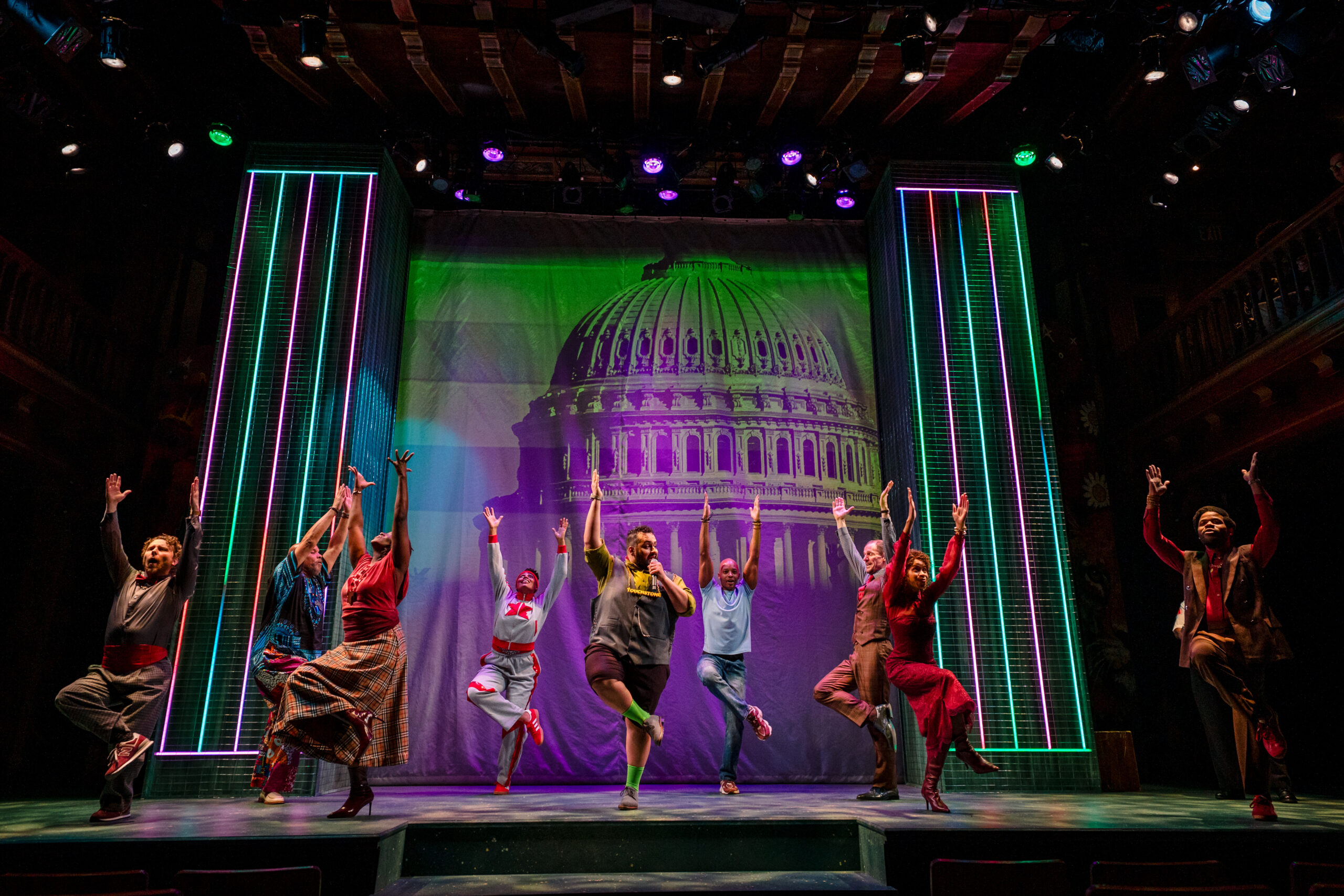
The Great Gatsby Brings a Dazzling Musical Extravaganza Full of Glamour and Pizazz to the National Theatre
The Great Gatsby – A New Musical
Broadway at the National DC
Jordan Wright
May 13, 2026
Special to The Zebra
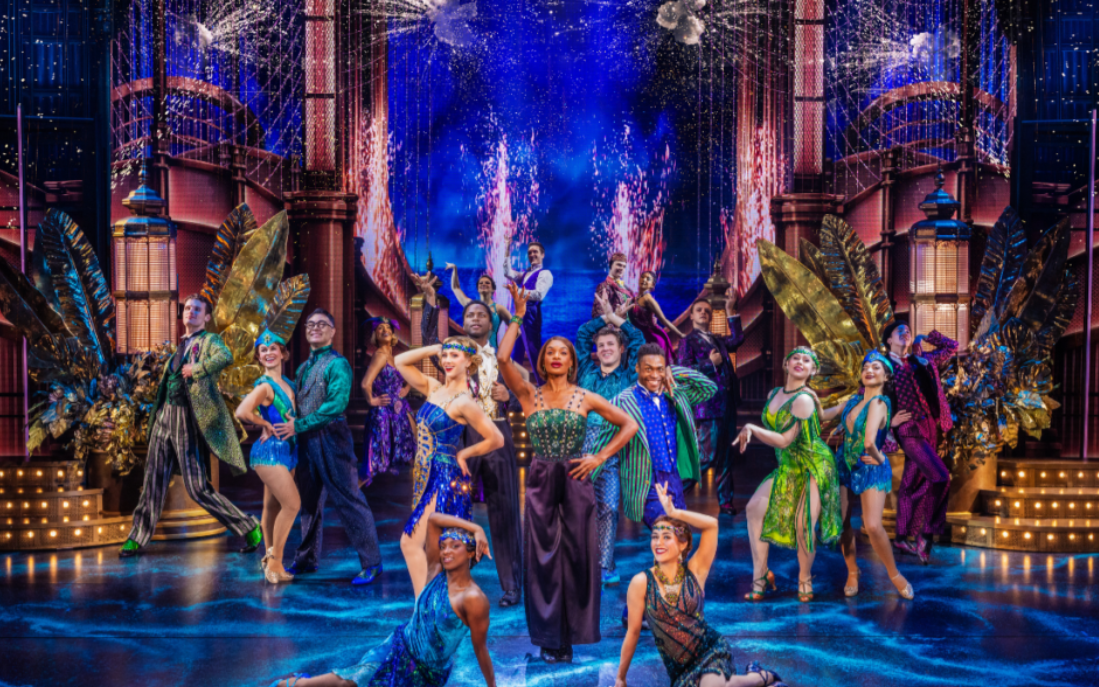
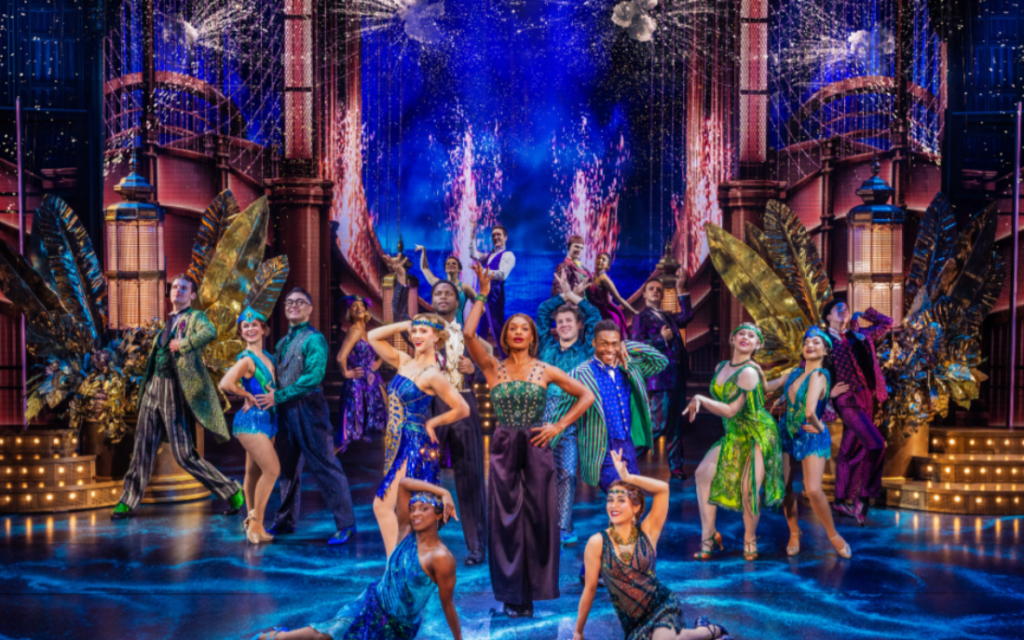 Cast of the First National Touring Company of The Great Gatsby. (Photo/Evan Zimmerman for MurphyMade)
The Broadway hit musical The Great Gatsby is a razzamatazz retro showcase for the glitz and glamour of the Jazz Age. Set in the Roaring Twenties when flappers wore short skirts and thumbed their noses at the proprieties of the Victorian Era, danced the Shimmy and the Charleston too. All when Prohibition meant having a secret password to enter a speakeasy, where mobsters and rum-runners hobnobbed with robber barons and East Coast aristocracy. Opening with the allure of a green light from a lighthouse on the shoreline of the Long Island Sound where the bay separated the swells from the elite, this lavish production draws from F. Scott Fitzgerald’s novel of the same name.
Those with a proper pedigree lived in posh East Egg, a reference to the landed gentry of East Hampton, while the nouveau riche and their shady neighbors lived in West Egg, where the residents were new money. Knowing Fitzgerald’s life and works can deepen your connection to this story as it parallels his life in New York City and his passionate romance with the Southern belle and darling debutante, Zelda, his muse, whom he would later wed. Here is where I urge you to read the book and everything this iconic American author ever wrote. It will deepen your understanding of the period and Fitzgerald’s genius for capturing the gilded life.
Brought to the big stage after four movie versions (hello, Robert Redford and Leonardo DiCaprio who each played Jay Gatsby), the show manages to pack in 22 numbers, a 26-person cast, crime drama, emotional breakups, a murder, a mansion, slinky flappers and a massive chorus line backed by a terrific orchestra. In other words, it’s an extravaganza.
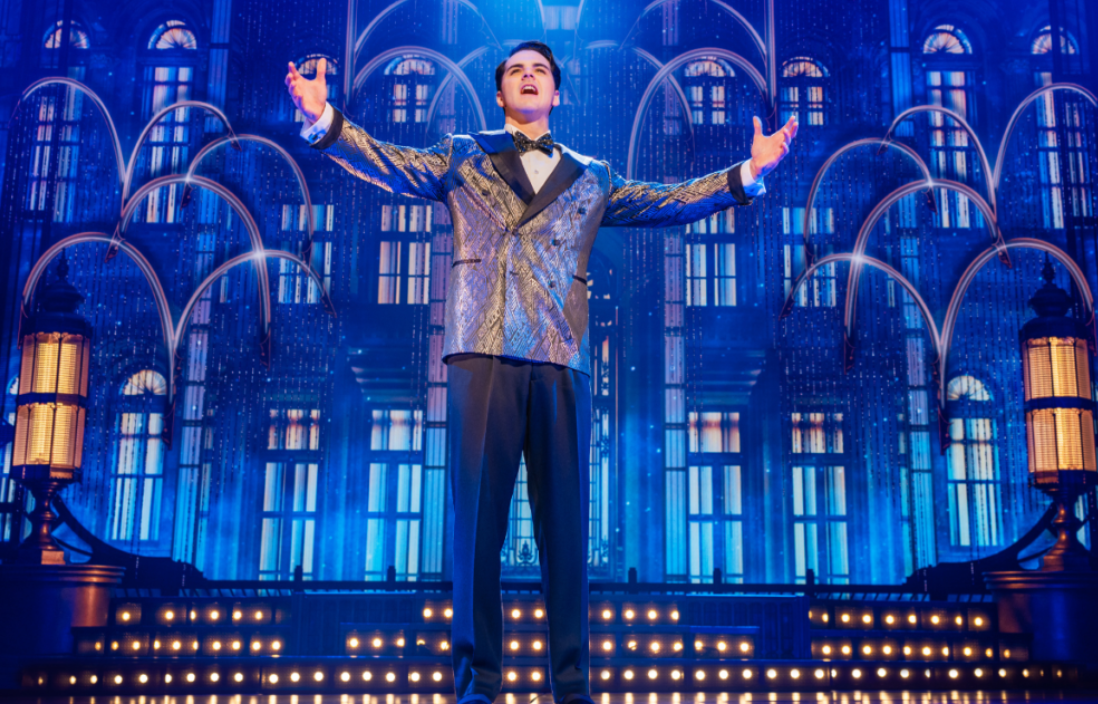
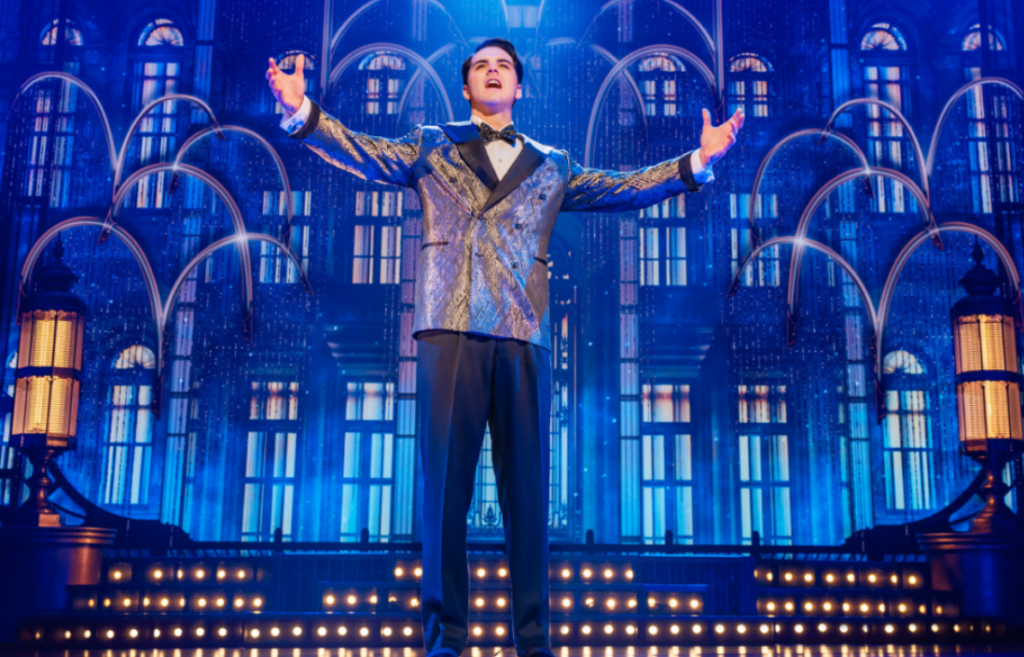 Jake David Smith (Jay Gatsby). (Photo/Evan Zimmerman for MurphyMade)
Directed by Marc Bruni; with book by Kait Kerrigan, music by two Broadway veterans, composer Jason Howland and lyricist Nathan Tysen, this show is a paean to the big productions from that era from Florenz Ziegfeld to George White to Earl Carroll with all the elements of sass and pizazz from the Great White Way in its heyday.
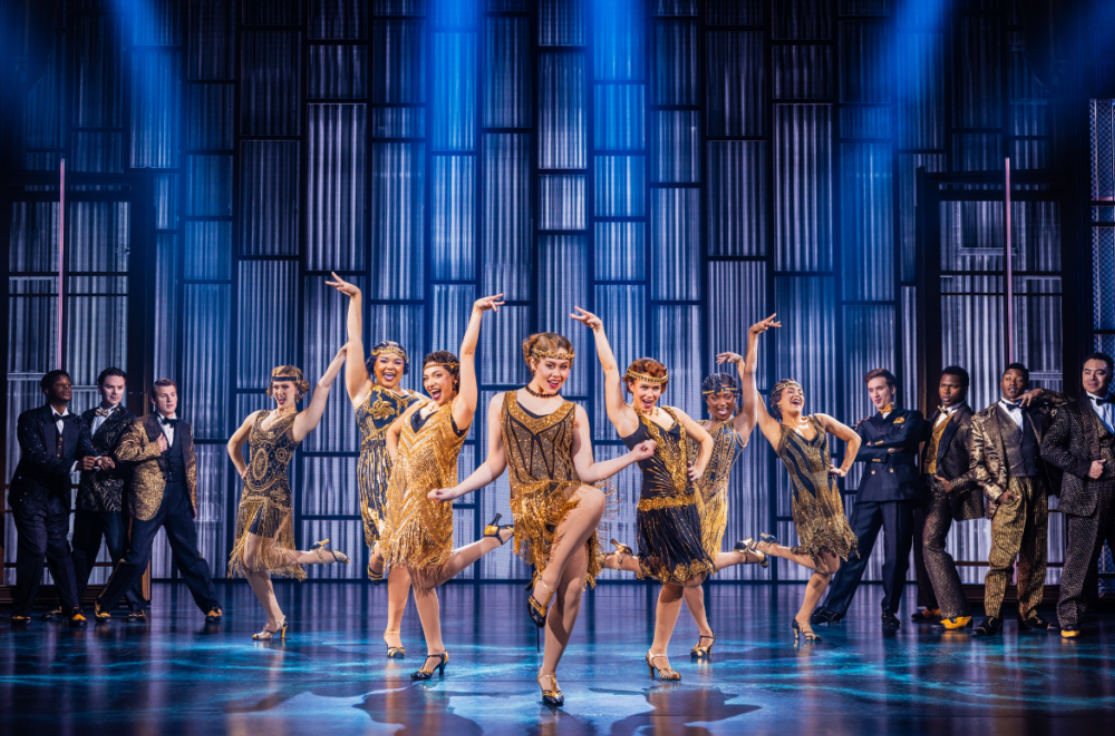
Gorgeous Art Deco-influenced sets by the marvelous Paul Tate dePoo III, who earned a well-deserved Outer Critic’s Circle award for “Outstanding Scenic Design”, are stunning, and I’m tossing bouquets to costume designer Linda Cho, who won for “Outstanding Costume Design” for her designs of lavish silks, satins, feathers, hats and mountains of crystals and sequins to the switched up gangster dancers in black trench coats. And an armful of red roses to choreographer Dominique Kelly, who turned the dancers inside out with flips and throws, a knockout tap competition between two male dancers that lit up the theater, and a host of chorines’ legs kicked high into the stratosphere. Another wowza moment reveals a royal blue 1920’s convertible driven on stage and later a jaw-dropping yellow Rolls Royce.
All you need to do is sit back and watch the romances and marriages self-destruct while the fast set is feasting on lobster and champagne and burning up the stage like firecrackers. Ain’t it grand?
Flashy and splashy with buckets of pizazz!
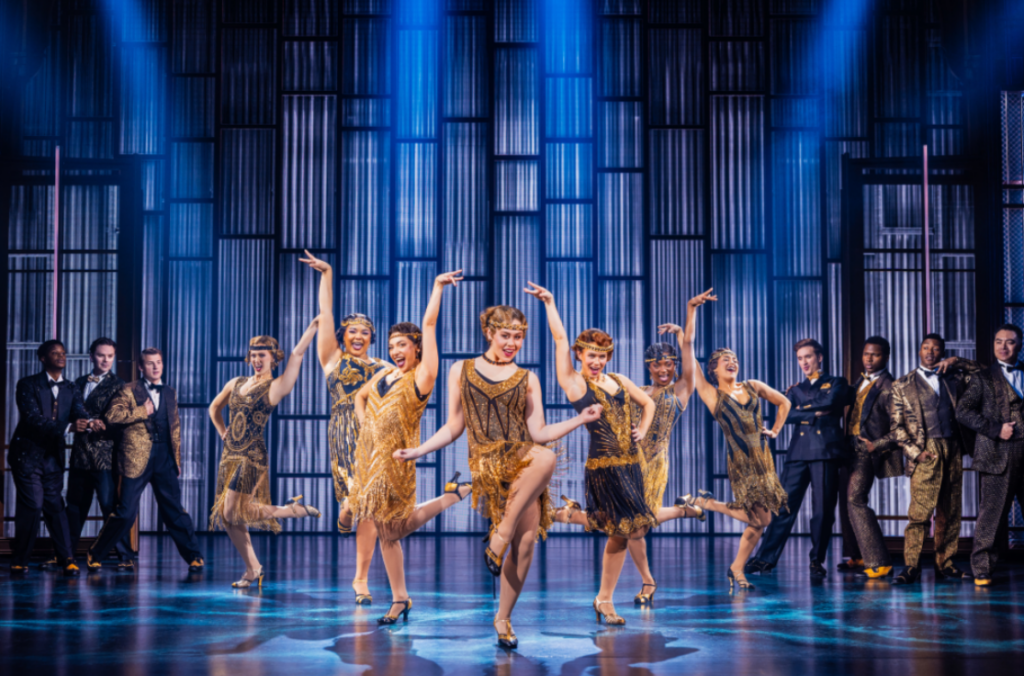 Cast of the First National Touring Company of The Great Gatsby. (Photo/Evan Zimmerman for MurphyMade)
Starring Jake David Smith as Jay Gatsby; Senzel Ahmady as Daisy Buchanan; Joshua Grosso as Nick Caraway; Leanne Robinson as Jordan Baker; Lila Coogan as Myrtle Wilson; Will Branner as Tom Buchanan; Tally Sessions as George Wilson; Edward Staudenmayer as Meyer Wolfsheim; Joann Gilliam as Catherine and Gilda Gray; Alli Sutton as Mrs. McKee; D’Marreon Alexander as Mr. McKee and Bystander #1; Anna Gassett, Josiah Hicks, Tyler Johnson-Campion, and Macy McKown as The Sugars; Shai Yammanee as Cop; Valeria Ceballos as Bystander #1; plus Joi D. McCoy, Maya Petropolis, Tim Quartier, Ryan Vogt in the ensemble. Partygoers include Kyle Caress, Rosie Granito, Kurt Kempner and Charlotte McKinley.
Lighting Design by Cory Pattak; Hair Design by Charles G. LaPointe and Rachel Geier; Orchestrations by Jason Howland and Kim Scharnberg.
Through May 24th at The National Theatre, 1321 Pennsylvania Avenue, Washington, DC 20004. For tickets and information call the box office at 202.628.6161 or visit www.BroadwayatTheNational.com
What’s Onstage in the DMV For June and July 2026
Jordan Wright
May 13, 2026
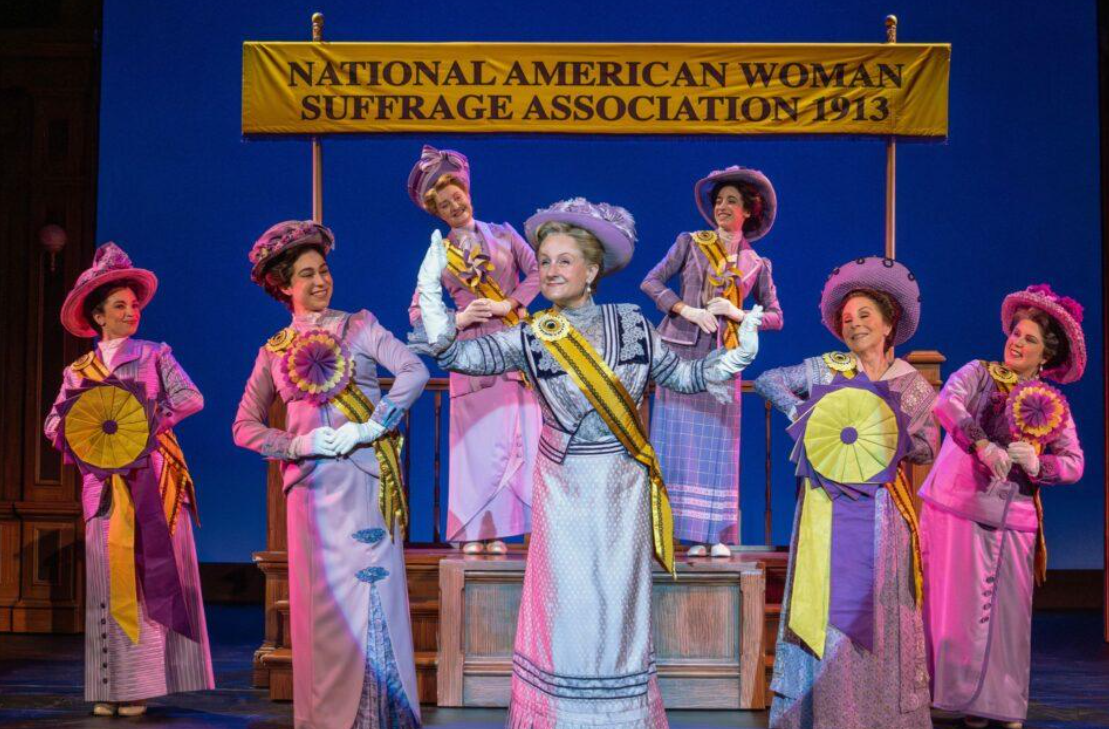
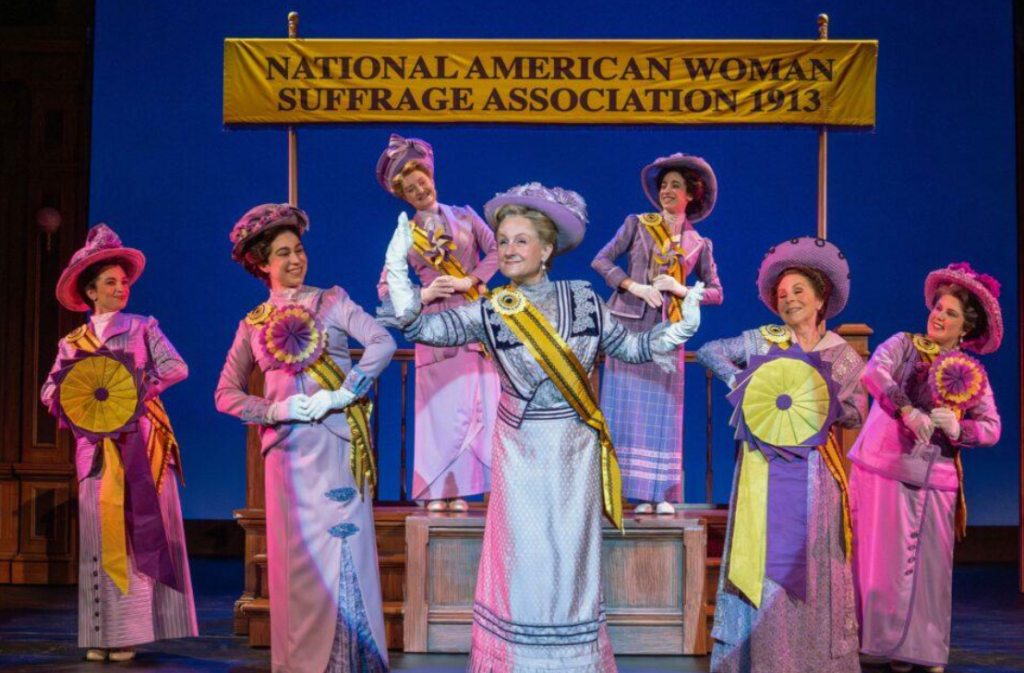 Suffs via Broadway at the National (Photo/Joan Marcus)
Broadway at The National www.TicketMaster.com
Suffs Jun 16 – 28
Beetlejuice Jul 7 – 19
Shakespeare Theatre Company www.ShakespeareTheatre.org
Othello through Jun 28
Woolly Mammoth www.WoollyMammoth.net
A Fine Madness through Jun 28
1st Stage www.1stStage.org
Indecent Jun 4 – 21
Dominion Stage www.DominionStage.org
Dead Air through Jun 13
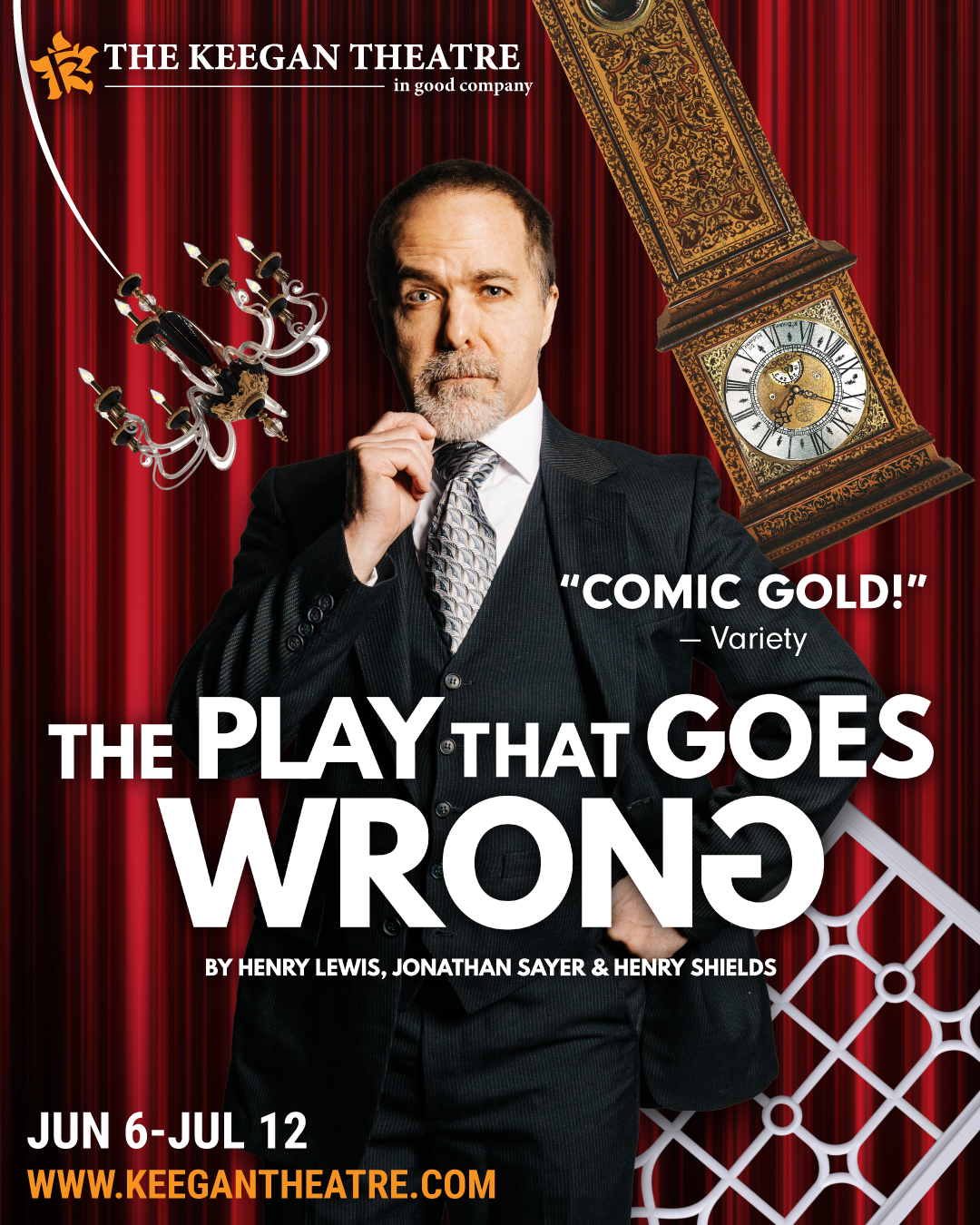
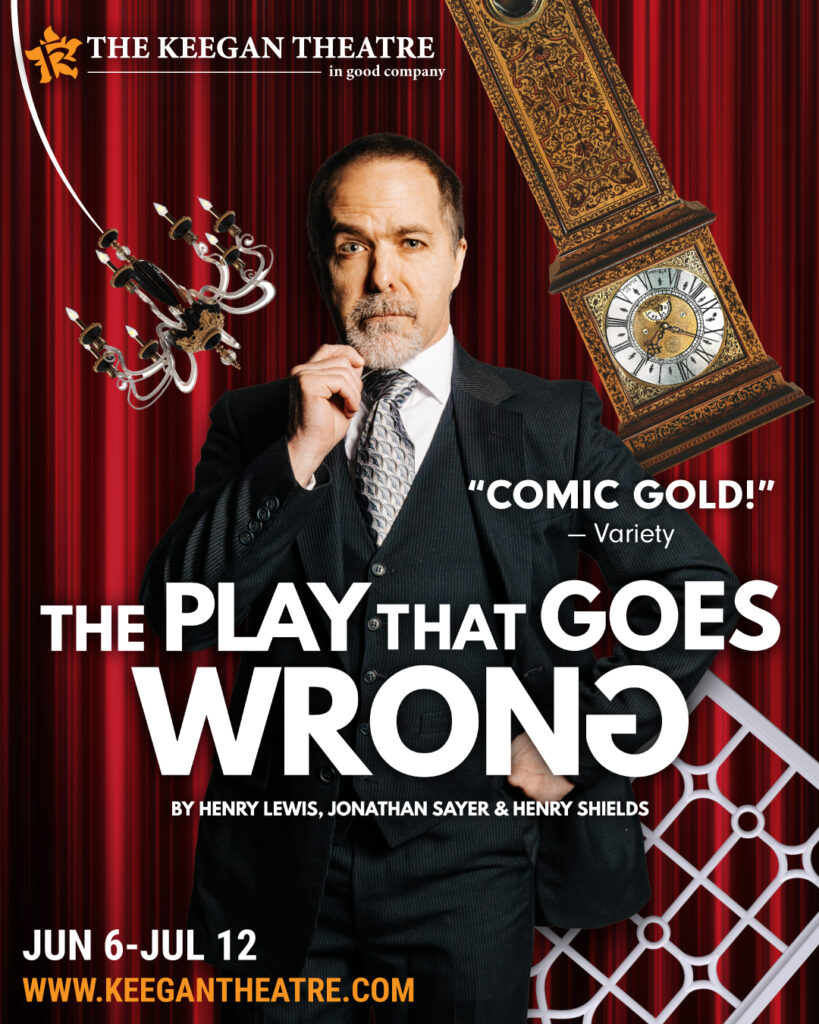 The Play That Goes Wrong via Keegan Theatre (Photo/Cameron Whitman)
Keegan Theatre www.KeeganTheatre.com
The Play That Goes Wrong Jun 6 – Jul 12
Workhouse Arts Center www.WorkhouseArts.org
The Sponge Bob Musical through June 14
Mosaic Theater www.MosaicTheater.org
Bad Kreyòl through Jun 13
Precarious Jun 4 – 28
Folger Theatre www.Folger.edu
How Shakespeare Saved My Life Jun 9 – Jul 12
IN Series www.INSeries.org
The Song of Sakuntala Jun 6 – 14
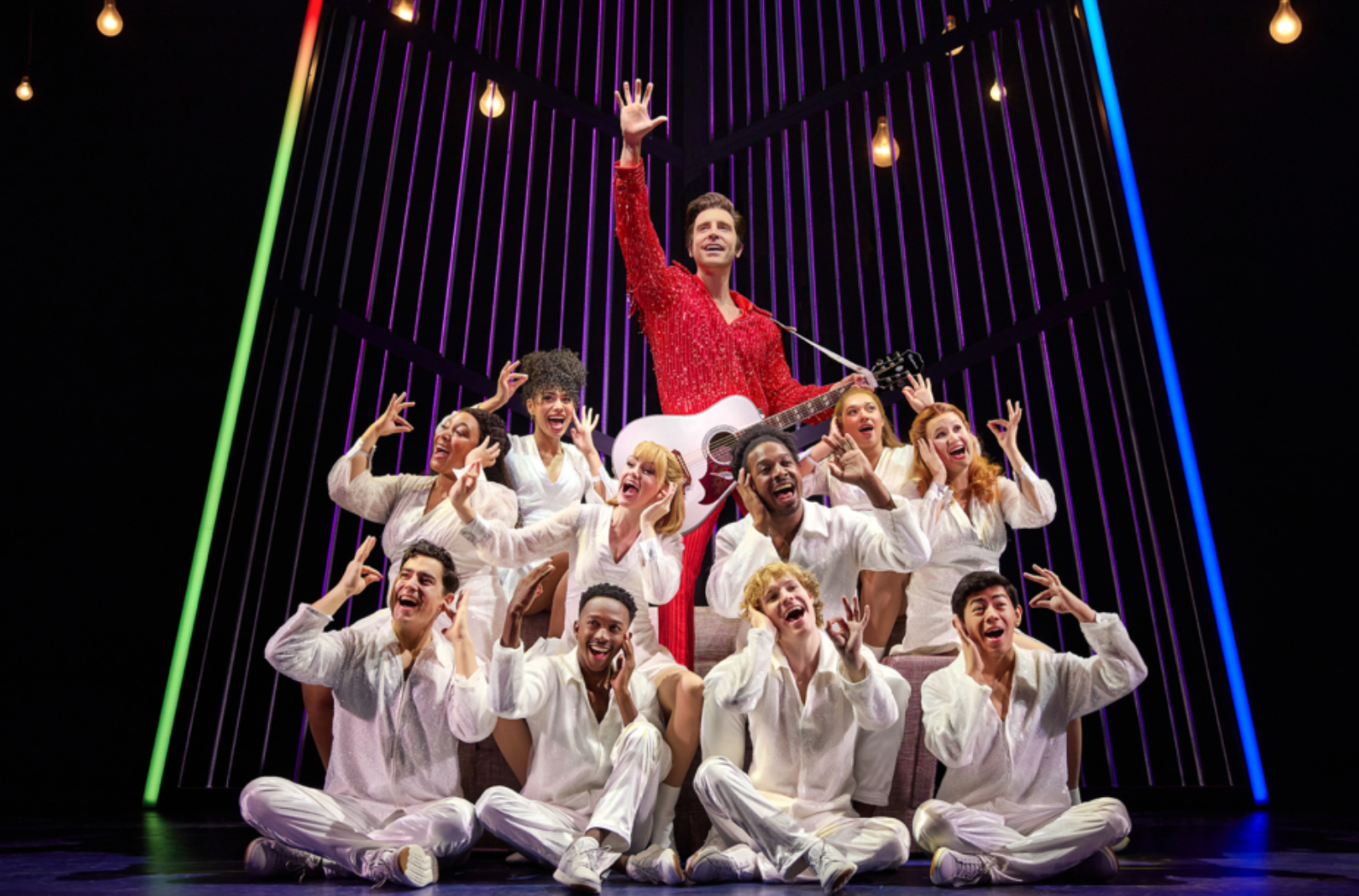
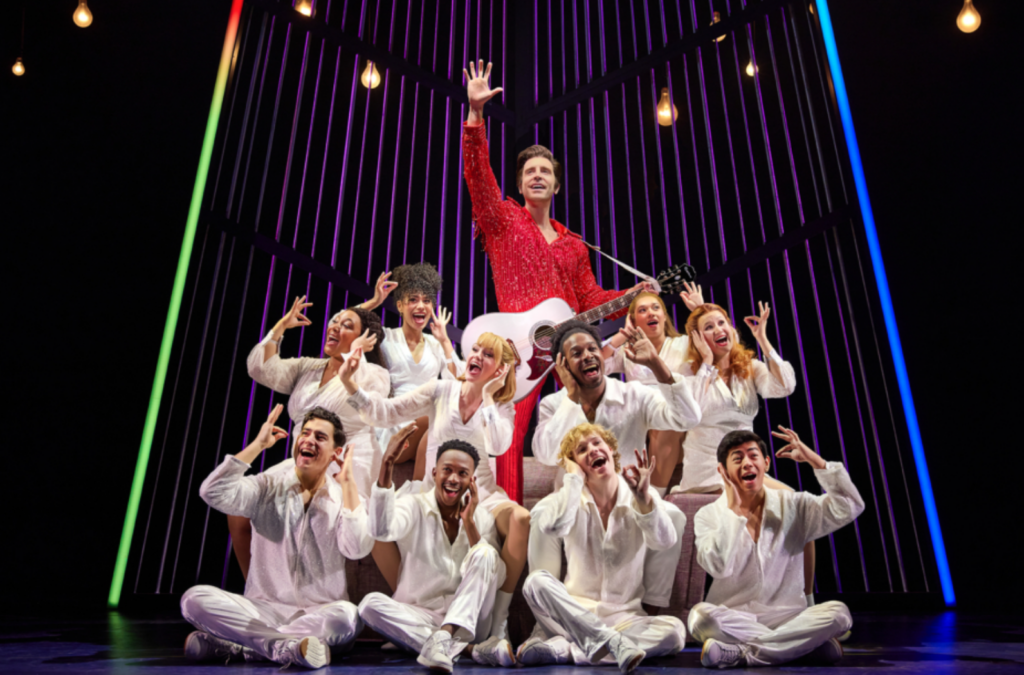 Nick Fradiani as Neil – Then and The Noise in A Beautiful Noise: The Neil Diamond Musical (Photo/Jeremy Daniel)
Hippodrome Baltimore www.Baltimore.Broadway.com
A Beautiful Noise: The Neil Diamond Musical Jun 23 – 28
Signature Theatre www.SigTheatre.org
Pippin through Jul 26
What Became of Us Jun 16 – Jul 26
Broadway in the Park at Wolf Trap Jun 20
Arena Stage www.ArenaStage.org
The Motion through Jun 14
CrazySexyCool The TLC Musical Jun 12 – Aug 9
The Puppet Company www.ThePuppetCompany.org
The Little Prince Jun 5 – Jul 6
Imagination Stage www.ImaginationStage.org
Pete the Cat Jun 17 – Jul 26
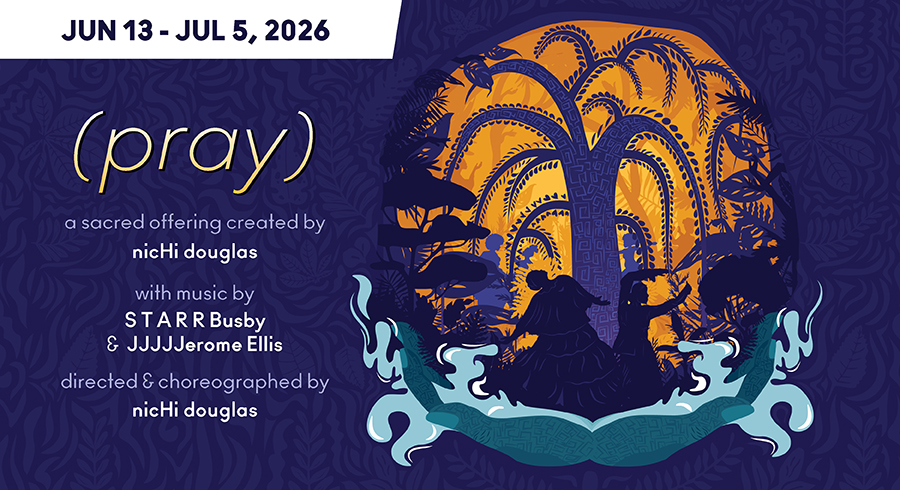 (pray) via Baltimore Center Stage
Baltimore Center Stage www.CenterStage.org
(pray) Jun 12 – Jul 5
Toby’s Dinner Theatre www.TobysDinnerTheatre.com
Mean Girls – The Musical Jun 12 – Aug 23
Olney Theater Center www.OlneyTheatre.org
Carla Hall in Please Underestimate Me Jun 3 – Jul 12
A Gentlemen’s Guide to Love and Murder Jul 2 – Aug 23
Providence Players of Fairfax www.ProvidencePlayers.org
I Love You Because Jun 12 – 27
Round House Theatre www.RoundHouseTheatre.org
Sally and Tom through Jun 28
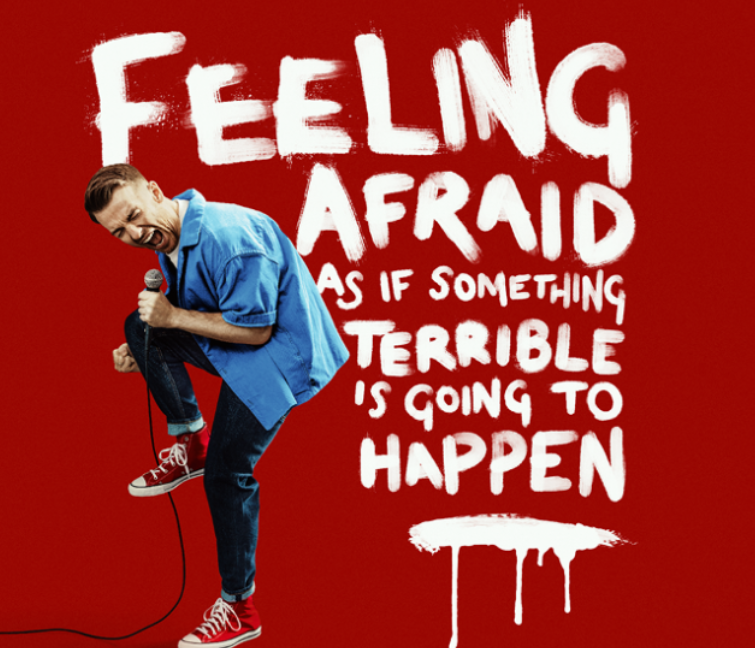 Feeling Afraid As If Something Terrible Is Going to Happen via Studio Theatre
Studio Theatre www.StudioTheatre.org
Feeling Afraid As If Something Terrible Is Going To Happen
Jun 4 – July 12
Purlie Victorious through Jun 21
NextStop Theatre www.NextStopTheatre.org
Once through Jun 21
Adventure Theatre www.My.AdventureTheatre-MTC.org
Sleeping Beauty – The Time Traveler Jun 17 – 29
Everyman Theatre www.EverymanTheatre.org
Emma through Jun 14
Yellow Door Concert Series www.YellowDoorConcertSeries.com
Eric Williams and Justin Mendez Jun 28
44 The Musical Spoofs the Obama Presidency With This Utterly Irreverent, Totally Original, Clever, Witty, Heartwarming and Ridiculously Hilarious Elixir Now at the Klein Theatre
44 The Musical
Shakespeare Theatre Company
Klein Theatre
Jordan Wright
April 25, 2026
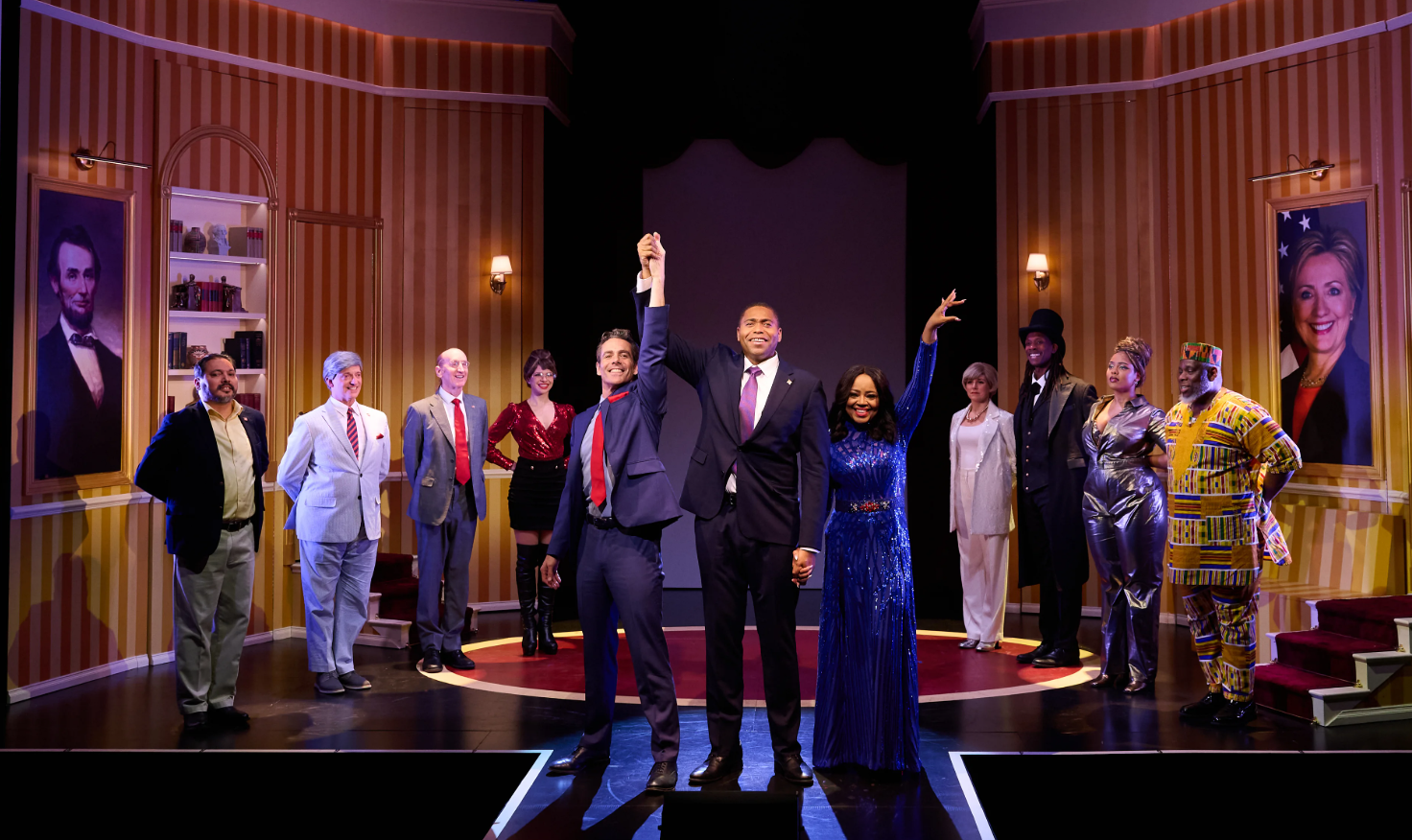
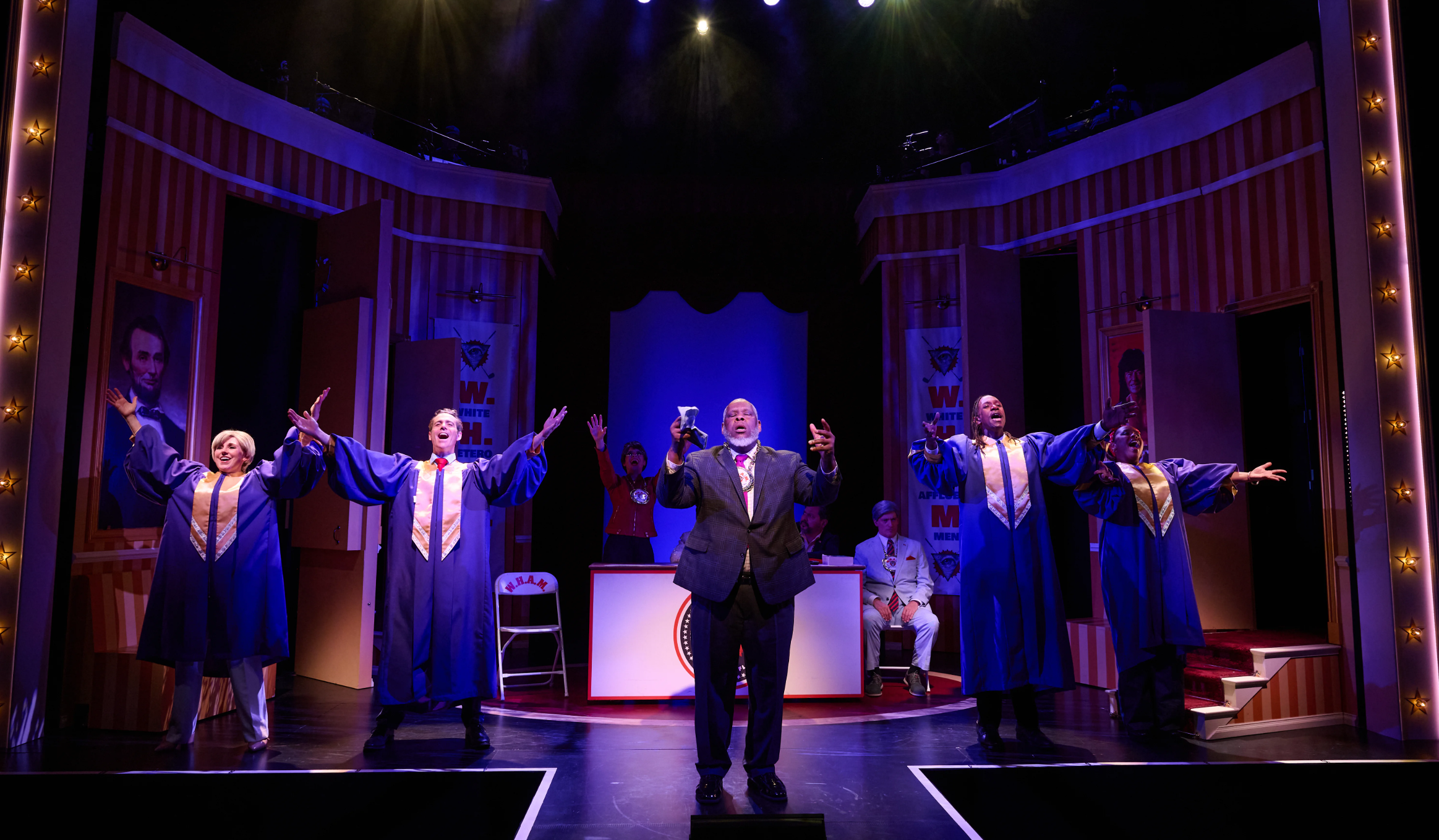
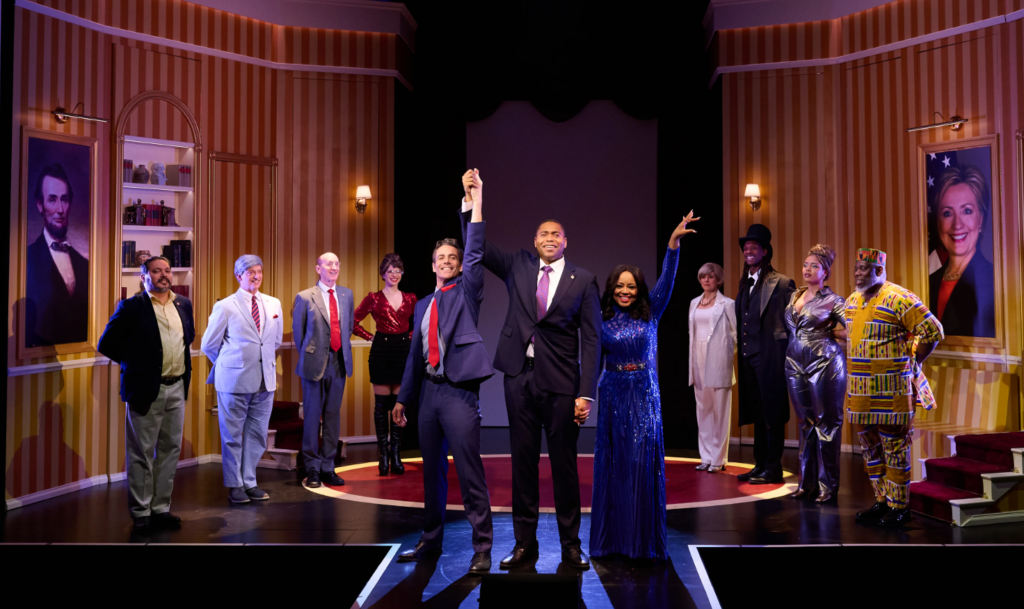 Cast of 44 The Musical at the Shakespeare Theatre Company’s Klein Theatre. (Photo/Jenny Anderson)
Warning: Do Not Read This Review – Go!
Already a winner of seven Broadway World Awards, 44 The Musical opens on Barack Obama’s election night as sung by the character, Voice of the People (Summer Nicole Greer), whose powerhouse soulful intro kicks off POTUS’s time in the White House. I’ve seen it with lead actor, T. J. Wilkins and again with his understudy Marqell Edward Clayton each playing the role of Obama and they are equally extraordinary.
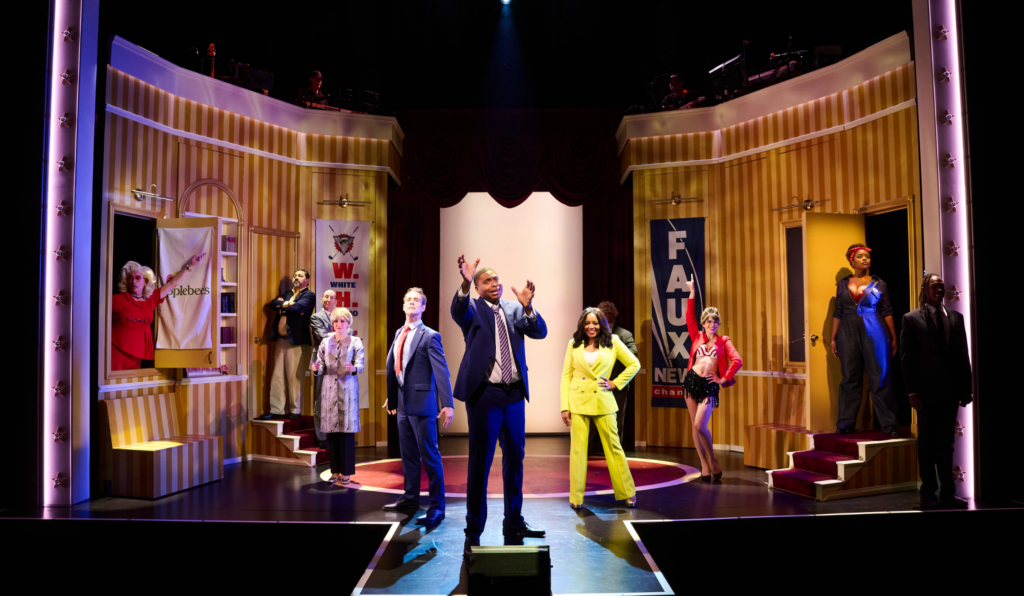
As told by his loyal Veep and adoring White bro and loveable, laughable sidekick Joe Biden (Tony Award-winning material Chad Doreck) in this crazy, wild, utterly irreverent, clever, witty, heartwarming and hilarious musical is the elixir we need to counter the every goddamn five minutes of dizzying, politically fraught BREAKING NEWS! headache-inducing, news cycle we’re living in. Here’s our soul-soothing, deliciously snarky skewering of 44’s political enemies also known as the GOP. This musical lights up the stage infusing a blend of lampoon and burlesque with lightning-quick comic shtick and a heart-warming romance delivered by top-tier singers. You couldn’t ask for more.
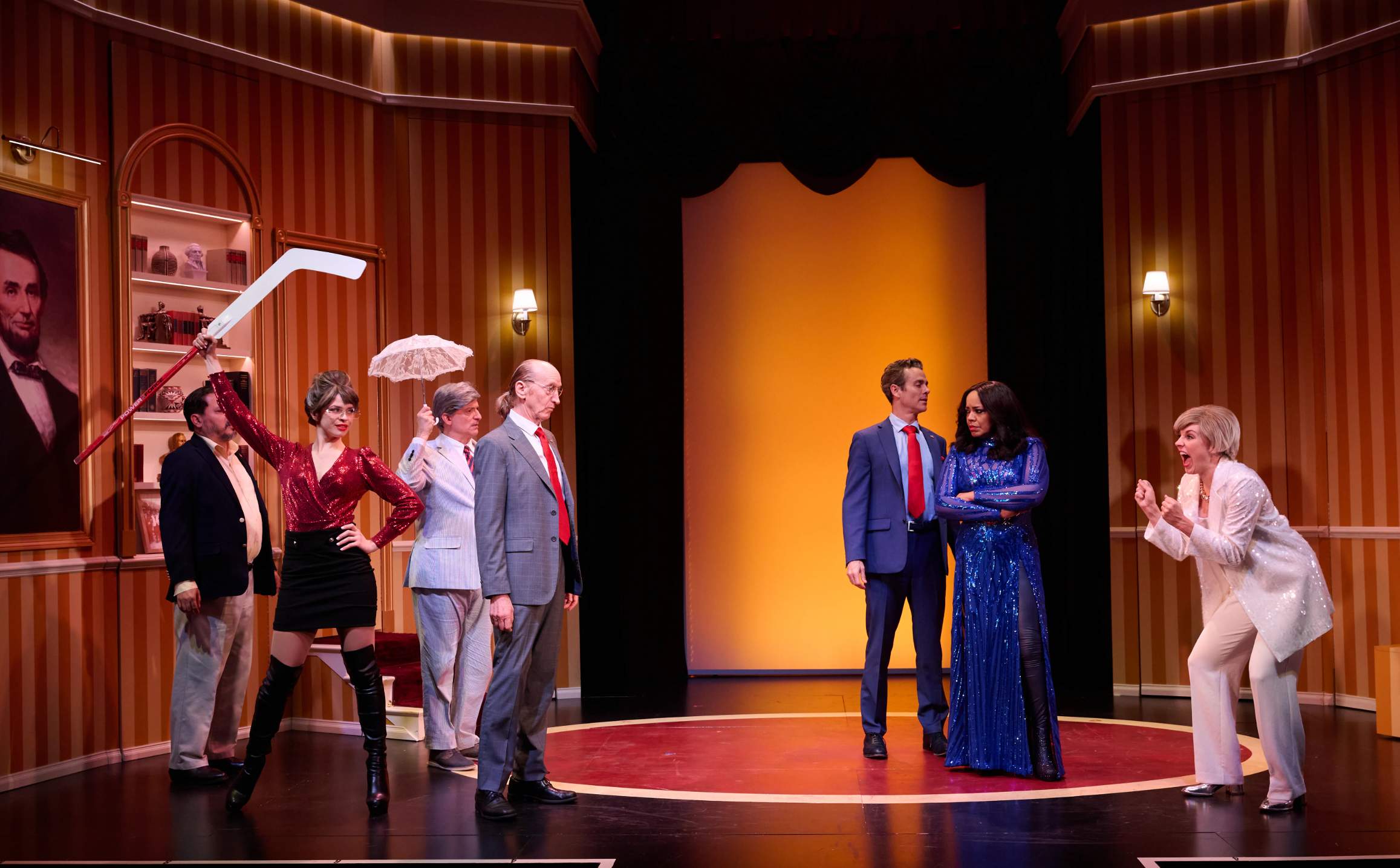
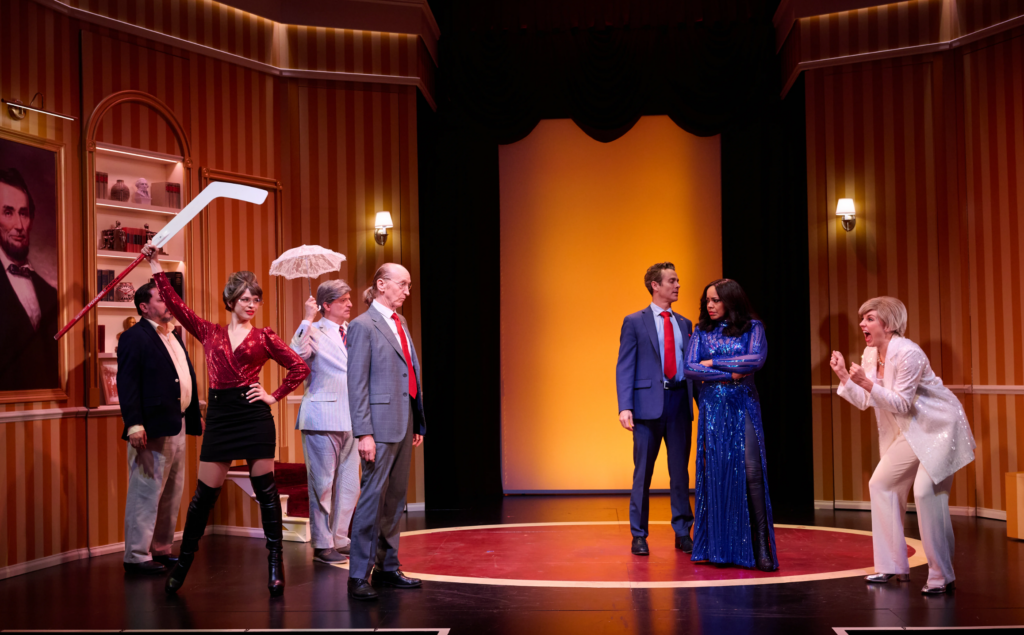 Cast of 44 The Musical (Photo/Jenny Anderson)
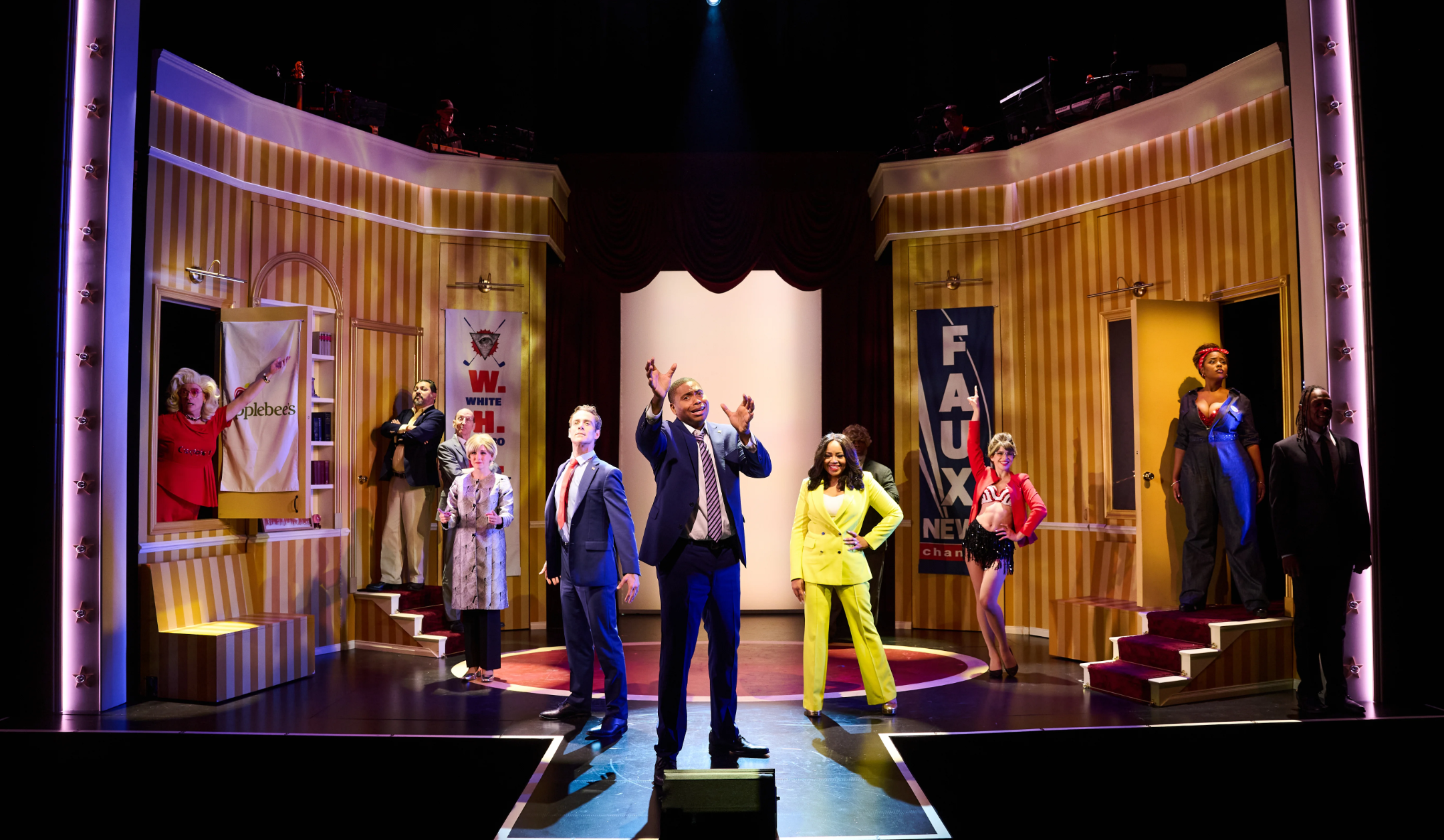
Briliantly directed, co-produced, written and composed by Eli Bauman, the cast of familiar characters includes Obama’s ever-lovely, “when they go low, we go high” wife, the beautiful Michelle (pitch-perfect Howard University grad, Sy Smith) and rival Hillary Clinton (Jenna Pastuszek totally nailing the sister side of the equation), along with Obama’s familiar nemeses – a slithery Mitch McConnell (Larry Cedar); don’t-remind-anyone-he’s-Latino Ted Cruz (Michael Uribes); a polar bear-hating Sarah Palin (Summer Collins), a lace parasol-toting Linday Graham (Jeff Sumner) and Godfather’s Pizza CEO Herman Cain (Dino Shorté) as their token Republican Black brother. They are a multi-talented cast of scene stealers in the best way possible.
Eager to upend Obama’s presidency and undermine hs signature programs, this band of loonies form a cabal called W. H. A. M. – an acronym for White, Heterosexual, Affluent Men. A dim-witted, pole-dancing, sexy babe Palin fronts for the female vote while Cain is the goofy group’s absurdly transparent attempt at racial inclusion. In an effort to be superfly and get the youth vote, the men go all Flavor Flav in clock neck chains and track suits and you could easily lose it watching McConnell fronting in Calvin Klein underwear.
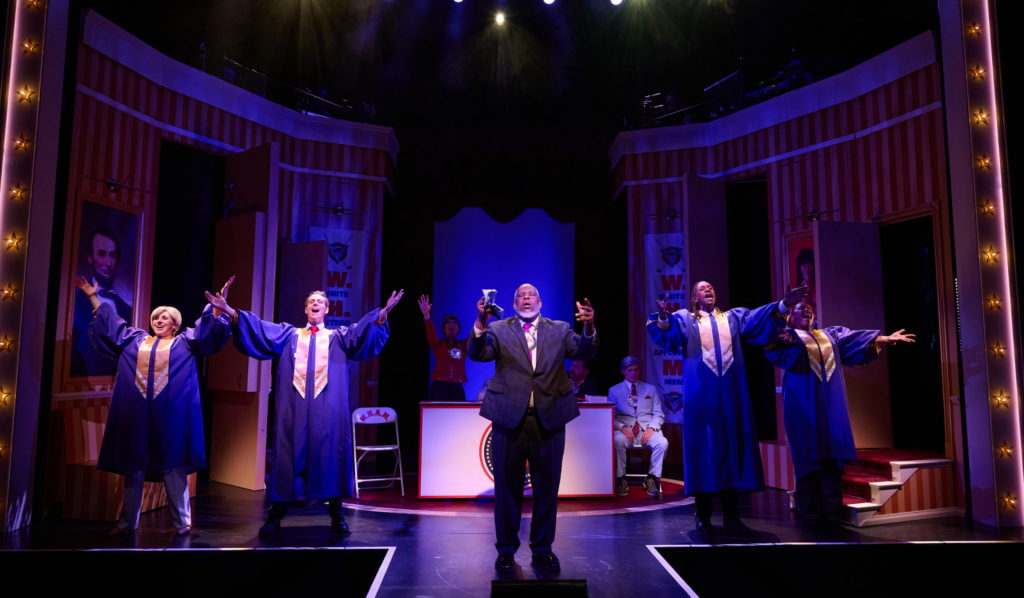 Cast of 44 The Musical (Photo/Jenny Anderson)
As Obama’s charisma soars and Michelle’s charm and savvy dazzle, Act 2 takes us to his second term as the ridiculous personal attacks prevail. Who doesn’t recall the tan suit debacle contrived by Republicans and Fox News pundits? Here called Faux News with a send-up presented by two ditsy identical blondes in matching skimpy dresses as a “Wonder Bread sandwich” for Herman Cain.
A wowza score by Bauman features 24 catchy numbers including soulful ballads and a Gospel trio to counterpoint the wacky political parodies. Perched the box seats is the kick ass House of Vibe All Stars band led by Musical Director and Co-Producer Anthony “Brew” Brewster.
 Cast of 44 The Musical (Photo/Jenny Anderson)
You’ll leave the theater merrily singing the raunchy-perfect tribute tune “M. F. O.” – short for mother-f***in’ Obama. Major kudos to Miss James Alsop’s brilliant choreography because this cast has hoofers as well as belters.
Terrific production values with costumes by Matthew Hemesath; Scenic Design by Julio Himede and Yellow Studio; Lighting Design by Nathan W. Scheuer and Natali Arco; Sound Design by Jonathan A. Burke; Wig & Hair Design by Brian Strumwasser. Co-Lead Produced with Bauman Monica Saunders-Weinberg.
Through May 10th at the Klein Theatre, 450 7th Street, Washington, DC 20004. For tickets and information call the box office at 202.547.1122 or visit www.44TheObamaMusical.com.
What’s Onstage in the DMV For May and June 2026
Jordan Wright
April 14, 2026
 Cinderella via Washington National Ballet
Washington National Ballet www.WashingtonBallet.org
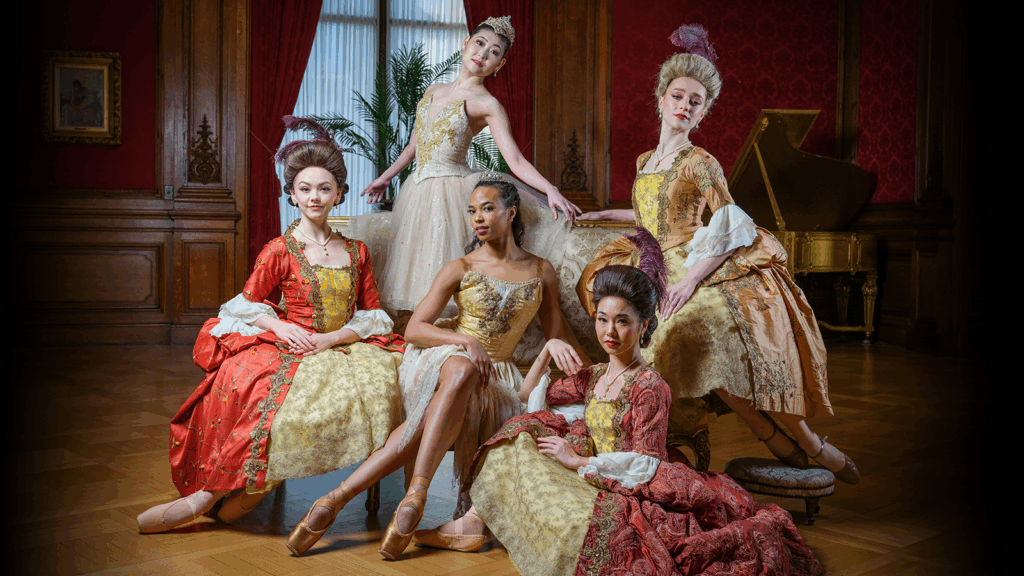
Cinderella May 8 – 10
Mosaic Theater www.MosaicTheater.org
Precarious Jun 4 – Jun 28
Arena Stage www.ArenaStage.org
The Motion May 6 – Jun 14
National Theatre www.BroadwayAtTheNational.com
The Great Gatsby May 12 – 24
Suffs June 16 – 28
Ford’s Theater www.Fords.org
1776 through May 16
 Or via Constellation Theatre Company
Constellation Theatre Company www.ConstellationTheatre.org
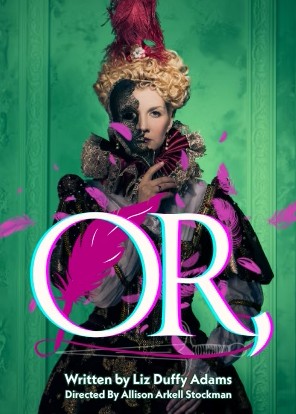
Or, May 15 – Jun 7
Dominion Stage www.DominionStage.org
Dead Air May 29 – Jun 13
Olney Theatre Center www.OlneyTheatre.org
I & You: The Musical through May 24
Carla Hall: Please Underestimate Me June 3 – Jul 12
Washington National Opera www.WashNatOpera.org
West Side Story May 8 – May 15
The Little Theatre of Alexandria www.TheLittleTheatre.com
The Drowsy Chaperone May 16 – Jun 6
Still We Rise: A Broadway Cabaret to Celebrate America’s 250th Jun 11 – Jun 21
 How Shakespeare Saved My Life via Folger Shakespeare Theatre
Folger Shakespeare Theatre www.Folger.edu
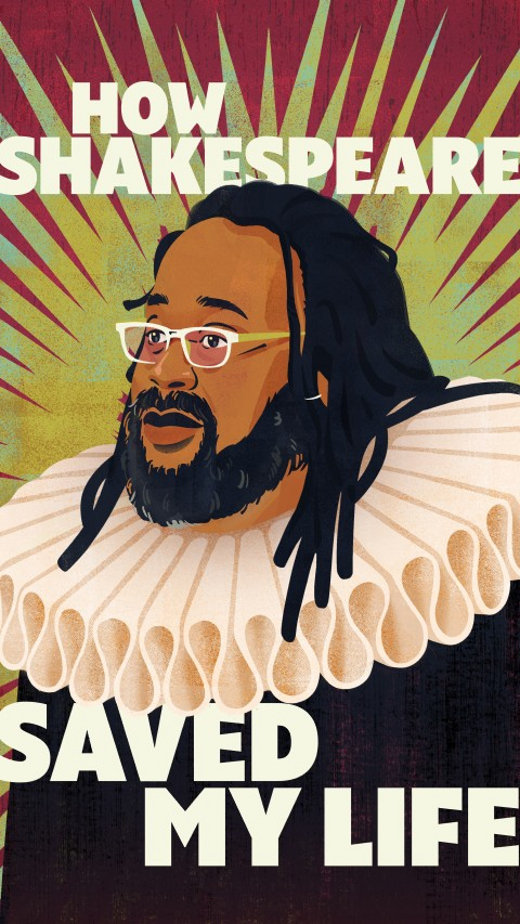
How Shakespeare Saved My Life Jun 9 – Jul 5
Creative Cauldron www.CreativeCauldron.org
Little Women: The Musical May 14 – Jun 7
Woolly Mammoth Theatre Company www.WoollyMammoth.net
A Fine Madness May 30, 31 – June 5-7, June 11-14, June 25-28 in different locations
Capital One Hall www.CapitolOneHall.com
Meredith Wilson’s The Music Man May 29 – 31
Next Stop Theatre www.NextStopTheatre.org
Once May 21 – Jun 21
 Pippin via Signature Theatre
Signature Theatre www.SigTheatre.org
Pippin May 12 – Jul 26
What Became of Us Jun 16 – Jul 26
Round House Theatre www.RoundHouseTheatre.org
Sally & Tom May 27 – Jun 28
Avant Bard www.AvantBard.org
Ghost Limb through May 25
The Puppet Company www.ThePuppetCo.org
The Forest of the Witch May 2 – May 24
INSeries www.InSeries.org
The Song of Sakuntala Jun 6 and 7
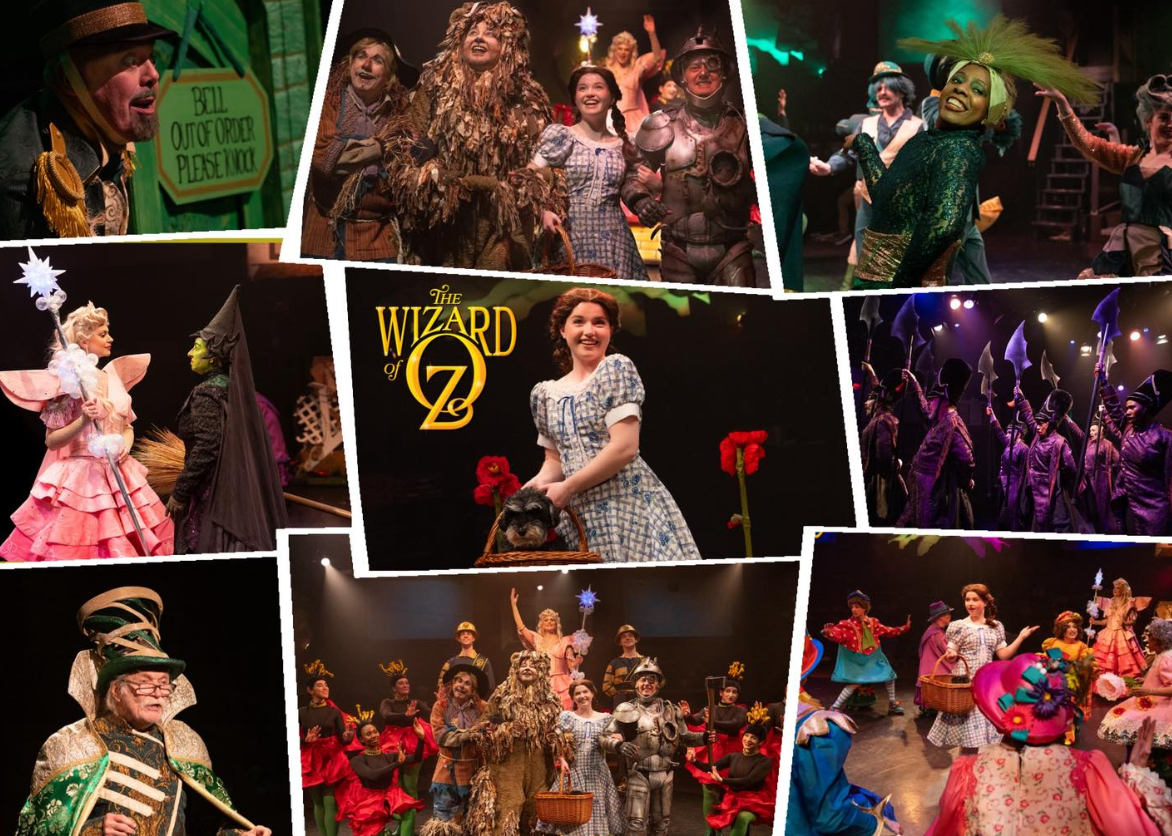
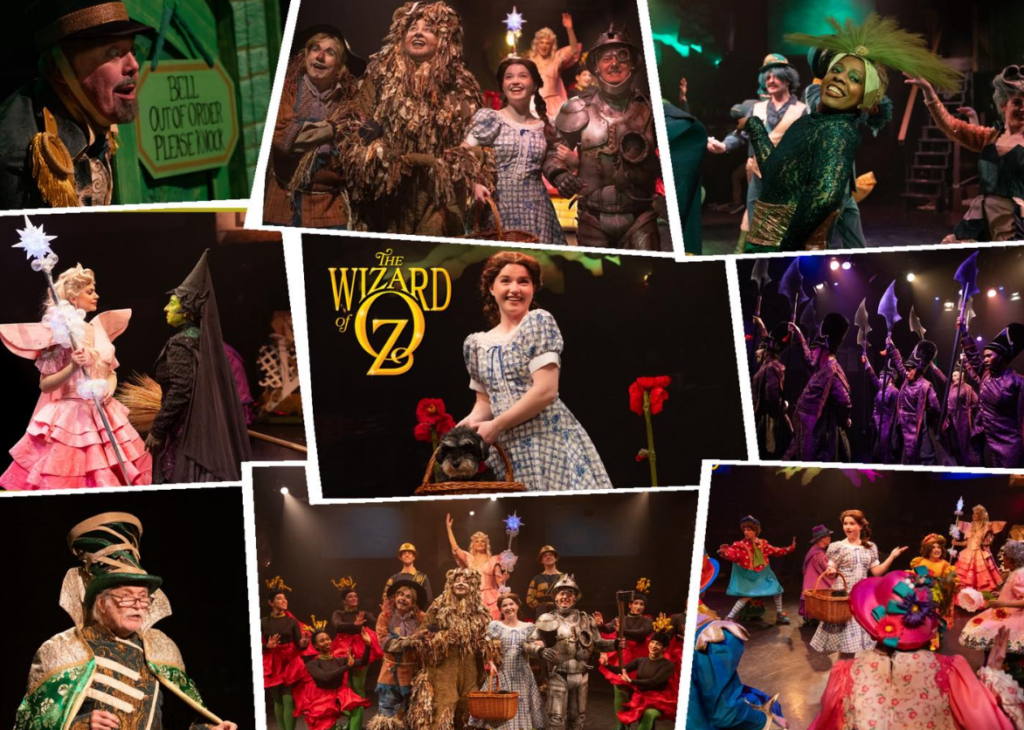 The Wizard of Oz via Toby’s Dinner Theatre
Toby’s Dinner Theatre www.TobysDinnerTheatre.com
The Wizard of Oz through Jun 7
Hexagon Revue www.Hexagon.org/tickets
Lollapalosers! Apr 17 – 26
GALA Hispanic Theatre www.Ci.OvationTix.com
Aguardiente – Where Magic Transcends Borders Apr 30 – May 24
Shakespeare Theatre Company www.ShakespeareTheatre.org
Othello May 19 – Jun 28
44: The Musical through May 10
Momentum Collective Inc. www.MomentumCinc.org
Little Shop of Horrors May 14, 15, 16
 A Mirror via Prologue Theatre
Prologue Theatre www.PrologueTheatre.org
A Mirror through May 17
Studio Theatre www.StudioTheatre.org
Purlie Victorius May 6 – Jun 21
Feeling Afraid As If Something Terrible Is Going To Happen June 4 – Jul 12
Rorschach Theatre www.RorschachTheatre.com
Dragon Play through May 17
1st Stage www.1stStage.org
Indecent June 4 – 21
The Colonial Players www.TheColonialPlayers.org
Poor Clare through May 10
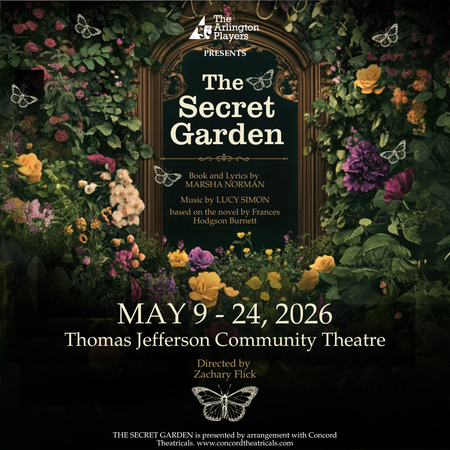 The Secret Garden via Arlington Players
Arlington Players www.TheArlingtonPlayers.org
The Secret Garden May 15 – 31
Port Tobacco Players www.PTPlayers.com
Lend Me a Soprano May 15 – 31
Silver Spring Stage www.SSStage.org
The Effect of Gamma Rays on Man-in-the-Moon Marigolds May 8 – 24
Everyman Theatre www.EverymanTheatre.org
Emma May 17 – Jun 14
Adventure Theatre www.MyAdventureTheatre-MTC.org
Aesop’s Fables through May 24
St. Marks Players www.StMarksPlayers.org
Spring Awakening – A Rock Musical through May 16
Mosaic Theater Company Soars with “Young John Lewis: Prodigy of Protest” as an Epic History Lesson in Rap, Rhyme and Song
Young John Lewis: Prodigy of Protest
Mosaic Theater
Jordan Wright
April 5, 2026
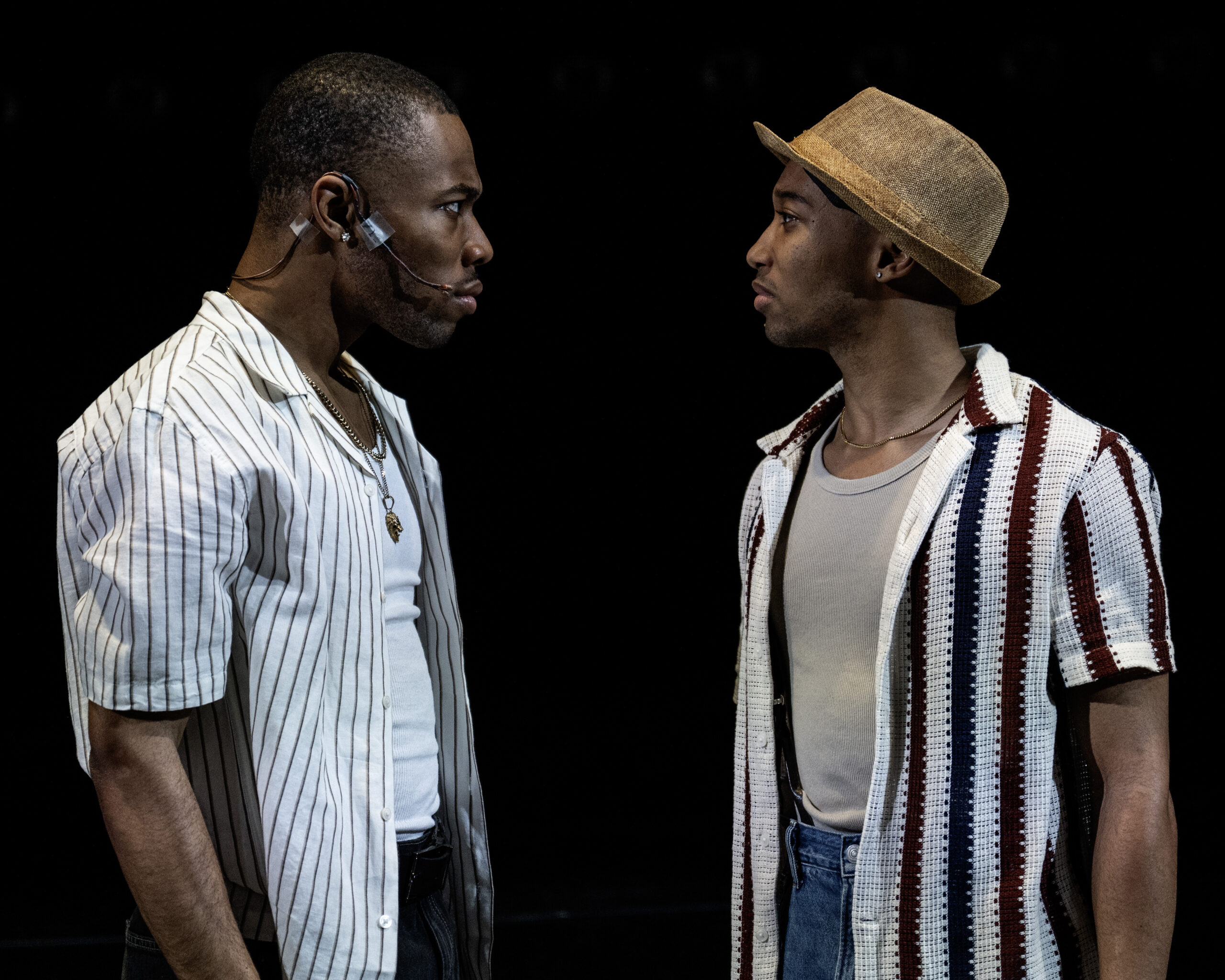
 Michael Bahsil-Cook (Young John) and Christian Emmanuel (Emmett Till) in Mosaic Theater Company’s Young John Lewis: Prodigy of Protest. (Photo/Teresa Castracane Photography)
Mosaic’s premiere production of the life and times of former Congressman John Lewis has finally come to fruition. With music and lyrics by the brilliant award-winning composer, director and playwright Psalmayene 24 and music by Grammy-nominated composer Kokayi, this gripping, often funny, deeply emotional and beautifully performed musical is a history lesson in Rap, rhyme and song and one of my favorite productions this year. And, in light of the current state of affairs (we hear you Minnesota), and the groundswell of citizen activists’ support, this deep dive into Lewis’s legacy could hardly be more appropriate, or timely.
Directed brilliantly by Mosaic’s Artistic Director, Reginald L. Douglas, the story begins in 1955 in Pike County, Alabama with Lewis in his early teens living with his parents plus ten brothers and sisters. We see his visceral response to the news of the brutal lynching of Emmett Till at the hands of racist murderers and Lewis’s desire to fight back by joining the youth movement led by the Student Non-Violent Coordinating Committee (SNCC). During that fraught period the South was mired in Jim Crow laws whose systemic apartheid was enforced by the KKK and ordinary White citizens, and Blacks were being actively, and illegally, restricted from voting. Black preachers took to the pulpits urging people to boycott the buses and Lewis joined up.
As a mentee of the Reverend Martin Luther King, Jr. and eager to follow King’s mission to bring about desegregation, young Lewis defies his parents’ wishes and joins the movement full throttle. We hear the call to action known by the powerful anthem, “God’s Gonna Trouble the Waters” and with that introductory song the mood is set for the Civil Rights Movement.
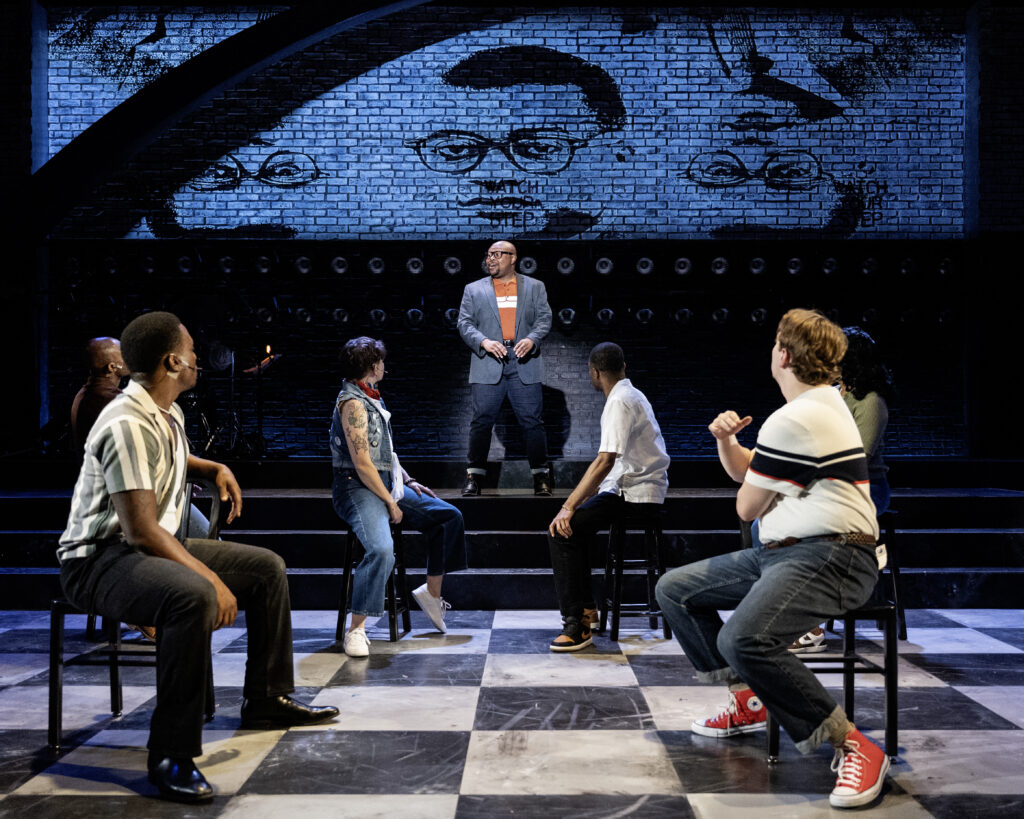 Montel B. Butler (Jim Lawson) with the cast of Young John Lewis: Prodigy of Protest. (Photo/Teresa Castracane Photography)
A few of the actors vividly portray the racists’ roles, taunting the non-violent protesters at the famous lunch counter demonstrations and sending in police to crack heads. For Lewis’s first night in jail, we hear his emotions spill out with the song, “I’m Free”.
Soon he is to meet Black power revolutionary and firebrand anti-Capitalist, Stokely Carmichael who is working inside SNCC. It’s here we come to witness the inside squabbles of SNCC’s leaders depicted as a Rap battle between Lewis and Carmichael deciding whether it’s more important to march, fight Capitalism or register Blacks to vote. History smiled when they agreed to do both. This is the man who advocated for “good trouble” and lived it to his grave.
As this national movement evolves and CORE (Congress of Racial Equality) becomes a key player, other seminal players are depicted – from Bobby Kennedy and Medgar Evers to Bayard Rustin, Ella Baker and others – backgrounding Lewis’s rise to power and his legendary efforts to change the laws affecting African Americans with his contribution to the historic Voting Rights Act and, ultimately, his work on human rights during his 33-years as U.S. Congressman from Georgia. From Nashville to DC to Selma and Memphis, this musical leaves nothing out as it urges us to “say their names”.
Twenty-eight powerful numbers from Rap to Rock to Gospel inform the period’s struggles and celebrations. Stylishly choreographed by Tony Thomas with period costume design by Moyenda Kulemeka, a three-piece onstage band plus DJ keep the place rockin’.
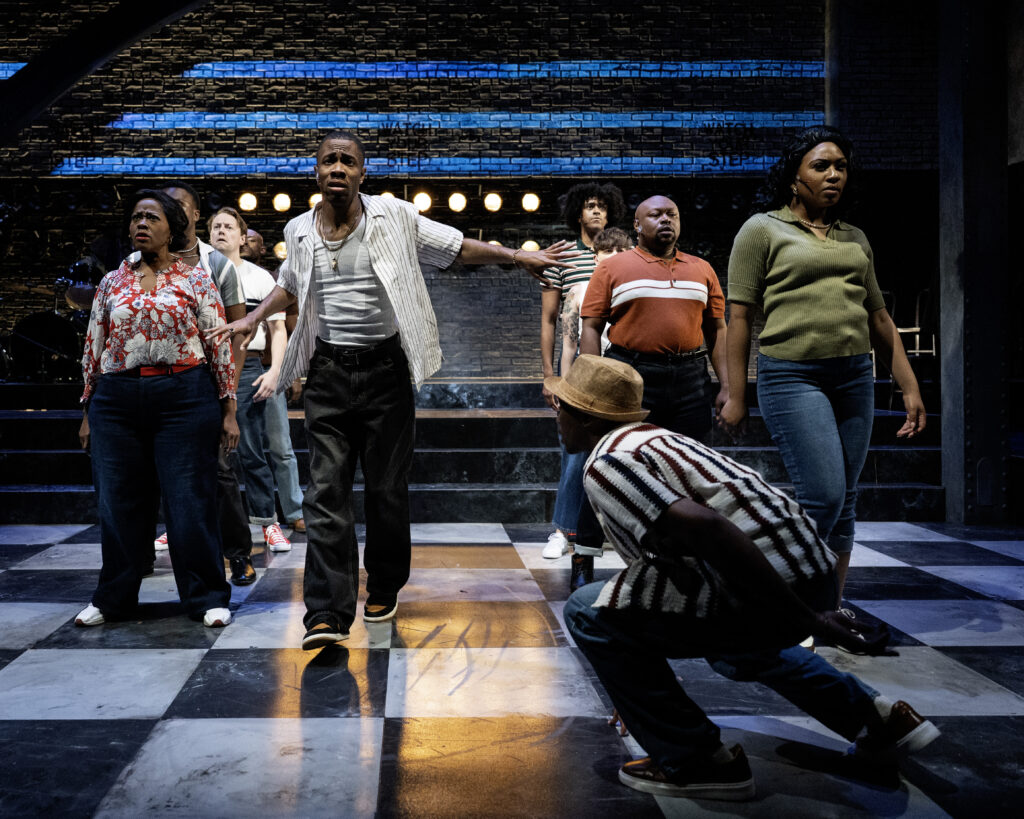 Michael Bahsil-Cook (Young John) and the cast of Young John Lewis: Prodigy of Protest. (Photo/Teresa Castracane Photography)
The perfect cast consists of Michael Bahsil-Cook as Young John; Montel Butler as Jim Lawson/A. Philip Randolph/Ensemble; Christian Emmanuel as Emmett Till/Ensemble; Jordan Essex as Stokely Carmichael/Bayard Ruskin/Ensemble; Kit Krull as Joan T. Mulholland/Waitress/Ensemble; Vaughan Ryan Midder as Medgar Evers/Eddie/Ensemble; Latrice Pace as Ella Baker/Willie Mae/Ensemble; Solomon Parker as Reverend Doctor/Hosea Williams/Ensemble; Nia Savoy-Dock as Diane Nash/Mamie Till/Ensemble; and Harrison Smith as Bobby Kennedy/Ensemble.
Highly recommended! See it and take everyone you know!!!
Mosaic Theater Company at the Atlas Performing Arts Center through May 3rd at 1333 H Street, NE, Washington, DC 20002. For tickets and information check hours for the box office and call 202.399.7993 ext. 501 or visit www.MosaicTheater.org
Folger Theatre’s As You Like It Brings the DC Culture Scene to Shakespeare’s Classic Rom-Com
As You Like It
Folger Shakespeare Theatre
Jordan Wright
March 22, 2026
 The cast of As You Like It at the Folger Shakespeare Theatre. (Photo/Brittany Diliberto)
Artistic Director Karen Ann Daniels has a story to tell and in her re-imagining of Shakespeare’s classic rom-com she has chosen to lean into DC style with Costume Designer Celeste Jennings for the funky cool streetwear; Composer KOKAYI to frame it in seven musical numbers using rap and DC’s go-go sound plus at least one Elizabethan ballad; Miki Vale writing the original lyrics; Choreographer Tony Thomas putting hip-hop and breakdance to the music and Director Timothy Douglas dovetailing the characters’ eclectic modern vibe to mesh seamlessly.
So, step into the world of The Bard in hip-hop style straight from the super cool, multi-generational streets of DC. This version employs the popular contemporary approach of introducing audiences to Shakespeare’s relevance as translated into our modern age while keeping the universal themes alive and entirely relatable. I, for one, loved it.
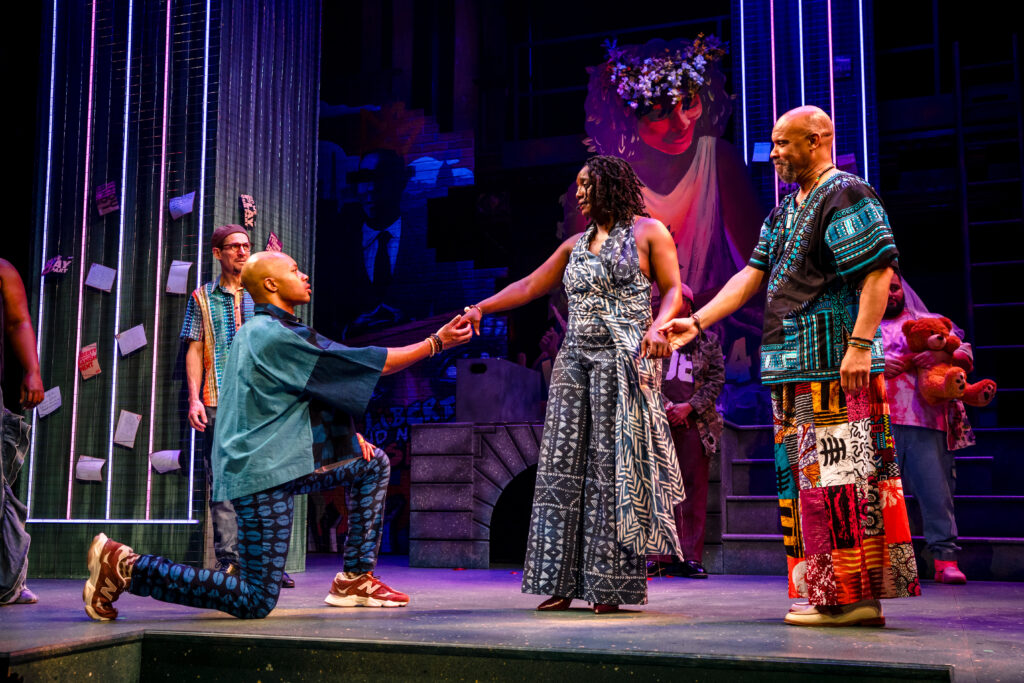 Joey Collins (Silvius), Manu Kumasi (Orlando), Tsilala Brock (Rosalind), Jefferson A. Russell (Duke Senior) and Raven Lorraine (Phebe). (Photo/Brittany Diliberto)
Meet Orlando (Manu Kumasi) an artist who totes a sketch pad and wears his brushes like bullets in a bandolier. He’s madly in love with the fair Rosalind (Tsilala Brock) whose father has been banished from the kingdom. There’s Charles (Nikkole Salter also as Jaques/First Lord) feeling the vibe in a red and white polyester track suit; Rosalind’s cousin, Celia (Sabrina Lynne Sawyer); Monsieur LeBeau (John Sygar also as Amiens/Musician); Touchstone (Ahmad Kamal) an uproariously silly jester; Duke Frederick (Jefferson A. Russell also as Duke Senior) a super fly older guy and uncle to Rosalind who sports a 1970’s slick three-piece maroon suit. Love is in the air… elusive love, unrequited love, massive confusion and gender-switching which makes for ridiculousness on steroids. When Ollie (Terrance Fleming), Orlando’s eldest brother, organizes a wrestling match between Charles and Orlando, the captivatingly comic Touchstone announces the rumble to the audience with, “Are you ready for some bone-crushing action?”. We are!
Later Frederick banishes Celia and Rosalind from the kingdom, the girls set off to the countryside of Arden to find Duke Senior. To pass through this strange land they disguise themselves as boys thus deceiving the villagers as well as their paramours. Realizing his Ros has left the kingdom, lovelorn Orlando sets off to find her bringing along Adam (Joey Collins also playing Silvius), a geriatric wanderer who travels with a zip-lock bag filled with his myriad of meds. Are we having fun yet? We are falling out of our seats!
 The cast of As You Like It. (Photo/Brittany Diliberto)
The audience is not only in on it, they’re actually in on it, when Orlando asks us to help write a love note to Rosalind and Celia recites the odes with references to Beyoncé and Taylor Swift. Of course, Phebe finds Adam aka Silvius, and Corin (Raven Lorraine as the wise old shepherd and also as Phebe) capitulates to Touchstone wearing his blinged-out name necklace (they’re now “going steady”) all while we are encouraged to shout, applaud and call out when summoned by the actors for a response. Fun for us and fun for the cast.
Super clever and hilarious!
Through April 12th at the Folger Shakespeare Theatre, 201 East Capitol Street, SE, Washington, DC 20003. For tickets and information call 202.544.4600 or visit www.GoTickets.com.
|