GRACE – Beyond the Stage
A Colloquium to Celebrate African American Foodways
The John F. Kennedy Center for the Performing Arts
at the REACH
Jordan Wright
July 17, 2022
Special to The Zebra
 Left to right – Carla Hall, Erin Tucker-Oluwole – Nolan Williams Jr., Furard Tate, Dr. Lance London and Rock Harper (Photo/Jermoni K Dowd – Courtesy of NEWorks Productions) As the rain poured down in sheets against the wraparound windows of the Reach, guests listened to vocals by local African American performers, bathed in the warm glow of storytelling and bonded together in recognition of shared experiences. During discussions and performances, we enjoyed samplings of African American cuisine with a modern twist, while panelists spoke on the history and culture of African American foodways.
The panels were led by Nolan Williams, Jr. who was appointed Social Practice Resident at the Kennedy Center in 2019. Williams, as you may recall, is the co-book writer, composer, lyricist and music director of Grace – the groundbreaking musical that ran from March to May at Ford’s Theatre. Williams is the recipient of ten Telly Awards including the Gold Prize for ‘Best TV Documentary”. Grace is a story of family, food and Black culture and references early African American chefs and modern Black restaurateurs who struggle against gentrification of their traditional Black neighborhoods.
 Nolan Williams, Jr (Photo/Marvin Joseph – Courtesy of NEWorks Productions_ Kennedy Center’s VP and Artistic Director of Social Impact, Marc Bamuthi Joseph, introduced the impressive lineup of panelists that included TV celebrity chef and author Carla Hall; Joanne Hyppolite, Supervisory Museum Curator of the African Diaspora at the National Museum of American History and Culture; Psyche Williams-Forson, Ph.D. Professor and Chair of the Department of American Studies at the University of Maryland; Furard Tate, Owner of Inspire Hospitality Group and Co-Founder and Organizer of DMV Black Restaurant Group; Erinn Tucker-Oluwale, Ph.D. Associate Professor of the Practice at Georgetown University, Director of the Global Hospitality Leadership master’s program at Georgetown University and Co-Founder of DMV Black Restaurant Week; and Dr. Lance London, Founder/Owner of The Carolina Kitchen. These speakers offered historical context and explored the social impact of food history.
In addition, there were soul-stirring performances of songs from the musical by well-known local singers Nova Y. Payton, who starred in Grace, Kevin McAllister, Monique Steele Griffiths and Anitra Raquel and conducted by pianist Leigh Delano.
Inaugural Grace Awards were presented to Dr. Lance London, Dr. 5, Chef Furard Tate and Culinary Pioneer Virginia Ali, Founder/Owner of Ben’s Chili Bowl. Ali opened Ben’s in 1958 when DC was a segregated city. “U Street was known as Black Broadway,” she recalled. “Now young, educated professionals have moved in and we’re no longer known as ‘Chocolate City’.”
Williams-Forson, who explained that “Soul food is an experience,” was pleased to announce the release of her new book, “Eating While Black: Food Shaming and Race in America”.
Carla Hall was one of my first interviewees and I am a huge fan of her work. In 2009 she invited a group of her friends to a watch party at CulinAirie, her DC-based cooking school. She was a finalist on the TV show Top Chef. She didn’t win that year but took it gracefully. “Winning to me was feeling good about what I did,” she told me that night.
During the discussions, Hall reminded attendees of the foods that originated from Africa like benne seeds, watermelon, yams (I learned “sweet potato” was a made-up name to please the American consumer.), bananas, millet, okra, sorghum and many more we take for granted in our American kitchens including the Coca-Cola and potato chips invented by a Black man and later stolen by Lay’s. Hall also spoke of the popularity of “Nashville hot chicken” created at a roadhouse called Prince’s Hot Chicken Shack. “I will always call it Prince’s Hot Chicken,” she promised.
Hall has graciously given me permission to publish three of her fabulous recipes for the dishes served at the event.
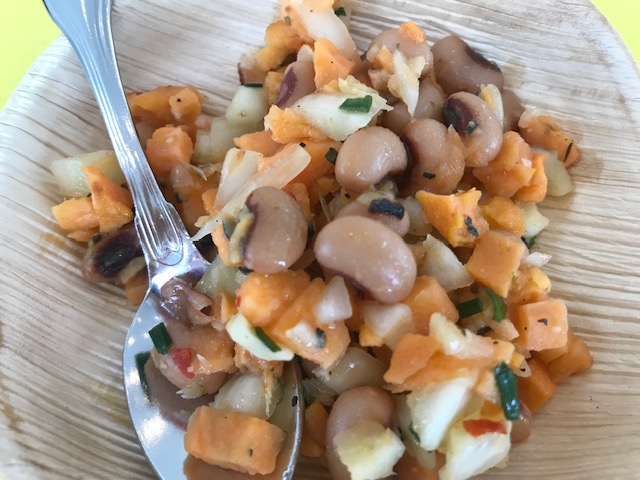 (Photo/Jordan Wright) Black-Eyed Pea Salad with Sweet Potatoes and Fennel
Hot Sauce Vinaigrette by Carla Hall
8 servings
- 2 cans black-eyed peas, drained
- 2 large sweet potatoes, peeled and diced (1/4” cubes)
- 3 tablespoons olive oil
- 1 teaspoon Kosher salt
- 2 teaspoons freshly ground black pepper
- 2 fennel bulbs, diced (1/4”)
- 1 lime, zest and juice
- ½ small white onion, finely chopped
- 1 clove garlic, minced
- 1 sprig fresh thyme, leaves only
- ½ teaspoon chili flakes
- ½ cup finely cut chives or scallions
- ½ – 1 teaspoon salt
Hot Sauce Vinaigrette:
- ¼ cup hot sauce
- 2 tablespoons apple cider vinegar
- 1 tablespoon honey
- 1 tablespoon yellow mustard
- 1 clove garlic, minced
- ½ cup canola or vegetable oil
- S&P to taste
Heat a large nonstick skillet to medium high.
Place the cubed sweet potatoes in a large bowl, then drizzle with the olive oil and toss with the salt and pepper until well-coated. In two batches, spread the sweet potatoes in a single layer in the hot pan. Leave them for 1 minute, toss the sweet potatoes, continue to allow them to brown. Cook for 3-4 minutes until they are dotted with color and al dente. Remove the potatoes from the pan and place on a sheet pan or large plate in a single layer to cool. Repeat with remaining potatoes.
Prepare the Hot Sauce Vinaigrette: Put all ingredients in a jar and shake to combine. Set aside.
In a medium bowl, toss the roasted sweet potatoes and diced fennel in lime zest/juice and 1/2 teaspoon salt. Set aside.
In a large bowl, combine the black-eyed peas, onions, garlic, thyme, chili flakes and chives. Toss to combine. Start by adding ½ cup vinaigrette, and gently stir to combine. Add the sweet potato/fennel mixture to the black-eyed peas.
Add more vinaigrette, if desired, and salt and pepper to taste.
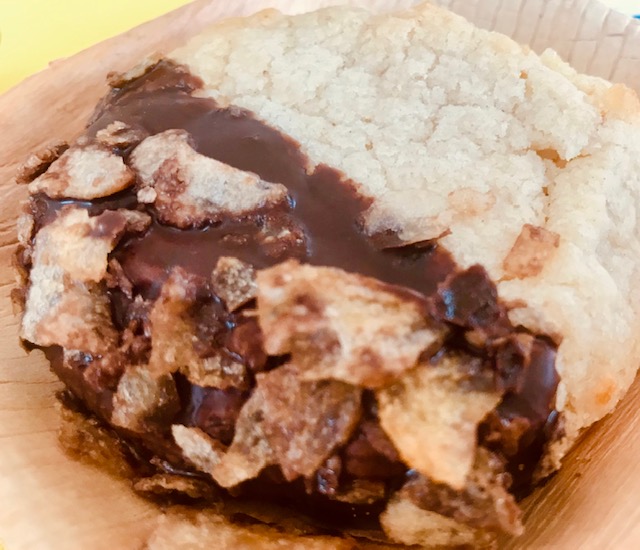 (Photo/Jordan Wright) Potato Chip Shortbread Cookies by Carla Hall
Makes 2 dozen
- 1 cup butter (softened)
- 3/4 cup granulated sugar
- 3/4 cup crushed potato chips plus an additional 1/2 cup for garnish
- 1 teaspoon vanilla
- 2 cups all-purpose flour
- Confectioner’s sugar (for dusting)
- 1 cup chocolate chips (melted)
Preheat oven to 350°F. In the bowl of a stand mixer with the paddle attachment, cream the butter and sugar until fluffy. Reduce speed to low and add the 3/4 cup potato chips and mix until incorporated, and then add the vanilla, and mix until thoroughly combined. Add the flour and mix until just combined — do not over mix the dough!
Use a spoon to scoop small 1-inch balls of dough onto a lightly greased sheet pan, spacing them at least two inches apart. Dust each of the cookies with a bit of confectioner’s sugar, and press flat.
Cook for 10 to 15 minutes, or until golden brown, and allow to cool. Dip each of the cookies in melted chocolate. While the chocolate is still soft, dip the cookies in the crushed potato chips. Allow to set before serving.
Jordan Wright
June 17, 2022
Special to The Zebra
 Photos Courtesy of Restaurant Associates Freedom Day, Juneteenth, marks the moment in United States’ history on June 19, 1865 when the remaining 250,000 enslaved African Americans in Confederate states were legally declared free two years after the Emancipation Proclamation was signed. In the century-and-a half since, the Juneteenth holiday represents a time to gather with family and community, to honor the present and to reflect on shared history and tradition. This year’s commemoration explores the “sense” of freedom by highlighting the music, food and experiences of African Americans.

For the first anniversary of this federal holiday, the museum plans include a variety of family-friendly virtual and in-person events and programs to celebrate Juneteenth. As you stroll through the galleries you will hear a newly created playlist by music curator Steven Lewis and see the museum’s display of the Rev. Dr. Martin Luther King Jr.’s original speech from the 1963 March on Washington for Jobs and Freedom on view from June 9th through June 20th in the “A Changing America” exhibition curated by NMAAHC Curator Joanne Hyppolite.

Head to the Sweet Home Café where Executive Chef Ramin Coles of Restaurant Associates has created a special menu to celebrate Juneteenth. The Café will be offering a number of delicious choices including Whole Hog BBQ, Yeast Rolls, Smoked half Chicken with Cherry BBQ sauce and House-made Pickles, St Louis Ribs with a choice of BBQ Sauces and White Bread, Louis Armstrong Red Beans and Rice with pork, Stewed Tomato, Okra and Corn, Coleslaw and Potato Salad. For a sweet home finish, two tempting desserts are on the menu with both Cherry Cobbler and Red Velvet Cake. Iced tea and Cherry Lemonade are available.


*Photos Courtesy of Restaurant Associates
Interview with Ramin Coles
Executive Chef of Sweet Home Café at
The Natual Museum of African American History and Culture
June 18, 2022
Jordan Wright
Special to The Zebra
 Photos Courtesy of Restaurant Associates New Jersey native and longtime DC Metro area resident, Executive Chef Ramin Coles started out at Academie de Cuisine a mere two weeks out of high school. From there he earned an externship at the Clyde’s Group in Chevy Chase, later cooking at Kincaid’s where the legendary Bob Kincaid taught the teenager both cooking and life lessons. Staying in the area and working under some of DC’s best-known chefs, Coles partnered with Chef Tracy O’Grady to compete in the prestigious international Bocuse d’Or championship. With such diverse and extraordinary experiences under his belt, he went on to work with Jeff Black at Black Salt and then Black Market and credits him as the person who gave him the confidence to develop his own recipe ideas. From that intense growth period Coles went on to Founding Farmers and later to the catering operation with Wolfgang Puck at The Sunset Room. He is now the Executive Chef at Sweet Home Café.
 Photos Courtesy of Restaurant Associates Wright – Did you learn how to cook from your family members? What are some of your memories of growing up around food?
Coles – My grandmother and mom are both great cooks and my mom would make most anything for me. When I was young, I would sometimes stay with my great-grandmother and she taught me how to make pancakes, because my mom wouldn’t let me eat pancakes. As a family we would go fishing a lot. We would go out on a boat in the Chesapeake Bay and and and my mom would catch rockfish. There was a guy on the dock would scale it and clean it and wrap it up for us. One day my grandmother, who was a seamstress, made the fish with Stovetop stuffing – sewed it up with a needle and thread. It was so delicious. I got to see a lot of different things through them.
When I was a kid my stepfather’s family had food trucks parked at the Smithsonian, so I spent a lot of time around here. I think my dad bribed the guards to look after me so I wouldn’t get kidnapped.
In summers they took me to the Italian neighborhoods in New Jersey where my grandmother made certain I tried a lot of different types of food. One day when I was in Middle School, I robbed a beehive. It was like a Disney cartoon. We cracked open the floorboards at this old house and took out five gallons of honey from the hive – wax and all. My grandmother said we had to process it right away otherwise the bees would follow the honey back to our house.
Wright – How did you decide what to prepare for the Museum’s Juneteenth menu?
Coles – I did some research and the museum jumped on it even before it was named a federal holiday. I was inspired by Texas barbecue. I use red in a lot in the dishes. It’s color of the holiday that stands for the blood of the people or the resilience of the people. So, we highlighted recipes to reflect that and incorporated a few of the recipes from the Sweet Home Café cookbook. It’s the first time we’ve done whole hog barbecue. We’ll serve different sauces on the side. One is made with cherry cola, cherries and chiles that we cook down and then add tomatoes. The mustard sauce represents South Carolina and comes from my stepfather Uncle Oliver’s recipe handed down to my mom and then how I figured it out. The vinegar sauce is from North Carolina. Once on a trip we found a lady selling barbecue out of her barn on white bread with mustard sauce. That was years ago but it was the best I’d ever had.
This interview was condensed and edited for content.
Jordan Wright
June 2019
Photo credit: Jordan Wright
East Indian Glamour at Punjab Grill ~ Gâteau Bakery Café & Tea Room Brings Bespoke British Tea Time to Old Town Warrenton ~ High Street Café – Latin-inspired Brasserie in Georgetown
Punjab Grill
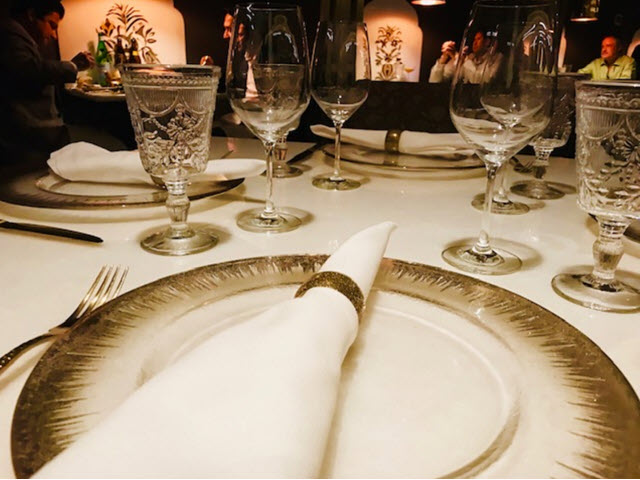 Glamorous table setting at Punjab Grill As a great admirer of Indian cuisine (inspired by my mother who turned down a marriage proposal from the last Maharaja of Sarila , I have been delighted with the wide variety of Indian restaurants around DC. Dining at the award-winning Rasika or Indique or Bombay Club (think days of the Raj) spring to mind. Even casual spots like Indigo and Pappe – which all are on my short list. Travel outside city limits and a new Indian restaurant seems to pop up every month. The more exposed we are to the joys and complexities of Indian food, the more we want to try a new one.
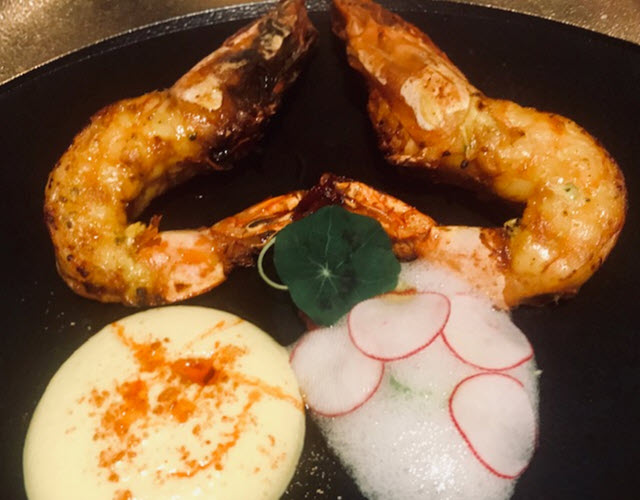 Tandoori Tiger Prawns at Punjab Grill Punjab doesn’t tumble neatly into any of these categories. It stands alone as a temple to Indian fine dining with its luxe décor – Hermés plates, napkin rings and gold-handled silverware – and well-trained, crisply uniformed waitstaff. If I were hosting a dream dinner party it would be luxuriating in its private dining room where 150,000 miniature, convex mirrors reflect the light from dozens of candles and low-lit chandeliers, and where a long dining table inlaid with mother-of-pearl creates a glimmering, shimmering ambiance that reeks of regal sophistication. Dubbed the ‘Sheesh Mahal’ or ‘Palace of Mirrors’ it accommodates ten of your nearest and dearest.
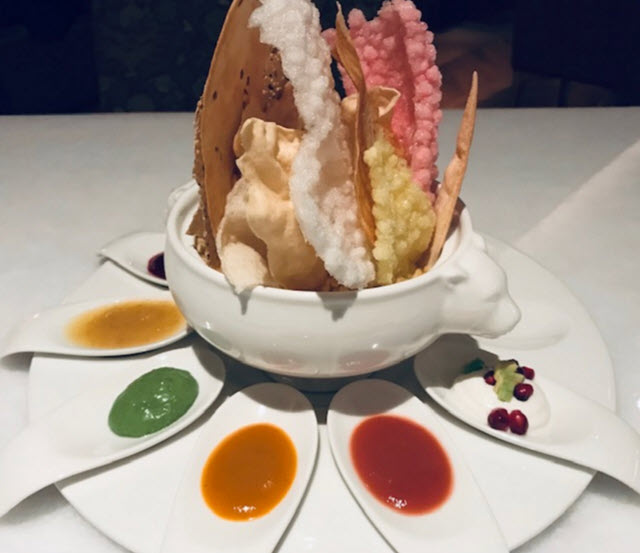 Punjab Grill’s Chutney Flight Another dining room – dubbed the ‘Passage to India’ is inspired by the private railroad car journeys through India taken in the comfort of royal saloons. Each table is supported by a hand-carved marble base, sourced from the same mines as the Taj Mahal. Its walls are artfully decorated with beautifully carved wooden latticework.
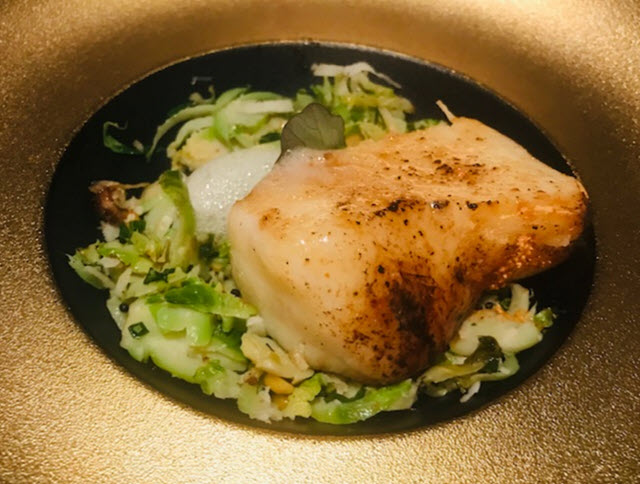 Malabar Macchi- Chilean Sea Bass with jaggery cumin glaze, Brussels sprouts thoran and kokum coconut sauce A translucent onyx bar at the entrance beckons you to order one of their delicately-spiced cocktails. Decorated with marble inlays and aglow with amber lighting from within the stone, it makes for a dramatic introduction to the dining rooms where dishes are treated as works of art.
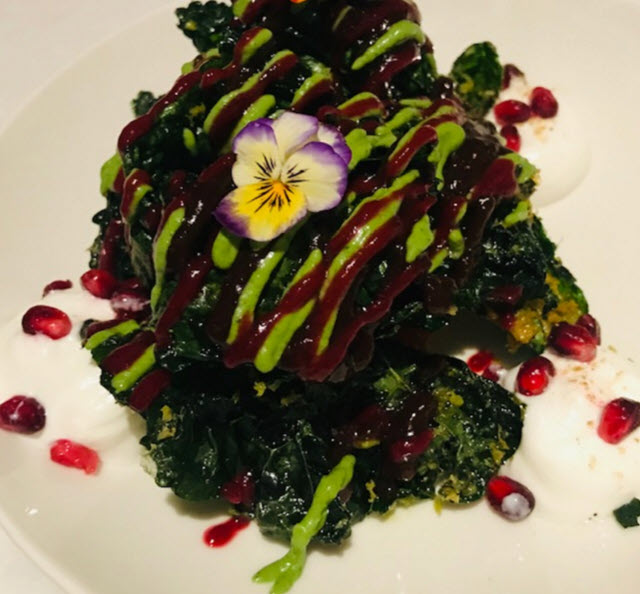 Aloo Tikki Chaat surrounded by pomegranate seeds A must-have starter is the sampler of six distinctive chutneys – mango, pineapple, mint yoghurt, ginger tamarind carrot pickle, turnip pickle, radish pickle and laccha onion surrounding an assortment of crisp “breads” – poppadum, dosa crisps and naan grissini. The pink one is tinted with beet juice.
As beautiful as the dishes are, they are not mere window dressing. The food is divine – a tribute to Executive Chef Jaspratap ‘Jassi’ Bindra’s modern twist on Indian cuisine.
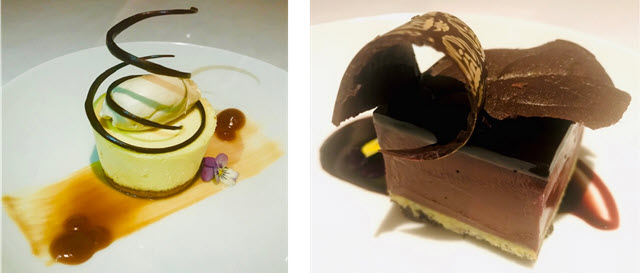 Salted Caramel Paneer Cheesecake (L) – honey cashew crust, mascarpone cream / Chocolate Pistachio Giandiya (R) – cardamom ganache, chocolate sable Punjab Grill, 427 11th Street NW, Washington, D.C. 20004. Reservations are recommended. Call 202 813.3004 or visit www.punjabgrilldc.com Valet parking is available at dinner.
Gâteau Bakery Café & Tea Room
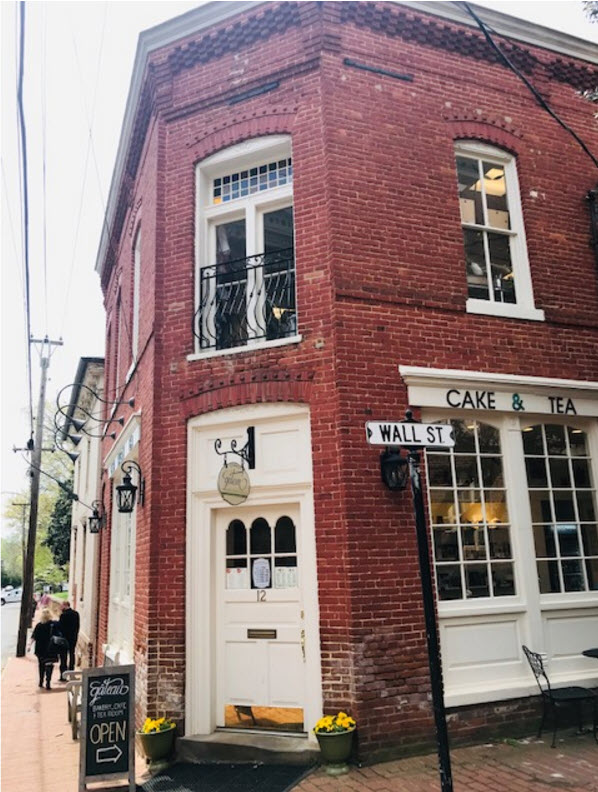 Gâteau Bakery Café and Tea Room in Warrenton, VA I met owner Lora Vennettilli Gookin at a Gold Cup event in The Plains, Virginia a few years ago. I had been gobbling up her delicious pastries while visiting the Airlie tent and was introduced to her by a mutual friend. Lora let me know she was opening a bakery in Old Town Warrenton and was in the process of restoring a historic building in the center of town. She promised to contact me when it was ready. Fast forward two years later and Lora made good on her pledge and that was how I came to experience Gâteau Bakery’s delightfully delicious afternoon tea.
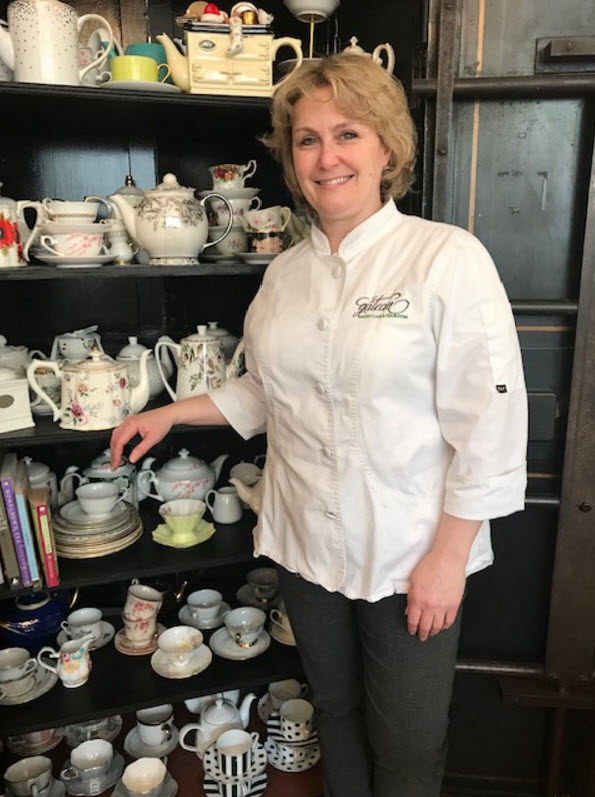 Owner/Baker Lora Vennetilli Gookin in front of the historic bank’s vault where she houses the collection of cups and teapots used for tea service. A short drive out from DC, and a world away from the stresses of the city, the charming bakery plus tea room is situated near the Fauquier Courthouse and Fauquier History Museum and Old Jail, both of which are worth a visit. Built in 1860, the bakery itself with its interior brick walls is housed in what was once the Bank of Warrenton. On one side you’ll find the tea room on the other near the entrance a gift shop, takeout bakery and a café serving soups, salads and sandwiches.
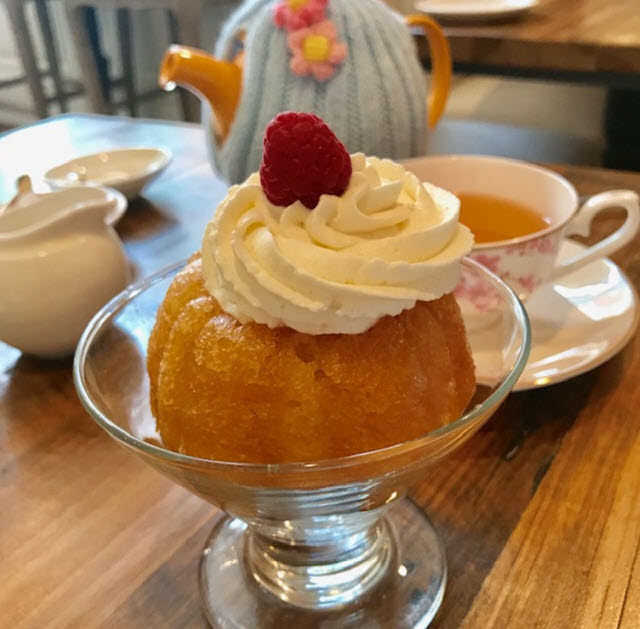 Baba au rhum at Gateau Bakery Lora is a superb pastry chef and enterprising baker. All the scrumptious baked goods are baked by Lora and her well-trained staff of bakers. In the bakery section you’ll find lots of flavors of cakes (caramel cakes!) and cupcakes (coconut chocolate almond!) plus savory treats to take away – cupcakes, muffins, biscuits, cookies, cakes and classic desserts like baba au rhum. For those with specific food issues or allergies, you can still have your cake and eat it too with gluten-free, dairy-free and/or vegan options. For my friend and I, the exquisitely prepared afternoon tea is what we came for. Take away sweets can wait.
Different levels of the tea experience are offered. I recommend you go all in with the Royal Tea featuring cucumber sandwiches, mini savory puff pastries with tomato, basil and mozzarella, scones (flavors at the whim of the chef), Virginia ham and sweet potato biscuits served with mustard butter, curried egg salad, mini chocolate tarts with shortbread crust, and an assortment of cookies and scrumptiously rich cake bites. It is a tea lover’s dreamland heightened by the freshly whipped cream and seasonal fruit jams.
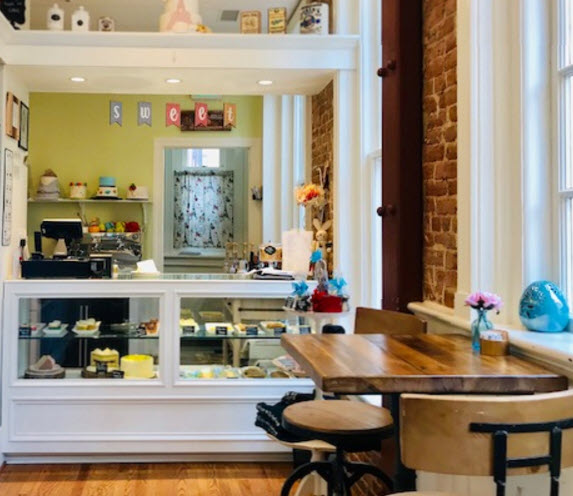 The bakery and gift shop at Gâteau Twenty-five varieties of tea grace the menu. Your selection is brought to the table in an individual pot, kept warm with hand-knit tea cosies Lora has made in England. Each pot and cosy are unique and tea varieties are custom made exclusively for the bakery by Green Alchemy Herb & Mercantile Company owned by nearby Lovettsville residents, Sarah and Peter Roussos, a former chemistry teacher. Be sure to take home a few of these unique teas. The Roussos’s ‘American Chai’ has been patented and is the perfect morning sip.
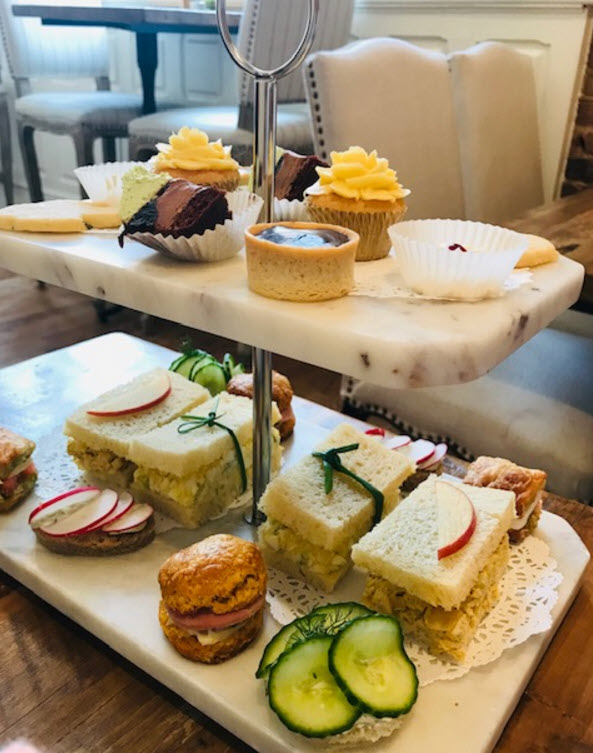 The Royal Tea at Gateau Bakery Lora also serves a Children’s Tea, which is the best way to introduce your child to the finer things in life (including good table manners). The Gentleman’s Tea is more meat- and cheese-centric and features bison sliders and smoked gouda grits washed down with a sprightly pilsner. For those craving something with a bit more punch, the bakery has a full-on liquor license that includes cocktails, wine, beer and champagne.
Once a career civil engineer who, encouraged by friends, attended pastry school in Scottsdale, Arizona, Lora has her own style. Though many of her pastries are of the classic variety, this is not your average corner bakery. On-trend sweets as well as gorgeously decorated multi-tiered wedding cakes that are her most popular items. Lora is committed to the best quality ingredients – many of which are locally sourced. A visit to her website reveals more about her exacting practices. “All of our cakes, fillings and frostings are skillfully made from scratch using select organic ingredients, no shortening, unbleached and unbromated flour, aluminum free leaveners and non-GMO ingredients.”
Gâteau Bakery Café and Tea Room is located on 12 Culpeper Street, Warrenton, VA 20186. Reservations are recommended for afternoon tea. Call 540 347.9188 or visit www.1gateau.com
High Street Café
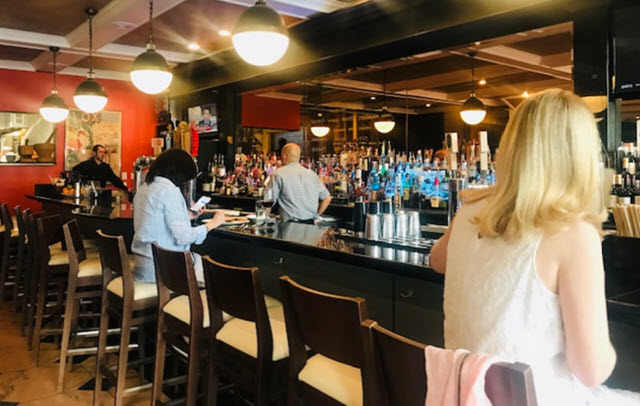 The bar at High Street Café Imagine my surprise to find Georgetown’s old Paolo’s turned into an American brasserie with a Latin flair. It’s like having culinary Europe at your doorstep. Veteran restauranteur Manuel Iguino is back and center stage. (Nearly a decade ago he served the pounded plantain dish mofongo at his Puerto Rican-influenced restaurant Mio.) Whether sitting on the patio smack dab on Wisconsin Avenue (perfect for people-watching) or perched at the intimate bar, or nicely cosseted on a banquette, Georgetown’s hustle-bustle is at eye level. Located in the heart of Georgetown’s toniest environs, his latest venture, High Street Café, affords diners a sunset view, an accomplished chef, Gerard Cribbin, and an ambitiously creative cocktail program by Beverage Director, Carl Townsend.
Cribbin, who once cheffed a few blocks away at Filomena’s making fresh pastas, drifted farther south. After stints in Greenville, SC, a noted foodie destination where he was chef and co-owner of Gerard’s, he cooked at The Lazy Goat and later became the executive chef at Coal Fired Bistro. For now, he’s back in the nation’s capital. Let’s hope he stays. At Coal Fired Bistro his seafood bisque became all the rage. It’s one of his specialties and on the menu here. Cribbin has his own way of interpreting the dishes we think we’re familiar with. A starter of tuna tartare was a surprising refresher. Not your usual raw fish dish, this version becomes elevated with the addition of tiny cubes of sweet mango and a silken dressing of orange cream.
 Scallops with wild mushrooms, sherry cream, spinach and saffron risotto A wide array of menu items (I spotted lechon pizza!) beckons, but I drilled down on a calf’s liver starter. Now there are a lot of things that can go wrong with this rarely encountered delicacy – a chef that thinks it’s okay to substitute beef liver (too bitter), overcooking (tough as shoe leather) and near-raw onions.
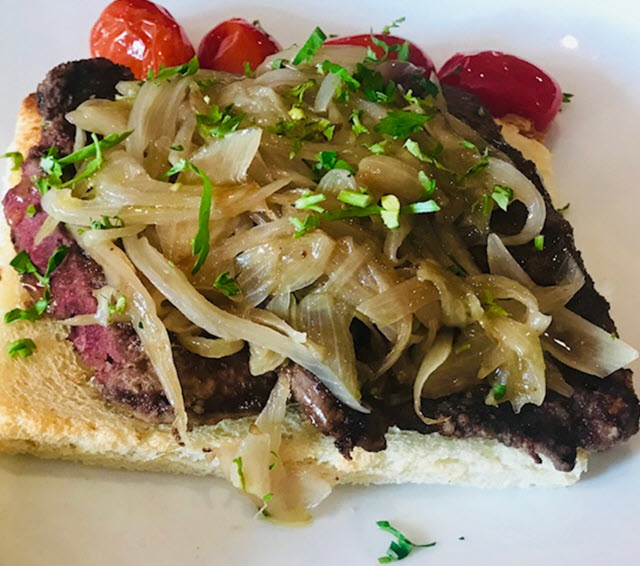 Calf’s Liver with caramelized shallots The onions must be caramelized through a process of long, low and slow cooking. For those who are equally as discerning about liver and onions, I can report that this one was sheer perfection and served with caramelized shallots. Even better, as these tiny bulbs yield a sweeter result.
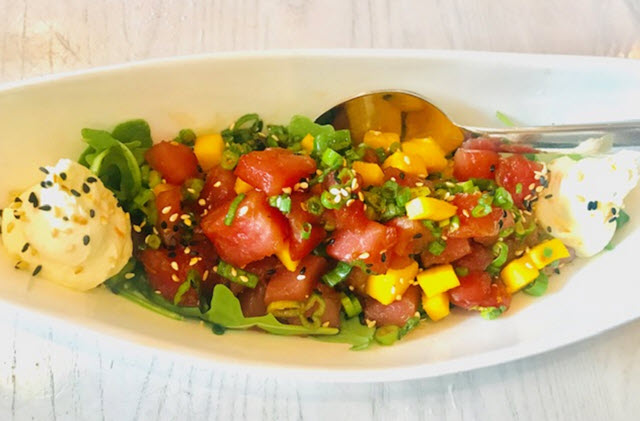 Tuna Tartare with mango, orange cream and baby kale Another dish I measure a restaurant’s chef by, is Spaghetti alla Vongole. Cribbin prepares it with the tiniest of sweet clams, plenty of garlic, seasoned bread crumbs and a charred lemon on the side. Memorable. A dish of perfectly bronzed scallops with wild mushrooms and sherry cream and risotto was oh, so rich and delicious too.
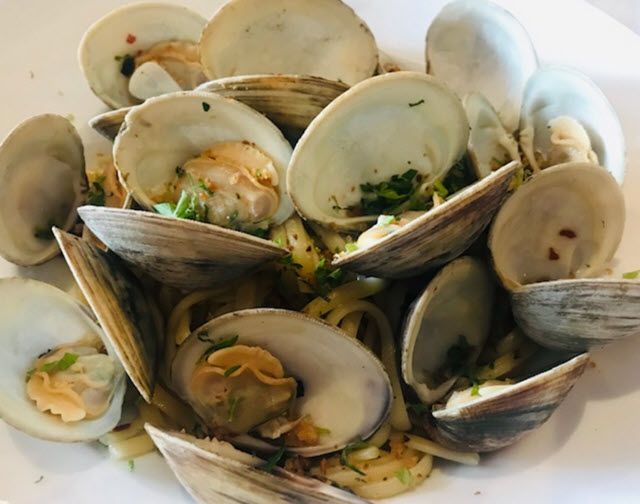 Spaghetti alla Vongole Although I was racing off to the theatre and I usually forgo a drink when I’m working, I wanted to try, on this very hot day, just one mojito. It’s a good way to test a bar’s credibility as too often this classic Spanish cocktail is dumbed down by a lazy bartender who plants a solitary sprig of mint and calls it a day. Townsend’s was a veritable garden of mint and limes and super hydrating.
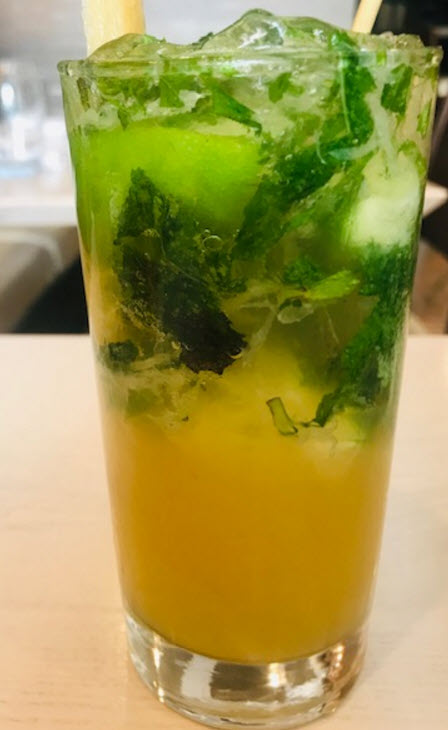 High Street Café’s Mojito Here are a few of Townsend’s specialty summer cocktails: ‘Mai High Tai’ with Novo Fogo Cachaça, Dry Curaçao and orgeat; ‘Seasonal Buck’ with Gin Lane 1751 ‘Victoria’ Pink Gin, lavender and ginger beer; ‘Ponce Old Fashioned’ with Don Q Añejo Rum, turbinado and bitters; ‘Spicy Guava Pisco Sour’ with Soldeica Pisco, Ancho Reyes and sichuan syrup; and ‘Paloma-rita’ with Rooster Rojo Tequila, lime and grapefruit soda.
Two house-aged cocktails presented by High West Whiskey are also featured – the ‘Chili Aged Manhattan’ with High West American Prairie Bourbon, vermouth and Amargo de Chile; and the ‘Caribbean Negroni’ with Don Q Gold Rum, Tiki Lovers Dark Rum, amaro blend and vermouth blend.
A return trip (with alcohol) is definitely on the horizon.
High Street Café – 1303 Wisconsin Avenue, NW, Washington, DC 20007. Call 202 333.0256.
Jordan Wright
May 15, 2019
Top chefs from a collection of our area’s best restaurants came together earlier this week for the 10th Annual Blue Star Families Celebration. Paired with chefs from the different branches of the military, together they created unique and scrumptious nibbles and sips. This singular arrangement encourages the importance of and solidifies BSF’s mission to bridge the gap between civilian and military communities. Awards were presented by General and Mrs. Joseph F. Dunford, USMC and Brianna Kellar, Anchor of CNN’s Right Now and Blue Star Ambassador.
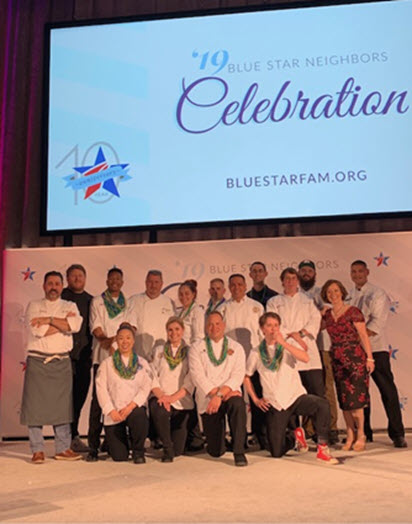 Blue Star Chefs and Partners with winning chef Shamon Hill (Top Row – third from the left) With a view of the White House across Lafayette Park as a backdrop, guests were treated to an array of fabulous food and colorful cocktails created by Todd Thrasher who, alas, was busy at his new distillery and bar, Tiki TNT & Potomac Distilling Company. The red-carpet event was Co-Chaired by General George W. Casey, Jr. USA (ret) and his wife, Sheila Casey and attended by military VIPs and their wives, many of whom donate their time to support military families in need.
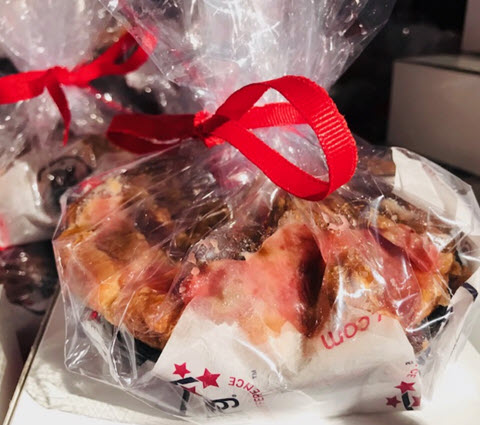 Dog Tag Bakery’s Strawberry Rhubarb Pie A step-and-repeat was offered to guests whose photos were posted to the Blue Star Families’s website and colorful bead necklaces were given to guests to vote on the chefs whose dishes they liked most. Young chef Shamon Hill, ‘Military Brat’ of the USMC who partnered with Chris Clime of PassionFish, were the winners of the competition with their delicious ‘Smoked Salmon Pizzelle’ served with an everything bagel crisp, Coleman mustard aioli, pickled red onions, chopped eggs and capers.
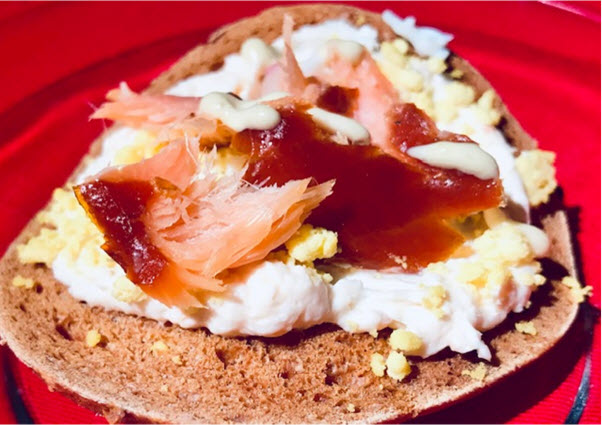 The winning dish ‘Smoked Salmon Pizzelle’ A bit of background on this amazing organization: Through their All-Volunteer Force 50 chapters around the world serve military families, providing assistance through education, empowerment and employment programs in civilian communities. Chapters partner with the general public and other services to address the daily challenges of military life. Over 1.5 million military families are helped every year. Can I get a hooray?
During the event, Susan Masser received the 2019 Blue Star Neighbors Award. Masser was nominated by friends Major Steven Brewer and his wife Chelle Brewer for saving their daughter’s life and for her unconditional friendship and support. General Joseph F. Dunford Jr., Chairman of the Joint Chiefs of Staff, and his wife, Mrs. Ellyn Dunford presented the award. The star-studded affair was attended by the highest decorated military leaders, business executives, celebrities, Congressional delegates, and government leaders who are dedicated to strengthening opportunities for military families through Blue Star Families. A few of those high-level military leaders and VIPs in attendance included General H. R. McMaster – National Security Advisor; Robert “Bob” Gates – Former US Secretary of Defense and current Director of Starbucks; and Dr. Lynda Davis – U. S. Department of Veterans Affairs.
Guests were serenaded by the Washington Performing Arts Men and Women of the Gospel Choir and entertained by military spouse and comedian, Maggie Phillips of the Armed Services Arts Partnership.
The 2019 celebrity chefs and culinary partners with their tastings included:
- Chef Chris Clime of PassionFish Restaurant with USMC “military brat” Shamon Hill – ‘Smoked Salmon Pizzelle’ with an everything bagel crisp, Coleman mustard aioli, pickled red onions, chopped eggs and capers.
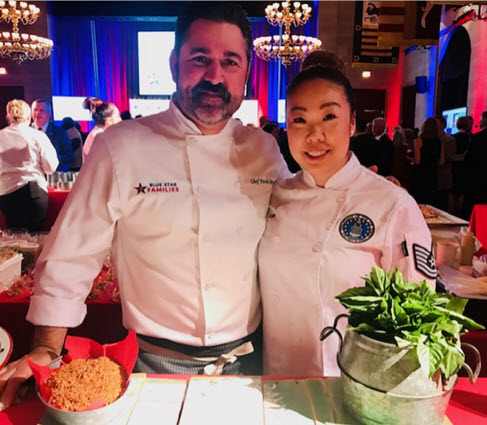 Chef David Guas with TSgt Claire Kim
- Chef David Guas of Bayou Bakery, Coffee Bar & Eatery with TSgt Claire Kim of the Air National Guard – ‘South Meets East’ Spicy Chilled Crawfish Etouffée with puffed rice chip
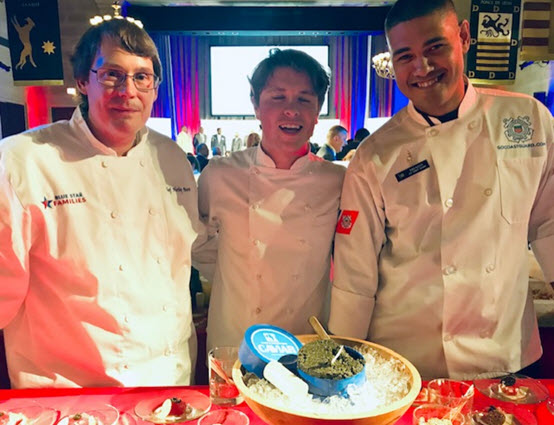 Chef Harley Peet (left) with CSCS James Swenson (right) and an assistant (center)
- Chef Harley Peet of Bas Rouge in Easton, MD with CSCS James Swenson of the Coast Guard – Ahi Tuna Tartare with preserved lemon, crème fraiche and osetra caviar
- Chef Kyle Bailey of The Salt Line with SSG John Densham of the Army – Pork Belly Slider with Asian pear BBQ, broccoli rabe, fennel-apple slaw on an onion roll
- Chef Ris Lacoste of RIS Restaurant with CS1 Sierra Tyler – Miso Salmon Tartare with fried wontons, Napa cabbage slaw, sriracha aioli
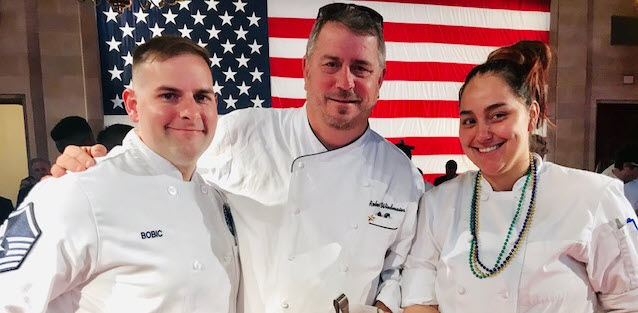 Chef Robert Wiedmaier (center) with TSgt Kristi Jackman (right)
- Chef Robert Wiedmaier of Marcel’s with TSgt Kristi Jackman of the Air Force – Roasted Herb Barley with peas, fava beans, toasted cashew hummus, black truffles
- Chef Todd Gray of Equinox with SSgt Hiram Carrion of the Marine Corps – Medjool Date Tabbouleh Salad with spiced carrots and green tahini
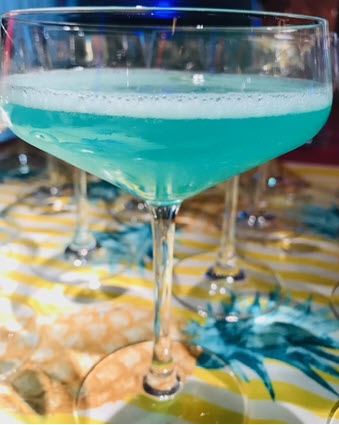 Todd Thrasher’s ‘JCS Cooler’
- Mixologist Todd Thrasher of Tiki TNT – ‘Code Red’ and ‘JCS Cooler’ cocktails
Awards for their service and inspiration were given out to the following people and organizations.
- The Walt Disney® Company — Corporate Neighbor Award
- Craig Newmark, Founder of Craigslist and Craig Newmark Philanthropies — Constance J. Milstein Philanthropic Award who donated $1M to the New York Chapter
- Susan Masser, Civilian Hero — 2019 Blue Star Neighbors Award
Ian Bohen, American Actor and Director of Paramount Pictures’ Yellowstone – Master of Ceremonies
Jordan Wright
March 6, 2019
Photo credit – Jordan Wright
Last October Jonathan Till arrived at Del Ray’s Evening Star to take over as Executive Chef in a restaurant that has been successful serving a mostly local clientele for over two decades and seen its share of chefs. It’s also seen its ups and downs.
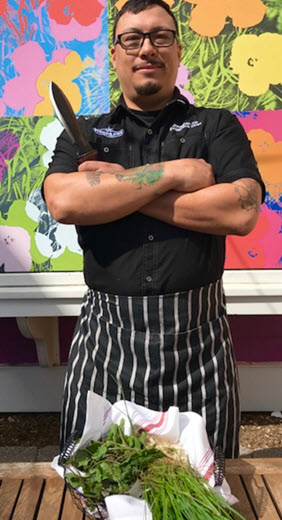 Evening Star Executive Chef Jonathan Till Till brought with him a wealth of experience from his education at the New England Culinary Institute and an internship at L’Espalier in Boston, where he trained under James Beard Award winning chef, Frank McClelland. From there he received an Associates’ Degree in Culinary Arts in 2008 and learned pastry under Certified Master Pastry Chef, Frank Vollkommer, at the Saratoga National Golf Course.
Locally, Till spent two years at William Jeffery’s Tavern, a neighborhood joint featuring pub food, followed by two years as a corporate chef for the Barteca Restaurant Group before they were bought out by Del Frisco’s for a cool $325M.
Before all that, he’d taken a turn or two in fine dining (two months spent picking shells out of crabmeat in a dark room at The Dabney was not to his liking) and farm-to-table. As it turns out, connecting with farmers and growers seemed to suit him far better. At the casual Beekman Street Bistro in Saratoga Springs, New York’s tony arts district he’d enjoyed relationships with local Mennonite farmers, and at the five-star Hermitage Hotel in Nashville he was able to source many of his ingredients from their historic vegetable gardens and private cattle farm.
Till’s curiosity peaked when right out of culinary school he met an old trapper and farmer who taught him how to forage in the wild. He’d come from generations of home canners and wanted to preserve the bounty he culled from the fields and forests. After that auspicious meeting, he began making his own charcuterie and experimenting with wildcrafting and homesteading techniques including learning the pleasures of tapping maple syrup. When I spoke to Till this March, he had just returned from ice fishing in Canada. This week he’ll present Evening Star’s new Spring menu incorporating wild-foraged stinging nettles, garlic mustard greens, and spring garlic. Ramps will appear on the menu in a few weeks. All in due time.
Having seen the Spring menu there are a lot of dishes I’m looking forward to – duck with Virginia buckwheat honey, foraged greens, glazed black soybeans and wild garlic and an inspired dish of American snapper with fava beans, asparagus, morels and uszka dumplings. A planned dessert, Strawberry and Rhubarb Galette with lightly churned cream, sounds positively irresistible.
Who inspired your interest in cooking?
My grandmother was my mentor. She is a third-generation chef in the family who had four or five restaurants. Other family members worked in restaurants too – uncles and aunts – and my mom was a café owner at one time, so my path was pretty much set for me.
Will you be involved in the local farming community?
I’ve been working with Pam Hess the Executive Director at Arcadia [Arcadia Center for Sustainable Food & Agriculture] where I’m learning about what’s grown in Virginia. Next year we will set out a foraging walk to tie into permaculture. I’m very passionate about teaching and educating people and hope to make an impact.
What’s different about the food at Evening Star [ES] since you’ve been there?
Neighborhood Restaurant Group as a whole is going through an overhaul and there are big changes at their other restaurants, like Vermillion and Hazel. The company reviewed their image and went out to pick some of the best chefs they could find.
Describe your style.
How I cook for Evening Star is how I eat home. I want warm, comforting dishes and some lighter things too. When I was approached by ES I was out picking mushrooms. I had just returned from a trip to Europe where I was eating my way around the Continent with my wife and foraging for mushrooms in the Czech Republic.
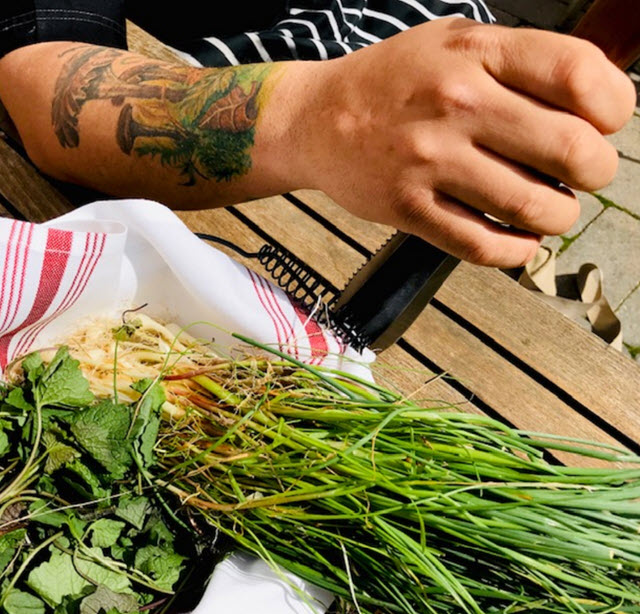 Till’s favorite hori hori knife for wildcrafting Foraging is a huge part of what I do. I go into the woods and get it for free. This summer I established relationships with local farmers and developed a good connection with them. Since I am new to the area, I had to find spots to go foraging. ES has a rooftop garden, but it only has six inches of soil. We have to get the soil up there using ropes and a bucket. It’s very intense. This winter I set up some grow lights in the basement and started growing microgreens when a supplier wanted to charge me $100 a flat!
I’m using heirloom seeds from Monticello [Thomas Jefferson’s Monticello in Charlottesville is a World Heritage Site] where they have a program called the Thomas Jefferson Center for Historic Plants. They will be using 800 acres of their property just for heirloom crops.
What ingredients have you foraged recently?
I found spring garlic while foraging last week and caught lake trout while ice fishing in Canada.
Are you cautious not to overharvest?
I only harvest one third of what I find. I learned my lesson years ago when I picked all the chanterelles from one patch and it took five years for them to come back!
What’s the most popular dish you can’t take off the menu?
Acorn pasta made with flour from acorns I foraged, has been really popular. Unfortunately, I’m out of the acorns for now. Also, guests seem to not get enough of chicory – brined and seared with black pepper and served with a side of kombucha squash and sage. The pork chop schnitzel and gumbo are favorites now too, and the sea bass served with clams and broccolini.
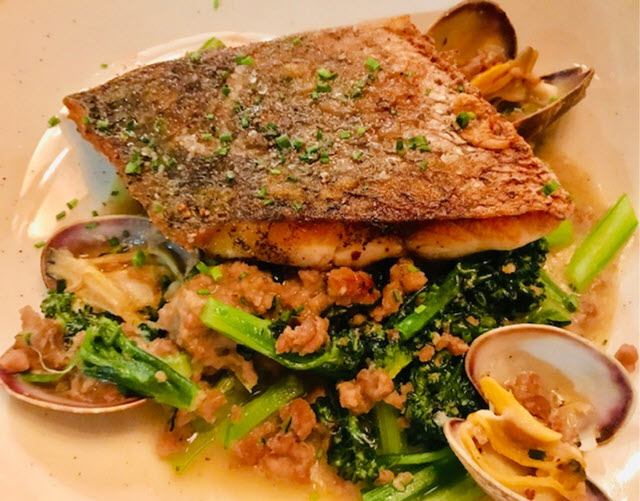 Sea bass with clams and broccolini at Evening Star I had the sea bass the other night and it was perfectly prepared with a crisped skin and tender flesh.
It’s important to understand what goes into raising or catching food. I have raised animals and farmed before and it bothers me when people don’t respect the protein.
What do you see as the future of Evening Star?
I’m still getting used to the flow. Seeing how the summer is going to be when we open the patio. The balance is going to be interesting. I plan to be at the farm and continue foraging this summer. Next year I’ll know exactly what to expect.
This interview was lightly edited for clarity.
|